Vogn
0
Tilmeld dig og få 10% i rabat på din ordre
Forventet levering
1-3 dage
Du vil måske også kunne lide


Dansk Firma

TL;DR:
- Proper ergonomic outdoor support requires lumbar support, pressure distribution, stability, and adjustability.
- Supportive features include adjustable backrests, contouring, wide stable legs, and tension-based seats.
- Fit your body and activity needs through measurement and testing rather than trusting marketing claims.
You’ve probably been there: three hours into a camping trip, shifting your weight for the fifth time in ten minutes, wondering why that chair that looked so supportive is now making your lower back feel like it lost an argument with a boulder. Most outdoor chairs are sold with ergonomic-sounding language slapped on the box, but a cushioned seat and a high back don’t automatically mean your spine is happy. Real ergonomic support outdoors is a more nuanced conversation than most buyers expect, and this guide is here to cut through the marketing noise and help you actually sit comfortably, whether you’re at a festival, a trailhead, or parked beside a crackling fire.
| Point | Details |
|---|---|
| True ergonomic support | Outdoor ergonomic support is more than padding—it’s about posture, pressure, and adjustability. |
| Features vs. fit | Finding the right chair depends more on your body needs and activity type than on marketing claims. |
| Tradeoffs matter | Lightweight, compact seats often sacrifice comfort or accessibility for portability. |
| User testing | Whenever possible, test the chair in real-world conditions to ensure it truly fits you. |
| Be skeptical | Independent reviews reveal that not all ‘ergonomic’ claims hold up under practical use. |
Let’s be honest: the word “ergonomic” gets thrown around so freely that it’s practically lost its meaning. Slap it on a chair with a curved back and suddenly it’s premium. But ergonomic support in outdoor settings means something genuinely specific, and it goes well beyond padding thickness.
Supportive design in outdoor chairs comes down to how a chair works with your body rather than against it. True ergonomic support addresses four core elements working together. According to independent testing guidance, when choosing ergonomic seating for outdoor use, you should look for mechanisms that address lumbar and hip alignment, pressure distribution through geometry and fabric tension rather than just softness, the ability to maintain that alignment on uneven ground, and adjustability that matches your specific body and preferred posture.
Here’s what those four pillars actually mean in plain English:
Key ergonomic features to look for: lumbar curve support, pressure-spreading seat geometry, stable legs or base for uneven ground, adjustable height or backrest angle, and appropriate seat depth for your hip-to-knee length.
These factors matter enormously for hikers who park themselves after miles of trail, for festival-goers who spend eight hours on their feet and then want to actually rest, for campers who sit around a fire for hours, and for anyone who finds that cheap outdoor seating leaves them stiff and sore. Ergonomic support isn’t a luxury. It’s what separates an enjoyable outdoor session from a miserable one.
Understanding the principles is the start. Now let’s get practical about what features actually deliver on those principles when you’re shopping or testing a chair in the wild.
Here are the most important features to put on your checklist:
Pro Tip: Prioritize fit over features. A chair with six adjustment options that’s sized for a taller person will still feel wrong if you’re shorter. Always check the seat height and seat depth measurements against your own body before buying. If you can, test it before committing.
As independent testing at CleverHiker shows, even a well-reviewed chair can feel awkward depending on body size, mobility, terrain, and whether you prefer to recline or sit upright. Lightweight minimalist designs often trade padding and features for packability, and that tradeoff can make them less ideal for reducing fatigue over long sessions or for people with specific mobility needs.
The honest reality is that no single chair ticks every box for every person. The goal is to find the best match for your body and your outdoor habits, not the one with the most impressive spec sheet.
Every ergonomic outdoor chair is a compromise. That’s not a criticism; that’s just physics and materials science meeting the real world. The key is knowing which compromises you can live with and which ones will make you regret your purchase by day two of a camping trip.
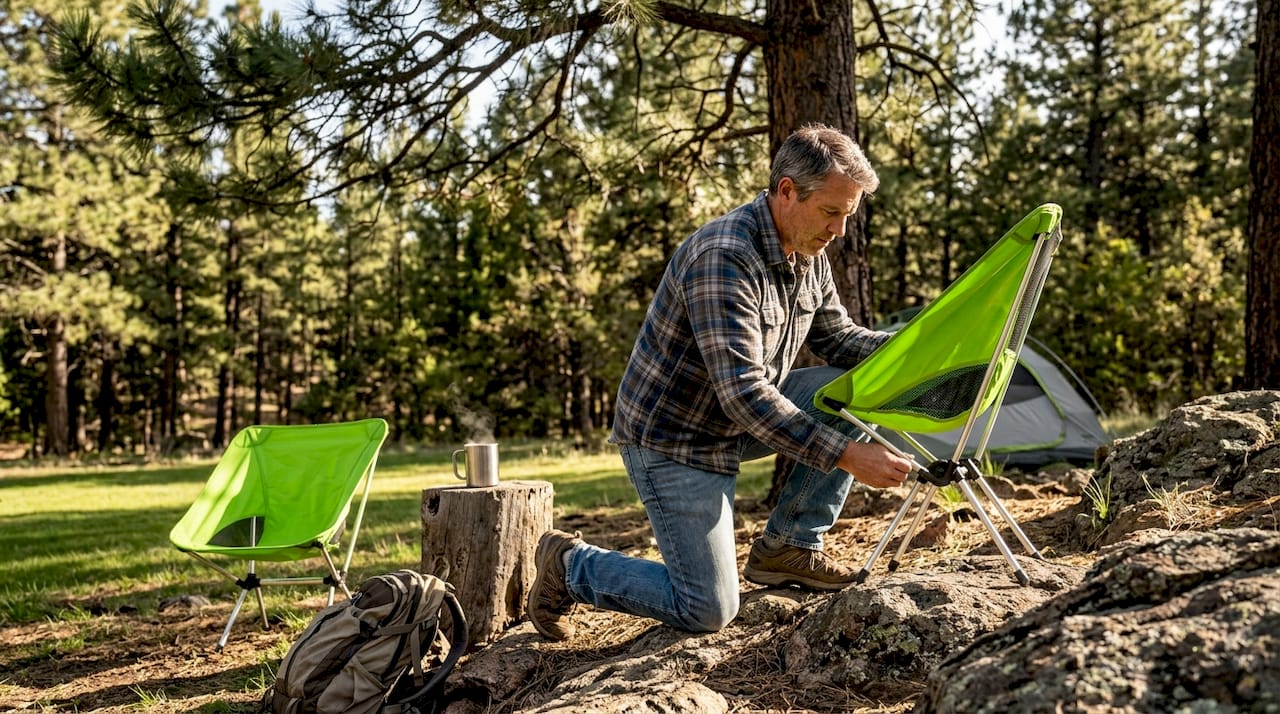
As independent product testing repeatedly shows, many ergonomic outdoor chair claims are at least partly marketing-driven, with real comfort and support being highly user-dependent. The tradeoffs between stability and weight, padding and packability, and body-position flexibility are real and significant.
Here’s how common chair types stack up across the key categories:
| Chair type | Support | Comfort | Packability | Stability on rough terrain |
|---|---|---|---|---|
| Full-size camp chair | High | High | Low (bulky) | Medium |
| Lightweight backpacking chair | Medium | Medium | High | Low to medium |
| Minimalist/stick-style seat | Low to medium | Low to medium | Very high | Medium (varies) |
| Folding stool | Low | Low | Very high | Medium |
| Reclining lounge chair | High (reclined) | Very high | Low | Low |
What this table really tells you is that portable seating comfort is always a balancing act. Here’s how it plays out in real situations:
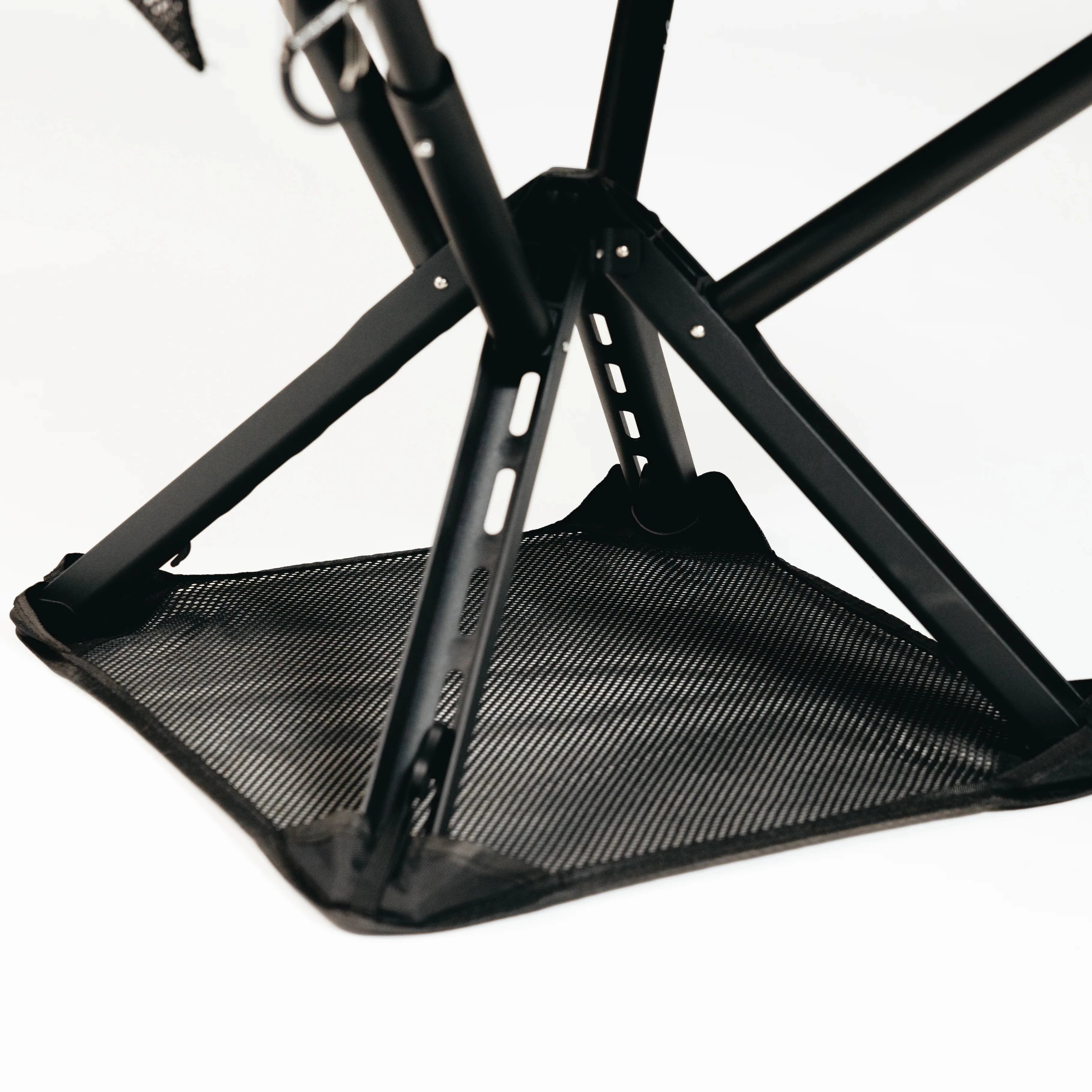
Terrain adds another layer. Rocky, sloped, or soft ground can undermine even a well-designed chair’s stability. Wide-legged designs and anti-sink feet help on soft earth, but adjustable feet are rare in lightweight models. If you know you’ll be camping on uneven ground frequently, stability should move up your priority list even if it costs a little in weight.
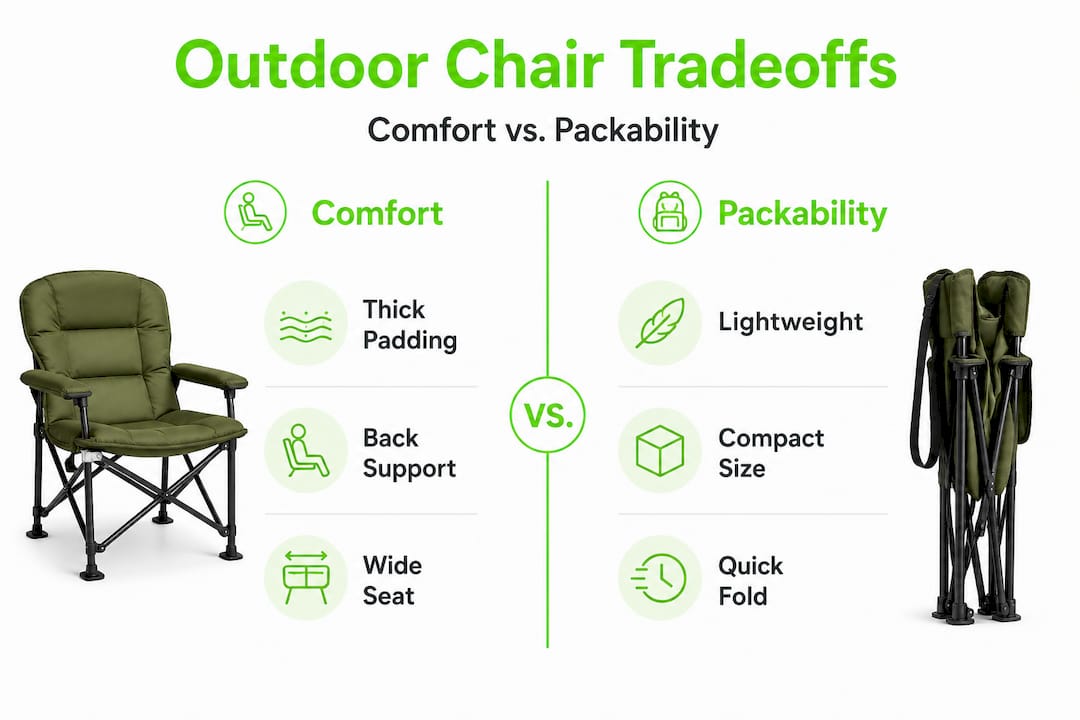
With all these tradeoffs mapped out, the most important question becomes: which type of ergonomic support is right for you? This is where most buyers go wrong. They get dazzled by features, ratings, or a slick marketing claim and skip the step of actually matching the chair to their body and their typical outdoor activity.
Here’s a simple way to find your right fit:
Pro Tip: Before any major outdoor trip, sit in your chair at home for at least 30 minutes on a firm, flat surface. Then assess how your lower back, hips, and knees feel. If anything is uncomfortable before you’ve even hit the trail, it won’t magically improve on rocky ground.
As testing data makes clear, even a popular high-back chair can feel uncomfortable on the back of the neck for certain body heights when leaned back, and the lack of armrests can make getting out awkward for some users. Your outdoor seating needs to be tested against your actual body, not against the body of a hypothetical average user. Checking outdoor seating adjustability options before committing to a purchase is one of the smartest moves you can make.
Here’s something most gear guides won’t say out loud: the ergonomic label on an outdoor chair means almost nothing by itself. After spending real time testing different seating options in real outdoor conditions, the pattern becomes pretty clear. The buyers who end up happiest aren’t the ones who bought the chair with the longest feature list. They’re the ones who took the time to figure out what their body actually needs and then tested their options honestly.
Marketing budgets fund a lot of ergonomic claims. But as real-world testing consistently shows, comfort and support are user-dependent, and the tradeoffs between stability and weight, padding and packability, and body-position flexibility are real and not always disclosed upfront.
The conventional wisdom says: buy ergonomic, buy supportive, buy the brand with the good reviews. And that’s not wrong exactly. But it misses the most important variable in the whole equation, which is you. Your height, your hip-to-knee ratio, your mobility level, your tolerance for low seats, your preference for upright versus reclined sitting. None of that can be solved by a feature on a spec sheet.
My honest advice after all of this? Trust your body’s feedback over any product description. If a chair makes you shift uncomfortably after 20 minutes, no amount of five-star reviews should convince you it’s the right fit. Test before you buy whenever possible, and don’t be embarrassed to sit in every floor model at the gear shop until you find the one that makes your back say yes, thank you.
If this guide has got you thinking about what genuine ergonomic support actually looks like for your outdoor adventures, the good news is that there are genuinely thoughtful options out there designed with real portability and real comfort in mind.
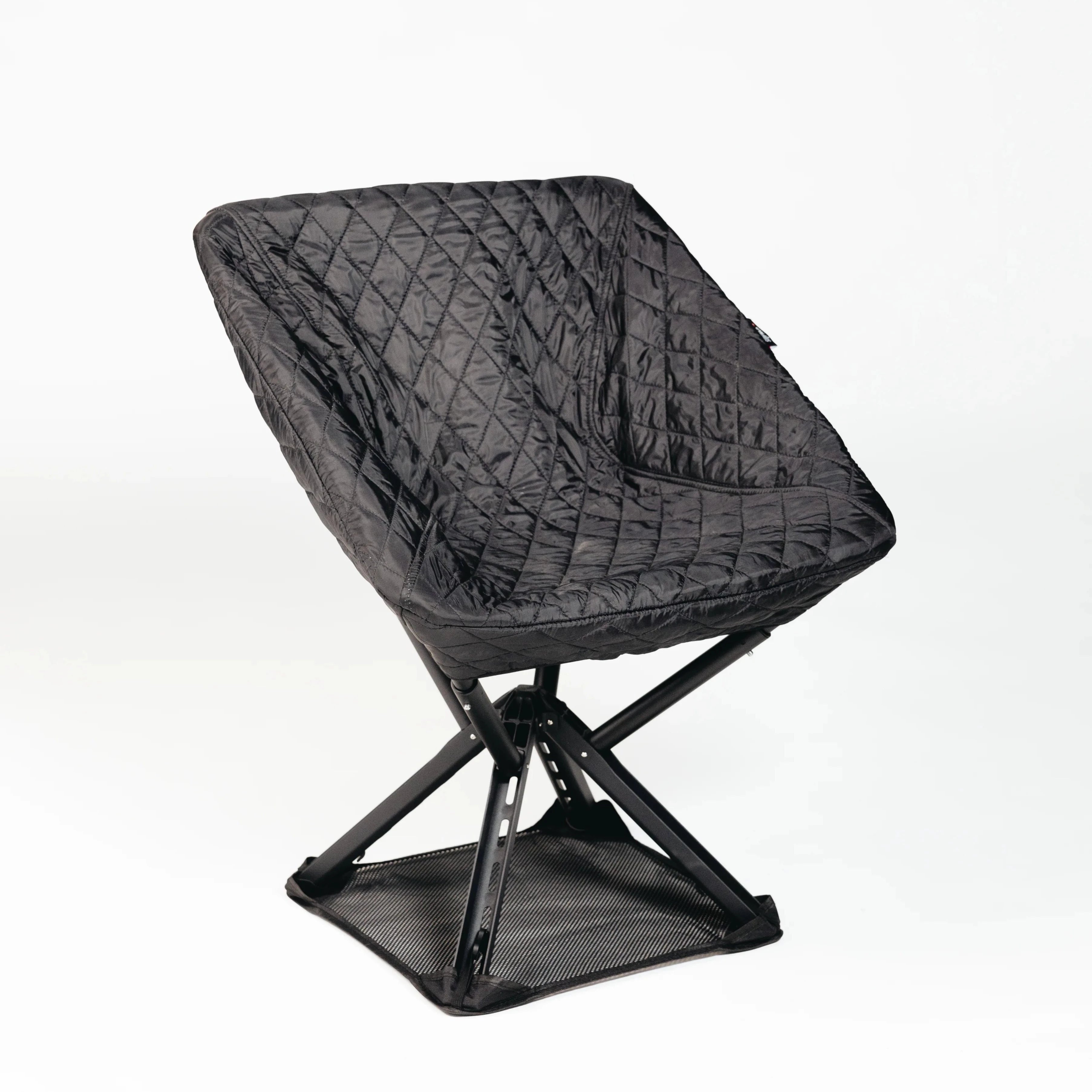
Sitpack portable seating is built around the idea that you shouldn’t have to choose between carrying something lightweight and sitting comfortably. Whether you’re eyeing the Campster II for base camp sessions or the Sitpack Zen for on-the-go comfort, each option is designed with minimalist efficiency and ergonomic intention. With a 45-day satisfaction guarantee and fast worldwide delivery, you can actually test the fit for your body without the usual risk. That’s how outdoor seating shopping should work.
A true ergonomic outdoor chair maintains body alignment, distributes pressure properly across the seat, and can be adjusted for different postures and terrain. The key mechanisms include lumbar and hip alignment support, pressure distribution through geometry, stability on uneven ground, and body-specific adjustability.
Generally yes, because lightweight designs often trade padding and structural features for lower pack weight, which can limit comfort and accessibility for larger body types or those with reduced mobility.
Look for adjustable backrests and seat heights, and cross-reference your seated height with the chair’s seat height measurement. Even well-reviewed chairs can cause discomfort at the wrong fit, as testing shows a high back can strain the neck for certain heights.
Not always. While high-back chairs offer neck and upper back support, the extended back panel can feel uncomfortable for shorter torsos when reclined, making adjustability and personal fit more important than back height alone.
Be skeptical. Independent reviews consistently find that comfort and support are user-dependent, and real-world tradeoffs between stability, weight, padding, and packability are often glossed over in brand marketing.