Vogn
0
Tilmeld dig og få 10% i rabat på din ordre
Forventet levering
1-3 dage
Du vil måske også kunne lide


Dansk Firma

TL;DR:
- Modern foldable gear has transformed travel packing by offering lightweight, versatile options that save space and increase adaptability. Properly selecting foldable clothing, furniture, electronics, and daypacks enhances mobility, comfort, and decision-making during adventures. However, travelers must consider the durability, setup ease, and specific limitations of each category to maximize their benefits.
Packing for adventure has always felt like a negotiation you can’t win: bring the comfortable chair, lose the room for your rain jacket; squeeze in the full-size organizer, sacrifice space for your hiking boots. But here’s the thing, modern foldable gear has quietly rewritten those rules. Lightweight, packable, and genuinely functional, today’s foldable essentials let you bring more comfort without hauling more weight. In this guide, we’ll walk through the categories that matter most, share some hard-won insights, and help you figure out which foldable upgrades are actually worth your pack space.
| Point | Details |
|---|---|
| Packability doesn’t equal compromise | Choose foldable gear that maintains comfort, stability, and convenience for your travel style. |
| Use the right tool for the job | Rolling soft clothes, folding bulky items, and using organizers can transform packing and daily use. |
| Test electronics for real use | Foldable tech offers space savings but may come with handling or durability tradeoffs—try before you rely. |
| Optimize for organization on the go | Strategic use of foldable organizers and daypacks reduces stress and keeps essentials at hand, wherever you are. |
| Evaluate true value for your needs | The best foldable gear adapts to your journey and routine, not just your luggage. |
The rise of minimalist travel and fast-moving adventure trips has pushed gear designers to rethink everything. People are no longer willing to choose between a comfortable campsite and a manageable bag. That tension is exactly what foldable gear was built to resolve.
The numbers back this up. The adventure tourism and outdoor gear markets have both grown sharply over the past decade, and a big part of that growth is driven by travelers who want real functionality in a small footprint. Travel hacks with smart tools are no longer just nice to have, they’re a genuine competitive edge for people trying to see more of the world with fewer logistical headaches.
Here’s what makes foldable gear genuinely useful beyond the obvious space savings:
The categories where foldable gear makes the biggest difference span camp furniture, clothing organizers, electronics, and daypacks. Packable daypacks, for instance, have been recognized as critical not just for travel days but for daily use without needing to repack your essentials between contexts. That kind of seamless adaptability is the real magic of a well-designed foldable system.
“The best foldable gear doesn’t just save space. It saves decisions.”
With the foundation set, let’s explore how foldable gear actually performs in the major categories travelers care about.
Not all foldable gear is created equal, and this is where a lot of travelers go wrong. They assume “foldable” automatically means “better for travel,” but each category comes with its own strengths and genuine limitations.
Clothing and soft goods
The way you fold or roll your clothes has a real impact on both space efficiency and wrinkle management. Rolling vs. folding guidance from Eagle Creek confirms what veteran packers already know: rolling works brilliantly for casual fabrics like t-shirts and underwear, while folding is still better for dress shirts, blazers, and anything prone to creasing. Pair either method with well-chosen packing cubes or garment folders and you’ll arrive with clothes that actually look wearable.
Furniture
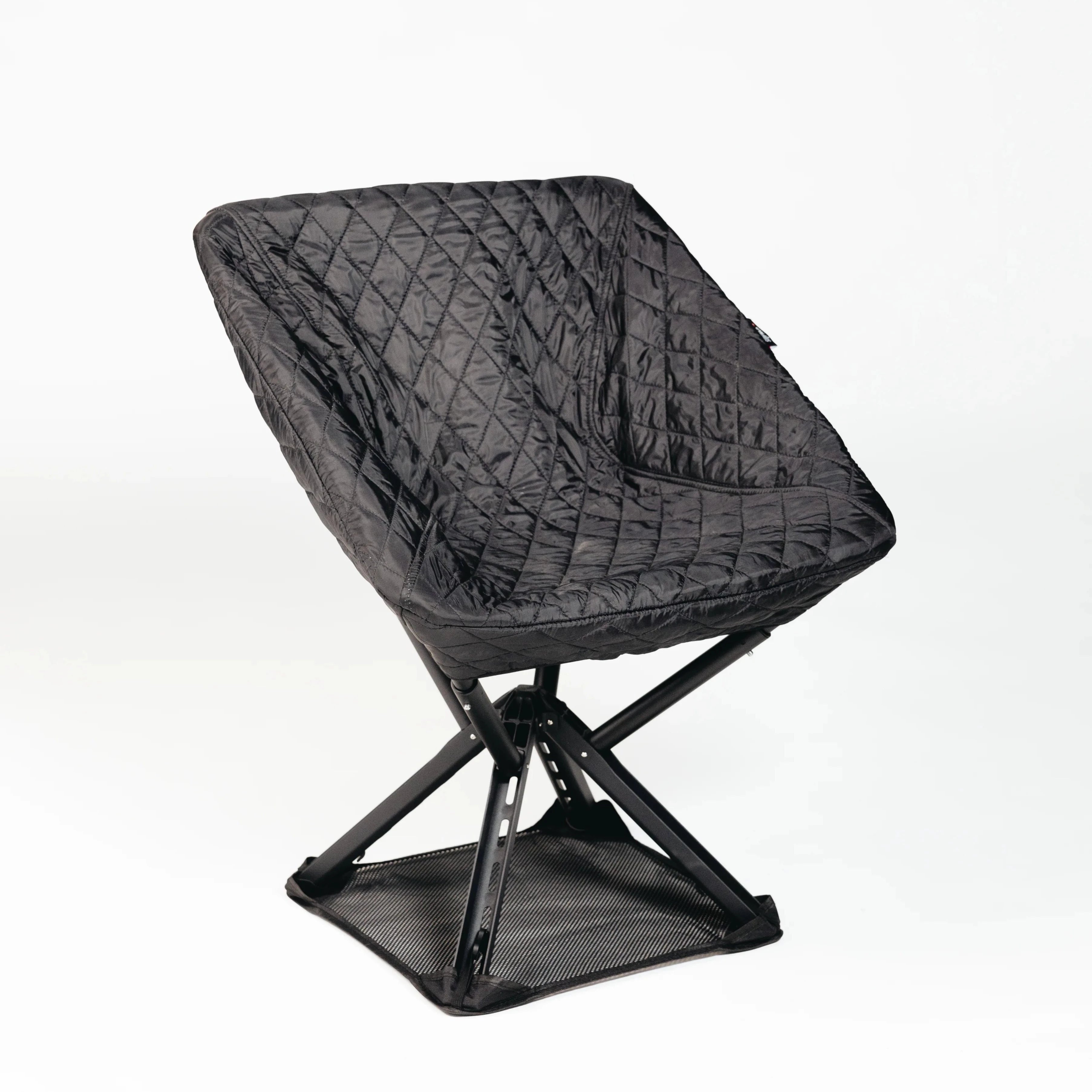
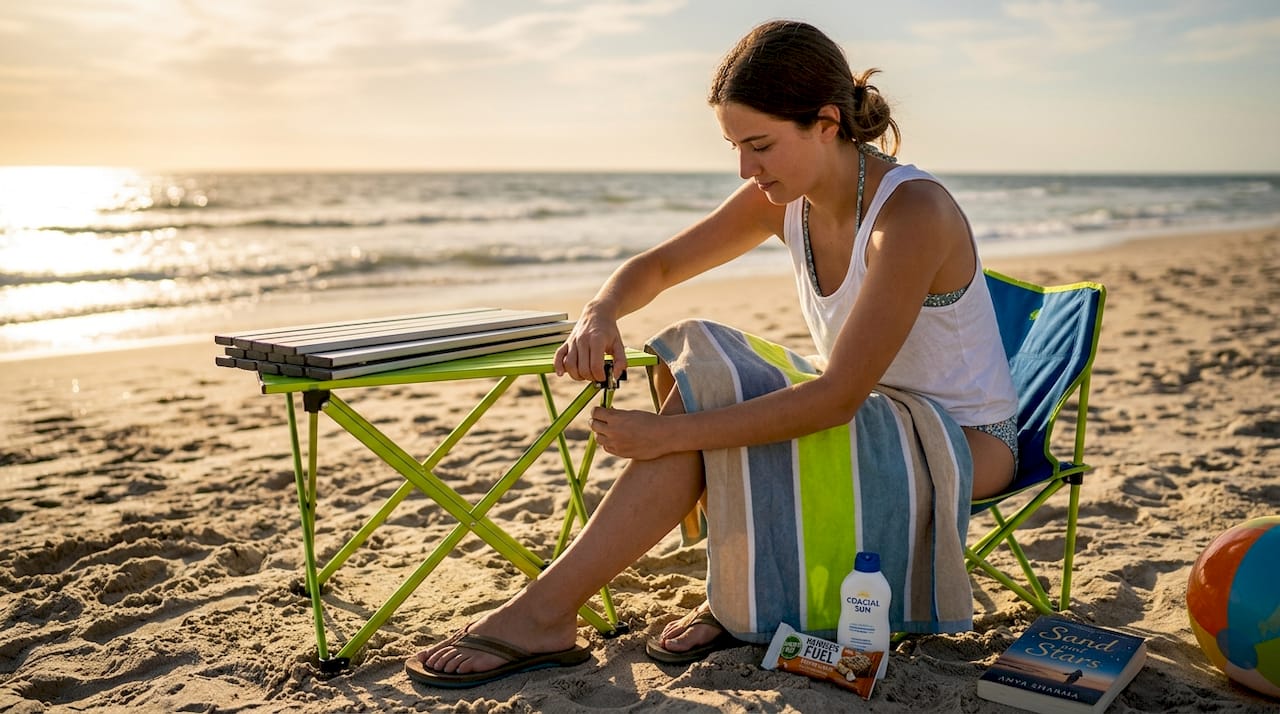
This is where foldable design has made the most dramatic leaps. Chairs and tables that once weighed several pounds and required ten minutes to assemble now come in ultralight versions that snap open in seconds. The compact furniture advantages are clearest in this category: you get a real, usable piece of furniture that fits in a side pocket or stuff sack. The tradeoff is that cheaper options often sacrifice stability or comfort, so quality matters enormously here.
Electronics
Foldable electronics, from foldable solar panels to folding keyboards, offer genuine space savings but come with some real caveats. Foldable solar panels like the FlexSolar 40W deliver useful output, roughly 30 to 35 watts in good sun, but they’re best suited for light loads like phones and lanterns rather than laptops or heavy power draws. And optimizing tech for travel often means thinking carefully about whether the foldable version of a device is actually more reliable or just more compact.
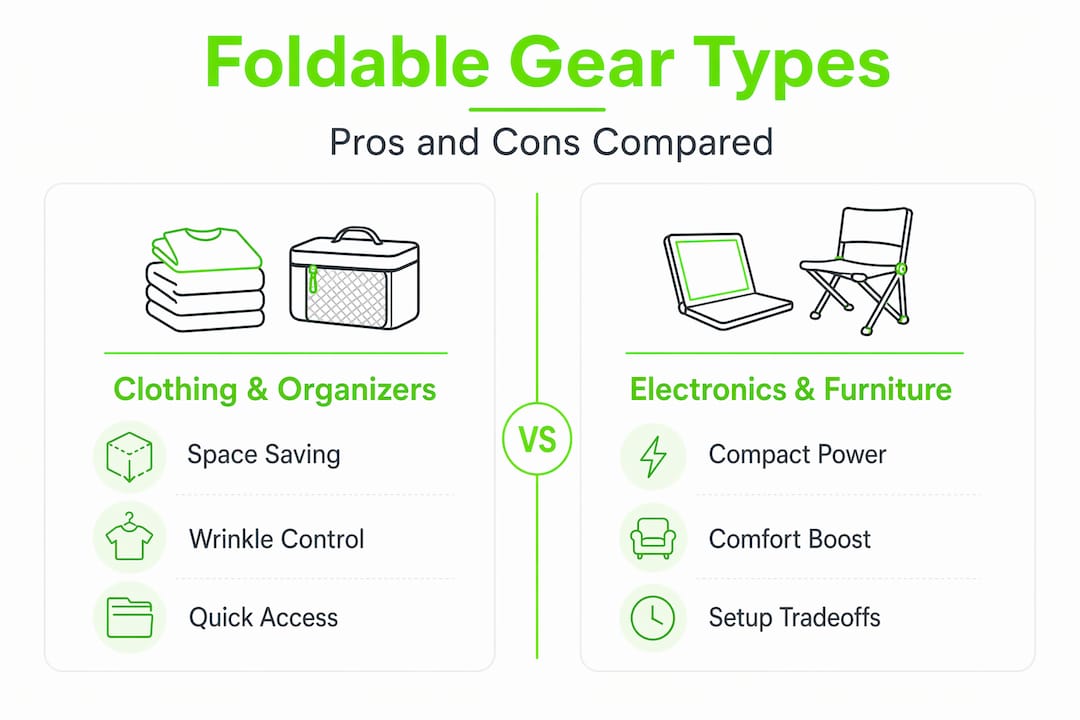
Here’s a quick comparison of how the major foldable gear categories stack up:
| Category | Main benefit | Key limitation | Best for |
|---|---|---|---|
| Clothing organizers | Space and wrinkle control | Requires discipline to use consistently | Any trip with more than 2 nights |
| Foldable furniture | Comfort anywhere | Setup friction on the cheapest models | Campers, festival-goers, long stops |
| Foldable electronics | Portability | Hinge reliability over time | Occasional use, lighter loads |
| Packable daypacks | Dual-use flexibility | Less structure than fixed packs | Travelers who add day trips |
The takeaway here: foldable is not automatically optimal. Each category has its sweet spot, and knowing where that sweet spot is saves you from buying gear that looks great online but frustrates you in real use.
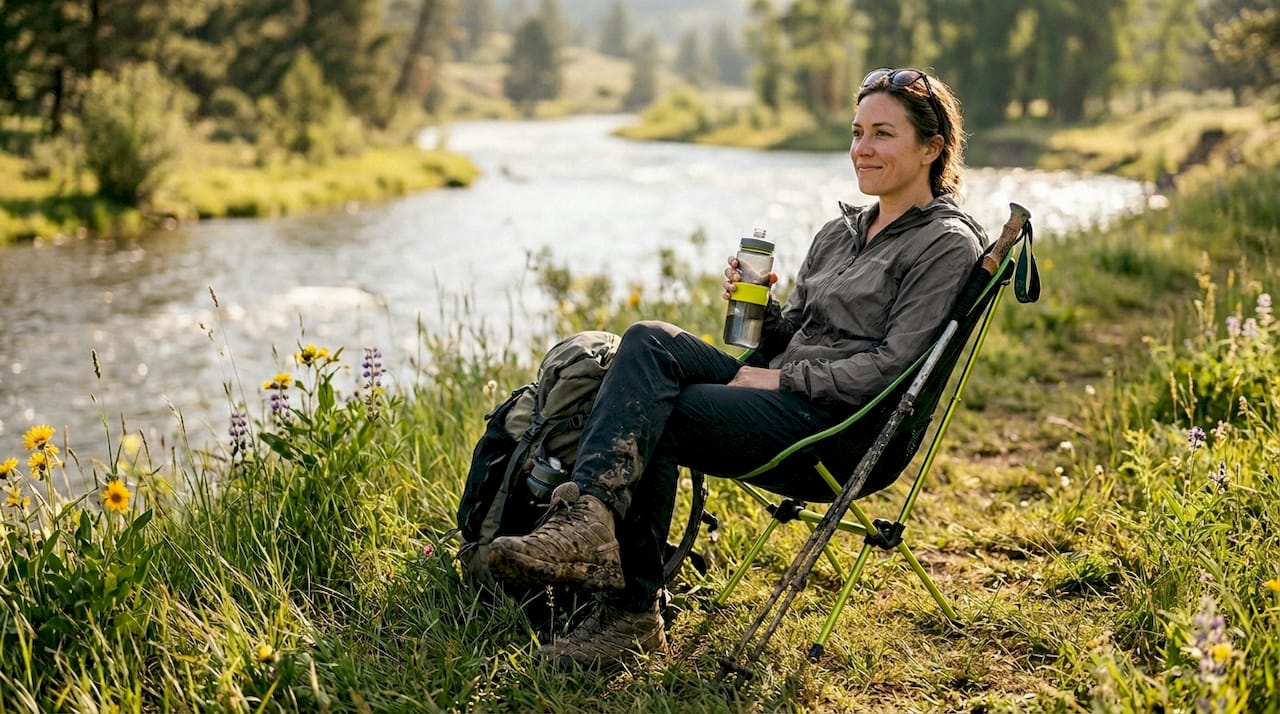
Foldable furniture is arguably where you’ll feel the biggest quality-of-life improvement on any trip. Parking your posterior on a proper chair instead of a cold, wet rock? That’s not a luxury. That’s just smart packing.
But there’s a real trap here. Because “foldable furniture” spans everything from flimsy plastic stools to precision-engineered ultralight chairs, you need to evaluate options on the right criteria. Camp table testing from OutdoorGearLab consistently shows that the best foldable furniture earns its place by delivering on stability, ease of setup, and portability without compromising strength. Foldability is only worth it when it doesn’t introduce weakness or setup friction that makes you want to leave the thing in the car.
Here’s what to look for in foldable furniture:
The advantages of compact chairs for outdoor enthusiasts go beyond just fitting in your bag. A great foldable chair means you’ll actually sit down comfortably at the trailhead, the overlook, or the crowded outdoor concert instead of standing awkwardly waiting for someone else to vacate a bench.
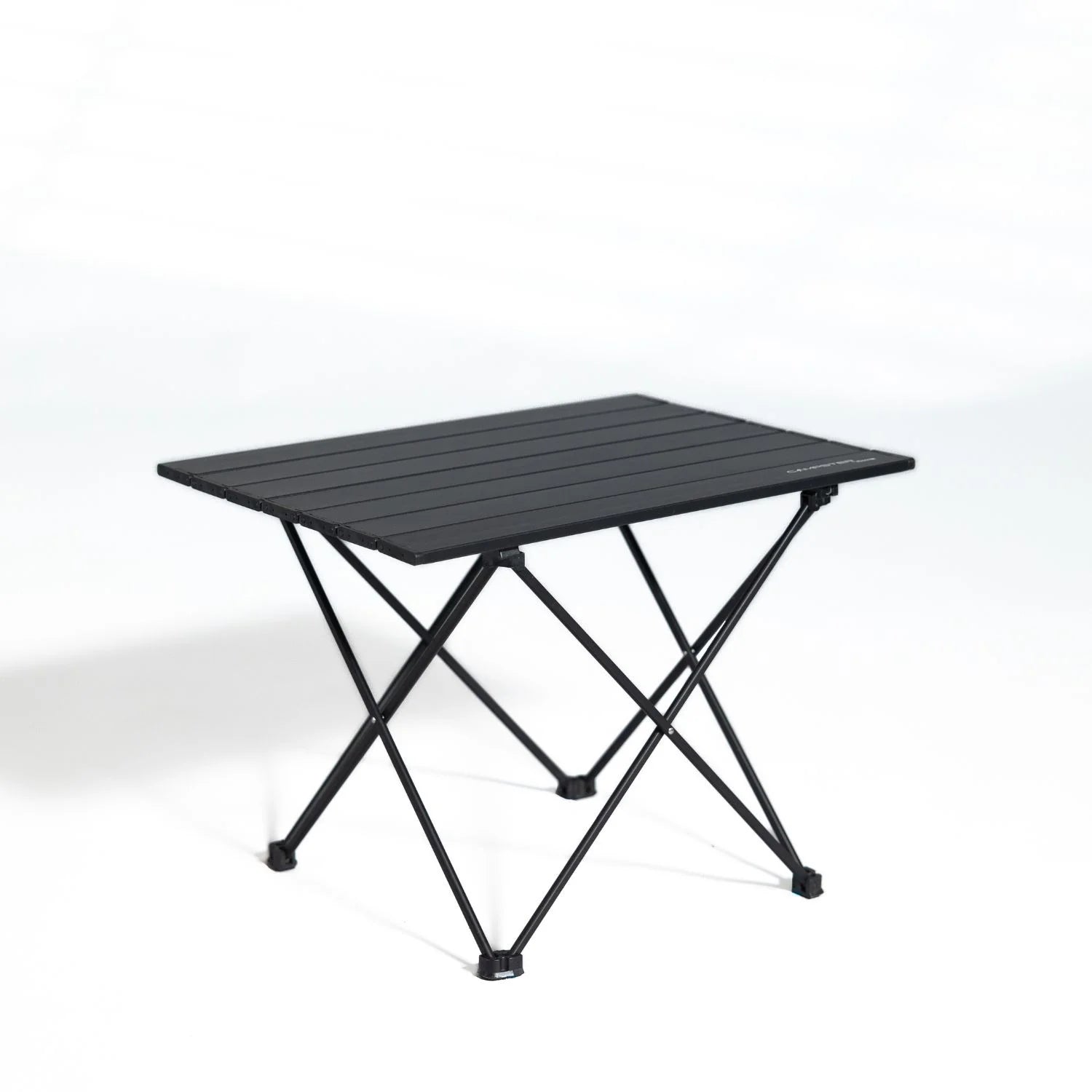
Thinking about a table as well? The packable furniture guide is a solid resource for pairing chairs with lightweight tables that actually hold your gear without wobbling every time you set down a coffee mug.
“Evaluate comfort against the hassle of repeated folding and unfolding. If the friction is high, the gear won’t get used.”
Pro Tip: Before committing to any foldable furniture piece, actually time yourself setting it up and breaking it down three times in a row. If it still feels smooth on the third attempt, it’s a keeper.
Now that you know what to look for in furniture, let’s apply this thinking to packing strategies and day-to-day organization.
A great packing system isn’t just about what you bring. It’s about how fast you can find it and how easily you can move between contexts without repacking everything from scratch. Foldable organizers and daypacks are the unsung heroes of this challenge.
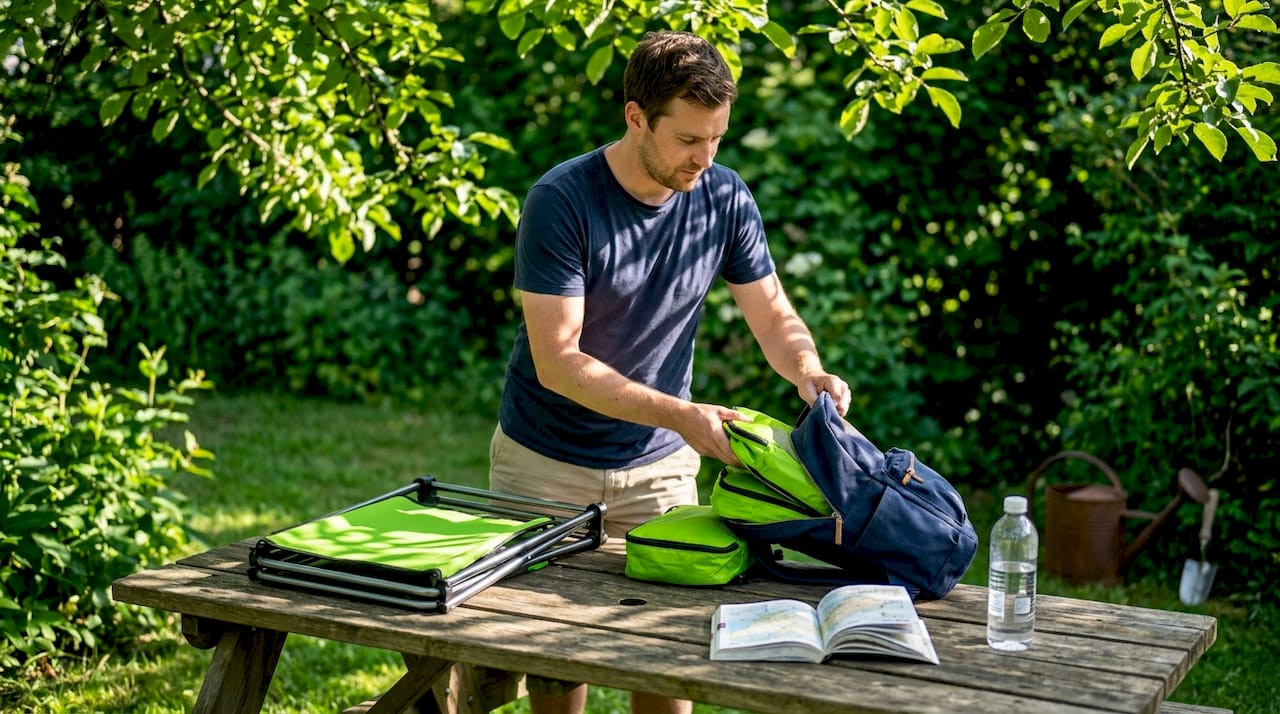
Wirecutter’s reviewed packable daypacks highlight something that most gear guides skip over entirely: the best packable daypacks earn their recommendation not just for travel days, but for working as daily commute bags too. That’s the dual-use magic that makes them such good value. One bag goes from stuffed inside your checked luggage to strapped on your back for a day hike without skipping a beat.
Here’s a numbered breakdown of how to build a smart foldable organization system:
The travel with compact furniture angle also applies here: a well-organized pack lets you add foldable furniture without feeling like you’re sacrificing anything else.
| Organizer type | Average packed size | Best use case | Key feature |
|---|---|---|---|
| Packing cube set | Fist-sized per cube | Multi-night trips | Color-coded sorting |
| Compression cubes | Smaller than standard | Cold weather gear | Volume reduction |
| Packable daypack | Fits in palm | Airport to day trip | Dual-mode flexibility |
| Tech pouch | Wallet-sized | Electronics cables | Quick access at security |
Pro Tip: Check out the bikepacking essentials checklist for inspiration on ruthlessly efficient packing that translates perfectly to any adventure-focused trip.
Having covered the benefits and tradeoffs, let’s pull back and consider the nuances that most guides completely miss.
Here’s the uncomfortable truth: foldable gear fails in predictable ways, and most reviews don’t talk about it honestly enough.
The single most common failure point is the hinge or folding mechanism itself. This is especially true for electronics. Minimalist travel tech packing notes that foldable electronics introduce handling and reliability considerations that their non-folding equivalents simply don’t have. A folding keyboard might survive 500 open-close cycles beautifully and then start to degrade fast. A foldable phone case can weaken around the crease over time.
Here’s what seasoned travelers watch out for:
Pro Tip: Always look for the lightweight gear benefits of purpose-built foldable items over retrofitted or converted gear. Items designed from the ground up to fold are almost always more reliable than items that fold as an afterthought.
One more thing worth calling out: some foldable gear that works brilliantly at a relaxed campsite is genuinely unsuitable for fast-moving transit. A foldable camp chair that takes 90 seconds to collapse is fine when you’re packing up after breakfast. It’s a nightmare when you’re sprinting to catch a connecting train.
Most people think foldable gear is about saving space. That’s only half the story, and honestly, it might be the less important half.
After years of watching people pack and travel, what we’ve noticed is that the travelers who genuinely thrive with foldable gear aren’t the ones chasing the smallest packed size. They’re the ones who prioritize instant adaptability. A foldable chair you actually deploy at every rest stop is infinitely more valuable than a foldable chair that stays buried in your bag because the setup feels like a chore.
This is where the “foldable for its own sake” trap catches a lot of people. They buy gear because it packs small, then discover that the packed size comes at the cost of comfort, stability, or usability. That’s not a win. That’s just smaller disappointment.
The compact chair expertise we’ve built at Sitpack comes from exactly this observation: the gear that people use most is gear that earns its place by actually improving the experience, not just checking the “small when packed” box.
The seasoned traveler’s checklist for evaluating any foldable item goes something like this: Does it set up fast enough that I’ll use it every single time? Does it perform as well as its non-foldable equivalent? Does it survive the conditions I’ll actually put it through? If the answer to any of those is no, the packed size advantage disappears pretty quickly.
There’s also no universal answer here. A solo bike traveler needs fundamentally different foldable gear than a family camping in a national park or a business traveler bouncing between cities. The best foldable kit is the one that flexes with your specific routines and tolerances, not the one that scores highest on a spec sheet comparison.
If this guide has sparked some ideas about upgrading your travel kit, you’re in exactly the right place. At Sitpack, we’ve spent years engineering foldable seating and travel accessories that actually hold up in the real world, from music festivals to mountain trails to long airport layovers.
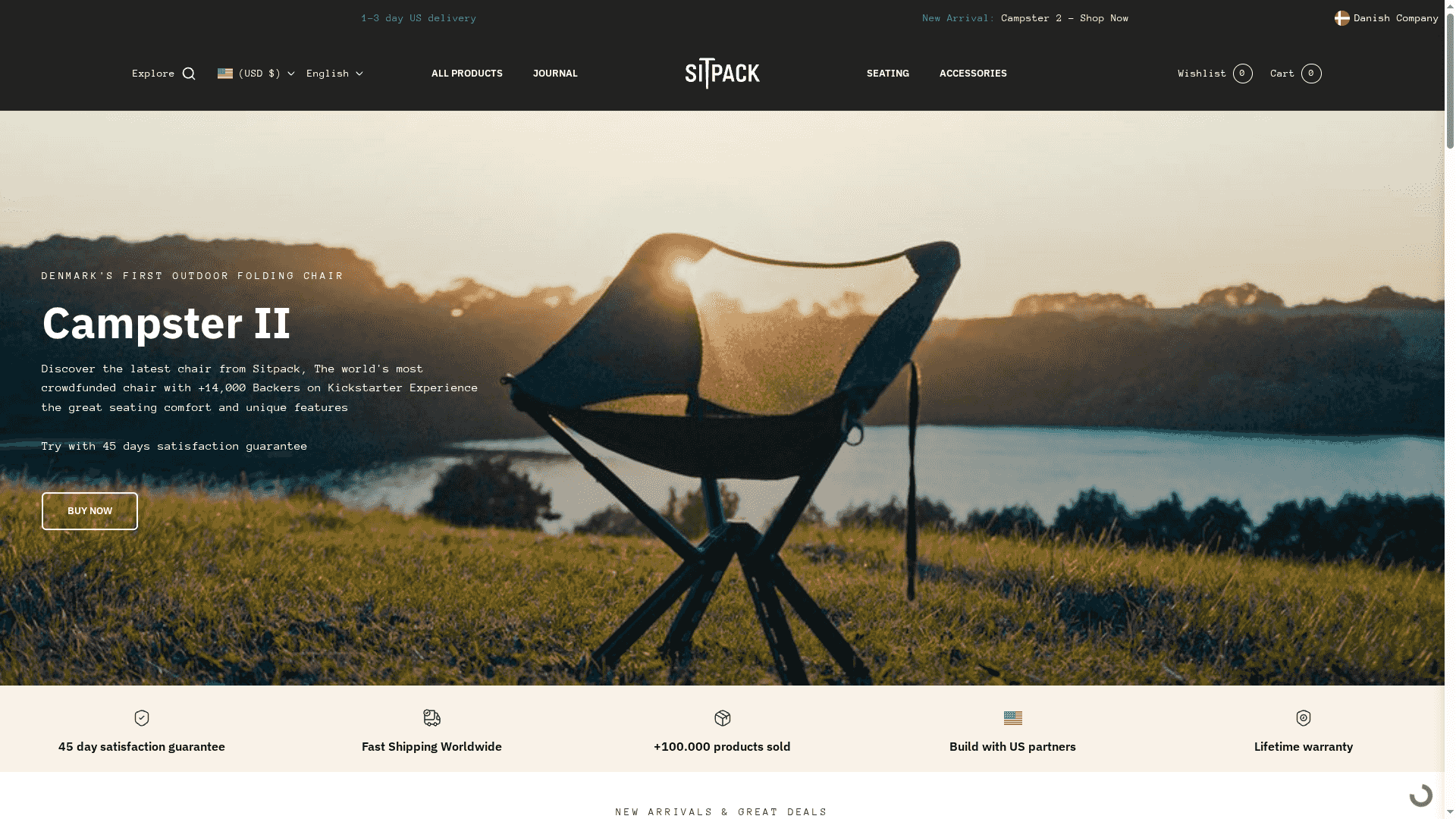
Our range includes the Campster II and Sitpack Zen, both built to deliver genuine comfort in a package that fits where your other gear won’t. Real customer reviews, robust materials, and a lifetime warranty back everything we make. Whether you’re after a packable chair that deploys in seconds or accessories like lightweight tables and thermal blankets, we’ve got options designed for travelers who take their comfort seriously without taking their pack weight lightly. Explore the full range at sitpack.com and find the foldable gear your next adventure has been waiting for.
Not always; foldable gear saves space but may add setup or durability tradeoffs, and foldability is only worth it when it doesn’t compromise strength or create friction at use time.
Roll soft or casual clothing and use packing cubes; fold bulkier or crease-prone items and use garment folders to keep formal wear looking sharp.
They’re best for small loads like phones and portable lights; the FlexSolar 40W produced only about 30 to 35 watts in full summer sun, making heavy power demands unrealistic.
Their hinges and moving parts add handling complexity, and foldable electronics introduce reliability considerations that non-folding equivalents simply don’t have.
Yes, the best ones work seamlessly for both transit and daily commute use; packable daypacks were chosen specifically for their ability to serve as a practical second-mode bag without repacking.