Vogn
0
Tilmeld dig og få 10% i rabat på din ordre
Forventet levering
1-3 dage
Du vil måske også kunne lide


Dansk Firma

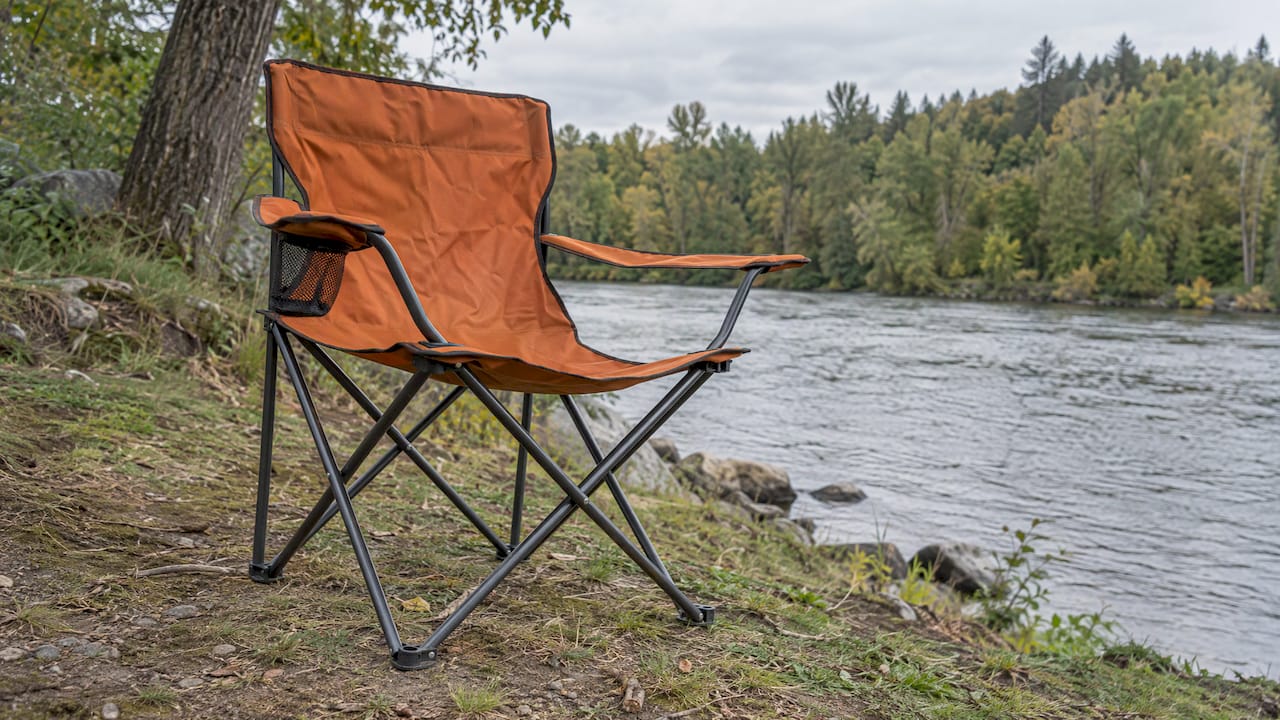
A stable chair stays where you put it, holds your weight when you shift, lean or reach, and does not tip when the ground is less than perfect. Indoors, on a flat floor, you rarely think about it. Outdoors, on grass, gravel, sand or a sloping patio, stability is the first thing a seat has to get right, because comfort, packability and style mean nothing if you end up on the ground. This guide explains what stability is, what affects it, and how to choose and set up a portable chair that stays put.
Stability is a chair’s ability to resist tipping over when a load shifts. Strength is something different: a chair can be strong enough to hold you and still fall sideways because its legs sit too close together or its seat is too high for its footprint.
The product-safety team at Australia’s consumer regulator describes the general rule for furniture: things are more stable when they are bottom-heavy, shorter, wider and deeper. The same paper lists behaviors that raise the risk of toppling, including leaning back on a chair and standing on chairs or tables. That paper is about household furniture, but the physics does not care whether the chair is in a kitchen or a campsite.
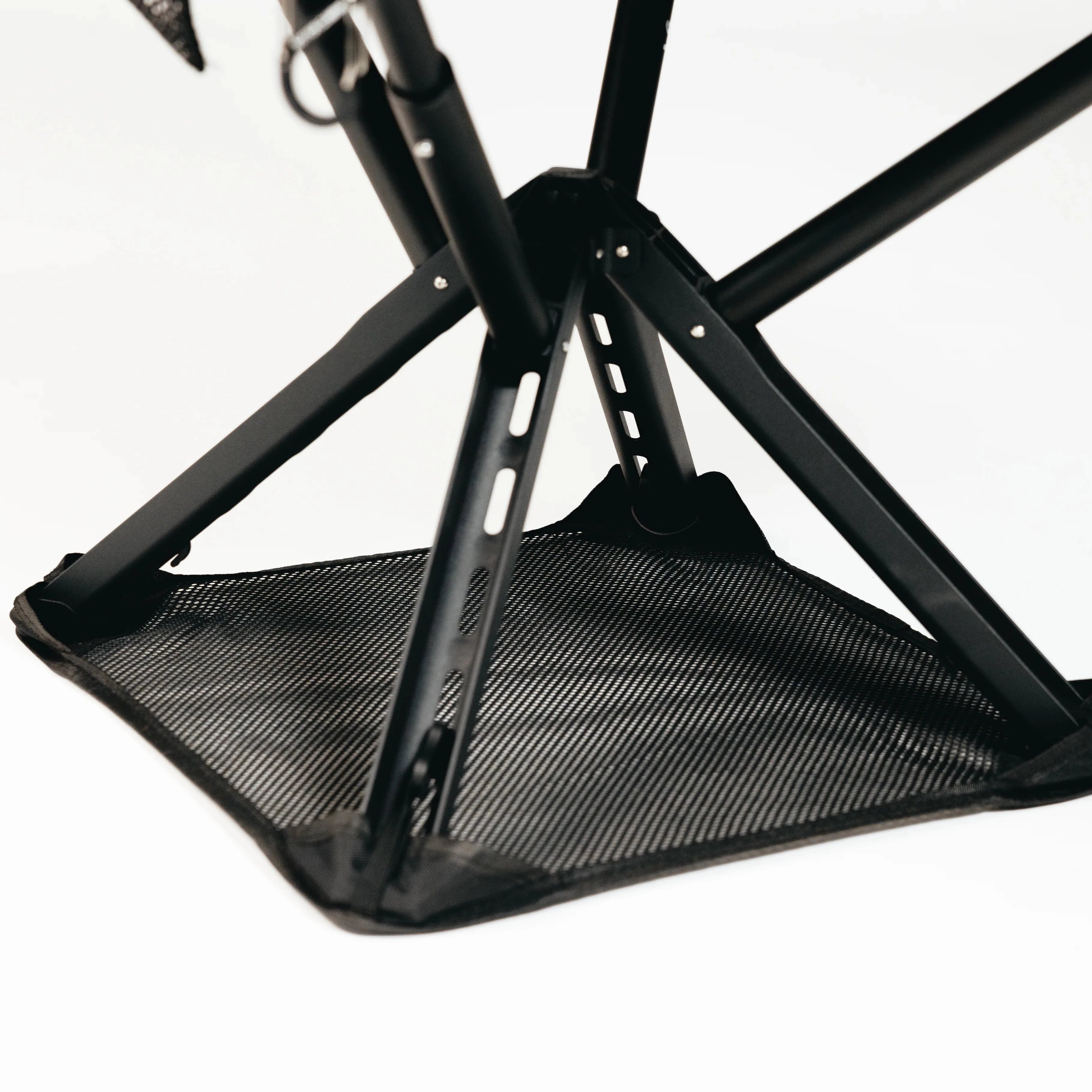
Think of it as a simple balance. Your weight acts through a point above the seat. If that point moves outside the area marked by the chair’s feet, the chair goes over. A wider stance and a lower seat make that area large and that point low. A leaning-back posture, a sloped surface or a sinking leg moves the point toward the edge.

It is easy to shrug off a tipped chair as an embarrassing moment. The numbers say it is more than that. UL, the safety science organization, reviewed outdoor furniture hazards and reported that about 3,000 people were treated in U.S. hospital emergency rooms in 2017 for outdoor-furniture-related injuries, a figure that had risen steadily over ten years. Tables, beach chairs and folding chairs were frequently involved.
That is a 2017 snapshot, so treat it as an indication of the kind of risk rather than a current count. What it tells you is that portable seating belongs on the list of things worth choosing carefully.
A few situations where a fall hurts more than you would expect:
UL’s review makes a point that matters a lot for campers: stability is a performance-related safety issue, distinct from component quality and structural strength, and outdoor furniture is often designed without enough stability to hold its position outside. The paper also notes that uneven outdoor surfaces can destabilize furniture that would be unaffected on an even indoor floor.
In plain terms, a chair that passes the “kitchen floor test” can still tip on dirt, grass or an uneven patio. This is the key reason portable and outdoor seating deserves its own stability criteria, and why you should judge a camp chair on the ground you will actually use it on.
| Surface | What goes wrong | What helps |
|---|---|---|
| Soft grass or sand | Feet sink, usually unevenly, so the seat tilts | Wider feet or a wider footprint, firmer patch of ground, sitting down slowly |
| Gravel or rocks | One foot lands on a stone and the chair rocks | Nudge the chair side to side after placing it and shift it until all feet sit flat |
| Slopes | The tipping point moves toward the downhill side | Face the chair across the slope less, or pick flatter ground, and keep your weight centered |
| Wet or muddy ground | Feet slide or sink | Pick the firmest nearby spot and re-check after a few minutes |
| Decks and patios | Gaps between boards catch narrow feet, uneven boards tilt the seat | Move the chair until all feet sit on a level section |
The thicker or bulkier the surface under a chair, the more variable it gets. The ACCC paper names thick or bulging carpet as a factor that can increase instability, and soft turf behaves a lot like carpet that is much deeper and much less even.
You do not need an engineering degree to read a chair. Five things tell you most of what you need.
Two behaviors cause a lot of tipping:
No one expects you to read a standard before buying a camp chair, but knowing they exist explains what “stable” is measured against.
Two takeaways. First, the best test setups deliberately put the chair in its worst position, which is a good model for how you should think about your own seat. Second, weight ratings matter: stability and strength both assume a stated maximum load, so check the rated capacity of any chair you buy and stay under it.
It is easy to confuse the two. Ergonomic claims are about posture and support. Stability is about not falling over. Queen’s University’s furniture standard makes the distinction explicit by noting that the office chair standard it relies on does not address ergonomic considerations. A chair can pass a stability test and still be miserable after an hour, and a plush chair can be a tipping hazard.
For portable seating, the sweet spot is a seat that stays planted and keeps your posture reasonable for the time you will sit. A steady chair also feels more comfortable, because you are not subconsciously bracing against a wobble.
CCOHS’s chair guidance tells people to check chair stability as part of setting up, and the same habit works for a campsite. Here is the routine.
For longer trips, our own step-by-step outdoor seating setup guide walks through getting a seat ready, and our safe outdoor seating guide covers comfort and safety more broadly.
A chair that was stable on day one can loosen with use. Grit in joints, bent parts and worn feet all change how a seat sits. Regular care is part of stability, and our guides to maintaining foldable chairs and portable seating maintenance cover cleaning, storage and what to look at before each trip.

Stability matters for everyone, but a few readers should plan around it more.
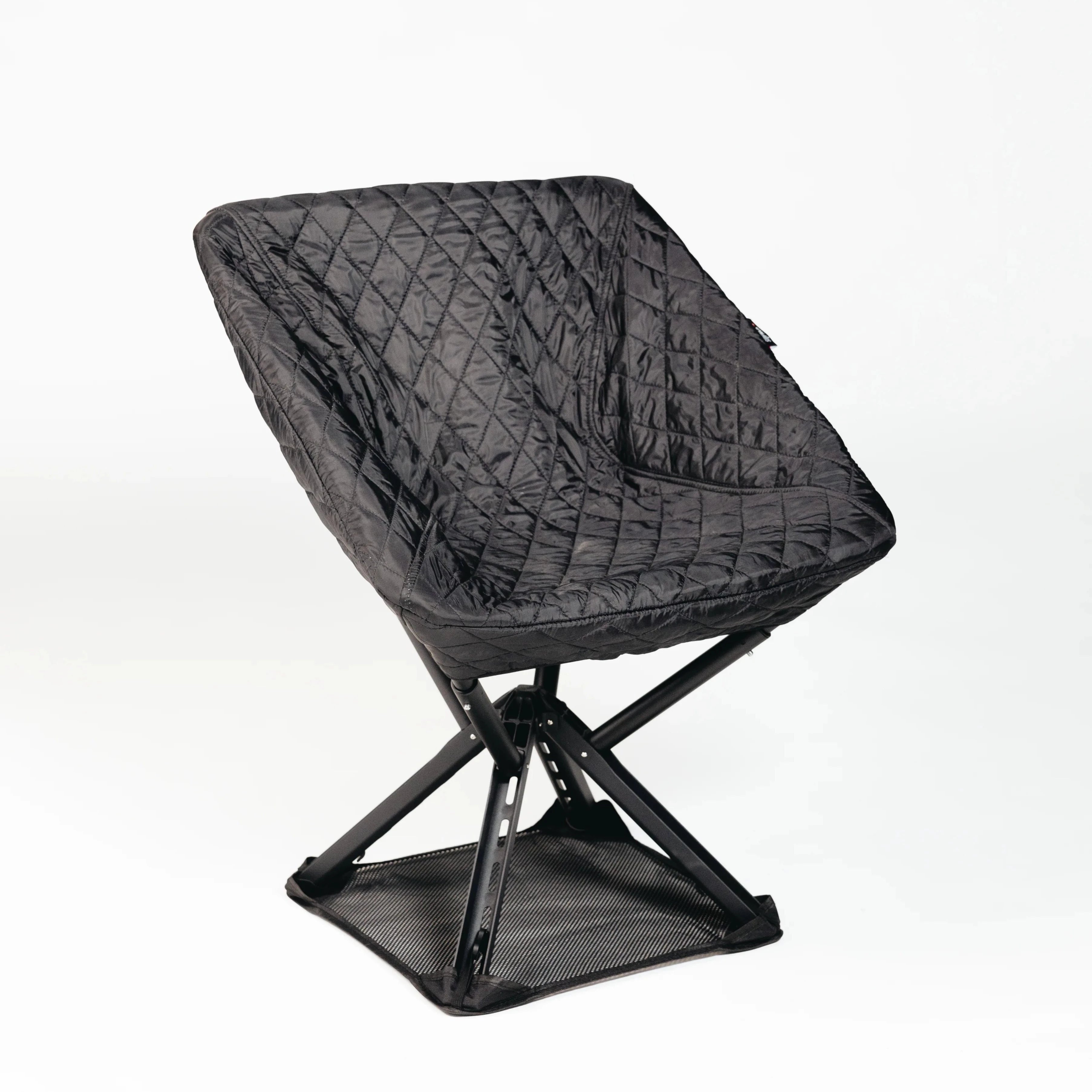
We make portable, foldable seating built around a lightweight, minimalistic and durable design, using eco-friendly materials where we can. Our Campster II is the chair many campers and travelers start with, and the full range of seats and accessories, including the Sitpack, OCTO and Airwrap lines, is built for people who carry their seating with them. Orders ship worldwide and come with a 45-day satisfaction guarantee, and select items carry a lifetime warranty.
Pair a seat you trust with the habits above and you have covered most of what keeps a portable chair steady.

We think about stability the way you probably do: you only notice it when it is missing. Nobody photographs a chair for being steady, but everybody remembers the one that tipped them into the dirt.
What we have learned from building portable seating is that a seat has to do three jobs at once. It has to be light enough that you actually bring it, small enough to pack, and steady enough that you stop thinking about it after you sit down. That is a hard balance, which is why we keep our designs minimal and our materials durable.
Our advice is simple. Choose the chair for the ground you will really sit on, not the floor of the shop. Set it up with a bit of care, sit down like a grown-up instead of a sack of potatoes, and keep it maintained so it stays the chair you bought. Do that, and a portable seat becomes the most relaxing piece of kit in your pack.
Jonas
A chair that tips can cause falls, and falls cause injuries. In the U.S., UL reported about 3,000 emergency room visits in 2017 linked to outdoor furniture, with folding and beach chairs frequently involved. Stability is also what lets you relax, since you are not bracing against a wobble.
Mostly a combination of design and use. Narrow, tall and top-heavy chairs tip more easily, and so do chairs on uneven or soft ground. Leaning back on two legs, perching on the front edge, or hanging heavy items from the backrest shifts your weight toward the edge of the chair’s footprint.
No. Stability is about resisting tipping, while ergonomics is about posture and support. Standards for chair stability generally do not address ergonomics, so a good seat should give you both: a steady base and a sitting position that suits the time you will spend in it.
Move it to the flattest, firmest patch you can find, clear stones and sticks, and press and rock the seat before you sit. Sit down slowly with your weight centered, keep bags on the ground instead of on the backrest, and re-check after a few minutes if the ground is soft.
Yes. Stability and strength tests assume a stated maximum user weight. The European standard for camping seating, for example, is based on users up to 110 kg (about 243 lb). Stay within the rated capacity on your chair, and remember that a heavy pack on your lap adds to the load.