Vogn
0
Tilmeld dig og få 10% i rabat på din ordre
Forventet levering
1-3 dage
Du vil måske også kunne lide


Dansk Firma

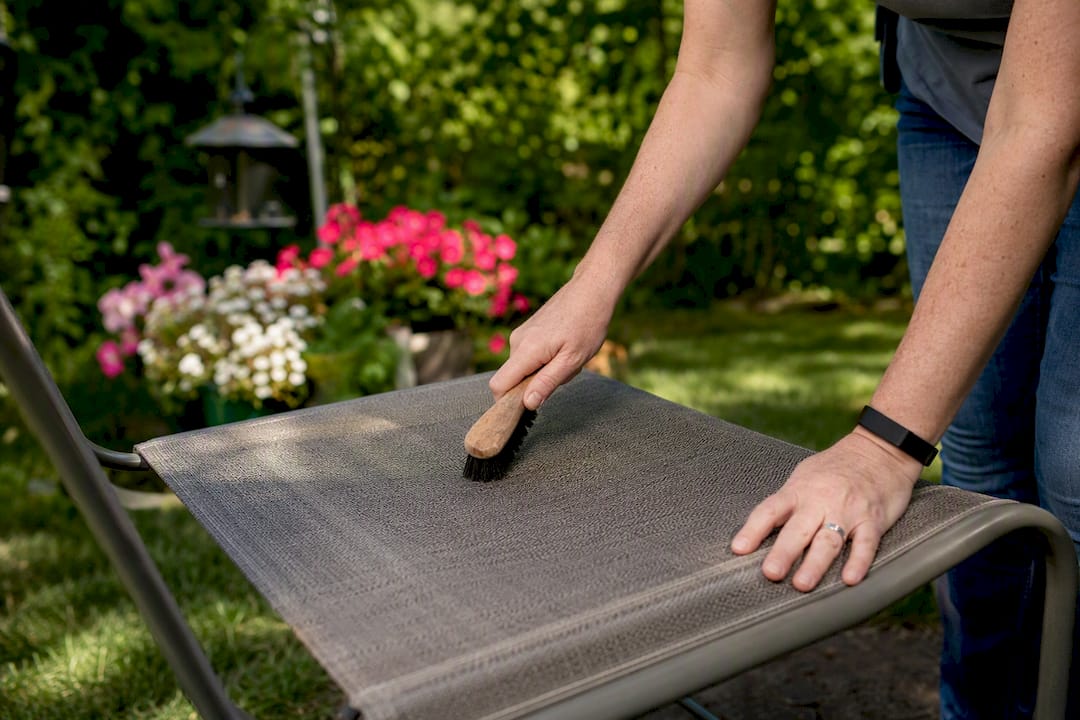
The fastest safe way to clean mesh lawn chairs is to vacuum off loose grit first, then spot-treat with a mild soap solution, rinse thoroughly, and let the chair air-dry completely before you fold it up. Save bleach for stubborn mildew, and even then, dilute it properly.
Pro Tip: Skipping the vacuum step is the number one reason mesh chairs end up with faint scratch marks after cleaning. Grit acts like sandpaper the moment you add water.
Mesh lawn chairs stay clean and mildew-free when you vacuum before washing, use the mildest effective cleaner for the job, and dry the chair completely before storage.
| Point | Details |
|---|---|
| Vacuum before wet cleaning | Removes grit that would otherwise scratch mesh fibers once water hits the fabric. |
| Match cleaner to the stain | Use dish soap or vinegar for routine grime; save oxygen or diluted chlorine bleach for severe mildew. |
| Test a hidden spot first | Apply any cleaner to an inconspicuous area and check for color change before treating the whole chair. |
| Rinse and dry completely | Full airflow drying in shade prevents mildew from returning and protects plastic trim. |
| Protect hardware from soaking | Dry folding joints and fasteners fast to prevent corrosion and preserve warranty coverage. |
Gather your supplies before you start so you’re not dripping across the yard hunting for a sponge. You want a soft-bristle brush or a car-wash glove, microfiber cloths, and a handheld vacuum with a brush attachment (a shop vac works even better for chairs with heavy pollen buildup). For solutions, keep mild dish soap, a spray bottle, distilled white vinegar, and oxygen bleach on hand, and reserve household bleach only for the rare severe mildew case.
Safety gear matters more than people expect. Consumer Reports notes that running a vacuum before washing removes the dirt that would otherwise stain outdoor fabric once it’s wet.
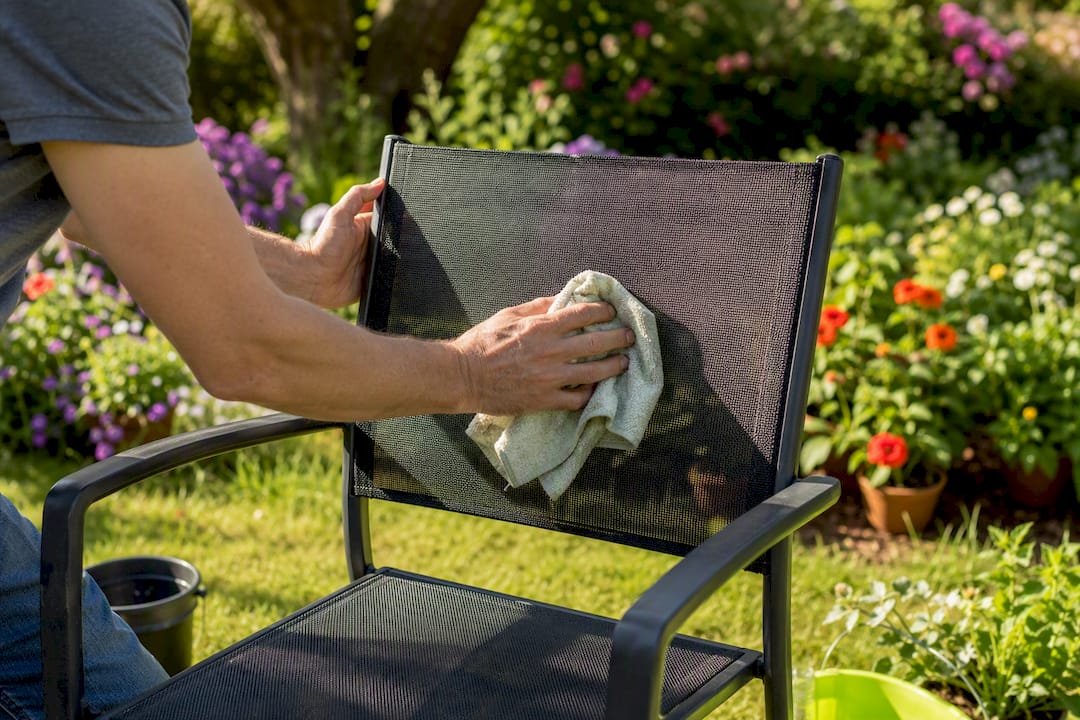
Prep the chair. Move it to a shaded, ventilated spot, then vacuum or brush off every loose crumb, leaf fragment, and dust bunny. Check the manufacturer’s care tag if one still exists, and test your cleaner on a hidden seam or the underside of the frame first.
Mix your solution. For routine grime, a few drops of dish soap per gallon of warm water handles most of the job. For tougher buildup, some manufacturer guides recommend roughly 2 ounces of dish soap per gallon of warm water for general mesh cleaning, or a stronger mix of oxygen bleach powder for plastic mesh specifically.
Give tougher stains five to ten minutes of contact time before you rinse. Then plan your drying window around several hours of open airflow, not a quick pass with a towel. CleaningBro’s step-by-step method follows this same sequence: vacuum, wipe with warm water and a small amount of mild dish soap, then air-dry fully rather than soaking the fabric.
Pro Tip: Vacuuming first isn’t just about dirt removal. It reduces the abrasion that happens when you drag a wet brush over grit trapped in the weave, which is what causes those hairline snags in mesh fibers.
A quick wipe-down every few weeks during heavy-use season keeps chairs looking decent. Plan on one real deep clean at the start and end of the outdoor season, or several times a year if the chairs see daily use.
Different stains need different approaches. Treating everything with the same bleach solution is how people end up bleaching out color they didn’t mean to touch.
Every method above ends the same way: a full rinse to clear out whatever you just applied. Leftover residue attracts new dirt and can accelerate fading.
Reach for stronger chemicals only when soap and vinegar have already failed. Oxygen bleach is generally the safer first choice over straight chlorine bleach, since it’s gentler on both fabric and nearby landscaping.
For severe, entrenched mildew on bleach-safe, non-colored mesh or hard frame surfaces, Consumer Reports outlines a controlled spot recipe: about 1 cup of bleach, 1/4 cup of mild detergent, and 1 gallon of water, applied and scrubbed before rinsing. Let stronger solutions sit no more than 5 to 15 minutes, following HGTV’s guidance for heavy mold treatment, then rinse thoroughly and direct runoff away from grass and garden beds.
Rinsing isn’t the afterthought step. It’s the one that decides whether your cleaning actually worked or just left a film that attracts new grime within a week.
Pro Tip: If you’re short on drying time before a storm rolls in, prop the chair open in a garage or covered porch with a fan running. Trapped moisture inside folded mesh is exactly how mildew gets a second life.
Skip abrasive scrub pads, undiluted solvents, unlabeled degreasers, and anything approaching high heat, since all four can fray fibers or warp plastic components permanently.
Before you commit to any cleaner, pick a hidden spot (the underside of the seat or a rear leg strap works well), apply it for the time the label recommends, then blot and let it dry fully. Look closely for color shift or fiber weakness before treating the whole chair.
Always check the chair maker’s own care tag or product page before you clean, since allowed cleaners vary by mesh type and frame finish. Vinyl mesh fabrics like Phifertex generally respond well to mild soap or vinegar solutions rather than straight chlorine bleach, which can fade the coating over repeated use.
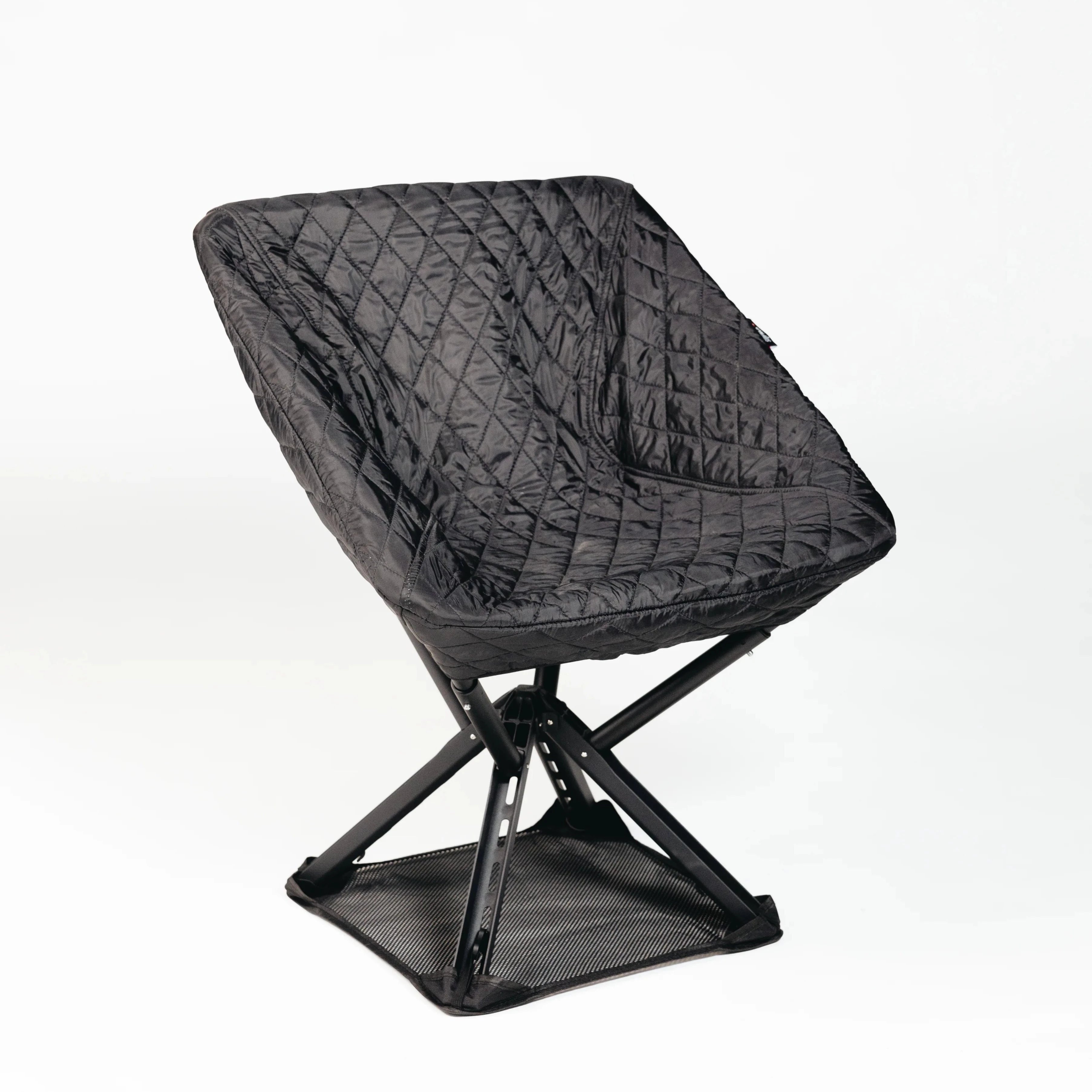
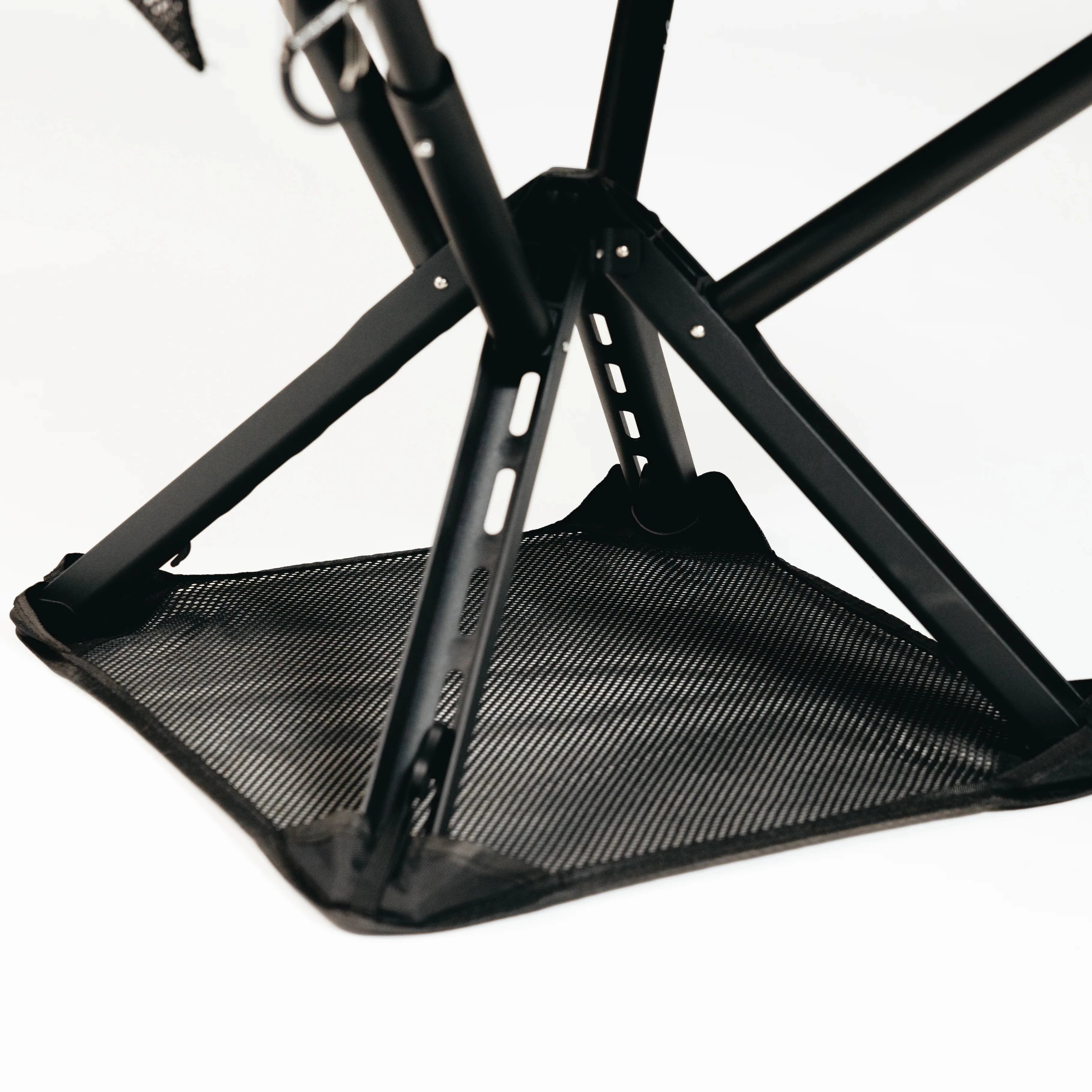
If you own a Sitpack chair, protect the folding joints and fasteners from prolonged soaking. A quick wipe beats a soak every time. Dry hardware fast with a towel after rinsing to avoid corrosion, which keeps the chair’s lifetime warranty intact and the mechanism moving smoothly for years.
Pro Tip: A cordless leaf blower on a low setting works surprisingly well for chasing water out of folding joints before you put a chair away for the season.
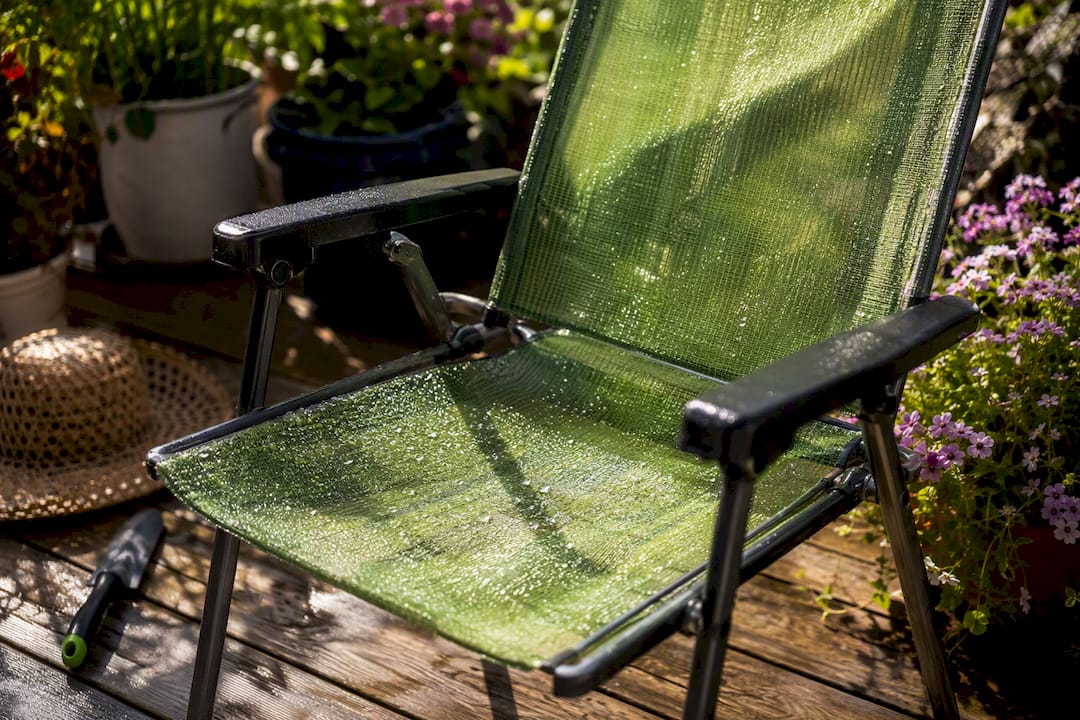
Honestly, the chairs that hold up best aren’t the ones that get some elaborate quarterly scrub. They’re the ones getting a thirty-second vacuum and a damp wipe every couple of weeks. Keep it gentle, keep it manufacturer-safe, and always store chairs bone dry.