Vogn
0
Tilmeld dig og få 10% i rabat på din ordre
Forventet levering
1-3 dage
Du vil måske også kunne lide


Dansk Firma


TL;DR:
- Convertible travel chairs transform into various seating options, balancing portability with comfort.
- They come in styles like tripod seats, sling-backs, high-back recliners, and walking stick hybrids.
- Choosing the right model depends on your specific use case, weight needs, and terrain considerations.
Most portable chairs promise the world and deliver a folding lawn chair that weighs as much as a small toddler. You’ve probably been there: stuffing a bulky seat into an already-packed bag, only to leave it in the car because it’s just not worth the hassle. Here’s the thing, though. Most travel chairs struggle to balance portability with comfort and versatility, which is exactly the gap convertible travel chairs are designed to fill. This guide breaks down what convertible travel chairs actually are, the main types available, where they shine, and how to pick the right one for your next adventure without overthinking it.
| Point | Details |
|---|---|
| Multi-use portable seating | Convertible travel chairs offer versatility for outdoor and urban adventures alike. |
| Balance weight and comfort | Lightweight designs trade some comfort for packability, so match your choice to your travel needs. |
| Check specs for your needs | Always review weight capacity, seat height, and setup procedure before purchasing. |
| Use case matters most | The ideal chair depends on where you’ll be and how you’ll use it, not just the lightest option. |
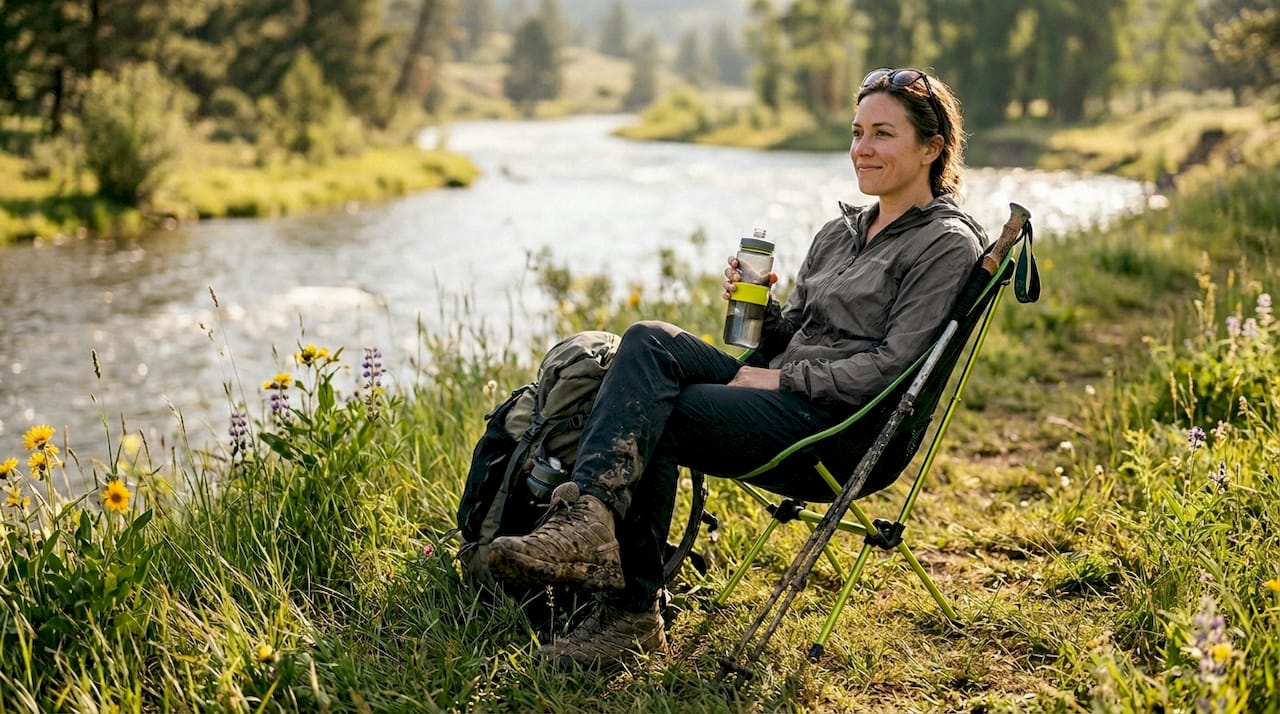
A convertible travel chair is exactly what it sounds like: a seat that morphs, folds, or transforms into more than one configuration. We’re not talking about your standard folding camp chair. These are purpose-built pieces of gear designed to pack small, weigh little, and adapt to different situations, whether you’re perched on a hillside watching a sunset or waiting in a two-hour festival line.
The defining characteristic is versatility. Some models shift from an upright chair to a reclined lounger. Others collapse from a walking stick into a tripod seat in seconds. The best ones feel like they were engineered by someone who actually travels, not just someone who designs chairs in an office.
Here’s what most convertible travel chairs have in common:
Popular styles include tripod seats, sling-back chairs, high-back models, and hybrid walking stick designs. Each has its own personality, and choosing between them really comes down to where you plan to park your posterior most often.
Pro Tip: If you’re new to convertible chairs, start by thinking about your most common use case. A music festival calls for a very different chair than a multi-day backpacking trip. Nail down your primary scenario first, then filter by weight and packed size. For more ideas on matching seating to your environment, check out these outdoor seating tips.
Not all convertible travel chairs are built the same, and the differences go well beyond color choices. Let’s break down the main categories so you know what you’re actually comparing.
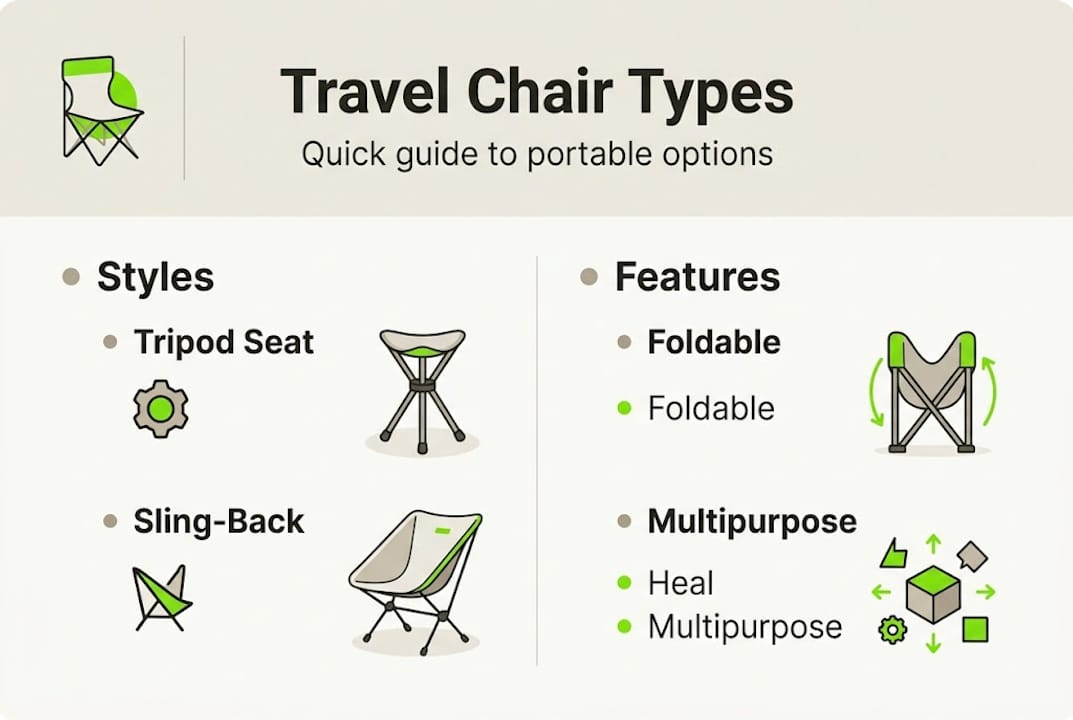
1. Tripod seats These are the minimalist’s dream. Three legs, a small seat, and almost nothing else. They’re incredibly light and pack down to the size of an umbrella. The trade-off? No back support. Great for short breaks on a trail, less ideal for a three-hour outdoor concert.
2. Sling-back chairs Think of these as the sweet spot between comfort and portability. A fabric sling stretched across a lightweight aluminum or carbon frame gives you actual back support without piling on the weight. The REI Flexlite Air is a well-known example in this category.

3. High-back recliners These prioritize comfort and often include adjustable recline positions. They weigh a bit more but are worth it for base camp setups or festival camping where you’re not hiking in with everything on your back.
4. Walking stick hybrids This is where things get genuinely clever. The
Here’s a quick comparison to help you visualize the differences:
| Type | Avg. weight | Back support | Best for |
|---|---|---|---|
| Tripod seat | 0.5 to 1 kg | None | Trail breaks, day hikes |
| Sling-back chair | 1 to 1.5 kg | Yes | Backpacking, festivals |
| High-back recliner | 1.5 to 2.5 kg | Full | Base camp, car camping |
| Walking stick hybrid | ~1 kg | None | Hiking, urban touring |
Pro Tip: Pay attention to seat height when comparing models. A seat that’s too low makes getting up feel like a workout, especially after a long day on your feet. For a deeper look at what separates good outdoor seating from frustrating gear, these best outdoor seating tips are worth bookmarking.
Convertible travel chairs earn their keep in a surprising range of situations. Once you own one, you start spotting opportunities to use it everywhere.
Outdoor scenarios where they shine:
Indoor and travel scenarios:
That said, convertible chairs aren’t perfect for every situation. Soft sand can swallow thin legs. Uneven rocky terrain challenges stability. And if you’re dealing with mobility concerns or older joints, a very low seat can become a real problem.
“For urban adventures, prioritize higher seats around 14 inches to make sitting and standing easier throughout the day.” This insight from Helinox chair testing applies whether you’re exploring a city or navigating a crowded event space.
The honest truth is that convertible chairs are most useful when you’re moving a lot and sitting occasionally, not when you’re setting up a permanent base. For extended lounging, a heavier chair with more padding will always win. But for the traveler who values mobility above all else, these chairs are a genuine game-changer. Before you buy, review this portable seating buying guide to match your needs with the right features.
Choosing a convertible travel chair doesn’t need to be complicated, but it does require a bit of honest self-assessment. Here’s a practical framework to cut through the noise.
Step 1: Define your primary use case Backpacking demands the lightest possible option. Festival-going rewards comfort. City travel benefits from compact size and quick setup. Pick your dominant scenario and let it guide every other decision.
Step 2: Set a weight budget Ultralight models around 1 lb or 454 g excel in comfort and portability, with durability often coming from reinforced X-frames. If you’re not counting every gram, you can afford a bit more weight in exchange for comfort.
Step 3: Check the packed dimensions A chair that doesn’t fit in your bag is just a chair you leave at home. Measure your pack’s largest compartment or side pocket before shopping.
Step 4: Verify weight capacity This one’s non-negotiable. Always check the manufacturer’s listed capacity and give yourself a comfortable margin.
Step 5: Assess ease of assembly Some chairs set up in ten seconds. Others require threading poles through sleeves while your hands are cold and your patience is thin. Read reviews specifically for setup experience.
Here’s a reference table for popular convertible chair categories:
| Category | Packed size | Weight | Capacity |
|---|---|---|---|
| Ultralight backpacking | 33 x 13 cm | 450 to 700 g | 120 to 145 kg |
| Mid-range sling | 38 x 15 cm | 900 g to 1.2 kg | 145 to 160 kg |
| High-back comfort | 45 x 18 cm | 1.5 to 2 kg | 145 to 160 kg |
Reputable brands and stable frames consistently top reviewer recommendations, even without formal benchmark testing. Trust user feedback from people who’ve actually used the chair in the conditions you’re planning for. A five-star review from a car camper means something different to a backpacker. Dig into the seating comfort guide to fine-tune your decision with real-world criteria.
Here’s something the gear industry doesn’t always tell you: lighter isn’t automatically better. I’ve seen experienced outdoor travelers obsess over shaving 200 grams off their chair weight, only to spend a weekend shifting uncomfortably on a seat that’s too low and too narrow for real-world use.
The truth is that comfort, seat height, and stability often matter more than raw weight, especially for trips longer than a single day. Urban explorers and older travelers in particular benefit from a higher seat that doesn’t require a small act of gymnastics to get out of. A chair you actually enjoy sitting in gets used. A chair you tolerate gets left behind.
Real-world testing consistently reveals preferences that spec sheets can’t predict. Someone who loves a particular ultralight chair on a weekend hike might find it miserable at a three-day festival seating event where they’re sitting for hours at a stretch. Long-term versatility almost always outperforms pure minimalism for most trips. Buy for your actual life, not for the lightest possible version of it.
If this guide has you rethinking your current setup, you’re in the right place. At Sitpack, we design portable seating specifically for people who move through the world and refuse to sacrifice comfort along the way. Whether you’re heading into the backcountry, navigating a packed festival, or simply want a seat that fits in your everyday bag, we’ve built something for that.
Our range includes compact, lightweight chairs built with durable materials and backed by a 45-day satisfaction guarantee, because gear should work as hard as you do. If you’re still weighing your options, the seating buying guide walks you through exactly what to look for based on your travel style. Your next adventure deserves a seat at the table.
Most convertible travel chairs support between 120 and 265 pounds (54 to 120 kg), but always verify the specific model’s listed capacity before purchasing.
Absolutely. Ultralight models around 1 lb or 454 g are a favorite among backpackers who need to keep their total pack weight and bulk to a minimum.
Convertible chairs offer far more flexibility, packing down smaller and often doubling as walking sticks or loungers, which standard folding chairs simply can’t do.
Ultralight models trade comfort for weight savings, which can mean a narrower seat, less padding, and lower seat height compared to heavier options.
Choose models with reinforced frames and wider feet to reduce sinking and improve stability on soft ground or uneven surfaces.