Vogn
0
Tilmeld dig og få 10% i rabat på din ordre
Forventet levering
1-3 dage
Du vil måske også kunne lide


Dansk Firma

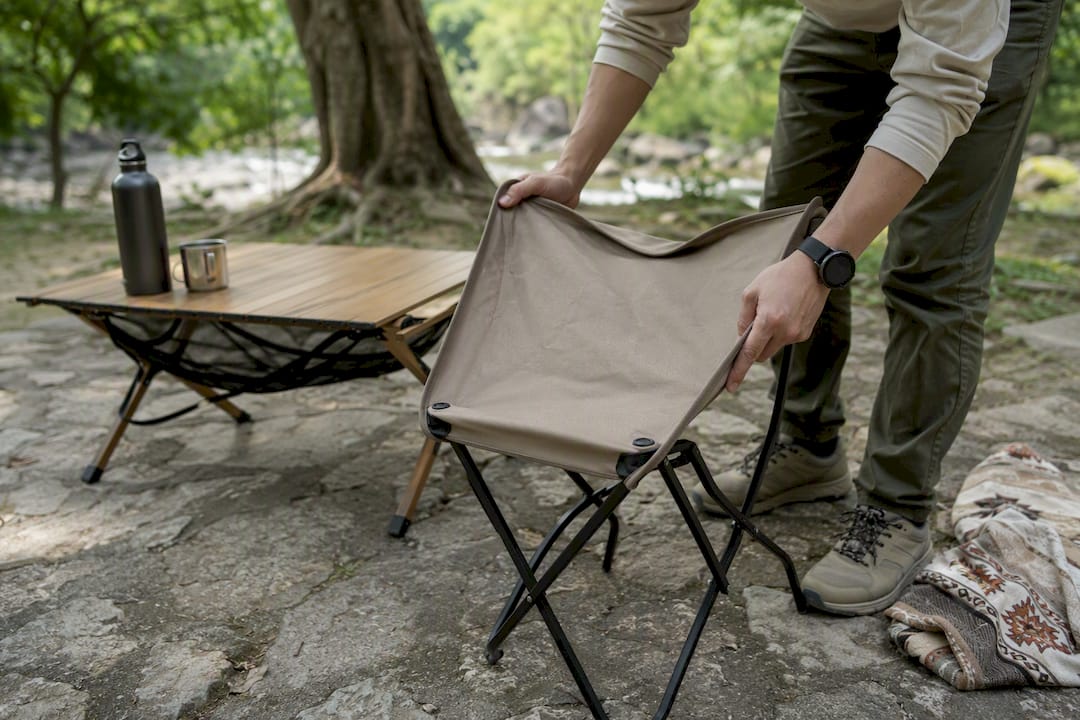
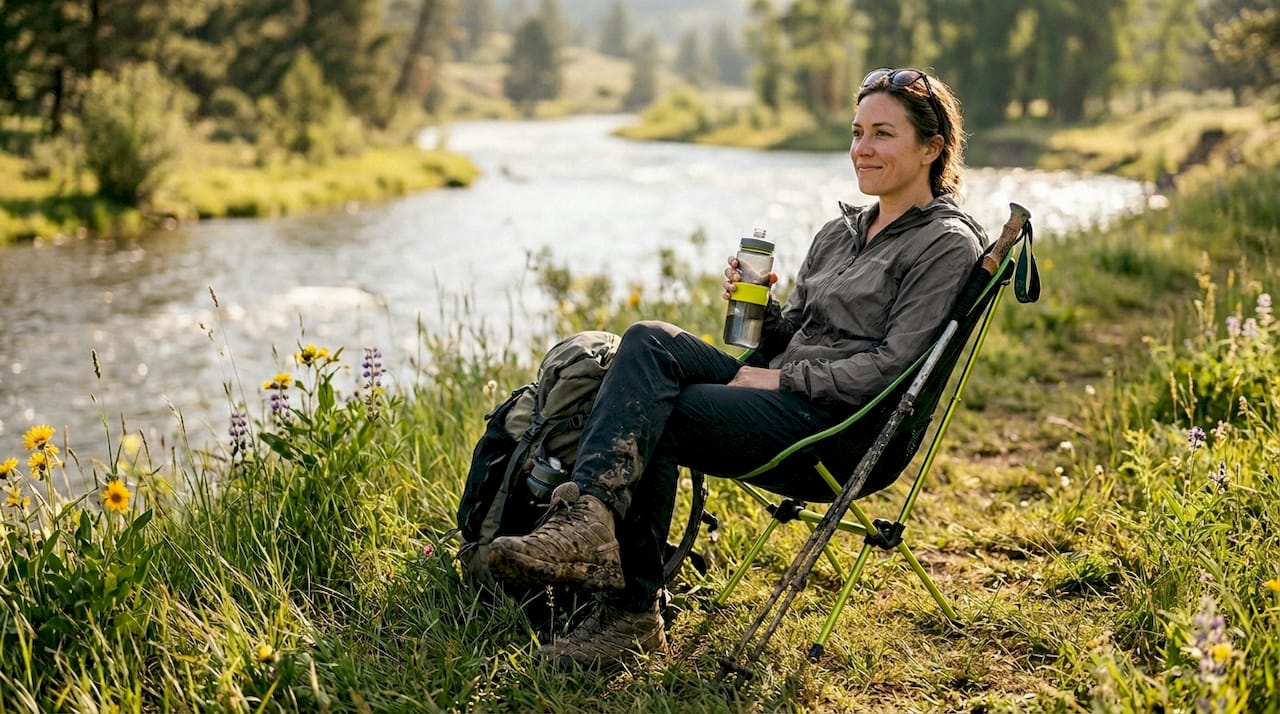
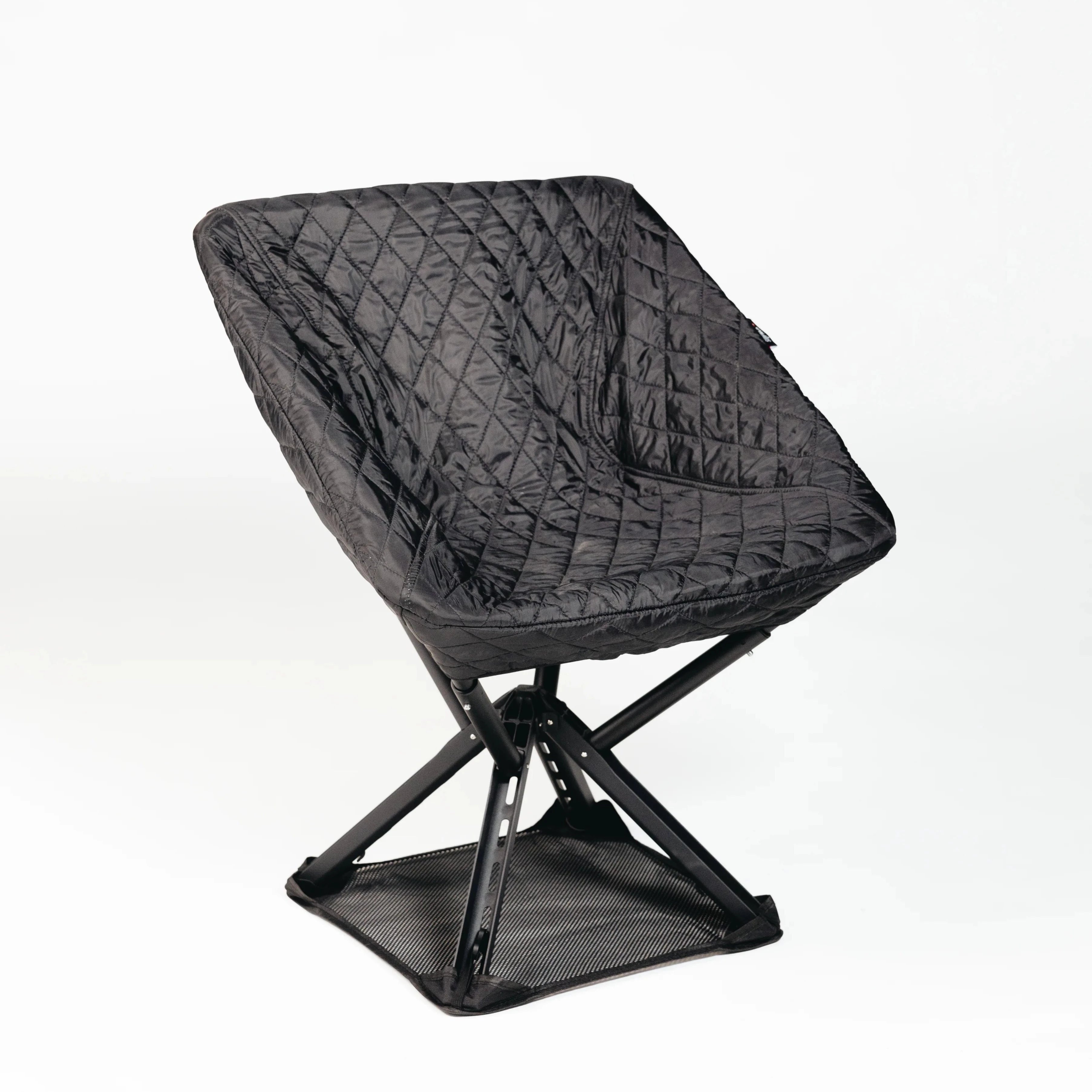
The minimal kit for comfortable outdoor dining is one dining-height chair (18 to 20 inches at the seat) paired with a stable dining-height table, matched closely in seat height. Everything else is optional. What matters is stability on soft ground, packability that fits your transport, and a chair rated at least 100 pounds above your body weight. Get those three right and the rest, as Jonas at Sitpack likes to say, is just garnish.
TL;DR:
- Use a chair rated at least 100 pounds above your weight and matching the table height within two inches to avoid discomfort during outdoor meals.
- Opt for a roll-top aluminum table for compactness and weather resistance, while avoiding MDF options that swell when wet.
- Test chair stability on uneven ground by rocking gently and check that seat height remains consistent across different terrains to prevent postural strain.
- Backpackers should aim for gear totals under 3 pounds, whereas car and touring setups can carry heavier, more comfortable options up to 25 pounds.
- Buying furniture designed to work together, such as Sitpack’s matching foldable chairs and tables, offers better fit, durability, and ease of setup.
Forget browsing endless product pages. If you’re building a setup for outdoor meals, whether at a campsite, a trailhead pullout, or a park bench that’s seen better days, you need exactly three categories of gear.
That’s the whole list. Everything past this point in the article is about fine-tuning which version of each piece fits your specific trip.
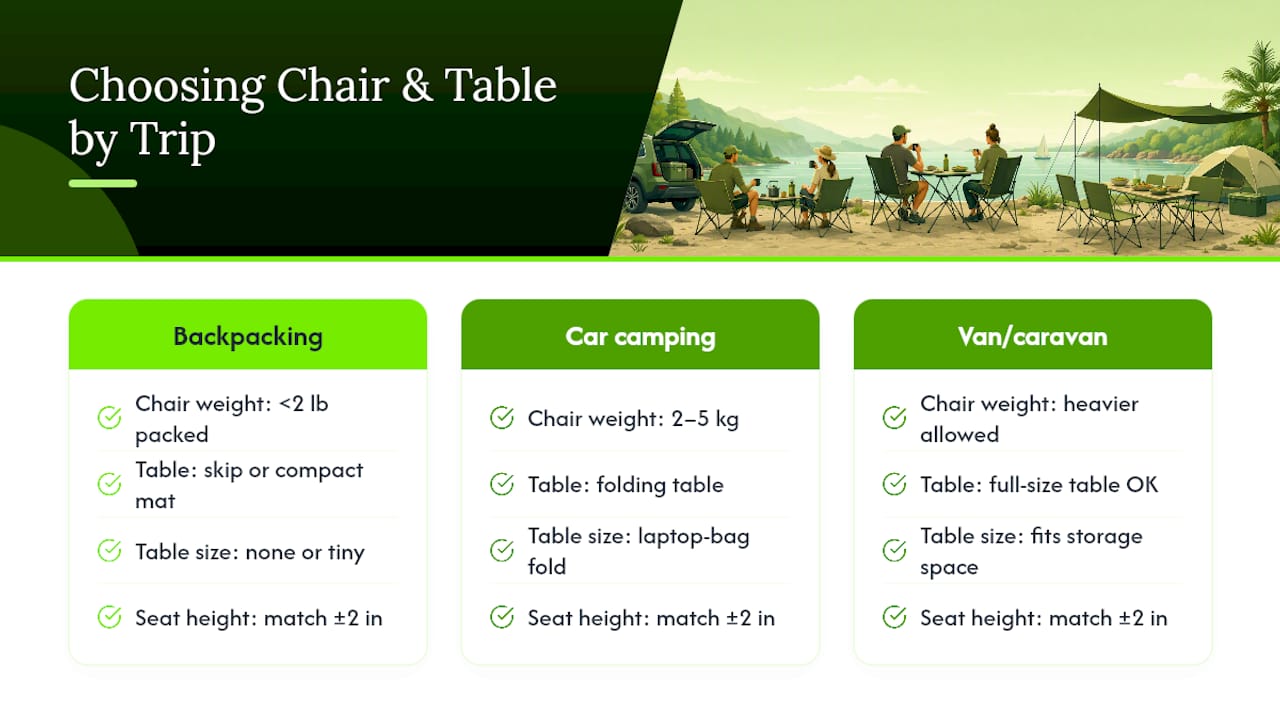
Your transport method should decide your gear before comfort preferences do. A backpacker hauling everything on their back has different gear considerations than someone loading a vehicle for a weekend trip.
For backpacking or long urban walks to a picnic spot, target a packed weight under 2 pounds per chair and a table you can skip entirely, or swap for a compact mat. Car camping opens up more room. You can afford a chair in the 2 to 5 kilogram range and a table that folds to roughly the size of a laptop bag. Van or caravan touring gives you the most flexibility, so heavier, more comfortable chairs and full-size tables are fair game as long as they fit your storage.
Once you know your transport tier, work backward from the table. Pick the table height first, then choose chairs within two inches of that seat height. Mismatched heights cause posture strain within about two hours, which turns a relaxed dinner into a slouching contest nobody wins. Rated capacity matters here too. A chair built for 250 pounds will feel sturdier and last longer than one squeaking under load, even if both technically hold your weight.
Not every chair is built for the same job, and treating them as interchangeable is how people end up hauling nine pounds of aluminum on a trip that called for two.
Whichever family you pick, favor frames with replaceable parts. A chair you can repair beats one you replace every summer.
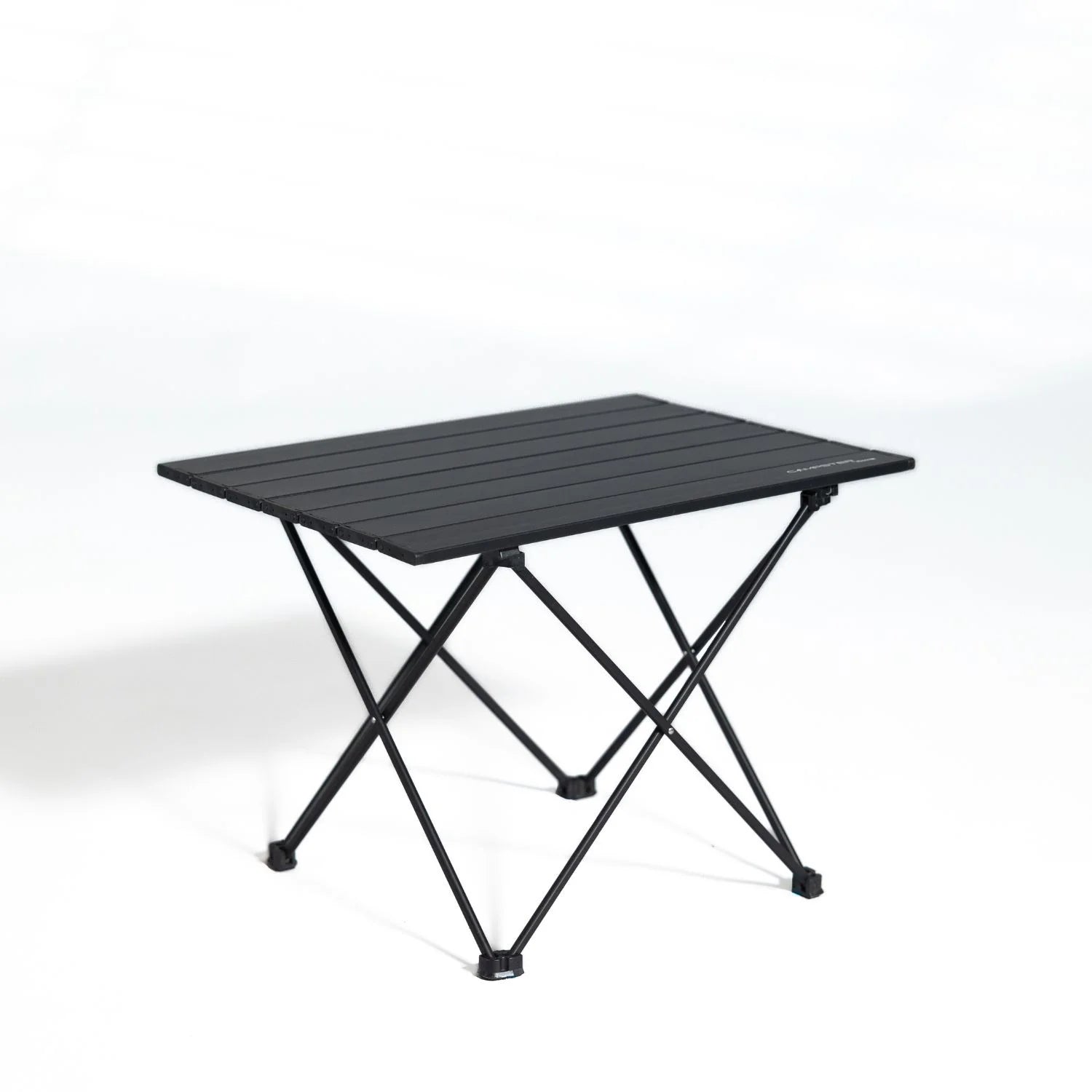
The table you choose affects packing, food prep, and how much water damage you’ll be dealing with after the first rainy trip.
Size your table to your group: a two-person table needs roughly 24 by 24 inches, four people want closer to 4 feet of length, and six or more usually means two tables pushed together rather than one oversized slab that won’t fit in the trunk.
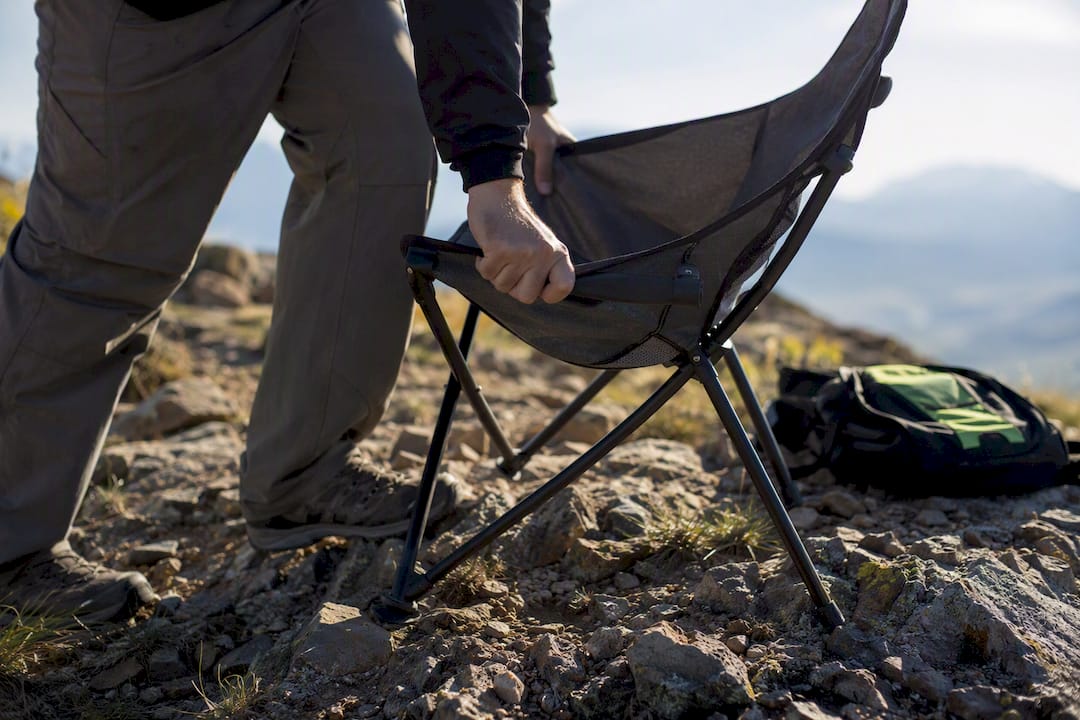
A chair that felt solid in the store can wobble the moment it hits sand, grass, or a slightly sloped patch of gravel. Run a few quick checks the moment you set up.
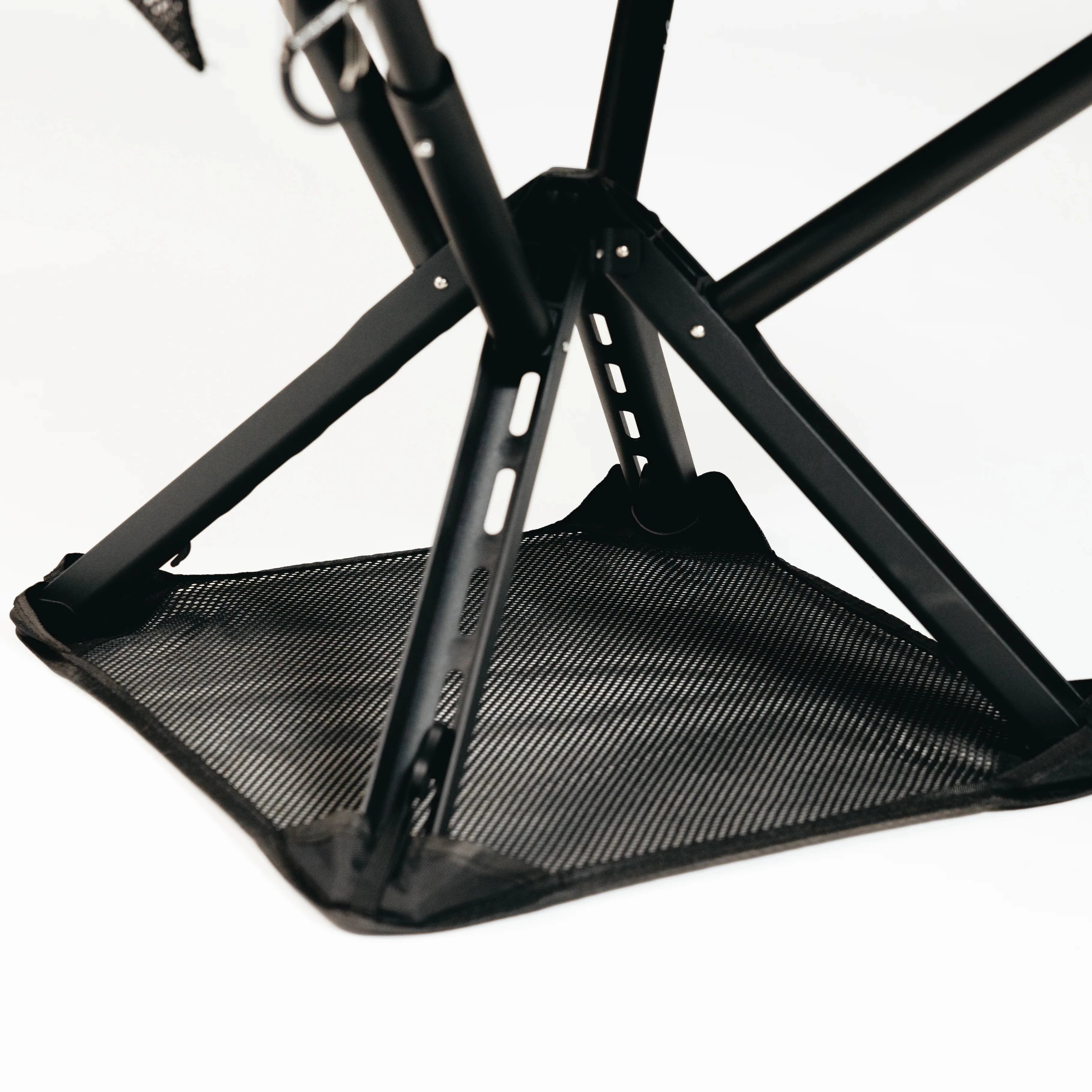
Push down on each armrest to check for flex, then bounce gently in the seat to feel for give in the frame. On soft ground, watch the feet for the first minute. Legs that sink unevenly will throw off your table height fast. For sandy or muddy sites, sand plates or wider feet distribute weight and stop that sinking. Leveling legs handle sloped ground, and for windy spots, anchor the table down or weigh it with a full water bottle.
Stick to the seat height range of 18 to 20 inches for dining, and keep every chair at the table within two inches of that mark. As for capacity, the rule of thumb is a chair rated around 100 pounds above your weight and a table rated for three to five times your intended load, since dishes, elbows, and the occasional foot on the crossbar all add up.
Pro Tip: Test stability on the worst patch of ground at your site, not the flattest. If your setup holds there, it’ll hold anywhere else you might pitch camp.
Packed dimensions and carry weight deserve as much planning as comfort does, especially once you’re loading a car instead of a backpack.
Backpackers should aim for a combined chair and table weight under 3 pounds. Car campers have more room to work with, up to 15 pounds per person is reasonable. Touring setups can go heavier, but anything over 25 pounds becomes a two-person lift, which changes how you load and unload at every stop.
Nest your gear: chairs inside table bags, or stools stacked inside a larger tote, to save space and stop rattling. If you’re working with a hatchback, stick to two mid-range chairs and one roll-top table. A truck bed gives you room for a touring chair or two. A van comfortably fits a full dining set plus the accessory pieces. For anyone packing multiple textile items into limited space, a compression bag can shave real volume off blankets and cushions riding alongside the furniture.
A predictable order for setup and teardown saves time and stops small parts from getting left behind.
Designing a chair that folds small and still sits at proper dining height is harder than it sounds, and it’s the problem Jonas has spent years solving at Sitpack. Seat-to-table ergonomics isn’t a nice-to-have. Get the height wrong and even the most beautifully engineered chair becomes a chore to sit in for an hour.
That focus on durability and correct height is why Sitpack builds around lightweight frames, eco-friendly materials, and parts meant to outlast a single season. The company backs that with a 45-day satisfaction guarantee and lifetime warranties on select products, plus international shipping for readers outside any one market. The anchor-piece method in this guide, chair first, table matched to it, grew directly out of testing that logic on Sitpack’s own product line before writing about it.
— Jonas
If you’ve read this far, you already know the fix for wobbly, mismatched outdoor dining gear: buy pieces designed to work together from the start. Sitpack builds foldable chairs and matching accessories around exactly the seat-to-table logic covered above, so you’re not guessing whether a $30 chair from a big-box store will sit at the right height next to your table.
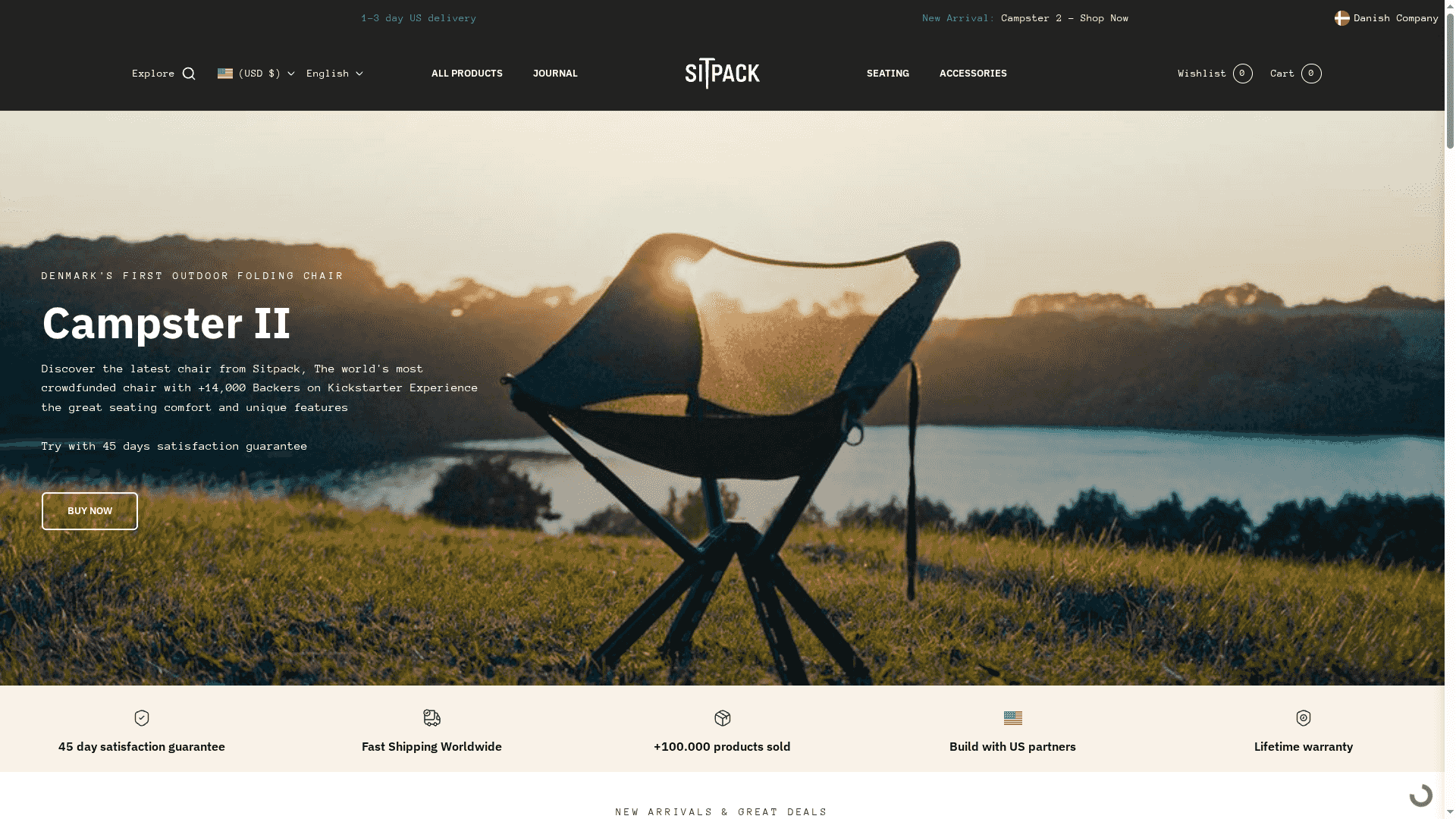
Every purchase comes with a 45-day satisfaction guarantee and lifetime warranties on select products, so testing a chair at your own dinner table before committing to a full camping season is a low-risk decision. International shipping means the fit works whether you’re outfitting a van in Colorado or a balcony in Copenhagen. Visit the Sitpack landing page to browse dining-height chairs and see full specs, then check them against the height and capacity rules in this guide before you add anything to your cart.
The height and sizing guidance in this piece draws on REI’s expert advice on choosing a camp chair, which breaks down end use, sizing, and materials. Table trade-offs, including roll-top packing efficiency, come from Outcamp’s 2026 campers’ guide. Seat-to-table compatibility guidance comes from Camper Loadouts, and ultralight chair weight benchmarks from CleverHiker. Readers wanting product-specific detail can also check Sitpack’s own outdoor seating buying guide and its tips for choosing camp chairs.