Vogn
0
Tilmeld dig og få 10% i rabat på din ordre
Forventet levering
1-3 dage
Du vil måske også kunne lide


Dansk Firma

TL;DR:
- Telescopic folding seats use sliding, height-locking tubular segments for compactness and adjustable comfort.
- They offer quick setup, high portability, and are ideal for backpacking and outdoor activities.
- Stability and ergonomic comfort vary; wider feet improve stability on uneven ground, and regular maintenance extends lifespan.
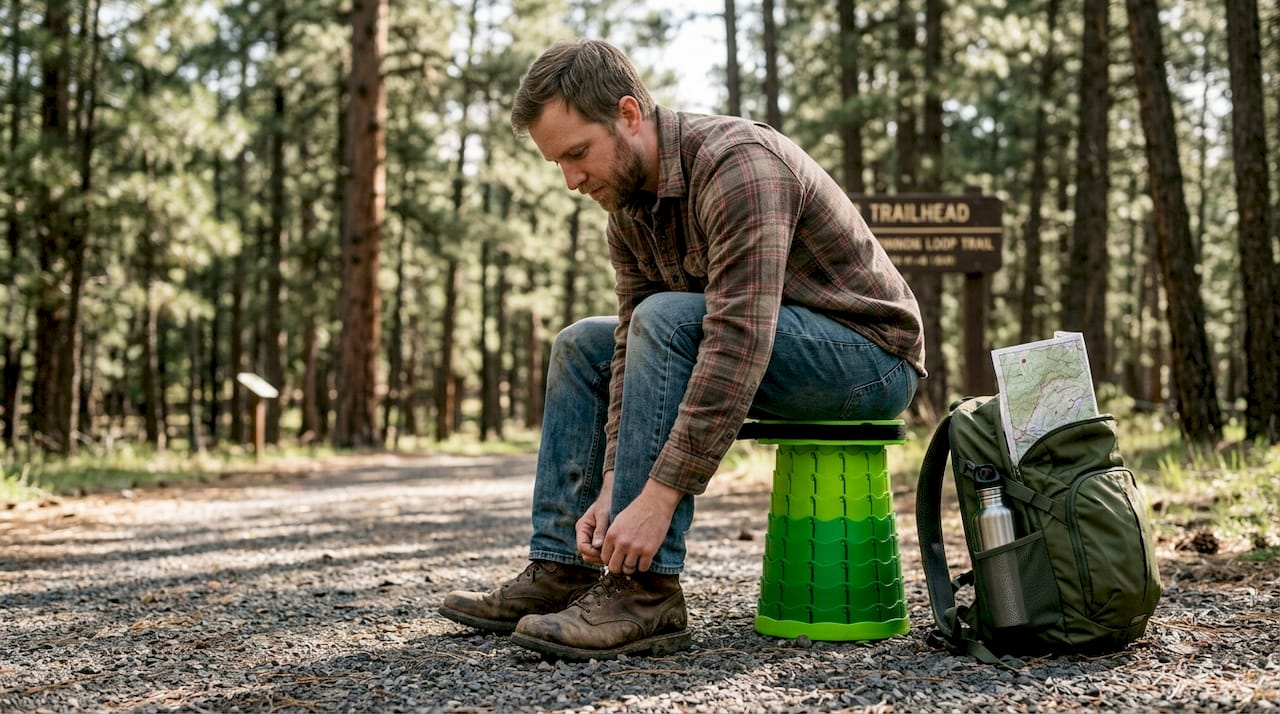
Most outdoor enthusiasts assume all compact stools fold the same way. You grab it, it collapses, you shove it in your pack, done. But there’s a genuinely important distinction that most campers, festival-goers, and trail hikers walk right past: telescopic folding is its own beast entirely. Unlike basic hinged or accordion-style folding, telescopic folding uses a sliding, height-adjustable mechanism that changes everything about portability, setup speed, and on-site comfort. If you’ve ever wrestled with a seat that was either too tall, too wobbly, or just too bulky to bother with, this article is for you.
| Point | Details |
|---|---|
| Telescopic vs. traditional folding | Telescopic folding uses sliding segments for compactness and adjustable height unlike traditional hinged folding seats. |
| Setup and portability | These seats offer quick setup, secure locking, and easy packing for travel or outdoor use. |
| Critical tradeoffs | While highly packable, telescopic folding stools may need careful placement for stability, especially on uneven ground. |
| Choosing the right seat | Consider your activity, terrain, seat stability, and comfort needs when selecting a telescopic folding model. |
With the need for convenient seating on the rise, understanding the real mechanics behind telescopic folding is essential. Let’s clear up the confusion once and for all.
Telescopic folding refers to a design where a column or leg is made up of multiple tubular segments that slide into one another, much like a retractable telescope. You pull them out to extend, lock them at your chosen height, and the seat is ready. To pack up, you reverse the process, and the whole column collapses into a fraction of its extended length.
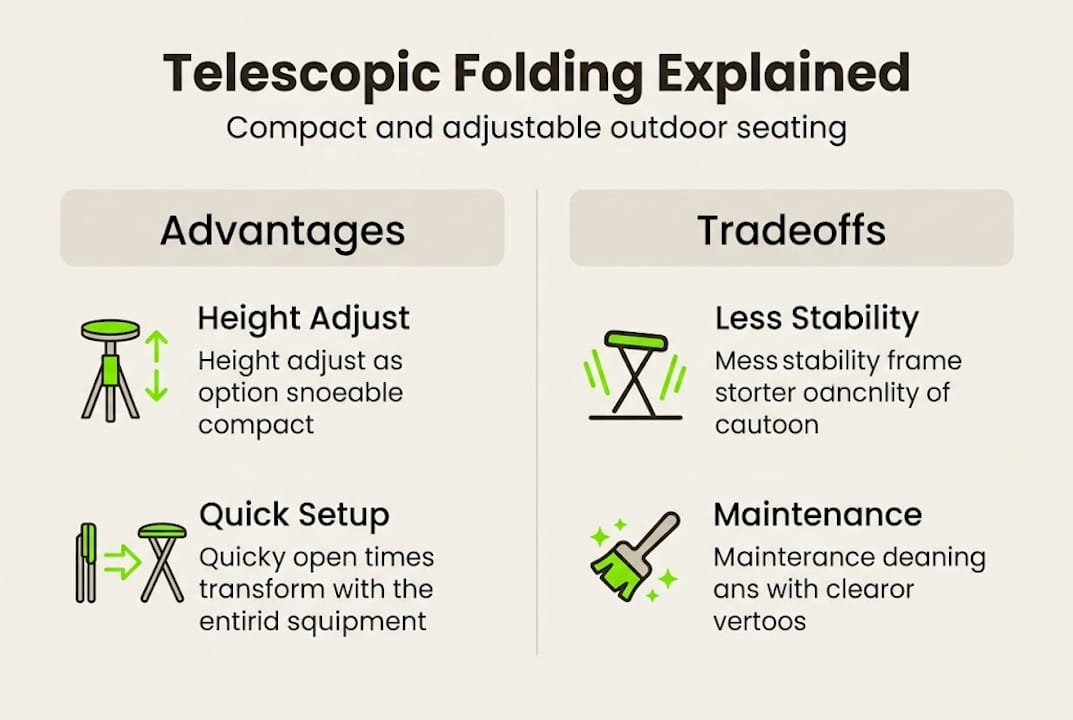
As the Amtech DIY outdoor stool demonstrates, telescopic stools use sliding, height-adjustable columns with segments that lock at selected heights. That locking action is the key detail. It’s what makes telescopic seating both height-flexible and secure enough to actually trust with your bodyweight after a long hike.
Now, contrast that with other folding types you’ve probably encountered:
Here’s the thing: camping gear marketing routinely blurs the line between telescopic and accordion-style folding, treating them as interchangeable terms. They’re not. The difference in real-world use is significant, especially when you’re adjusting to rough terrain or trying to shove your seat into an overstuffed backpack.
“True telescopic folding gives you precise height control and a compact packed size, which is something accordion and hinged designs simply can’t match in the same form factor.”
Here’s a quick comparison to keep things straight:
| Folding Type | Height Adjustable | Packed Size | Setup Speed | Best For |
|---|---|---|---|---|
| Telescopic | Yes | Very compact | Fast | Backpacking, travel |
| Hinged/X-frame | No | Medium | Fast | Car camping |
| Accordion-style | Sometimes | Medium | Moderate | Festivals, parks |
| Flat-pack | No | Very flat | Slow | Picnics, patios |
Understanding collapsible furniture explained in this context really highlights why telescopic design stands apart. It isn’t just about folding smaller. It’s about folding smarter, giving you control over height, stability, and pack size in a way other mechanisms just don’t.
Now that you know what telescopic folding is, let’s see how these seats perform in real outdoor situations.
Setting one up is refreshingly intuitive once you’ve done it once or twice. The process typically goes like this:
Understanding why use folding stools for outdoor adventures becomes even clearer once you’ve actually run through this setup sequence. It takes about 15 seconds when you know what you’re doing. Compare that to assembling a traditional camp chair with poles and sleeves, and you’ll appreciate the speed difference immediately.
Portability specs matter a lot when choosing a telescopic seat. Here’s what typical models look like in terms of real-world numbers:
| Spec | Typical Range | Ideal Backpacking Target |
|---|---|---|
| Packed length | 10–16 inches | Under 14 inches |
| Packed weight | 1.5–3.5 lbs | Under 2.5 lbs |
| Max height | 16–22 inches | 18+ inches |
| Load capacity | 220–330 lbs | 250+ lbs |
Pro Tip: Always extend and lock a telescopic seat at home before your first trip. This helps you identify any stiff segments, get familiar with the release mechanism, and spot any defects while you can still return or exchange the item.
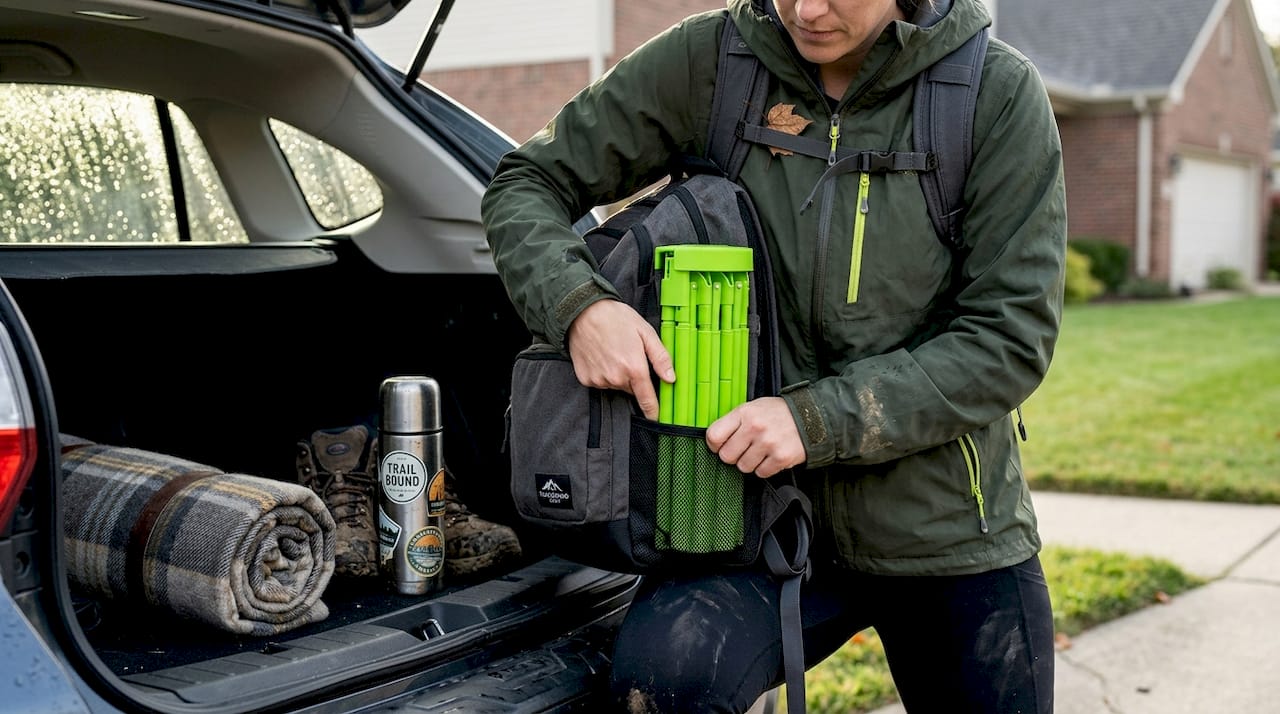
One often-overlooked aspect of portability is how the seat carries when folded. Telescopic stools typically pack into a cylinder or slim rod shape, which slots vertically into a backpack side pocket or straps easily to the outside of a pack. That matters when you’re prioritizing stability for comfort during long walks between sites.
Understanding the mechanics leads to knowing when and why telescopic folding shines, or falls short.
Let’s be real about both sides of the coin, because no piece of gear is perfect for every situation.
The benefits are genuinely impressive:
But there are honest tradeoffs worth knowing:
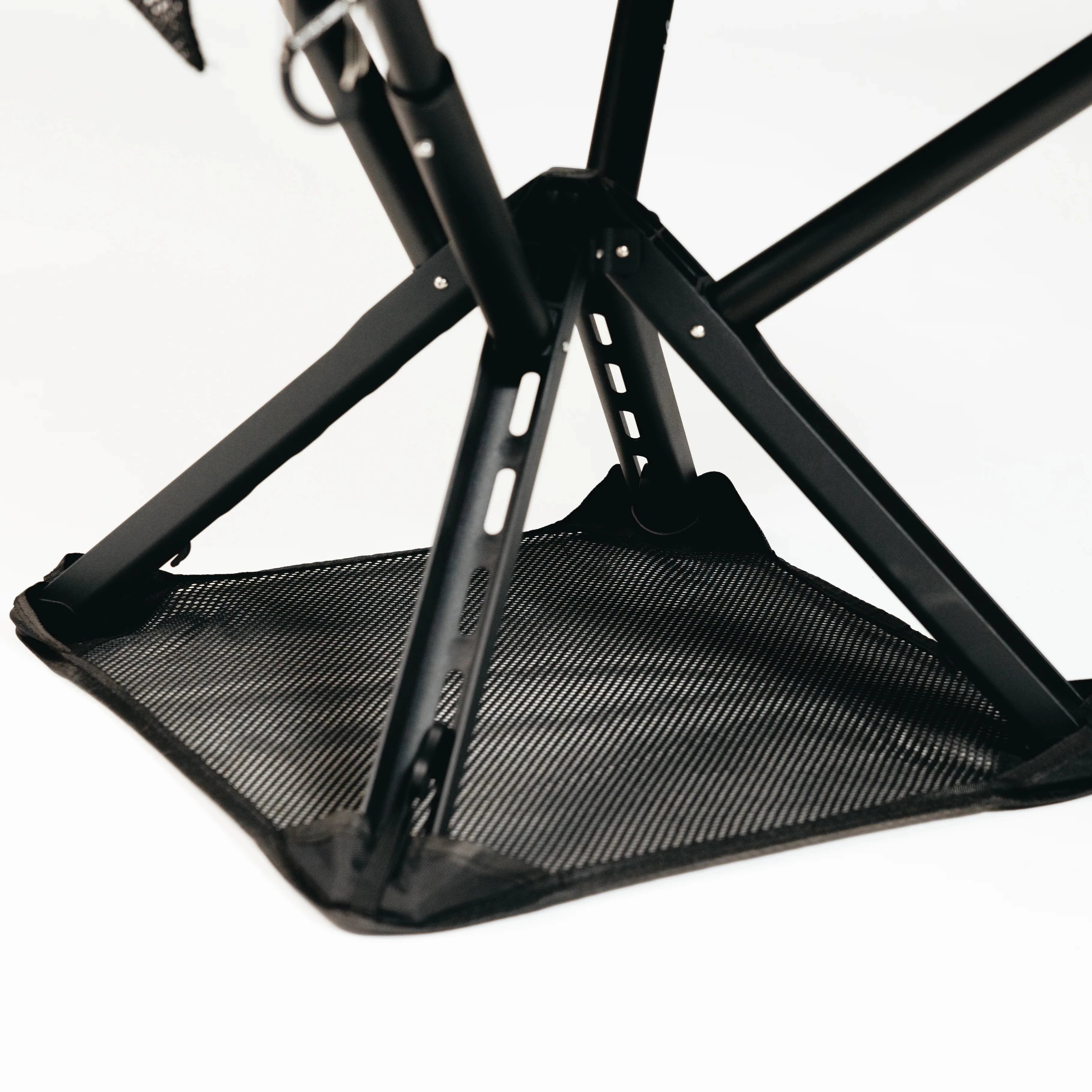
Pro Tip: Look for telescopic stools with wider tripod feet or rubberized tips. Models with wider feet or careful placement perform significantly better on soft ground, and the rubber tips prevent slipping on hard surfaces like concrete or tile.
The collapsible chair benefits are real and substantial, but being honest about the limitations helps you pick the right seat for the right job. Seat material also matters more than people realize. Ripstop nylon and waterproof canvas handle weather exposure and extended use far better than basic polyester weaves, especially in wet or muddy conditions.
Quick pros and cons at a glance:
Pros: Ultracompact packing, height control, fast setup, wide activity range, durable material options.
Cons: Lower stability on soft ground, ergonomic limitations for long sits, lock mechanism wear over time.
With clear benefits and tradeoffs in mind, making the right gear choice becomes much easier.
Use this framework to zero in on the best option for your specific outdoor lifestyle.
Step 1: Define your primary surface type. If you mostly camp at established sites with packed dirt or grass, a standard tripod telescopic stool works beautifully. If you’re frequently on soft or sandy ground, prioritize models with wider base feet. As noted in the Amtech DIY product details, telescopic stools on firm surfaces perform best, with wider feet recommended for softer terrain.
Step 2: Decide between stool and chair. Here’s a practical breakdown:
| Situation | Best Choice |
|---|---|
| Day hiking, festivals, transit | Telescopic stool (no back support needed) |
| Extended camping, fishing trips | Telescopic chair with backrest |
| Ultralight backpacking | Minimal telescopic stool under 2 lbs |
| Mixed use with vehicle access | Full telescopic camp chair |
Step 3: Check these key specs before buying:
Step 4: Consider ergonomics based on trip length. For anything under two hours, a backless stool is perfectly comfortable for most people. Beyond that, a seat with even minimal lumbar support changes the experience dramatically. The folding stools for outdoor use discussion gets more nuanced the longer your adventures run.
Step 5: Factor in maintenance. Telescopic seats need occasional cleaning of their sliding segments. Dirt and grit in the locking mechanisms accelerate wear. A quick rinse and dry after muddy outings significantly extends a seat’s lifespan. Some higher-end models include replacement lock mechanisms, which is worth looking for if you’re buying for serious long-term use.
Pro Tip: Before purchasing at an outdoor gear store, always fully extend and retract the telescopic mechanism in the aisle. A quality lock should click firmly and require deliberate pressure to release. If it feels loose or the segments wobble when extended, pass on that model regardless of how good the price looks.
Here’s something I’ve noticed that most gear guides gloss over: people consistently underestimate how much the wrong seat slows them down, not just in terms of physical weight, but in decision fatigue and setup friction.
I’ve seen hikers abandon a perfectly functional campsite because their chair took too long to assemble in fading daylight. I’ve watched festival crowds leave their seats behind at the end of an event because collapsing them quickly felt like a puzzle. The swift gear setup strategies that come with well-designed telescopic seating eliminate that friction almost entirely.
The bigger issue is that marketing language has made most of us lazy about scrutinizing how a seat actually folds and unfolds. “Collapsible,” “foldable,” and “telescopic” get thrown around as if they mean the same thing. They don’t. Choosing based on a buzzword instead of actual mechanism understanding is how you end up with a seat that’s theoretically portable but practically annoying.
My honest takeaway after years of testing portable seating across camping trips, long hikes, and international travel is this: prioritize the mechanism over the aesthetics every single time. A beautifully designed seat that’s slow to set up or awkward to pack will end up left at home. A slightly uglier, perfectly functional telescopic stool goes everywhere with you because it earns its spot in your pack every trip.
If this breakdown has made you rethink your current camp seat situation, you’re in good company.
At Sitpack, we’ve built an entire product range around exactly the principles discussed here: lightweight design, smart folding mechanics, genuine durability, and the kind of portability that actually makes you want to bring your seat along. Whether you’re looking for something to toss in a daypack for a music festival or a reliable perch for extended backcountry trips, our lineup covers it all. With a 45-day satisfaction guarantee and fast worldwide delivery, exploring smarter seating has never felt lower-risk. Browse the full range at Sitpack and find the seat that fits your adventure style.
Telescopic folding uses sliding, height-adjustable sections that lock at set positions, while accordion-style folding relies on hinged segments that fan out; the two mechanisms are often conflated in product marketing but move and function quite differently in practice.
Stability drops noticeably on soft or uneven surfaces, though models with wider tripod feet and careful placement perform much better; stools on firm ground are almost always the most reliable option.
They offer excellent height adjustability but typically lack back support, and telescoping leg chairs in broader frames tend to outperform simple stools for extended comfort during multi-hour outdoor sessions.
Most quality models weigh between 1.5 and 3.5 pounds depending on materials and design; ultralight aluminum and carbon fiber versions can come in under 2 pounds, but always verify the specific product specs before purchasing.