Cart
0
Sign up and get 10$ off your order
Expected delivery
1-3 days
You may also like
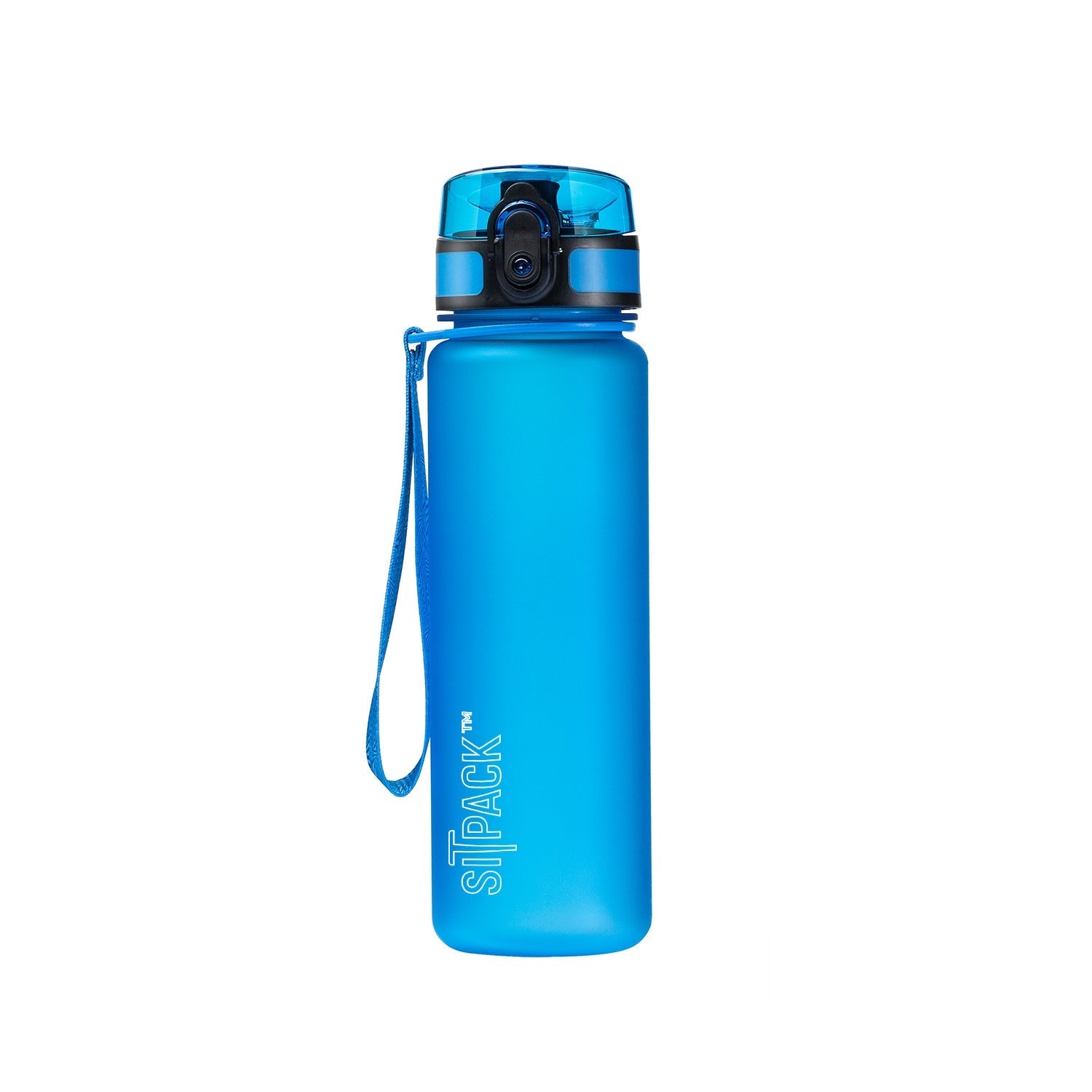
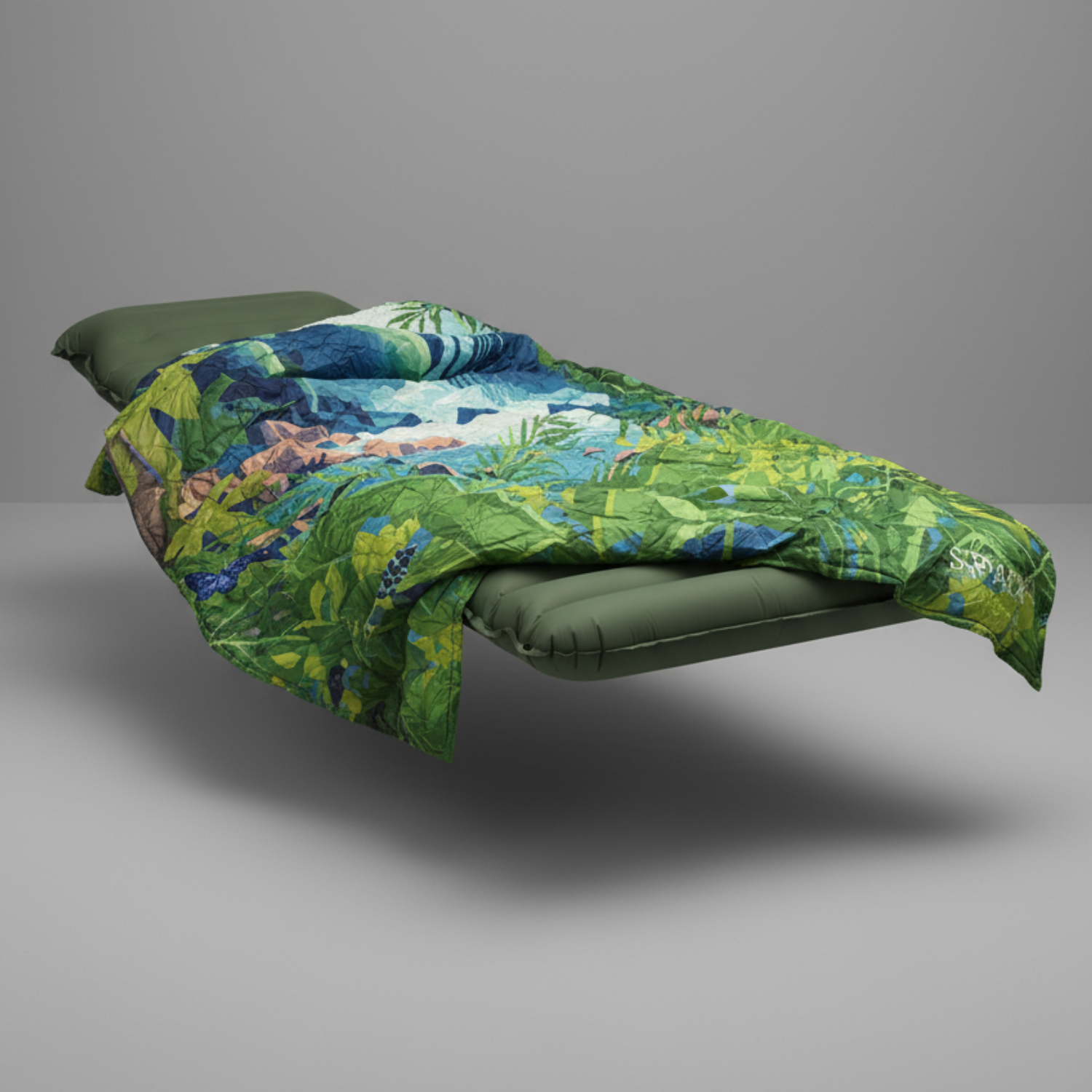
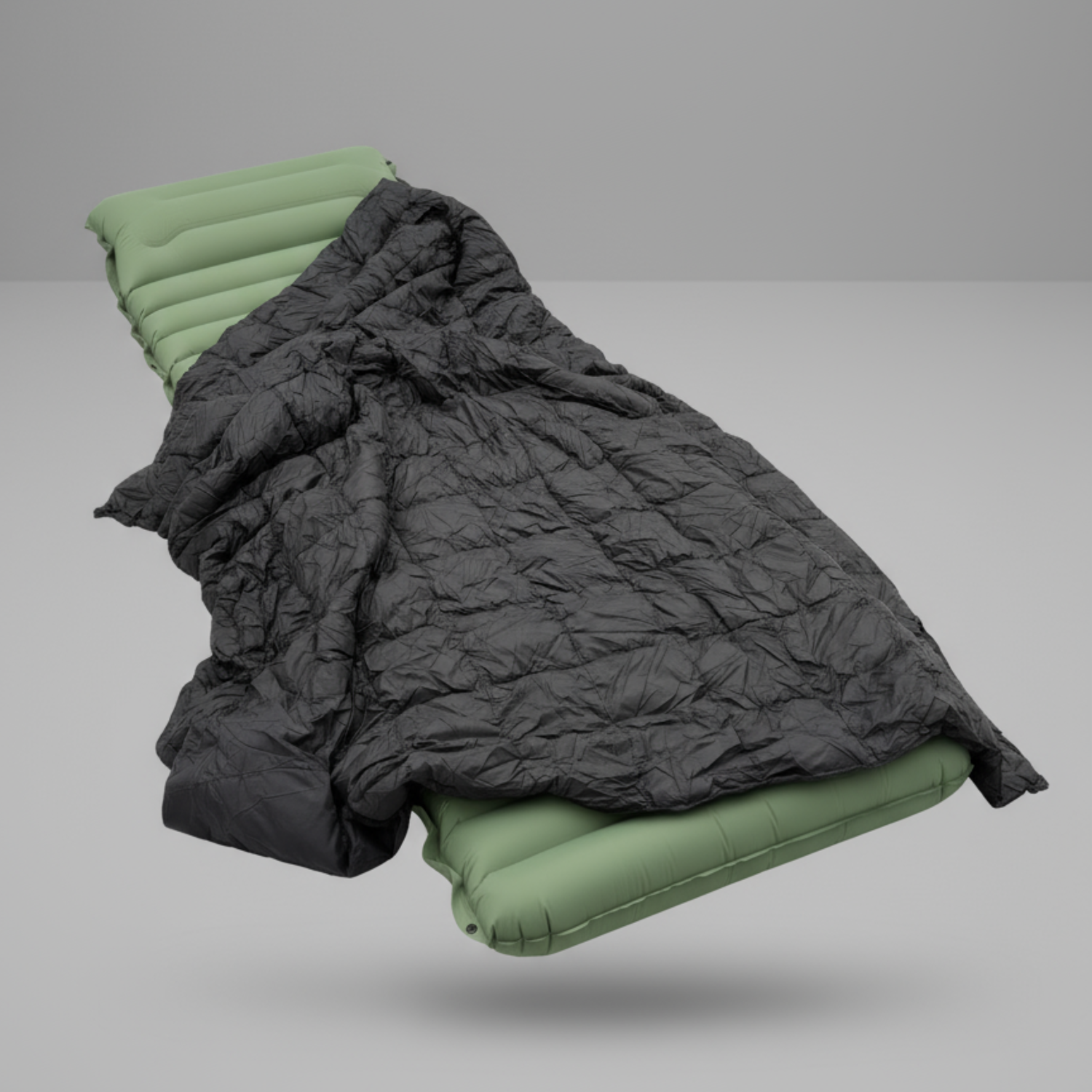


Danish Company

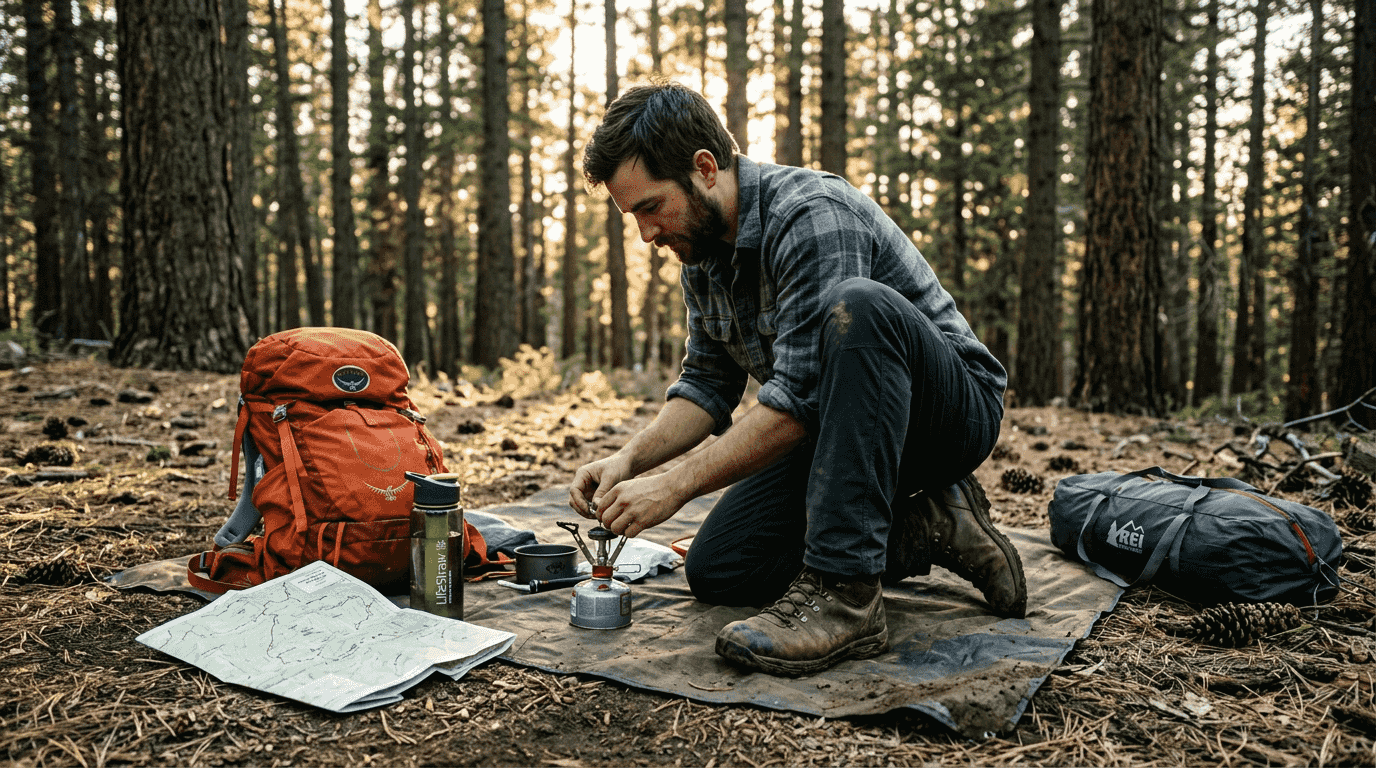
Most new campers believe packing more gear guarantees better preparation, but the opposite proves true. Excess equipment creates burden, slows setup, and increases frustration at camp. This guide teaches you how to assemble a modular, multi-functional camping gear kit tailored to your specific needs. You’ll master core components, selection criteria, common mistakes, and packing strategies that transform camping from chaotic to comfortable.
| Point | Details |
|---|---|
| Core components | Essential categories include shelter, sleep system, cooking gear, hydration tools, navigation aids, clothing, and multi-functional tools for safety and comfort. |
| Modular advantages | Adaptable gear systems reduce weight, increase versatility, and allow customization for different trip durations and environments. |
| Selection criteria | Choose gear based on weather conditions, trip type, experience level, and weight considerations to optimize performance. |
| Common pitfalls | Avoid overpacking, practice setup before trips, and select appropriate gear sizes to prevent campsite frustration. |
| Packing efficiency | Organize by category, layer items strategically, and prioritize emergency gear accessibility for smooth camping experiences. |
A camping gear kit represents a curated set of multi-functional, durable equipment designed for outdoor adventures. Each component serves a specific purpose in ensuring your safety, comfort, and convenience during camping trips.
Primary gear categories include shelter, sleep, cooking, hydration, navigation, clothing, and tools, each critical to safety and comfort. Your shelter protects you from weather and wildlife. The sleep system maintains body temperature and provides rest. Cooking gear enables meal preparation and water purification. Hydration tools keep you supplied with safe drinking water.
Navigation equipment prevents you from getting lost in unfamiliar terrain. Clothing layers regulate body temperature across changing conditions. Multi-functional tools handle repairs, food prep, and emergency situations. Portability and weight matter significantly for each category, especially when backpacking long distances.
Gear selection varies dramatically based on environment and activity type. Desert camping requires different hydration capacity than forest camping. Winter expeditions demand higher insulation than summer trips. Understanding climbing equipment basics helps appreciate specialized gear needs across outdoor activities.
The key components include:
Each category connects to the others, creating an integrated system. Your shelter size affects pack weight. Cooking method determines fuel needs. Climate dictates clothing layers. Recognizing these relationships helps you build a cohesive kit rather than a random collection of gear.
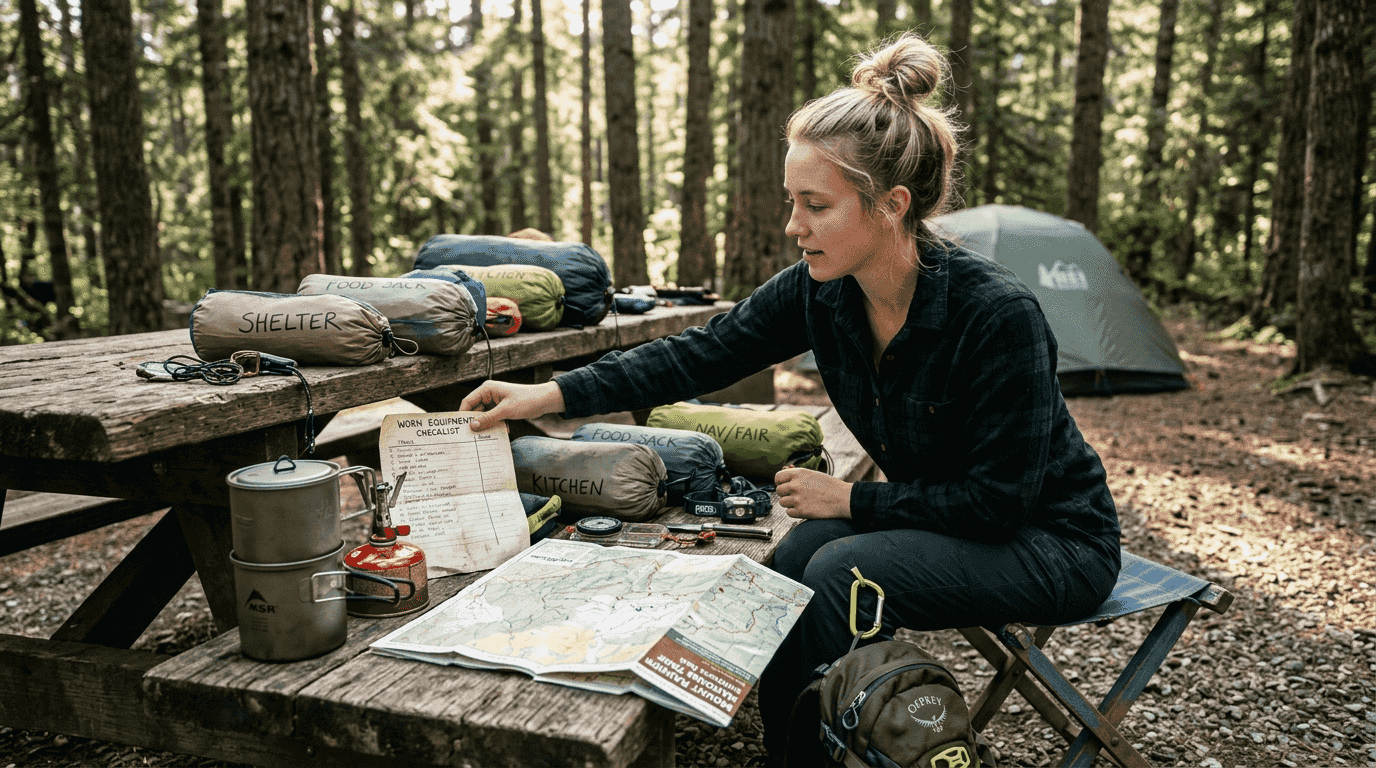
Modular backpack systems with detachable compartments allow customization for different trip durations, reducing unnecessary load. This flexibility transforms how you prepare for adventures. A weekend trip requires less capacity than a week-long expedition.
Modular systems let you detach unused sections, instantly reducing pack volume and weight. You carry exactly what the trip demands, nothing more. This approach prevents the common mistake of using the same oversized pack for every outing.
Multi-functional gear like knife-fire starters and ponchos serving double purposes reduce overall weight and enhance usability. These tools deliver exceptional value per ounce carried. A spork combines spoon and fork functions. A bandana serves as sweatband, water filter, sling, and towel.
Examples of effective multi-functional gear:
Modular gear supports adaptability from short day hikes to week-long camping trips. You build a core kit, then add or remove components based on specific requirements. This strategy proves more economical than buying separate complete kits for different trip types.
Pro Tip: Choose gear that serves multiple functions without sacrificing reliability to optimize packing efficiency. A flimsy multi-tool that breaks creates more problems than it solves. Quality matters more than clever features.
The compact camping gear portability benefits extend beyond weight savings. Smaller packed size improves pack organization and accessibility. You find items faster when they occupy less space. Modular design also simplifies gear upgrades, replacing individual components rather than entire systems.
Selecting appropriate tents by season, size, and ease of setup significantly impacts shelter comfort and safety. Three-season tents handle spring through fall conditions in most climates. Four-season tents withstand winter snow loads and fierce winds.
Sizing considerations matter more than most campers realize. Tents labeled for two people feel cramped with two adults and gear inside. Choose one size larger than occupant count for comfort. A three-person tent works better for two campers with equipment.
Sleeping bag temperature ratings indicate the lowest temperature for survival, not comfort. Subtract 10-15 degrees from the rating to find your actual comfort range. Down insulation offers superior warmth-to-weight ratios but loses effectiveness when wet. Synthetic materials maintain insulation even in damp conditions.
Weight versus comfort tradeoffs define the backpacking versus car camping divide. Car campers enjoy luxuries like cots, larger tents, and cast iron cookware. Backpackers scrutinize every ounce, sacrificing some comfort for mobility.
Follow this selection process:
Weather-appropriate selection prevents miserable experiences. Rain gear matters more in Pacific Northwest camping than desert adventures. Sun protection becomes critical at high elevations. Wind resistance determines tent stability in exposed locations.
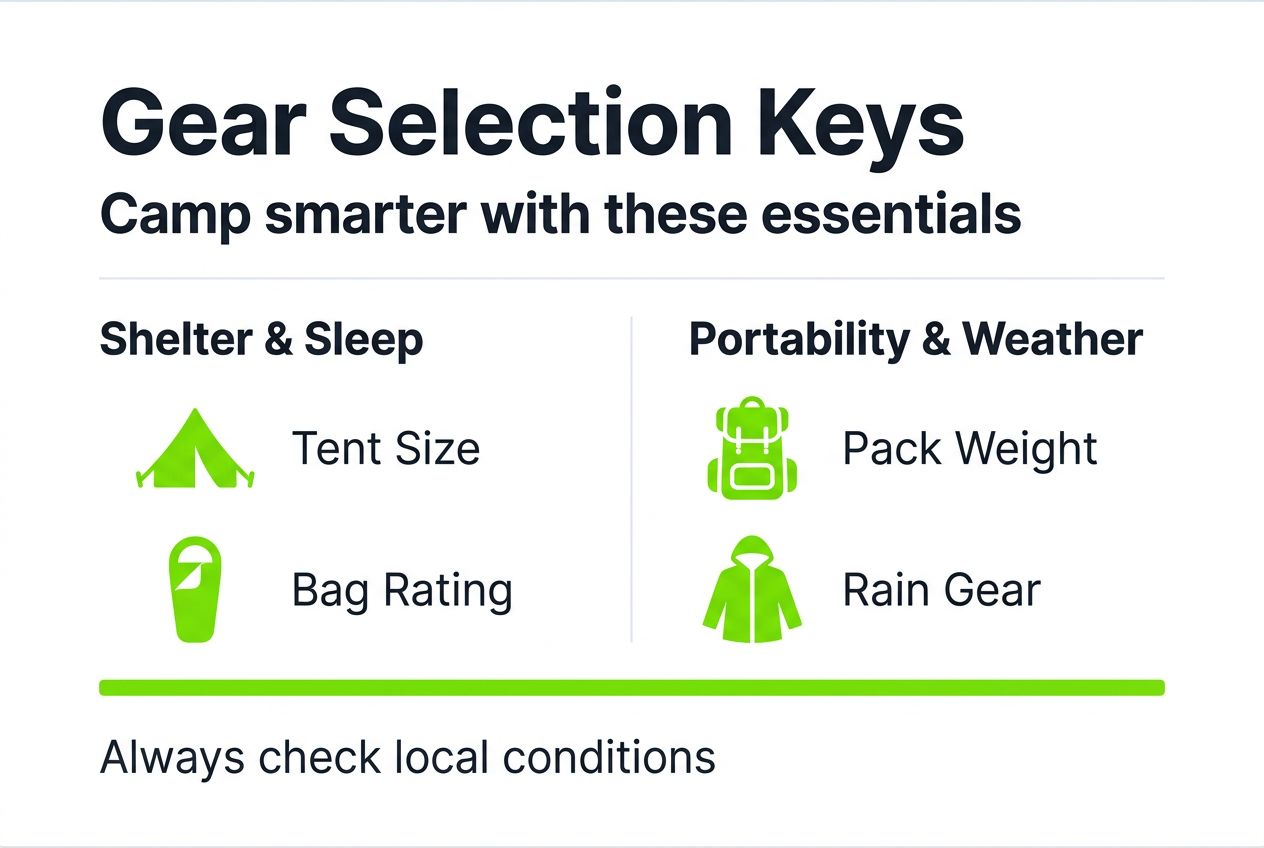
Understanding compact camping gear portability benefits helps balance weight and functionality. Ultralight gear costs more but enables longer trips with less fatigue. Budget gear works fine for occasional car camping.
Consider the beginner camping gear kit guide approach of starting simple. Master basic gear before adding specialized equipment. Experience teaches what features you actually need versus marketing hype.
The myth that more gear equals better preparedness leads campers astray constantly. Overpacking creates multiple problems: heavier loads cause fatigue, excess items complicate organization, and unused gear wastes space for essentials.
Practicing tent setup and stove use at home reduces campsite frustration and setup time significantly. Arriving at camp tired and attempting first-time gear assembly in fading light guarantees stress. Practice builds muscle memory and reveals missing components before you need them.
Many believe a tent sized exactly for occupants maximizes efficiency. Reality proves otherwise. Snug tents force gear storage outside or in vestibules, exposing equipment to weather and wildlife. Cramped quarters reduce sleep quality and increase condensation problems.
Practice your gear setup at home in daylight conditions. This simple step prevents countless campsite mishaps and builds confidence for actual trips.
Key misconceptions and corrections:
Another false belief suggests skipping gear maintenance between trips. Dirty equipment deteriorates faster. Stored wet gear develops mold. Unchecked zippers fail at critical moments. Simple post-trip cleaning and inspection extend gear life dramatically.
Some campers assume compact camping gear portability benefits only matter for backpackers. Even car campers appreciate lighter, smaller gear when setting up camp or moving between sites. Portability improves every camping scenario.
The beginner camping gear checklist helps new campers avoid these pitfalls by focusing on essentials first. Experience then guides additions based on actual needs rather than perceived requirements.
Organizing gear into functional categories simplifies access and speeds setup dramatically. Group shelter components together. Bundle cooking items separately. Keep clothing layers in one location. This categorization creates a mental map of pack contents.
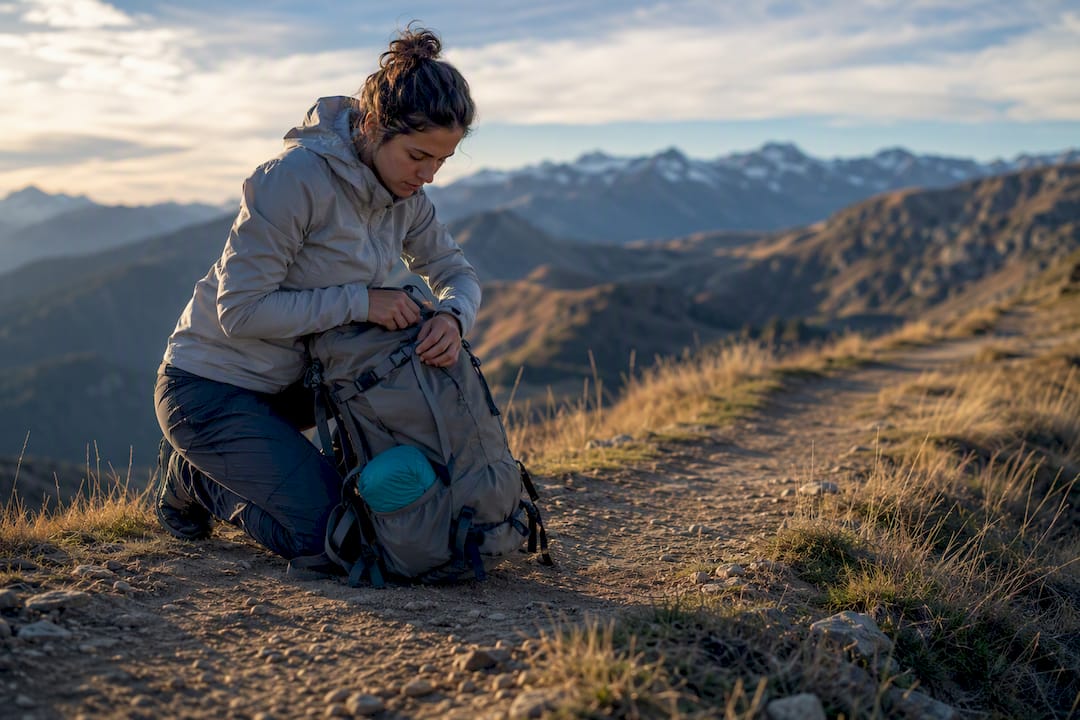
Layered packing techniques balance weight distribution and accessibility simultaneously. Heavy items belong close to your back and centered vertically for optimal load transfer. Frequently needed items stay near the top or in external pockets. Rarely used gear packs deep in the main compartment.
Emergency readiness focuses on quick access to critical items. First aid kits, fire starters, and emergency shelters must be reachable without unpacking everything. Store these in consistent locations across all trips, building automatic retrieval habits.
Packing order and organization steps:
Pro Tip: Use color-coded or labeled bags inside the main pack to speed setup and retrieval. Red for cooking, blue for clothing, green for hygiene keeps organization visual and intuitive.
| Packing Method | Car Camping | Backpacking | Ultralight |
|---|---|---|---|
| Primary Container | Large bins/bags | 50-70L backpack | 30-45L backpack |
| Weight Priority | Comfort over weight | Balanced approach | Every ounce matters |
| Organization | Category boxes | Stuff sacks | Integrated pockets |
| Accessibility | Everything reachable | Strategic layering | Minimalist essentials |
| Setup Speed | Leisurely unpacking | Efficient deployment | Rapid pitch |
Different trip types demand adapted organization strategies. Weekend trips allow simpler packing since resupply happens soon. Week-long expeditions require careful rationing and protection of consumables. Group camping benefits from shared gear distribution, dividing tent components and cooking equipment among members.
Consider climbing gym equipment checklist essentials for inspiration on efficient gear organization systems. Climbers excel at streamlined packing due to weight sensitivity and safety requirements. Their methods transfer well to camping applications.
Weather predictions influence packing decisions significantly. Rain forecasts demand waterproof stuff sacks and pack covers. Cold weather requires insulation accessibility. Hot conditions prioritize hydration capacity and sun protection placement.
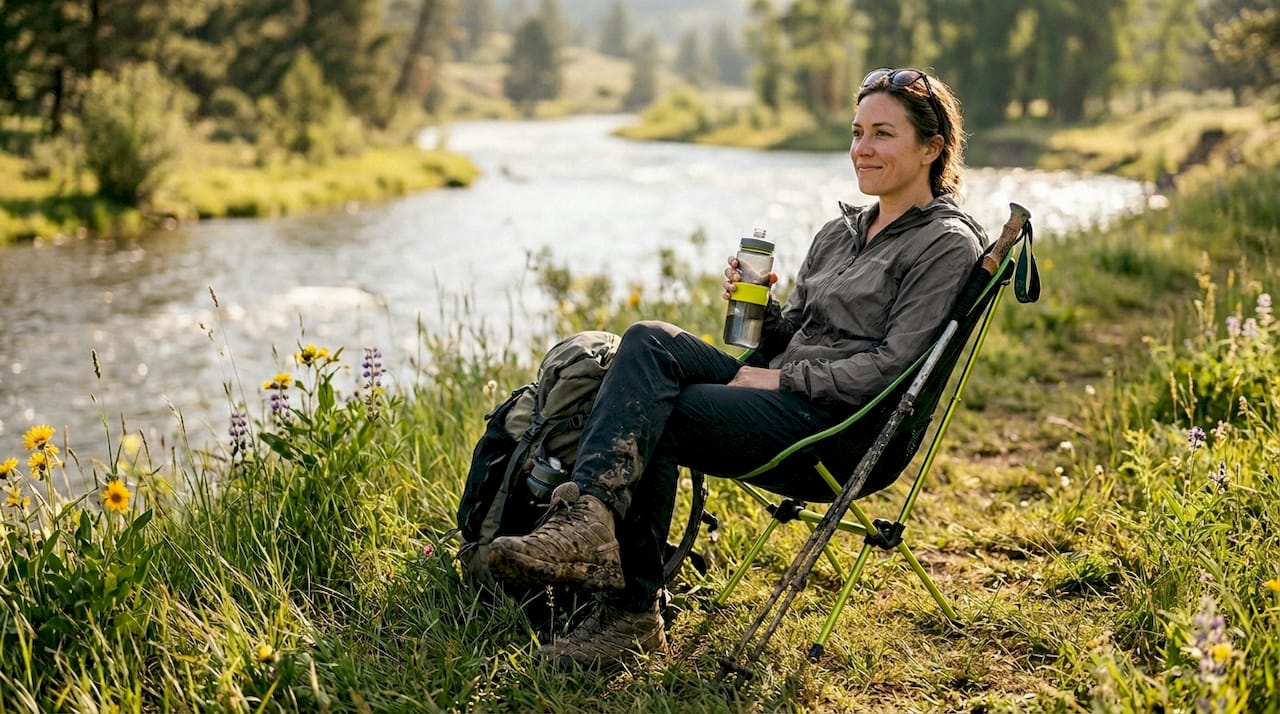
Portable seating transforms campsite livability dramatically. Foldable chairs provide back support during meals and evening relaxation. Compact designs pack small but deliver substantial comfort improvements. Sitting on logs or ground gets old quickly on multi-day trips.
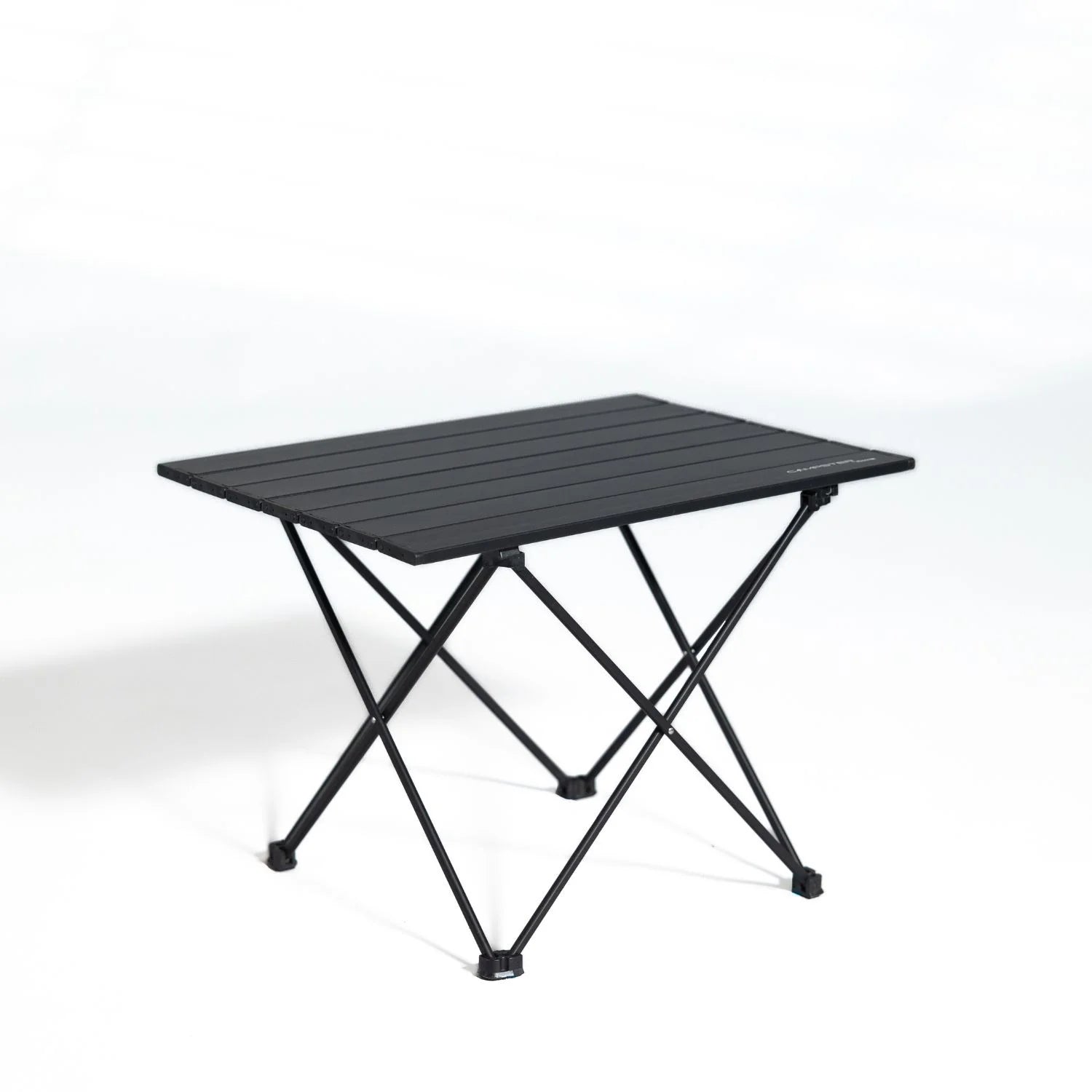
Camp tables create functional surfaces for food prep, cooking, and games. Elevated storage keeps items off damp ground and away from crawling insects. Lightweight aluminum tables fold to briefcase size while supporting substantial weight.
Lighting options extend usable camp hours safely. Headlamps keep hands free for tasks while illuminating work areas. Lanterns create ambient light for group spaces. Red light modes preserve night vision when moving around after dark.
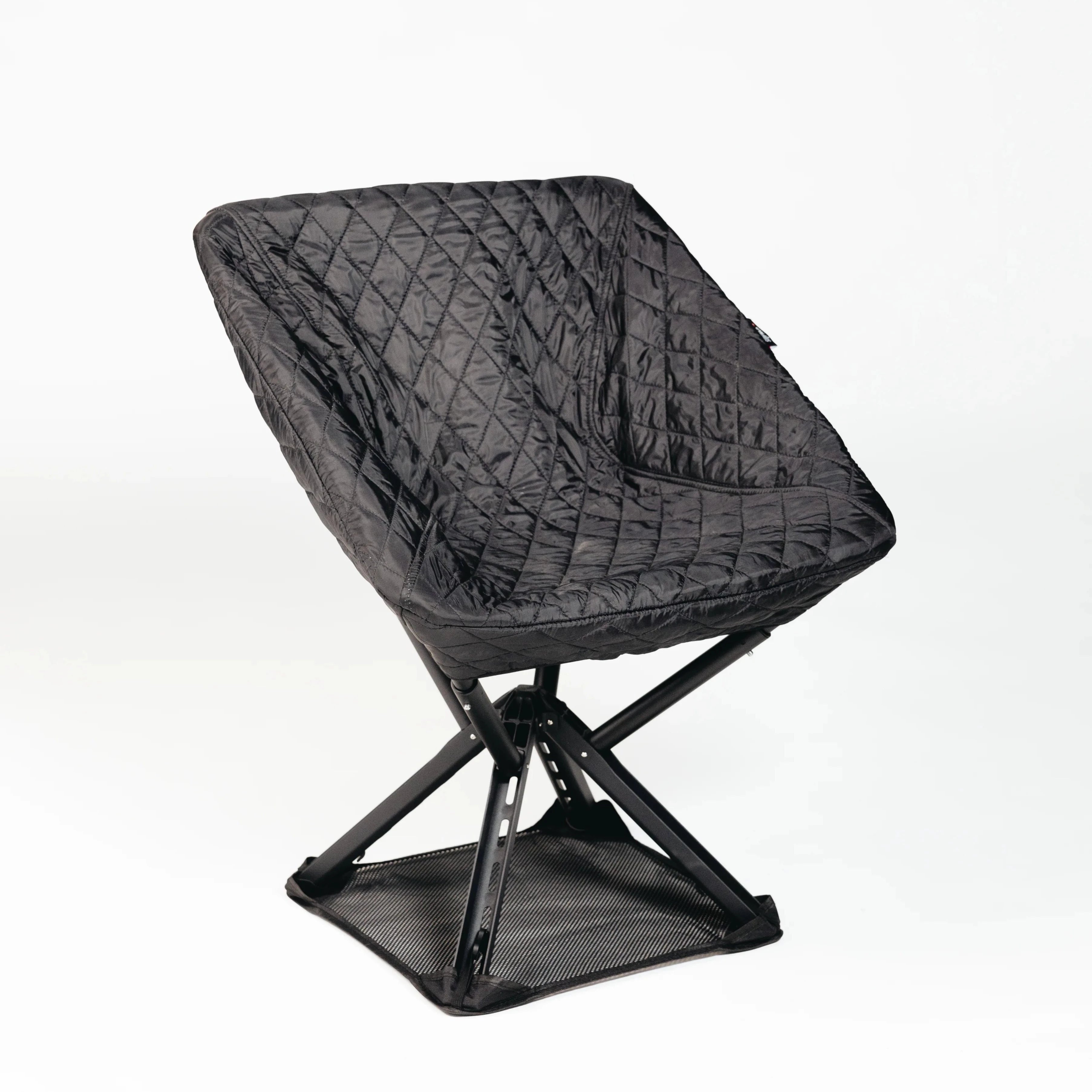
Heating devices matter in cold conditions. Portable seat warmers prevent heat loss through conduction. Compact heaters warm tent interiors before sleep. Chemical hand warmers provide instant heat for fingers and toes.
Water and food storage solutions maintain provisions safely:
Adding portable seating, lighting, and food storage accessories significantly improves campsite comfort and livability. These items bridge the gap between survival and enjoyment. Camping should refresh you, not exhaust you further.
Compact, lightweight options maintain kit portability while adding function. A 2-pound chair beats sitting on rocks. A 4-ounce headlamp beats stumbling in darkness. Smart accessory choices enhance experience without burdening packs.
Accessories complement core gear to round out the camping experience holistically. Your tent provides shelter, but a chair makes that shelter comfortable. Your stove cooks food, but a table makes eating civilized. Consider types of camping accessories that align with your camping style and priorities.
Building the perfect camping kit requires thoughtful gear selection that balances portability with comfort. Sitpack specializes in innovative, portable camping gear that aligns perfectly with modular comfort principles.
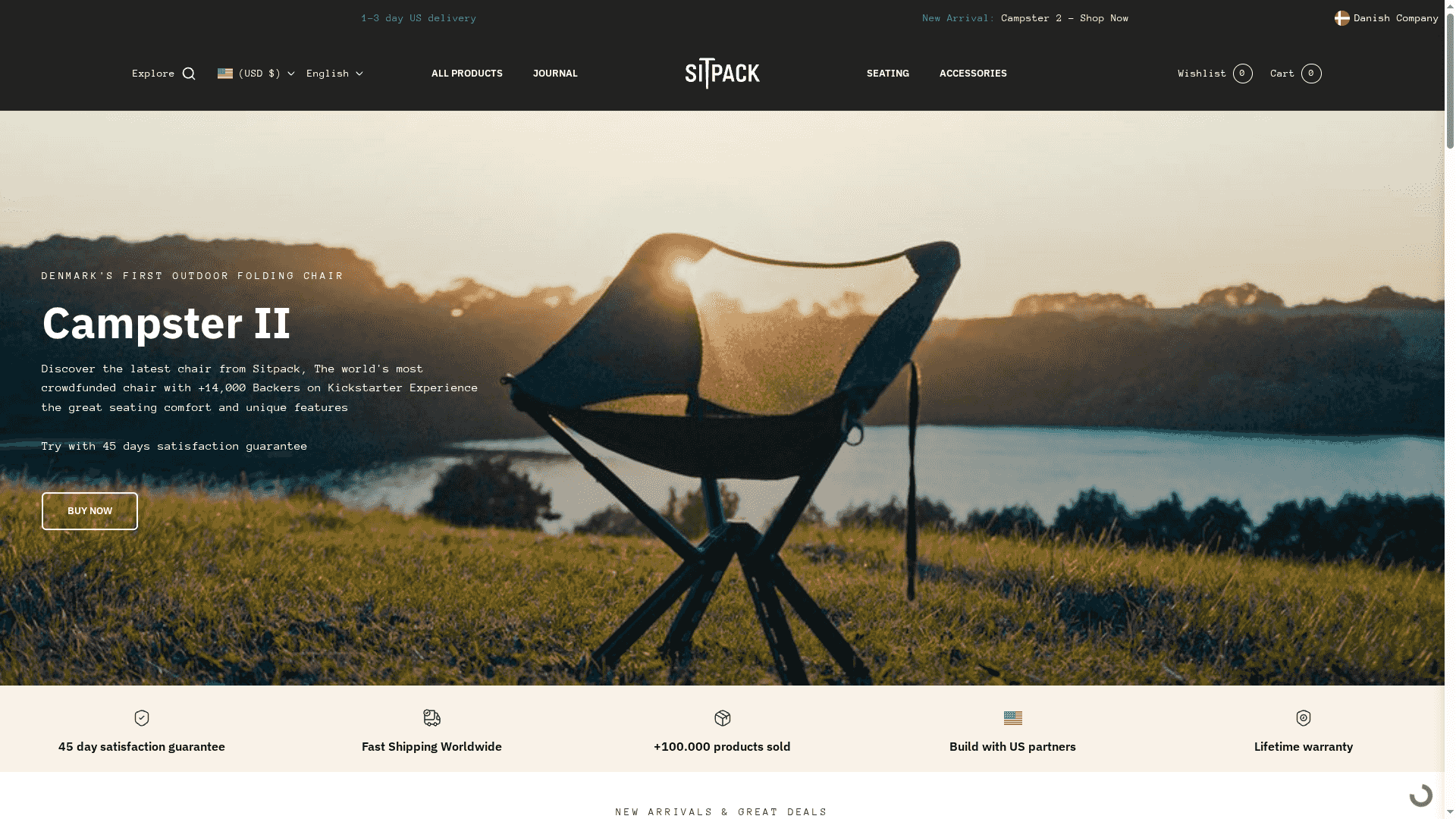
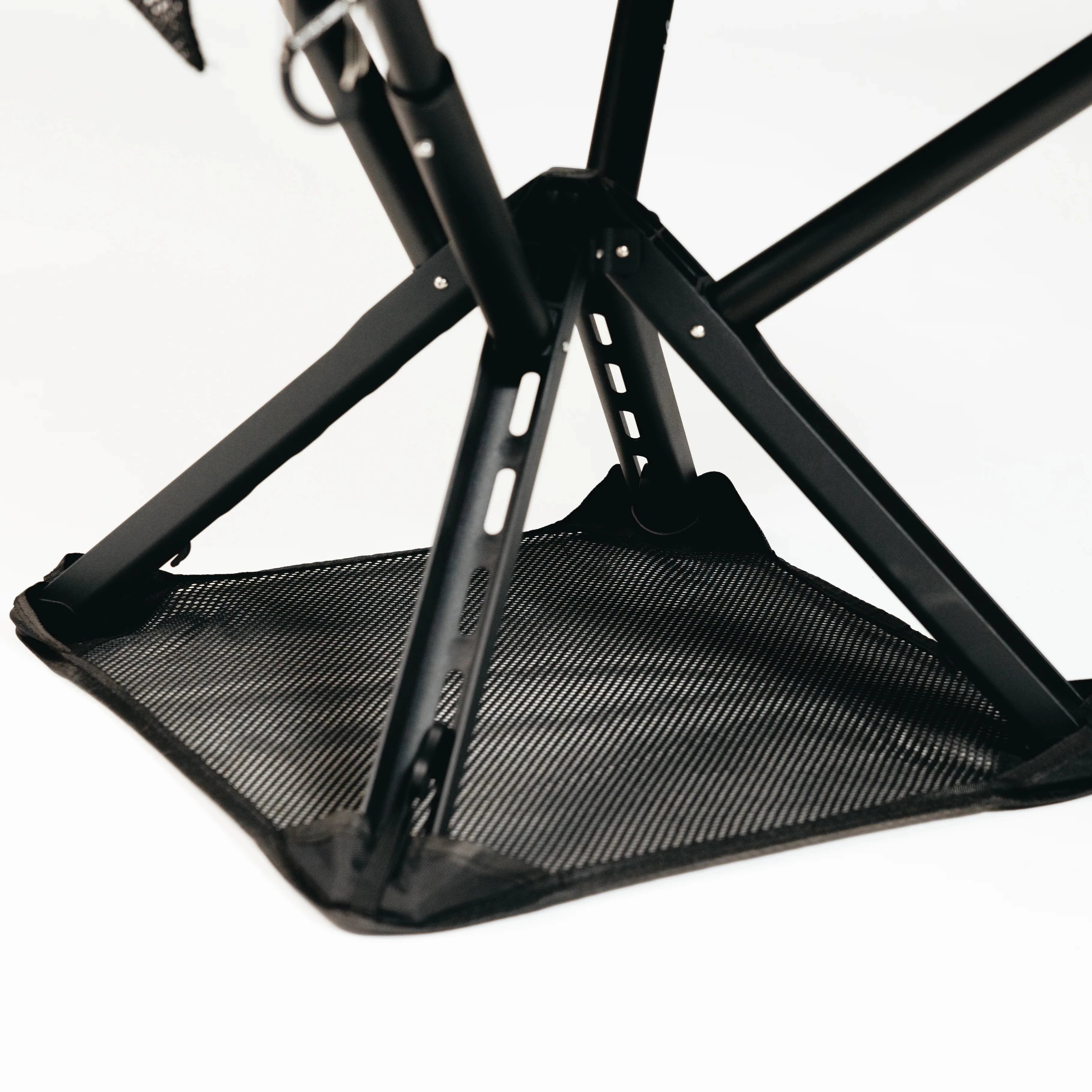
Sitpack’s compact seating solutions deliver exceptional comfort without the bulk of traditional camp chairs. The Campster II folds to briefcase size yet supports full body weight with ergonomic design. This exemplifies the multi-functional, space-saving approach that makes camping more enjoyable.
Explore Sitpack’s collection to discover gear that optimizes camp comfort and portability simultaneously. Their lifetime warranties and eco-friendly materials reflect commitment to sustainable outdoor recreation. From portable chairs to thermal blankets, each product enhances your camping experience.
Pro Tip: Try Sitpack’s compact seat to reduce fatigue during long camping days, improving your overall outdoor experience significantly.
Essential items include shelter (tent or tarp), sleeping system (bag and pad), cooking gear (stove and cookware), hydration tools (bottles and filters), navigation aids (map and compass), appropriate clothing layers, and multi-functional tools (knife and repair kit). These core components ensure safety, comfort, and self-sufficiency in outdoor environments.
Modular gear provides adaptability by allowing you to customize your kit for specific trip requirements. You can remove unnecessary components for short trips, reducing pack weight and improving mobility. This flexibility also proves more economical since you upgrade individual pieces rather than replacing complete systems as your needs evolve.
Avoid overpacking gear beyond actual needs, which increases fatigue and complicates organization. Never skip practicing gear setup at home before trips, as this prevents campsite frustration and reveals missing components. Don’t select tents sized exactly for occupants, as this creates cramped conditions. Proper preparation and realistic gear selection matter more than equipment quantity.
Organize gear by functional category using labeled stuff sacks or color-coded bags. Layer items strategically with heavy gear centered close to your back, frequently needed items near the top, and sleeping gear at bottom. Prioritize emergency equipment placement for quick access without unpacking everything. Distribute weight evenly side to side to maintain pack balance and comfort.
Beginners should start with budget-friendly, reliable essentials rather than premium specialized equipment. Focus on core items like shelter, sleep system, and cooking gear first. Add accessories gradually as you gain experience and identify actual needs. Renting or borrowing gear for initial trips helps you understand requirements before investing significantly. Quality improves with modular upgrades over time.