Cart
0
Sign up and get 10$ off your order
Expected delivery
1-3 days
You may also like


Danish Company

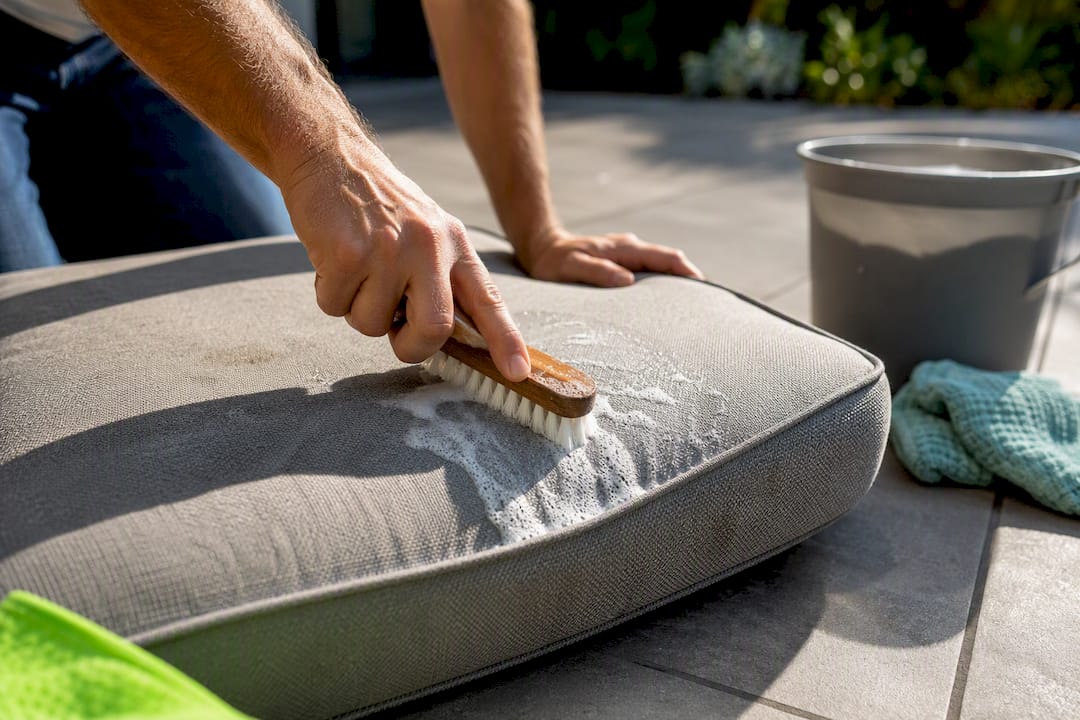
If the cushion cover unzips and the tag says machine washable, wash it on a gentle, cold cycle with mild detergent. If it’s sewn on, scrub it with a mild soap solution (a quarter cup of dish soap per gallon of water), rinse well, and air-dry completely. Always check the care label first and vacuum off loose debris before adding water. For mildew, borax or diluted bleach can be used cautiously on colorfast or white fabrics after a spot test.
TL;DR:
- Vacuum cushions thoroughly before cleaning to prevent grime from pressing into fibers and worsening stains during washing or scrubbing.
- Removable covers should be washed on a gentle, cold cycle with mild detergent, then air-dried to avoid damaging the fabric or foam.
- Sewn-on covers require careful scrubbing with a soap solution and rinsing from top to bottom, avoiding excessive wetness and ensuring complete drying.
- Mildew should be treated with diluted bleach or vinegar and dried in direct sunlight; never store damp cushions, as mold spores thrive in moisture.
- Regular prevention, like vacuuming and drying cushions fully after cleaning, significantly extends their lifespan and reduces the need for intensive deep cleaning.
Rushing straight to a bucket of soapy water is how good cushions end up with worse stains than they started with. Run through this first.
Skipping the vacuum step is the most common mistake homeowners make. Wet debris turns into ground-in paste the moment you start scrubbing.
Keep it simple: a soft-bristle brush, a sponge, a bucket, a garden hose, a spray bottle, clean towels, and a vacuum with an upholstery attachment cover most jobs.
For everyday grime, mix a quarter cup of mild dish soap per gallon of lukewarm water, which is the standard ratio recommended for hand-washing and spot-cleaning outdoor cushions. For mildew, BobVila recommends one cup of borax to four cups of water, or diluted bleach for white fabrics only, always tested on a hidden patch first. A gentler alternative is one part white vinegar to three parts water, which works well on colored fabrics that can’t handle bleach. Save enzyme cleaners for organic stains like grass, blood, or bird droppings, where they break down proteins that soap alone won’t touch.
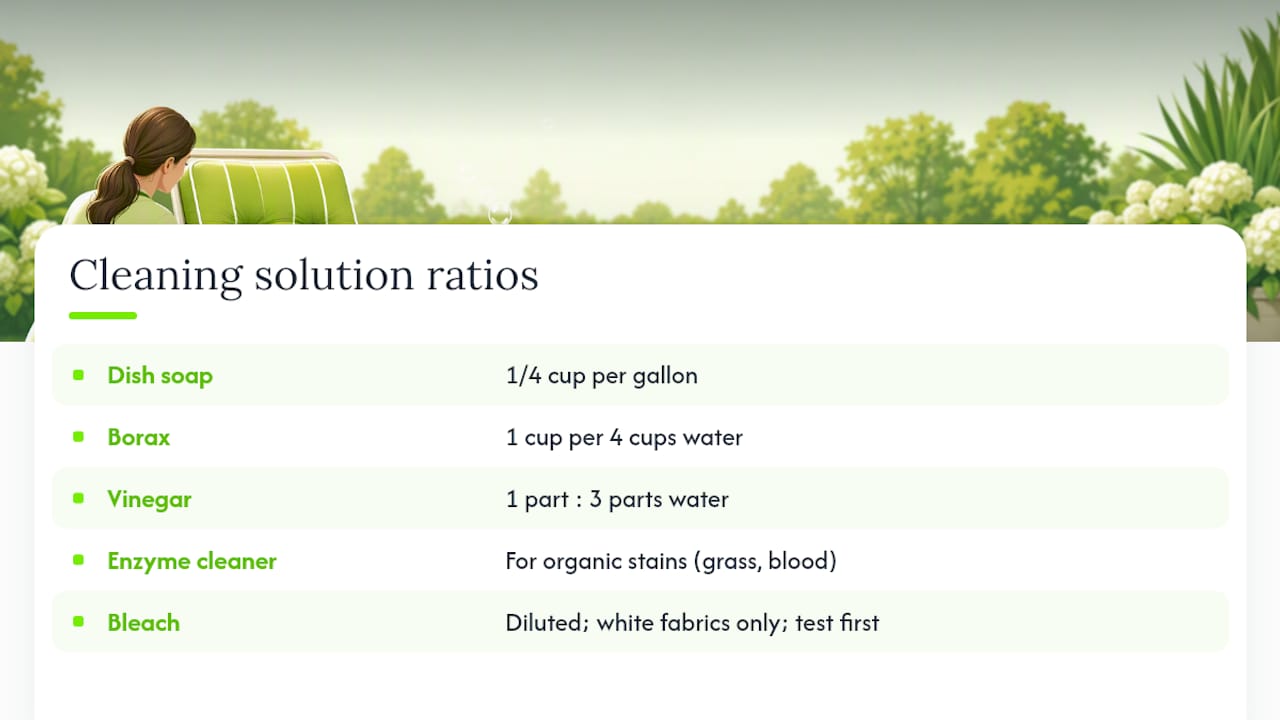
Quick reference: doubling the borax ratio doesn’t clean faster. It just leaves more residue behind if you don’t rinse thoroughly, and residue is exactly what attracts new mildew.
Removable covers are the easy win here, so treat them gently and they’ll reward you for years.
That last step matters more than people think. Foam should never go in a washing machine; the agitation tears it apart and the spin cycle compresses it permanently. Rinse foam separately with a hose and let it air-dry standing on its edge.
Pro Tip: Zipping a damp cover back over foam that’s even slightly moist is basically building a mildew incubator. Give both an extra day of drying time if you’re at all unsure.
Cushions without a zipper take more patience, but the process is straightforward once you know the order of operations.
Standing cushions on edge rather than laying them flat cuts drying time noticeably, since water drains instead of pooling in the middle.
Different stains need different chemistry. Treating them all the same way just spreads the mess around.
Pro Tip: Stubborn oily or sap stains respond better to staged treatment than to scrubbing the same spot harder. BobVila’s approach layers an absorbent powder, then a solvent, then a detergent paste, rinsing between each stage rather than repeating one step.
Mildew spreads fastest in fabric that stays damp, and it’s the one stain category where doing nothing makes things dramatically worse.
Brush or vacuum the dry mold outdoors first, away from other furniture, so you’re not spreading spores across the whole patio set. For colored fabric, mix one cup of borax with four cups of water, or use the gentler one-to-three vinegar solution. White or colorfast fabric can handle diluted bleach, roughly one tablespoon per pint of water, but test it on a hidden seam first since even “colorfast” tags aren’t always accurate.
Rinse thoroughly and let the cushion dry in direct sun, which has a natural bleaching and sanitizing effect. Never store a cushion until it’s bone-dry; that’s the single fastest way mildew returns within a season. If the smell or dark spotting keeps coming back after repeated cleanings, the foam core itself may be compromised, and at that point replacing the insert usually costs less than fighting mold every few weeks.
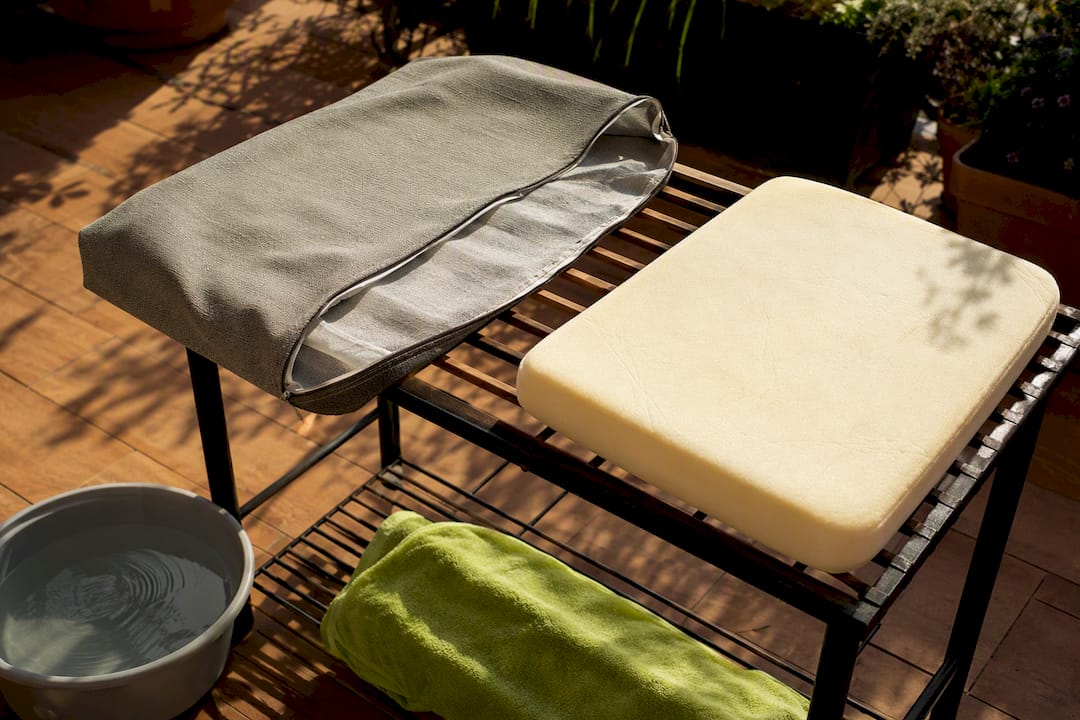
Getting the water out fast is just as important as getting the stain out in the first place.
Stand cushions upright so they drain instead of holding water in the middle, and use a fan or open sun exposure to speed things along, though prolonged direct UV will fade colored fabric over time. Once fully dry, store cushions in breathable bags inside a dry shed or garage, off concrete floors where moisture wicks upward. Rotating cushions periodically also prevents one side from bearing all the sun damage and wear.
A spot-clean-as-you-go schedule during the season, followed by one deep clean before winter storage, keeps cushions in far better shape than an annual scramble to save them.
Fabric-care professionals keep landing on the same short list of steps for a reason. A fabric-care scientist’s guidance for Martha Stewart boils down to checking the label, vacuuming before any water touches the fabric, scrubbing gently rather than aggressively, rinsing until no soap remains, and letting everything air-dry fully. BobVila, Bissell, and Simple Green each arrive at nearly identical advice through slightly different testing, which is a strong signal these aren’t just opinions.
“Start with a label check, vacuum first, rinse thoroughly, and allow full air drying before storing.” That sequence, more than any specific product, is what actually prevents mildew and fabric damage.
For heavily soiled or tufted cushions, a portable extractor can pull out more water and speed drying considerably. If foam has collapsed, cracked, or holds a musty smell no amount of cleaning shifts, replacing it is cheaper than replacing the whole chair. Sitpack’s own guide on cleaning outdoor chairs walks through the same maintenance logic for the frames these cushions sit on.
Most articles on this topic treat cleaning as an emergency response, something you do after a cushion is already stained, soggy, or smelling like a wet basement. That’s backwards. The research consistently points to prevention as the higher-leverage move: vacuum before every wet clean, dry cushions completely before storage, and rotate them so one side isn’t absorbing all the UV damage.
Where conventional advice falls short is treating every stain and every fabric the same way. A dilution ratio that’s safe for polyester acrylic blends can discolor a cheaper woven fabric, which is exactly why every credible source, from Martha Stewart’s fabric scientist to Bissell’s cleaning team, insists on a spot test before anything else. Skipping that step is the single most avoidable mistake homeowners make.
If you take one thing from this guide, prioritize the drying step over the cleaning step. A mediocre wash that dries fully beats a perfect wash that goes back outside damp. Moisture, not dirt, is what actually destroys outdoor fabric and foam over time.
— Jonas
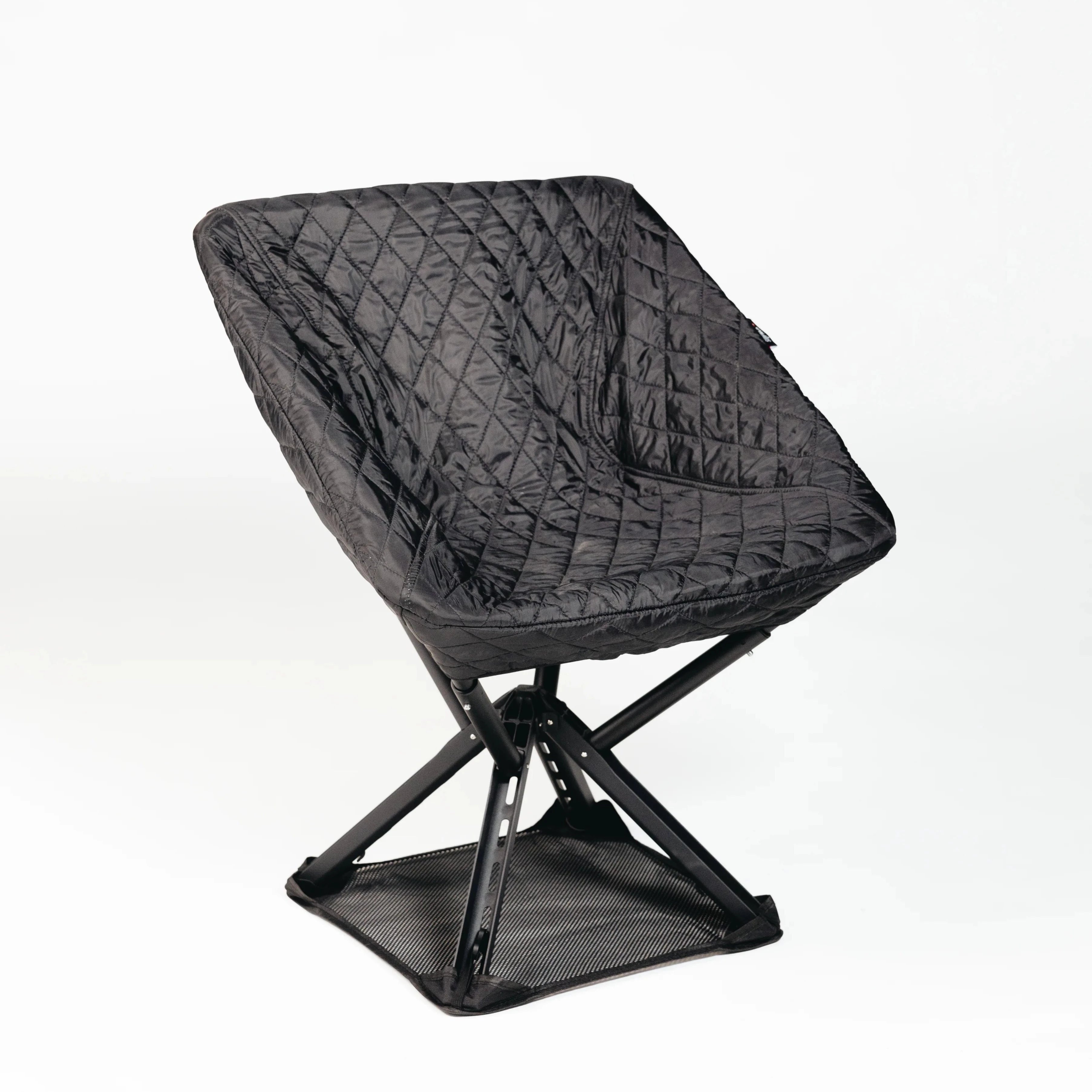
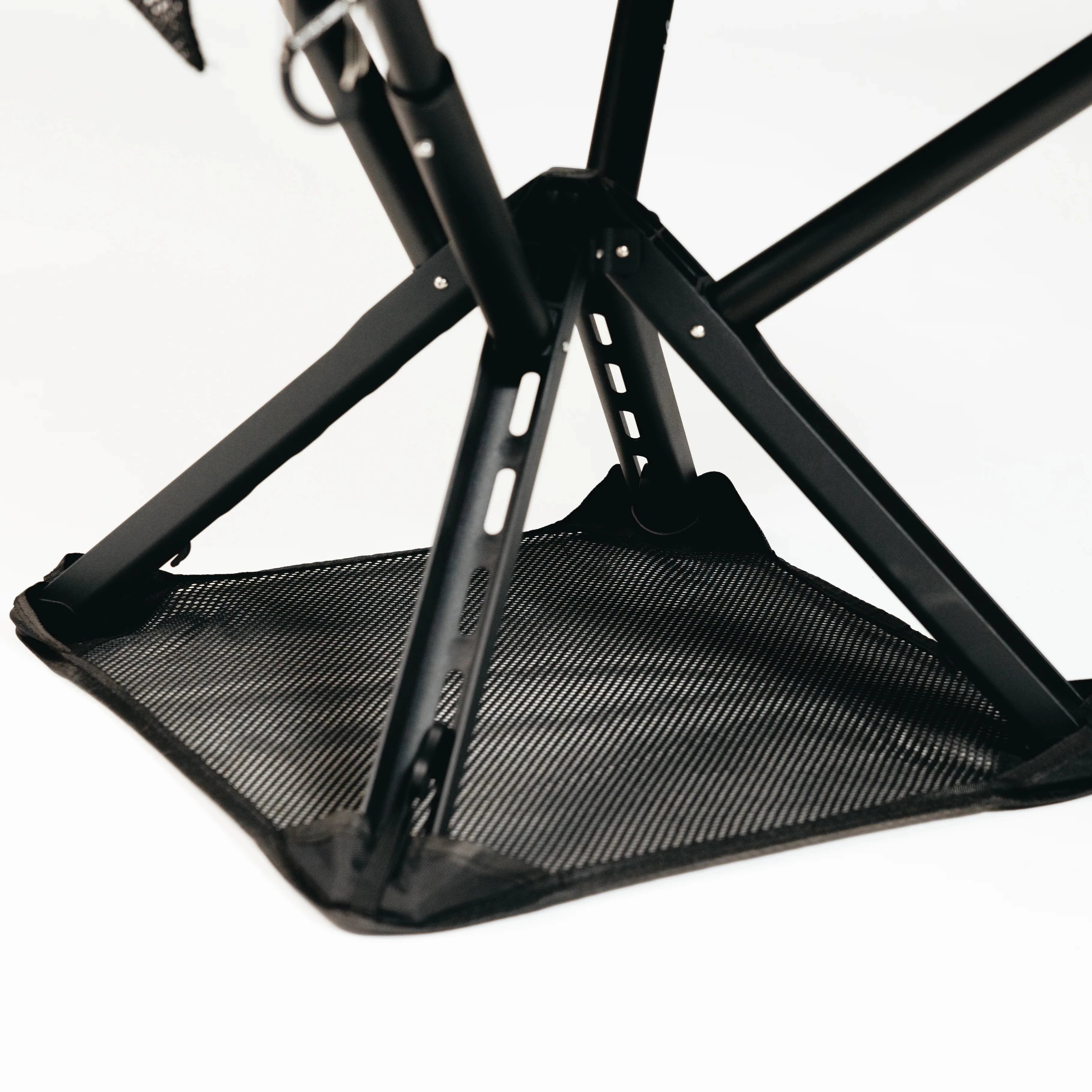
Some cushion problems start with the fabric choice, not the cleaning routine. Some portable seating products are built around lightweight, durable materials designed to resist grime and moisture that turn ordinary lawn chairs into recurring cleaning projects. If you’re tired of babysitting bulky patio furniture, browse Sitpack’s seating lineup for something built to travel, fold flat, and shrug off the outdoors with far less upkeep. For cushions and covers you already own, Sitpack’s guide on cleaning outdoor chairs covers frame care alongside fabric maintenance, so you can handle the whole chair in one pass. Check out the current lineup and see which portable seat fits your setup.