Cart
0
Sign up and get 10$ off your order
Expected delivery
1-3 days
You may also like


Danish Company

TL;DR:
- Travel towels have become essential for hygiene, versatility, and lightweight packing in modern adventure travel.
- Microfiber towels outperform cotton by drying faster, weighing less, and resisting mildew and sand.
- Choosing the right travel towel depends on trip needs, with features like quick-dry, antimicrobial treatment, and eco-friendliness.
The travel towel used to live in the bottom of your pack, only making an appearance in genuine emergencies. Not anymore. These days, savvy adventurers are making them a top packing priority, and for good reason. The compression travel towel market is expected to double by 2033, signaling a massive shift in how travelers think about everyday comfort. In this article, we break down why travel towels have become essential outdoor gear, what makes them genuinely superior to standard cotton, and how to pick the right one for your adventures.
| Point | Details |
|---|---|
| Market growth | Travel towels are booming thanks to global travel and adventure trends. |
| Microfiber mechanics | Microfiber towels absorb more water, dry faster, and are lighter than cotton. |
| Multi-use convenience | Travel towels serve multiple functions, from yoga mats to beach blankets. |
| Hygiene advantage | Antimicrobial travel towels help prevent odor and mildew in shared facilities. |
| Smart shopping tips | Choosing the right towel requires balancing weight, drying speed, and comfort. |
Adventure tourism has exploded over the last few years, and with it came a whole new set of packing priorities. Travelers aren’t just thinking about plane tickets and accommodation anymore. They’re thinking about gear that works as hard as they do. The global travel boom pushed outdoor enthusiasts to rethink the basics, and the humble towel landed squarely in the spotlight.
Health consciousness played a huge role in this shift. Post-pandemic, people became far more attuned to what they’re touching in shared spaces. Hostels, communal showers, gym locker rooms, and beach changing areas all look different through hygiene-aware eyes. Travel towels that are antimicrobial and quick-drying became less of a bonus feature and more of a baseline expectation.
The numbers back this up convincingly. Quick-dry and compression towel markets are projected to grow significantly through 2033, and the overall towel market is forecast to reach USD 28.7 billion by 2034. That’s not niche anymore. That’s mainstream.
| Market segment | Projected growth trend | Key driver |
|---|---|---|
| Compression travel towels | Expected to double by 2033 | Adventure travel demand |
| Quick-dry towels | Significant rise through 2033 | Hygiene awareness |
| Overall towel market | USD 28.7B by 2034 | Global travel resurgence |
So where do travel towels actually shine in the real world? Honestly, almost everywhere. Here’s where outdoor enthusiasts and travelers are putting them to good use:
If you want to understand more about the eco-friendly travel towels movement driving much of this growth, it goes well beyond market stats. It ties directly into how outdoor communities are rethinking sustainability alongside performance.
With the demand clearly rising, let’s examine what makes travel towels different from everyday towels.
Here’s where things get genuinely interesting. Most people assume a towel is a towel. You get wet, you dry off, done. But microfiber changes the whole equation in ways that matter a lot once you’re three days into a backpacking trip with no laundromat in sight.
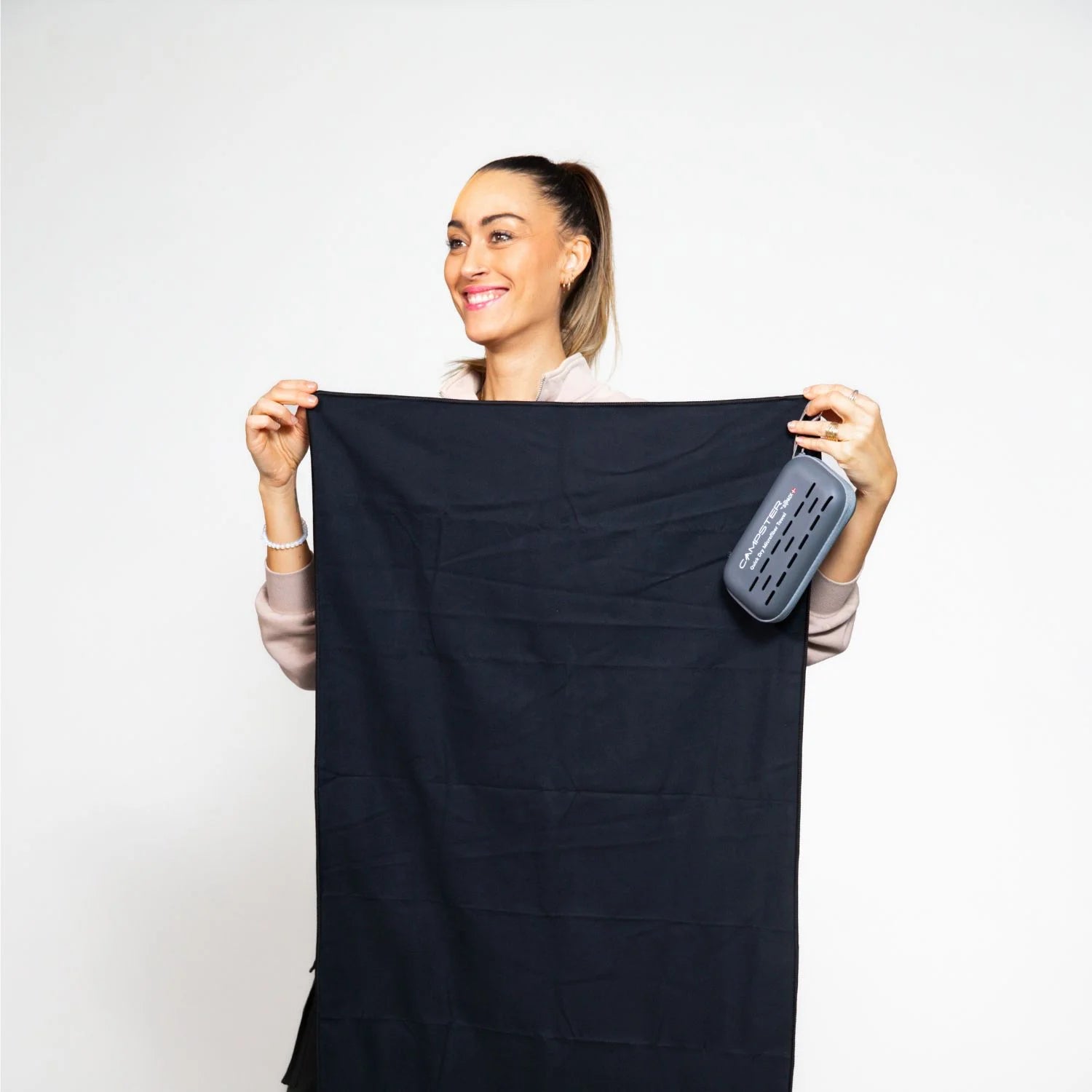
Microfiber towels absorb up to 7 times their weight, dry 3 to 10 times faster, and weigh significantly less than cotton. That’s not marketing fluff. That’s physics working in your favor. The fibers are split to microscopic levels, creating a massive surface area that wicks moisture away fast and releases it back into the air just as quickly.

Compare that to cotton. Cotton holds moisture for hours, gets heavy when wet, and takes up a frustrating amount of pack space. In humid climates, a wet cotton towel in a sealed pack is basically a mildew incubator. Not ideal.
| Feature | Microfiber travel towel | Cotton towel |
|---|---|---|
| Absorbency | Up to 7x its weight | Standard absorption |
| Drying speed | 3 to 10x faster | Slow, hours in humidity |
| Weight | Very lightweight | Heavy, especially when wet |
| Pack size | Compresses small | Bulky |
| Mildew resistance | High | Low |
Quick-dry towels also reduce mildew risk, repel sand, and resist odor, which matters enormously when you’re living out of a pack for weeks. A towel that smells fresh on day ten is not a small thing.
Here’s a simple three-step approach to getting the most out of your travel towel:
Pro Tip: In shared facilities like hostel bathrooms or campground showers, bring your own antimicrobial travel towel. You eliminate cross-contamination risk and you’ll never be stuck borrowing a questionable communal towel again.
For practical travel towel packing tips that go beyond the basics, knowing how to fold and store your towel properly also extends its lifespan.
Now that we see how microfiber towels outperform traditional cotton, let’s look at their practical uses for travelers.
Performance specs are great on paper, but what does a travel towel actually do for you out in the field? More than you’d expect. Travelers who switch rarely go back to cotton, and it’s not just about drying speed.
Versatility is the real secret weapon. A good travel towel isn’t just for post-swim duty. Travel towels are sand-repellent, odor-resistant, and genuinely multi-use, making them ideal for camping, beach, yoga, and more. That means one piece of gear covers a lot of ground.
Here are five ways travelers are actually using them:
The convenience factor really adds up over a long trip. You’re not waiting for your towel to dry before packing up camp. You’re not dealing with that distinctive damp-cotton smell that announces itself to everyone in a shared dorm room. Life is just a little more manageable.
Pro Tip: After a sweaty hike or swim, hang your travel towel from your pack’s exterior loops while you walk. It’ll be bone dry by the time you reach camp, saving you that annoying twenty-minute wait before you can pack it away.
For deeper travel towel efficiency tips, thinking about towel rotation during longer trips can save both weight and frustration over time.
Understanding these advantages helps buyers choose the right towel, so let’s break down how to select your perfect travel towel.
Not every travel towel is built for every traveler, and this is where a lot of buyers go wrong. They grab whatever’s cheapest or whatever has the most reviews without thinking about what their specific trips actually demand.
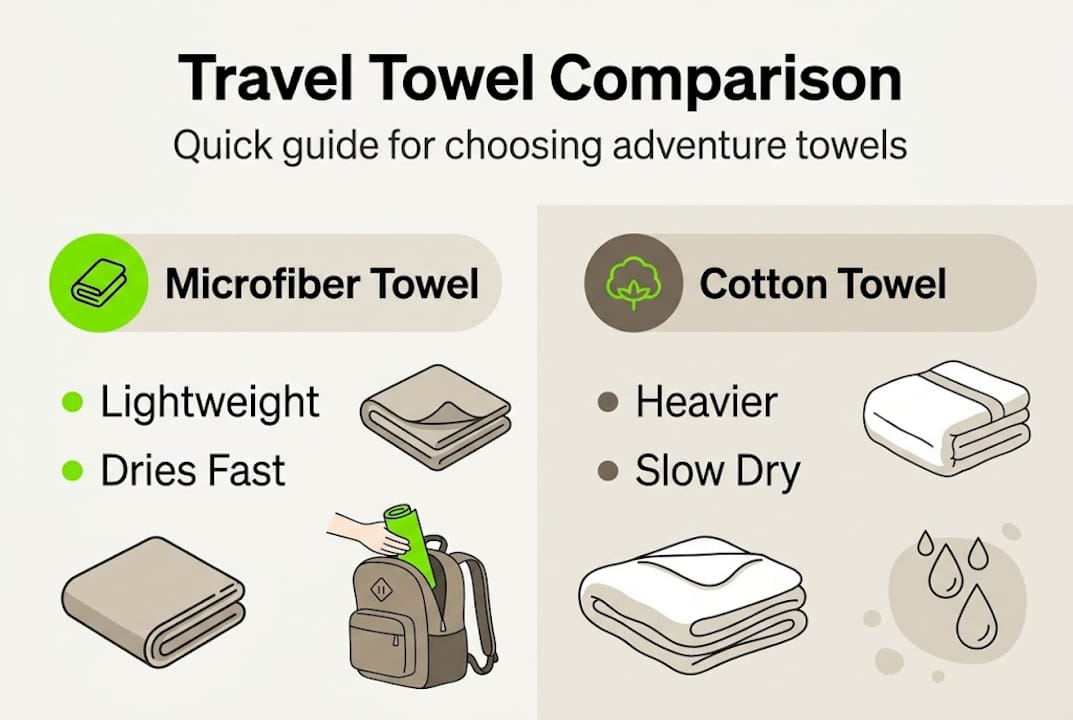
Start by identifying your priority. Are you going ultralight? A thin microfiber towel that packs down to the size of a softball is your best friend. Are you someone who hates the slightly waxy feel that some microfiber has against skin? Then a Turkish cotton or a hybrid option might suit you better, even if it costs a bit more pack space.
Speaking of hybrids, they’re emerging as a genuine solution for travelers who want plushness without sacrificing too much portability. They blend microfiber and cotton or bamboo fibers to offer a softer feel while still drying faster than a standard cotton towel. It’s a smart middle ground.
Here’s what to actually look for when shopping:
A handy companion resource is this travel towel packing guide, which helps you figure out sizing and storage strategies for different trip types.
The right choice really comes down to your trip style. Ultralight backpackers and hostel hoppers will almost always choose microfiber. Resort travelers or those doing yoga retreats might prefer the luxury feel of Turkish cotton or a plush hybrid. Neither choice is wrong. The wrong choice is bringing your bathroom’s oversized bath towel on a two-week trek.
Now that you know how to select the best travel towel, let’s examine what most guides overlook about their role in outdoor gear.
Here’s the uncomfortable truth that most buying guides gloss over: travelers consistently undervalue their towel until they’re standing in a hostel bathroom at midnight, holding something that smells like a wet dog and takes until noon to dry. Then suddenly, the whole conversation changes.
Most expert roundups focus on specs. Absorbency ratios. Gram weights. Compression size. And yes, that stuff matters. But the real game-changer is long-term behavior. How does the towel hold up after fifty washes? Does the antimicrobial treatment fade? Is the material sustainably sourced in a way that aligns with the outdoor values most adventurers actually hold?
Post-pandemic hygiene awareness shifted what people expect from their gear permanently. Antimicrobial quick-dry towels aren’t a nice-to-have anymore. They’re table stakes for anyone spending significant time in shared outdoor and travel spaces. The eco-friendly impact of choosing recycled microfiber or sustainably made travel towels adds another layer that matters increasingly to modern outdoor communities.
The towel doesn’t get the glory. It never will. But neglect it and it will absolutely ruin your trip.
Ready to upgrade your outdoor essentials? Whether you’re planning a weekend camping trip or a multi-month backpacking adventure, having the right gear makes everything smoother, lighter, and frankly a lot more enjoyable.
Sitpack travel gear covers the full spectrum of what modern adventurers need, from portable seating solutions to accessories like travel towels that genuinely earn their place in your pack. Explore the latest arrivals, check out what fellow outdoor enthusiasts are rating highly, and find the pieces that match your adventure style. Gear that works hard so you can focus on the actual adventure, not the logistics.
Travel towels dry up to 10 times faster than cotton towels, often reaching fully dry in just 15 to 60 minutes depending on conditions.
Yes, microfiber travel towels are typically antimicrobial, which significantly reduces odor and mildew risk. This is especially valuable in shared spaces like hostels or public showers, where post-COVID hygiene standards have raised the bar for what travelers expect from their gear.
Absolutely. Many travel towels are purpose-built for multi-use scenarios, functioning effectively as a yoga mat, picnic blanket, or beach layer without adding significant weight to your pack.
Microfiber leads for drying speed and weight, but hybrid and Turkish cotton options offer a plush, softer feel for travelers who prioritize comfort over pure performance metrics.