Cart
0
Sign up and get 10$ off your order
Expected delivery
1-3 days
You may also like


Danish Company


TL;DR:
- Genuine pop-up furniture opens instantly with no assembly, ideal for spontaneous use.
- Quick-fold chairs offer better comfort and support, suitable for longer outdoor events.
- Match chair type to activity for optimal comfort, portability, and stability.
Not all portable chairs are created equal, and if you’ve ever grabbed what the packaging called a “pop-up chair” only to wrestle with poles for ten minutes, you know exactly what I mean. The term “pop-up furniture” gets tossed around so loosely that it’s become almost meaningless in outdoor gear circles. Some chairs truly spring open in one fluid motion. Others are just cleverly marketed quick-fold designs that still require a few steps. This guide cuts through the noise, explains what genuine pop-up furniture actually is, breaks down the main types, and gives you a practical checklist so you can park your posterior on the right seat every single time.
| Point | Details |
|---|---|
| True pop-up defined | Pop-up furniture instantly deploys, but many chairs marketed as ‘pop-up’ are actually quick-fold models for better durability. |
| Key buying features | Weight, frame material, setup speed, and capacity are critical when selecting the right pop-up chair for travel or urban outings. |
| Best use cases | Pop-up furniture thrives at events, parks, and short adventures but prioritizing comfort and stability pays off for longer uses. |
| Watch for limitations | Not all pop-up chairs offer the support or resilience needed for every situation; know the trade-offs before you buy. |
With the big picture established, let’s get clear on what actually counts as “pop-up furniture” by today’s standards.
At its core, pop-up furniture is any seating (or table) that deploys in a single motion or with minimal, tool-free assembly, typically under thirty seconds. The key word is instant. Think of a spring-wire beach chair that you toss in the air and it lands open, ready to sit in. That’s the purest definition. No instructions needed, no loose poles, no head-scratching.
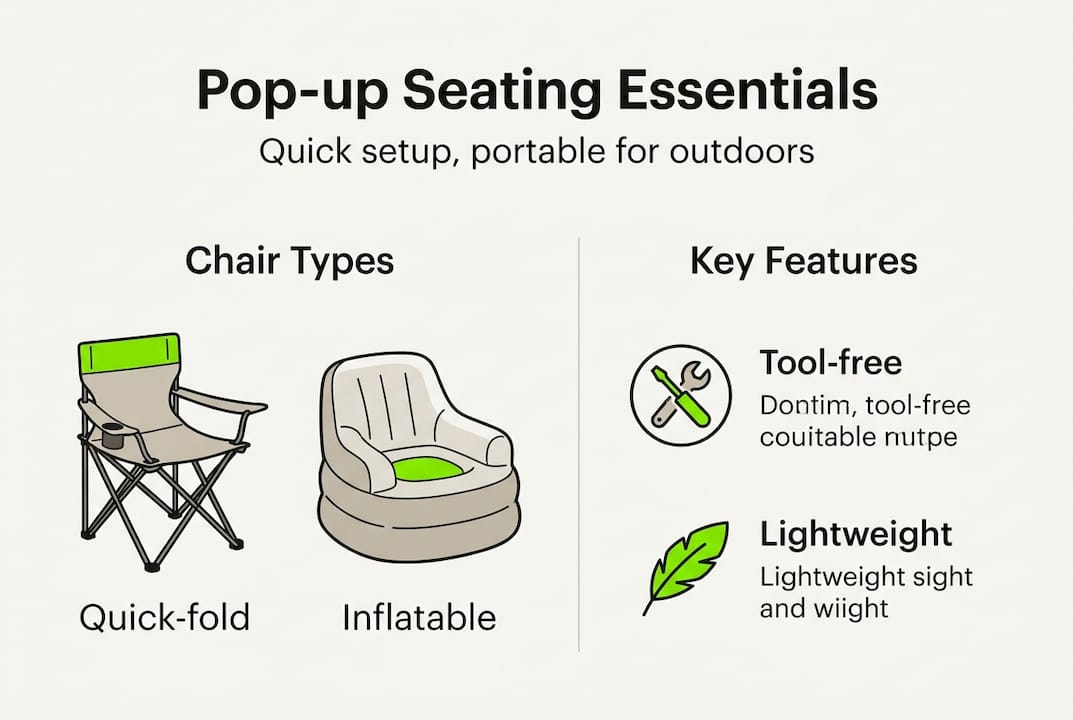
But here’s where it gets murky. Brands slap “pop-up” on everything from true spring-wire designs to tent-pole assembly chairs that honestly take two or three minutes to set up. As Popular Mechanics notes, “pop-up” is often used as marketing for any fast-deploy chair, and genuine spring-wire versions are best for impulse seating but may lack ergonomic support. That’s a real trade-off worth understanding before you buy.
So let’s draw some clear lines:
For portable event seating tips, knowing which category you’re buying into matters enormously. A spring-wire chair is brilliant for a spontaneous picnic but a poor choice for a six-hour music festival where your back will start filing complaints by hour two.
“The best pop-up chair is the one that matches your actual use case, not the one with the flashiest marketing on the box.”
Urban users love true pop-ups for crowded parks and impromptu outdoor lunches. Hikers and campers tend to lean toward quick-fold designs because the added setup time is worth the comfort payoff on a long trail day.
After defining the basics, it’s time to look at the specific forms pop-up seating can take, and how they’re used.
There are four main categories you’ll encounter, and each has a sweet spot:
Here’s a comparison of leading models to make the choice easier:
| Model | Weight | Capacity | Setup time | Best for |
|---|---|---|---|---|
| Helinox Chair One | 2.25 lbs | 320 lbs | Under 1 min | Hiking, backpacking |
| Gonex Camping Chair | 3.3 lbs | 330 lbs | 1-2 min | Camping, tailgates |
| Tornado Pop-Up | ~2 lbs | 300+ lbs | One motion | Festivals, impulse use |
| Basic inflatable lounger | 1-2 lbs | 200-250 lbs | 30-60 sec | Pools, beaches |
| Traditional folding chair | 5-8 lbs | 250-300 lbs | 30 sec | Backyard, car camping |
As benchmarks confirm, the Helinox weighs 2.25 lbs with a 320 lb capacity, the Gonex hits 3.3 lbs with 330 lbs capacity, and the Tornado pops open in one motion supporting 300+ lbs. Those numbers matter when you’re choosing between a summit hike and a tailgate.
For durability, quick-fold chairs are preferred over true pop-ups, inflatables win on convenience and speed, and traditional folders remain the budget-friendly workhorse despite being bulkier. Want to stay ahead of what’s new? Check out the latest portable seating trends shaping the market right now.
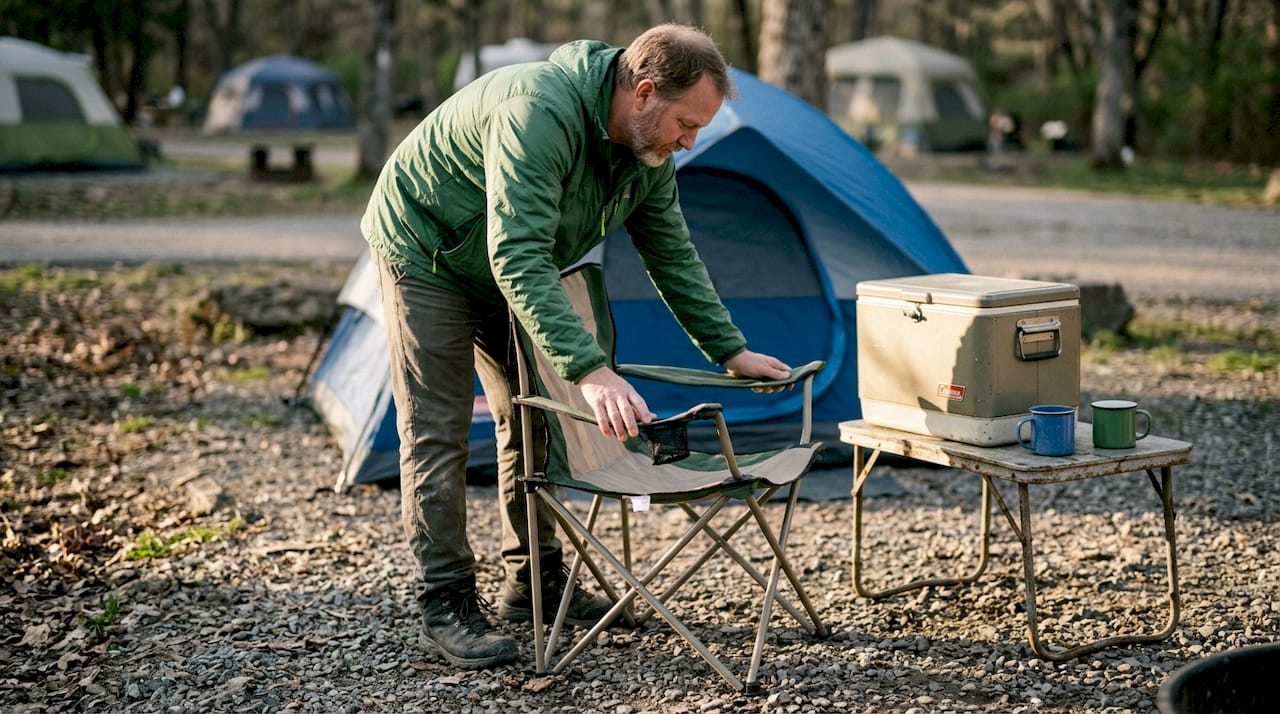
The bottom line: match the chair type to the mission. Ultralight hike? Quick-fold. Pool party? Inflatable. Spontaneous city park lunch? True pop-up wins every time.
Now that you know the main types, here’s exactly what to look for when choosing a pop-up solution for your next adventure.
Not all features are equal, and some specs that sound impressive on paper fall flat in the field. Here’s what actually matters:
Here’s a quick feature comparison for top models:
| Feature | Helinox Chair One | Gonex Chair | Basic pop-up |
|---|---|---|---|
| Frame | Aluminum | Aluminum | Spring-wire |
| Weight | 2.25 lbs | 3.3 lbs | ~1.5 lbs |
| Capacity | 320 lbs | 330 lbs | 200-300 lbs |
| Setup | Under 1 min | 1-2 min | Instant |
| Carry bag | Yes | Yes | Usually no |
Understanding the foldable chair advantages can also help you narrow down which features matter most for your specific lifestyle.
Pro Tip: Always test your chair on uneven ground before a big trip. A chair that’s rock-solid on your living room floor can wobble dangerously on gravel or soft dirt. Look for models with wide, rubberized feet or adjustable legs for the best stability.
So how does pop-up seating actually perform where you need it most? Here’s what real-world use and actual testers reveal.
Let’s run through the most common scenarios where pop-up furniture earns its keep, and where it occasionally lets you down.
Now for the honest part. Edge cases reveal real limitations: pop-up chairs aren’t suited for ultralight backpacking where every ounce counts, padded seats need to air-dry properly after rain to prevent mold, and some models are genuinely tricky to fold back up the first few times.
Pro Tip: If you’re using a pop-up chair on wet grass or sand, bring a small square of rubber matting to place under the feet. It prevents sinking and keeps the chair stable without any extra gear weight.
For smarter event seating strategies that cover both urban and outdoor scenarios, a bit of pre-trip planning goes a long way. Knowing your terrain and duration before you pack makes all the difference.
Quick stat: Most quality quick-fold chairs set up in under sixty seconds, yet surveys consistently show that over 60% of outdoor chair buyers don’t check weight capacity before purchasing. That’s how chairs get broken and people get hurt.
With all this detail covered, it’s time for a candid assessment of what really counts in portable seating.
Honestly? The “pop-up” label has become a marketing trap, and I’ve watched it burn buyers repeatedly. People see “instant setup” on the box and assume they’re getting the full package: comfort, durability, and convenience. What they often get is a springy wire contraption that folds them nearly in half and leaves their lower back staging a protest by sunset.
The conflation of pop-up, quick-fold, and traditional folding is a marketing trap, and long-term comfort and frame durability matter far more than setup speed. I’d add that the buyers who are happiest with their portable chairs are the ones who ignored the flashy claims and focused on three things: proven comfort from real user reviews, a weight limit that actually matches their needs, and a frame material that won’t corrode or snap after a season.
Speed is a bonus. It’s not the foundation. A chair that pops open in two seconds but collapses under you or leaves you hunched over isn’t a win. Look at foldable vs pop-up chairs with a critical eye, prioritize ergonomic support and stability, and treat setup time as a secondary consideration. Your back, and your long-term satisfaction, will thank you.
Ready to put your new knowledge to use? Here’s where to continue your search for the ideal pop-up chair.
If this guide has helped you cut through the marketing fog, the next step is finding gear that genuinely delivers. Sitpack portable furniture is built around exactly the principles we’ve been talking about: lightweight design, real-world durability, and seating that fits your life rather than the other way around. Whether you’re a city explorer who needs something that slips into a backpack or a trail hiker who refuses to sacrifice comfort for weight, there’s a solution worth exploring.
Dive into the full range and discover the advantages of foldable chairs to see how the right seat can genuinely upgrade your outdoor and urban adventures. Sometimes the best gear decision you make is simply knowing what to look for before you buy.
True pop-up chairs deploy in a single motion using spring-wire frames, while quick-fold chairs like the Helinox require simple pole assembly but deliver significantly better comfort and durability in return.
Most quality models are tested stable on grass, gravel, and concrete, but they’re not ideal for extreme off-road conditions or ultralight backpacking where base design and total weight become limiting factors.
Pop-up chairs prioritize speed and convenience, but overloading risks collapse and true spring-wire designs typically offer less ergonomic support than their quick-fold counterparts.
Expert reviews favor quick-fold for long-term comfort and stability, while true pop-up chairs are best reserved for short rest stops, impulse seating, or situations where you’re constantly on the move.