Cart
0
Sign up and get 10$ off your order
Expected delivery
1-3 days
You may also like
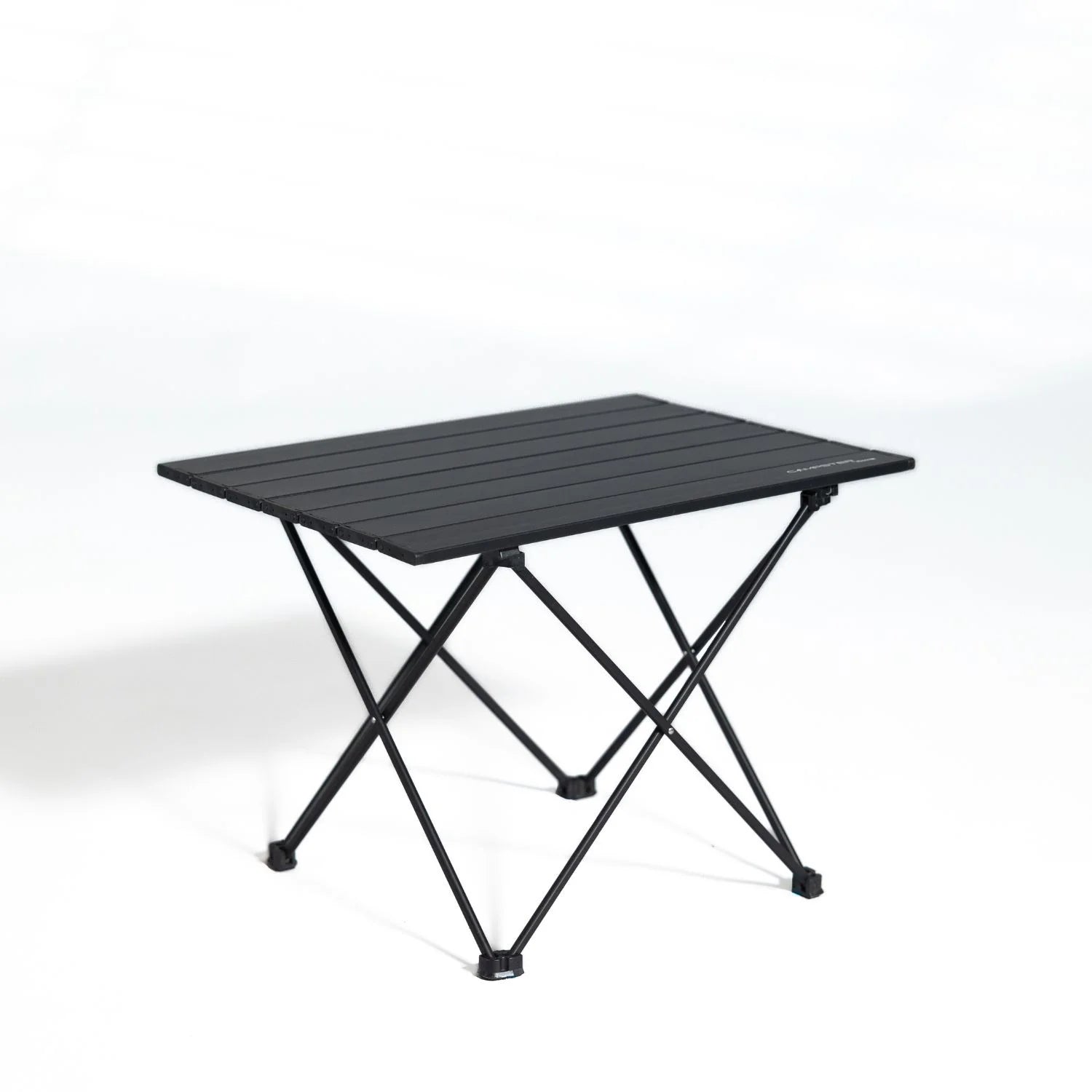


Danish Company

TL;DR:
- Effective urban seating relies on ergonomic dimensions, smart placement, durable materials, and environmental features. Proper placement encourages social interaction or solitude, and lightweight, weather-resistant seats increase usage and longevity. Thoughtful design and positioning create inviting spaces where people genuinely want to sit and spend time.
Urban seating solutions are defined as portable, ergonomic, and context-aware furniture systems designed to support comfort, rest, and social interaction across city environments. Whether you’re a daily commuter hunting for a quick rest between trains or a city resident building out a rooftop patio, the right seating changes how you experience urban life. This guide to urban seating solutions covers the ergonomic standards, material choices, placement strategies, and sustainability factors that actually matter. You’ll leave with a clear framework for choosing seating that fits your space, your lifestyle, and your city.
Good urban seating starts with numbers, not aesthetics. The standard ergonomic seat height for adults sits between 17 and 19 inches, with a seat depth of 15–18 inches. Those dimensions keep your knees at roughly a 90-degree angle and distribute weight evenly across your thighs, which matters a lot when you’re sitting on a hard park bench for 30 minutes.
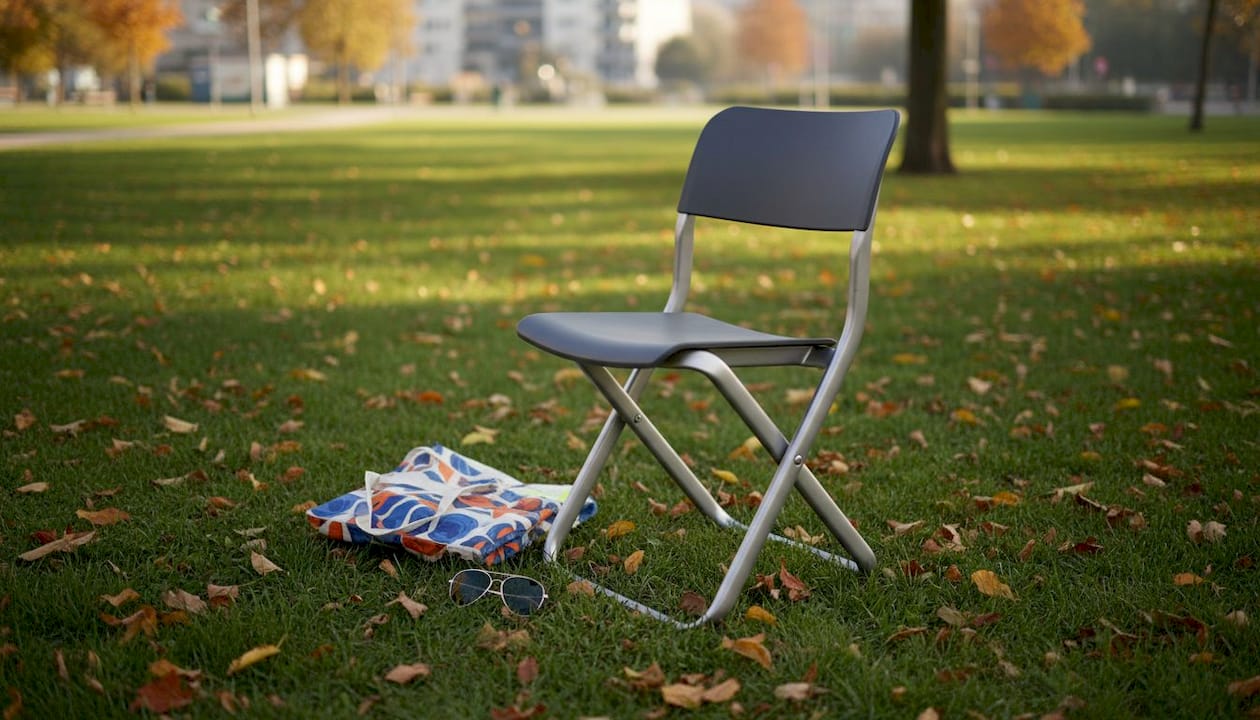
Portability adds another layer to the equation. High-quality portable chairs designed for urban use weigh around 3.7 kg (8.1 lbs). That weight hits a sweet spot: light enough to carry in a backpack or over one shoulder, but heavy enough to feel stable on uneven city surfaces like cobblestones or cracked pavement.
Design features that hold up in city conditions deserve equal attention. Weather resistance, UV stability, and scratch-resistant finishes are not luxury upgrades. They are the baseline for anything that lives outdoors in a city. Seats that fade, crack, or rust within a season cost you more in the long run than a well-built piece bought once.
Here’s a quick checklist of features worth prioritizing when evaluating urban seating design:
Pro Tip: Before buying, sit in the chair for at least five minutes on a hard floor. If your legs go numb or your lower back rounds out, the seat depth is wrong for your body.
Sustainable urban seating should be made from materials that are reusable, repairable, and recyclable. That standard reduces environmental impact and extends the product’s useful life well beyond a single season. Choosing sustainable seating options is not just an ethical call. It’s a practical one, since better materials simply last longer.
Seating placement is one of the most underestimated tools in urban design. Benches facing each other encourage conversation and social interaction, while isolated benches placed at angles or facing outward support solitude and quiet rest. That single variable, orientation, shapes whether a public space feels like a gathering spot or a place to decompress alone.
Understanding that dynamic helps you make smarter choices for your own outdoor seating ideas, whether you’re arranging a small city patio or picking a spot in a shared courtyard. Here’s a practical framework for matching placement to purpose:
“The balance between encouraging social interaction and providing quiet solitude in urban seating is primarily driven by thoughtful placement and variety of seat options.”
For small urban outdoor spaces, the most effective approach combines movable seating with a fixed anchor point like a wall-mounted shelf or a compact table. That combination gives you flexibility without sacrificing function.
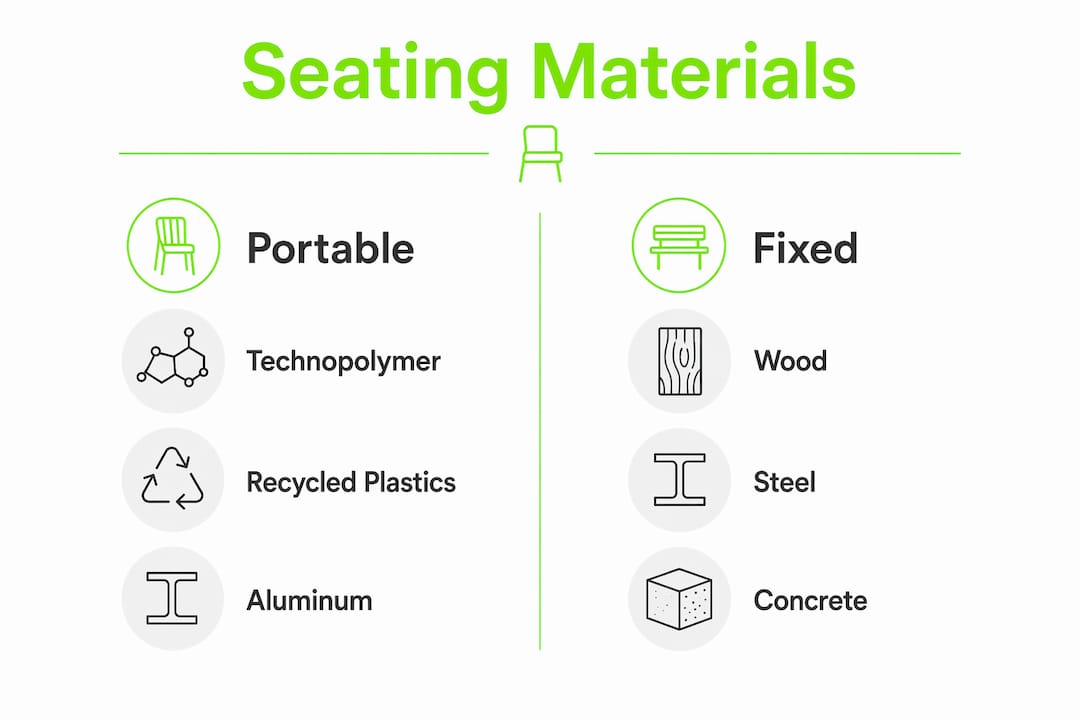
Material choice determines how long your seating lasts and how easy it is to move. Technopolymer, recycled plastics, and lightweight aluminum are the three most common materials in well-regarded portable urban furniture. Each has a specific strength.
Technopolymer is a glass-fiber-reinforced plastic that resists UV degradation, handles temperature swings well, and cleans up with a damp cloth. Recycled plastics offer similar weather resistance with a lower carbon footprint, making them a strong pick for sustainable seating options. Lightweight aluminum frames add structural rigidity without adding much weight, which is why you see it in folding and stackable designs.
Here’s a comparison of the three main material categories by practical criteria:
| Material | Weight | Weather resistance | Sustainability | Maintenance |
|---|---|---|---|---|
| Technopolymer | Low to medium | Excellent | Moderate | Wipe clean |
| Recycled plastic | Medium | Excellent | High | Wipe clean |
| Lightweight aluminum | Low | Good | Moderate | Occasional coating check |
Lightweight and foldable seating increases usage frequency among urban commuters who need flexible seat choices for variable locations. That’s the core argument for prioritizing portability over bulk. A chair you actually carry beats a heavy chair that stays home.
Pro Tip: Check whether replacement parts are available before you buy. A chair with a replaceable seat pad or frame connector will outlast a “disposable” design by years, and it costs far less over time.
Maintenance in city environments is more demanding than in a suburban backyard. Pollution, bird activity, and rain cycles all accelerate wear. Wipe down seats weekly during heavy-use seasons and store foldable pieces indoors during extended cold or wet periods to preserve finish and joint integrity.
The difference between a seating area that gets used and one that gets ignored usually comes down to three things: shade, surfaces, and sound. Get those right, and people linger. Get them wrong, and even beautiful furniture sits empty.
Permanent shade solutions like fixed pergolas or mature trees outperform retractable awnings for daily usability. Shade that requires no setup removes friction entirely. Layered lighting, meaning a mix of overhead, ambient, and low-level sources, extends the usable hours of any outdoor seating area well past sunset.
Every seat needs a nearby surface within arm’s reach for drinks or belongings. That detail sounds minor, but it’s the single most common reason people leave a seating area sooner than they’d like. A small side table or even a built-in armrest with a flat top solves the problem completely.
A few more elements that consistently improve how much an urban seating area gets used:
The ergonomic principles behind urban seating apply just as much to a private patio as to a public plaza. Comfort is not subjective. It follows measurable standards, and meeting those standards is what keeps people sitting rather than shifting and standing.
Effective urban seating combines ergonomic standards, smart placement, durable materials, and thoughtful environmental design to create spaces that people genuinely want to use.
| Point | Details |
|---|---|
| Ergonomic dimensions matter | Target 17–19 inch seat height and 15–18 inch depth for adult comfort. |
| Placement drives social behavior | Inward-facing seats encourage interaction; outward-facing seats support solitude. |
| Material choice affects longevity | Technopolymer and recycled plastics offer the best weather resistance for city use. |
| Portability increases usage | Lightweight, foldable seating gets used more often by urban commuters. |
| Shade and surfaces are non-negotiable | Fixed shade and a nearby surface within arm’s reach keep people seated longer. |
I’ve spent a lot of time parking my posterior on everything from sleek aluminum park benches to wobbly plastic chairs outside corner cafés. The spec sheet never tells you the whole story. What I’ve noticed is that the seating people actually return to has one thing in common: it makes them feel like they belong in the space, not like they’re borrowing it.
The biggest mistake I see in urban seating design is treating placement as an afterthought. People agonize over material and color, then plunk the chair down wherever it fits. That’s backwards. Placement shapes behavior more than any material choice. A beautifully made chair facing a blank wall will sit empty while a cheap bench angled toward foot traffic fills up by noon.
The other thing that rarely gets discussed is the transition zone. That 4-foot-wide, well-lit path between indoor and outdoor seating is not a luxury. Without it, the outdoor space feels like an obstacle course rather than an invitation. I’ve seen expensive patio setups go completely unused because the path to reach them was awkward, dark, or blocked by a planter.
My honest recommendation: before you buy anything, stand in your intended space for five minutes and watch how people move through it. Then place your seating where the natural pauses already happen. You’ll spend less and use the space far more. For flexible city living, a portable seating option that travels with you beats a fixed setup that only works in one spot.
— Jonas
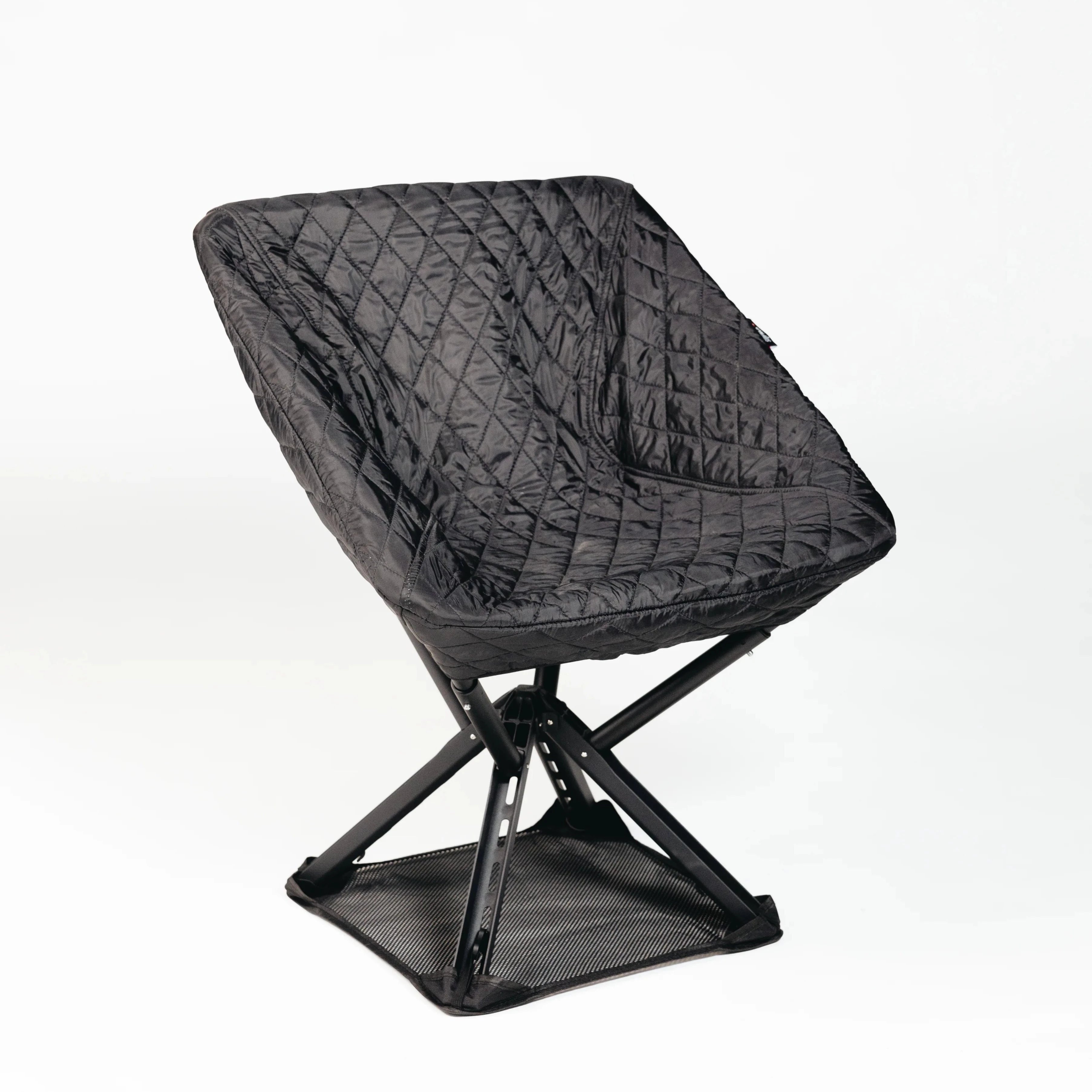
City life moves fast, and your seating should keep up. Sitpack designs portable, foldable chairs built specifically for urban residents and commuters who need comfort without the bulk.
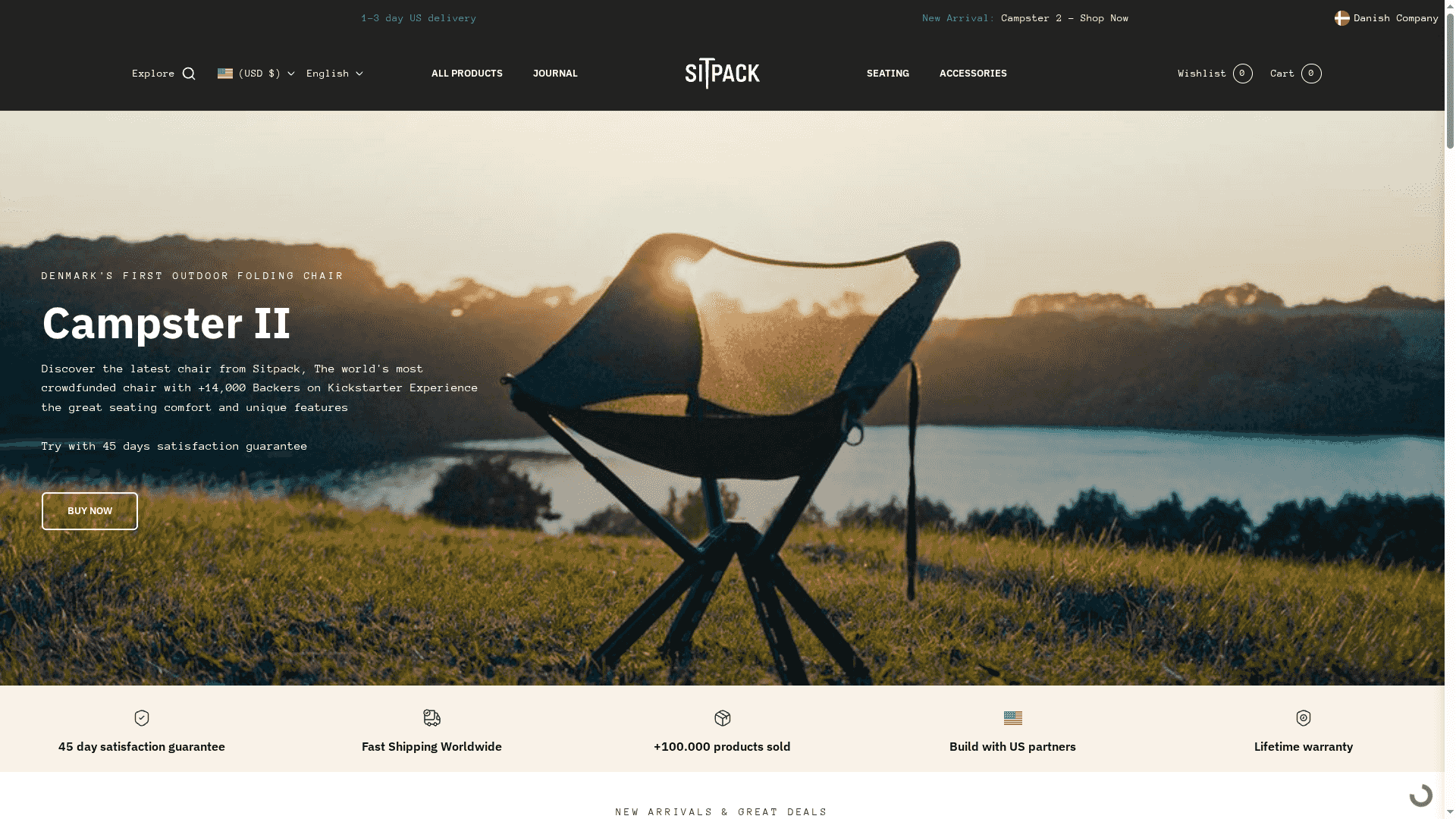
The Campster II and Sitpack Zen are built from lightweight, eco-friendly materials with ergonomic proportions that meet the seat height and depth standards covered in this article. Both chairs fold flat, weigh well under 9 lbs, and come with a lifetime warranty backed by a 45-day satisfaction guarantee. Whether you’re heading to a rooftop gathering, a city park, or a weekend market, Sitpack’s portable chair lineup gives you a proper seat wherever you land.
The standard ergonomic seat height for urban seating is 17–19 inches, with a seat depth of 15–18 inches. These dimensions support comfortable posture for most adults across extended sitting periods.
Choose portable seating if you move between locations regularly or have limited storage space. Fixed seating works best for permanent outdoor areas where stability and weather resistance are the top priorities.
Technopolymer, recycled plastics, and lightweight aluminum are the top choices for outdoor urban seating. All three offer strong weather resistance, and recycled plastics carry the highest sustainability rating.
Seats facing each other encourage conversation, while seats angled outward or placed in isolation support quiet rest. Mixing both arrangements in one space gives users a choice and increases overall usage.
A portable urban chair should weigh under 9 lbs, fold flat or compact enough to fit in a bag, and use weather-resistant materials that handle daily city conditions without requiring constant maintenance.