Vogn
0
Tilmeld dig og få 10% i rabat på din ordre
Forventet levering
1-3 dage
Du vil måske også kunne lide


Dansk Firma


The best eco-friendly outdoor products come from brands that treat sustainability as a design requirement, not a marketing afterthought. Patagonia, Tentree, Oboz Footwear, prAna, Toad and Co., Nau, Tellus, and Sitpack all make that cut in 2026, each with a distinct approach to materials, ethics, and durability. Here’s the short version of what makes them worth your money:
Certifications like bluesign, Fair Trade, and the Global Recycled Standard are your fastest shortcut to separating genuine sustainability from greenwashing.
Patagonia’s Worn Wear program is one of the most concrete examples of circular thinking in outdoor apparel. You send in a worn jacket, they repair it, and it goes back into use rather than a landfill. Their gear uses recycled polyester and nylon throughout, and every purchase contributes to environmental nonprofits through the 1% for the Planet pledge.
Ten trees planted per purchase is a simple, trackable promise. Tentree builds its clothing from organic cotton, recycled polyester, and TENCEL lyocell, a fiber made from sustainably harvested wood pulp. The brand publishes its supply-chain impact data publicly, which is rarer than it should be.

Oboz uses recycled content in its midsoles and plants a tree for every pair sold through its Oboz Gives Back program. Their hiking boots are built for longevity, which matters more than most shoppers realize. A boot that lasts five seasons beats a “green” boot that falls apart in two.
prAna’s bluesign and Fair Trade certifications cover both the materials and the workers who make them. Their hemp-blend shirts and organic cotton leggings are practical trail pieces, not just feel-good purchases. Hemp is naturally pest-resistant, so growing it skips most of the pesticide load that conventional cotton carries.
Toad and Co. publishes detailed sourcing information for its fabrics, which puts it ahead of most outdoor apparel brands. Their pieces use recycled polyester, organic cotton, and Tencel, and the brand has committed to phasing out virgin synthetic materials. Good for hikers who want to know exactly where their gear comes from.
Nau designs outdoor apparel with a low-waste production model, using bio-based and recycled materials to keep its footprint small. The brand’s aesthetic leans minimal, which tends to produce more versatile pieces you actually wear more often. Versatility is its own form of sustainability.
Tellus, along with the broader plant-wax fire pit category including the El Fuego Original, runs on 100% vegetable wax refills that cut CO2 emissions by up to 90% compared to a traditional wood fire. Each refill burns for up to 8 hours and replaces roughly 100 pieces of firewood. No ash, no sparks, no smoke drifting into your neighbor’s yard.

The Plaza Hexagon Table from Polly Products is crafted entirely from 100% recycled HDPE plastic, including milk jugs and detergent bottles, offering durability without rust and rot, and backed by a 20-year commercial warranty. It won’t rust, warp, or need painting, and it’s fully recyclable at end of life. That’s a closed-loop product in the truest sense.
The Sea to Summit Ikos Evo uses recycled 68D polyester and DAC poles, with all materials certified bluesign approved and 100% non-PFAS. Big Agnes’s Fly Creek UL1 goes further with proprietary recycled 15D nylon and solvent-free polyurethane seam tape. Both prove that weatherproof and chemical-free aren’t mutually exclusive.
For outdoor bags and accessories, full-grain leather goods from makers like Grainmark Leather offer a biodegradable alternative to synthetic packs. Full-grain leather ages well, resists abrasion, and breaks down naturally at end of life, unlike most nylon alternatives.
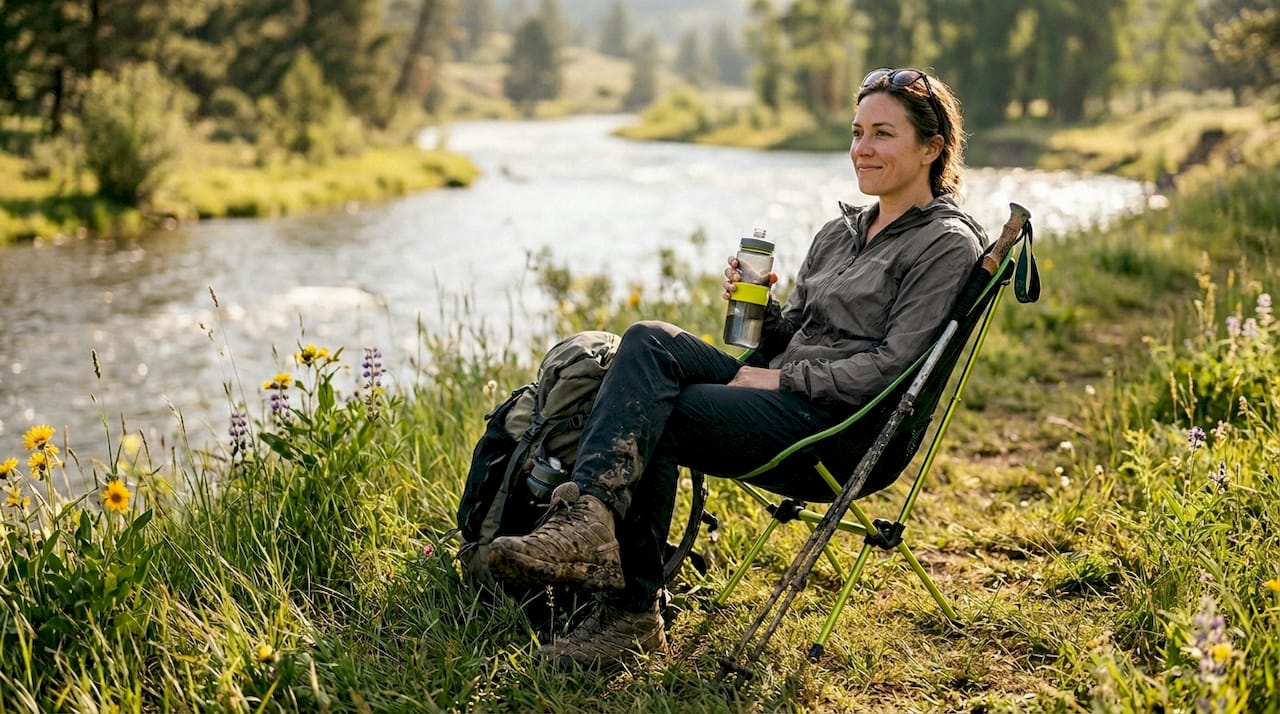
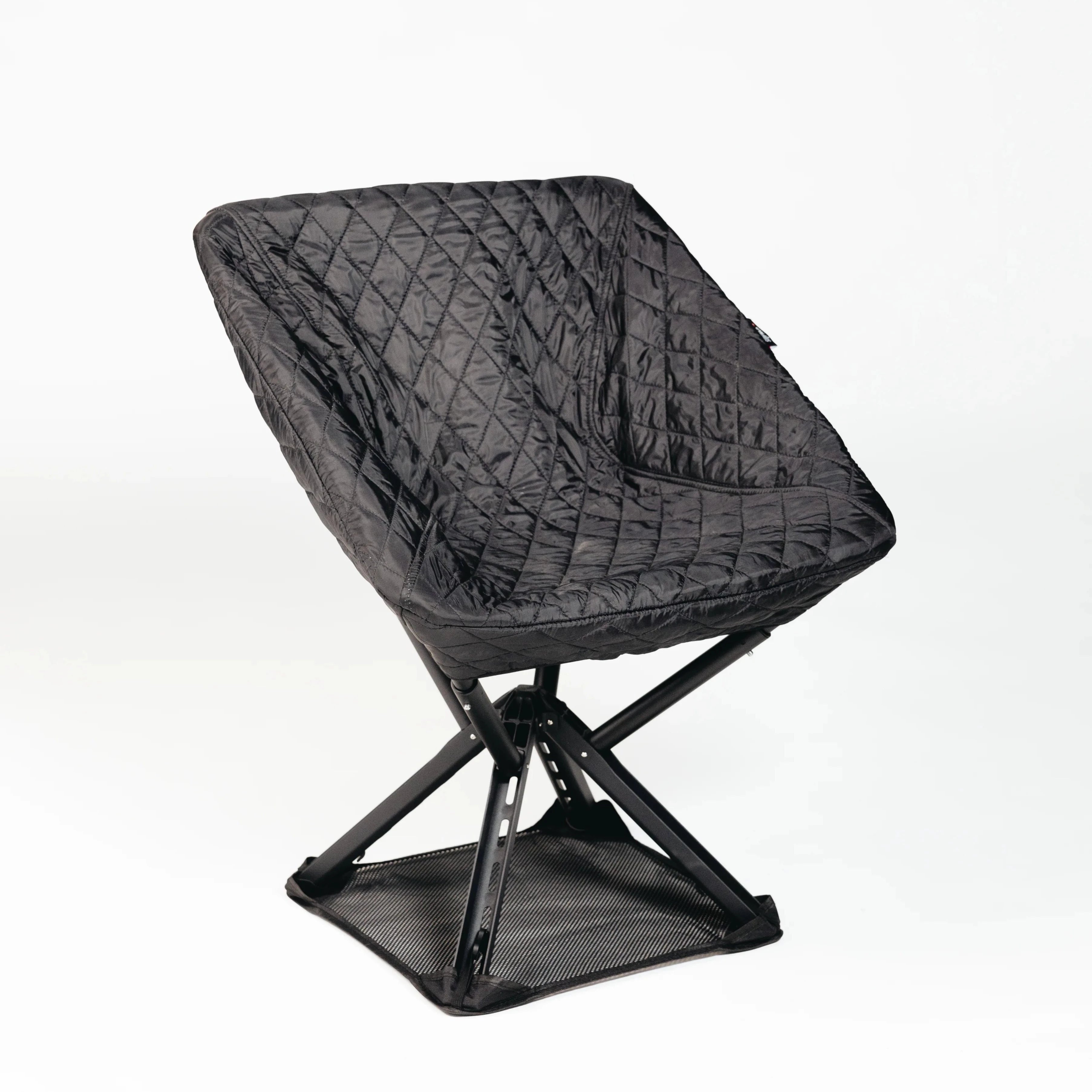
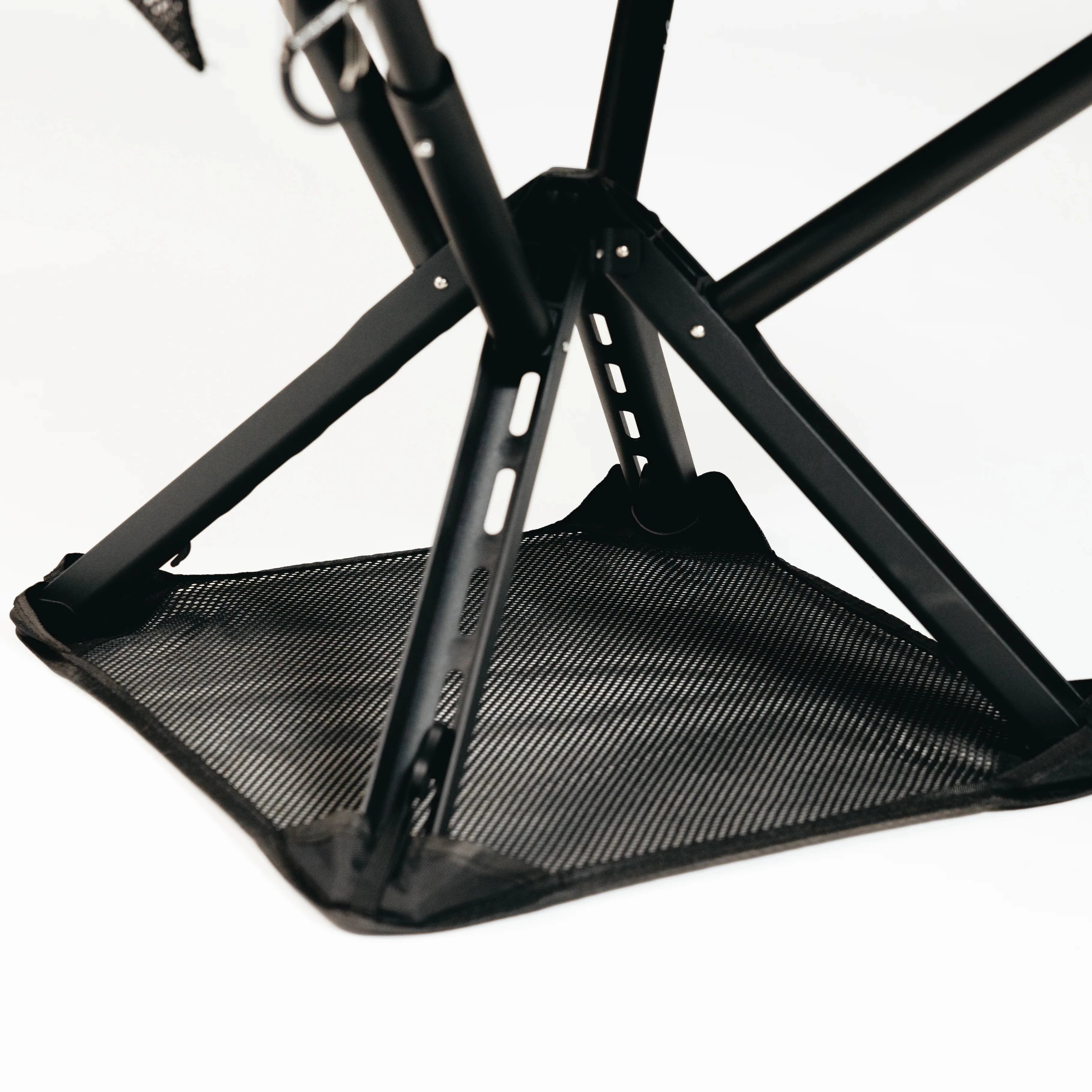
Sitpack’s Campster II and Sitpack Zen are built with durability as the core design principle. Lightweight, compact, and backed by a lifetime warranty, they’re the antidote to the cheapo folding chairs that crack after one season and end up in a landfill. For sustainable portable seating, fewer replacements means less waste, full stop.
The most common sustainable materials in green hiking equipment and camping gear right now are recycled polyester, organic cotton, recycled HDPE plastic, and plant-based waxes. Each solves a different problem.
Recycled polyester turns plastic bottles into functional fabric. Non-toxic, weather-resistant recycled PET maintains durability while cutting the chemical load of conventional outdoor cushions and fabrics. Natural fibers like organic cotton and hemp are genuinely sustainable at the growing stage, but they often need treatment to handle moisture outdoors, so check what that treatment is before you buy.
Waterproofing is where a lot of “eco-friendly” claims fall apart. Many products still use PFAS-based coatings despite marketing language that implies otherwise. Look specifically for “non-PFAS” or “PFC-free” on the label, not just “eco-friendly.” Bluesign certification is the most reliable third-party signal that a fabric’s chemistry has been independently vetted.
Biodegradable outdoor products, like certain tent pegs and footwear, do break down eventually, but they require specific composting conditions and take years. Don’t assume “biodegradable” means you can leave it in the woods.
Pro Tip: When shopping for waterproof outdoor gear, filter specifically for “non-PFAS” or “PFC-free” labels and cross-check with bluesign or OEKO-TEX certification. A product can be marketed as eco-friendly and still use legacy waterproofing chemicals.
Durability is the single most critical sustainability factor in outdoor gear, because a product that lasts a decade eliminates nine years of replacement manufacturing. Industry experts recognize that reducing the need for new resource-heavy production cycles matters more than any single material choice.
Patagonia’s Worn Wear and VAUDE’s repair initiatives are the clearest real-world examples of this principle in action. Both brands have built repair infrastructure so that a broken zipper or torn seam doesn’t become a landfill contribution. That’s a fundamentally different business model than selling you a replacement every two years.
A product built to be repaired and used for a decade has a fraction of the environmental footprint of a “sustainable” product that wears out in two seasons. Lifecycle impact, not just material content, is the real measure of green outdoor gear.
The lifecycle approach to sustainability requires that products are recyclable or biodegradable at end of life, not just made from recycled content at the start. The Plaza Hexagon Table’s 20-year warranty and full recyclability at end of life is a better sustainability story than a cheaper table made from recycled plastic that cracks in three years.
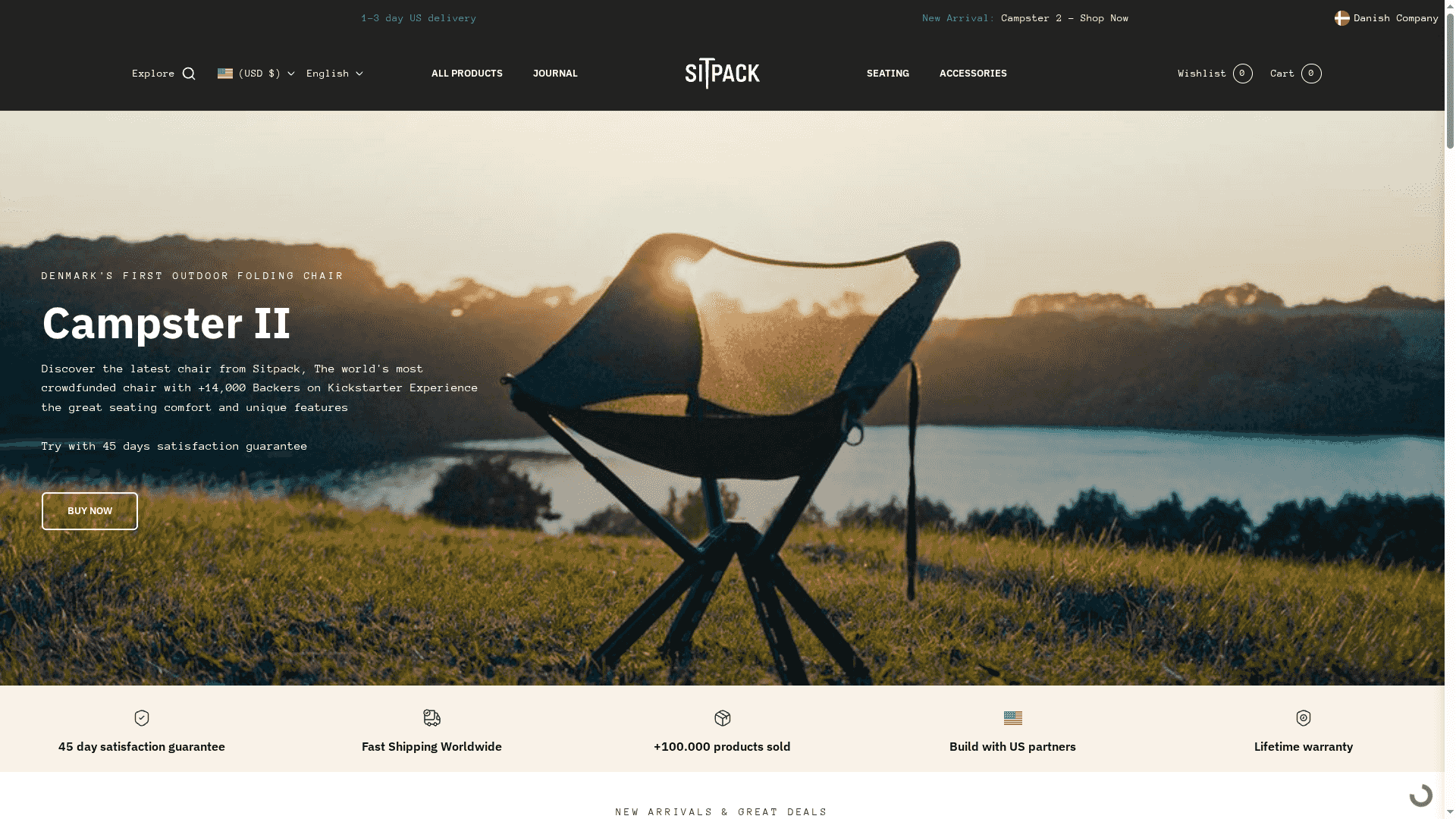
Sitpack makes portable chairs that are genuinely built to last, which puts them in a different category from the disposable folding seats cluttering most campsite supply aisles. The Campster II and Sitpack Zen are lightweight, packable, and backed by a lifetime warranty. That warranty isn’t a marketing line. It’s the brand’s commitment that you won’t be buying another chair next season.
For outdoor enthusiasts who’ve spent real time thinking about the footprint of their gear, Sitpack’s approach to low-impact outdoor adventures makes practical sense. Less waste, less replacement, more time actually sitting around that plant-wax fire. Browse the full range at sitpack.com and find the seat that goes where you go.
The most sustainable outdoor gear combines recycled or biodegradable materials, PFAS-free coatings, and durable construction designed for repair and long-term use.
| Point | Details |
|---|---|
| Durability beats material alone | A product built to last a decade eliminates years of replacement manufacturing and waste. |
| PFAS-free certification matters | Look for “non-PFAS” or “PFC-free” labels and bluesign certification to verify waterproofing safety. |
| Lifecycle sustainability | Products should be recyclable or biodegradable at end of life, not just made from recycled content initially. |
| Plant-wax fire pits cut emissions | El Fuego-style vegetable wax refills reduce CO2 emissions by up to 90% compared to traditional wood fires and each wax refill burns steadily for up to 8 hours, replacing approximately 100 pieces of traditional firewood. |
| Sitpack: durable portable seating | Lifetime-warranted portable chairs reduce the cycle of disposable outdoor seating and its associated waste. |