Vogn
0
Tilmeld dig og få 10% i rabat på din ordre
Forventet levering
1-3 dage
Du vil måske også kunne lide


Dansk Firma

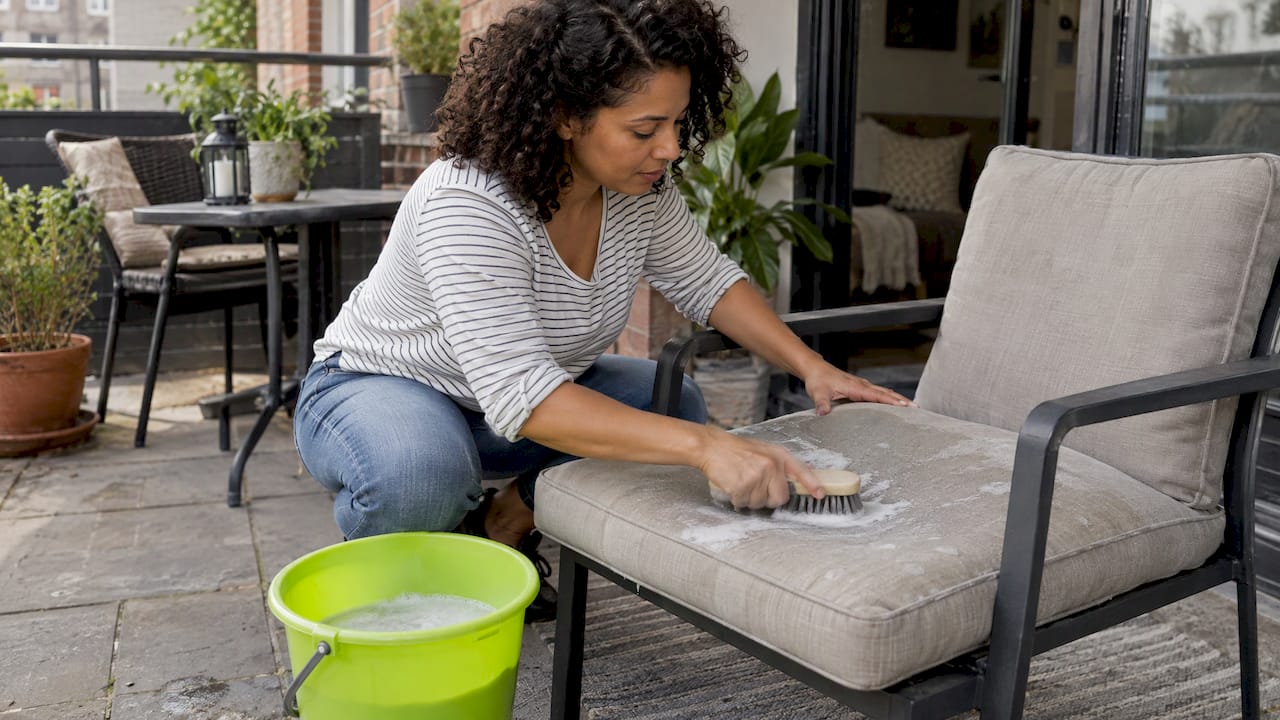
To clean patio chair cushions, brush or vacuum off loose dirt, scrub with mild dish soap and warm water, rinse until no suds remain, and let them air-dry fully on their sides. Check the care tag first and test any cleaner on a hidden spot. That covers most grime. Mildew and stubborn stains need a stronger step, and I’ll walk you through both below.
I’ve parked my posterior on plenty of grubby cushions, so consider this the no-nonsense version: what to use, in what order, and what to skip so you don’t turn a dirty cushion into a ruined one.
Before you grab a bucket, find the tag. It tells you whether the cover comes off, whether it can go in a washer, and whether bleach is allowed. If there’s no tag, assume hand washing is the safe route.
The fabric matters too. Wirecutter’s Harry Sawyers points out that part of your success depends on the material itself. His own cushions are olefin, a polypropylene fiber, and he adapts his approach to whatever he is cleaning. A solution-dyed acrylic behaves differently from a cotton blend, and neither behaves like a vinyl seat pad.
Two habits save a lot of regret:
Nothing fancy. Most of this is already in your garage or under the sink:
Brush choice is worth a second of thought. Architectural Digest’s fabric-care expert recommends medium-stiff bristles: too soft and it won’t lift grime, too stiff and you can damage the fabric. For delicate material, a microfiber cloth is the gentler option.
This is the routine for a typical removable-cover or fixed cushion that is dirty but not moldy.
Remove the inserts if the covers unzip. Brush or vacuum both sides of the cover and the cushion itself. Leaves, crumbs, pollen and spider webs all turn to paste once water hits them, so don’t skip this. Wirecutter’s method starts the same way, vacuuming with a mini roller attachment to lift debris.

For spot-cleaning, Architectural Digest recommends one part non-detergent dish soap to two parts warm water. For a whole-cushion wash, Real Simple suggests 1/4 cup of mild detergent per gallon of water and a soft-bristle brush. Both are gentle enough for most fabrics, which is exactly why they’re the place to begin.
Apply the solution and give it a few minutes to loosen the dirt. Stained areas can sit for up to 15 minutes. Then scrub with your brush or cloth, working across the whole panel rather than hammering one patch.
Use the hose or clean buckets of water until no suds remain. This step gets rushed more than any other, and it’s the one that matters most. Martha Stewart’s cleaning expert Romine explains that leftover detergent attracts more dirt and can cause discoloration over time. If your cushions have zippers, pay extra attention there, since trapped liquid hides in those seams.
See the drying section below. A clean cushion that stays damp is just a future mildew project.
Not every mark gives up to soap. Work up the ladder, gentlest first, and stop when the stain is gone.
| Problem | First try | If it stays |
|---|---|---|
| General grime | 1:2 non-detergent dish soap and warm water, scrubbed with a medium-stiff brush | Longer soak, up to 15 minutes |
| Bird droppings, tough spots | 1 part vinegar to 3 parts water, left for an hour or more before scrubbing | Oxygen-based cleaner |
| Crusted-on dirt | Damp rag to soften, then scrub | Teaspoon of oxygen-based cleaner in a cup of warm water, applied with an old toothbrush |
| Pretreating older stains | 50/50 warm water and white vinegar in a spray bottle, left 20 minutes, then hosed off | Repeat, then rinse well |
| Odors | Baking soda paste with a little water | Air out in shade |
The vinegar-and-water ratios come from Architectural Digest for tough stains such as bird droppings, and from Lowe’s for the 50/50 pretreatment. The oxygen-based cleaner method, a teaspoon of OxiClean in a cup of warm water, is Wirecutter’s, and it uses an old toothbrush for small spots and a larger scrub brush for bigger ones.
One more tip from the same Architectural Digest expert: oil stains are particularly stubborn, so give them a proper brush with medium-stiff bristles rather than a feather-light dab.
Mildew shows up as gray, green or black speckles and a damp, basement smell. It loves cushions that were put away wet or never fully dried after rain.
Here is a sensible order of attack:
Sunbrella also notes that its fabrics don’t promote mildew growth, but mildew can grow on dirt and other foreign substances left on the fabric. In plain terms, even mildew-resistant cushions need regular cleaning. Keep the dirt off and you give mildew nothing to eat.
Sometimes. It depends on the cover and the filling, and the care tag is the final word.
Architectural Digest’s guidance is that some covers can be machine washed if they’re removable and the care instructions allow it. In that case, take out the inserts, use the cycle the tag prescribes, dry on low heat only if permitted, and air-dry fully. Make sure the inserts are completely dry before you put the covers back on.
If the tag says hand wash only, or there’s no tag, skip the machine. A soaked foam insert can take days to dry and can hold moisture long after the cover feels fine. Foam inserts generally shouldn’t be put through the washer at all, so wash the covers and treat the insides with the gentle surface methods above.
Rinse with a garden hose or clean water until the runoff is clear. Then squeeze out excess water gently. Real Simple suggests squeezing out excess water and standing cushions up against a clean surface to dry thoroughly.
Some drying rules worth following:
The sneaky problem is the inside. A cover can feel dry while the insert is still damp, and that’s how mildew gets a second act. When in doubt, give it another sunny-but-shaded afternoon.
We design seating for people who actually use it: campers, commuters, travelers and city sitters who want something light that holds up. After years of that, the lesson we keep coming back to is simple: gear lasts longer when it gets a little care more often, not a big rescue once a year.
That’s why we like the cleaning routine in this guide. It’s boring in the best way. Dry brush, mild soap, a proper rinse, and real drying time. None of it needs a special product, and it works whether the seat is a patio cushion or a portable stool that lives in a backpack.
It’s also why we build around materials that shrug off a wipe-down and designs that stay minimal, so there are fewer seams and folds for grime to hide in. We back our gear with a 45-day satisfaction guarantee and a lifetime warranty on select items, because we want you outside, not scrubbing. If you want the deeper dive on fabric care, our own guides on cleaning lawn chair cushions without fading and cleaning outdoor chair cushions in 24 hours go further.
Jonas
A ten-minute habit beats a Saturday of scrubbing. Here is what we’d do:
If you’re also working through the frames, our guides on cleaning outdoor chairs naturally and maintaining foldable chairs cover the rest of the seat. And if you’re replacing worn cushions, our roundup of garden furniture seat cushion covers is a good place to browse.
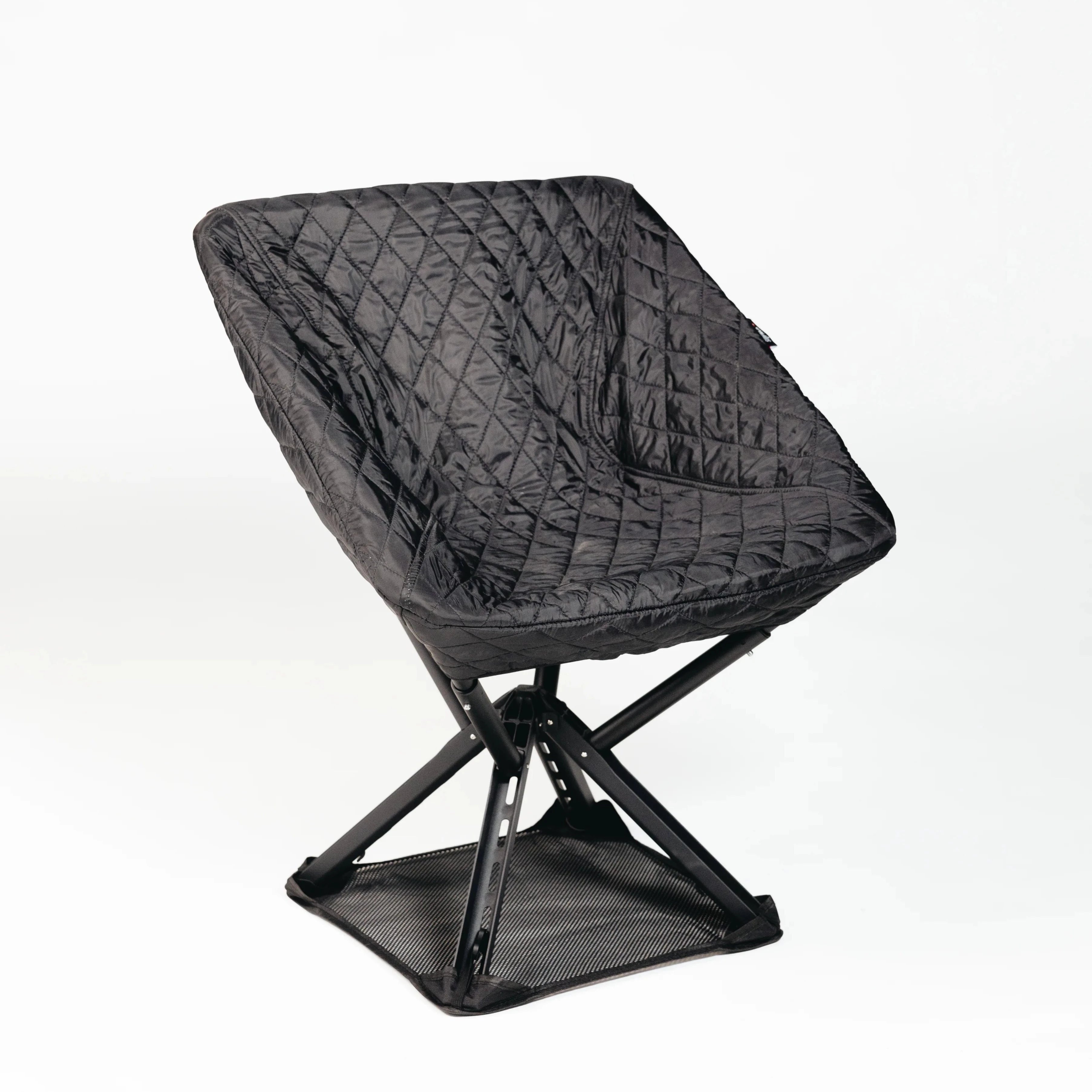
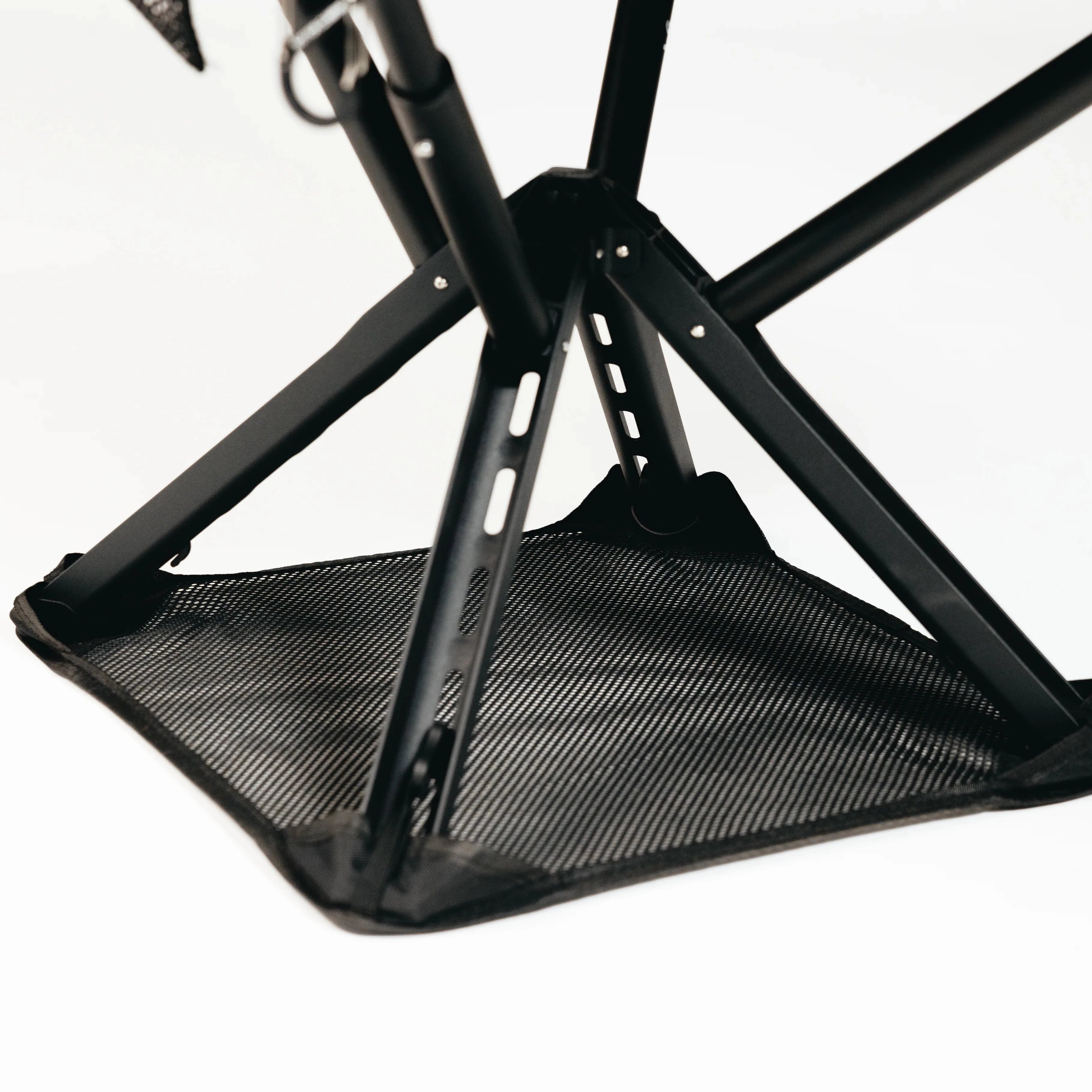
If your patio set has you spending more time scrubbing than sitting, a lightweight foldable seat is a handy second option for trips, the park, the sideline or the campsite. Our Campster II is a portable folding chair designed to be light, minimalistic and durable, and it ships worldwide with a 45-day satisfaction guarantee.

You can see the Campster II collection or browse everything, including blankets, seat warmers and tables, in the full Sitpack range.
Only if the cover is removable and the care tag allows machine washing. Take out the insert, use the prescribed cycle, and air-dry everything fully. If the tag says hand wash, or you can’t find one, stick with a bucket, mild soap and a brush.
Brush off the loose growth outdoors first, then scrub with mild soap and warm water. If it lingers, try a vinegar and water mix or an oxygen-based cleaner. Use bleach only if the manufacturer’s care guidance allows it, wear gloves, rinse thoroughly, and dry completely.
Vacuum or brush off dirt, scrub with a 1:2 mix of non-detergent dish soap and warm water, rinse until the suds are gone, and dry the cushions on their sides. Test the cleaner on a hidden spot first so you know the color will hold.
Allow roughly a day before putting them back, longer for thick inserts or humid weather. Stand them on their sides in a spot with good airflow, and keep them out of long, hot, direct sun to protect the fabric color.