Vogn
0
Tilmeld dig og få 10% i rabat på din ordre
Forventet levering
1-3 dage
Du vil måske også kunne lide


Dansk Firma

TL;DR:
- Choosing outdoor seating requires careful consideration of environment, placement, and surface stability to ensure safety.
- Proper setup, regular maintenance, and awareness of wind and user posture are essential for preventing accidents in outdoor settings.
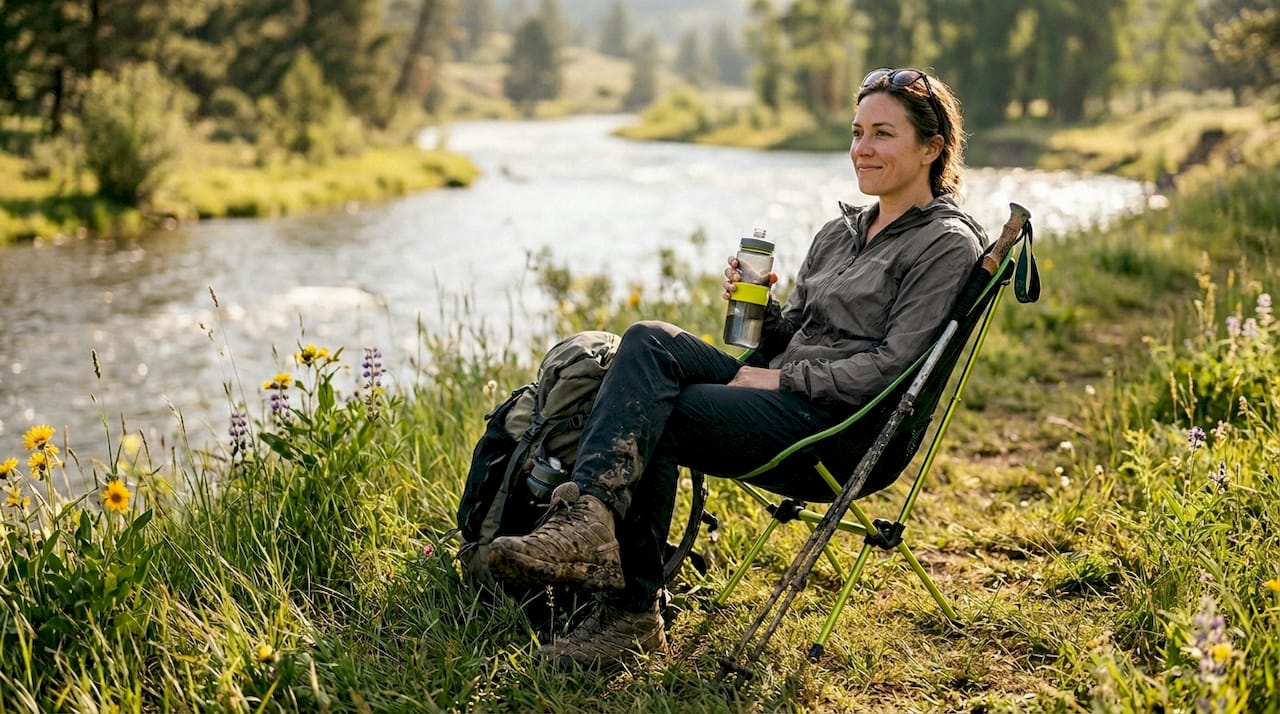
Choosing outdoor seating sounds simple until you’re at a festival sinking into grass on a wobbly camp chair, or you’ve set up your picnic spot just a few feet from a busy path with zero room to breathe. This safe outdoor seating guide exists because most people pick chairs based on looks or price and then wonder why things go sideways. Literally. Whether you’re a weekend camper, a festival regular, or an urban dweller who loves a good park hang, the wrong setup creates real hazards: tip-overs, trip risks, and gear that falls apart after two uses. Here’s how to get it right.
| Point | Details |
|---|---|
| Maintain safe clearances | Keep outdoor seating at least 6 feet away from hazards and provide 36 inches for wheelchair access. |
| Choose stable, lightweight chairs | Select chairs under 2kg with a wide base and capacity exceeding your weight by 20-30 pounds for safety. |
| Proper setup is crucial | Fully open and lock chairs on stable, level ground; secure chairs on soft or windy locations. |
| Regular maintenance prevents damage | Clean monthly, store cushions indoors, and use breathable covers to extend seating lifespan. |
| Balance practicality and design | Leave ample walking space and secure seating to avoid accidents and ensure comfortable use. |
Before you even browse chairs, you need to understand the physical environment you’re working with. It’s not just about comfort — placement, clearance, and surface stability are the foundation of every safe outdoor seating setup.
Clearance matters more than most people think. According to outdoor dining safety standards, you should keep dining areas 6 feet from corners, crosswalks, curbs, bus shelters, and public seating, with 36 inches of wheelchair clearance to minimize trip hazards. Even if you’re just setting up camp chairs at a picnic, that logic holds: too close to foot traffic and someone’s going down.
Key safety considerations before you sit:
The surface under your chair is one of the most underrated factors in outdoor seating safety. Loose soil shifts. Wet grass becomes a slip hazard. Gravel doesn’t grip chair legs the way it looks like it should.
| Surface type | Safety level | Recommendation |
|---|---|---|
| Hard flat ground | High | Ideal for all chairs |
| Dry, firm grass | Medium | Use wide-footed chairs |
| Wet or soft ground | Low | Add stakes or avoid |
| Gravel or loose rock | Low | Use a chair with rubber feet |
| Uneven slopes | Very low | Avoid or use specialized gear |
Pro Tip: Before committing to a spot, do the “stomp test.” Press your heel firmly into the ground in three spots. If your foot sinks more than an inch, that surface will swallow chair legs and cause instability later, especially after people have been sitting for a while.
For anyone putting together a kit for portability, our lightweight outdoor seating guide walks through how surface, weight, and design all interact when you’re on the move.
With safety requirements clear, let’s move on to selecting seating options that combine comfort and portability.
Not all portable chairs are created equal, and the gap between a well-built seat and a flimsy one becomes very obvious when you’re on your third hour at a music festival. Weight, capacity, and base design are the three variables that actually determine whether your chair is a comfort asset or an accident waiting to happen.
Weight and capacity are your starting point. Festival chairs under 2kg with at least 100 to 145kg capacity offer ideal portability and safety for outdoor events. That weight range means you can carry it all day without destroying your shoulder, while the capacity gives you a meaningful safety margin above most users’ body weight.
What to prioritize when choosing portable outdoor seating:
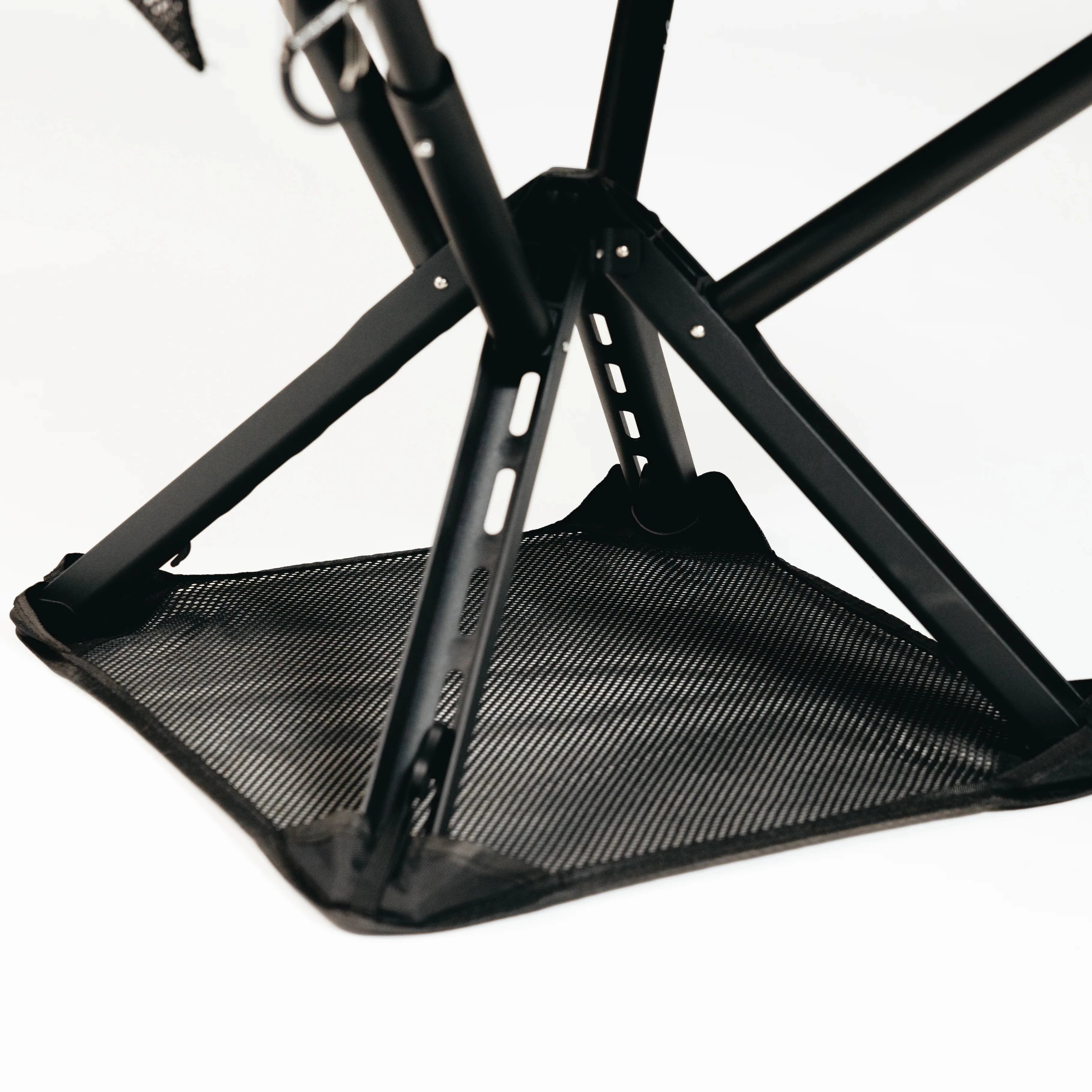
Wide bases and low centers of gravity prevent tip-overs on uneven ground, and non-slip feet add another layer of safety that cheap chairs often skip entirely.
| Chair type | Best for | Weight | Stability rating |
|---|---|---|---|
| Ultralight backpacking chair | Hiking, camping | Under 1.5kg | Medium |
| Low-profile festival chair | Festivals, concerts | 1.5 to 2kg | High |
| Classic folding camp chair | Campsites, picnics | 2 to 4kg | High |
| Compact stick seat | Urban use, travel | Under 0.5kg | Medium (on firm ground) |
Pro Tip: Sit in a chair before you buy it if you possibly can. Specifically, try to stand up from it quickly. If you have to roll forward and push off both armrests just to get vertical, that chair is going to be a problem after a few drinks around a campfire, or in a crowded festival row where there’s no room to maneuver.
For specific event settings, check out our outdoor event seating tips for context on what works where.
Now that you know what to look for, let’s cover best practices for setting up your seating safely outdoors.
Buying the right chair is half the job. Setting it up correctly is the other half, and most accidents happen here, not in the store.
Step-by-step setup for safe outdoor seating:
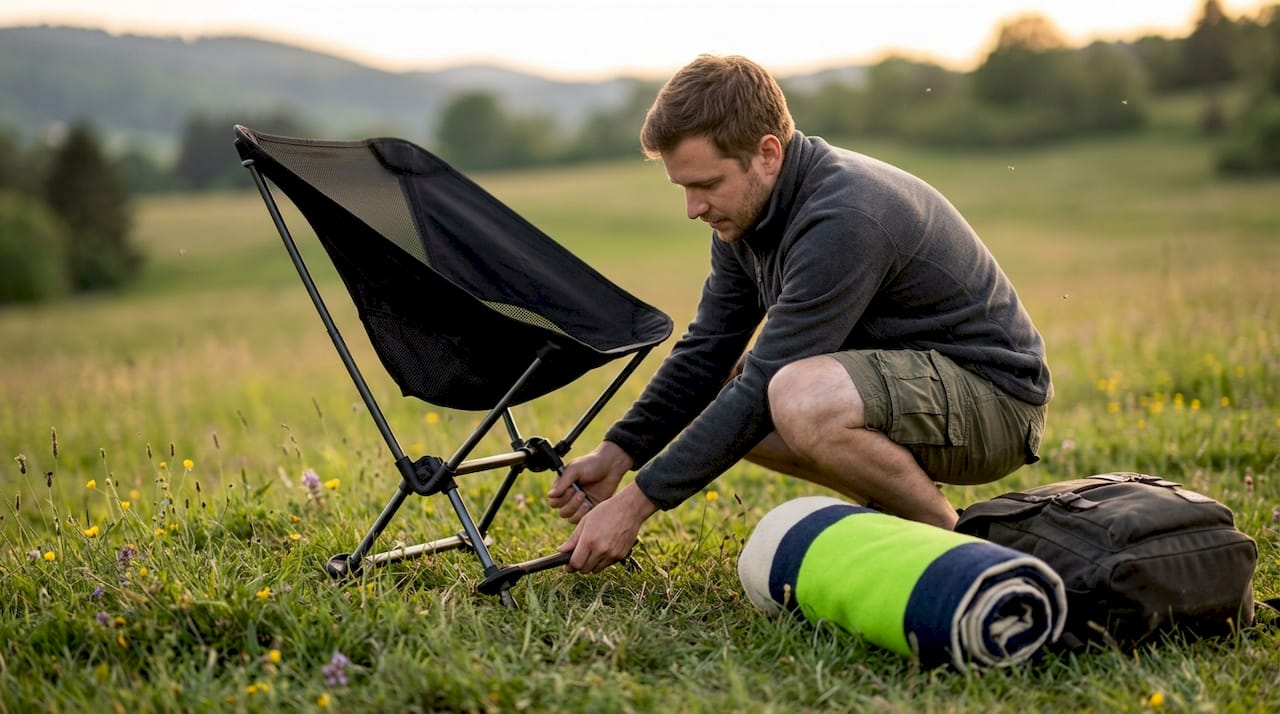
Always fully open and lock portable camping chair joints before sitting, and place chairs on flat, firm ground while avoiding slopes or soft sand. That last part about soft sand is worth repeating: sand looks stable and is not.
Additional placement safety rules:
“Maintain 24 to 36 inches of walkway clearance behind seating and adequate clearance from combustibles for fire pit safety.”
Pro Tip: Use a groundsheet or camping mat under your chair setup area. It visually marks your space, adds grip, and gives you immediate feedback if the ground shifts under your chairs over time. It’s one of those small moves that quietly prevents a lot of problems.
Having set up your seating correctly, keep reading to learn how to maintain it for safety and longevity.
A chair that was safe on day one can become a hazard by day 100 if you don’t look after it. Maintenance is where most outdoor enthusiasts go wrong, because it’s easy to fold up a chair and toss it in the garage without a second thought.
Core maintenance habits that keep your seating safe:
Breathable fitted covers prevent mold while allowing airflow. Stack and secure chairs in high winds. Store cushions indoors before bad weather hits, not after. The timing matters because wet cushions that sit overnight become mold cushions by morning.
Fabric care is also worth getting right. Most outdoor chair fabrics are polyester or nylon, and both respond well to mild soap. Avoid bleach unless the manufacturer explicitly says it’s fine. For metal frames, a quick wipe and occasional light coating of a rust-resistant spray extends the life of the chair significantly.
Pro Tip: Keep a zip-lock bag with your chair gear containing a small rag, a flat-head screwdriver, and a small bottle of all-purpose outdoor cleaner. Takes up almost no space in a pack and means you can handle a dirty chair or a loose joint on the spot rather than discovering the problem when you get home. For more on how the right gear simplifies everything, read about the benefits of lightweight seating.
With proper maintenance covered, let’s share some expert insights and lesser-known tips on outdoor seating safety.
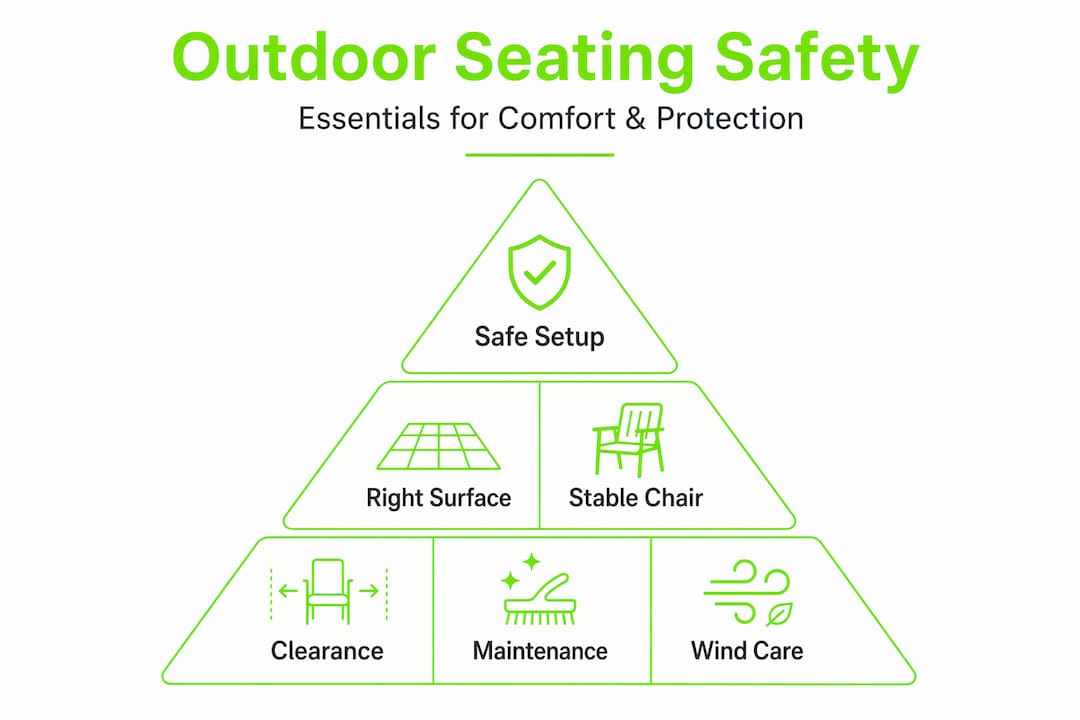
Here’s something I’ve noticed after years of testing portable seating across campgrounds, city parks, and outdoor festivals: most safety advice is written for static, permanent installations. It talks about restaurant patios and backyard furniture. Very little of it addresses the real-world chaos of portable seating, which is where most of you actually live.
The biggest overlooked issue? Walking clearance. Most articles mention it once in passing. But in a crowded festival field or a busy campsite, the narrow path behind someone’s chair is where most falls actually happen, not from the chair collapsing. Leaving ample walking clearance and storing cushions dry to avoid damage and hazards are two things that matter more in real outdoor conditions than most safety guides acknowledge.
Wind is another area where people drastically underestimate risk. I’ve watched a stack of “secured” chairs at a campsite become a small hurricane’s worth of flying furniture during a fast-moving storm. Folding chairs are lightweight by design, which means they move fast in wind. If you don’t stake them or weight them down, they will go somewhere.
Then there’s the posture problem. People test chairs by sitting in them normally in a shop, then spend hours at a festival leaning sideways, draping legs over armrests, or balancing a plate of food on one knee while tilting. That’s when chairs tip. Educating yourself and your group about centered sitting posture isn’t overthinking it. It’s the kind of practical knowledge that actually prevents the mid-afternoon spill. For more guidance that actually fits how you use outdoor seating, explore our outdoor seating comfort and safety tips.
The bottom line is that real outdoor seating safety is about habit and environment, not just gear specs. You can own the most well-rated portable chair on the market and still face problems if you ignore placement, clearance, posture, and wind.
Now that you know how to choose and maintain safe outdoor seating, the next step is finding gear that actually holds up in the wild. That’s where Sitpack comes in.

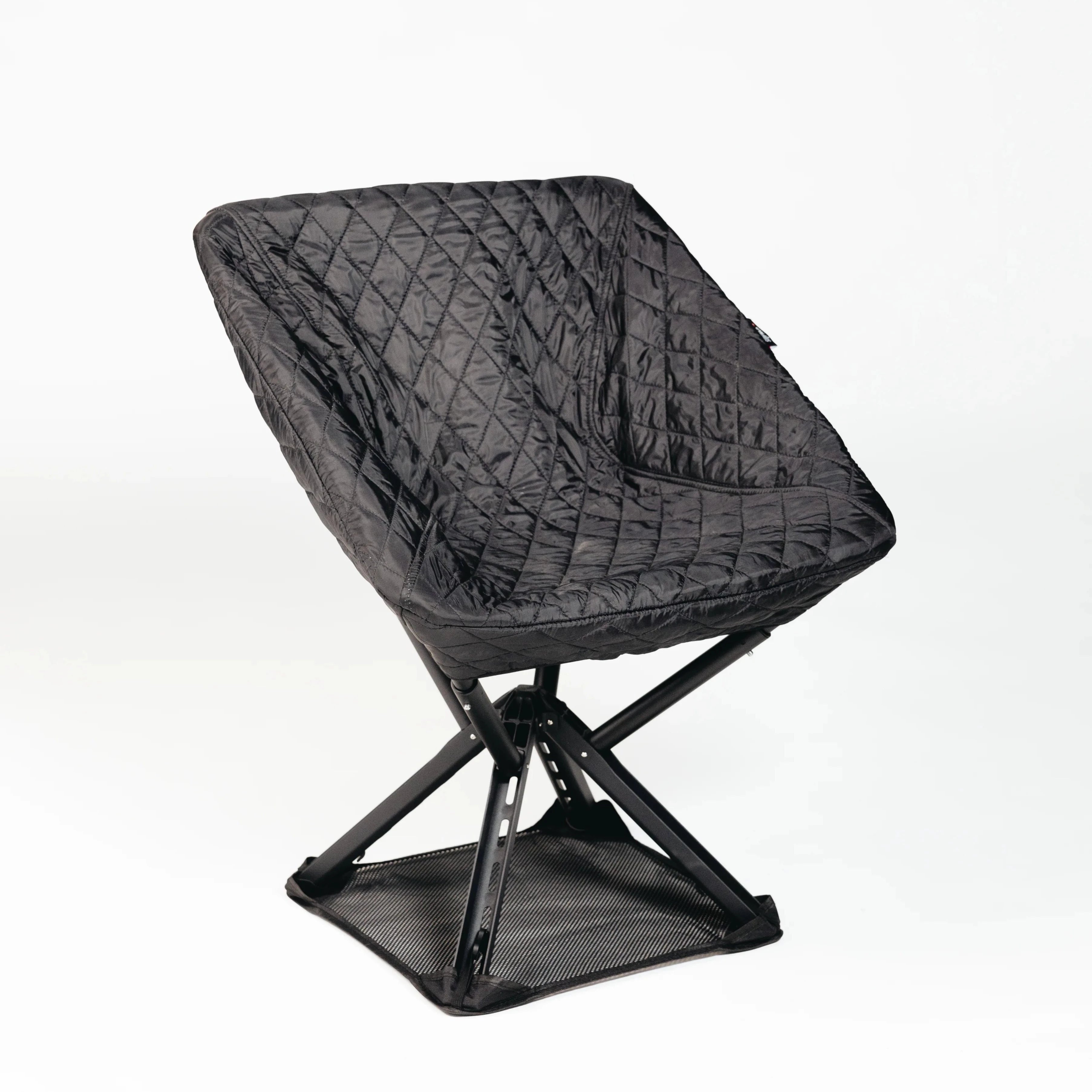
Sitpack builds portable seating specifically for outdoor enthusiasts and urban adventurers who refuse to compromise on safety or comfort. Products like the Campster II and Sitpack Zen are designed to be genuinely lightweight, stable on varied terrain, and easy to transport to festivals, campsites, or city parks. Every product is built with real durability in mind, backed by a lifetime warranty and a 45-day satisfaction guarantee. If you want seating that ticks every box in your outdoor seating safety checklist without weighing you down, the lightweight seating guide from Sitpack is the best next read after this one.
Outdoor seating areas should have at least 36 inches of clearance for wheelchair passage and 6 feet of distance from hazards like corners, curbs, and crosswalks to reduce slip and trip risks effectively.
Choose chairs with a weight capacity at least 20 to 30 pounds above your own body weight, and aim for chairs rated for 100 to 145kg capacity for durability and a meaningful safety margin during extended outdoor use.
Always fully open and lock all chair joints before sitting, place chairs on stable level ground, use stakes or anchors in windy conditions, and avoid setting up on slopes or soft sand to prevent collapses and tip-overs.
Clean seating monthly with mild soap and water, store cushions indoors in dry, dark locations, and use breathable covers to prevent mold buildup and protect against storm damage between uses.