Vogn
0
Tilmeld dig og få 10% i rabat på din ordre
Forventet levering
1-3 dage
Du vil måske også kunne lide


Dansk Firma

TL;DR:
- Reinforced seating uses welded frames, gusset plates, and thick steel to support higher weights and withstand outdoor conditions. It offers increased safety, stability, and durability, especially on uneven terrain, compared to standard chairs. The best reinforced seats for travel are foldable or compact sit-sticks that balance strength and portability.
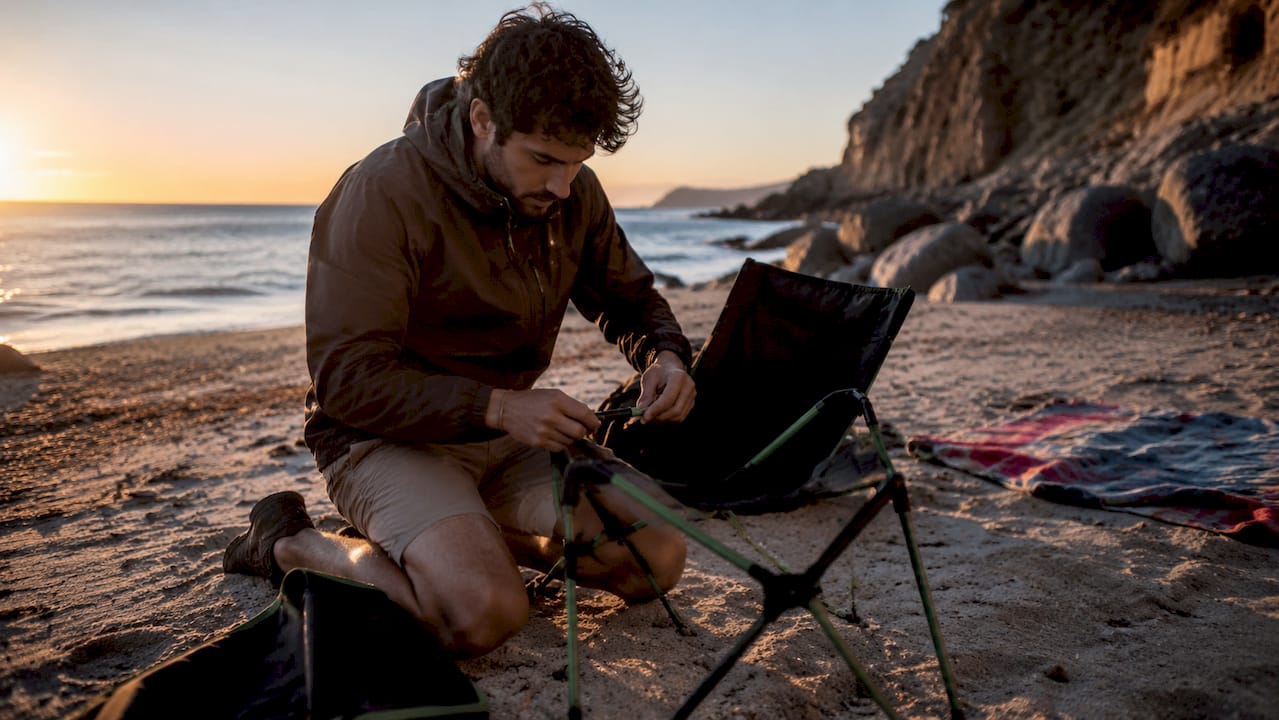
Reinforced seating is furniture engineered with structural enhancements, including thick-gauge steel frames, welded joints, and gusset plates, to support weight capacities and durability demands far beyond standard chairs. If you’ve ever had a cheapo folding chair buckle under you at a campsite, you already understand the problem reinforced seating solves. For outdoor enthusiasts, campers, and travelers, the difference between a structurally sound seat and a flimsy one isn’t just comfort. It’s safety, longevity, and the confidence to park your posterior anywhere without second-guessing the chair beneath you.
Reinforced seating is defined as any chair or stool built with deliberate structural upgrades that go beyond the materials and construction of consumer-grade furniture. Standard chairs use bolted frames, thin tubing, and basic fabric. Reinforced versions replace those with welded construction, thicker steel, and added bracing at high-stress points.
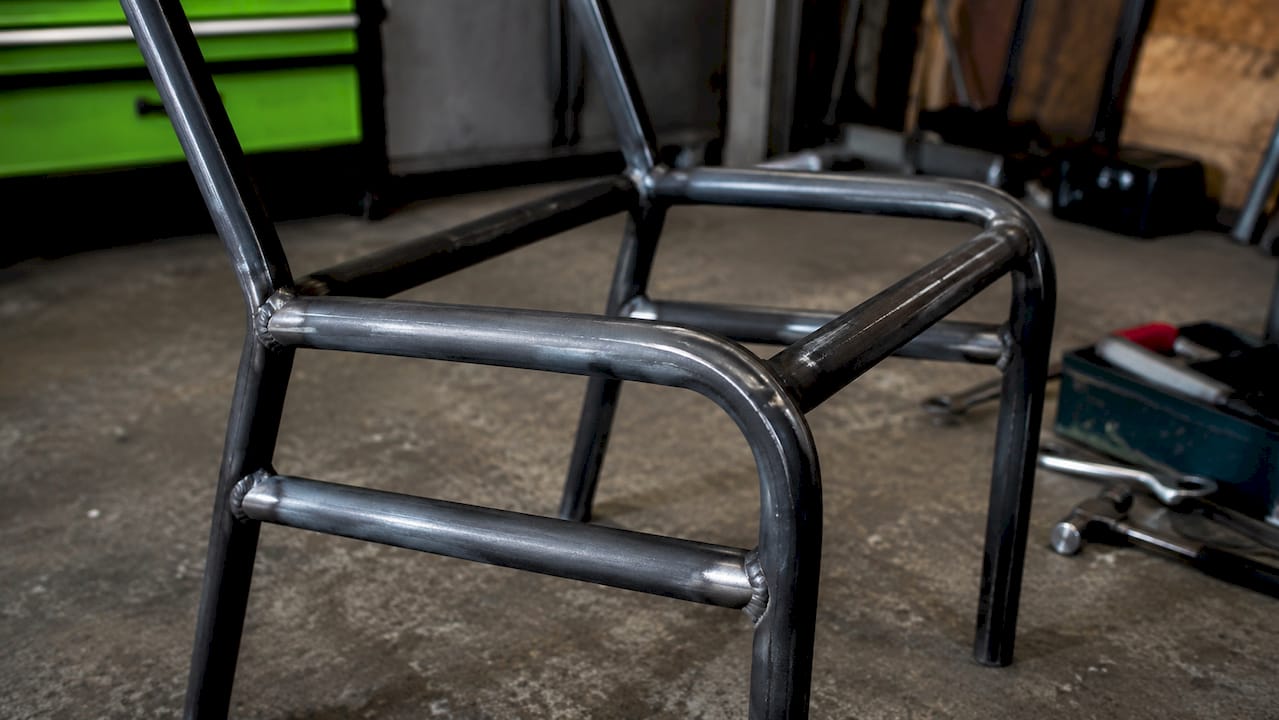
The weight capacity gap tells the story clearly. Heavy-duty reinforced models often support loads exceeding 500–600 lbs, while a typical folding chair tops out well below that. That gap exists because of engineering choices made at the frame level, not just the choice of fabric or padding.
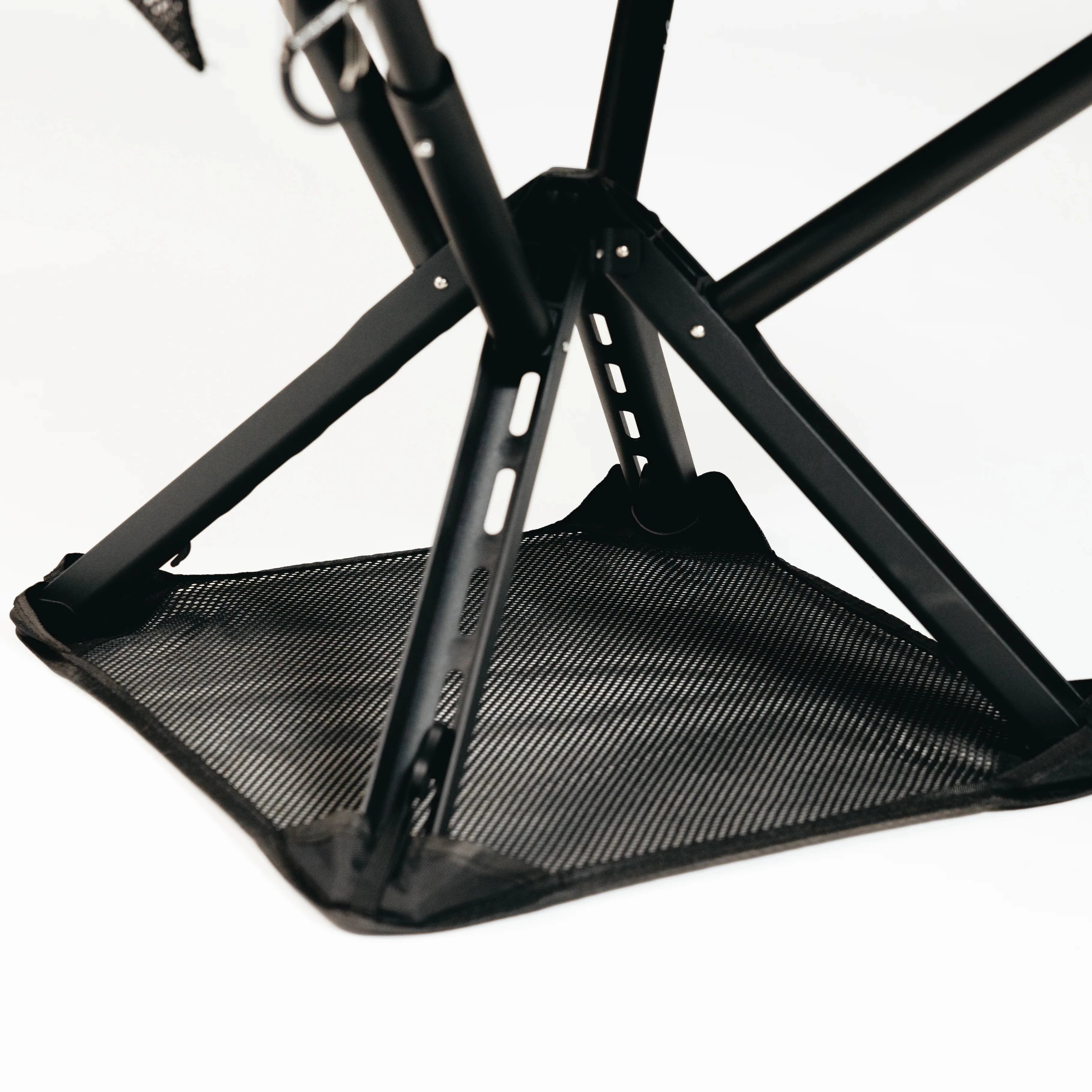
Welded frame joints prevent the joint fatigue that kills bolted assemblies under repetitive sit-stand cycles. Every time you drop into a bolted chair, the hardware loosens slightly. Over hundreds of uses, that adds up to wobble, creak, and eventual failure. Welded joints don’t have that problem.
Reinforced seating also addresses stability in a way standard chairs ignore. Engineered centers of gravity resist tipping during movement, which matters enormously on uneven ground. A chair that holds your weight on flat pavement may still tip sideways on a rocky trail or a sloped campsite.
The structural markers of true reinforced seating are specific and measurable. Here’s what separates a genuinely reinforced chair from one that just looks heavy-duty on the product page:
Pro Tip: When evaluating a portable reinforced chair, flip it upside down and look at the leg joints. Welded connections look continuous and smooth. Bolted connections show hardware. If you see bolts at every joint, the chair is not truly reinforced.
True heavy-duty seating uses Class-4 gas lifts and thick steel tubing to sustain repetitive high loads. That distinction matters when you’re comparing a chair rated for occasional use versus one built for daily, demanding conditions outdoors.
Reinforced seating for outdoor and travel contexts comes in several distinct forms. Each type trades off weight, portability, and structural strength differently.
| Type | Durability | Weight | Portability | Best Use |
|---|---|---|---|---|
| Heavy-duty camping stool | High | Medium | Good | Campsite, festivals |
| Foldable reinforced chair | Medium-High | Light-Medium | Excellent | Hiking, travel, events |
| Portable event chair (resin/steel) | Very High | Heavy | Moderate | Outdoor events, tailgating |
| Bariatric portable chair | Very High | Heavy | Low-Moderate | Extended outdoor stays |
| Compact reinforced sit-stick | Medium | Very Light | Outstanding | Concerts, queues, trails |
Heavy-duty camping stools use cross-braced steel or aluminum frames with reinforced fabric seats. They fold flat and weigh little, but they sacrifice back support for portability. These work well for short sits around a fire or at a trailhead.
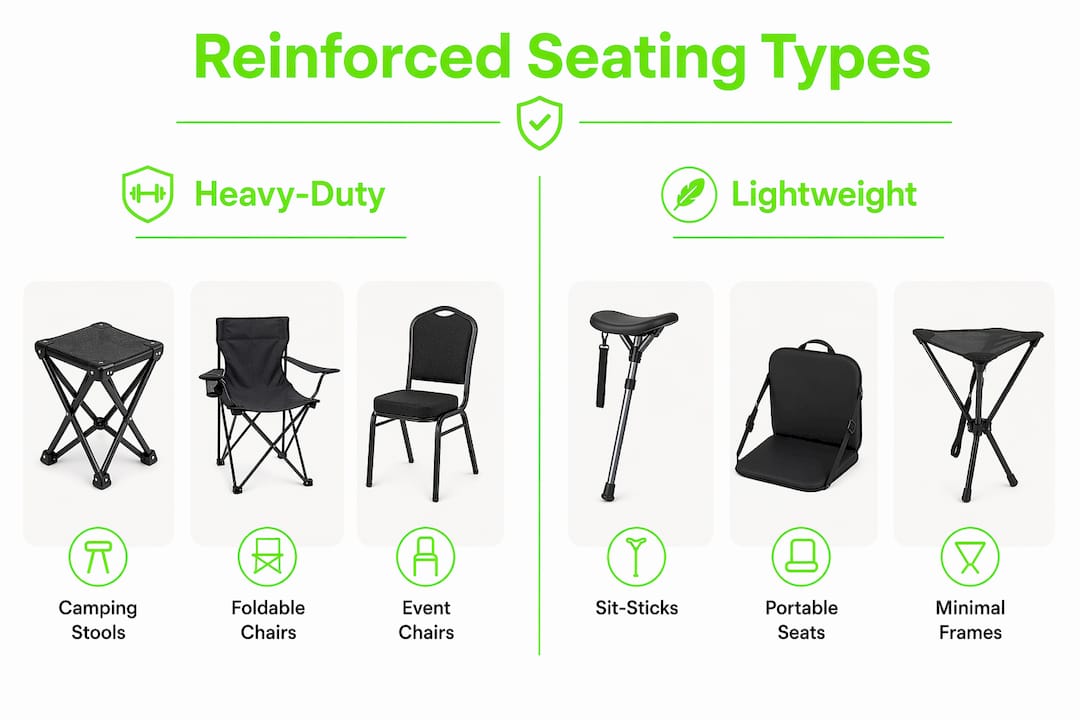
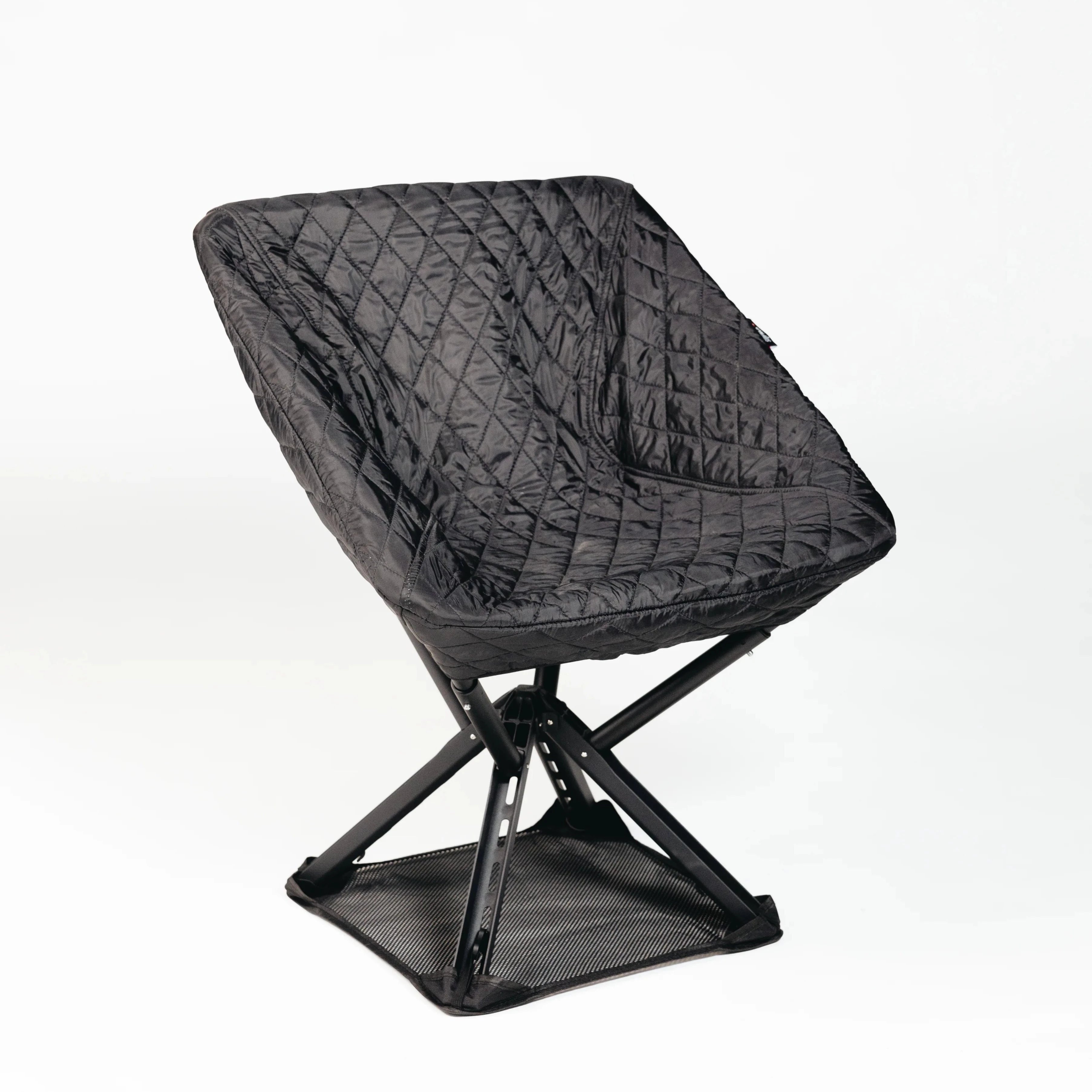
Foldable reinforced chairs add a backrest and often arm support while keeping the frame welded rather than bolted. Industrial-grade reinforced chairs combine strength with portability for varied uses, which is exactly the design brief for this category. Sitpack’s Campster II fits this profile, using a minimalist reinforced frame that folds down small enough to carry in a pack.
Portable event chairs built from resin and steel are the workhorses of outdoor gatherings. They hold serious loads and survive weather, but they’re bulky. Bariatric portable chairs extend this concept further, with frames engineered specifically for higher weight ratings and extended sitting periods. These are less common in backpacking but valuable for car camping or accessible outdoor events.
Compact reinforced sit-sticks, like the Sitpack Zen, represent the lightest end of the spectrum. They use a single reinforced column and a small seat platform to give you a perch rather than a full chair. The trade-off is obvious: less comfort, but you can carry one in a jacket pocket.
Reinforced seating pays for itself in ways that standard chairs simply cannot match over time. The benefits stack up across safety, comfort, and cost.
The versatile seating for outdoor comfort argument is not just about luxury. For travelers who carry their seating with them, a chair that fails mid-trip is a real problem with no easy fix.
Picking the right reinforced seat comes down to matching the chair’s engineering to your actual use case. Here’s a practical process:
Pro Tip: Avoid chairs that advertise weight capacity without specifying the testing standard behind the number. A self-reported 400 lb rating with no certification is a marketing claim, not an engineering guarantee.
Understanding ergonomic seating principles also helps here. A reinforced frame that forces you into a bad sitting posture is only solving half the problem.
Reinforced seating is the most reliable choice for outdoor, camping, and travel use because it combines structural integrity, safety, and long-term durability that standard chairs cannot deliver.
| Point | Details |
|---|---|
| Definition of reinforced seating | Furniture built with welded joints, thick-gauge steel, and gusset plates to exceed standard weight and durability limits. |
| Key structural feature | Welded joints prevent joint fatigue under repetitive use, unlike bolted assemblies that loosen over time. |
| Best type for portability | Foldable reinforced chairs and compact sit-sticks offer the best balance of strength and carry weight for travelers. |
| Top selection criterion | Check for BIFMA certification to confirm the chair has passed independent cyclic load and drop testing. |
| Core benefit for outdoor use | Engineered stability resists tipping on uneven terrain, reducing injury risk on slopes and rugged ground. |
Here’s the uncomfortable truth I’ve landed on after years of testing outdoor seating: most people buying “reinforced” chairs are actually buying marketing language, not engineering. They see a weight rating on a tag and assume the job is done. It isn’t.
The real differentiator in reinforced seating is joint construction and center-of-gravity engineering, not the weight number printed on the box. I’ve sat in chairs rated for 400 lbs that wobbled on flat ground because the joints were bolted and the legs were poorly angled. I’ve also sat in lighter chairs with welded frames that felt rock-solid on a gravel slope. The stability difference was night and day.
The other mistake I see constantly is prioritizing weight capacity over portability for trail use. A chair that holds 600 lbs but weighs 12 lbs is a car camping chair, not a hiking chair. Matching the chair to the actual activity is the decision most buyers skip.
My honest recommendation: buy the lightest reinforced chair that genuinely meets your structural needs, not the heaviest one you can justify. For most outdoor enthusiasts, a well-built foldable reinforced chair or a compact sit-stick covers 90% of real-world use cases without punishing your back on the trail in.
— Jonas
If you’ve been searching for reinforced seating that doesn’t make you choose between strength and portability, Sitpack has built its entire product line around that exact problem.

The Campster II and Sitpack Zen both use reinforced structural designs that fold down to near-nothing for travel, while holding up on the terrain where you actually need them. Sitpack backs its products with a lifetime warranty and a 45-day satisfaction guarantee, so you’re not gambling on a weight rating you can’t verify. Whether you’re heading out for a weekend camp or a long-haul travel day, explore Sitpack’s collection to find a reinforced portable seat that fits how you actually move.
Reinforced seating is any chair or stool built with structural upgrades like welded steel frames, gusset plates, and cross-bracing to support higher weight loads and last longer than standard furniture.
Heavy-duty reinforced models commonly support 500–600 lbs or more, compared to standard folding chairs that typically max out well below those figures.
BIFMA certification means a chair has passed independent cyclic load and drop tests. It is the most reliable third-party signal that a reinforced chair will hold up under real, repeated use.
Yes. Even casual campers benefit from the stability and lifespan of reinforced seating, since standard folding chairs fail quickly on uneven ground and need frequent replacement.
Compact reinforced sit-sticks, like the Sitpack Zen, are the lightest option. They use a single reinforced column and a small seat platform, making them pocket-sized without sacrificing structural integrity.