Vogn
0
Tilmeld dig og få 10% i rabat på din ordre
Forventet levering
1-3 dage
Du vil måske også kunne lide


Dansk Firma

TL;DR:
- Prioritize gear based on activity, environment, and portability to ensure durability and suitability.
- Check construction quality by assessing zippers, seams, and waterproofing features for longevity.
- Choose fabrics with appropriate denier ratings and eco-certifications for sustainable, long-lasting outdoor gear.
There’s nothing quite like the sinking feeling of a zipper giving up the ghost three miles into a backcountry trail, or a bag seam splitting open just as you’re loading up for a weekend camping trip. Gear failure mid-adventure is frustrating, expensive, and honestly pretty avoidable. The good news? With a solid durability checklist in your back pocket, you can shop smarter, waste less, and spend more time actually enjoying the outdoors instead of duct-taping your kit back together. This guide walks you through everything from matching gear to your activity, to decoding fabric specs, to making eco-conscious choices that hold up trip after trip.
| Point | Details |
|---|---|
| Identify needs first | Clarifying your activity, environment, and portability needs prevents purchasing the wrong gear. |
| Inspect construction | Look for reinforced stitching, welded seams, and premium zippers for lasting performance. |
| Choose smart materials | High-denier nylon or polyester offer superior durability and weather protection. |
| Sustainability matters | Opt for eco-certified, repairable gear to minimize environmental impact and maximize longevity. |
Before you even glance at a product page, the single most useful thing you can do is get crystal clear on what you actually need. Sounds obvious, right? But most people skip this step and end up with gear that’s either overkill for a Sunday picnic or completely underpowered for a week-long alpine trek.
Start by thinking about your primary activities. Are you a weekend car camper who needs comfort and convenience over weight savings? A frequent flyer who needs packable, lightweight accessories that slide into an overhead bin? Or an urban adventurer bouncing between coffee shops, parks, and transit? Each scenario calls for a different balance of ruggedness and portability.
Here’s a quick breakdown of what to prioritize based on use case:
Environment matters just as much as activity. Gear used on rocky, abrasive terrain takes a beating that smooth-surface urban gear never faces. Abrasion resistance matters significantly for rugged terrain, which is why specs like 75D floor fabrics exist on quality tents and shelters. Wet environments demand waterproofing and quick-dry properties, while desert conditions call for UV resistance and breathability.
Portability is the third variable. Ultralight gear often sacrifices some durability, while bomber-tough gear can be a back-breaker. The sweet spot depends entirely on your specific use. A compact foldable seat that weighs under a pound is a game-changer for festivals and travel, but you’d want something sturdier for a base camp setup.
Pro Tip: Before you shop, jot down your top three priorities in order: weight, durability, or weather resistance. This list becomes your filter, and it stops impulse buys dead in their tracks.
Once your priorities are locked in, it’s time to get a little nerdy about how gear is actually built. Construction quality is where the real durability story lives, and it’s surprisingly easy to assess once you know what to look for.
Zippers are a great starting point because they’re one of the first things to fail on cheaper gear. YKK #5 zippers, bartacked stress points, and welded seams dramatically improve longevity on bags, shelters, and apparel. YKK is the global gold standard for zipper quality, and the #5 designation refers to the size and load capacity of the zipper coil. On main compartments, you want #5 or higher. Anything smaller is fine for small pockets, but not for areas under repeated heavy stress.
Seams are equally telling. Here’s a quick hierarchy to keep in mind:
Here’s a quick comparison table to help you evaluate construction at a glance:
| Feature | Budget gear | Mid-range gear | Premium gear |
|---|---|---|---|
| Zipper brand | Generic | YKK #3 | YKK #5 or higher |
| Seam type | Single stitch | Double stitch | Welded or taped |
| Stress points | Unsupported | Reinforced | Bartacked |
| Waterproofing | DWR spray only | Taped seams | Fully welded seams |
Check the key construction features of any accessory before buying, especially if you’re investing in something meant to last years.
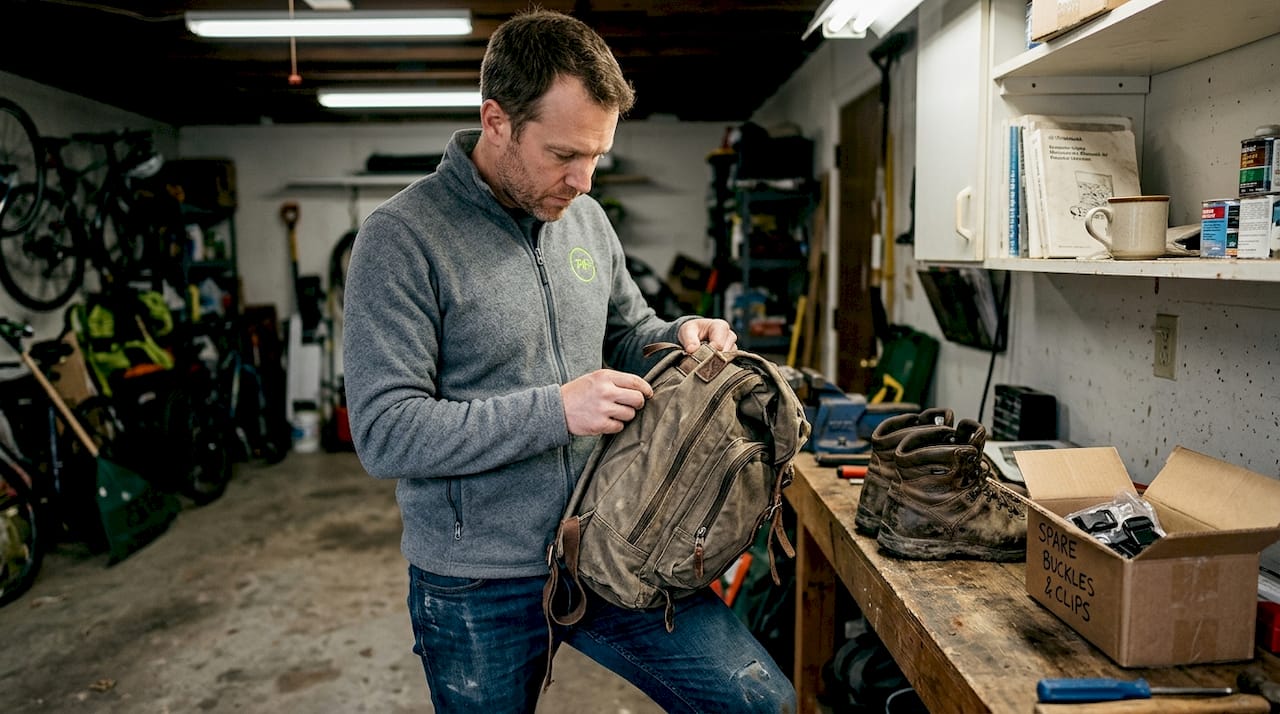
Pro Tip: Flip a bag or shelter inside out before buying (or check reviewer photos online). Taped or welded interior seams are a dead giveaway of genuine waterproof construction. If the inside looks raw and unfinished, the waterproofing claims are probably optimistic.
Fabric choice is where a lot of shoppers’ eyes glaze over, but it’s genuinely worth a few minutes of your attention. The right fabric can mean the difference between gear that looks rough after one season and stuff that’s still going strong five years later.
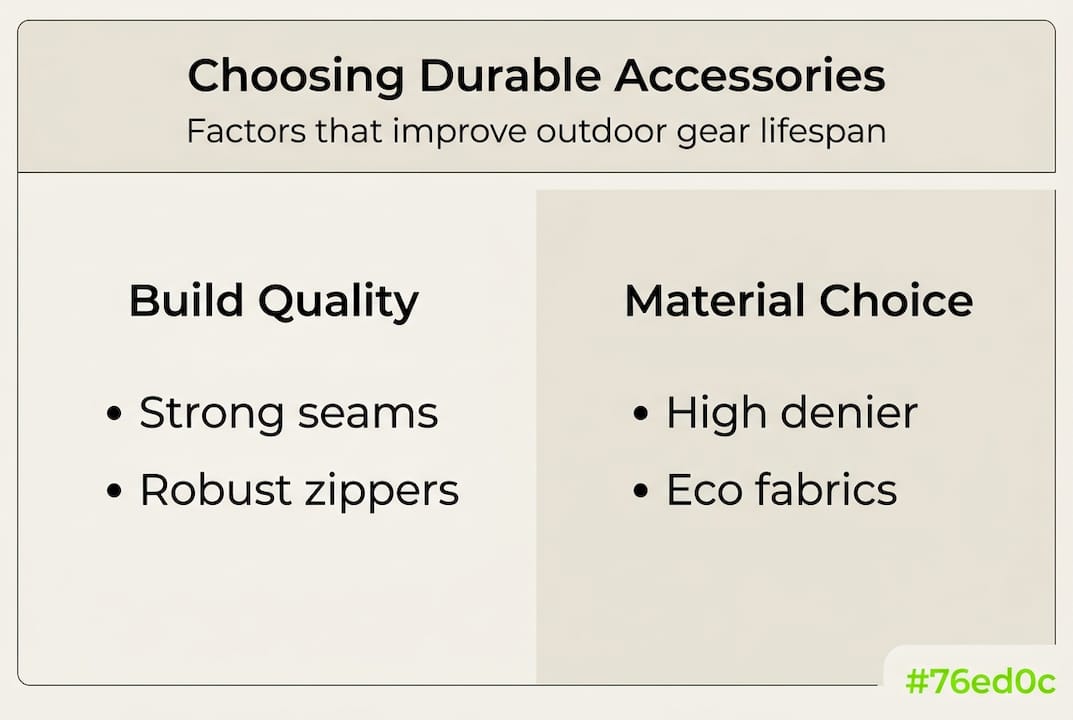
Denier (D) is the measurement of fabric thread thickness. Higher denier equals thicker, heavier, and more abrasion-resistant fabric. Here’s the practical breakdown:
Nylon vs. polyester is the big debate in outdoor fabrics. Synthetic fabrics like nylon and polyester offer better abrasion and tear strength than cotton, with nylon winning on raw abrasion resistance and polyester offering better UV stability and mechanical stretch. For most outdoor accessories, nylon is the go-to for anything that takes physical punishment, while polyester works well for items exposed to prolonged sun.
“Synthetics outperform naturals in wet/dry cycles, but always check certifications for eco-impact before you buy.”
Cotton, despite its comfort, is a poor choice for serious outdoor use. It absorbs water, dries slowly, and loses structural integrity when wet repeatedly. Down insulation has similar wet-condition weaknesses, which is why synthetic fill has become the default for gear used in unpredictable weather.
For eco-friendly outdoor fabric options, recycled polyester (rPET) is increasingly common and performs comparably to virgin polyester in most applications. Brands like Hilleberg and The North Face use high-denier fabrics with taped seams to achieve serious weather resistance without sacrificing longevity.
| Fabric | Abrasion resistance | Weight | Wet performance | Eco options |
|---|---|---|---|---|
| Nylon | Excellent | Light | Good | rNylon available |
| Polyester | Good | Light | Excellent | rPET widely available |
| Cotton | Poor | Heavy | Poor | Organic cotton |
| Dyneema | Outstanding | Ultralight | Excellent | Limited |
Here’s where durability and environmental responsibility shake hands. Choosing gear built to last is already a sustainability win, but going one step further and selecting products made with certified, lower-impact materials is the real sweet spot for eco-conscious adventurers.
Knowing which certifications actually mean something is half the battle. Look for these on labels and product pages:
Beyond materials, look at what brands do after the sale. REI’s repair and resale programs, Nemo’s warranty support, and similar initiatives extend the useful life of gear dramatically. Outdoor sustainability explained in practical terms often comes down to this: a product repaired twice is a product that never hit a landfill.
Brands that offer genuine repair programs are betting on the quality of their construction. That’s a confidence signal worth paying attention to.
Pro Tip: Durability is sustainability. A well-made piece of gear that lasts ten years has a fraction of the environmental footprint of three cheap replacements over the same period. Buy once, buy right.
We’ve spent a lot of time talking about specs and certifications, but here’s the real talk from years of testing outdoor gear in actual conditions: the fanciest features rarely save you when something fundamental fails.
The zipper that splits on a $300 bag is just as annoying as the one on a $30 bag. The difference is that the $300 bag probably used a YKK #5, so it’s far less likely to happen. That’s the insight worth holding onto. Durability isn’t about buying the most expensive thing on the shelf. It’s about knowing which construction details actually correlate with longevity, and then finding products that nail those details at whatever price point works for you.
Our in-depth durability guide digs even deeper into this, but the short version is: field-tested basics beat designer trends every single time. Repairability is the other underrated factor. Gear you can fix is gear that earns its keep for years. That’s the real win for eco-conscious adventurers who want to spend less time shopping and more time outside.
If you’ve made it this far, you’re clearly serious about gear that actually holds up. That’s exactly the kind of adventurer we built Sitpack for.
At Sitpack, every product in our lineup is designed with the same durability-first philosophy we’ve outlined here. From our foldable portable chairs to our travel towels, water bottles, and thermal blankets, we focus on materials and construction that survive real adventures, not just Instagram ones. We also prioritize eco-friendly outdoor gear across our range, so you can feel good about what you’re buying and where it came from. Explore our collection and find accessories built to go the distance with you.
Synthetic fabrics like high-denier nylon or polyester offer the best combination of abrasion resistance, weatherproofing, and longevity for outdoor use. Nylon edges out polyester on raw toughness, while polyester handles UV exposure and stretch better.
Look for YKK #5 zippers or higher on main compartments, double or triple stitching throughout, bartacked stress points at strap anchors and zipper ends, and welded or taped seams for genuine waterproofness.
Check for certifications like Bluesign or Oeko-Tex, look for recycled materials such as rPET, and favor brands that offer repair or resale programs to extend product life.
Denier measures fabric thread thickness, and 75D or higher floors resist abrasion and rough use far better than lighter fabrics, making them essential for gear that contacts the ground repeatedly.