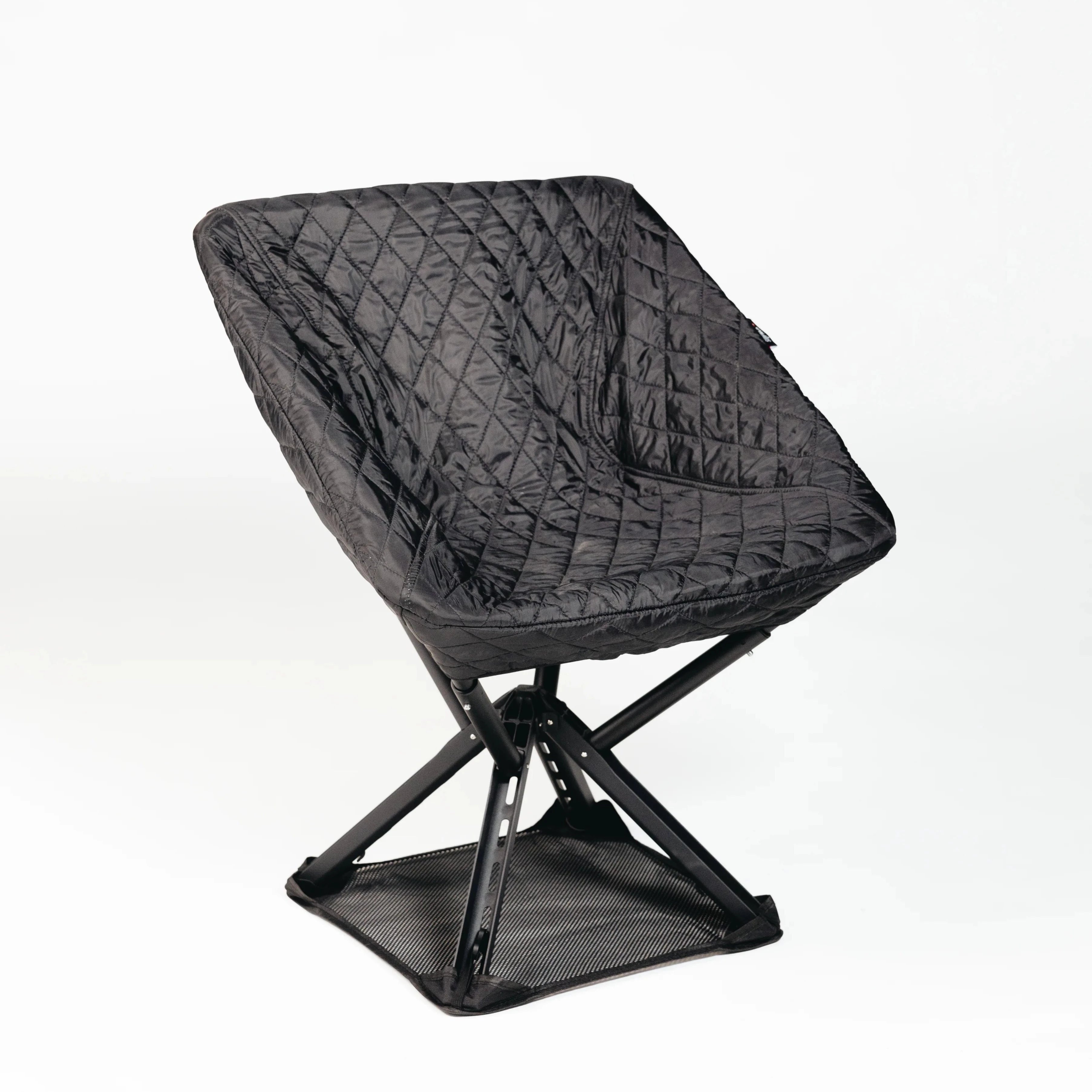
For portable folding and camping chairs, the best patio furniture seat cushion covers use ultralight UHMWPE-style laminates or high-tenacity coated polyester with reinforced seams. Skip the heavy stuff. Your cover should fold with your chair, not fight it.
Your immediate next steps:
- Measure first: seat width, seat depth, and back height, plus the critical folding-clearance gap near armrest joints and cross-frame struts
- Or skip measuring and grab a universal ultralight cover if you rotate between multiple chairs
- Look for Venom™ UHMWPE webbing on straps and attachment points — at 1,800 lb break strength per 1-inch width and just 2.2 g/ft, it’s the gold standard for weight-sensitive hardware
- Sitpack designs its portable seating line around exactly this philosophy: low bulk, high durability, folds without drama
Key Takeaways
The single most important choice for portable chair covers is folding clearance — a cover that binds a hinge will damage the chair faster than any weather will.
| Point | Details |
|---|---|
| Folding clearance first | Confirm the cover clears all joints mid-collapse before buying anything else. |
| UHMWPE laminates win on weight | Fabrics at ~3.3 oz/yd² deliver waterproofing and abrasion resistance without bulk. |
| Dry before you pack | Always air-dry covers completely before storage to prevent mold and frame corrosion. |
| Custom vs universal | Custom fits one premium chair; universal suits multiple chairs and tighter budgets. |
| Sitpack’s approach | Sitpack chairs and accessories are designed around foldability, backed by a 45-day guarantee and lifetime warranty. |
Table of Contents
- What should you check before buying a seat cover?
- How do you measure a folding chair for the right cover fit?
- Which fabrics and construction details actually hold up on the trail?
- How do straps and buckles keep a cover secure without blocking the fold?
- Can a cover add comfort without wrecking the fold?
- How do you clean and store covers so they last multiple seasons?
- What should you expect to pay, and how long does delivery take?
- How do you make the final call without wasting money?
- What I’ve learned designing covers that actually fold
- Sitpack makes portable seating that pairs perfectly with ultralight covers
- Sources
What should you check before buying a seat cover?
A quick checklist you can run through while shopping, so you don’t end up with a cover that turns your packable chair into a lumpy burrito:
- Fit type: Do you own one premium chair with a unique shape? Go custom. Rotating between two or three chairs? Universal saves money and hassle — custom vs universal guidance here
- Material: UHMWPE/Dyneema-style laminates for ultralight backpacking; coated polyester for car camping and festivals where weight matters less
- Construction: Reinforced seams, elastic hems, buckle straps, and air vents are non-negotiable for covers that survive real outdoor use
- Installation speed: A cover that takes five minutes to wrestle on defeats the purpose of a packable chair
- Folding clearance: Confirm the cover doesn’t block hinges or cross-frame struts when you collapse the chair
- UV protection and color: Bright colors help you spot your chair at a crowded campsite; UV-resistant fabrics prevent fading and material breakdown over a full season
Pro Tip: Lay your chair half-folded on the floor and photograph it from three angles before ordering any cover. That photo will tell you more about clearance problems than any spec sheet.
How do you measure a folding chair for the right cover fit?
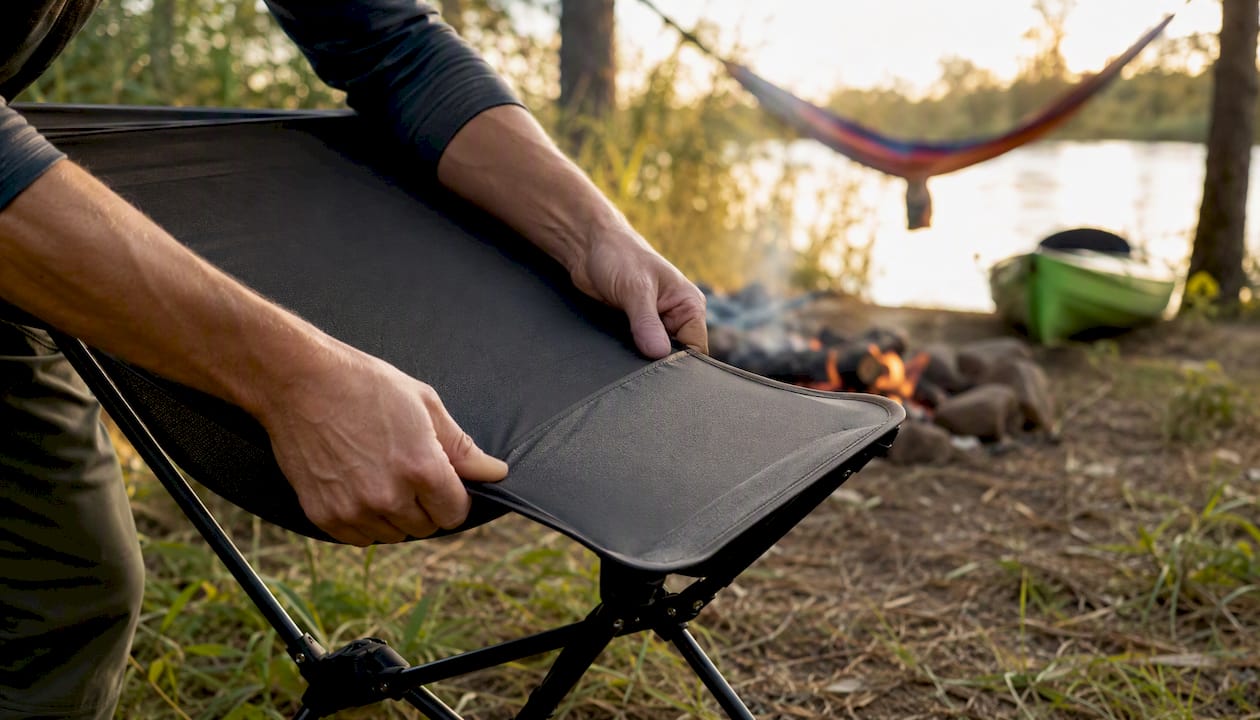
Fit is where most people go wrong, and a cover that bunches around a folding joint can actually stress the hinge over time. Custom fit prevents interference with folding mechanisms; universal fit trades that precision for flexibility and lower cost.
- Measure seat width at the widest point of the seat pan, not the frame
- Measure seat depth from the front edge to the backrest junction
- Measure back height from the seat junction to the top of the backrest
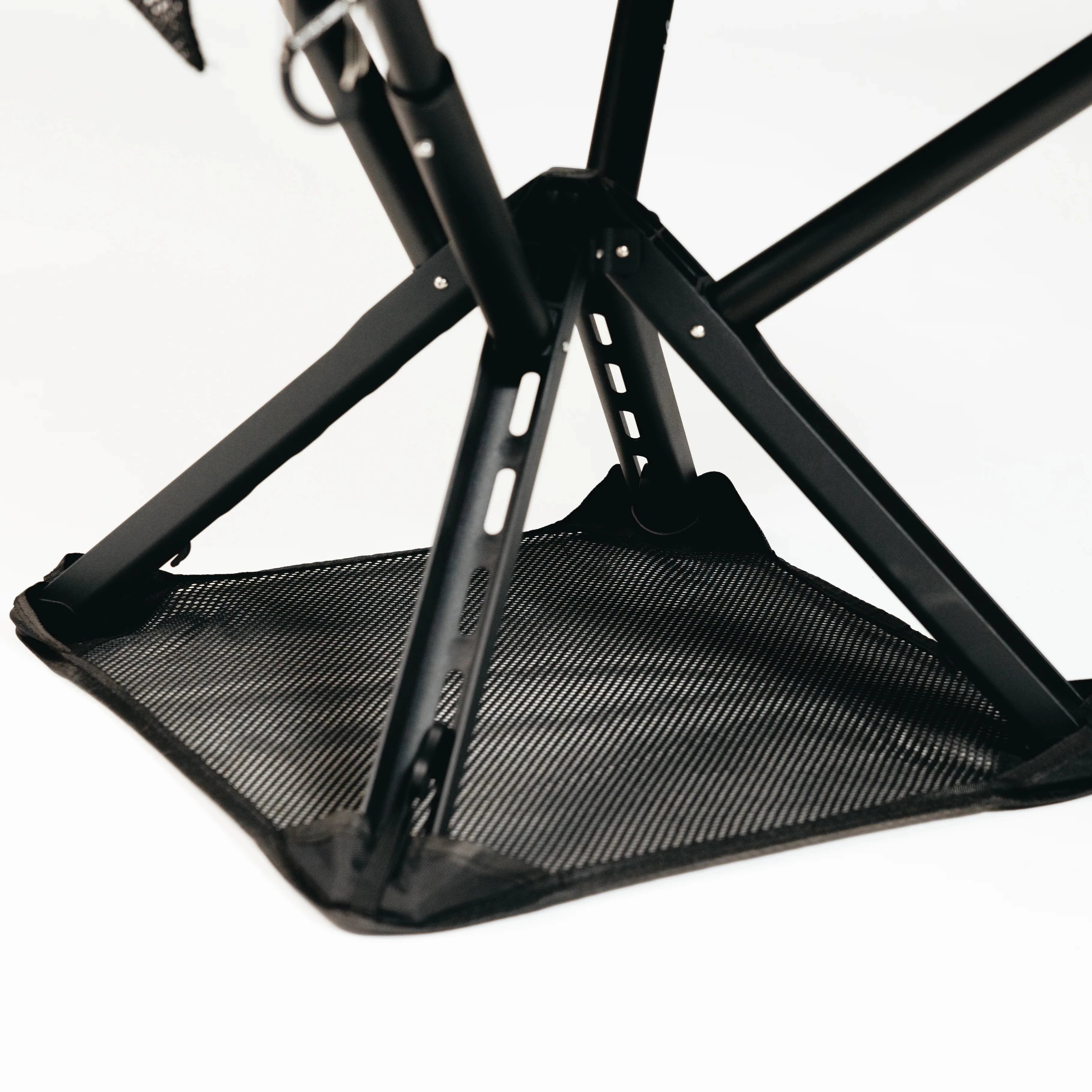
- Identify folding-clearance points — mark where armrest joints and cross-frame struts sit when the chair is mid-fold; these are your no-interference zones
- Add clearance allowance of roughly 1–1.5 inches around collapsible joints and armrests so the fabric doesn’t bind
- Photograph the chair while partially folded for any geometry that looks tricky — send that photo to a custom maker rather than guessing
When to go custom: Single premium chair with an unusual bucket seat or integrated armrests. When to go universal: Multiple chairs, tighter budget, or a simple sling-seat design where standard sizing works fine.
Which fabrics and construction details actually hold up on the trail?

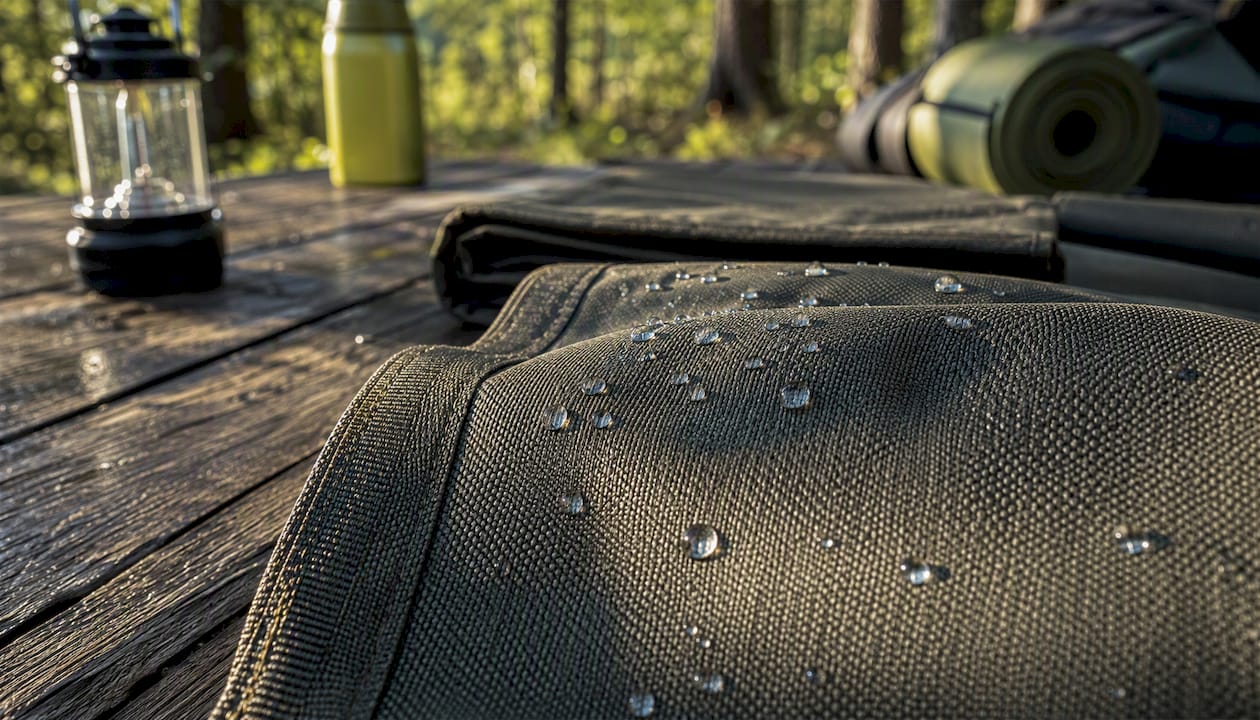
UHMWPE/Dyneema-style laminates offer the best strength-to-weight ratio and the lowest bulk of any cover fabric available right now. Coated polyester and nylon cost less and are easier to care for — a genuine tradeoff worth knowing.
Material categories:
- UHMWPE/Dyneema® composites: Fully waterproof, very high tear resistance, low stretch, and ultralight. Dyneema® composites are engineered for exactly this kind of high-performance, low-weight application. The woven Dyneema composite construction pairs a UHMWPE core with a woven face and film backing for waterproof, ultra-durable, low-bulk results. Best for: backpacking and ultralight travel.
- UHMWPE laminates (e.g., Challenge Ultra 100): At roughly 3.3 oz/yd² with a PET film backing, this class of laminate delivers high waterproofing and abrasion resistance without the bulk that kills foldability. Covers under ~3.5 oz/yd² fold alongside the chair rather than fighting it.
- Coated polyester/nylon: Lower cost, easier machine care (check the label), heavier per square yard. Fine for car camping or festival use where you’re not counting grams.
Construction details that separate good covers from great ones:
- Reinforced seams and bartacks at stress points (corners, strap attachment zones)
- Tapeable seams for full waterproof integrity on laminates
- Venom™ UHMWPE webbing on straps — 1,800 lb break strength at 2.2 g/ft means you’re not adding meaningful weight to your pack
Weight callout: A UHMWPE laminate cover at 3.3 oz/yd² can cover a standard camping chair seat and back in under 4 oz of total fabric weight — lighter than most stuff sacks.
How do straps and buckles keep a cover secure without blocking the fold?
The sweet spot is elasticized hems combined with two buckle straps, placed well clear of folding joints. Anything more complex tends to snag on hinges or add fiddly steps when you’re breaking camp at 6 AM.
Common attachment systems, ranked by travel-friendliness:
- Elasticized hems: Fast, low-profile, and they move with the chair during folding. Best all-around choice.
- Buckle straps: Add security in wind; position them on flat frame sections, never across a hinge
- Drawcords: Work well on simple sling seats; can loosen over time
- Velcro tabs: Convenient but collect debris and lose grip after heavy use
- Sewn-in webbing loops: Durable anchor points, but only useful if the cover is designed to stay on during folding
Safety notes: Straps that apply sideways load to folding hinges accelerate wear on the joint. Check strap placement before every season, and inspect webbing for fraying quarterly. One more thing about Venom™ UHMWPE webbing — it’s slippery with cinch buckles, so use cam buckles or ladder locks instead.
Can a cover add comfort without wrecking the fold?
Yes, but only if you treat it as a modular layer rather than a permanent fixture. The right approach is a thin closed-cell foam liner or a removable quilted fleece layer that slips out before you collapse the chair.
- Backpacking: A 3–4mm closed-cell foam pad cut to seat size adds insulation without meaningful weight
- Car camping: A thicker quilted liner or a fleece seat cover gives real comfort; weight isn’t the constraint here
- Pairing with a separate cushion: Use a non-slip backing on the cushion and a cover with a snug hem to hold both in place. Check that the combined thickness still allows full folding — if the chair won’t close flat, the cushion is too thick
Sitpack’s modular seating approach is built around this idea: add comfort layers that come off cleanly, so the chair stays packable.
How do you clean and store covers so they last multiple seasons?
Always dry fabric completely before folding and storing. That single habit prevents mold, mildew, and the frame corrosion that quietly destroys good chairs over winter.
- After each trip: Spot-clean high-contact areas (seat pan, armrest zones) with a damp cloth; wipe and air out before packing
- Deep clean: Hand-wash technical coatings with a mild, non-detergent cleaner — machine washing degrades waterproof films
- Drying: Air-dry only; high-heat drying breaks down both coatings and UHMWPE fibers
- Seam and webbing check: Inspect quarterly for fraying, delamination, or loose bartacks
- Storage: Use a breathable bag, not a compression sack; dry, cool storage with airflow prevents trapped moisture from doing slow damage
Pro Tip: If you’re storing chairs for winter, leave the cover slightly loose in a mesh bag rather than compressed tight — trapped moisture in a sealed compression sack is a mildew incubator.
What should you expect to pay, and how long does delivery take?
Universal covers ship fast and cost less. Custom-fit covers for specialist laminates cost more and take longer — plan accordingly.
- Entry-level universal coated polyester: Widely available, ships in days
- Mid-range water-resistant laminates: Better abrasion resistance and lighter weight; still available off-the-shelf from specialty outdoor retailers
- High-end UHMWPE/Dyneema-style custom covers: Premium pricing reflects the material cost and cut-to-order work; lead times can stretch to several weeks for bespoke sizes
If you travel more than a few times a year with the same chair, the custom option pays for itself in fit quality and reduced wear on your folding joints. Occasional campers who swap chairs seasonally are better served by a quality universal cover.
How do you make the final call without wasting money?
Use this decision order: fit and folding clearance first, material second, construction third, weight fourth, care requirements last.
Decision checklist:
- Confirm the cover clears all folding joints when the chair is mid-collapse
- Choose material based on trip type (UHMWPE for ultralight; coated poly for car camping)
- Verify reinforced seams, webbing type, and buckle placement
- Weigh the cover — anything over 5–6 oz for a seat-only cover is worth questioning for backpacking use
- Check care instructions match your washing setup
Questions to ask any seller:
- What fiber type and weight (oz/yd² or g/m²) is the fabric?
- Are seams reinforced, taped, or bartacked?
- What webbing material are the straps made from?
- What’s the warranty and return policy?
- What are the exact washing instructions for the coating?
Red flags: No seam or webbing specs listed. Seller can’t confirm folding clearance for your chair model. Claims of machine-washable waterproof films with no care instructions attached.
What I’ve learned designing covers that actually fold
Here’s the thing most cover guides miss: the folding mechanism is the chair’s most vulnerable point, and most covers are designed as if the chair never moves. A cover that looks great flat on a table can bind a cross-frame strut on the first collapse and stress the joint every single time after that.
The covers worth recommending are the ones where the designer clearly folded the chair with the cover on, repeatedly, before signing off. Elasticized hems that track the frame’s movement, straps positioned on flat sections, and fabric light enough that it doesn’t add meaningful resistance to the fold — those details only come from people who actually use the gear.
Sitpack’s multifunctional seating designs reflect that same thinking: portability isn’t an afterthought, it’s the starting point. The 45-day satisfaction guarantee and lifetime warranty back that up with something more than marketing language.
Sitpack makes portable seating that pairs perfectly with ultralight covers
Sitpack builds travel-first chairs like the Campster II and Sitpack Zen around one principle: the chair should pack as small as possible without sacrificing the sit. That same logic applies to every accessory in the lineup.
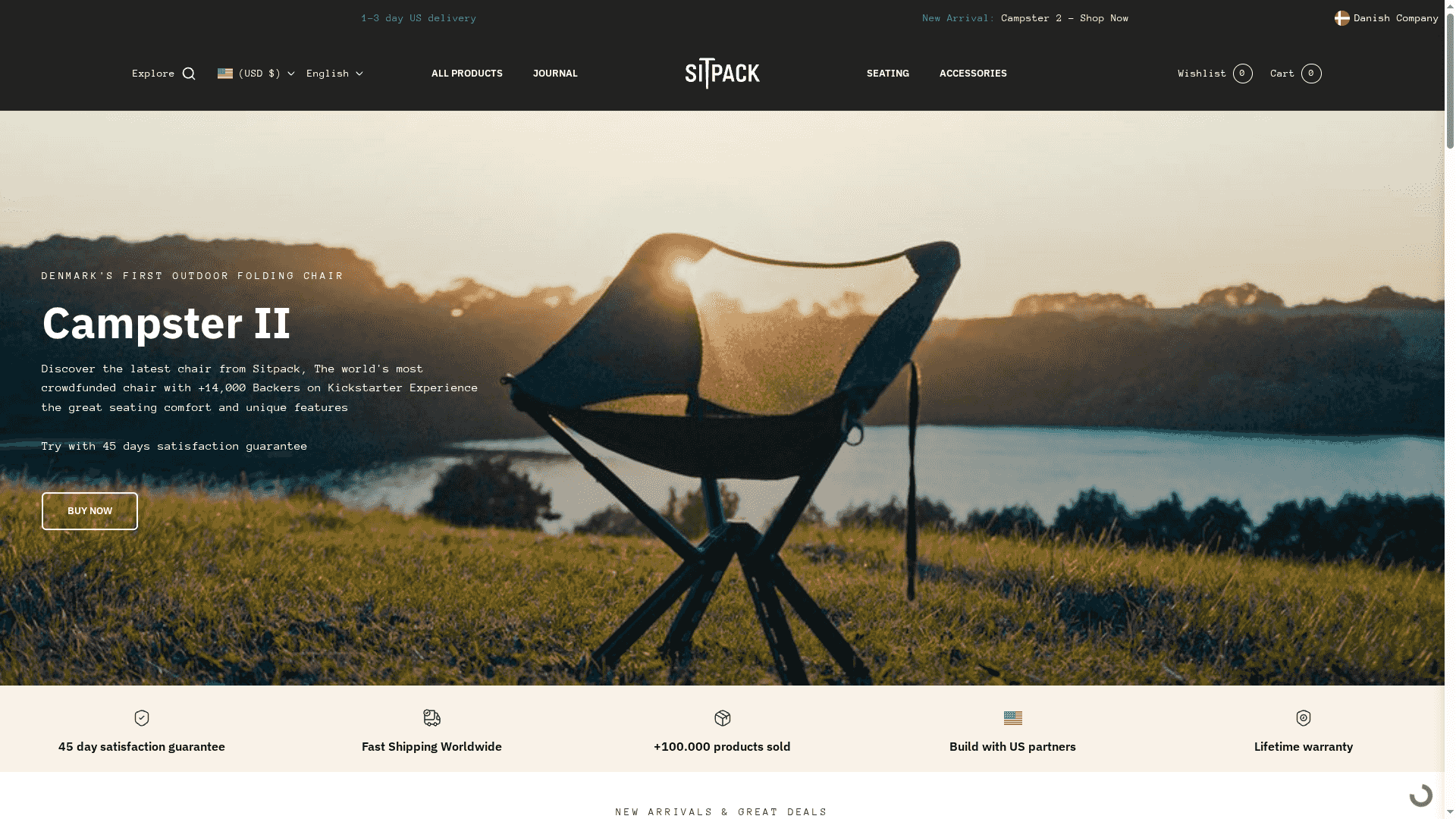
If you’re pairing a lightweight cover with a chair that was actually designed to fold compactly, you’re not fighting the geometry — you’re working with it. Sitpack’s accessories are chosen to complement that packable design, not undermine it. The 45-day satisfaction guarantee means you can test the fit in real conditions, and the lifetime warranty means you’re not replacing the chair every two seasons.
Check out the full Sitpack lineup and find the right chair and cover combination at Sitpack.
Sources
- Design with Dyneema — Fabric finder guide
- Dyneema® woven composite 31 - XCTD100-BK01
- Challenge ULTRA™ 100X - Ripstop By The Roll
- Maintenance Tips for Portable Camping Chair | Keep It Durable
- How To Pick Outdoor Chair Covers for Maximum Protection | Covers & All
- Ultimate guide to choosing the right camping chair seat cover
- Patio Sealing Options: A Homeowner’s 2026 Guide
Before ordering a custom cover, download the material datasheet for your chosen fabric and verify the oz/yd² weight and seam-tape compatibility — those two numbers will tell you whether the cover will fold cleanly with your chair or fight it every time.