Cart
0
Sign up and get 10$ off your order
Expected delivery
1-3 days
You may also like


Danish Company


Lugging heavy chairs through crowded European parks or onto public transport quickly turns any outing into a hassle. For eco-conscious commuters who value both comfort and sustainability, finding a truly portable seat is more than a convenience—it is a smarter way to enjoy city life and outdoor escapes. This guide spotlights compact seating as a thoughtful blend of minimalist design, easy portability, and earth-friendly materials, making it easy to relax anywhere your journey takes you.
| Point | Details |
|---|---|
| Compact Seating Innovations | Focuses on lightweight, portable designs that maximize comfort while minimizing space requirements. |
| Variety of Portable Chairs | Features diverse types tailored for specific activities, enhancing user experience across different environments. |
| Ergonomics and Comfort | Prioritizes user-centered design to ensure comfort and support through adjustable features and thoughtful material choices. |
| Sustainability in Design | Emphasizes eco-friendly materials and production methods to reduce environmental impact throughout the product lifecycle. |
Compact seating represents an innovative approach to mobility and spatial efficiency, transforming how we think about portable sitting solutions. At its core, this design philosophy focuses on creating lightweight, adaptable seating arrangements that maximize comfort while minimizing physical footprint. Flexible designs support diverse learning environments across multiple contexts, from urban classrooms to outdoor adventures.
The fundamental characteristics of compact seating include several critical design elements:
Understanding compact seating goes beyond simple furniture design. Classroom mobility research reveals these solutions are increasingly important in dynamic, space-constrained urban settings. The concept embraces universal design principles, ensuring accessibility and comfort for diverse users with varying physical needs and preferences.
Modern compact seating solutions represent more than just a furniture category - they embody a strategic response to contemporary spatial challenges. By integrating advanced materials, smart engineering, and user-centered design, these innovations provide practical alternatives to traditional, bulky seating arrangements. They transform how we approach comfort, mobility, and spatial optimization in personal and professional environments.
Pro Tip: When selecting a compact seating solution, prioritize weight, folding mechanism, and material durability to ensure long-term performance and reliability.
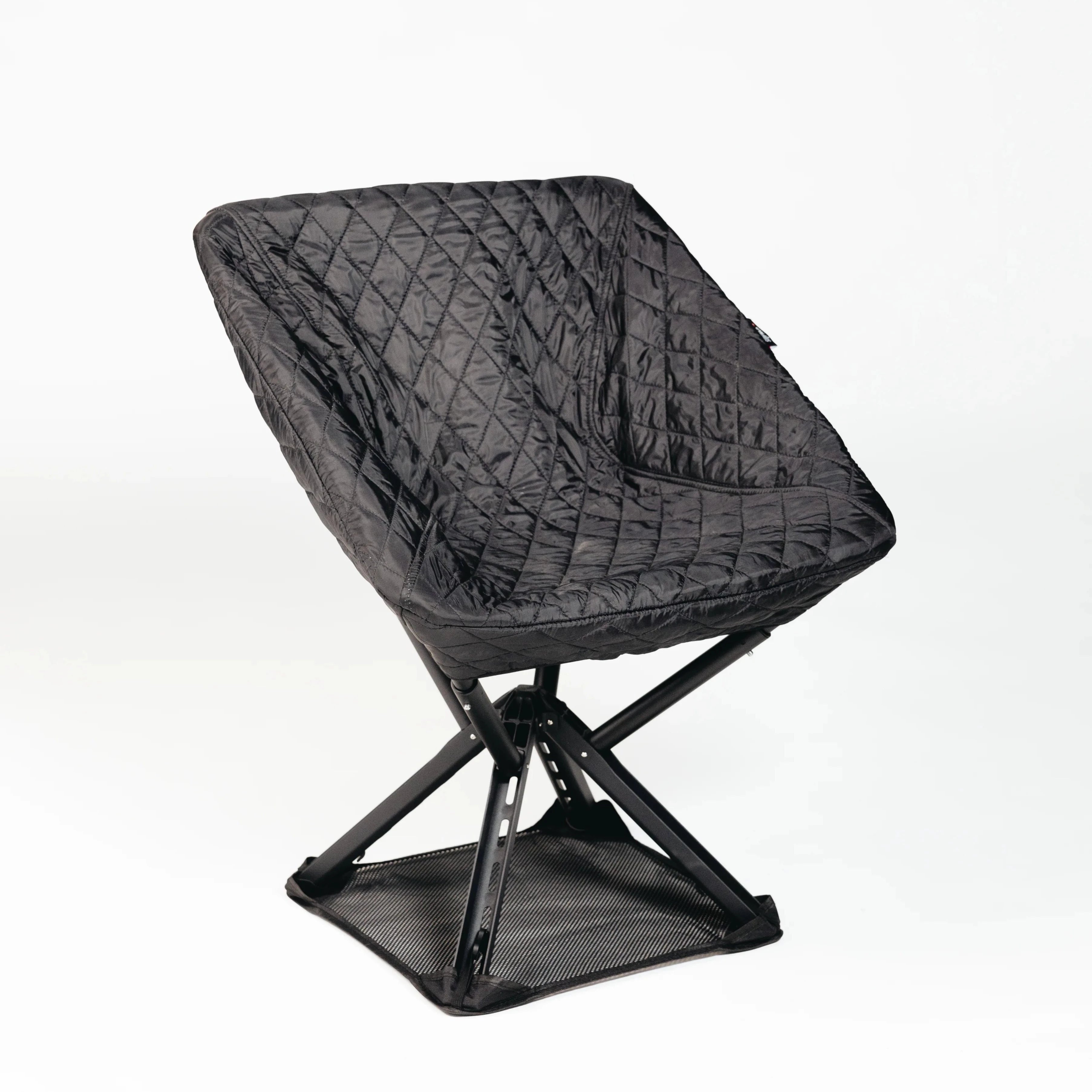
Portable chairs represent a diverse and innovative category of seating solutions designed to meet the dynamic needs of modern mobile lifestyles. These versatile chairs range from ultralight camping models to sophisticated ergonomic designs that prioritize comfort and functionality. Lightweight folding chairs have become essential tools for outdoor enthusiasts, urban commuters, and travelers seeking flexible seating options.
The primary types of portable chairs can be categorized based on their specific design and intended use:
Ergonomic chair design principles emphasize critical features that enhance user comfort and support. These include adjustable backrests that conform to spinal curvature, seats that allow proper foot positioning, and supportive armrests that minimize musculoskeletal strain. The most advanced portable chairs integrate these design elements while maintaining exceptional lightweight and foldable characteristics.
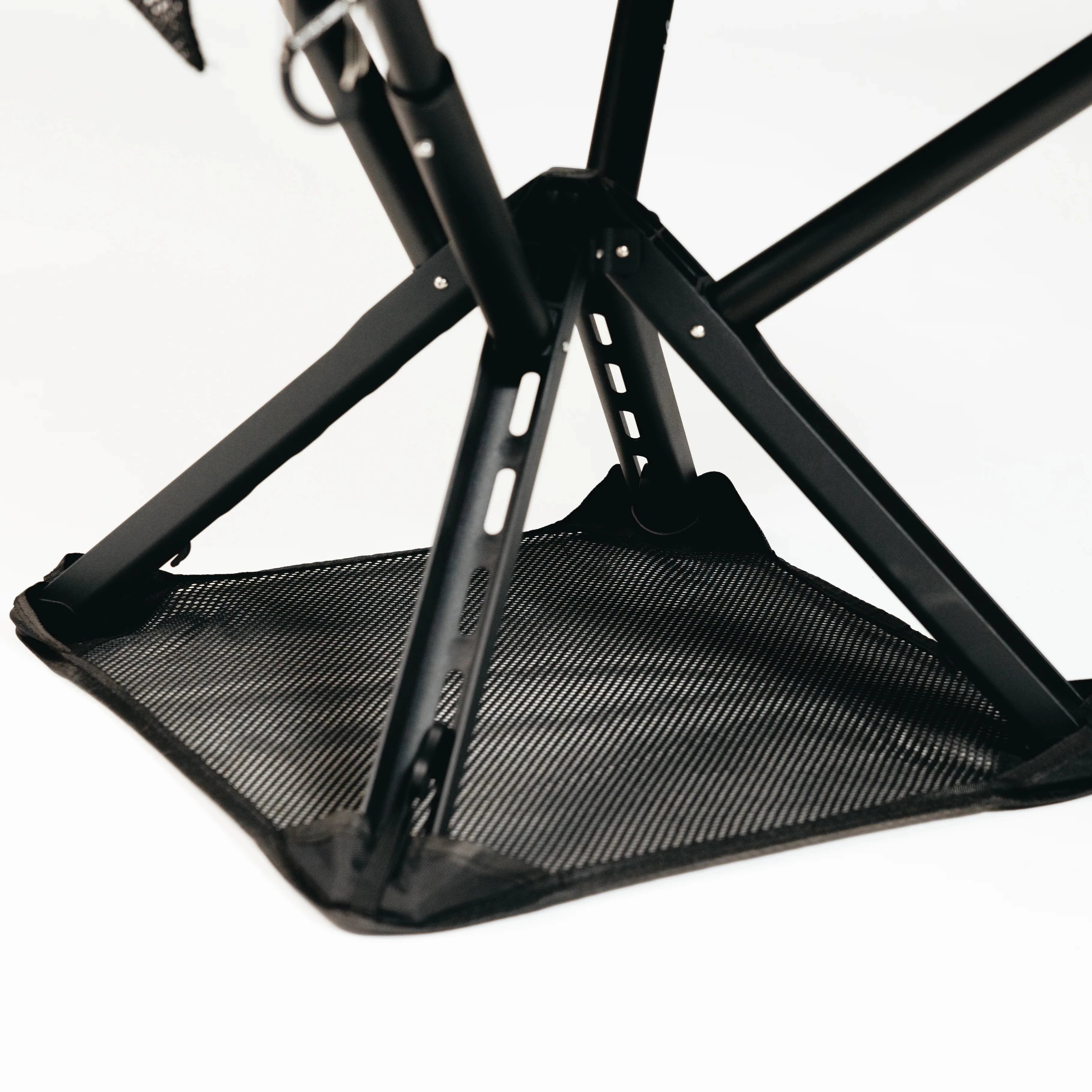
Modern portable chairs go beyond simple sitting solutions - they represent a sophisticated intersection of engineering, materials science, and user-centered design. Manufacturers now utilize advanced lightweight materials like aircraft-grade aluminum, high-tensile synthetic fabrics, and innovative folding mechanisms that transform seating into incredibly compact, easily transportable configurations. These chairs are no longer just functional accessories but sophisticated mobility tools that adapt to users’ changing environments and needs.

Here’s a quick comparison of major portable chair types and their ideal use cases:
| Chair Type | Best For | Typical Weight Range |
|---|---|---|
| Camping Chair | Outdoor recreation, car trips | 5–12 lbs |
| Backpacking Chair | Hiking, minimal travel weight | 1–3 lbs |
| Beach Chair | Sandy, coastal environments | 4–7 lbs |
| Stadium/Event Chair | Sports events, bleachers | 2–6 lbs |
| Ergonomic Portable | Prolonged comfort, office use | 6–15 lbs |
Pro Tip: When selecting a portable chair, test the folding mechanism, check weight capacity, and evaluate the material durability to ensure long-term performance and comfort.
Portable seating solutions represent a sophisticated intersection of design, engineering, and human-centered innovation. Portability design principles focus on creating lightweight, adaptable chairs that seamlessly integrate comfort, functionality, and ease of transportation. These designs challenge traditional notions of seating by prioritizing user experience across diverse environments and activities.
Key ergonomic considerations in portable chair design include:
Ergonomic design standards emphasize accommodating diverse user capabilities, including variations in body size, strength, and physical reach. Modern portable chairs incorporate advanced anthropometric research to create seating solutions that adjust dynamically to individual user needs. This approach ensures that comfort is not a one-size-fits-all proposition but a personalized experience tailored to each user’s unique physical characteristics.
The evolution of portable seating represents a remarkable convergence of materials science, biomechanical engineering, and user-centered design. Manufacturers now employ cutting-edge technologies like advanced composite materials, precision-engineered folding mechanisms, and intelligent ergonomic mapping to create chairs that are simultaneously lightweight, robust, and supremely comfortable. These innovations transform portable chairs from simple sitting devices into sophisticated mobility tools that adapt seamlessly to users’ changing environments and physical requirements.
Pro Tip: When evaluating a portable chair, test its weight distribution and adjustability by simulating different sitting positions to ensure maximum comfort and support.
Compact seating design is undergoing a transformative shift towards sustainability, with manufacturers increasingly prioritizing environmentally responsible materials and production methods. Eco-friendly material innovations are revolutionizing how portable chairs are conceived, manufactured, and ultimately disposed of, addressing growing consumer demand for more sustainable outdoor equipment.
Sustainable materials used in compact seating now include:
Sustainable processing techniques are increasingly focused on minimizing chemical treatments and reducing energy consumption during manufacturing. These advanced approaches aim to preserve natural material properties while dramatically lowering the environmental footprint of portable seating solutions. Manufacturers are developing innovative treatments that maintain material integrity while significantly reducing ecological impact.
The future of sustainable compact seating lies in a holistic approach that considers the entire product lifecycle. This means designing chairs that are not just environmentally friendly in production, but also designed for longevity, easy repair, and eventual responsible recycling. Advanced material science is enabling the creation of portable chairs that are lightweight, durable, and minimally harmful to the environment, representing a significant leap forward in sustainable product design.
Pro Tip: When purchasing portable chairs, prioritize brands that transparently communicate their sustainability practices and use verifiable eco-friendly materials.
Compact seating solutions have become essential for urban dwellers and frequent travelers navigating increasingly dense and dynamic environments. Compact seating strategies revolutionize space utilization by offering lightweight, foldable designs that transform how we think about mobility and personal comfort in confined spaces. These innovative solutions address the growing challenge of maximizing functionality within limited urban landscapes.
Key space-efficient features of modern portable chairs include:
Compact city development strategies emphasize the importance of flexible, efficient design solutions that support active transportation and urban mobility. Portable seating plays a crucial role in this ecosystem, providing comfortable, adaptable sitting options that align with the principles of dense, interconnected urban environments. These chairs are not just furniture - they are strategic tools for navigating modern urban landscapes.
The evolution of space-efficient seating reflects a broader cultural shift towards minimalism and mobility. Urban professionals, digital nomads, and frequent travelers now demand furniture solutions that are as dynamic and flexible as their lifestyles. Advanced engineering and materials science have enabled the creation of chairs that can be effortlessly carried, quickly deployed, and stored with remarkable efficiency, transforming how we conceptualize personal space in an increasingly mobile world.
Pro Tip: Measure your available storage space before purchasing a portable chair to ensure it truly fits your urban lifestyle and transportation needs.
Portable seating solutions, while innovative, are not without their inherent challenges and contextual limitations. Flexible seating research reveals that these designs, despite their numerous advantages, come with specific performance constraints that users must carefully evaluate before making a purchasing decision. Understanding these nuanced trade-offs is crucial for selecting the most appropriate seating solution.
Key limitations of compact portable chairs include:
Seating arrangement strategies demonstrate that alternative options might better suit specific environments. Traditional chairs remain superior in scenarios demanding maximum stability, while bench-style seating can provide more flexible group configurations. The selection depends entirely on specific user requirements, anticipated usage patterns, and environmental constraints.
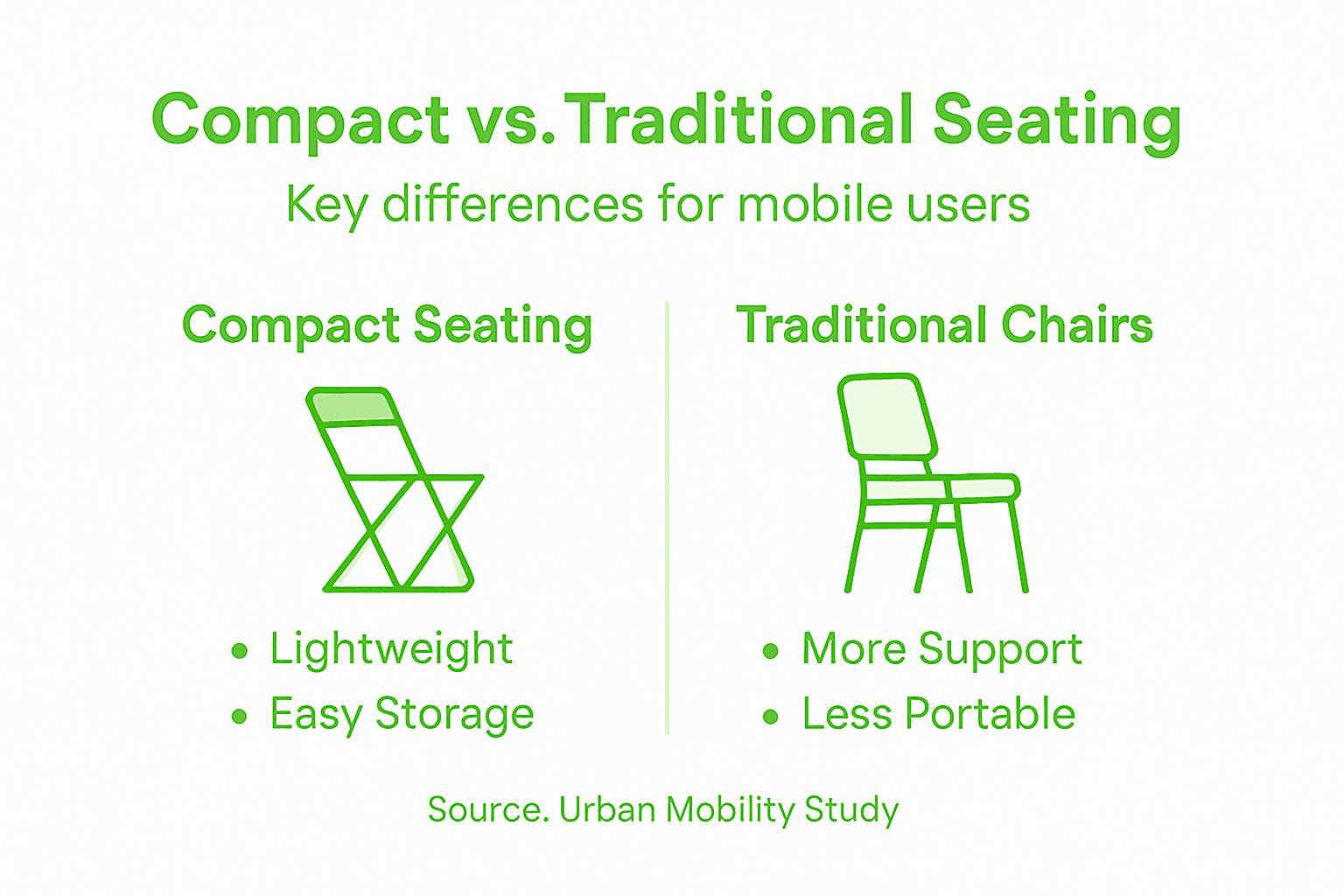
Comparing portable chairs against traditional seating reveals a complex landscape of trade-offs. While compact chairs excel in mobility and space efficiency, they often compromise on long-term comfort and structural integrity. Advanced materials and engineering are progressively narrowing this performance gap, but users must still carefully assess their specific needs. The ideal solution varies dramatically based on individual preferences, physical requirements, and intended usage contexts.
This summary shows how compact and traditional seating solutions compare on essential factors:
| Factor | Compact/Portable Chairs | Traditional Chairs |
|---|---|---|
| Stability | Lower, lightweight construction | High, solid build |
| Comfort | Moderate, varies by design | Consistent, well-padded |
| Portability | Extremely portable, foldable | Bulky, not portable |
| Durability | Good, but material dependent | Excellent, robust frames |
| Storage Space | Minimal, compact when folded | Requires dedicated space |
Pro Tip: Always test a portable chair’s weight capacity and stability before committing to a purchase, and consider your primary intended usage environment.
The article highlights key challenges travelers, urban users, and outdoor enthusiasts face around comfort on the go, including limited space, ergonomics, and durability of portable seating. Many find traditional chairs too bulky or heavy while compromising on ergonomic support and ease of transport. At Sitpack, we understand that your seating solution must combine lightweight design, advanced ergonomics, and compact foldability to meet your active lifestyle needs.
Explore the innovative Campster II and Sitpack Zen collections designed specifically to transform how you experience comfort on the move. Whether you need a chair that folds down ultra-compact for urban commuting or one crafted with sustainable materials for your outdoor adventures, our offerings provide reliable durability and user-centered comfort. Act now to embrace the freedom of portable seating that keeps up with your dynamic world and enjoy fast worldwide delivery plus a satisfaction guarantee at Sitpack online store.
Compact seating offers portability, space efficiency, adaptability to different environments, and ergonomic support, allowing for comfortable seating solutions that are easily transportable and suitable for diverse settings.
When selecting a compact seating solution, consider factors such as weight, folding mechanism, material durability, and ergonomic design to ensure it meets your comfort and transportation requirements.
While many compact chairs provide ergonomic features, their comfort for prolonged use varies by design. It’s important to test different options to find one that offers sufficient lumbar and back support for your needs.
Compact seating solutions typically have lower stability and durability compared to traditional chairs due to their lightweight and portable designs. However, advancements in materials and engineering are improving their robustness, making them suitable for various situations.