Cart
0
Sign up and get 10$ off your order
Expected delivery
1-3 days
You may also like


Danish Company

TL;DR:
- Portable seating in 2025 is lighter, smarter, and more adaptable for different terrains.
- Proper setup, including ground support and correct height, ensures stability and comfort.
- Testing gear at home on various surfaces helps prevent issues during outdoor use.
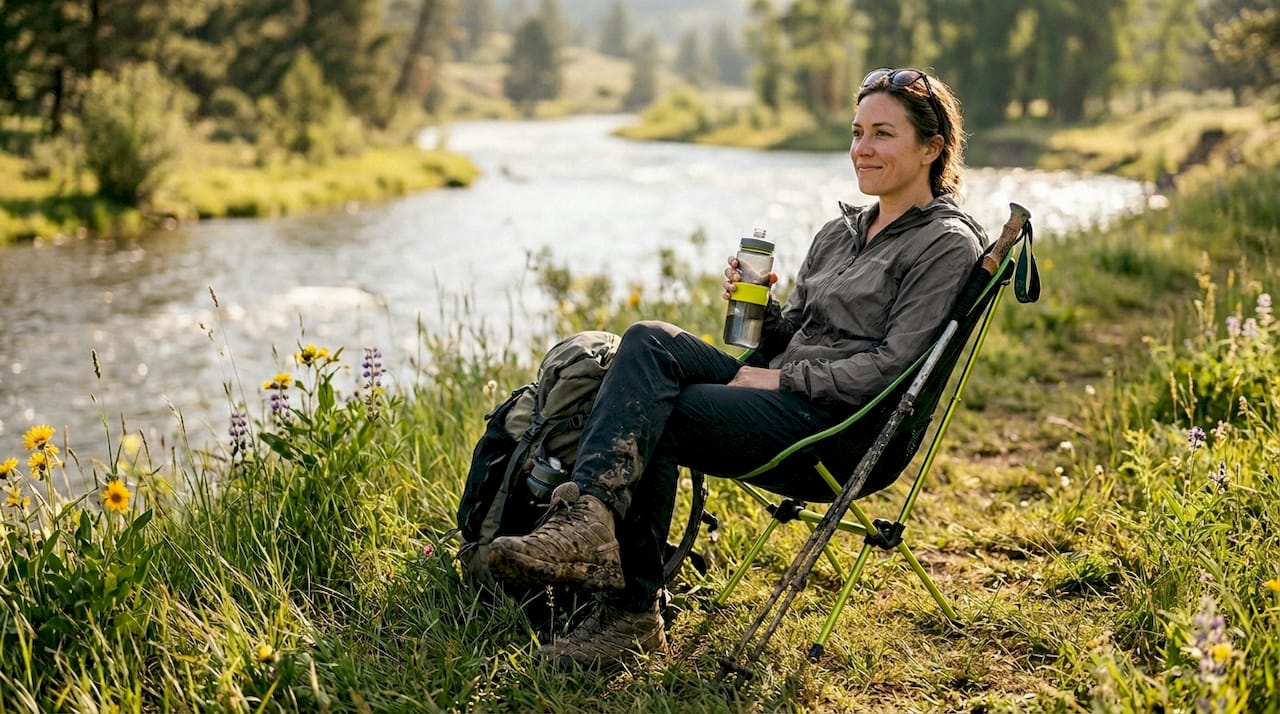
You know that feeling when you’ve hiked three miles to a stunning overlook, only to realize your only seating option is a jagged rock or a patch of wet grass? Yeah, we’ve all been there, parking our posterior on whatever nature offers up. In 2025 and beyond, that’s no longer the trade-off you have to make. Portable seating has evolved dramatically, and the options available to outdoor adventurers today are lighter, smarter, and more packable than ever. This guide walks you through everything you need to know, from identifying your specific needs to setting up your seat like a pro on any terrain.
| Point | Details |
|---|---|
| Seat height matters | Choose seating with an 18-20 inch height for best comfort during travel. |
| Prepare for terrain | Use groundsheets and wide bases to avoid sinking and instability outdoors. |
| Test before you travel | Set up your portable seat at home on various surfaces to ensure success in the field. |
| Maintenance extends lifespan | Clean, inspect, and store your seating gear properly to last all season. |
With the objective clear, the first step is knowing exactly what you need. Not all outdoor seating situations are created equal, and the wrong seat for your adventure can turn a relaxing trail break into a frustrating balancing act.
Terrain is probably the single biggest factor most people overlook when buying a portable seat. Hard, flat surfaces like packed dirt or rock give you a solid base. Soft surfaces like sand, mud, or loose grass? That’s where things get wobbly fast. Low seats and unstable legs create real problems on soft or uneven ground, especially if you’re carrying a heavy pack and just want to sit down without doing a physics experiment.
Seat height matters more than most people realize. A seat that’s too low forces your knees up past your hips, which gets uncomfortable surprisingly quickly. Most adults do best with a seat height between 18 and 20 inches, which keeps knees at a comfortable angle and makes standing back up feel effortless. If you’re tall, go toward the higher end. Shorter adventurers might be fine with slightly less, but don’t go below 16 inches unless you enjoy the sensation of trying to escape a beanbag chair.
Here’s a quick look at how different travel scenarios affect your seating priorities:
| Travel scenario | Key priority | Ideal seat type |
|---|---|---|
| Music festival | Lightweight, packable | Compact stool or tripod seat |
| Backcountry hiking | Ultralight, durable | Minimalist stool or pad |
| Road trip stop | Comfort, easy setup | Collapsible chair with back support |
| Beach or lakeside | Stability on soft ground | Wide-base chair with groundsheet |
| Urban travel | Portability, style | Pocket-sized foldable stool |
Beyond terrain and height, think about these factors before buying:
Pro Tip: Check out the latest portable seating trends before committing to a purchase. The 2025 market has some genuinely surprising innovations that weren’t available even two years ago.
Once you know your needs, the next step is selecting the best gear for your particular adventure. The 2025 portable seating market has expanded well beyond the classic folding camp chair your dad used to haul to Little League games.
Here’s a comparison of the main seat types you’ll encounter:
| Seat type | Weight range | Best terrain | Pack size | Price range |
|---|---|---|---|---|
| Ultralight tripod stool | 0.3 to 0.7 lbs | Firm ground, rock | Very small | $20 to $80 |
| Collapsible chair with back | 1.5 to 3 lbs | Mixed terrain | Medium | $40 to $150 |
| Hybrid foam pad/seat | 0.2 to 0.5 lbs | All terrain | Tiny | $15 to $50 |
| Wide-base foldable stool | 1 to 2 lbs | Soft ground, sand | Small to medium | $30 to $100 |
| Pocket-sized foldable stool | Under 0.3 lbs | Firm surfaces | Pocket-sized | $25 to $70 |
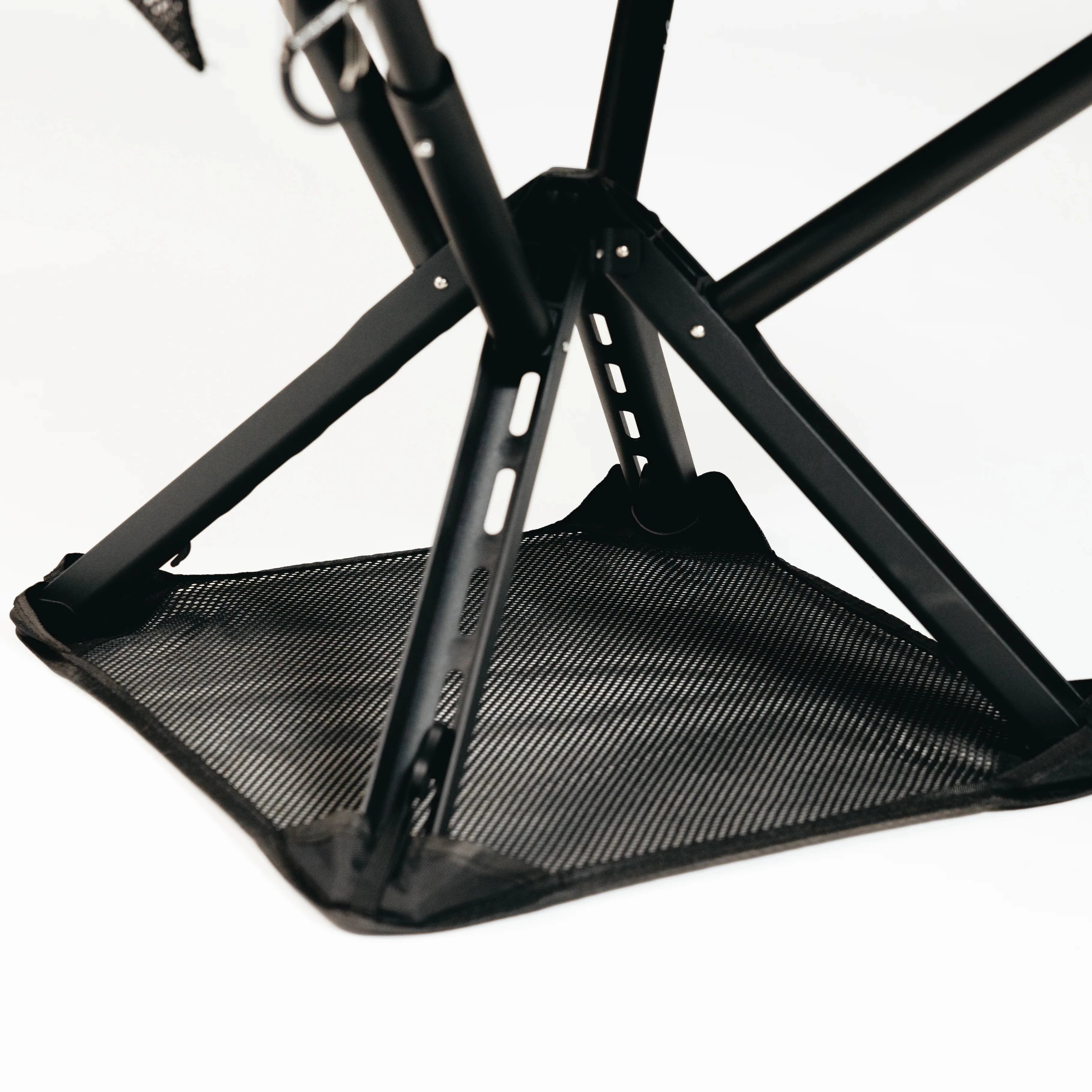
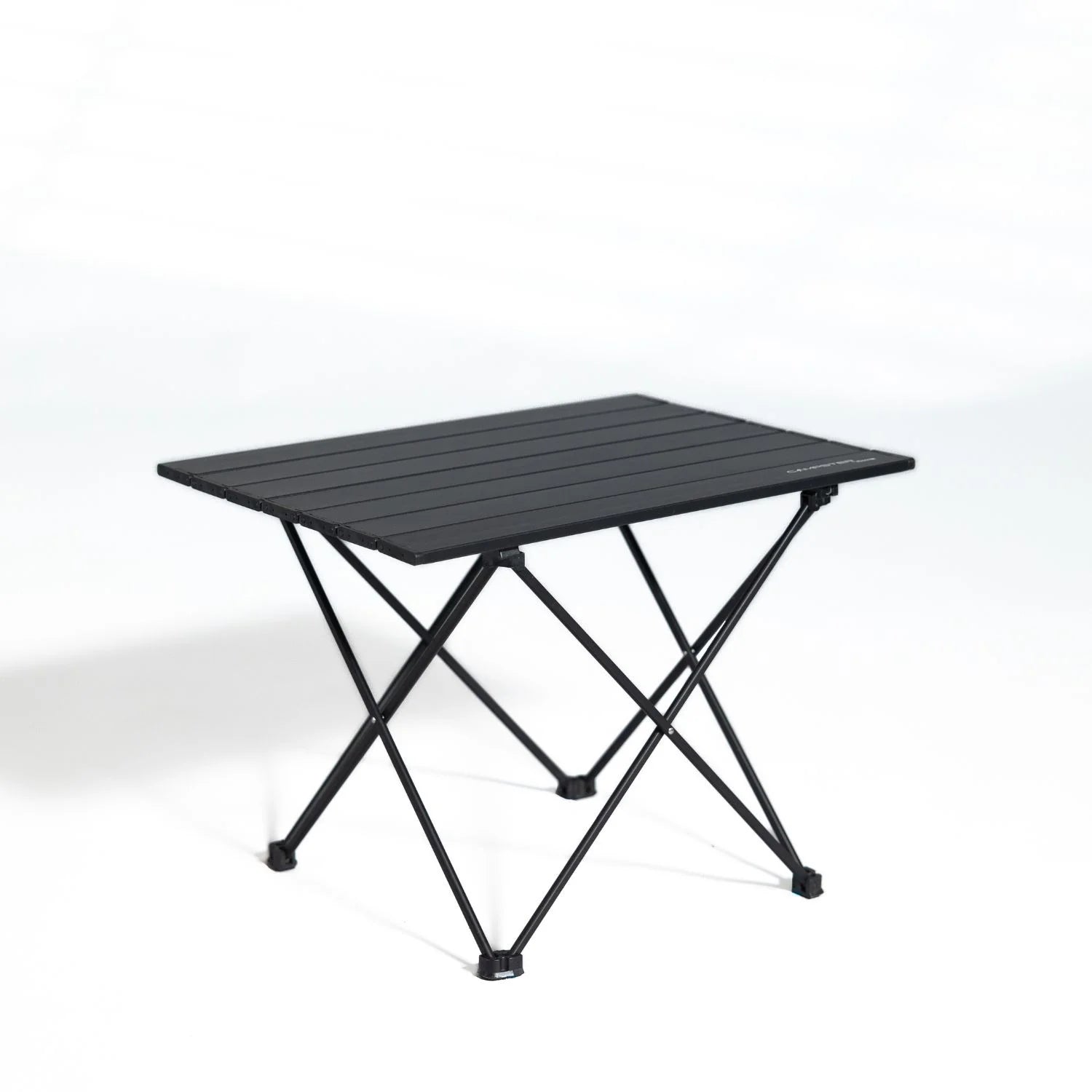
Tripod designs are wonderfully light and pack down tiny, but they have a narrower footprint that can be tricky on soft ground. Wide-base designs solve the sinking problem but add weight and bulk. The sweet spot for most travelers in 2025 is a hybrid approach: a lightweight seat combined with a small groundsheet or foam pad for versatility.
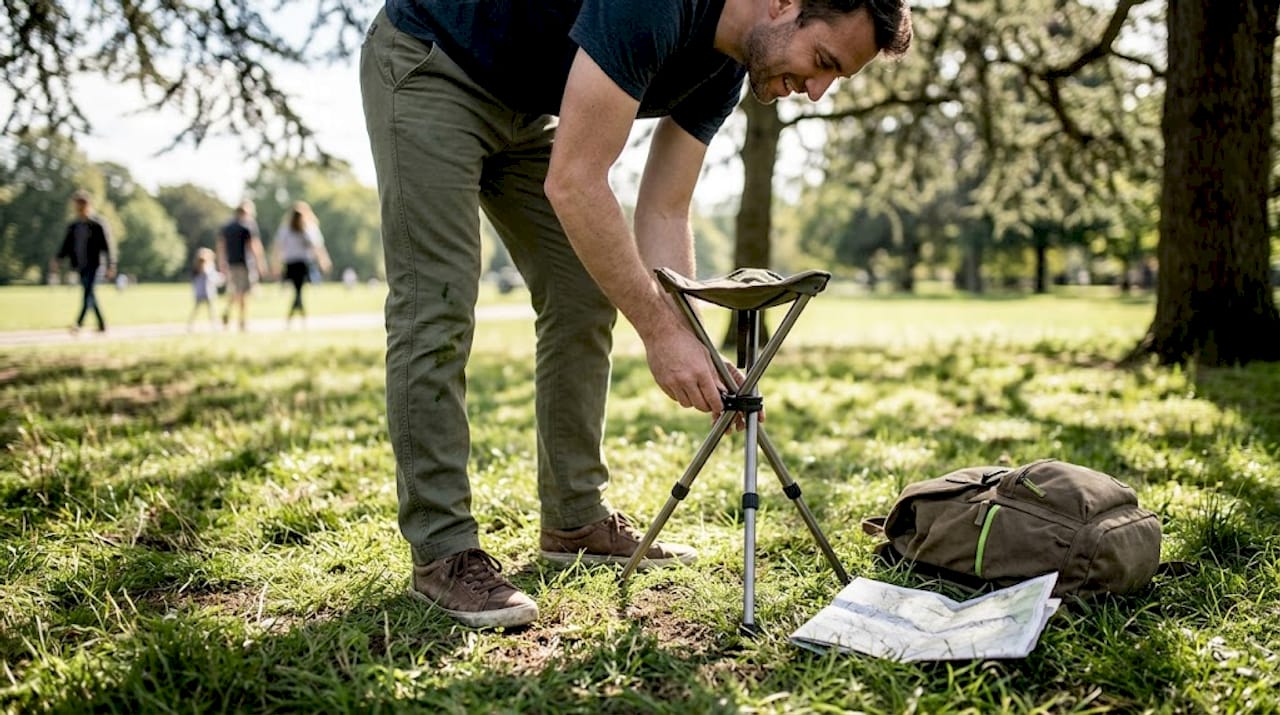
The lightweight seating benefits go beyond just saving your back on the trail. Lighter gear means you’re more likely to actually bring it, which means more comfortable breaks, better recovery between hiking segments, and genuinely more enjoyable trips.
Key accessories worth adding to your kit:
For the most current roundup of what’s worth buying, the best outdoor seating tips resource covers everything from ultralight options to full-comfort solutions for longer stays.
Having the right gear is only half the equation; setting it up correctly is crucial for maximum comfort. Even a premium seat can become a wobble machine if you plonk it down on the wrong patch of ground without thinking.
Follow these steps for a solid, comfortable setup every time:
Pro Tip: Test your seat at home on different surfaces before your trip. Try it on carpet, tile, grass, and even a folded blanket to simulate soft ground. You’ll spot problems before they ruin a trail break.
“The best seat is the one you’ve already practiced setting up. Fumbling with unfamiliar gear on a cold, windy ridge is nobody’s idea of a good time.”
For slope situations, keep an eye on the latest seating trends for 2025 because several new designs now include angled leg systems specifically built for hillside use. That’s a genuine innovation worth knowing about.
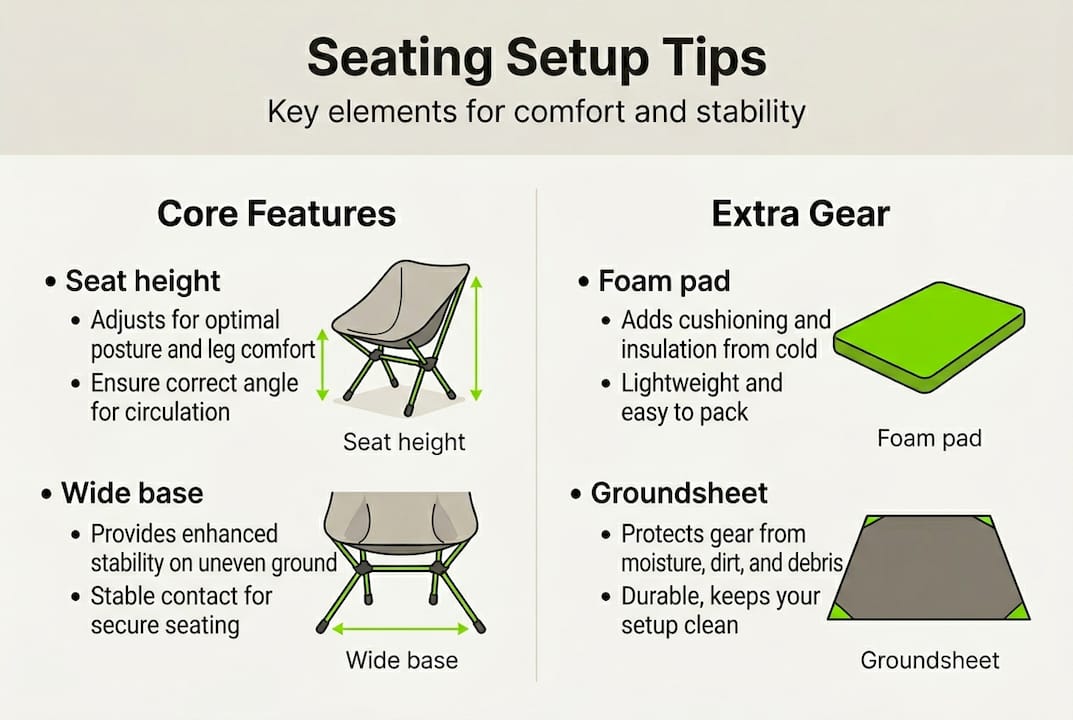
Even with the right setup, challenges can pop up on the trail or at your destination. Here’s how to handle them and keep your gear in top shape.
The most common mistake people make is ignoring base width relative to the terrain. A narrow tripod stool on a slope is asking for trouble. Instability on uneven terrain is best solved by widening your stance or using a pad underneath, not by just hoping for the best.
Common issues and quick fixes:
Pro Tip: Before packing up, flip your seat over and check every joint and leg tip. This 30-second habit catches small issues before they become trip-ruining failures. Good maintenance for lightweight seats extends the life of your gear significantly across a full travel season.
Proactive hacks that experienced travelers swear by:
Here’s our honest perspective after spending serious time with portable seating across different terrains and trip types. The spec sheet will tell you a seat weighs 400 grams and handles up to 265 pounds. What it won’t tell you is how it behaves on a gravelly slope in the rain, or whether the locking mechanism still works smoothly after being packed and unpacked 40 times.
Real-world testing reveals things no product page can communicate. We’ve seen seats with glowing reviews fail miserably on soft coastal sand, and we’ve seen simple, no-frills stools outperform expensive designs simply because they had a wider base. Accessories like pads and groundsheets often do more for your comfort than the seat’s built-in features.
Our advice? Buy a seat that fits your most common scenario, then adapt it with simple accessories for edge cases. Explore in-depth seating trends to stay current, but don’t let feature lists drive your decision. Your backside knows what it needs after a long day on the trail.
Now that you know what works, here’s where to find reliable and innovative seating for your next trip.
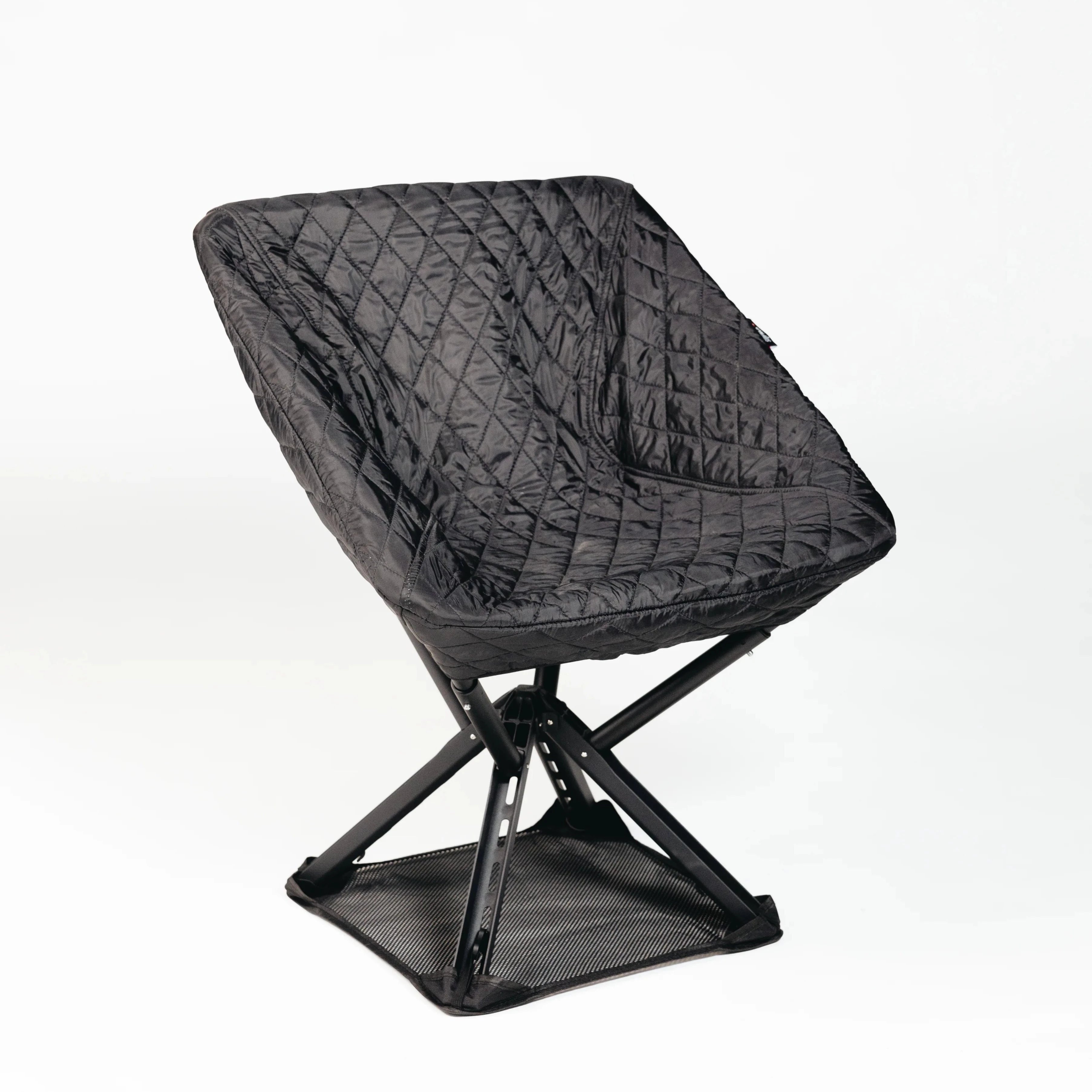
At Sitpack, we’ve built our entire product range around the exact problems this article covers: unstable legs, uncomfortable heights, bulky packs, and gear that fails when you need it most. From the ultra-compact Sitpack Zen to the versatile Campster II, every product is designed to be genuinely useful in the real world, not just impressive on a spec sheet. Explore the discover seat benefits page to see how our lineup matches up with your 2025 adventure plans, and find the seat that actually fits your life on the move.
Seats between 18 and 20 inches tall minimize knee stress and keep you comfortable on uneven or challenging terrain for extended periods.
Place a groundsheet or wide foam pad underneath your seat to distribute weight evenly. This simple fix, backed by real stability research, makes a noticeable difference on soft surfaces.
Foam pads and groundsheets provide meaningful stability and comfort improvements, especially on soft or uneven ground where seat legs tend to shift.
Set up your seat at home on different surfaces, including carpet, tile, and a folded blanket, to simulate varied terrain and catch stability issues before your trip.