Cart
0
Sign up and get 10$ off your order
Expected delivery
1-3 days
You may also like


Danish Company

TL;DR:
- Multi-season seating is outdoor furniture designed to withstand all weather conditions and remain usable year-round. It combines durable materials like rust-proof frames, UV-treated fabrics, and quick-dry cushions to ensure longevity across seasons. Building a flexible, zone-based layout with modular components enhances functionality and comfort throughout the year.
Multi-season seating is outdoor furniture explicitly engineered to withstand all weather conditions and remain usable throughout the entire year. Unlike standard patio chairs that crack, fade, or rust after a single winter, multi-season furniture combines fade-resistant fabrics, rust-proof frames, and quick-dry cushions to endure daily exposure across every season. For outdoor enthusiasts and travelers who refuse to pack up their favorite spots the moment temperatures drop, understanding what is multi-season seating is the difference between a patio that works nine months a year and one that works all twelve.
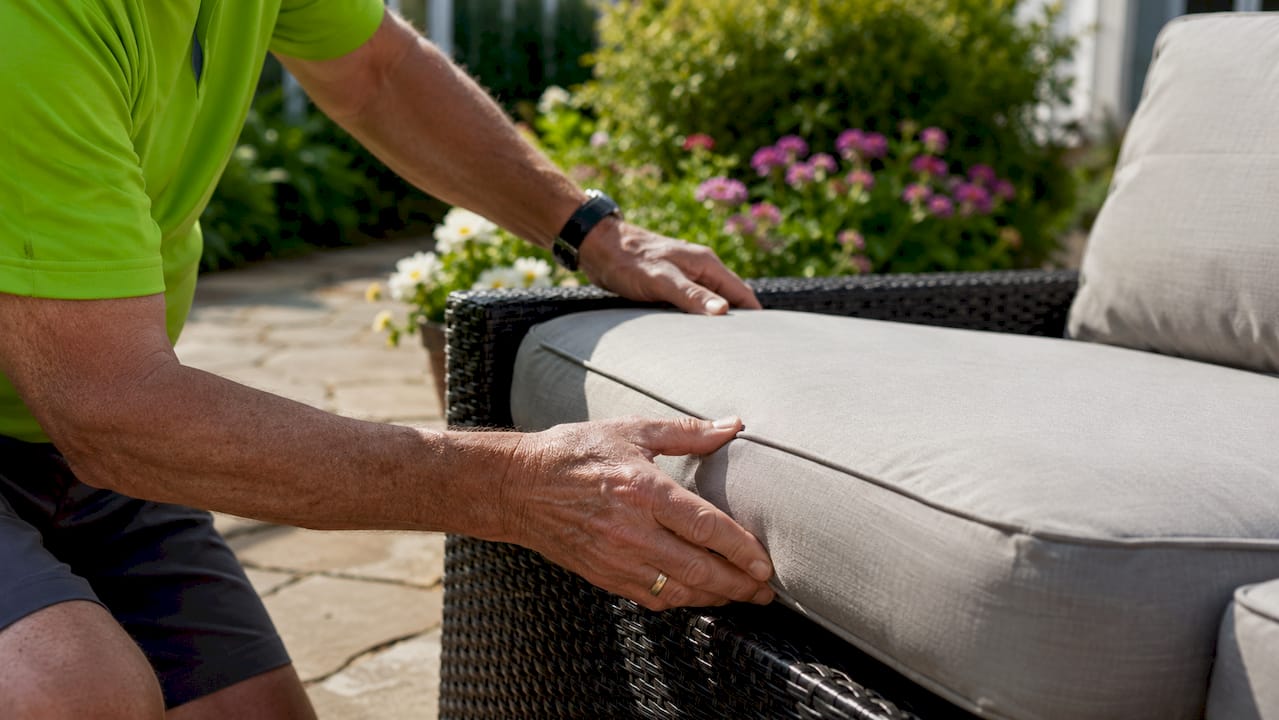
Multi-season durability comes down to materials and construction quality, not aesthetics alone. A chair can look stunning in a catalog and still warp, mildew, or corrode after one rainy season. The furniture that actually holds up uses a specific combination of materials that most budget options skip entirely.
Here is what separates genuine all-weather seating from the cheapo chairs that fall apart by fall:
High-quality multi-season furniture often lasts up to five years longer than typical seasonal pieces. That longer lifespan reduces lifetime costs despite higher upfront prices, which matters a lot when you are outfitting a campsite, a rental property, or a well-used backyard. Choosing the right outdoor seating materials from the start saves you from replacing furniture every other spring.
Pro Tip: When shopping for multi-season patio furniture, flip a cushion over and check the foam density. Dense, open-cell foam that springs back quickly drains faster and holds its shape longer than soft, slow-recovery foam.
The smartest approach to all-weather seating ideas is not buying one indestructible chair. It is building a system that adapts to what each season demands. Modular outdoor seating does exactly that.
Modular seating systems allow you to shrink or expand your seating footprint quickly by adding or removing detachable chaise sections, corner pieces, and side tables. Popular 2026 modular configurations can reduce a seating footprint by up to 40% within minutes. That kind of flexibility is not just convenient; it is the core of practical multi-season furniture planning.
Here is how a modular setup shifts across the calendar:
Flexible patio layouts treat the patio as a living system with a stable core and reconfigurable modules. That approach minimizes the labor involved in seasonal transitions, which is a real consideration if you are managing multiple outdoor spaces or traveling frequently.
Pro Tip: Label each modular piece with a small weatherproof tag noting its position in your summer and winter configurations. When you pull everything out of storage in spring, setup takes minutes instead of a frustrating puzzle session.
Multi-season outdoor seating is typically organized into multiple zones, each optimized for a different weather condition. A single undifferentiated seating area works fine on a perfect 72-degree afternoon. It fails the moment the wind picks up, the sun shifts, or the temperature drops after dinner.
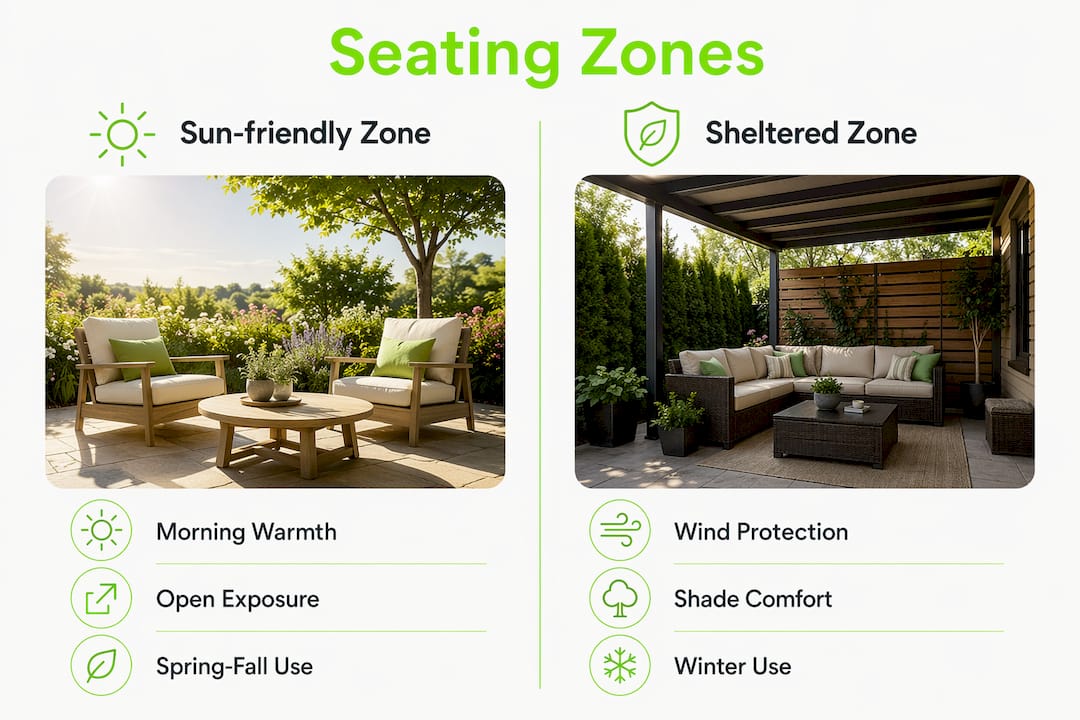
The zone approach divides your outdoor space into three functional areas:
| Zone type | Primary purpose | Seasonal strength |
|---|---|---|
| Sun-friendly zone | Open exposure, morning warmth | Spring and fall mornings |
| Shaded zone | UV protection, afternoon cool | Summer afternoons |
| Wind-protected zone | Barrier from prevailing winds | Fall and winter evenings |
Designing seating zones that adapt quietly to weather changes without requiring constant furniture movement keeps patios lively and social year-round. The key is movable seating within each zone, flexible spacing, and open circulation paths so guests can shift between zones naturally without breaking the conversational flow.
Orientation matters too. A sun-friendly zone facing southeast captures morning light in spring and fall when you want warmth. A shaded zone on the north or west side of a pergola blocks harsh afternoon sun in summer. A wind-protected zone tucked against a wall or dense hedge stays usable on blustery October evenings when an exposed zone would be abandoned.
Even the best weather-resistant chairs fail you if the layout makes the space feel cramped or hard to navigate. Outdoor seating functionality changes with layout. Crowding reduces ease of access, so multi-season planning must account for clearance as layouts shift between seasons.
Follow these spacing rules to keep your patio working well regardless of configuration:
Maintaining continuous circulation paths of 30–36 inches is the single most overlooked rule in outdoor layout planning. Overcrowded arrangements reduce functionality and comfort even when every individual piece of furniture fits physically within the space.
The term “multi-season” gets confused with other seating categories, particularly in commercial and venue contexts. Telescopic seating is a retractable, tiered system used in arenas, gymnasiums, and multipurpose event venues. It folds into compact stored positions to enable quick space conversion indoors. It has nothing to do with weather resistance or outdoor use.
Here is a clear comparison of the two categories:
| Feature | Multi-season outdoor seating | Telescopic seating |
|---|---|---|
| Primary environment | Outdoor patios, campsites, terraces | Indoor arenas, gyms, event halls |
| Weather resistance | Core design requirement | Not applicable |
| Reconfiguration method | Manual rearrangement or modular assembly | Motorized or manual retraction into tiers |
| Typical user | Outdoor enthusiast, traveler, homeowner | Venue operator, facility manager |
| Storage approach | Covers, stacking, modular breakdown | Folds into wall or floor cavity |
This distinction matters when you are searching for seasonal seating options online. Searching “multi-season seating” in a commercial context may surface telescopic venue products. For outdoor furniture, focus your search on terms like “all-weather seating,” “weather-resistant chairs,” or “best multi-season patio furniture” to find the right product category.
Multi-season seating works because it combines weather-resistant materials, adaptable modular layouts, and strategic zone planning to keep outdoor spaces functional and comfortable across every season.
| Point | Details |
|---|---|
| Materials determine longevity | Powder-coated frames and UV-treated textiles outlast standard seasonal furniture by up to five years. |
| Modular systems add flexibility | Reconfigurable pieces let you shrink or expand your setup by up to 40% to match seasonal needs. |
| Seating zones extend usability | Sun, shade, and wind-protected zones keep your patio social and comfortable as weather shifts. |
| Clearance prevents layout failure | Maintain 30–36 inch walkways as layouts change to preserve comfort and accessibility. |
| Know your terminology | Multi-season outdoor furniture and telescopic venue seating are entirely different product categories. |
I have spent a lot of time plonking myself down on outdoor furniture in all kinds of conditions, from breezy Scandinavian terraces to sun-baked American patios in July. The biggest mistake I see people make is treating multi-season seating as a product decision rather than a system decision. They buy one gorgeous weather-resistant sectional, shove it in the middle of the patio, and wonder why the space feels unusable by October.
The furniture is only half the answer. The other half is layout thinking. A well-placed modular setup in three distinct zones will outperform a single expensive sectional every single time. I have seen cheap powder-coated aluminum chairs arranged thoughtfully around a wind-protected corner outperform a premium teak set sitting exposed in the middle of a deck.
The cost argument also deserves a candid word. Yes, quality multi-season furniture costs more upfront. But replacing a set of flimsy seasonal chairs every two years costs more in the long run, and it is genuinely annoying. Invest once in materials that hold up, maintain your foldable chairs properly through the off-season, and you will be sitting comfortably on the same setup five years from now while your neighbor is hauling another flat-pack disaster out of a box.
The patio is a living space. Treat it like one.
— Jonas
If you are rethinking your outdoor setup after reading this, Sitpack is a great place to start. Sitpack specializes in portable, foldable outdoor seating built for real-world use across changing conditions. Products like the Campster II and Sitpack Zen are designed with lightweight durability in mind, making them ideal for travelers and outdoor enthusiasts who need seating that moves with them.
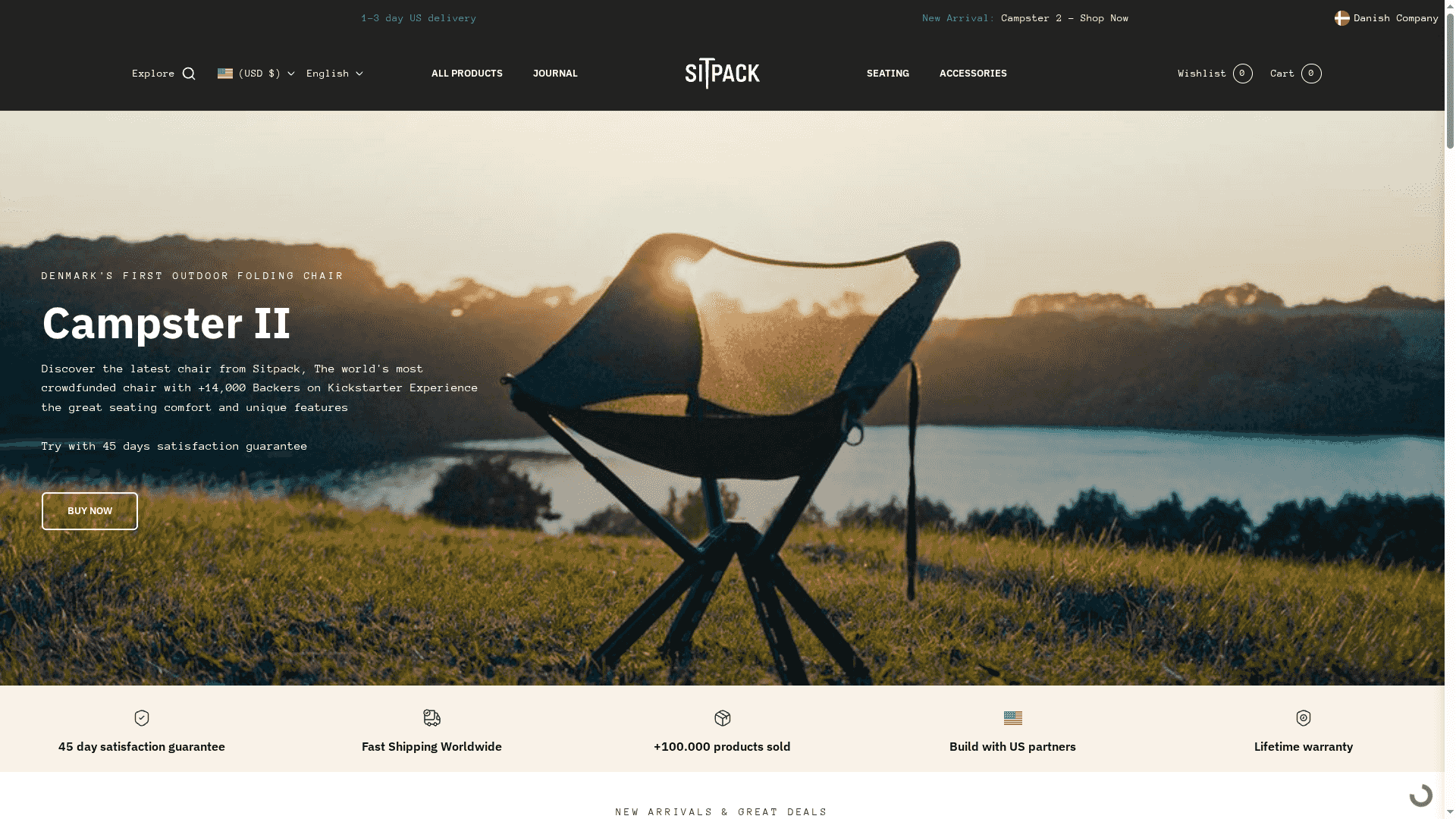
Whether you need a compact chair for a weekend camping trip or a versatile seat that handles everything from a breezy hillside to a sunny festival field, Sitpack’s range covers it. Every product ships worldwide with a 45-day satisfaction guarantee, so you can try it in your actual conditions before committing. Explore Sitpack’s outdoor seating and find the setup that fits your adventures.
Multi-season seating is outdoor furniture built to stay functional and comfortable year-round by using weather-resistant materials like rust-proof frames, UV-treated fabrics, and quick-dry cushions. It is designed to handle heat, rain, wind, and cold without degrading.
Powder-coated aluminum, stainless steel, UV-treated textiles, and quick-dry foam are the core materials in weather-resistant chairs. These components resist corrosion, fading, and mildew under prolonged outdoor exposure.
Regular patio furniture is often made for mild conditions and degrades quickly under UV exposure, rain, or frost. Multi-season furniture uses contract-grade construction that extends usable life by up to five years compared to standard seasonal pieces.
Prioritize frame material and cushion construction over aesthetics, then plan your layout in zones for sun, shade, and wind protection. Maintain 30–36 inch circulation paths as your configuration changes between seasons.
Multi-season seating refers to weather-resistant outdoor furniture for patios and campsites. Telescopic seating is a retractable tiered system used in indoor venues like arenas and gyms, with no connection to outdoor weather performance.