カート
0
サインアップすると注文から 10 ドル割引になります
配達予定
1〜3日
こちらもおススメ





デンマークの会社


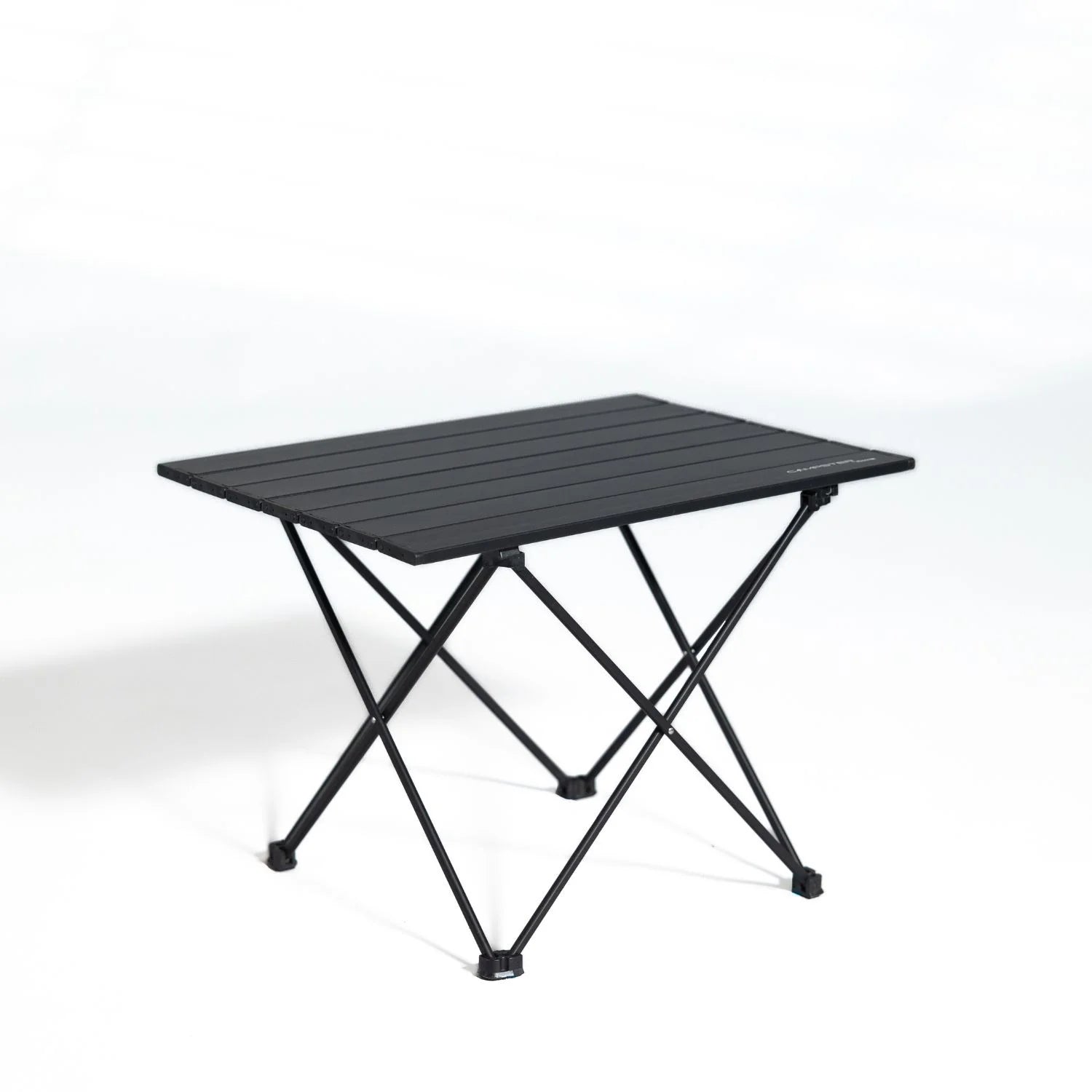
Compact tables are the unsung heroes of small-space living. If you’ve ever squeezed past a bulky dining table just to reach the coffee maker, you already know why the right table size changes everything. The core argument is simple: a compact table that earns its floor space through smart sizing, flexible function, and the right shape does more for a small room than any decorating trick ever could.

Small spaces punish oversized furniture fast. A table that’s even a few inches too wide can block a walkway, crowd a kitchen, or make a studio apartment feel like a storage unit. Compact tables solve this by keeping the footprint tight while still delivering a real, usable surface.
The benefits stack up quickly:
Pro Tip: Before you shop, ask whether each piece you already own serves at least two functions. If it doesn’t, removing it creates more space than any new compact table ever will.
Shape is the first decision, and it matters more than most people expect. The geometry of a table determines how it interacts with walls, walkways, and the people sitting around it.
Interior designers consistently recommend matching the table shape to the room’s primary movement path. If people walk through the dining area to reach another room, a round table with no sharp corners is the safer, smarter pick. If the table sits in a defined alcove, a square or rectangular shape often fits more naturally.
Getting the dimensions right is where most people go wrong. They measure the tabletop and forget about the chairs, the clearance, and the actual path people need to walk.
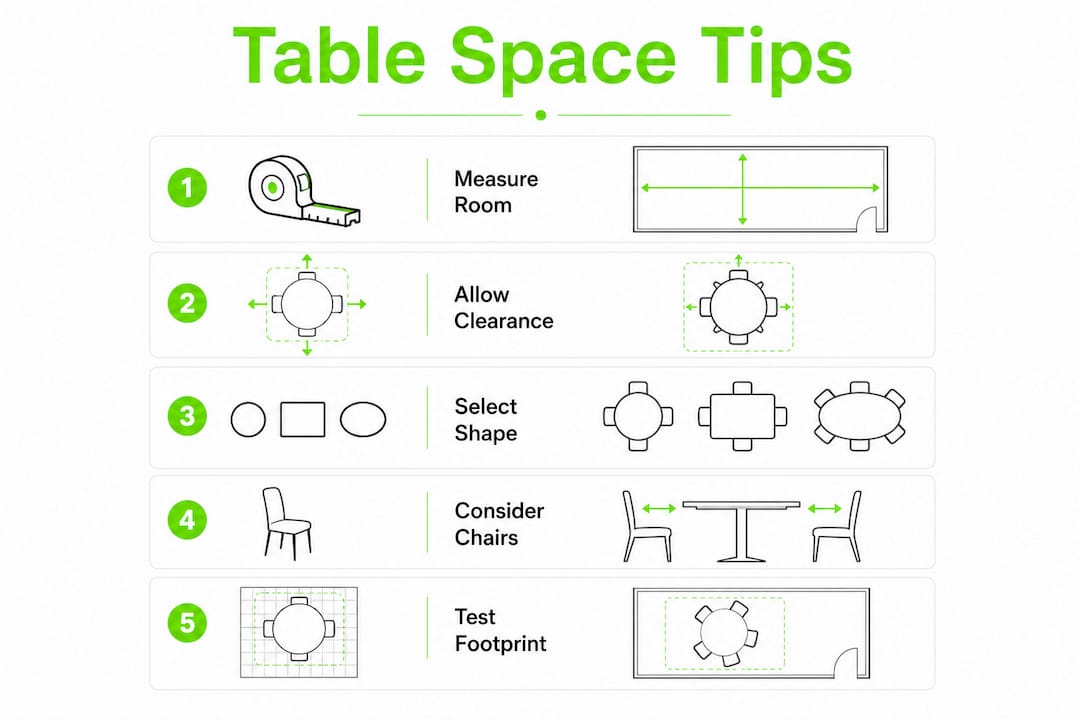
A good rule of thumb: leave at least 30–36 inches of clearance between the table edge and any wall or obstacle. That’s enough room for someone to pull out a chair, sit down, and not feel like they’re eating inside a closet. Tables with diameters of 48 inches or less are ideal for tight indoor spaces, with sizes down to 28 inches functional for two-seat setups; anything below 28 inches is generally considered a side table.
| Household size | Recommended table size | Best shape |
|---|---|---|
| two-person setups | 28–48 inches diameter | Round or square |
| two-person setups | a compact daily footprint with flexibility | Round or extendable |
| Occasional guests | Drop-leaf or extendable model | Extendable or drop-leaf |
Chair size and base design also affect the real footprint. A table with four corner legs forces chairs to sit at fixed points, which can feel cramped when you add a third or fourth seat. A pedestal base eliminates that problem by centering the support column, giving everyone better knee clearance and making it easier to slide chairs in from any angle. For tight dining spaces, pedestal tables consistently outperform four-legged designs on usability.
Measure your room before you buy, then tape out the table’s footprint on the floor with painter’s tape. Add the chair depth on each side. Walk around it. If it feels tight with tape, it’ll feel worse with furniture.
A smaller table that only does one job isn’t really saving you space. It’s just a smaller problem. The tables that genuinely transform small rooms are the ones that transform, store, or stack, pulling off two or three jobs in the same footprint.
Here’s what that looks like in practice:
The adaptability angle matters beyond just space. When your household needs change, a multifunctional table changes with you. A drop-leaf table that works as a two-person breakfast spot today can seat four for a dinner party next month without you buying anything new. That flexibility has real cost-efficiency built into it, especially compared to buying a dedicated dining table and a separate desk.
Pro Tip: Avoid buying a table that’s merely smaller than what you had before. If it still only does one thing, you’ve traded square footage for square footage without gaining any real function. Look for at least two distinct uses before committing.
Compact tables also support a tidier home by design. When a table folds away or nests neatly, the visual clutter disappears with it. That’s a practical organizational win, not just an aesthetic one.
The compact furniture philosophy, as interior designers frame it, is about efficiency as a feature, not a limitation. The goal isn’t to cram a smaller version of a traditional setup into a smaller room. It’s to rethink what the room actually needs to do.
“In smaller-scale apartments, the size of the table is dictated by the size of the apartment. Often, there is no dedicated dining room, so it’s a matter of finding a table you can put in the kitchen, the foyer, or one end of the living room.” — Alexander M. Reid, interior designer, New York, via The New York Times
That framing cuts through a lot of the noise around compact furniture. You’re not settling. You’re editing.
Key principles that designers and space-planning experts consistently return to:
At Sitpack, this philosophy runs through everything. The same thinking that goes into a portable, lightweight outdoor chair, built to do more in less space and weight, applies directly to compact table design. Whether you’re outfitting a studio apartment or a small city outdoor space, the principle is identical: bring only what earns its place, and make sure it does more than one thing well.
For anyone navigating furnished apartments or frequently changing living situations, compact multifunctional tables are especially worth prioritizing. They travel light, adapt fast, and never make a new space feel like it was designed for someone else’s life.
The compact furniture trends shaping 2025 and beyond point in one direction: smaller footprints, smarter functions, and materials that balance durability with visual lightness. That’s not a passing trend. It’s just good design catching up to how people actually live.
Compact tables work best when they combine the right shape, size, and multifunctionality to fit both the room’s dimensions and the household’s daily routine.
| Point | Details |
|---|---|
| Size ceiling for tight spaces | Tables with diameters of 48 inches or less are ideal for tight indoor spaces. |
| Clearance is non-negotiable | Leave 30–36 inches between the table edge and walls for comfortable seating and movement. |
| Round shapes improve flow | Circular tables have no corners, reducing collisions and improving traffic in cramped rooms. |
| Pedestal bases outperform four legs | A central support column gives better knee clearance and more seating flexibility in tight spaces. |
| Multifunctionality beats mere smallness | A compact table must transform, store, or stack to genuinely save space, not just occupy less of it. |