Cart
0
Sign up and get 10$ off your order
Expected delivery
1-3 days
You may also like


Danish Company


TL;DR:
- Compact design enhances travel by reducing weight, size, and setup time for portable seating. It helps avoid baggage fees, speeds security lines, and simplifies gear management on the go. Choosing the right seat depends on trip type and prioritizing features like dimensions, weight, and durability.
Compact design is the travel multiplier. Less weight, smaller folded volume, faster setup, and no checked-bag fees add up to a genuinely different trip experience. For portable outdoor seating specifically, the right compact seat fits in your carry-on, sets up in seconds, and disappears into your pack when you’re done. Here’s what that looks like in practice:
Think of the Anker Nano Travel Adapter as a useful analogy: at roughly 3.39 × 1.97 × 0.98 inches, it delivers five charging functions in a form factor smaller than a deck of cards. Good compact design for seating works the same way — full function, minimal footprint.
The role of compact design in travel goes well beyond saving a few inches of bag space. Compact carry-on items reduce stress, speed movement through security, and lower the risk of missed connections and lost belongings. That’s not a minor perk — it’s the difference between a smooth travel day and a chaotic one.
Stat to know: The carry-on-only movement is a direct consumer response to airline baggage fees and the behavioral shift toward minimalist travel. Skipping checked bags isn’t just convenient — it’s a strategic economic choice.
Cognitively, compact gear reduces what you have to think about. When your seat, your charger, and your jacket all have a fixed, fast-reach spot, you stop hunting for things mid-transition. You land, you move, you sit down wherever you need to. That’s the convenience advantage that frequent travelers talk about but rarely quantify.
Pro Tip: Before your next trip, count how many times you touch your gear in a single travel day — security, boarding, finding a seat, charging a device. Each interaction is a chance for compact design to save you 10–30 seconds. Over a full travel day, that adds up fast.
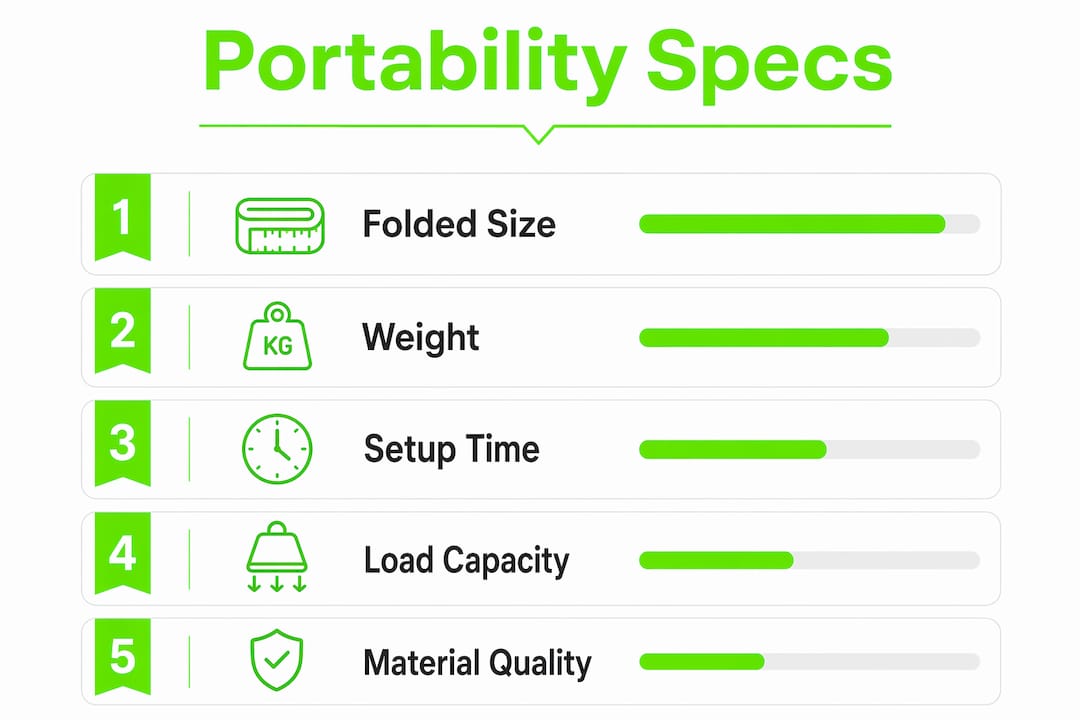
Prioritize in this order: folded dimensions, weight, setup time, and load capacity. Everything else is secondary for travel.
| Spec | Travel-Friendly Range | Why It Matters |
|---|---|---|
| Weight | Light enough to carry comfortably over long distances | Carry comfort over long distances |
| Folded dimensions | Compact size for carry-on and daypack | Fits carry-on and daypack |
| Open footprint | — | Usable in tight spaces |
| Setup time | Quick to set up | Fast transitions |
| Load capacity | Sufficient for typical users | Safety and durability |
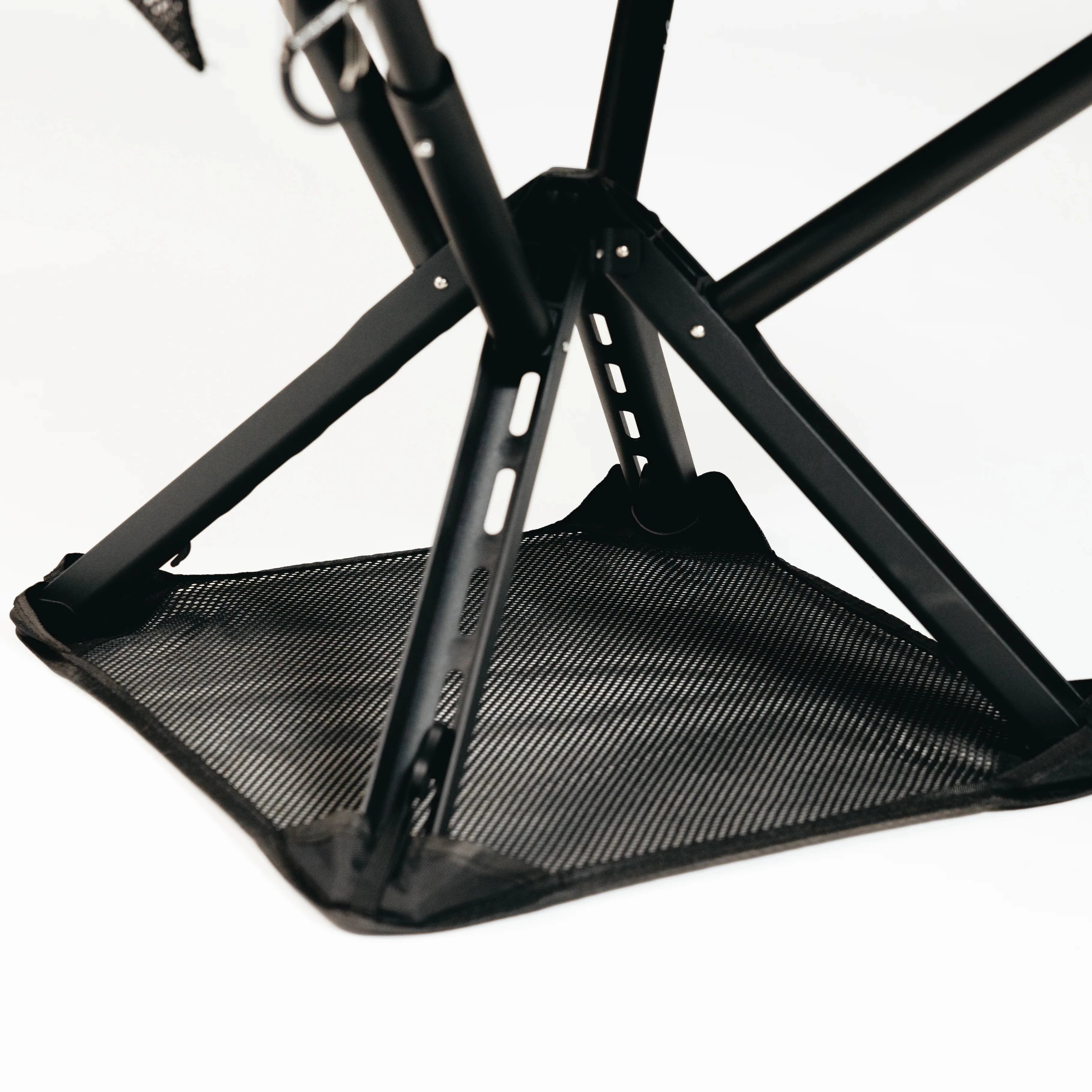
| Frame material | Aluminum or carbon fiber | Light and corrosion-resistant |
| Packed shape | Rollable or flat-fold | Fits alongside other gear |
Materials matter more than most buyers realize. Aluminum frames hit the sweet spot of light weight and corrosion resistance for most travel conditions. Carbon fiber goes lighter but costs more. Steel is heavier and better suited to base-camp use than carry-on travel. Fabric seat panels vary too: breathable mesh keeps you cooler but may sacrifice some weather resistance compared to coated nylon.
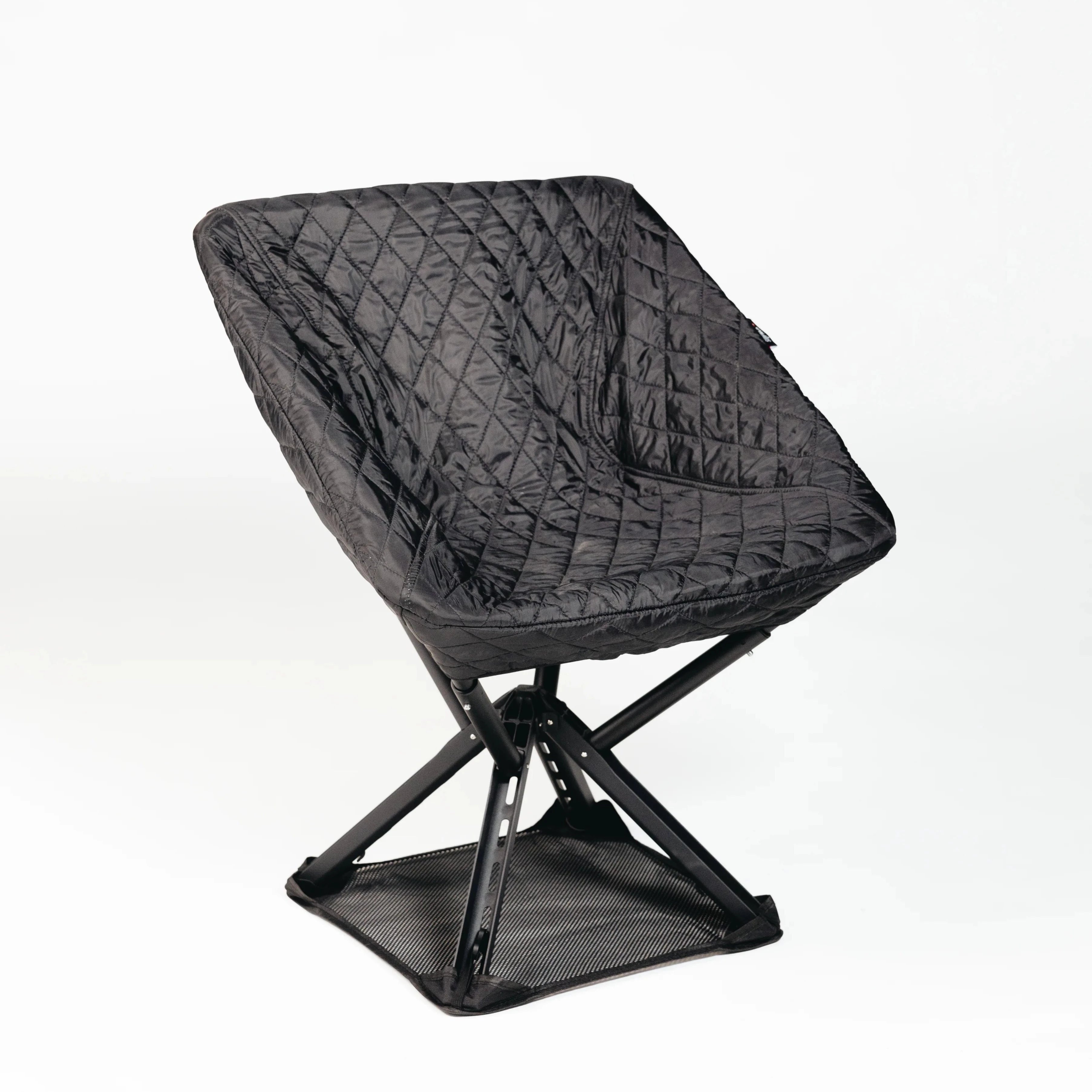
The Sitpack Campster II and Sitpack Zen are built around exactly these priorities — low weight, compact fold, and materials chosen for durability without bulk.
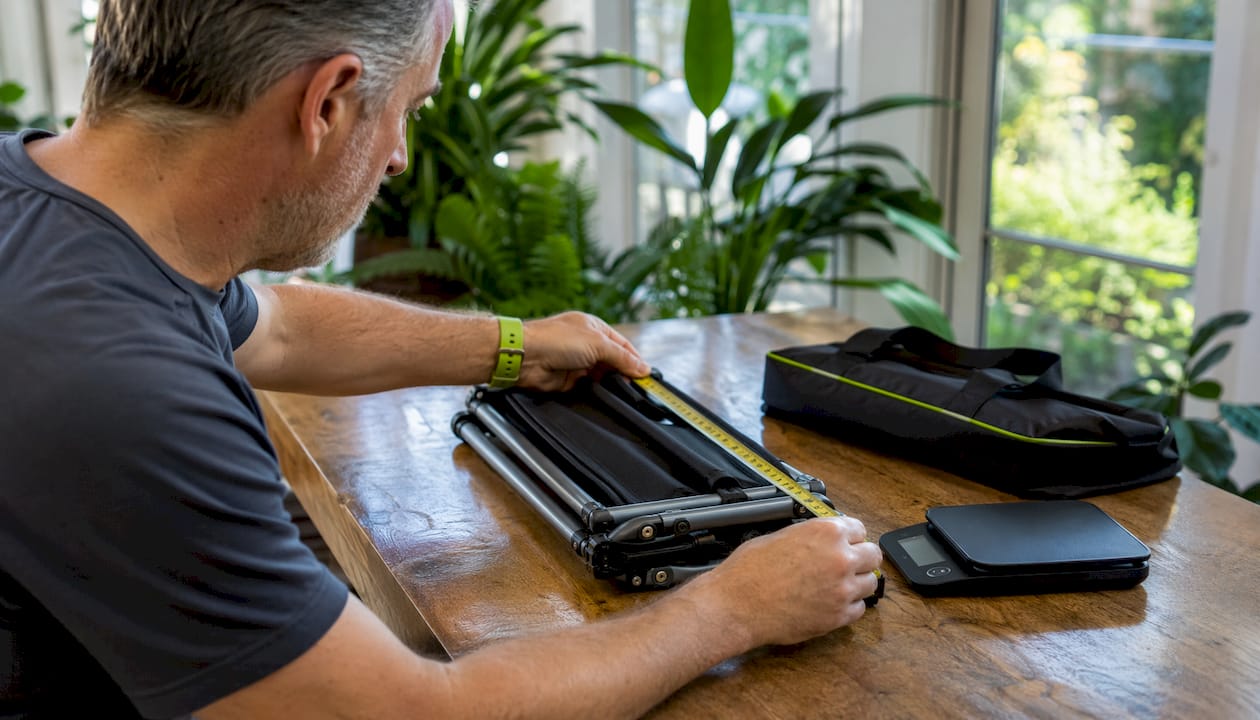
Pro Tip: At home, time yourself setting up and repacking the seat with a stopwatch. Then hold it next to your carry-on bag’s opening. If it fits without forcing, you’re good. If repacking takes more than 15 seconds, that friction will annoy you on day three of a multi-stop trip.
Choose your priorities based on trip profile, not a one-size-fits-all spec sheet.
| Trip Type | Priority 1 | Priority 2 | Priority 3 |
|---|---|---|---|
| Carry-on flights | Folded dimensions | Weight | Setup speed |
| Camping | Load capacity | Stability | Durability |
| Festivals | Weight | Open footprint | Setup speed |
| Trail day hikes | Weight | Packed shape | Load capacity |
| Urban commuting | Folded dimensions | Packed shape | Open footprint |
The trade-offs are real and worth accepting consciously:
Pro Tip: Pack the seat into the exact bag you’ll travel with, not a test bag. If it changes the bag’s shape or forces you to leave something else out, that’s your answer.
Pack the seat where you’ll access it — top of your carry-on or the main compartment of a daypack — and keep it in a protective sleeve or stuff sack to prevent snagging on zippers and other gear.
For care, wipe fabric panels with a damp cloth after muddy or dusty use. Inspect frame joints and fasteners after every few trips — a loose bolt caught early beats a broken seat mid-festival. Compression accessories can free up additional carry-on volume for clothing, giving your seat a dedicated slot without sacrificing other gear.
Pro Tip: Travel-ready kits are what separate experienced travelers from everyone else. Keep a small zip pouch with a hex wrench, a spare strap, and a microfiber cloth in the same pocket as your seat. You’ll thank yourself at mile 8 of a hiking day.
Look for quantifiable durability specs first: frame fatigue ratings, stated load test results, and corrosion-resistant finishes. A seat that lists “tested to 265 lbs” is giving you something concrete. One that says “durable” is not.
Sustainability and durability indicators worth verifying:
Trust signals that matter: A lifetime warranty tells you the brand expects the product to last. A 45-day satisfaction guarantee tells you they expect you to like it. Both together — as Sitpack offers — are the clearest buyer protection available in this category.
Paying more for a tested, repairable seat almost always reduces lifetime cost. A $30 chair that breaks after two festivals costs more over three years than a $120 seat with a lifetime warranty and replaceable parts.
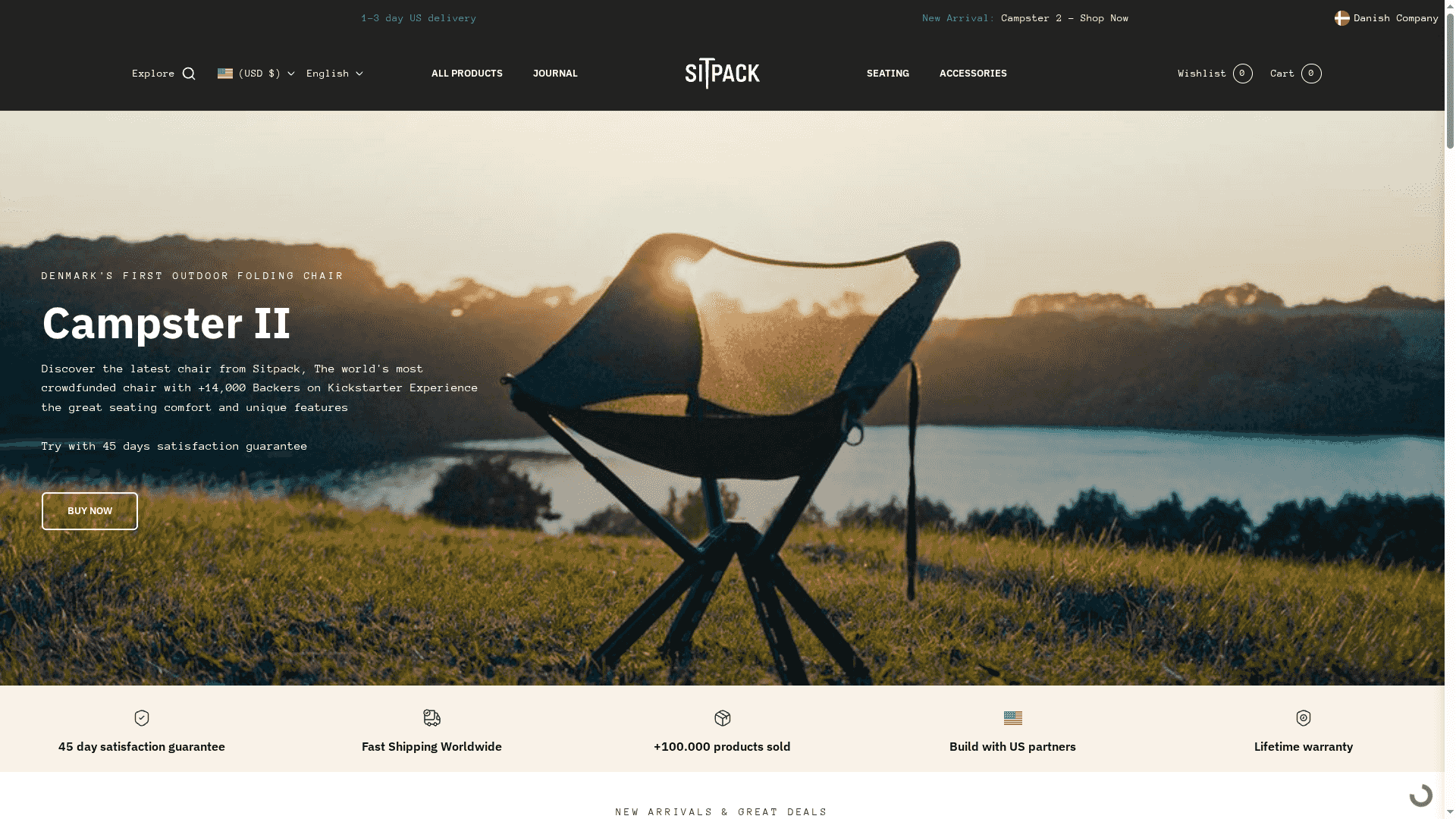
Sitpack built the Campster II and Sitpack Zen around the exact priorities covered above: compact folded dimensions, low weight, fast setup, and materials chosen for durability without unnecessary bulk. Both models are designed to fit carry-on travel and disappear into a daypack when you’re not sitting down.
The Campster II suits campers, festival-goers, and anyone who wants a stable, comfortable seat on uneven ground. The Sitpack Zen leans toward the ultralight end — ideal for day hikes, urban commuting, and air travel where every ounce and every inch of bag space counts. Both carry Sitpack’s lifetime warranty and a 45-day satisfaction guarantee, so you’re not guessing whether it’ll hold up.
Check the full model specs and pick the right seat for your trip type at sitpack.com.
Compact design multiplies your mobility: the right portable seat saves weight, fits your carry-on, sets up in seconds, and pays for itself by eliminating checked-bag fees across multiple trips.
| Point | Details |
|---|---|
| Prioritize folded dimensions first | A seat that fits a standard U.S. carry-on (22" × 14" × 9") eliminates baggage fees entirely. |
| A seat that weighs less than most water bottles is barely noticeable over a travel day; heavier seats become noticeable on long hiking days and multi-stop trips. | |
| Setup time predicts real-world use | If repacking takes more than 15 seconds, you’ll leave the seat behind on busy travel days. |
| Lifetime warranty + 45-day guarantee | These two signals together are the clearest buyer protection in the portable seating category. |
| Sitpack Campster II and Sitpack Zen | Both models meet carry-on dimensions, low weight, and fast-setup criteria for travel and outdoor use. |
Most travelers discover the value of compact seating the hard way: standing for three hours at a crowded festival, waiting at a gate with no chairs, or sitting on a rock mid-trail because they didn’t want to carry “one more thing.” The irony is that a well-designed compact seat weighs less than most water bottles and takes up less bag space than a rain jacket.
The conventional wisdom says comfort and portability trade off against each other. That’s only true for gear designed without real constraints. When a seat is engineered specifically for travel — light frame, fast fold, carry-on dimensions — you don’t sacrifice much comfort at all. You just stop carrying the bulk.
What actually matters is testing the seat in the context of your real trip before you commit. Pack it into your actual bag. Time the setup. Sit in it for 20 minutes. If it passes those three tests, it’ll serve you well from the airport gate to the trailhead.