Cart
0
Sign up and get 10$ off your order
Expected delivery
1-3 days
You may also like


Danish Company


Most people assume any portable seat works fine outdoors, yet surveys show up to 65% experience discomfort or instability using standard seats on rough terrain. All-terrain seating solves this through specialized designs that deliver stability, comfort, and durability across sand, gravel, grass, and uneven ground. This guide covers the engineering, materials, portability features, and practical applications that make all-terrain seating essential for outdoor enthusiasts and travelers in 2026.
| Point | Details |
|---|---|
| Definition | All-terrain seating uses specialized engineering for stability and comfort on varied outdoor surfaces including sand, gravel, and uneven ground. |
| Design innovations | Features include suspension systems, traction bases, ergonomic shapes, and lightweight foldable frames for portability. |
| Material advantages | Weather-resistant fabrics, aluminum or steel frames, and pneumatic tires provide durability while keeping weight under 25 lbs. |
| Comfort benefits | Adjustable heights, lumbar support, and cushioning reduce fatigue, enabling 40% longer outdoor sessions compared to traditional seating. |
| Practical applications | Ideal for hiking, camping, beach trips, and urban outdoor events where standard chairs fail on rough terrain. |
All-terrain seating refers to portable chairs engineered specifically for use on challenging outdoor surfaces where conventional seats struggle. Unlike traditional folding chairs with rigid legs and flat bases, these specialized seats integrate suspension systems, wide traction bases, and ergonomic contours to maintain stability on sand, gravel, grass, rocky paths, and uneven ground.
Outdoor enthusiasts and travelers frequently encounter frustrations with standard portable seating. Regular chairs sink into soft sand, tip on slopes, slide on wet grass, and provide minimal shock absorption on bumpy terrain. These issues lead to discomfort, safety concerns, and shortened outdoor sessions as users constantly adjust their seating or give up entirely.
All-terrain seating addresses these challenges through thoughtful design that prioritizes four core needs:
These seats excel in environments ranging from sandy beaches and forest trails to gravel campsites and urban parks with variable ground conditions. By understanding how all-terrain seating differs from conventional options, you can select solutions that genuinely enhance your outdoor experiences rather than just tolerating inadequate alternatives.
All-terrain seating solutions absorb impacts and provide stability through sophisticated engineering elements that differentiate them from standard outdoor chairs.
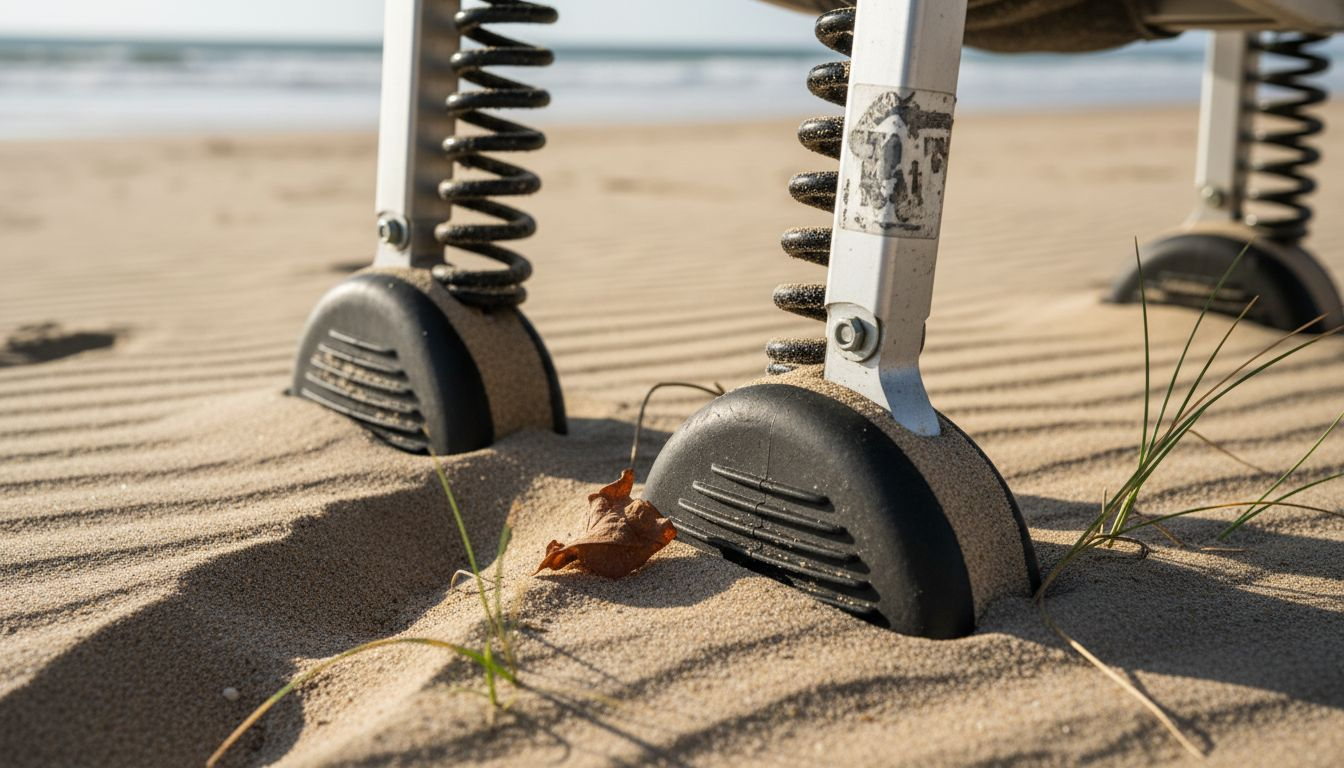
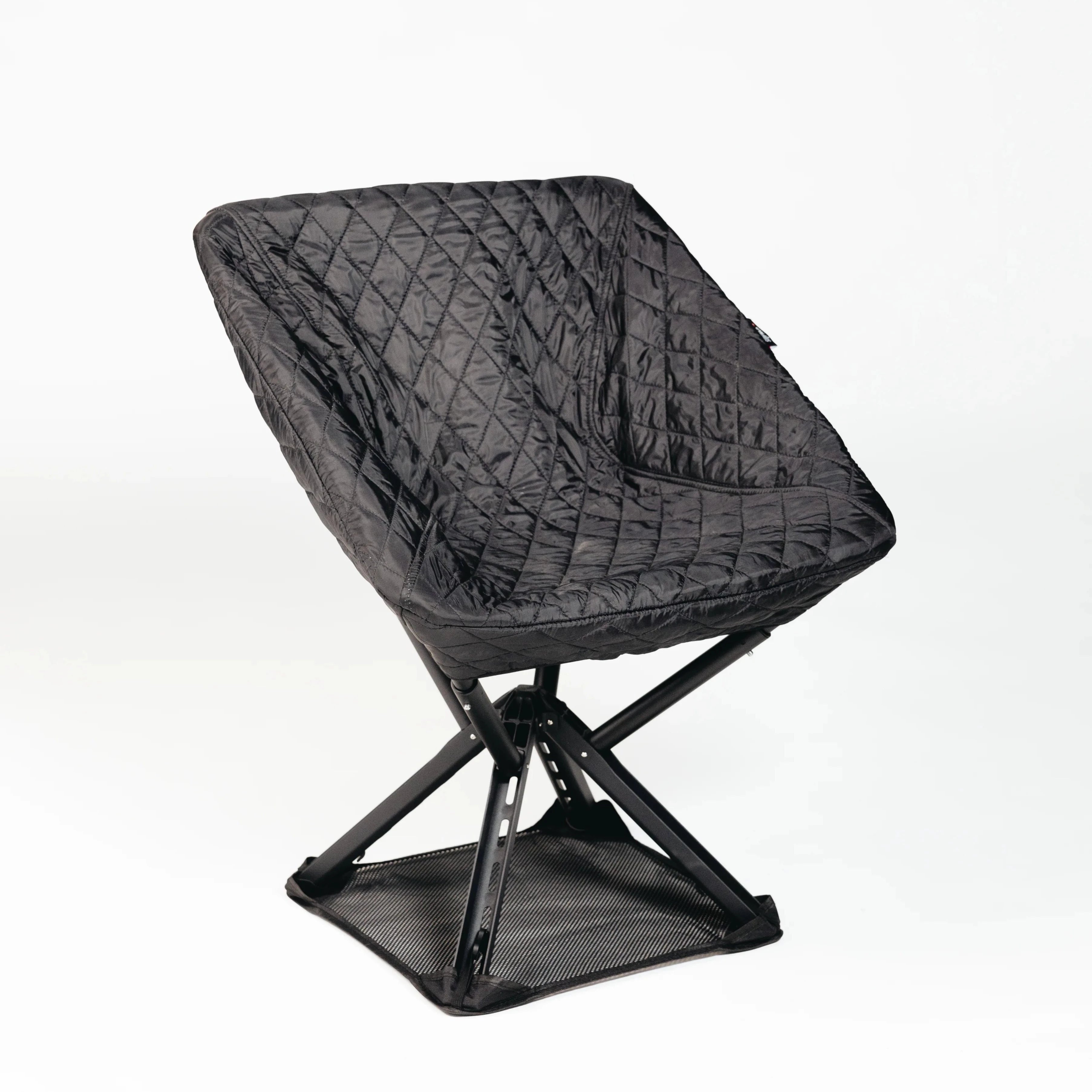
Suspension systems form the backbone of impact absorption. These mechanisms use springs, shock absorbers, or flexible frame components to reduce vibrations and jolts transmitted from rough ground to the user. When you sit on uneven terrain, the suspension compresses and rebounds, cushioning your body against sudden movements and maintaining comfort during extended sessions.
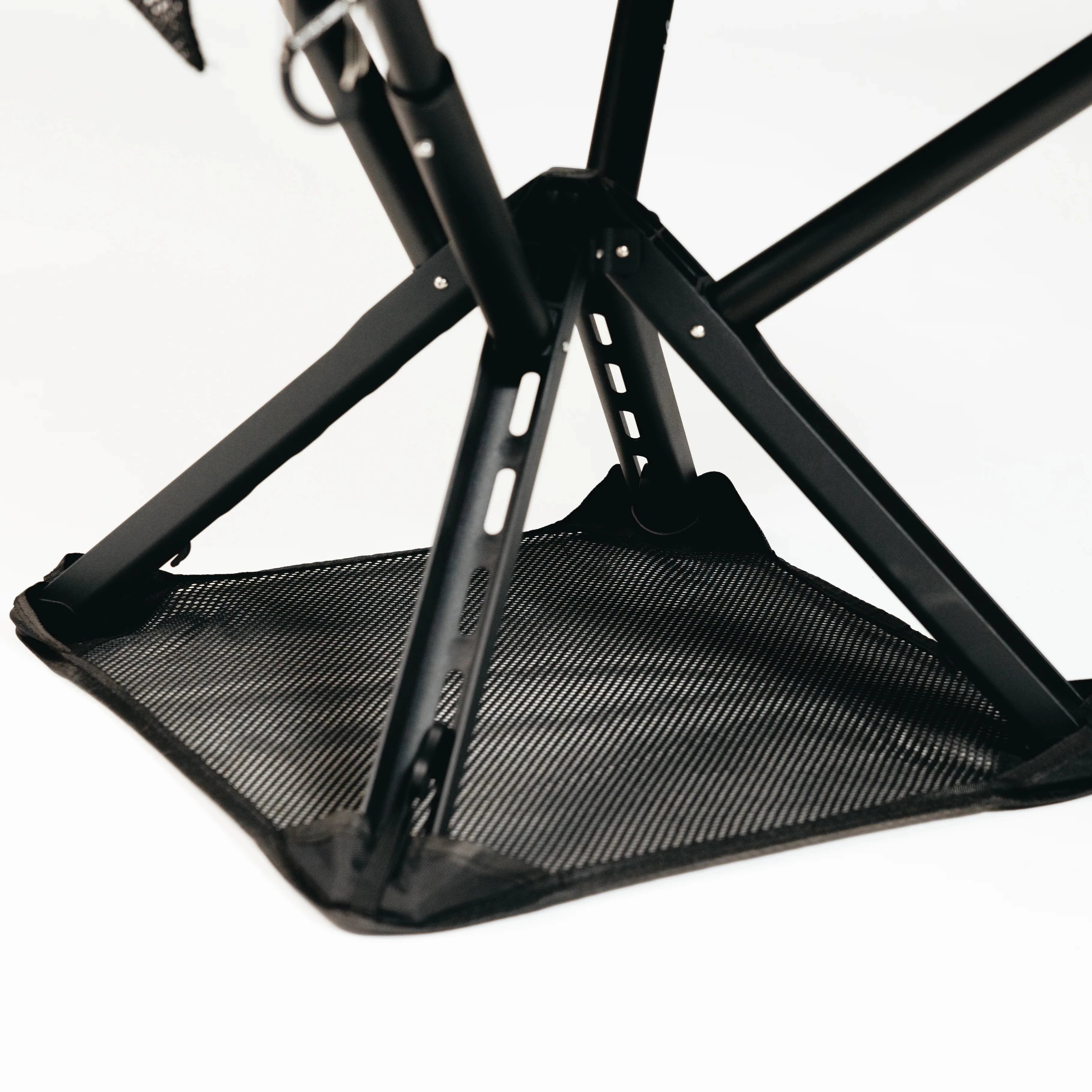
Traction-enhancing features prevent sliding and sinking. Wide bases distribute weight across larger surface areas, stopping chairs from penetrating soft sand or mud. Some designs incorporate pneumatic tires with aggressive tread patterns that grip grass, gravel, and dirt paths. Others use rubberized contact points or stabilizing feet that adjust to ground contours.
Ergonomic seat shapes maintain balance and proper posture regardless of terrain angle. Contoured backrests follow natural spine curves, while seat pans angle slightly to prevent forward sliding on slopes. Armrests positioned at optimal heights provide leverage for standing and reduce strain on joints when shifting weight.
These technical elements work together to create seating that remains stable and comfortable where traditional chairs fail. The Procar terrain seat exemplifies this integration by combining suspension mounting with ergonomic bolstering designed specifically for off-road conditions.
Pro Tip: When evaluating all-terrain seating, test the suspension by applying downward pressure. Quality systems compress smoothly without bottoming out harshly, indicating sufficient shock absorption for varied terrain.
Material choices directly impact how all-terrain seating performs outdoors and how easily you can transport it. Understanding these selections helps you match chairs to your specific activities and environments.
Frame materials balance strength against portability. Aluminum alloy frames weigh significantly less than steel while maintaining structural integrity for users up to 300 lbs. Steel frames add durability for heavier loads or extreme conditions but increase overall weight. Titanium represents a premium option, combining lightweight properties with exceptional strength, though at higher cost.
Weather-resistant fabrics and finishes protect against moisture, UV rays, and temperature extremes. Ripstop nylon resists tearing while repelling water and drying quickly after rain exposure. Powder-coated metal components prevent rust and corrosion from salt air or humidity. UV-stabilized materials maintain color and flexibility despite prolonged sun exposure.
Tire types affect mobility and cushioning on different surfaces. Pneumatic tires provide enhanced traction and cushioning through air-filled chambers that compress over obstacles. These excel on grass, gravel, and uneven paths but require occasional inflation. Solid foam or rubber tires eliminate maintenance needs while offering moderate cushioning, making them suitable for hard-packed trails and urban environments.
| Feature | All-Terrain Seating | Traditional Outdoor Seating |
|---|---|---|
| Frame material | Lightweight aluminum or reinforced steel | Basic steel or plastic |
| Fabric | Weather-resistant ripstop with UV protection | Standard polyester or canvas |
| Base design | Wide traction bases or pneumatic tires | Narrow fixed legs |
| Weight capacity | 250-350 lbs with reinforced joints | 200-250 lbs |
| Lifespan | 5-10 years with proper care | 2-4 years |
Selecting outdoor seating materials suited to your typical environments ensures your investment delivers reliable performance. The all-terrain walker seating guide provides additional insights into material performance across conditions.
Design advancements have transformed all-terrain seating from bulky equipment into travel-friendly gear that fits easily into backpacks, car trunks, and luggage.
Foldable mechanisms reduce packed dimensions dramatically. Modern designs collapse into compact bundles measuring 20-30 inches long and 4-6 inches in diameter. Quick-release joints and telescoping legs enable setup in under 30 seconds without tools or complex instructions. Some models separate into modular components that nest together, creating even smaller transport profiles.
Weight efficiency keeps most all-terrain seats under 25 lbs despite rugged construction. Engineers achieve this through strategic material placement, using reinforcement only in high-stress areas while minimizing excess material elsewhere. Hollow frame tubing and mesh panel backs eliminate unnecessary weight without compromising strength.
Design balance prevents portability from undermining durability. Reinforced pivot points handle repeated folding cycles without loosening or breaking. Protective caps shield fabric and joints during transport, extending lifespan despite rough handling in gear bags.
Key portability features to prioritize:
Pro Tip: Measure your vehicle trunk or backpack dimensions before purchasing to ensure the folded seat fits your primary transport method without forcing awkward positioning or removing other essential gear.
Ergonomic design separates all-terrain seating that feels comfortable for hours from options that leave you sore and restless after 30 minutes.
Adjustable seat heights adapt to different user sizes and terrain conditions. Telescoping legs extend from 14 to 20 inches, allowing shorter users to maintain proper foot contact with ground while taller individuals avoid knee strain. This adjustability also compensates for sloped terrain, keeping the seat level when one side sits lower.
Lumbar support maintains healthy spine alignment during extended sitting. Curved backrests follow natural lordotic curves, preventing the slouched posture that causes lower back pain. Some designs include adjustable lumbar pads you can position precisely at your lower back’s natural curve.
Cushioning technologies reduce pressure points that develop during long sessions. Gel padding distributes weight evenly across the seat pan, preventing numbness in thighs and buttocks. Memory foam conforms to individual body shapes, creating custom support that reduces fatigue. Breathable mesh panels allow air circulation, preventing heat buildup and sweat accumulation.
User feedback demonstrates measurable comfort improvements:
Ergonomic features also improve safety by maintaining stable center of gravity and reducing risk of tipping when shifting weight. Proper support helps you rise from seated position more easily, particularly important on uneven ground where balance challenges increase.
Several persistent myths prevent outdoor enthusiasts from discovering how all-terrain seating can improve their experiences.
Myth: All portable seats perform equally well in outdoor environments. This assumption ignores fundamental design differences. Standard folding chairs lack suspension systems, traction bases, and terrain-specific engineering. All-terrain seating is specifically designed to enhance usability and safety on uneven surfaces through features absent in conventional options.
Myth: Traditional chairs provide adequate comfort and safety outdoors. Reality contradicts this belief. Rigid legs sink into soft ground, narrow bases tip on slopes, and hard surfaces transmit ground vibrations directly to your body. These issues cause discomfort, create tipping hazards, and limit how long you can sit comfortably.
Myth: All-terrain seating is too heavy and bulky for practical travel. Modern engineering disproves this outdated view. Current designs weigh 15-25 lbs and fold into packages smaller than sleeping bags. Lightweight materials and clever folding mechanisms deliver rugged performance without excessive bulk.
Myth: Only extreme outdoor enthusiasts need specialized seating. Casual users benefit equally from improved stability and comfort. Beach trips, picnics in parks, outdoor concerts, and backyard gatherings all involve varied terrain where all-terrain features enhance the experience.
Key facts correcting these misconceptions:
“The difference between struggling with a standard chair on beach sand and sitting comfortably in a wide-base all-terrain seat transforms the entire outdoor experience from frustrating to enjoyable.”
Understanding these realities helps you make informed decisions rather than settling for inadequate solutions based on misconceptions. The all-terrain seating misconceptions guide explores additional myths worth examining.
Direct comparison reveals why all-terrain seating outperforms conventional options in challenging outdoor environments.
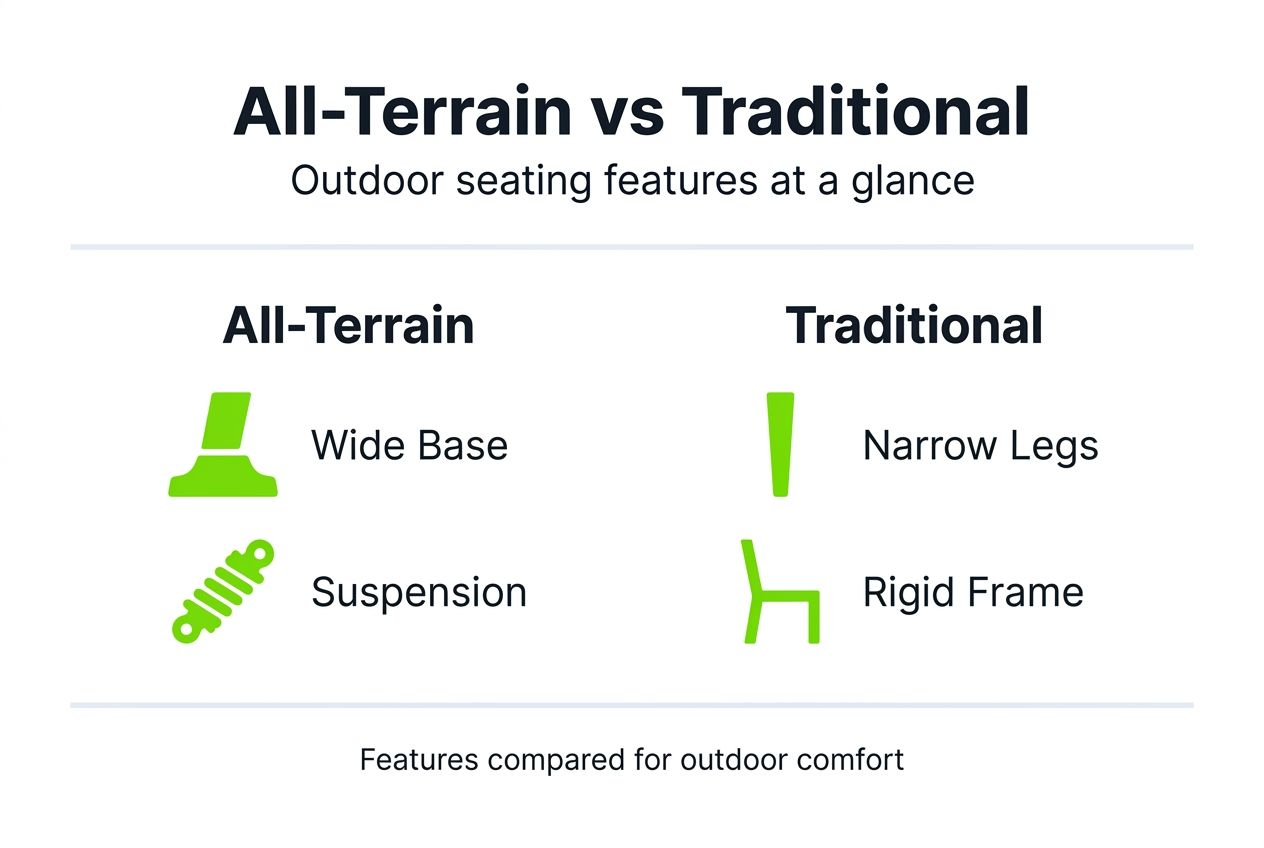
Stability differences stem from base design and suspension integration. All-terrain seats use wide bases or multiple contact points that resist tipping on slopes and prevent sinking in soft surfaces. Suspension systems absorb ground irregularities, maintaining level seating even on bumpy terrain. Traditional chairs rely on fixed rigid legs that concentrate weight into small footprints, causing instability on anything but flat, hard surfaces.
Material contrasts affect durability and weather resistance. All-terrain designs incorporate weather-resistant fabrics, corrosion-proof metal treatments, and UV-stable components engineered for years of outdoor exposure. Conventional chairs often use basic materials that degrade quickly when exposed to moisture, sun, and temperature extremes.
Portability aspects balance differently. While some traditional chairs fold compactly, they sacrifice stability and comfort to achieve minimal size. All-terrain seating maintains full functionality while still folding to reasonable dimensions through advanced engineering rather than feature elimination.
Powered all-terrain wheelchairs use 4x4 traction motors with optimized batteries, highlighting how advanced traction systems enhance outdoor capability. This principle applies across all-terrain seating categories.
| Feature | All-Terrain Seating | Traditional Outdoor Seating |
|---|---|---|
| Base stability | Wide traction bases or pneumatic tires | Narrow fixed legs |
| Suspension | Integrated shock absorption | None or minimal |
| Terrain suitability | Sand, gravel, grass, uneven ground | Flat, hard surfaces only |
| Setup time | 30-60 seconds | 15-30 seconds |
| Weight | 15-25 lbs | 8-15 lbs |
| Comfort duration | 2+ hours | 30-60 minutes |
| Price range | $80-$250 | $20-$60 |
Suitability varies by activity and environment. All-terrain seating excels for hiking, camping, beach outings, and any situation involving extended sitting on variable surfaces. Traditional chairs suffice for paved areas, decks, and short-duration use on flat ground.
The all-terrain vs conventional seating comparison provides additional performance data across different outdoor scenarios.
Real-world use cases demonstrate how all-terrain seating transforms outdoor activities from uncomfortable endurance tests into genuinely enjoyable experiences.
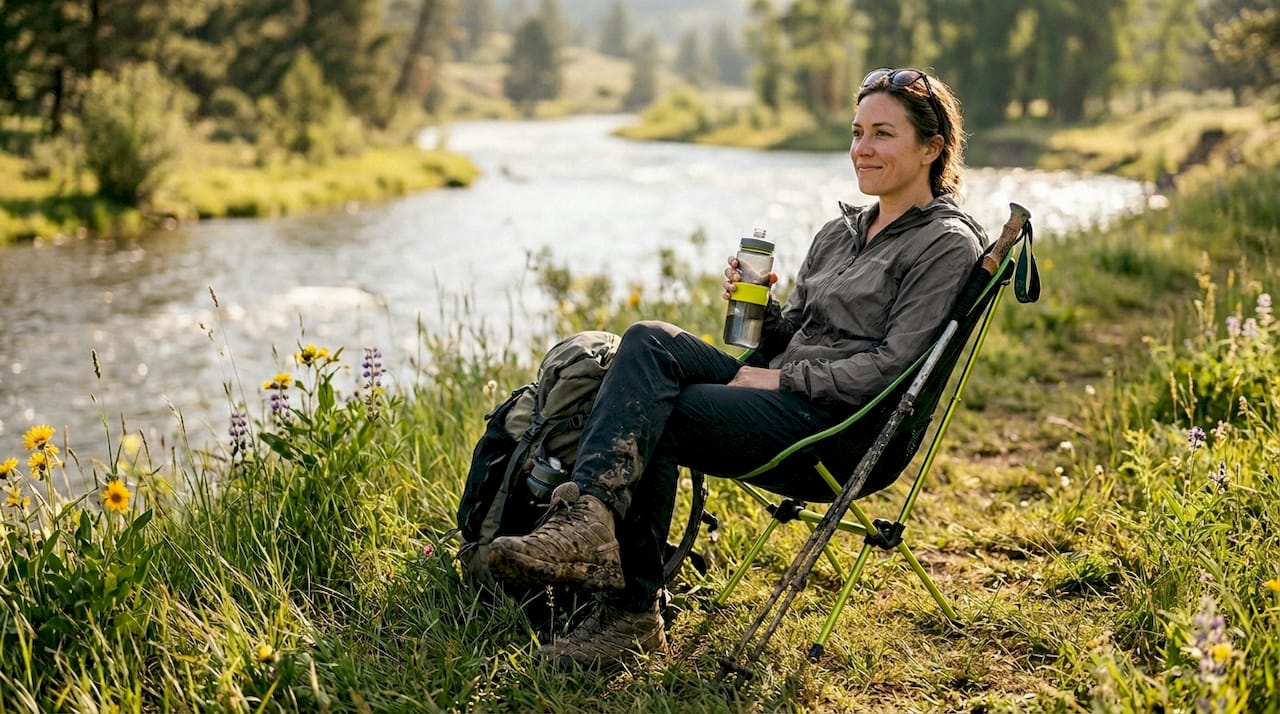
Extended hiking and camping trips benefit enormously from foldable, suspension-equipped seating. After hours on the trail, sitting comfortably at camp prevents fatigue accumulation that ruins next-day energy. Lightweight designs under 20 lbs pack easily without dominating backpack space. Suspension systems cushion tired muscles against rocky or root-filled ground at primitive campsites.
Beach environments challenge standard seating severely but suit all-terrain designs perfectly. Wide bases with low-pressure pneumatic tires prevent sinking into soft sand, eliminating the frustrating cycle of digging out stuck chair legs. Weather-resistant materials handle salt spray and moisture without corroding or developing mildew.
Urban outdoor events like concerts, festivals, and park gatherings occur on varied surfaces from grass to gravel to bare earth. Compact all-terrain seats navigate crowds easily while providing stable, comfortable seating regardless of ground conditions. Quick setup suits venues where early arrival secures prime spots.
Using all-terrain seating increases time spent comfortably outdoors by 40% due to reduced fatigue and improved stability. This measurable improvement translates to more enjoyment and fewer cut-short activities.
User testimonials highlight specific benefits:
Scenario selection depends on primary activities. Beach users prioritize wide bases and corrosion resistance. Hikers emphasize lightweight portability and compact folding. Festival attendees value quick setup and moderate weight for reasonable carrying distances.
Applying everything you’ve learned starts with exploring seating solutions engineered specifically for outdoor versatility and travel convenience. Sitpack seating solutions combine innovative folding mechanisms with ergonomic designs that deliver comfort across diverse terrains.
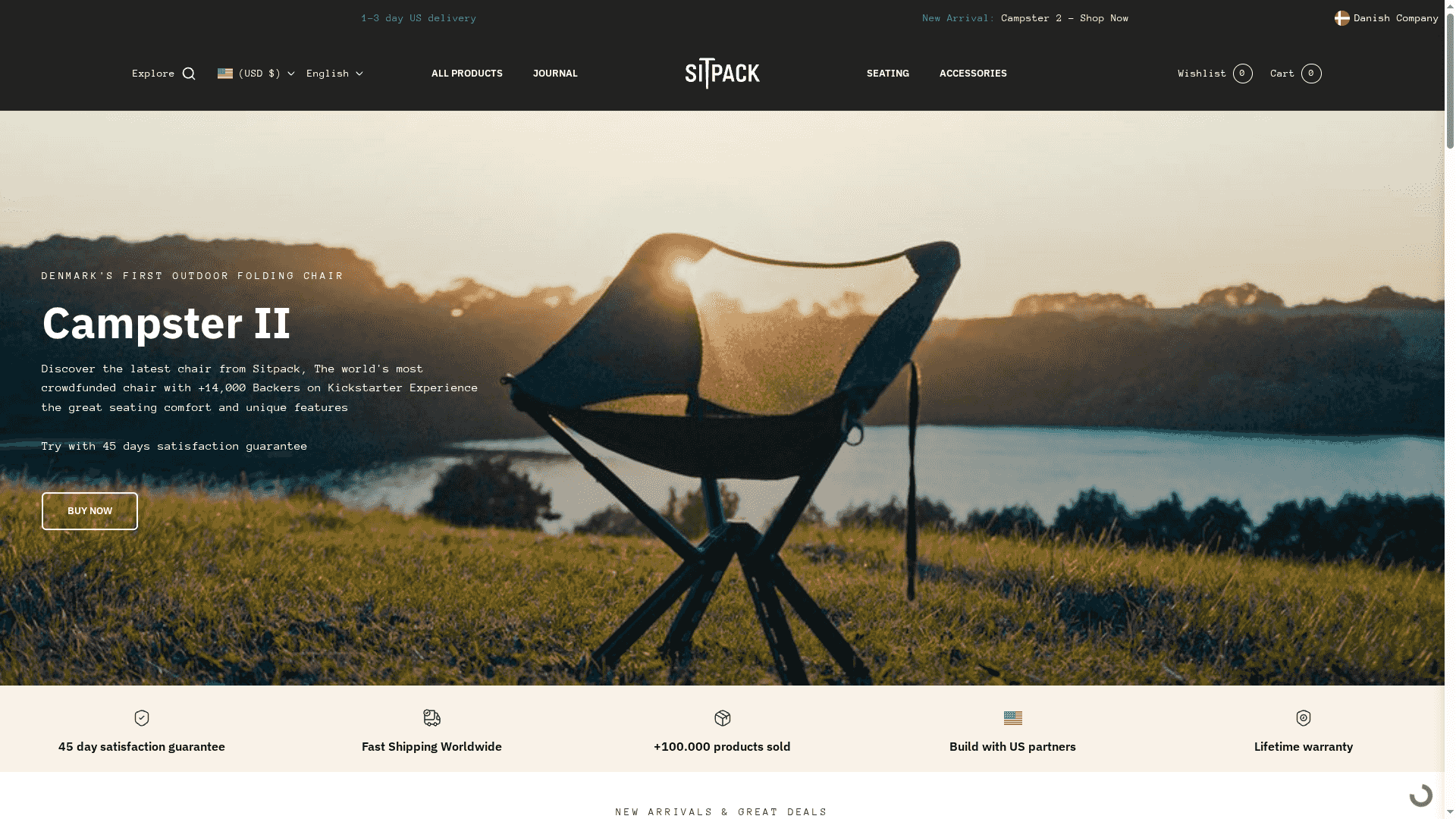
Sitpack’s product line emphasizes portability without sacrificing stability or durability. Lightweight aluminum frames fold into compact packages suitable for backpacks and luggage while maintaining weight capacities over 250 lbs. Weather-resistant materials and lifetime warranties demonstrate confidence in long-term outdoor performance.
Whether you’re planning extended camping trips, beach vacations, hiking adventures, or simply want reliable seating for backyard gatherings and park outings, specialized all-terrain designs transform how comfortably you experience the outdoors. Browse the complete range to find options matching your specific terrain challenges and portability requirements.
Match seat features to your primary terrain type. Beach and soft ground require wide bases or pneumatic tires to prevent sinking. Rocky trails benefit from suspension systems that absorb impacts. Multi-environment users should prioritize adjustable features and moderate weight for versatility. Consider typical activity duration when evaluating cushioning and ergonomic support levels.
Rinse frames and fabric after beach or muddy use to prevent corrosion and staining. Check pneumatic tire pressure monthly, maintaining manufacturer-recommended levels. Inspect joints and folding mechanisms quarterly, applying appropriate lubricant to moving parts. Store in dry locations when not in use and avoid prolonged direct sunlight exposure when possible.
Quality all-terrain seats withstand rain, heat, and cold within reasonable ranges. Weather-resistant fabrics repel moisture and resist UV degradation. Metal components with powder coating or anodized finishes prevent rust in humid or salty environments. However, avoid leaving seats exposed unnecessarily and store indoors during harsh winter conditions to maximize lifespan.
Many designs accommodate diverse user needs through adjustable heights and weight capacities from 100 to 350 lbs. Children benefit from lower height settings and lighter frame weights for independent transport. Elderly users appreciate armrests for standing assistance and lumbar support for extended comfort. Verify specific model specifications match user requirements before purchasing.
Expect 5-10 years from quality all-terrain seating with proper maintenance. Frame longevity depends on material choice and usage intensity, with aluminum and titanium outlasting basic steel. Fabric components may require replacement after 3-5 years of heavy use but frames typically remain functional much longer. Premium models often include lifetime frame warranties reflecting superior durability.