Cart
0
Sign up and get 10$ off your order
Expected delivery
1-3 days
You may also like


Danish Company

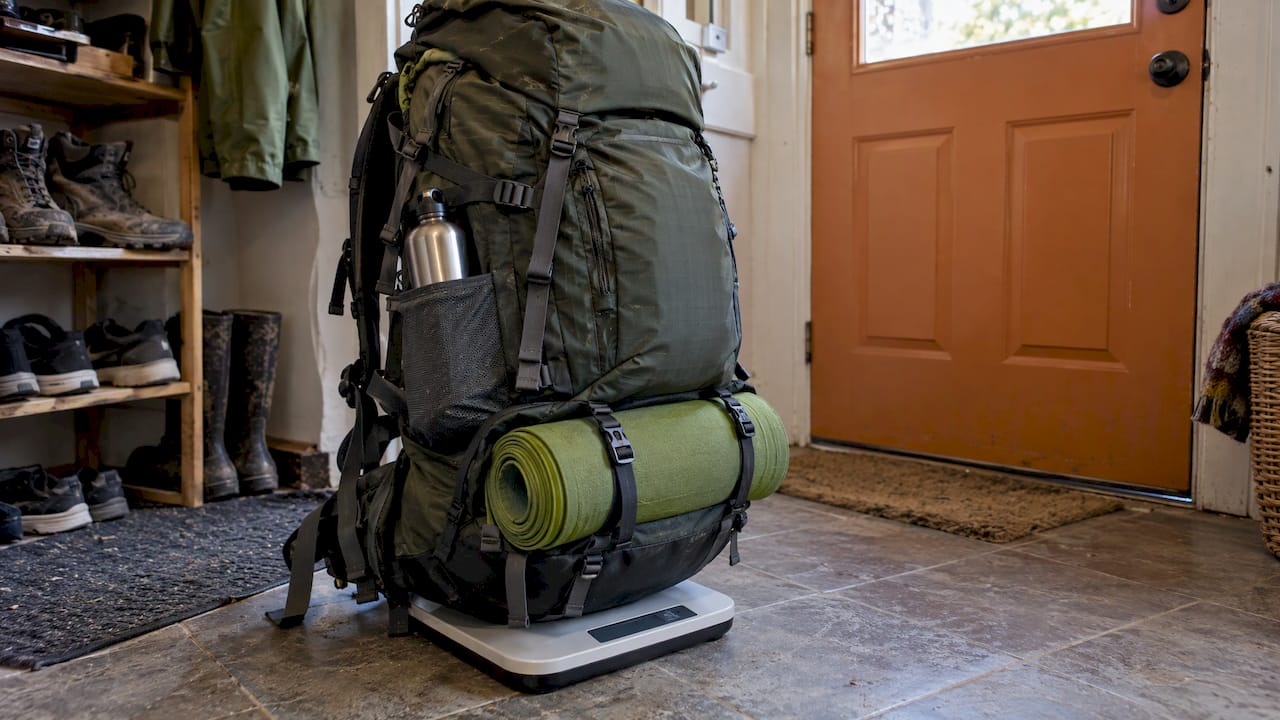
Pack weight is how much your loaded backpack weighs at a given moment: everything inside or strapped to it, including food, water and fuel. It is the number your shoulders, hips and knees actually feel. It also confuses people, because hikers use “pack weight” for three or four slightly different numbers. This guide sorts them out, shows you how to calculate each one with a worked example, and explains how to bring the total down without leaving anything essential at home. We make lightweight, foldable seating, so we think about every ounce that goes in a pack, and we will show where a sit-anywhere seat fits into the math.
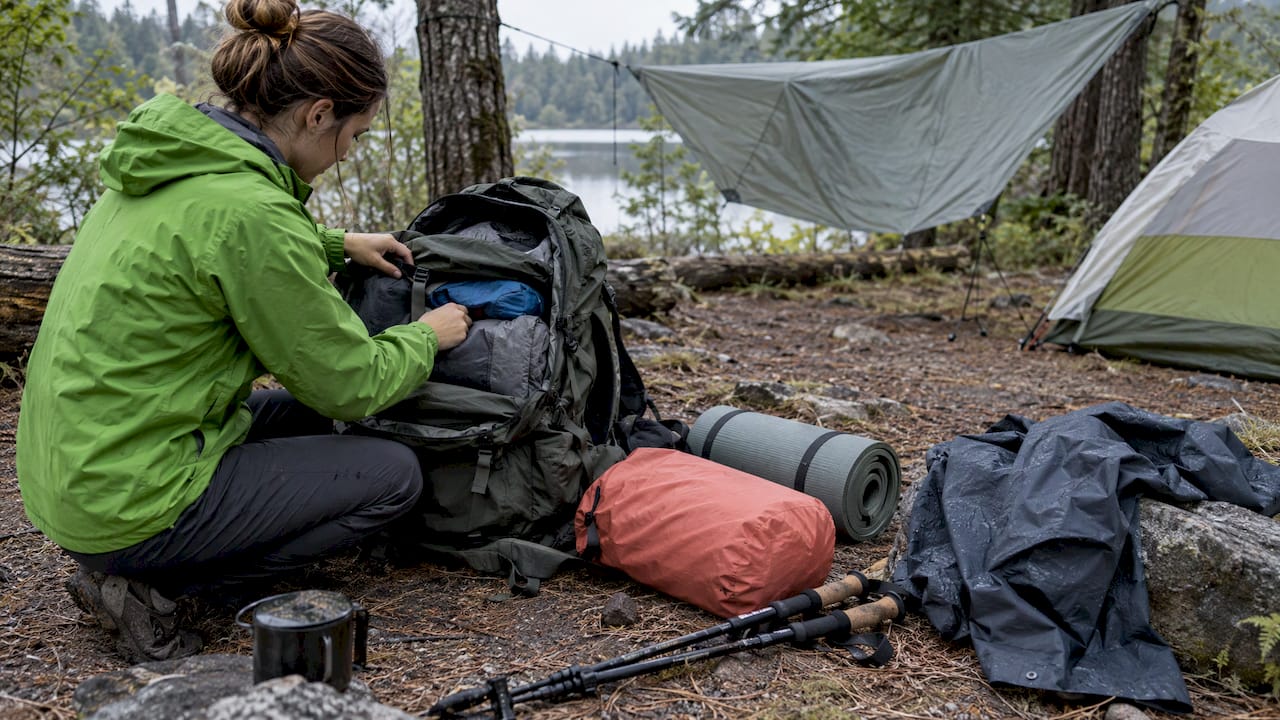
Think of pack weight as a snapshot. Stand at the trailhead with your pack on your back and put the whole thing on a scale: that is your pack weight. An hour later you have sipped some water. Three days later you have eaten most of your food. The number keeps shrinking, which is why one trip has several pack weights but only one base weight.
The Hiking Tribe explains that day one of a five-day trip is your heaviest moment, and that by day four your pack can be 8 to 10 pounds lighter. If you have ever noticed that the last day of a trip feels easier than the first, that is simple arithmetic, not just fitness.
The term also pops up in other places (people searching it sometimes land on video game results), but in the outdoors it always means the load you carry on foot.
When someone online says “my pack weight is 12 pounds,” ask which number they mean. Here is the vocabulary, from smallest to largest.
| Term | What it includes | Does it change during the trip? |
|---|---|---|
| Base weight | The pack and everything in it except food, water and fuel | No |
| Consumable weight | Food, water and fuel | Yes, it shrinks |
| Total pack weight | Base weight plus consumables | Yes |
| Skin-out weight | Total pack weight plus everything worn or carried in hand | Yes |
The Hiking Tribe notes that skin-out weight is base weight plus worn weight plus consumables, which makes it the total of everything you carry in every sense.
Backpacking forums mostly say “pack weight” when they mean base weight, and they sometimes mean the weight of the empty pack alone. When you compare yourself to anyone else’s number, check which definition they use, or the comparison is meaningless.
A good rule: if you would still be carrying it at the end of the trip, it is base weight. If you will have used it up, it is a consumable.
According to Trailhiking.com.au, base weight covers:
What stays out: food, water, fuel, and the clothing you are wearing at the trailhead.
Empty containers count, their contents don’t. The Hiking Tribe points out that an empty fuel canister (about 3.5 oz for a standard 8-oz canister) stays in base weight, and only the fuel inside is a consumable. The same goes for your water bottle: the bottle is base weight, the water is not.
Shirt, shorts, socks, shoes and trekking poles are worn weight. The Hiking Tribe warns that counting them in base weight inflates it by 2 to 5 pounds and makes comparisons pointless. Keep them in their own column.
You need a digital scale (a kitchen scale works) and ten minutes of patience. Trailhiking.com.au recommends weighing each item individually and recording the numbers in a list or spreadsheet.
Compare like with like. Trailhiking.com.au suggests you pack for a defined type of trip and avoid comparing a winter alpine setup to a mild coastal overnight.
The Appalachian Mountain Club (AMC) itemizes a reasonable three-season kit at roughly 20 pounds: sleeping bag 2.5 lb, sleeping pad 1 lb, shelter 4 lb, stove, fuel and cooking gear 5 lb, remaining clothing and safety essentials 4 lb, and the pack itself 3.5 lb. Add 4 lb of water and 6 lb of food for a three-day trip and the total comes to about 30 lb without luxury items.

Notice what the AMC’s list folds together. Its 20 lb includes some fuel, so a strict base weight would be a bit lower. This is exactly why separate columns matter: they stop you from fooling yourself.
Both, for different reasons. The Hiking Tribe puts it well: base weight is the lever you can optimize, while pack weight is the number your body carries, the one your knees feel on every downhill step.
Base weight is the best number for planning and shopping because it does not wobble with how much you packed to eat. Pack weight is the best number for deciding whether a particular trip is comfortable for you, especially on a long stretch between resupplies when you start fully loaded.
There is no single right answer. It depends on terrain, climate, how remote you are, trip length and how your body copes. Trailhiking.com.au says many hikers find base weights of 7 to 9 kg (about 15 to 20 lb) for lighter three-season trips and 9 to 13 kg (about 20 to 29 lb) when more self-sufficiency and weather protection are needed, and stresses these are examples, not targets.
Some common labels for base weight:
For context, an analysis of more than 300 shared gear lists found a median base weight of 11.6 lb (5.2 kg). Those lists skew toward people who care about weight, so treat the number as a curiosity, not a standard.
You can also see where your own total lands relative to your body. Many hikers use a percentage of body weight as a starting point: divide your loaded pack weight by your body weight. A 30 lb pack on a 150 lb hiker is 20 percent. Experienced, fit hikers may carry more and beginners less, so adjust to how you feel.
Your body is the best gauge. Goat Wanderlust lists warning signs such as:
Higher base weight is also generally linked with more strain on muscles and joints, a higher risk of fatigue or injury and a slower pace. If you have a history of back, knee or hip problems, talk with your doctor or a physical therapist before planning a multi-day trip with a heavy load.
Weight comes off fastest from the biggest items. Hartley Brody’s glossary notes that base weight is mostly determined by the “Big 3”: sleeping bag, backpack and shelter. In the AMC list above, shelter, sleeping bag and pack add up to 10 lb of the 20. A swap there beats shaving a toothbrush handle.
A sensible order of attack:
If you want a full walk-through, our ultralight gear list shows how to get under 10 lb base weight, and our guide to lightweight hiking covers cutting pack weight for mobility.
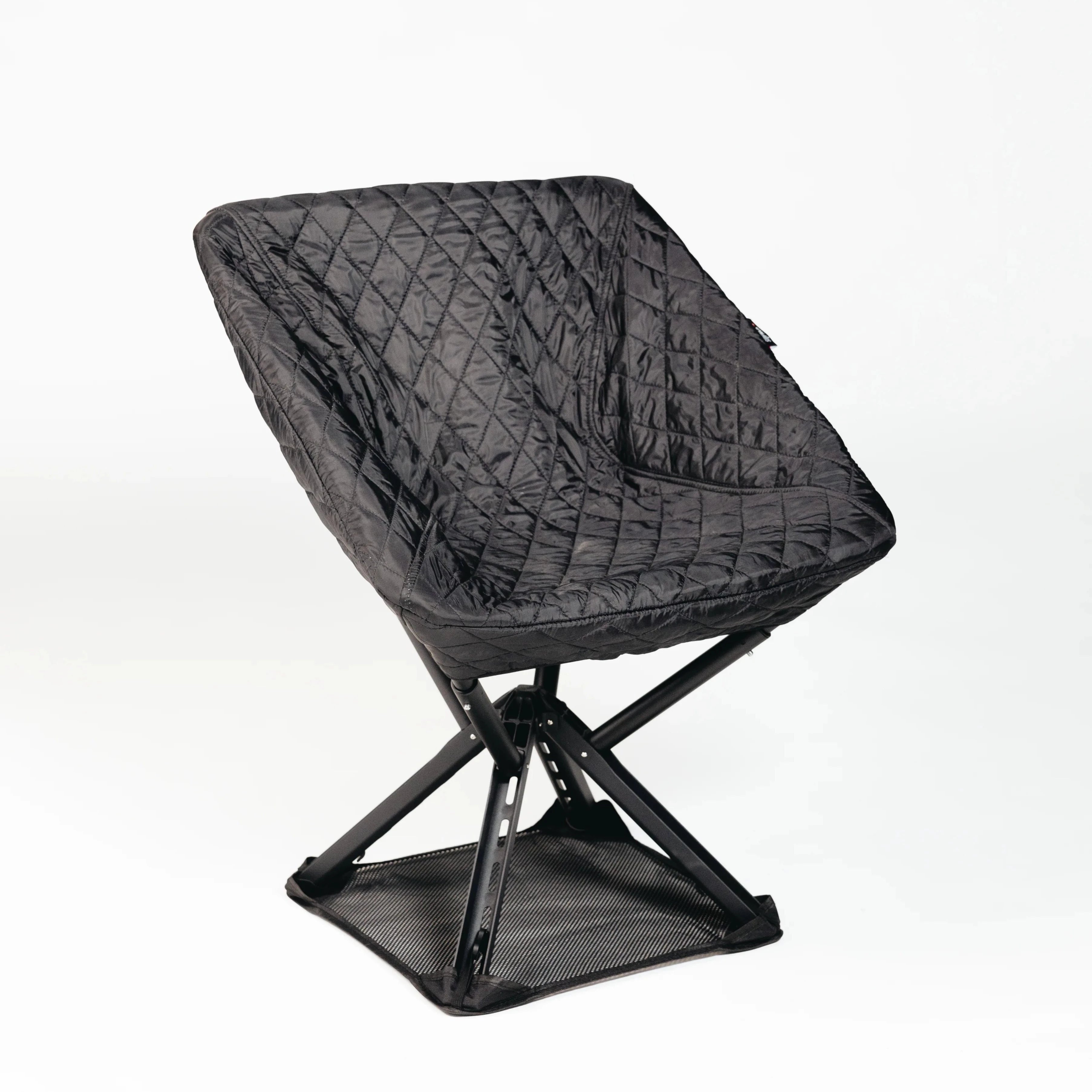
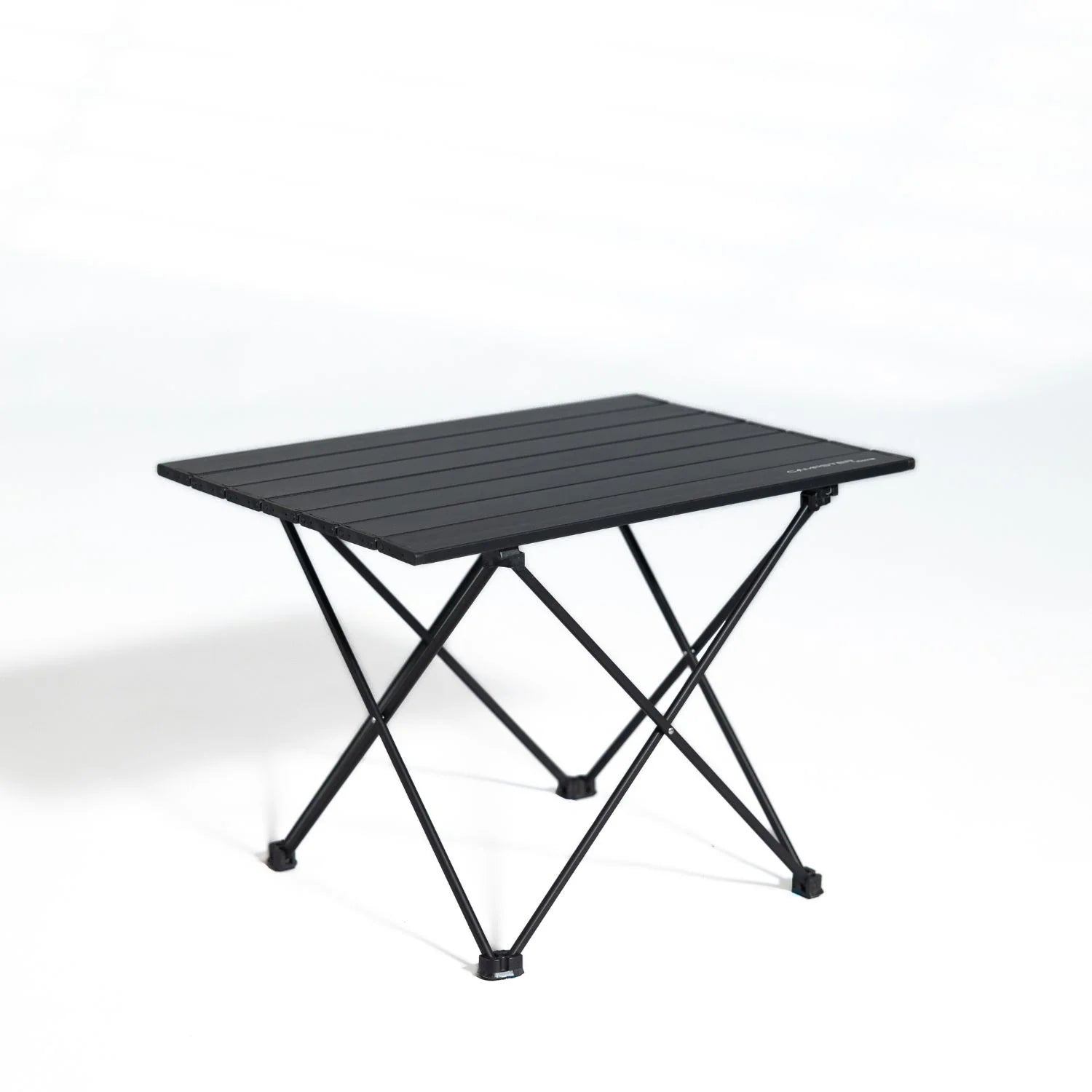
Most gear lists skip the seat, then the hiker spends the evening on a wet log. A seat is base weight like any other item, so it belongs in your spreadsheet. That is the case for choosing a compact, foldable design: it gives you somewhere to sit for dinner, boots-off time and the sunset, and it takes little room in the pack.
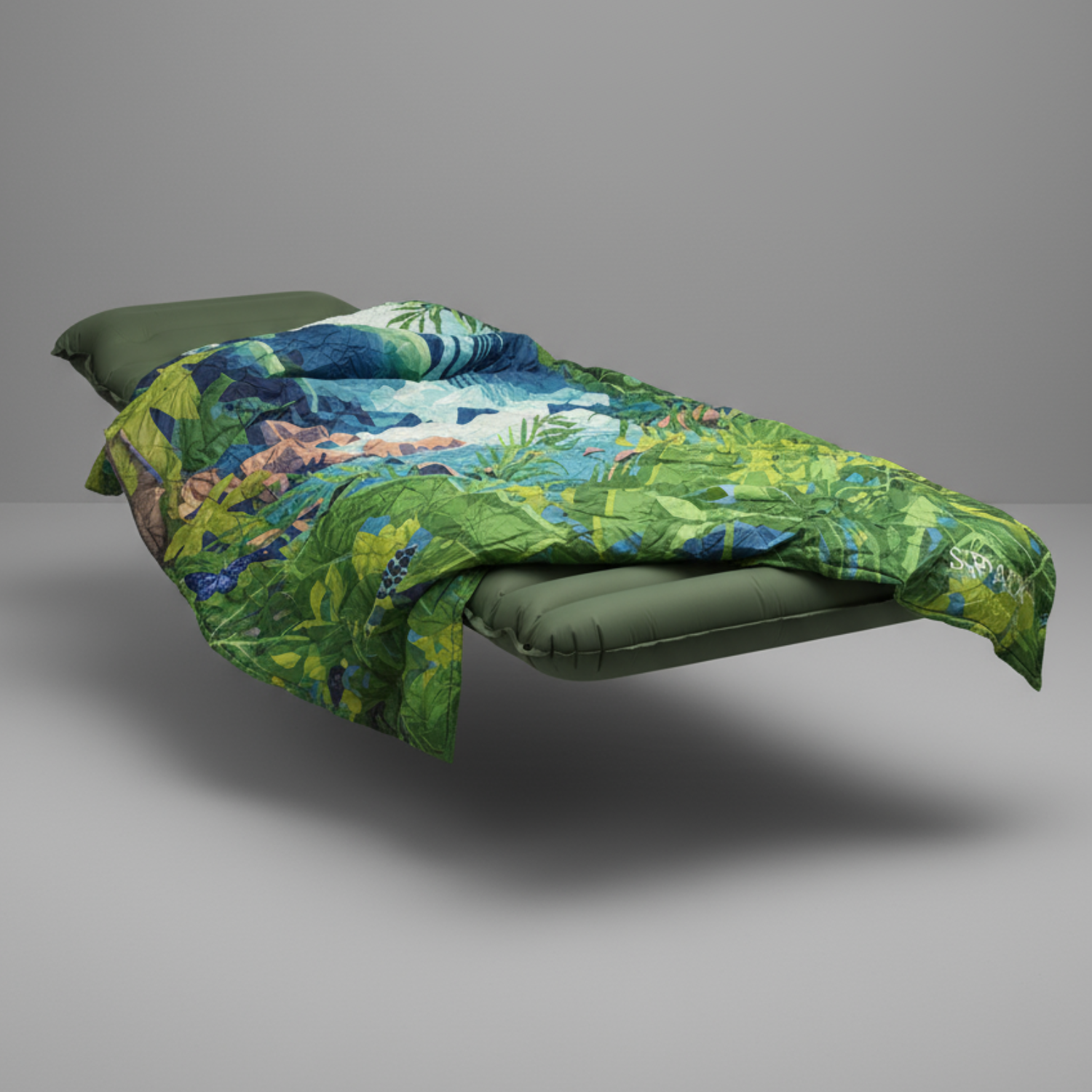
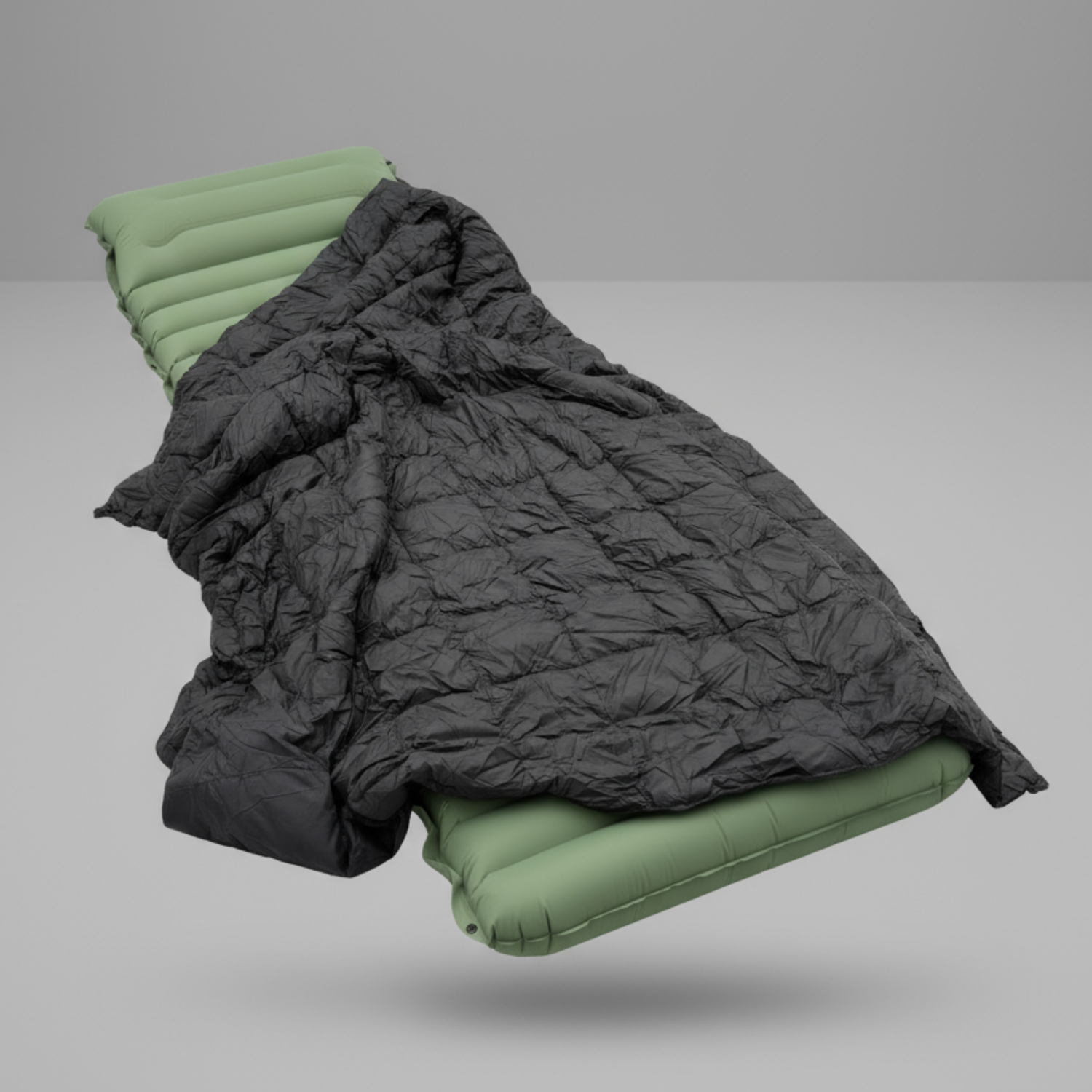
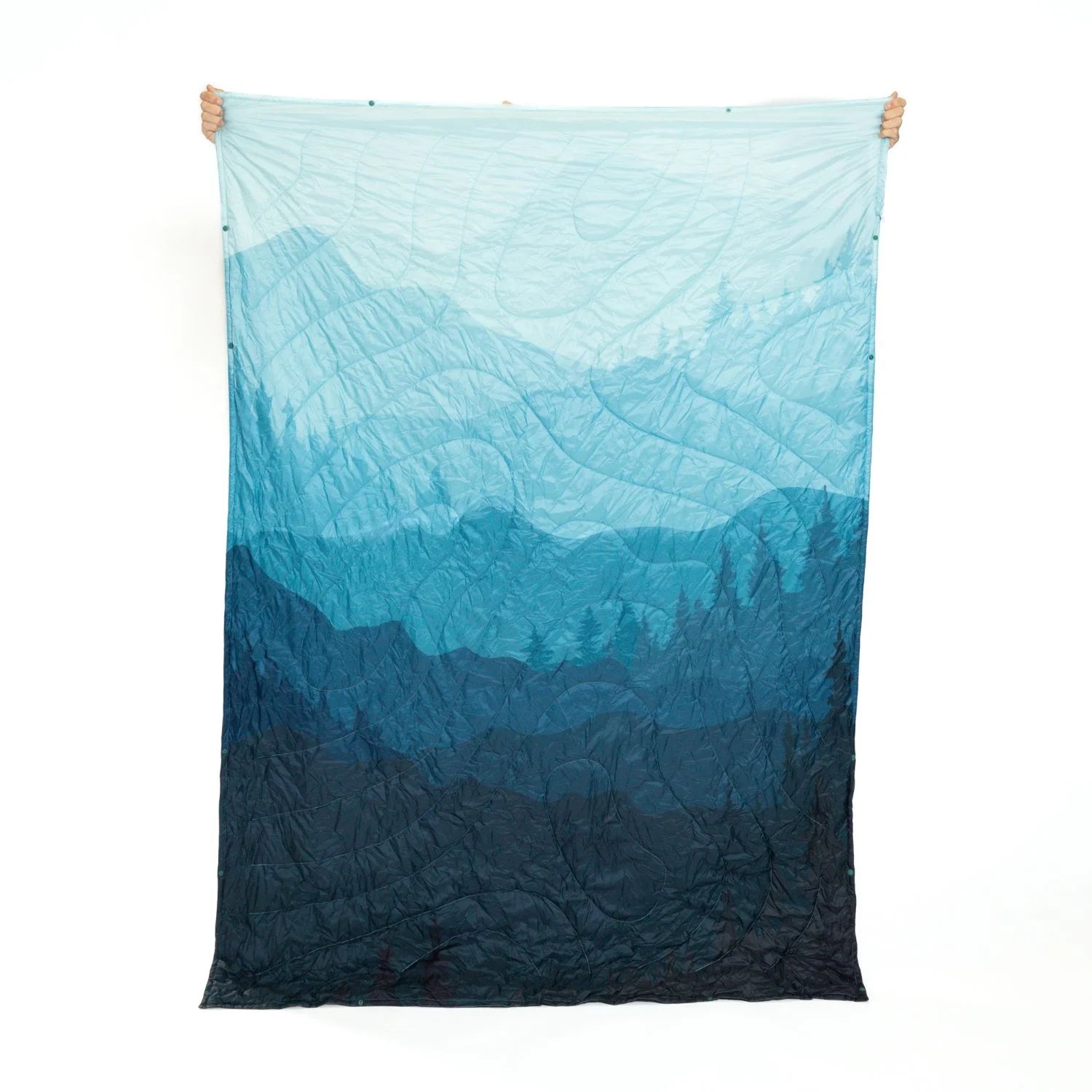
The same logic works for comfort pieces beyond the chair. A puffy blanket can stand in for extra layers around camp, and a small camp light replaces a heavier lantern. Weigh each on your scale, put it in the base column, and judge by your own totals. Our piece on minimalistic camping gear goes through how this thinking plays out in practice.
This also matters for people who are not backpackers at all. If you carry a bag to a festival, a beach, a sideline or on a commute, the same rule applies: count everything that goes in the bag, weigh it, and keep the total at a level your back enjoys.
We think of pack weight as a budget, not a punishment. Every item has to earn its place, and the ones that earn it are those that make you want to keep walking and keep camping.
That is why we design around a minimalistic, lightweight idea: a seat, a blanket, a camp light that do their job without taking over your pack. Our seating and accessories are built to be durable, and many use eco-friendly materials, because a light item that falls apart after one season is not light, it is disposable.
Our advice: weigh your gear, write it down, and treat the seat as part of the system, not an afterthought. Comfort at camp is why many people come back for another trip.
Jonas
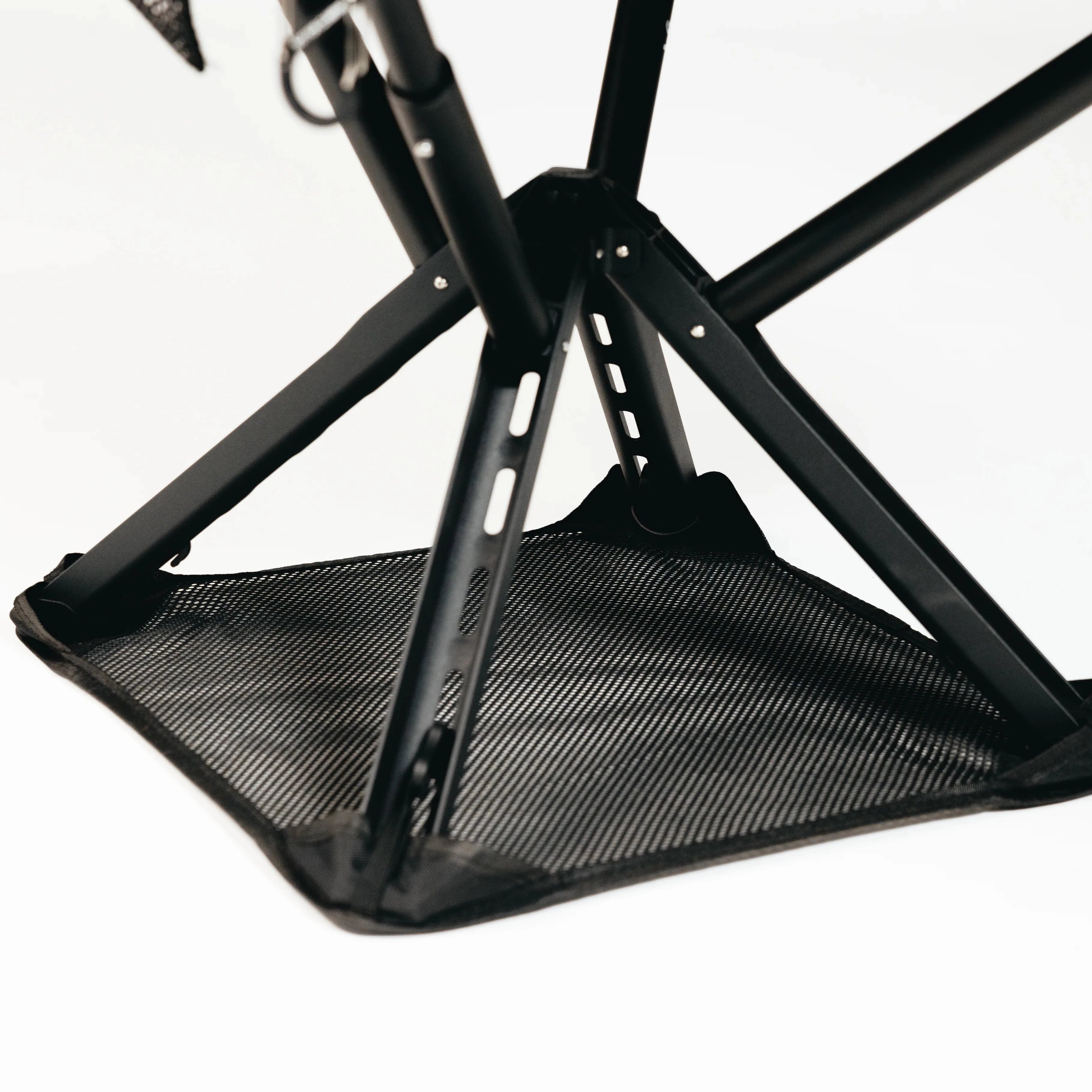
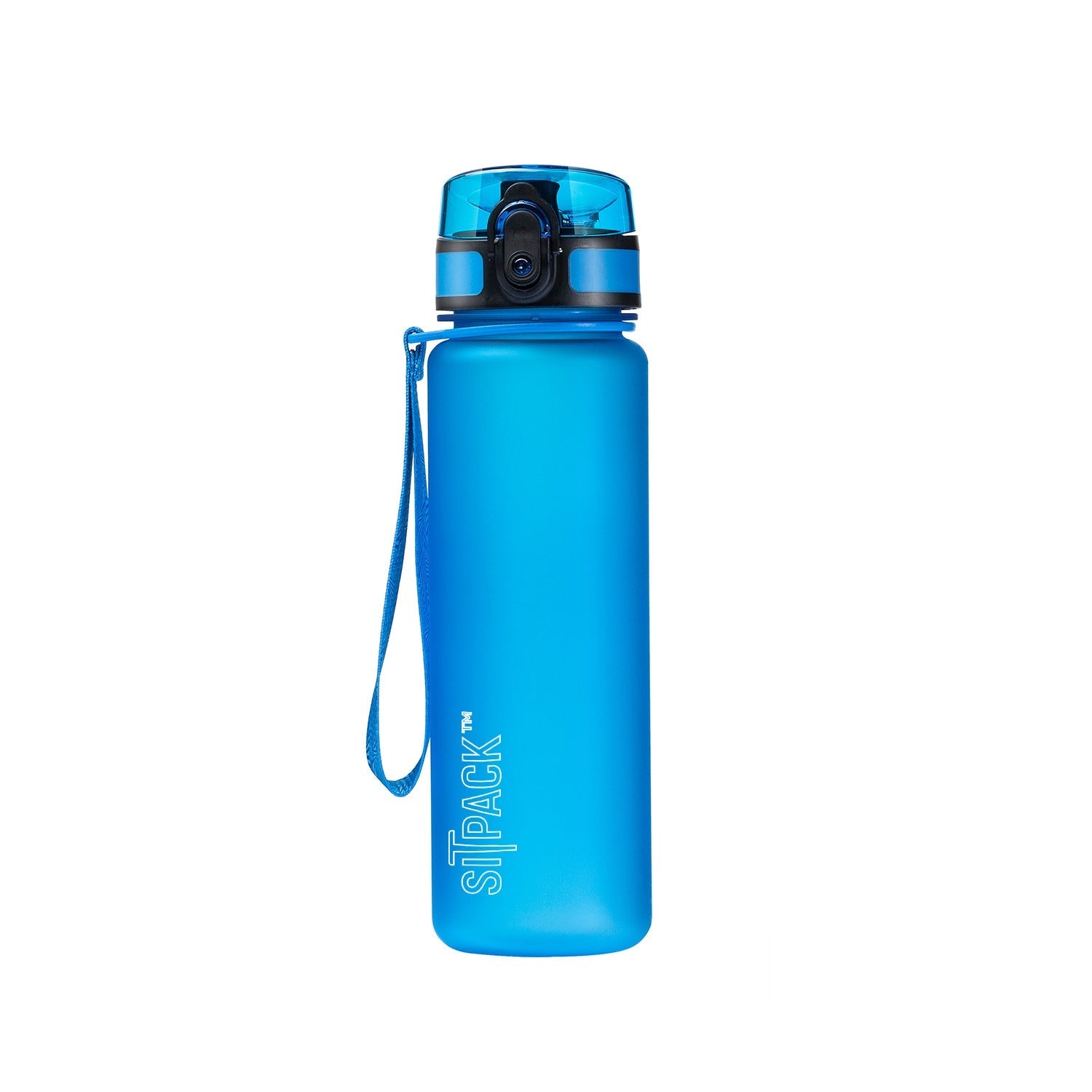
If the seat is the one thing missing from your list, take a look at the Campster II, our portable, foldable chair designed to be light and minimal. The rest of the range, including the Sitpack stool, the OCTO camp gear and the Airwrap puffy blanket, is on the full product page. We offer worldwide shipping, a 45-day satisfaction guarantee, and a lifetime warranty on select items.
Pack weight is the total weight of your loaded backpack at a given moment, including food, water and fuel. It falls during a trip as you consume supplies. Many hikers also use the phrase loosely to mean base weight, so check which one someone means.
Weigh every item on a scale, then add the base items (everything that stays in the pack all trip). Add the weight of your food, water and fuel to get total pack weight. If you want skin-out weight, add the clothing and gear you wear or carry in your hands.
Yes. Water counts as a consumable, so it is part of pack weight but not base weight. The empty bottle or reservoir is base weight. A full pack weight at the trailhead should include the water you start with.
Base weight is everything in the pack except food, water and fuel, and it stays constant. Pack weight is base weight plus those consumables, and it shrinks as the trip goes on.
There is no universal number. Trip length, climate, terrain and your own fitness all matter. Use ranges as starting points, then adjust based on how your body feels on a shorter trip. If you have joint or back concerns, ask your doctor before loading up for a long hike.