Vogn
0
Tilmeld dig og få 10% i rabat på din ordre
Forventet levering
1-3 dage
Du vil måske også kunne lide


Dansk Firma

TL;DR:
- Adventure seating offers ultralight, packable chairs, stools, and pads designed for mobility and comfort.
- Four main types include full chairs, stools, seat pads, and hybrids, each suited for different activities.
- Proper adventure seating improves muscle recovery, posture, and overall outdoor experience by providing support.
Most people assume that heading outdoors means accepting one of two fates: lug a heavy folding chair that doubles as a workout, or tough it out on a rock and pretend it’s fine. Neither sounds particularly appealing. Adventure seating flips that script entirely. It’s a fast-growing category of ultralight, packable chairs, stools, and pads engineered specifically for people who want real comfort without the bulk. Whether you’re hitting a trail, catching a festival, or killing time at the airport, the right adventure seat can genuinely change how you experience the day. This guide breaks down what adventure seating is, the main types available, why it matters for your health and energy, and how to pick the perfect one for your lifestyle.
| Point | Details |
|---|---|
| Lightweight portability | Adventure seating offers comfort without the bulk, ideal for mobile lifestyles. |
| Wide variety of types | Choose from chairs, stools, and pads to best fit your activity and comfort needs. |
| Measurable health benefits | Proper seating reduces fatigue and improves posture for outdoor and urban adventures. |
| Match seat to activity | No single seat is best—select based on your planned use and packing priorities. |
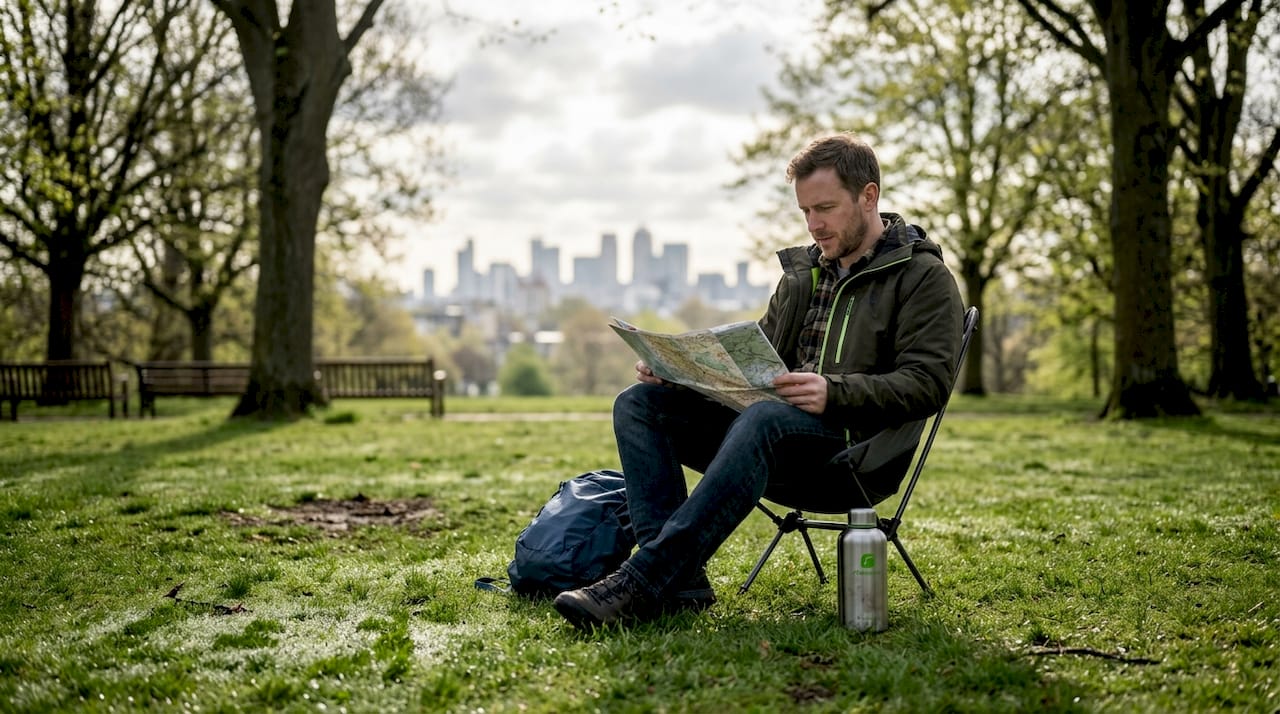
Adventure seating isn’t just a fancy name for a folding chair you toss in the trunk. It’s a purpose-built category of portable seating designed around one core idea: go anywhere, weigh almost nothing, and set up in seconds. We’re talking chairs, stools, pads, and hybrid designs that fit into a daypack, a tote bag, or even a jacket pocket.
What separates adventure seating from your average patio chair or big-box store folding seat? A few things, actually. Traditional folding chairs are built for convenience in a backyard or a tailgate. Adventure seating is built for mobility. That means obsessive attention to packed size, total weight, and setup speed, without sacrificing the support your back and legs actually need during a long day out.
Here are the core features that define a true adventure seat:
As the best portable outdoor chairs research confirms, adventure seating is designed to balance weight, comfort, and stability, enabling comfort on the go. That balance is exactly what makes it so useful across such a wide range of activities.
For a deeper look at pairing seats with a minimalist travel setup, the minimalist seating guide at Sitpack is a great starting point.
Pro Tip: Always check the packed size and weight against your planned activities before buying. A seat that’s perfect for a festival might be overkill for a summit hike.
“The best adventure seat is the one you’ll actually bring with you.” If it’s too heavy or too bulky to justify packing, it stays home, and that defeats the whole purpose.
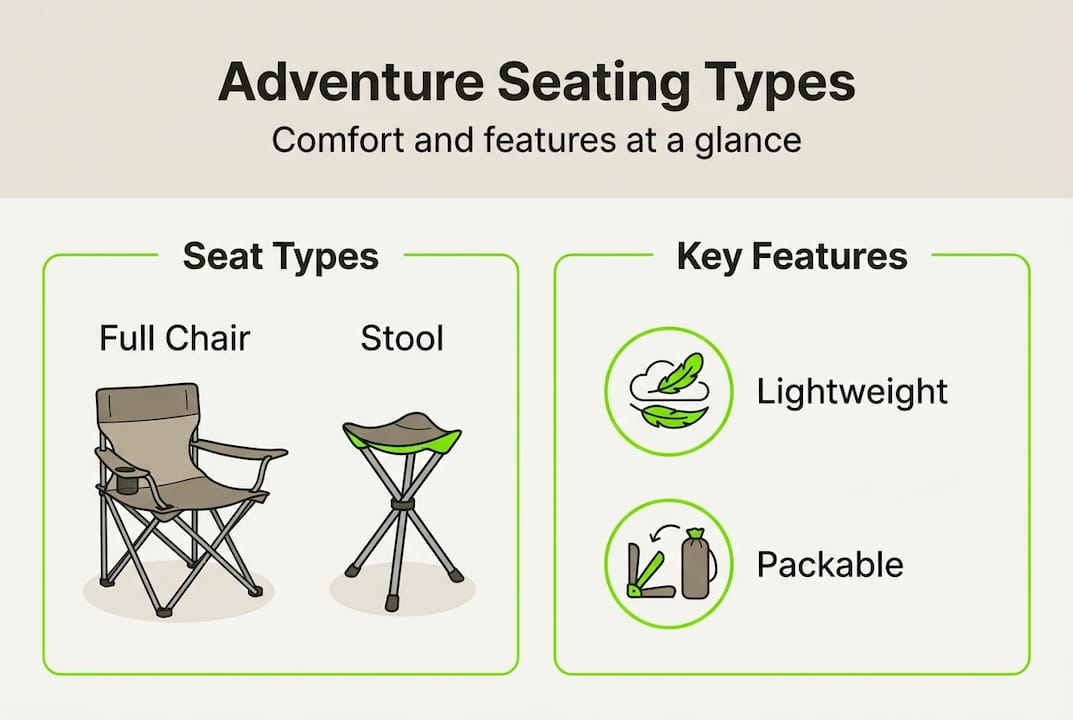
Now that you have a solid definition, let’s look at what’s actually out there. Adventure seating breaks down into four main categories, and each one has a distinct personality.
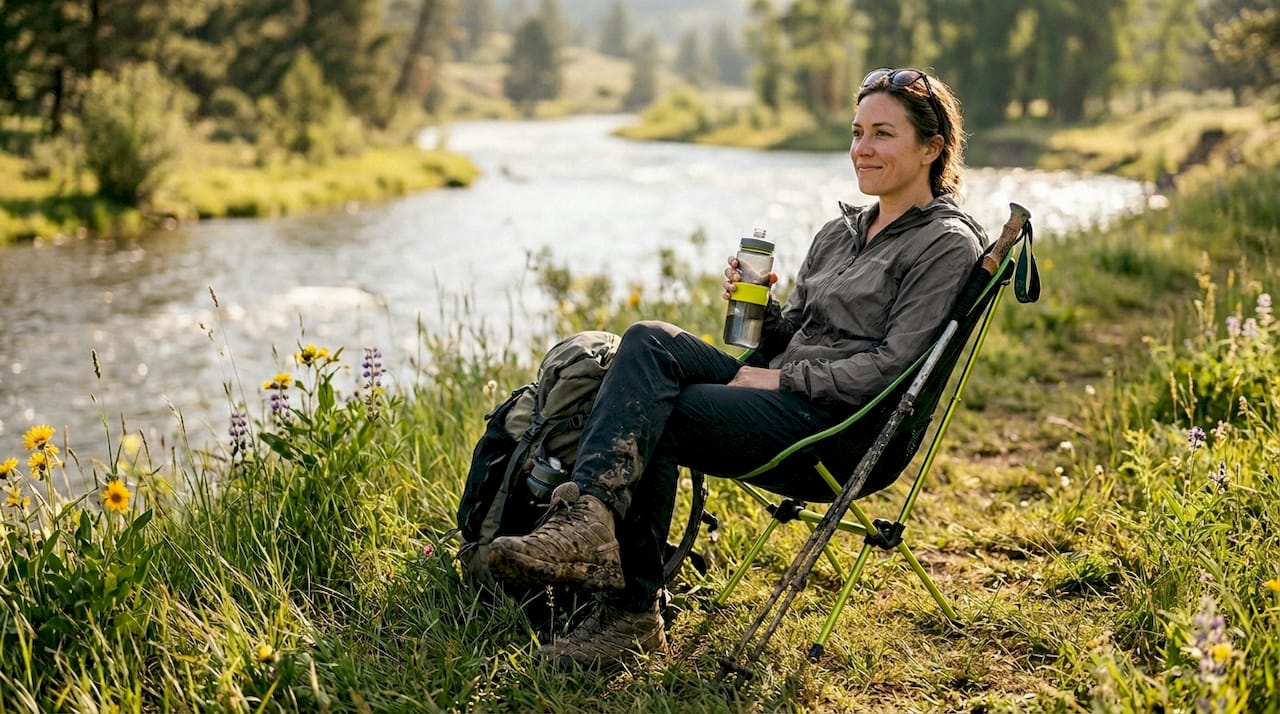
1. Full chairs These offer the most comfort and back support. Think collapsible frames with fabric seats and backrests. They’re ideal for base camps, long outdoor concerts, or any situation where you’ll be parked for a while. The trade-off is weight and pack size, though modern designs have gotten impressively lean. The Helinox Chair One and Zero are top-rated for combining comfort, low weight, and stability, proving that “full chair” doesn’t have to mean “heavy chair.”
2. Stools Lighter and faster to set up than full chairs, stools skip the backrest to save weight. They’re a fantastic choice for short trail breaks, photography outings, or events where you’re moving around frequently. You sacrifice lumbar support, but you gain serious packability.
3. Seat pads The most minimalist option in the lineup. Seat pads are typically closed-cell foam or inflatable panels that you place on the ground or a hard surface. Backpackers and ultralight festival-goers love them. They add insulation from cold or wet ground and weigh almost nothing.
4. Hybrid designs These blend features from multiple categories, like a stool with a small backrest, or a pad with an integrated handle. They’re built for niche use cases where one type alone doesn’t quite cut it.
Here’s a quick comparison to help you visualize the trade-offs:
| Type | Weight range | Comfort level | Setup time | Best for |
|---|---|---|---|---|
| Full chair | 1.2 to 2 lbs | High | 30 to 60 sec | Base camps, long events |
| Stool | 0.5 to 1.2 lbs | Medium | Under 30 sec | Trail breaks, markets |
| Seat pad | 2 oz to 4 oz | Low to medium | Instant | Backpacking, festivals |
| Hybrid | 0.8 to 1.5 lbs | Medium to high | Under 30 sec | Mixed-use adventures |
For a more detailed breakdown of how these stack up in real conditions, check out this lightweight seating comparison that puts several popular options head to head.
Okay, so adventure seating is light and packs small. But does it actually matter for your health and performance on an outing? Spoiler: yes, more than most people expect.
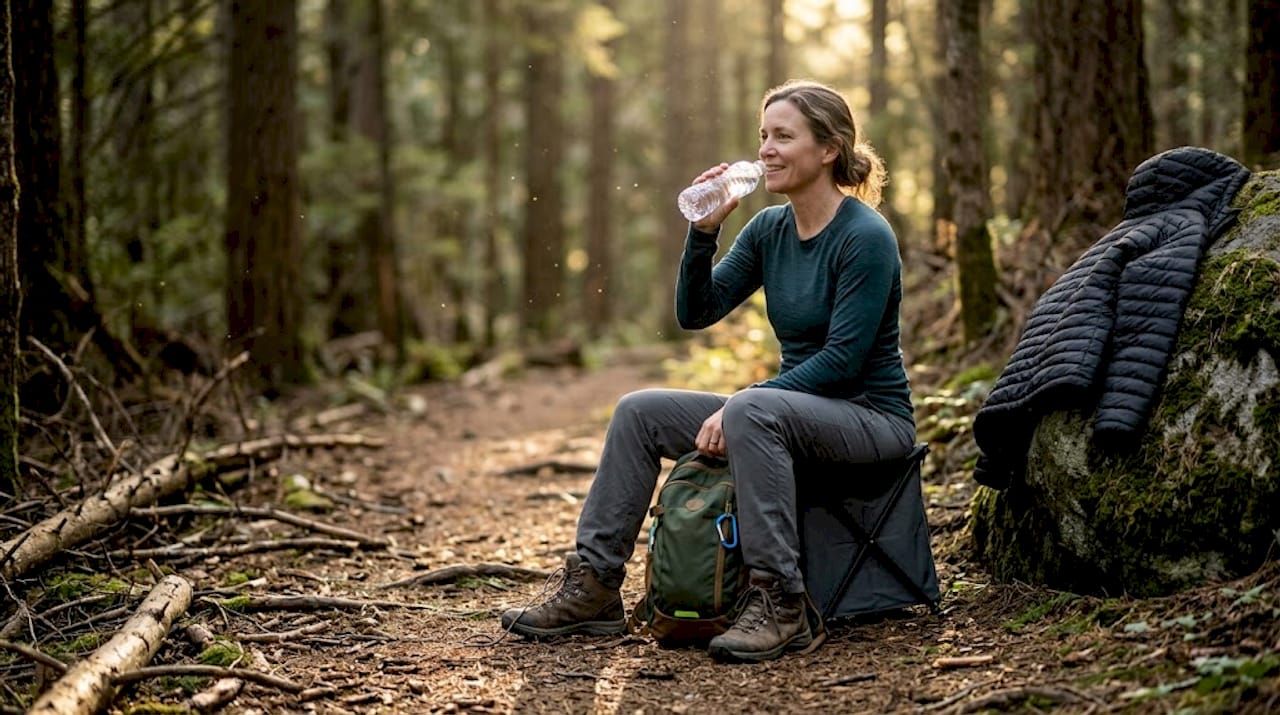
Sitting comfortably during breaks is not just a luxury. It directly affects how your muscles recover between bursts of activity. When you plop down on a hard rock or a damp patch of grass, your body is still working to stabilize and compensate for the uneven surface. A proper seat lets your muscles actually rest.
Here’s what a quality adventure seat does for you:
The evidence on adventure seating shows it reduces fatigue and improves posture and thermoregulation during outdoor activities. And the weight range is surprisingly accessible: chairs tested between 19 and 29 ounces, while seat pads can go as light as 2 ounces, meaning there’s a practical option for virtually every pack weight budget.
For a fuller picture of these advantages, the benefits of lightweight seats article covers seven specific ways a good portable seat improves your outdoor experience.
Pro Tip: Choose adventure seating that matches your body type and intended activity. A 250-pound hiker and a 130-pound festival-goer have very different needs, and most manufacturers publish weight limits for good reason.
After seeing the benefits, the real question becomes: what seat will actually serve you best? Here’s a step-by-step framework to make the decision simple.
Step 1: Define your primary activity. Backpacking demands ultralight. Festivals reward packability and quick setup. Base camping allows for a bit more weight in exchange for comfort. Urban travel calls for something discreet and fast.
Step 2: Set your weight limit. Decide the maximum weight you’re willing to carry. For backpackers, anything over 1 pound is a hard conversation. For car campers, 2 to 3 pounds is totally reasonable.
Step 3: Consider your comfort needs. Do you have back issues? You need lumbar support, which means a full chair or a hybrid. Are you just taking short breaks? A stool or pad will do the job without the extra bulk.
Step 4: Check the specs against your body. As the best portable outdoor chairs research points out, no product is “best” for every user. Fit your choice to your activity and comfort needs. Check weight limits, seat height, and ground clearance.
Step 5: Think about the surface. Loose sand, rocky terrain, and hard pavement all interact differently with seat legs and pads. Some chairs have wide feet for soft ground; others have rubber tips for hard floors.
Here’s a quick decision table:
| Activity | Recommended type | Key feature to prioritize |
|---|---|---|
| Backpacking | Seat pad or ultralight stool | Weight under 8 oz |
| Festival/concert | Stool or compact chair | Fast setup, small pack size |
| Base camping | Full chair | Comfort and back support |
| Urban travel/events | Hybrid or pocket stool | Discreet size, durability |
| Photography/birdwatching | Stool | Stability, quiet materials |
For more guidance on narrowing down your options, the lightweight adventure seating tips at Sitpack walk through real-world scenarios in detail.
Here’s an uncomfortable truth that most gear guides skip right over: the people who dismiss adventure seating are usually the ones who’ve never tried a genuinely good one. “I can sit anywhere” is a common attitude, and honestly, I get it. It sounds tough. Practical. But comfort and recovery shape the quality of every single adventure you take, whether that’s a 10-mile hike or a 6-hour music festival.
What I’ve noticed, both personally and from talking to seasoned outdoor folks, is that a small, well-chosen adventure seat has an outsized impact on how you feel at the end of the day. It’s not about being soft. It’s about being smart with your energy. Casual users are often the most surprised, because they discover unexpected value during city outings, long travel layovers, or crowded events where there’s nowhere decent to sit.
The cumulative benefit is real. Check out the underrated seat benefits that most guides never mention, and you’ll see why this category deserves a permanent spot in your everyday carry.
You now know what adventure seating is, why it matters, and how to pick the right one for your adventures. The next step is finding gear that actually delivers on all those promises.
At Sitpack, we’ve built our entire lineup around the idea that you should never have to choose between comfort and portability. From the Campster II to the Sitpack Zen, every product is designed to be the seat you actually bring with you, not the one that stays in the closet. Browse our full range of adventure seating solutions or dig into our minimalist travel seating tips to find the perfect fit for your next outing.
Adventure seating is lighter, packs smaller, and is specifically designed to balance weight and comfort for mobility and quick setup on the go, unlike traditional camping chairs built for stationary use.
Absolutely. Compact adventure seats provide quick rest during festivals, long lines, or transit delays, and seats as light as 2 oz can offer meaningful comfort during urban outings without adding noticeable weight to your bag.
Seat pads are the lightest option available. The Therm-a-Rest Z Seat at 2 oz is a top minimalist pick for anyone prioritizing ultimate portability over cushioned comfort.
Most adventure seating can be wiped down with mild soap and water, then left to air dry completely before storage to maintain durability and prevent mildew buildup.