Vogn
0
Tilmeld dig og få 10% i rabat på din ordre
Forventet levering
1-3 dage
Du vil måske også kunne lide


Dansk Firma

TL;DR:
- Chair height significantly impacts posture, comfort, and injury risk during outdoor activities.
- Matching chair height to body size and activity enhances circulation, usability, and reduces soreness.
- Prioritize ergonomic seat height over weight or packability when selecting outdoor chairs.
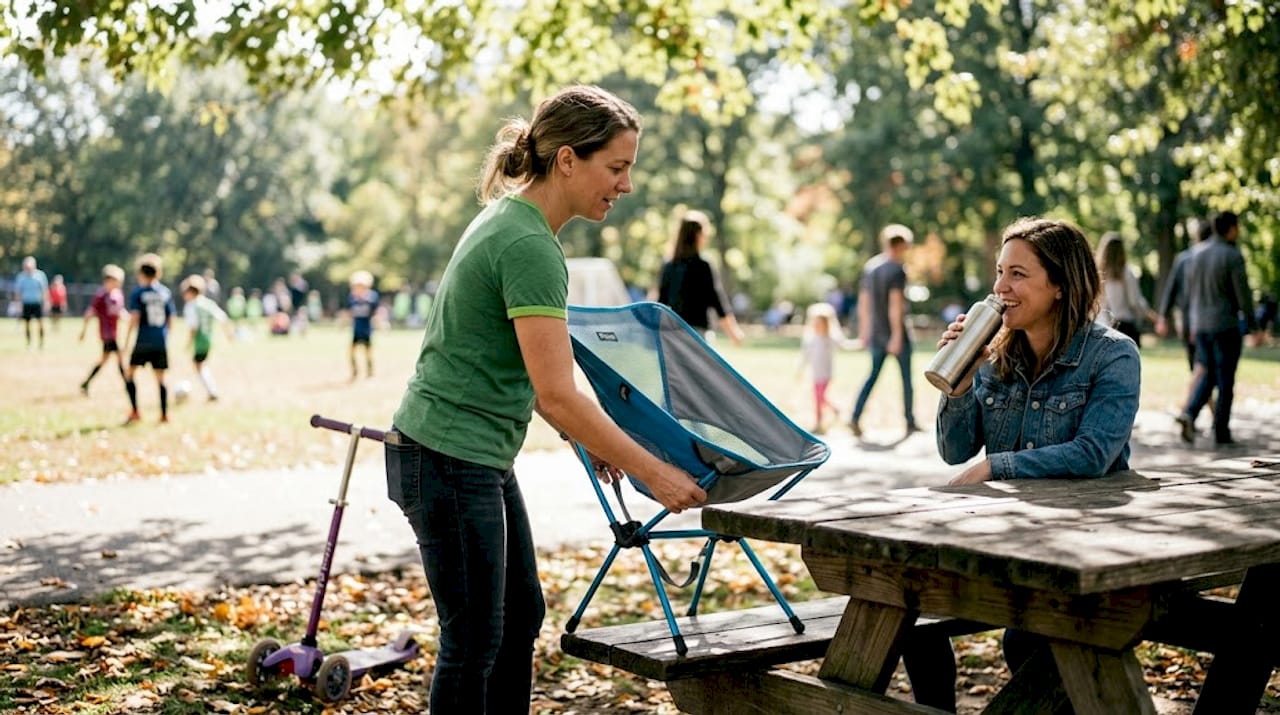
Most outdoor enthusiasts spend serious time researching tents, sleeping bags, and trail snacks, yet they grab the first folding chair they find without a second thought. That’s a mistake your back will remind you about around hour three of the campfire. Chair height is one of those deceptively simple details that quietly determines whether your outdoor experience is genuinely relaxing or a slow-burn exercise in discomfort. Get it right and you’ll be lounging like royalty. Get it wrong and you’ll be shifting, fidgeting, and limping back to the car. This guide breaks down everything you need to know to park your posterior at exactly the right height for any outdoor adventure.
| Point | Details |
|---|---|
| Chair height impacts comfort | Selecting the appropriate chair height is essential to maintain good posture and comfort outdoors. |
| Choose by activity | Consider your intended outdoor use—like camping, hiking, or picnics—when deciding on chair height. |
| Assess personal fit | Test how your knees and feet feel in the chair before making a purchase. |
| Prevention of discomfort | The right chair height helps avoid back pain, poor circulation, and trouble standing, especially for longer sits. |
Chair height, at its most basic, is the distance from the ground to the top of the seat surface. Simple enough. But that single measurement has a surprisingly large ripple effect on how your whole body feels after an hour of sitting around a campfire or a full afternoon at a festival.
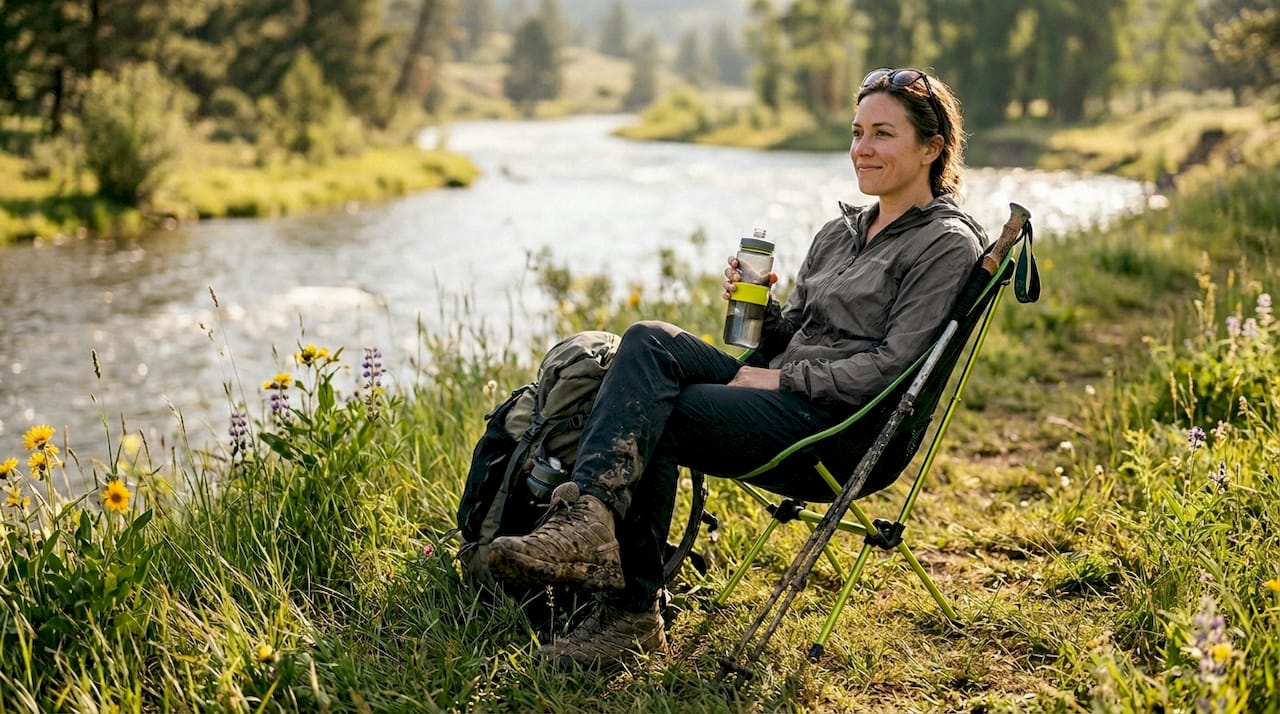
When your chair height is off, your body compensates. Sit too low and your hips drop below your knees, rounding your lower back and compressing your lumbar spine. Sit too high and your feet dangle, cutting off circulation behind your knees. Neither scenario is a good time, especially when you’re miles from the nearest couch.
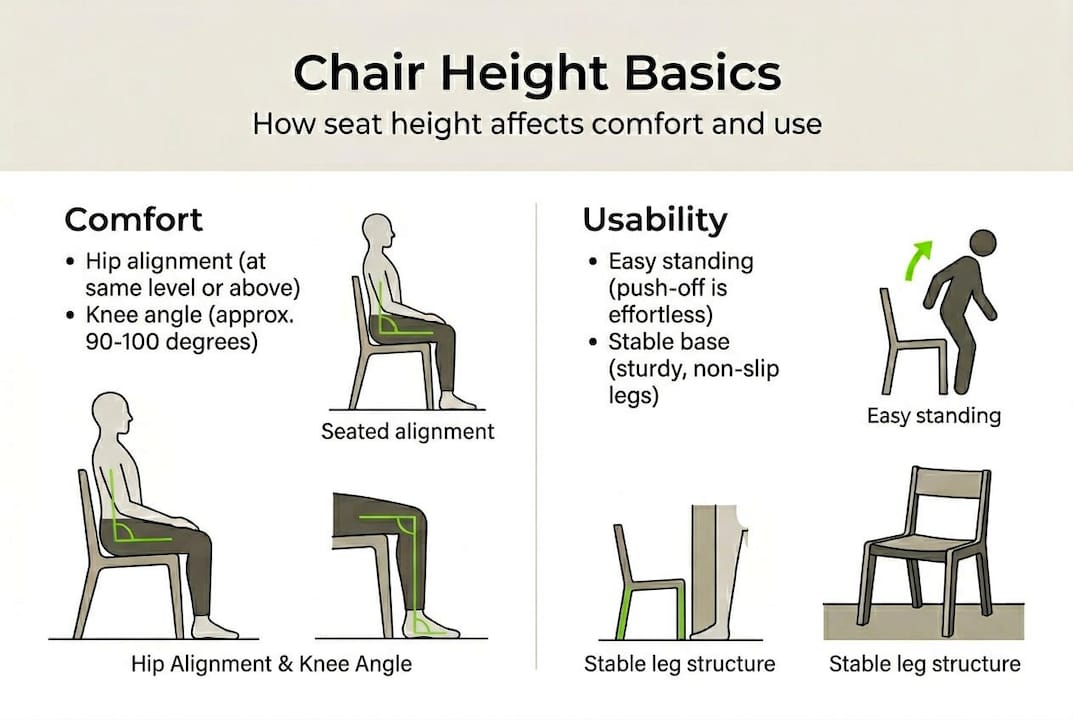
Chair height affects posture and comfort outdoors, which means ignoring it is essentially choosing discomfort on purpose. Outdoors, the stakes are actually higher than at home because you’re often sitting on uneven ground, without back support, and for longer stretches than you’d expect.
Here are the most common discomforts that come directly from the wrong chair height:
For camping and hiking rest stops, these issues aren’t just annoying. They can cut your enjoyment short and even lead to real soreness the next day on the trail.
Pro Tip: Before buying any outdoor chair, sit in it for at least five minutes. If your feet aren’t flat on the ground and your knees aren’t roughly level with your hips, keep looking.
“The best outdoor chair isn’t the lightest or the flashiest. It’s the one that lets you forget you’re sitting in it.”
Exploring versatile seating outdoors means thinking beyond fabric and frame weight. Height is the foundation everything else builds on. Get that right first, and the rest of your outdoor seating decisions become a lot easier.
Once you start paying attention to chair height, the benefits stack up fast. It’s not just about comfort in a vague, hand-wavy sense. There are specific, measurable improvements to your outdoor experience when you get the height dialed in.
Better circulation and back support are the big ones. When your knees sit at roughly a 90-degree angle and your feet rest flat on the ground, blood flows freely through your legs. No tingling, no that pins-and-needles scramble when you stand up too fast. Your lower back maintains its natural curve instead of collapsing into a C-shape.
Usability gets a serious upgrade too. Think about eating at a camp table, chatting with friends around a fire, or reaching into your pack. All of these actions are easier when you’re seated at the right height relative to the surface or activity in front of you. A chair that’s too low turns every meal into a hunched-over ordeal. Too high and you’re perching awkwardly, never quite settling in.
For older adults or anyone with mobility concerns, outdoor ergonomic seating at the right height is genuinely a safety issue. Getting in and out of a chair that’s too low requires significant hip and knee strength. A chair at the right height makes standing up smooth and controlled, reducing the risk of stumbles or falls on uneven terrain.
Here’s a quick rundown of the key benefits:
Pro Tip: For most adults, a seat height between 16 and 18 inches from the ground hits the sweet spot for outdoor use. That range accommodates the average leg length while keeping your posture in a healthy position.
Correct chair height increases comfort and reduces injury risk, which matters especially on multi-day trips where cumulative soreness can genuinely affect your performance and enjoyment on the trail.
Not all outdoor chairs are built the same, and the height category you choose should match your activity. Let’s break down the three main tiers and when each one actually makes sense.
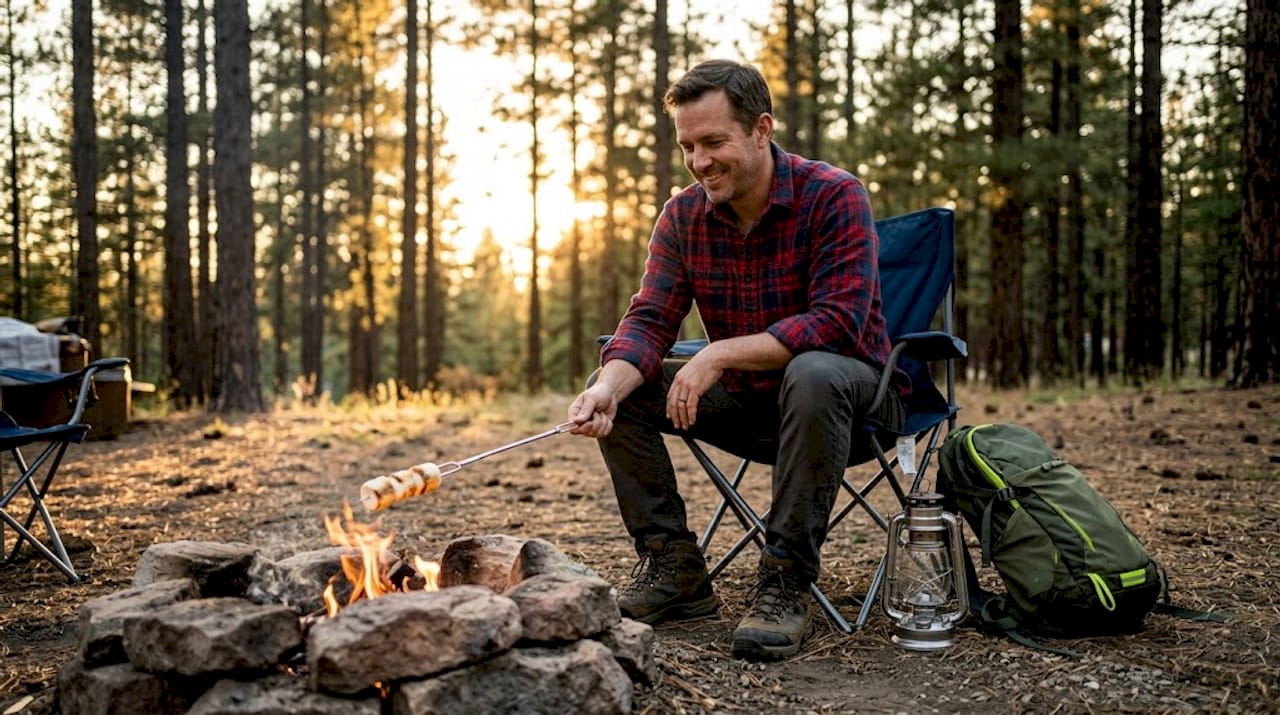
Low chairs (under 12 inches) sit close to the ground and are a staple around campfires and beach setups. They give you a relaxed, reclined feel and a low center of gravity that’s stable on soft or uneven surfaces. The downside? Getting up is a workout, and they’re not great for eating at a table.
Standard chairs (14 to 18 inches) are the versatile middle ground. They work for most adults across most activities, from festival seating to picnic lunches to trailhead breaks. They’re the easiest to get in and out of and pair well with standard camp tables.
High chairs (19 inches and above) are less common in camping contexts but show up at tailgates, outdoor bars, and events with tall tables. They keep you at eye level with standing people, which is great socially, but they can feel unstable on rough ground.
Various chair heights serve different outdoor activities best, so matching height to context is the smartest move you can make before you buy.
Here’s a quick comparison table to make the choice easier:
| Chair height | Best for | Pros | Cons |
|---|---|---|---|
| Low (under 12 in) | Campfires, beaches, festivals | Stable, relaxed feel | Hard to stand up, not table-friendly |
| Standard (14-18 in) | Camping, picnics, hiking breaks | Versatile, easy in/out | Less reclined feel |
| High (19 in+) | Tailgates, tall tables, events | Eye-level socializing | Unstable on rough terrain |
To pick the right tier, work through this quick numbered checklist:
Checking out the latest outdoor seating trends can also give you a sense of what experienced outdoor enthusiasts are gravitating toward in 2026.
Knowing the categories is helpful. Actually picking the right chair for your body and your trip is where it gets personal. Here’s how to nail it.
Step 1: Measure your sitting height. Sit on a firm, flat surface with your feet flat on the floor. Measure from the floor to the underside of your thigh, right behind your knee. That number is your ideal seat height.
Step 2: Factor in your activity. A relaxed campfire evening calls for something lower and more reclined. A long day of camp cooking or eating at a table needs standard height. Be honest about how you’ll actually use the chair.
Step 3: Think about terrain. Rocky, uneven ground is tricky for tall chairs. Soft sand swallows legs and makes low chairs feel even lower. Standard height chairs with wide, flat feet handle the most terrain types reliably.
Step 4: Consider portability. Lighter chairs often sacrifice adjustability. If you’re backpacking, you’ll likely accept a fixed height. If you’re car camping, you have more flexibility to bring something height-adjustable.
Step 5: Check the chair selection guide for your specific use case, especially if you’re buying for multiple people or varied activities.
Chair height selection should factor in user size and intended use, and the table below gives you a quick-reference starting point:
| Body height | Recommended seat height | Best use case |
|---|---|---|
| Under 5’4" | 14 to 16 inches | Campfire, picnic, beach |
| 5’4" to 5’10" | 16 to 18 inches | General camping, hiking breaks |
| Over 5’10" | 18 to 20 inches | Camp tables, festivals, tailgates |
Pro Tip: If you’re between sizes or buying a chair to share, go with the taller option. It’s much easier to add a cushion for extra height than to raise a chair that’s already too low.
Here’s something we’ve noticed after years of testing outdoor gear: nearly every buying guide leads with weight, then materials, then packability. Chair height shows up as an afterthought, if at all. That’s backwards.
You can have the lightest, most packable chair on the market, but if it plants your knees six inches above your hips, you’ll hate it by lunch. We’ve seen experienced hikers ditch otherwise great chairs after one trip because the height was just wrong for their body. It’s not a minor detail. It’s the detail.
Conventional gear advice is shaped by what’s easy to compare on a spec sheet. Weight and packed size are obvious numbers. Chair height feels less exciting, so it gets glossed over. But the outdoor comfort insights are clear: ergonomics determine whether you actually enjoy sitting in a chair, not just whether you can carry it.
Make chair height your first filter when shopping, not your last. Your back will thank you every single trip.
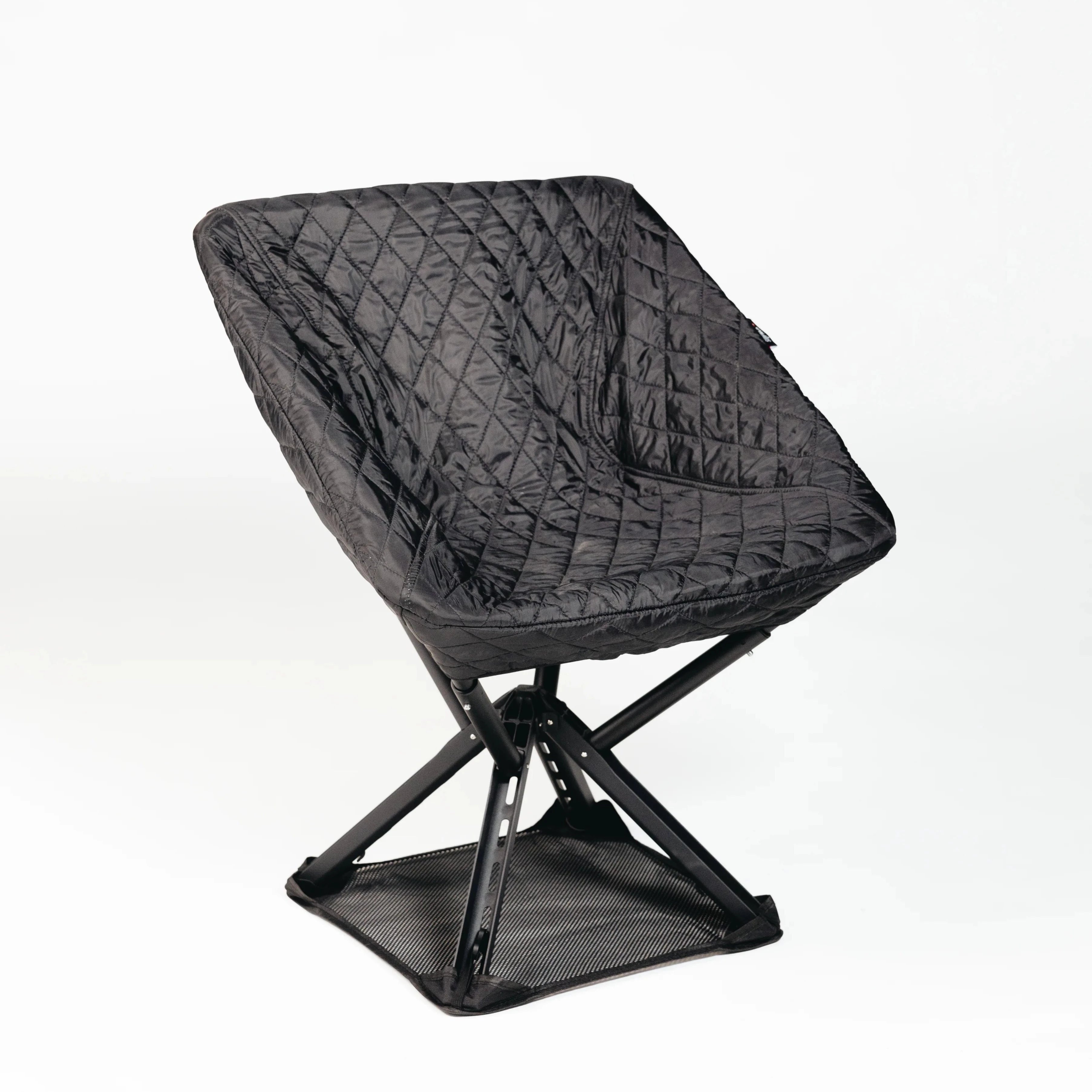
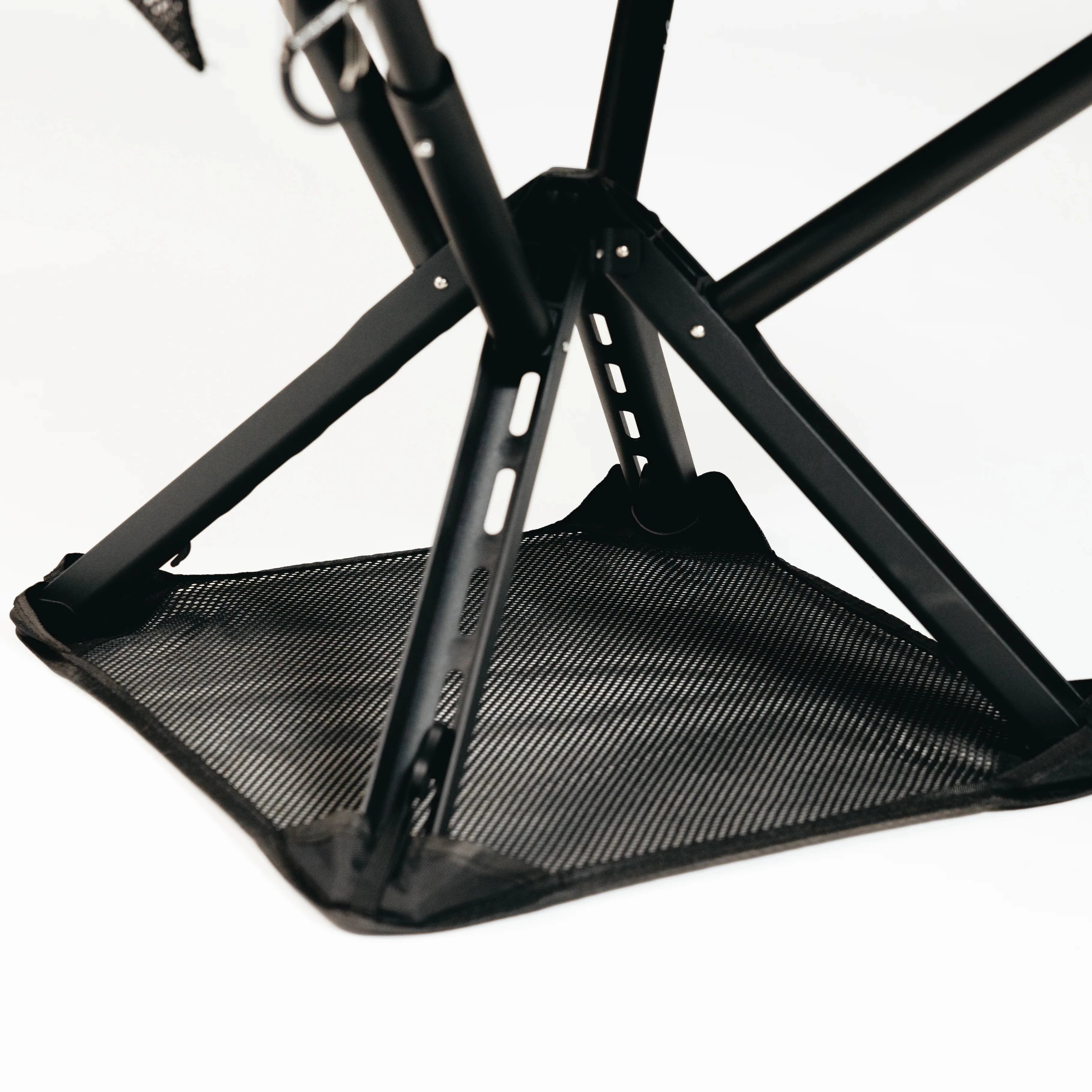
Now that you know exactly what to look for, the next step is finding a chair that actually delivers on all of it. That’s where Sitpack outdoor chairs come in. Sitpack designs portable, ergonomic seating with real-world comfort in mind, including options like the Campster II that balance packability with proper seated posture.

Whether you’re heading out for a weekend camping trip, a day hike, or a festival, there’s a Sitpack option matched to your height, activity, and comfort needs. Browse the full range at sitpack.com and find the chair that makes you forget you’re even sitting in one. Your adventures deserve better than a sore back.
Most adults prefer seat heights in the 16 to 18 inch range for outdoor use, though your personal leg length and the activity you’re doing will fine-tune that number.
Absolutely. Incorrect chair height may cause discomfort and muscle fatigue, turning what should be a relaxing evening into a fidgety, achy ordeal.
Sit on a firm surface and measure from the floor to the back of your knee. That measurement is your target seat height. Ergonomic chair height places knees at a right angle with feet resting flat on the ground.
A chair that’s too low strains your knees and hips, while one that’s too high cuts off leg circulation and makes standing up awkward. Incorrect height can lead to strain and circulation issues that compound over a long day outdoors.