Vogn
0
Tilmeld dig og få 10% i rabat på din ordre
Forventet levering
1-3 dage
Du vil måske også kunne lide


Dansk Firma


TL;DR:
- Outdoor problem-solving seating is designed to withstand environmental challenges like weather, terrain, and limited space, emphasizing durability and versatility. Choosing materials such as aluminum frames and Sunbrella fabrics, along with strategic placement and modular designs, enhances comfort and usability across seasons and conditions. Proper shade placement, microclimate consideration, and adaptable furniture maximize outdoor comfort and prevent space underutilization.
Problem-solving outdoor seating is defined as furniture designed to overcome specific environmental, spatial, or comfort challenges outdoors, from weather exposure and limited square footage to awkward terrain and shifting sun angles. The industry term for this category is “performance outdoor furniture,” and it covers everything from weather-resistant seating options to modular, reconfigurable setups built for real-world conditions. Whether you’re outfitting a cramped urban balcony, a sprawling backyard, or packing a chair for a weekend trail, the right seat does more than hold your weight. It handles rain, UV rays, wind, and the occasional spilled coffee without complaint. This guide walks you through materials, placement, modularity, and the structural upgrades that separate genuinely useful outdoor seating from furniture that looks great in a showroom and falls apart by August.
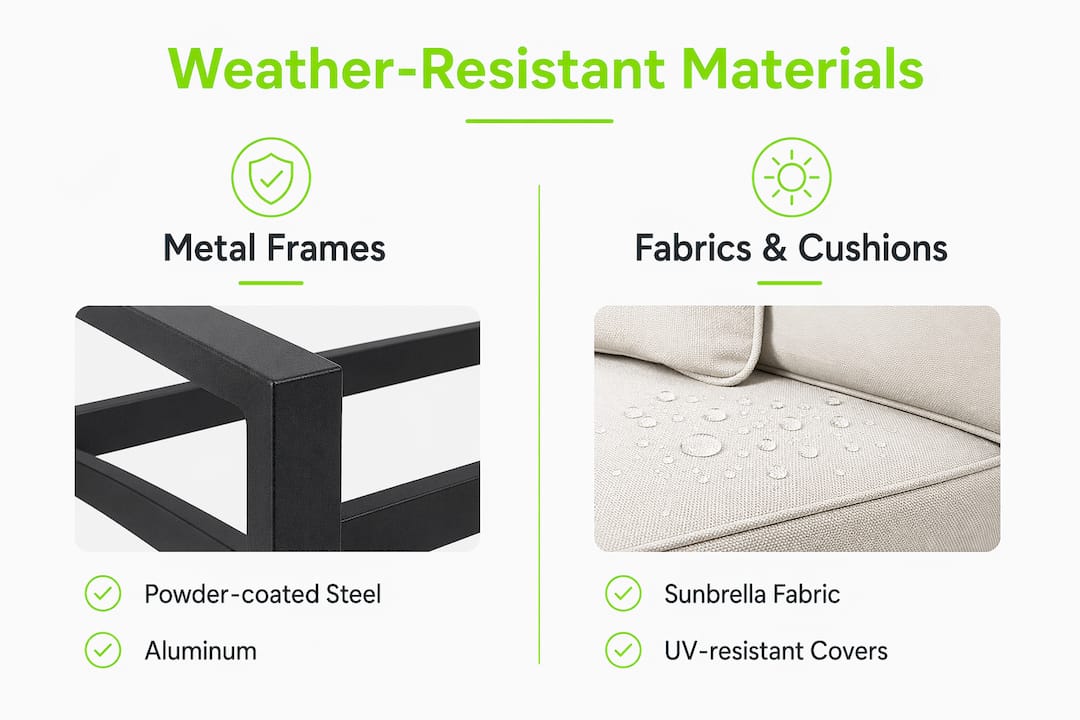
The frame is your first line of defense. Powder-coated steel resists rust and handles impact well, but aluminum is lighter and naturally corrosion-resistant, making it the go-to for coastal or high-humidity environments. Thermowood, a heat-treated timber, offers the warmth of natural wood with significantly better resistance to moisture and rot. Wirecutter’s 2026 guide to best outdoor sofas puts frames through real-world stress tests including hurricane-speed wind conditions, and the results confirm that build quality matters as much as material choice.
Upholstery is where most outdoor furniture fails first. Sunbrella fabrics are engineered specifically for outdoor use, offering fade-proof, colorfast performance with the added bonus of being bleach-cleanable. That last point matters more than people realize. Mold and mildew are the silent killers of outdoor cushions, and a fabric you can clean with diluted bleach without destroying the color is a genuine time-saver. Sunbrella covers residential, marine, and commercial applications, which tells you something about how seriously it takes weather resistance.
For modular seating specifically, Chicory’s outdoor line sets a useful benchmark. Their covers offer UV fade resistance up to 2,000 hours and abrasion resistance over 50,000 rubs, with a non-toxic moisture barrier underneath. The covers are machine-washable, which removes the single biggest maintenance headache in outdoor upholstery.
| Material | Weather resistance | Maintenance | Best for |
|---|---|---|---|
| Powder-coated steel | High (rust risk if chipped) | Low | Inland, sheltered spaces |
| Aluminum | Very high | Very low | Coastal, humid climates |
| Thermowood | High | Medium (occasional oiling) | Natural aesthetic, moderate climates |
| Sunbrella fabric | Very high (UV + moisture) | Very low (bleach-cleanable) | Cushions, upholstery |
| Synthetic wicker (resin) | High | Low | Decorative, patio use |
Pro Tip: Flip your cushions every few weeks and store them vertically rather than flat when not in use. Flat storage traps moisture underneath and accelerates mildew growth even in covered areas.
Getting the placement right is half the battle, and most people skip this step entirely. Strategic shade placement aligned with where people actually sit, accounting for sun shifts throughout the day, airflow corridors, and surface heat reflection, is what separates a comfortable outdoor space from one that gets abandoned by noon. ShadeFLA recommends extending shade coverage beyond the furniture footprint itself, not just covering the seat but the surrounding floor area where radiant heat builds up.
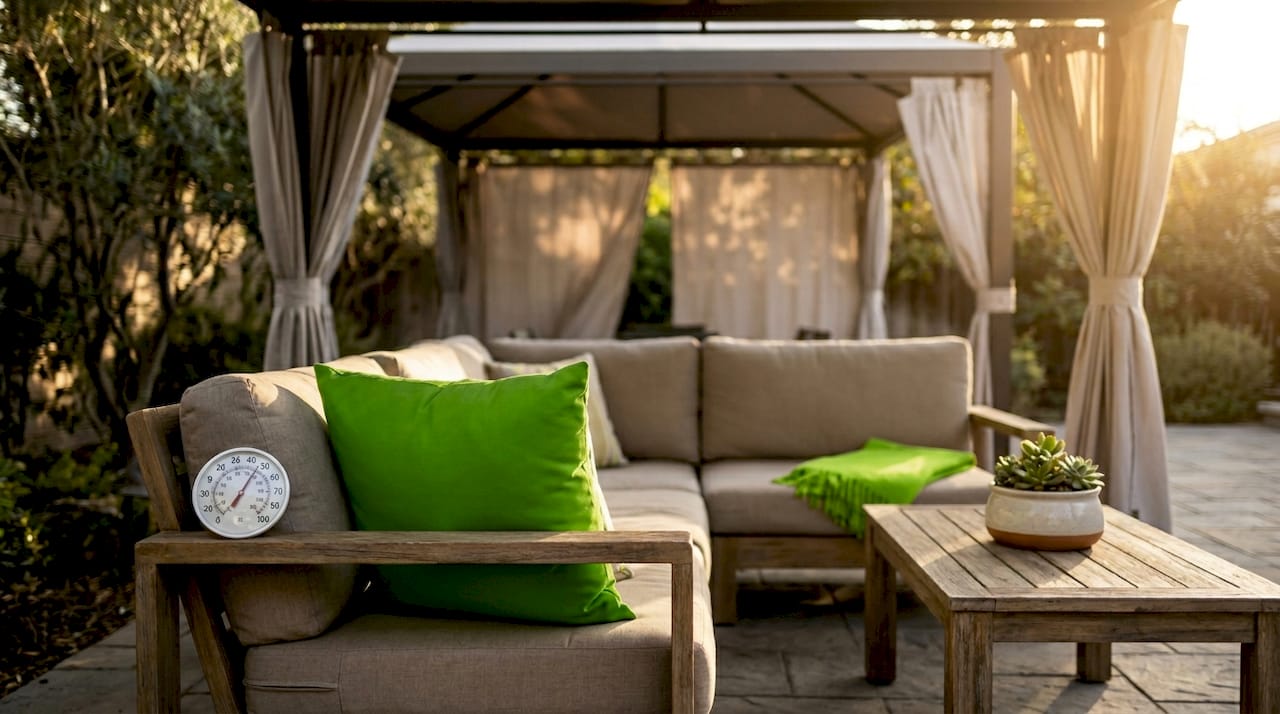
Thermally compatible outdoor furniture considers sun angle, wind direction, and microclimate conditions as part of the design equation, not afterthoughts. Building-Design.World advocates for integrated microclimatic solutions, meaning you treat your seating zone as a system rather than a collection of individual pieces. A shaded bench facing a reflective concrete wall is still going to cook you.
Here is a practical checklist for assessing your outdoor space before placing any furniture:
Pro Tip: Before buying any shade structure, spend a full weekend day in your outdoor space with a thermometer and a notebook. Map where it gets hot, where the breeze hits, and where the shadow falls at 2 p.m. That 30-minute exercise will save you from a $500 pergola mistake.
Modular outdoor seating is the best answer to spaces that need to do multiple jobs. A sectional that reconfigures from a lounge setup to a dining bench, or collapses flat for winter storage, gives you flexibility that fixed furniture simply cannot match. This is especially relevant for outdoor seating for small spaces, where every square foot counts and a rigid sofa becomes a permanent obstacle rather than a useful seat.
Modular seating layouts optimize social interaction and usability by allowing reconfiguration and zoning for different activity types. That principle applies equally to a backyard entertaining space and a compact urban terrace. When you can move pieces around, you stop fighting your space and start working with it.
Here is a step-by-step approach to selecting and maintaining modular outdoor seating:
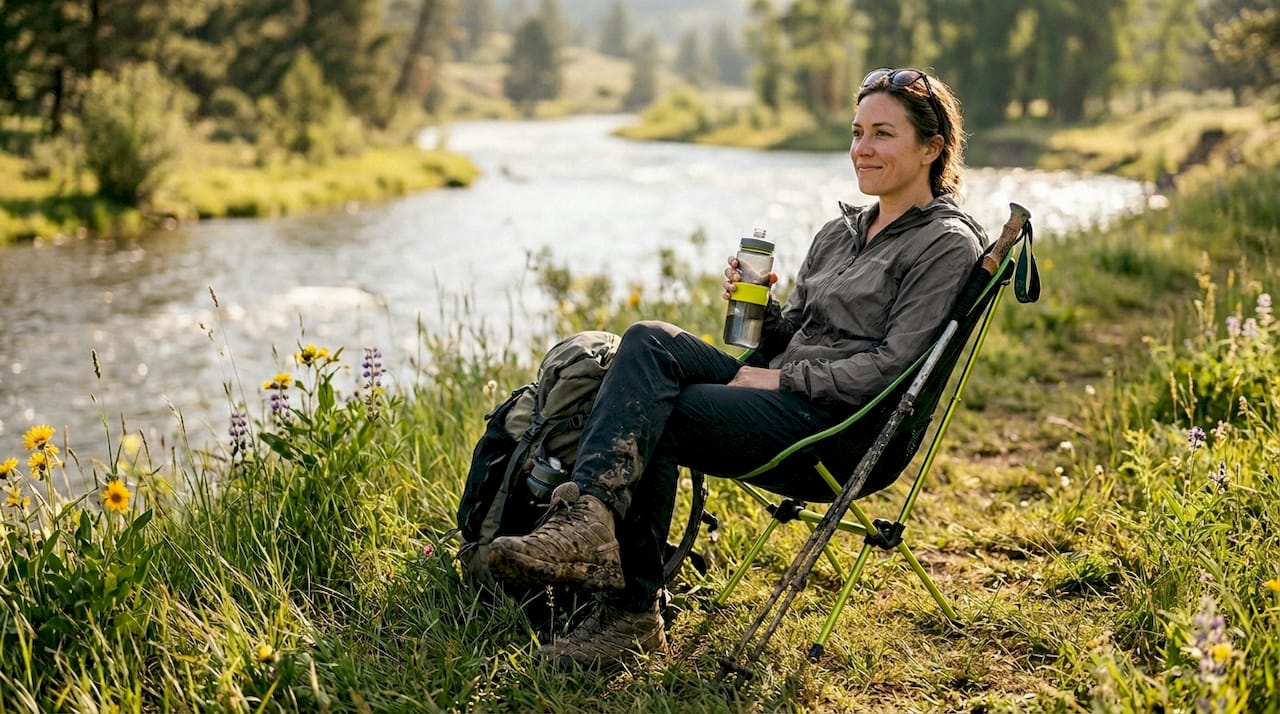
For travelers and urban users, portable seating takes the modular concept even further. Lightweight, foldable chairs that pack into a bag solve the problem of seating at festivals, markets, sporting events, and anywhere else you cannot guarantee a seat. The versatile seating options that work across multiple environments are the ones worth investing in.
A well-designed pergola transforms a seating area from a fair-weather luxury into a year-round destination. Adjustable louvered pergola systems let you control shade, airflow, and rain protection by rotating the roof slats, which means you can open them up on a breezy spring morning and close them down when a summer storm rolls in. Pergolas with integrated LED lighting and corrosion-resistant aluminum frames, as detailed by Greenawn, represent the current standard for commercial-grade outdoor comfort.
The practical benefits go beyond weather protection. Integrated lighting extends usability into evening hours, which effectively doubles the time you get out of your outdoor space. Corrosion-resistant aluminum frames require almost no maintenance beyond an occasional rinse, and the adjustable louver mechanism means you are not locked into a single climate setting.
| Feature | Benefit | Best application |
|---|---|---|
| Adjustable louvers | Control shade and rain protection on demand | Year-round outdoor dining |
| Integrated LED lighting | Extends usability into evening hours | Entertaining, restaurant patios |
| Corrosion-resistant aluminum | Low maintenance, long lifespan | Coastal and humid environments |
| Climate-responsive design | Adapts to seasonal weather shifts | Residential and commercial spaces |
Seasonal adaptability is the real selling point. A pergola that works in July heat and October rain earns its cost over time in a way that a fixed awning simply does not.
The most expensive mistake in outdoor seating setup is placing shade over empty floor instead of over the people sitting there. Poor shade placement and neglecting airflow are the two most common reasons outdoor spaces go unused on hot days, according to ShadeFLA. Both are entirely avoidable with a bit of upfront planning.
Watch out for these specific pitfalls:
Pro Tip: If you are setting up a larger outdoor space or a commercial patio, consult a landscape architect or outdoor comfort specialist for a microclimate assessment. One hour of professional advice can prevent years of uncomfortable, underused space.
The most effective problem-solving outdoor seating combines weather-resistant materials, microclimate-aware placement, and modular design to deliver comfort across changing conditions and spaces.
| Point | Details |
|---|---|
| Material selection matters most | Aluminum frames and Sunbrella fabrics outperform most alternatives in durability and low maintenance. |
| Placement beats cushioning | Even the best seat fails in a heat trap or wind corridor. Assess sun path and airflow before placing furniture. |
| Modular designs multiply usability | Reconfigurable, washable pieces like Chicory’s outdoor line adapt to different activities and seasons. |
| Structures extend the season | Adjustable louvered pergolas with LED lighting turn a summer patio into a year-round outdoor room. |
| Avoid the shade-over-floor mistake | Shade coverage must extend over where people sit, not just the furniture footprint. |
Here is the thing nobody tells you when you start obsessing over outdoor seating: the furniture is almost never the problem. The problem is the space it sits in. I have seen genuinely excellent, weather-resistant seating options go completely unused because someone placed a beautiful sectional in a spot that turns into a solar oven by 1 p.m. The chairs were fine. The placement was the issue.
What I keep coming back to is the value of modular, adaptable designs, not because they are trendy, but because outdoor conditions change and your life changes. The setup that works for a quiet morning coffee is not the same one you want for a dinner party of eight. Pieces you can move, reconfigure, and store flat give you options that fixed furniture never will.
Material choice is where I see the most regret. People buy based on how something looks in a catalog, then spend the next two summers fighting rust, fading, and covers they cannot wash. Spending a bit more on durable outdoor materials upfront, whether that is aluminum frames, Sunbrella fabric, or machine-washable covers, pays back in time and frustration saved. Maintenance ease is not a luxury feature. It is the difference between furniture you actually use and furniture you apologize for.
My honest recommendation: start with the space, not the furniture. Spend time in it. Notice where the sun hits, where the wind comes from, and where you naturally gravitate to sit. Then buy furniture that fits those conditions. You will get more enjoyment out of a modest, well-placed setup than an expensive one dropped into the wrong spot.
— Jonas
If this article has you rethinking your outdoor setup, Sitpack’s range of portable and space-saving outdoor seating is worth a look. Sitpack specializes in lightweight, durable seating designed for people who actually go outside, whether that means a weekend camping trip, a crowded festival, or a daily urban commute with nowhere to sit.
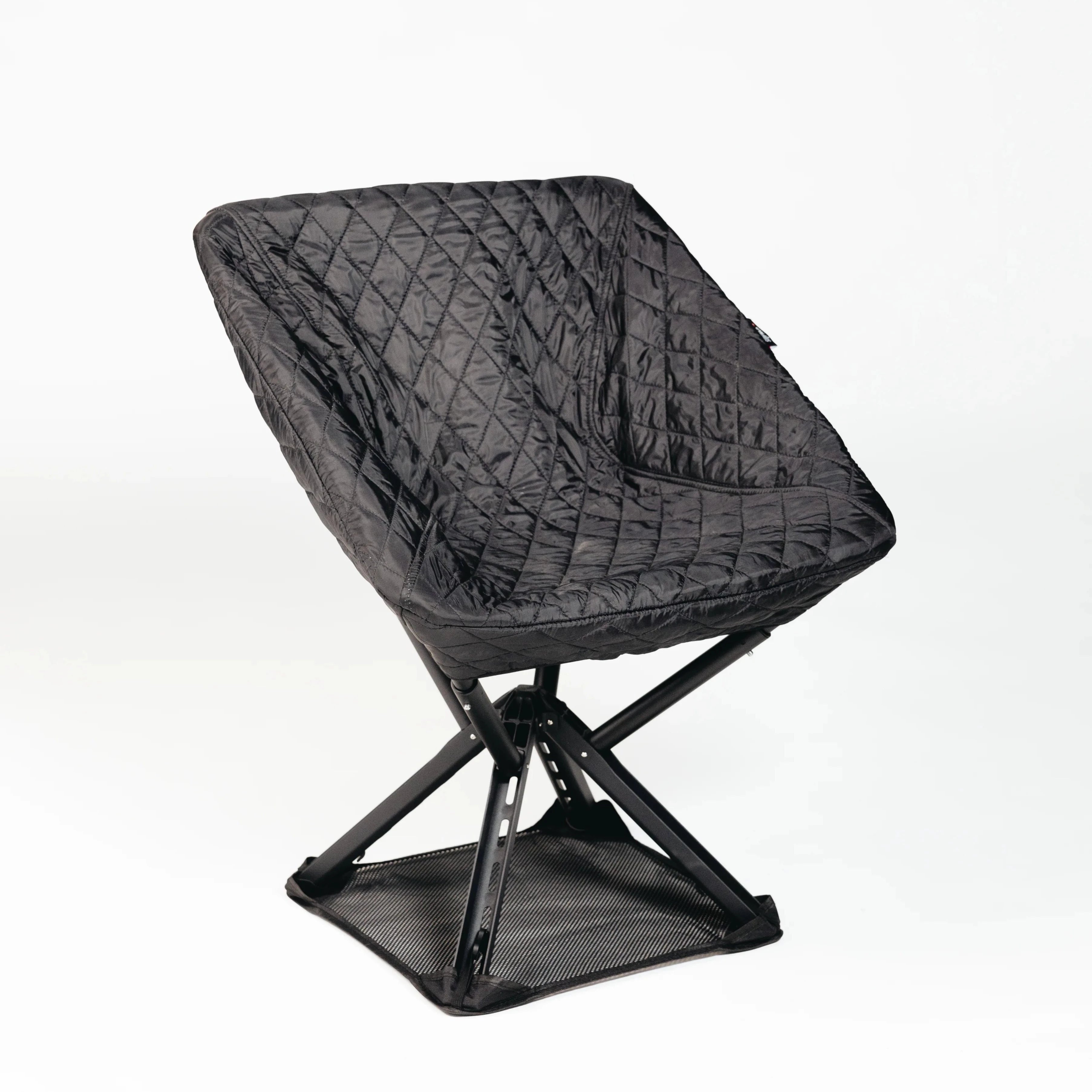
The Campster II and Sitpack Zen are built for exactly the kind of problem-solving scenarios this article covers: compact enough to carry, tough enough to handle real conditions, and designed with the kind of minimalist thinking that makes outdoor life easier rather than more complicated. Sitpack ships worldwide with a 45-day satisfaction guarantee, so you can try it in your actual outdoor environment before committing. Browse the full range at sitpack.com and find the seat that fits your adventure.
Problem-solving outdoor seating refers to performance furniture designed to address specific challenges like weather exposure, limited space, or difficult terrain. It prioritizes durability, adaptability, and comfort over purely decorative appeal.
Aluminum frames and Sunbrella-covered cushions consistently outperform other options in longevity and low maintenance. Aluminum resists corrosion without treatment, and Sunbrella fabrics are bleach-cleanable and fade-resistant across thousands of hours of UV exposure.
Prioritize modular or foldable designs that reconfigure or store flat when not in use. Space-saving patio furniture with interlocking sections, like Chicory’s collapsible modular line, gives you flexibility without permanently sacrificing floor area.
Yes, significantly. ShadeFLA’s research shows that shade aligned with where people sit, rather than just over the furniture footprint, is the single biggest factor in whether an outdoor space feels comfortable or gets avoided on hot days.
For anyone who moves between outdoor environments regularly, a lightweight portable chair is one of the most practical investments available. Compact designs like those from Sitpack solve the problem of guaranteed seating at events, markets, and outdoor spaces where fixed seating is unavailable or uncomfortable.