Vogn
0
Tilmeld dig og få 10% i rabat på din ordre
Forventet levering
1-3 dage
Du vil måske også kunne lide


Dansk Firma

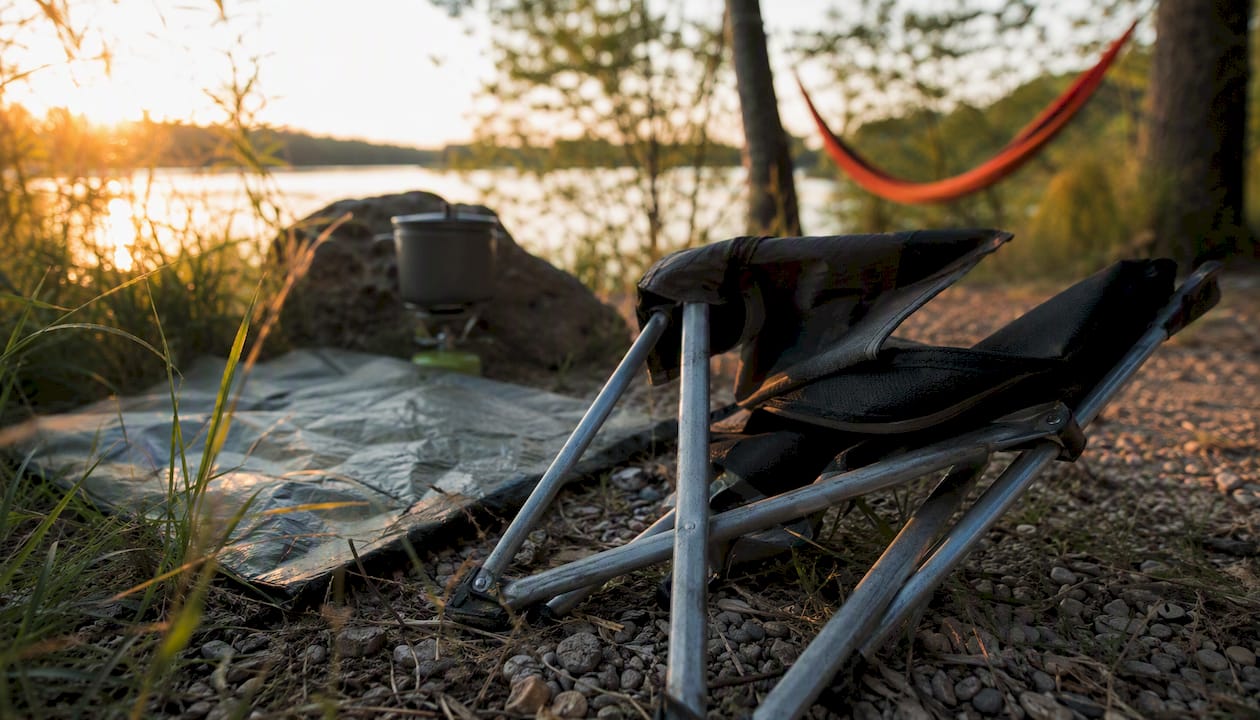
For backpacking, grab a chair with an aluminum frame and ripstop nylon seat. For car camping, powder-coated steel paired with 600D polyester handles more abuse without denting your wallet. Beach and festival trips call for stainless hardware and PVC-backed fabric that shrugs off sand and salt. On a tight budget, engineered plastics with polyester seating deliver the best value without falling apart after one summer.
The reason these pairings work comes down to three forces pulling against each other: weight, durability, and weather resistance. A featherlight chair usually sacrifices stability, and a bombproof chair usually weighs more than you want on your back. Sitpack builds around this exact tension, and standards like ISO 811 for water resistance give you a real benchmark instead of marketing fluff. Here’s the breakdown, use case by use case.
Here’s something worth clearing up before you shop: when people search “types of wood for outdoor furniture,” most articles that show up are talking about teak patio sets and cedar Adirondack chairs bolted to a deck. That’s a different world. Portable, foldable camp chairs almost never use solid wood, because wood doesn’t fold, doesn’t compress into a stuff sack, and adds weight you don’t want on a trail. What you’re really comparing when you shop for a Sitpack-style chair are metals, composites, and technical fabrics engineered to do what wood physically can’t in a packable format.
That’s the terminology shift that matters here. Instead of oak versus teak, you’re weighing aluminum versus steel, and ripstop nylon versus 600D polyester. The logic is the same as choosing lumber, though. You’re still balancing weight, weather resistance, and how the material ages over years of use outdoors. Think of aluminum as the “cedar” of camp chairs: light, naturally resistant to the elements, a little pricier. Steel plays the role of a dense hardwood like ipe: heavy, tough, and nearly indestructible if you don’t mind carrying the extra pounds.
Weight and pack size tell only part of the story. A chair that folds small but wobbles under 200 pounds of dynamic load isn’t doing its job, no matter how good it looks in a product photo.
| Material | Weight range | Pack size | Durability | Weather resistance | Comfort | Maintenance | Cost |
|---|---|---|---|---|---|---|---|
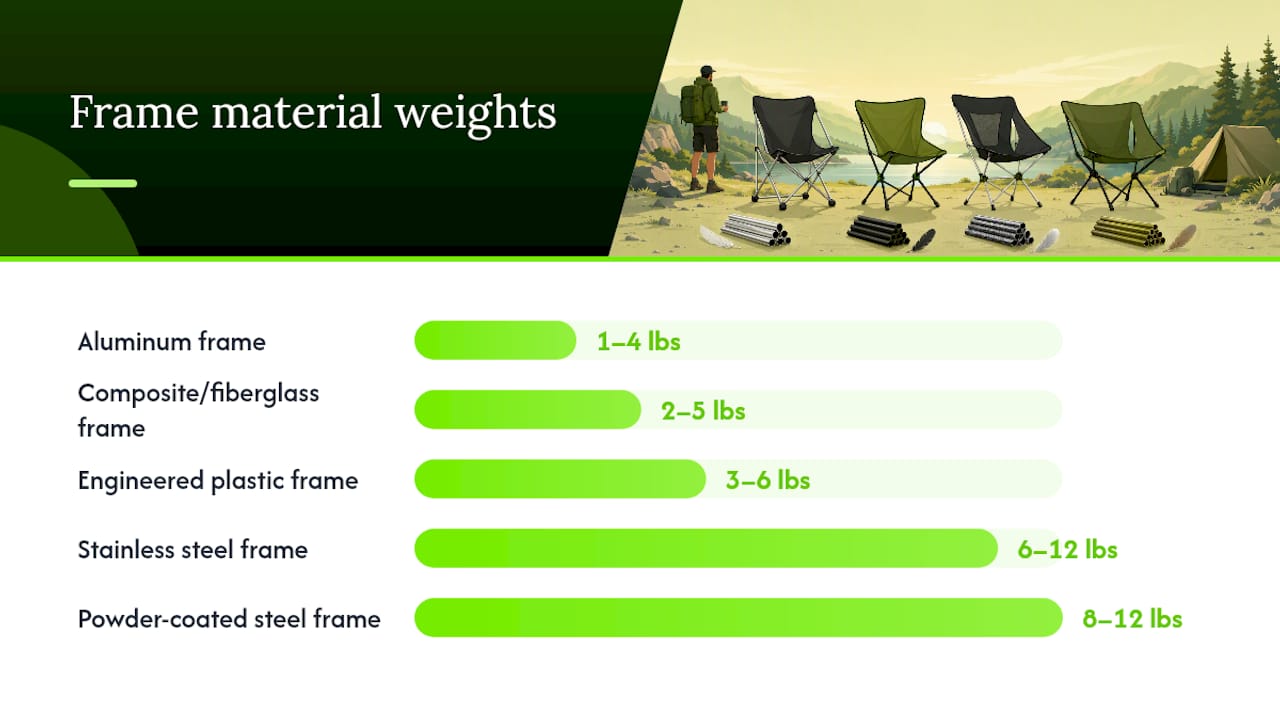
| Aluminum frame | 1–4 lbs | Very compact | High, flexes without cracking | Excellent, self-forming oxide layer | Neutral | Minimal | $$$ |
| Powder-coated steel frame | 8–12 lbs | Bulky | Very high, resists bending | Good until coating chips | Neutral | Moderate, watch for rust | $ |
| Stainless steel frame | 6–12 lbs | Bulky | Very high | Excellent, corrosion-proof | Neutral | Minimal | $$$ |
| Composite/fiberglass frame | 2–5 lbs | Compact | Moderate, can crack under impact | Good | Neutral | Low | $$ |
| Engineered plastic frame | 3–6 lbs | Compact | Moderate, weak in cold | Good | Neutral | Low | $ |
| Ripstop nylon seat | Light | Compresses well | Good, tears resist spreading | Fair, needs DWR refresh | Breathable | Wash and air dry | $$ |
| 600D polyester seat | Moderate | Standard | High, UV-resistant | Very good | Moderate | Wipe down | $ |
| Mesh/Textilene seat | Light | Compresses well | Moderate | Good, dries instantly | Excellent | Rinse only | $$ |
| Canvas/hybrid seat | Heavier | Bulkier | High | Fair, slow to dry | Good | Requires full dry before storage | $ |
Pro Tip: If two chairs list the same denier fabric, ask about the coating. A PU-coated 600D fabric runs around 180–230 gsm, while a PVC-backed 600D fabric can weigh nearly double at 350–550 gsm. Same number, very different chair.
Pro Tip: Aluminum costs more upfront, but its natural oxide layer resists corrosion without any coating, which makes it the lower-maintenance long-term buy for coastal campers.
Aluminum alloys, usually 6061 or 7075, give you the best strength-to-weight ratio on the market. Ultralight aluminum-frame chairs are notably lighter, which is why nearly every serious backpacking chair uses this metal. The trade-off is a slightly less rigid feel on soft sand or uneven ground, since thinner tubing flexes more than steel.
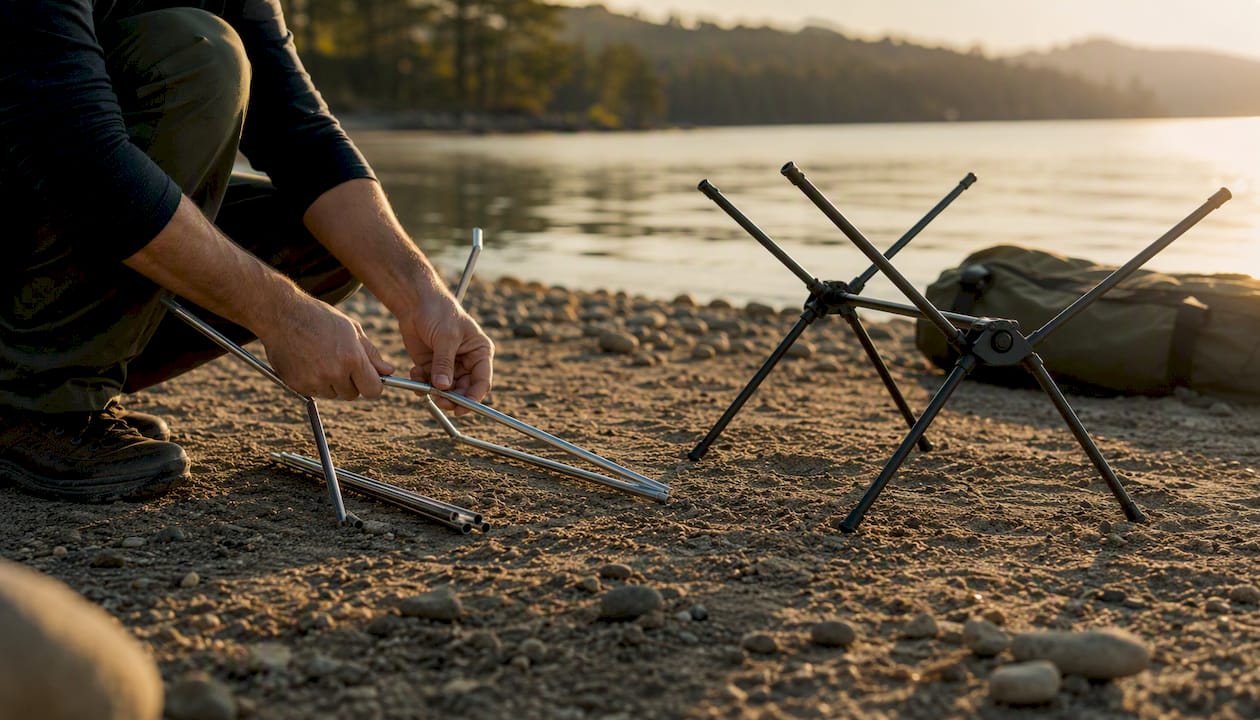
Powder-coated steel sits at the other end. Typical steel-frame chairs weigh 8 to 12 pounds, and that heft buys you rock-solid stability for car camping, tailgating, or backyard use where you’re not carrying the chair far. The coating protects against rust until it chips, at which point moisture can creep in.
Stainless steel splits the difference. It’s still heavy, similar to powder-coated steel, but it resists corrosion inherently rather than relying on a surface treatment. That makes it a smarter pick for anyone who camps near saltwater regularly.
Fiberglass and composite frames show up in mid-range chairs looking to shave weight without aluminum’s price tag. They flex well but can crack under a sharp impact, like a hard drop onto rock. Engineered plastics fill the budget tier. They’re light and cheap, but stiffen and become brittle in cold weather, so they’re a poor match for shoulder-season or high-altitude trips.
Ripstop nylon in the 150D to 300D range dominates ultralight chairs because it’s light and resists tears from spreading even when punctured. Standard 600D polyester is the industry workhorse, striking a balance of durability, UV resistance, and quick drying that makes it the default choice for recreational camping. Mesh and Textilene trade some durability for breathability, ideal if you’re sitting in direct sun for hours at a festival. Canvas and canvas hybrids are tough as nails but slow to dry, which matters if you’re packing a damp chair into a bag the next morning.
Fabric density claims vary widely. Oxford fabric alone spans a 210D to 1680D range depending on the coating and intended use, so denier by itself tells you less than you’d think.
Pro Tip: Before you buy, check the hubs where the frame legs meet the seat. Metal or reinforced nylon hubs hold up far longer than brittle polypropylene, which is the single most common failure point on cheap chairs.
Prioritize weight only after you’ve confirmed stability. A chair that’s ounces lighter but tips on uneven ground isn’t a good trade. The dynamic rating, how a chair handles repeated stress and movement, matters more than the static max-weight number printed on the box.
Pro Tip: Ask the seller directly what alloy the frame uses. If they can’t answer 6061, 7075, or a stainless grade, that’s a sign the listing is light on real engineering detail.
Compare total chair weight, folded length, packed volume, and carry-bag weight together, not in isolation. A 3-pound chair with a long folded pole can be more annoying to strap to a pack than a 4-pound chair that compresses into a tight cylinder, according to packability testing guidance from outdoor gear reviewers.
Pro Tip: In the store, fold the chair yourself and sling it over one shoulder for a minute. Advertised folded length rarely captures how awkward a long, thin pack shape feels on a real trail.
Pro Tip: If you camp near the ocean, aluminum’s natural corrosion resistance makes it a lower-maintenance choice long term than powder-coated steel, which needs regular coating checks.
Chasing the lowest weight number without checking stability is the most common misstep. A chair that’s 2 pounds lighter but rocks on uneven ground isn’t actually the better buy for most trips.
Assuming higher denier always wins is another trap. A 1200D fabric with a thin, low-quality coating can perform worse in real rain than a well-coated 300D fabric. The coating and gsm weight matter as much as the raw denier number.
Trusting “weatherproof” marketing language without specs is the third pitfall. For beach or coastal use, basic powder-coated steel without a stated corrosion-resistant finish is a real risk, since sand and salt can breach the coating faster than inland use would.
Sitpack designs around the same trade-offs covered in this guide, weighing aluminum’s strength-to-weight advantage against steel’s brute stability, and choosing fabrics based on coating quality rather than denier alone. Every Sitpack chair ships with a lifetime warranty on the frame and a 45-day satisfaction guarantee, backing the claim that these material choices hold up outside a showroom.
Most chair failures don’t start with the fabric tearing. They start with a plastic hub cracking or a hinge that was never rated for repeated folding in the first place. That’s the detail spec sheets leave out, and it’s the detail that determines whether a chair lasts one season or ten.
Sitpack’s own breakdown of durable outdoor seating materials goes deeper into how frame alloys and fabric coatings interact under real outdoor stress, and its list of durable seating options shows how these principles play out across different chair designs.
Aluminum production is energy-intensive to smelt initially, but the metal is highly recyclable and a well-made frame lasts many years, spreading that environmental cost over a long lifespan. Steel shares a similar profile: heavier upfront energy investment, offset by a frame that rarely needs replacing if the coating is maintained.
Synthetic fabrics carry a different footprint. Polyester and nylon are petroleum-based, though recycled polyester options are increasingly common in outdoor gear as manufacturers respond to demand for lower-impact materials. Durability itself is a form of sustainability here: a 600D polyester seat that lasts eight seasons has a smaller lifetime footprint than a cheaper fabric replaced every year. Sitpack’s material durability content touches on how build quality and longevity connect directly to the total environmental cost of a chair over its life.
Honestly, it mostly doesn’t, and that’s worth saying plainly. Solid wood species like teak or cedar show up in stationary patio furniture, not folding camp chairs, because wood doesn’t flex or compress the way aluminum tubing or nylon webbing does. A small number of hybrid or heritage-style folding stools use light woods like ash or bamboo for accent pieces, but these are the exception, not the rule, and they trade packability for aesthetic appeal.
If you do see a “wood-frame” folding chair, treat it as a backyard or patio product rather than a trail companion. It’ll be heavier, bulkier when folded, and more sensitive to moisture swelling than any metal-frame alternative in this guide.
Even without wood in the equation, the manufacturing details that separate a quality chair from a flimsy one are worth knowing. Look for anodized aluminum, a treatment that thickens the metal’s natural oxide layer for extra scratch and corrosion resistance beyond what raw aluminum offers on its own. On steel frames, a double-dip powder coat process resists chipping far better than a single thin layer, particularly at stress points like folding joints.
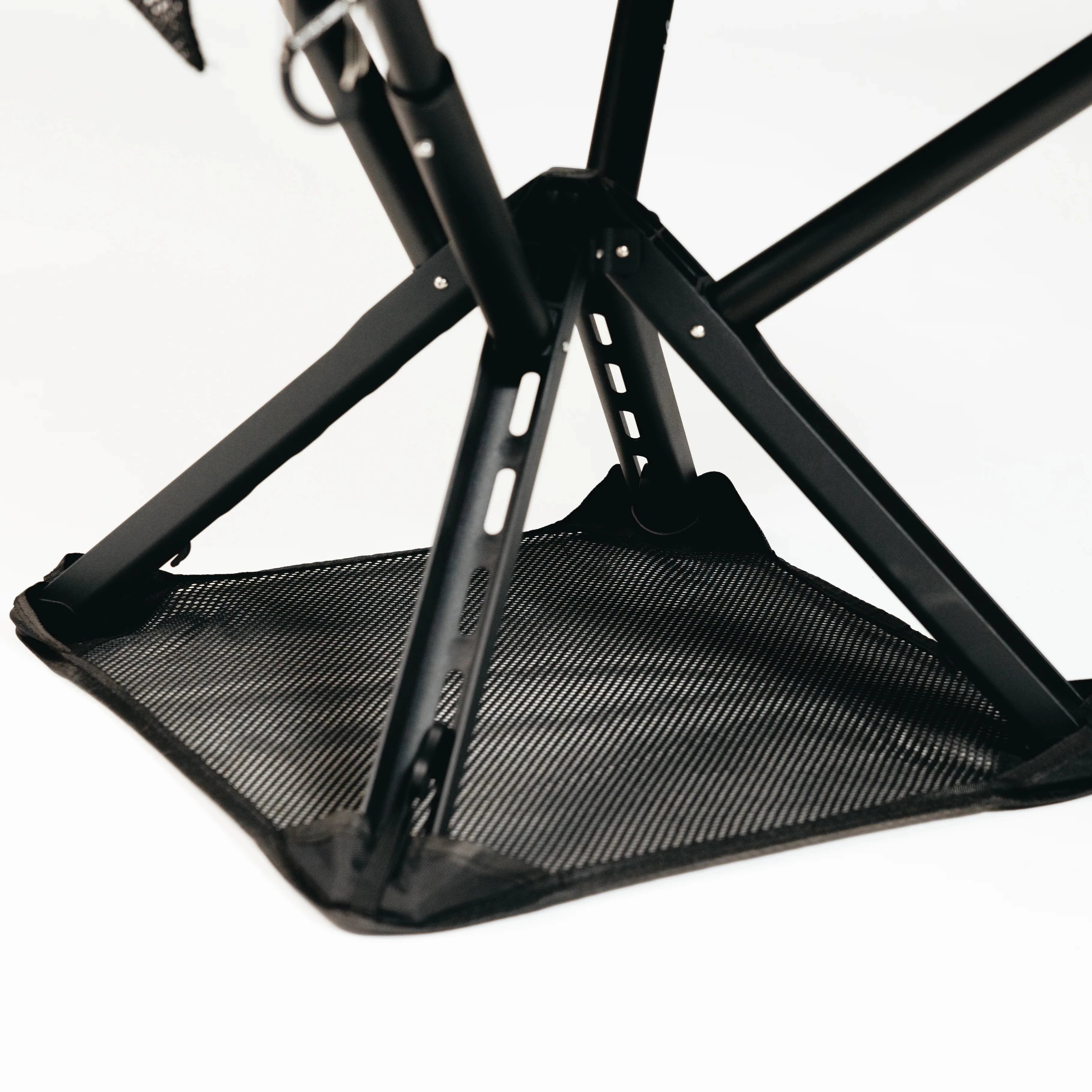
Injection-molded hubs reinforced with fiberglass or nylon composite outperform plain polypropylene by a wide margin under repeated folding stress. If a listing specifies the hub material by name rather than just calling it “durable plastic,” that’s usually a sign the manufacturer tested it under real load.
Powder coating is the standard finish for steel frames. It resists scratches well but chips with hard impacts, and once bare metal is exposed, rust follows if you don’t touch it up quickly with a matching coating pen.
Anodizing serves the same protective role for aluminum, adding scratch resistance without adding meaningful weight. It rarely needs maintenance beyond a rinse after coastal use.
For fabrics, DWR (durable water repellent) finishes and PU or PVC coatings function like a finish layer on wood would, sealing the material against moisture. DWR wears down with UV exposure and abrasion over time, but you can restore it with a spray-on reapplication once you notice water soaking in instead of beading on the surface. PVC-backed fabrics need less frequent attention but add the weight penalty covered earlier in this guide.
Most buying guides treat weight, durability, and weather resistance as three separate boxes to check. They’re not. They’re one continuous trade-off, and the honest answer is that no material wins all three at once. Aluminum wins weight and weather resistance but costs more. Steel wins durability and price but punishes your shoulders. Fabric coatings buy you water resistance at the direct cost of pack weight.
Where I think most shoppers go wrong is treating denier as a shortcut for quality. It isn’t. A 1200D fabric with a cheap coating will underperform a well-coated 300D fabric in actual rain, and most product listings don’t give you enough information to tell the difference. Ask about the coating type and gsm weight before you trust the denier number alone.
The other overlooked factor is hardware. People obsess over frame alloy and fabric spec sheets, then ignore the plastic hub holding the whole thing together. That’s backwards. A chair with a mediocre fabric but bombproof metal hubs will outlast a chair with premium fabric and brittle plastic joints, because joints fail first in the field, not fabric.
If you take one thing from this guide, prioritize hardware quality and honest weather-resistance specs over chasing the lightest possible number on the weight sticker. That’s where actual field failures happen, and it’s the detail most shoppers never think to ask about until it’s too late.
Sitpack builds its chairs around the exact aluminum-frame, technical-fabric combination this guide recommends for anyone who wants a chair that folds small without falling apart after a season of real use. Every model comes backed by a lifetime warranty on the frame and a 45-day satisfaction guarantee, so you’re not gambling on a listing with vague specs.
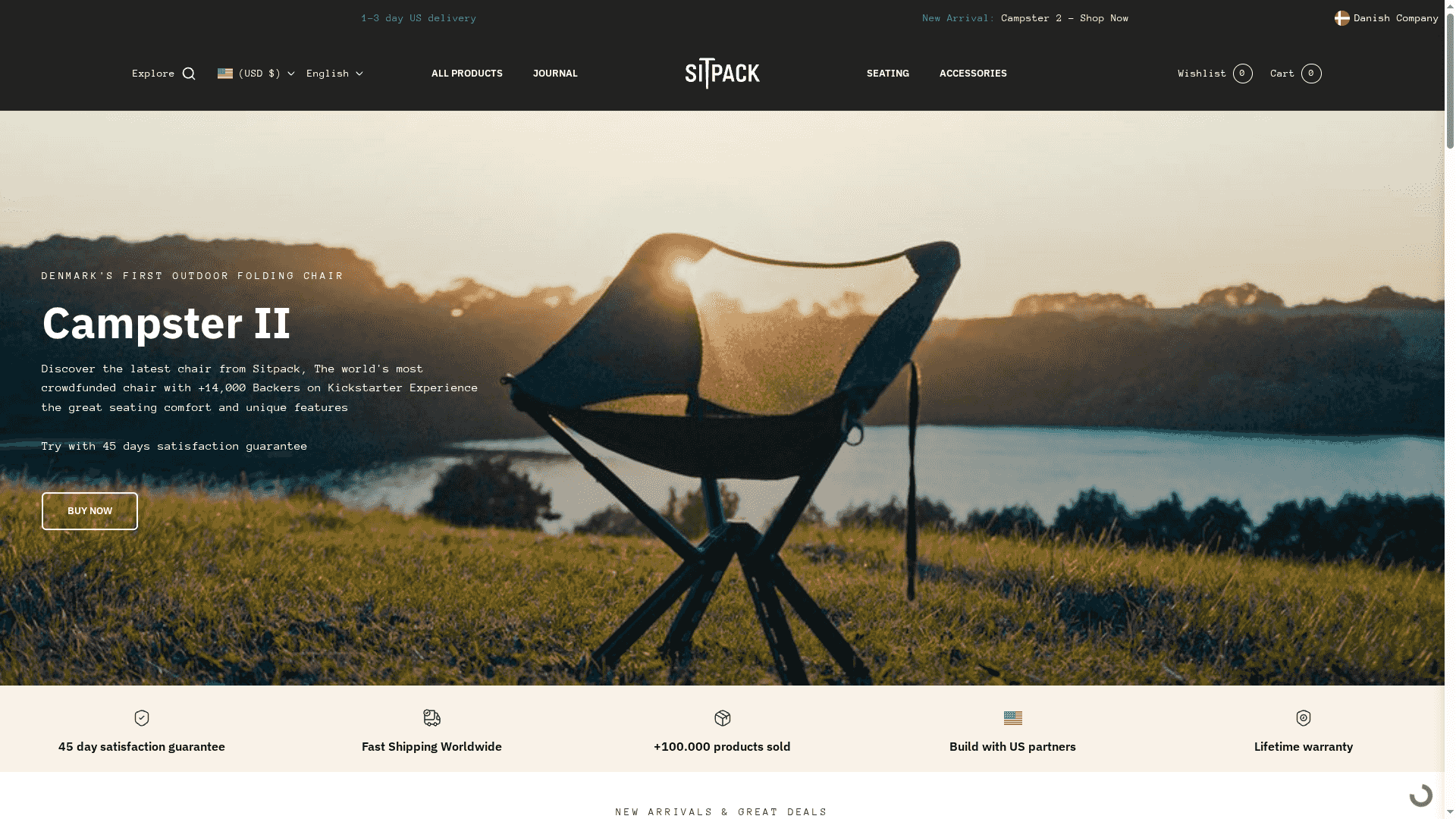
This is a promotional recommendation, and worth being upfront about: Sitpack is the brand behind this guide. If the trade-offs above sound like what you’re after, aluminum frames paired with well-coated fabric, backed by a warranty instead of marketing language alone, check out the Sitpack chair lineup to compare current models and find the fit for your next trip.
Choosing the right camp chair material comes down to matching frame and fabric to your specific use case rather than chasing the lowest weight or highest denier number alone.
| Point | Details |
|---|---|
| Match material to use case | Aluminum and ripstop nylon for backpacking, steel and 600D polyester for car camping. |
| Check the coating, not just denier | PU coatings stay light; PVC-backed fabric adds water resistance and weight. |
| Confirm dynamic load rating | Ask sellers directly if static max weight isn’t backed by a movement or stress rating. |
| Inspect hubs and hardware | Metal or reinforced nylon hubs outlast brittle polypropylene under repeated folding. |
| Consider Sitpack for a tested option | Sitpack pairs aluminum frames with durable fabric and backs it with a lifetime frame warranty. |