Vogn
0
Tilmeld dig og få 10% i rabat på din ordre
Forventet levering
1-3 dage
Du vil måske også kunne lide




Dansk Firma

TL;DR:
- Smart seating uses embedded sensors and actuators to actively monitor and improve posture, comfort, and health. The technology is widely applied across office, vehicle, venue, and medical settings, offering real-time feedback and automatic adjustments. Choosing between connected and adaptive systems depends on interoperability, calibration, and privacy considerations for effective long-term use.
Most people hear “smart seating” and picture a fancy chair with a heated cushion. That’s a bit like calling a smartphone a fancy phone book. What is smart seating, really? It’s a category of seating technology that uses embedded sensors, microcontrollers, and actuators to monitor your body, respond to your behavior, and actively improve your comfort and health. The global smart seating market was valued at $1,367.2 million in 2025 and is projected to nearly double by 2033. That kind of growth doesn’t happen for a heated cushion. It happens when technology genuinely solves problems people didn’t even know they had.
| Point | Details |
|---|---|
| Smart seating goes beyond comfort | It integrates sensors, microcontrollers, and actuators to actively monitor posture and adjust support in real time. |
| Ergonomic benefits are measurable | Features like posture correction and pressure management directly reduce sitting-related health risks over time. |
| Applications span many settings | From office chairs to vehicle seats to medical wheelchairs, smart seating solves different problems in each context. |
| Connected vs. adaptive matters | Understanding whether a system collects data or actually adjusts itself is the most important buying decision you’ll make. |
| Calibration is non-negotiable | Proper setup and user profiling prevent false alerts and determine whether you’ll actually use the system long-term. |
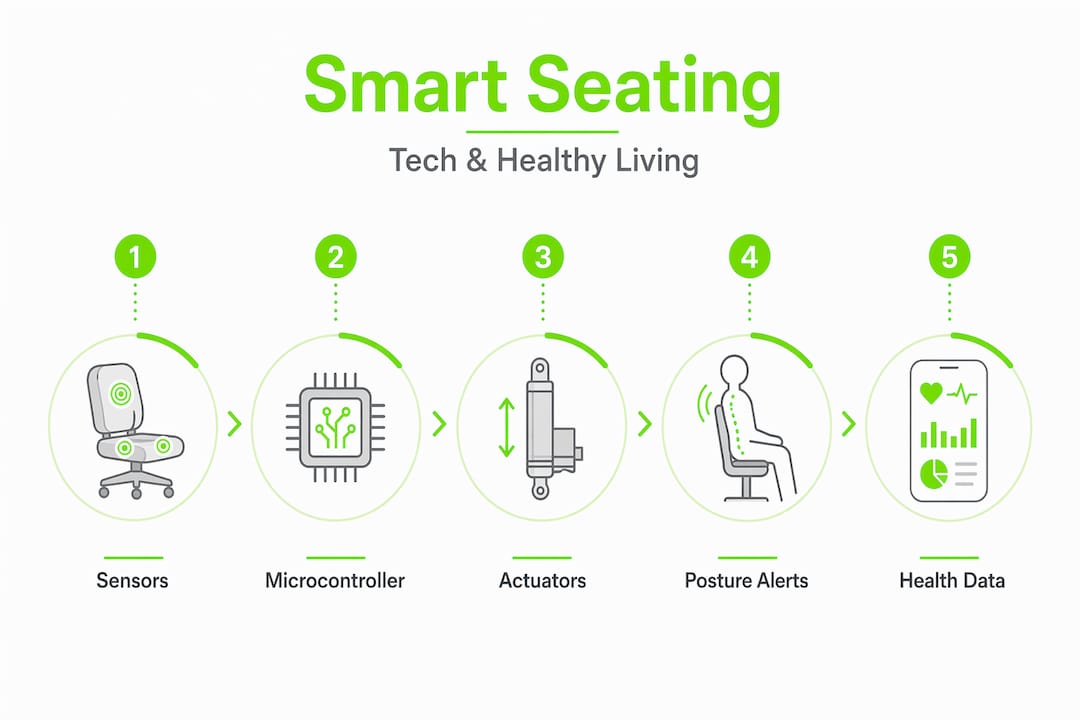
The industry term you’ll encounter most often is intelligent seating or adaptive seating technology, though “smart seating” has become the widely used shorthand. Whatever you call it, the architecture is consistent across products. Smart seating uses sensors, control units, and actuators to monitor posture, detect occupancy, and automatically adjust parameters like lumbar support and temperature. Think of it as a feedback loop: the seat reads your body, processes that data, and responds.
The sensor layer is where things get interesting. Here’s what you’ll typically find inside a smart seat:
The microcontroller sits at the center of all this, processing sensor data and triggering actuators. Actuators are the mechanical components that actually do something: motors that adjust lumbar support, air cells that redistribute pressure, or fans that regulate seat temperature. Some systems also connect to mobile apps via Bluetooth Low Energy, turning your phone into a posture dashboard.
Smart seating shows up in three main contexts: office chairs designed for knowledge workers, vehicle seats in cars and planes, and fixed venue seating in cinemas, stadiums, and auditoriums. Each context uses the same core technology to solve a different problem, which is why the category is growing so fast.
Here’s where smart seating separates itself from a good ergonomic chair with a lumbar knob. The difference is responsiveness. A traditional ergonomic chair is adjusted once and stays there. A smart chair keeps adjusting based on what your body is actually doing right now.
The key features that deliver real health benefits work in this sequence:
The cumulative health case is strong. Prolonged static sitting is linked to musculoskeletal disorders, poor circulation, and fatigue. Smart seating doesn’t replace movement, but it does make the time you spend sitting significantly less damaging. If you want to understand the foundational principles behind why this matters, the ergonomic seating basics are worth reading before you go shopping.
Pro Tip: If you’re evaluating a smart chair for office use, ask specifically whether posture alerts are customizable in sensitivity. A system that buzzes every five minutes will get ignored or turned off within a week. You want alerts that feel like a helpful nudge, not a nagging parent.
The same core technology plays very different roles depending on the setting. Here’s how smart seating systems perform across the four main environments where you’ll encounter them:
| Setting | Primary function | Key technology used |
|---|---|---|
| Office | Posture monitoring, sitting duration alerts | IMUs, Bluetooth app connectivity, vibration alerts |
| Automotive | Thermal comfort, lumbar auto-adjustment | Temperature sensors, motorized support, HVAC integration |
| Fixed venues (cinemas, stadiums) | Occupancy detection, personalized comfort | Capacitive sensors, app connectivity, adjustable firmness |
| Medical and mobility | Pressure injury prevention | High-density pressure mats, AI-driven air cell adjustment |
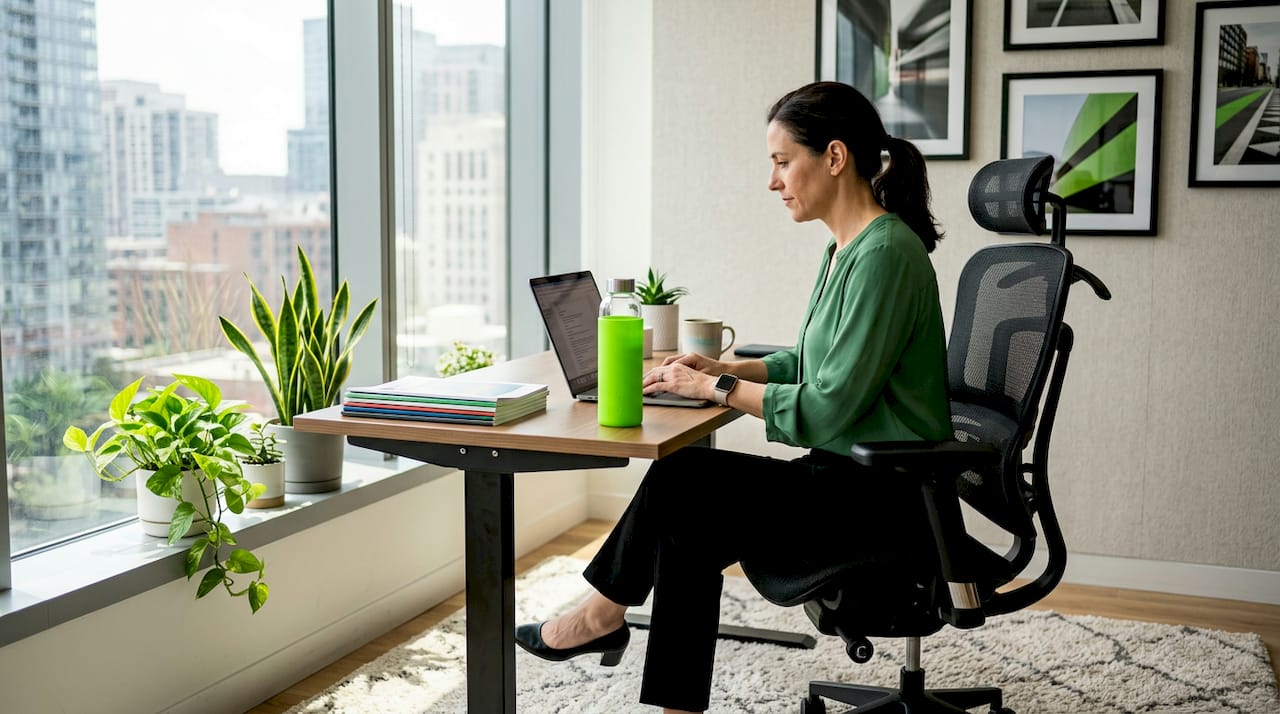
In workplaces, smart chairs connect to wellness platforms and, increasingly, building management systems. A facility manager can see which desks are actually being used, optimize cleaning schedules, and even identify hotspots where employees are sitting for dangerously long stretches.
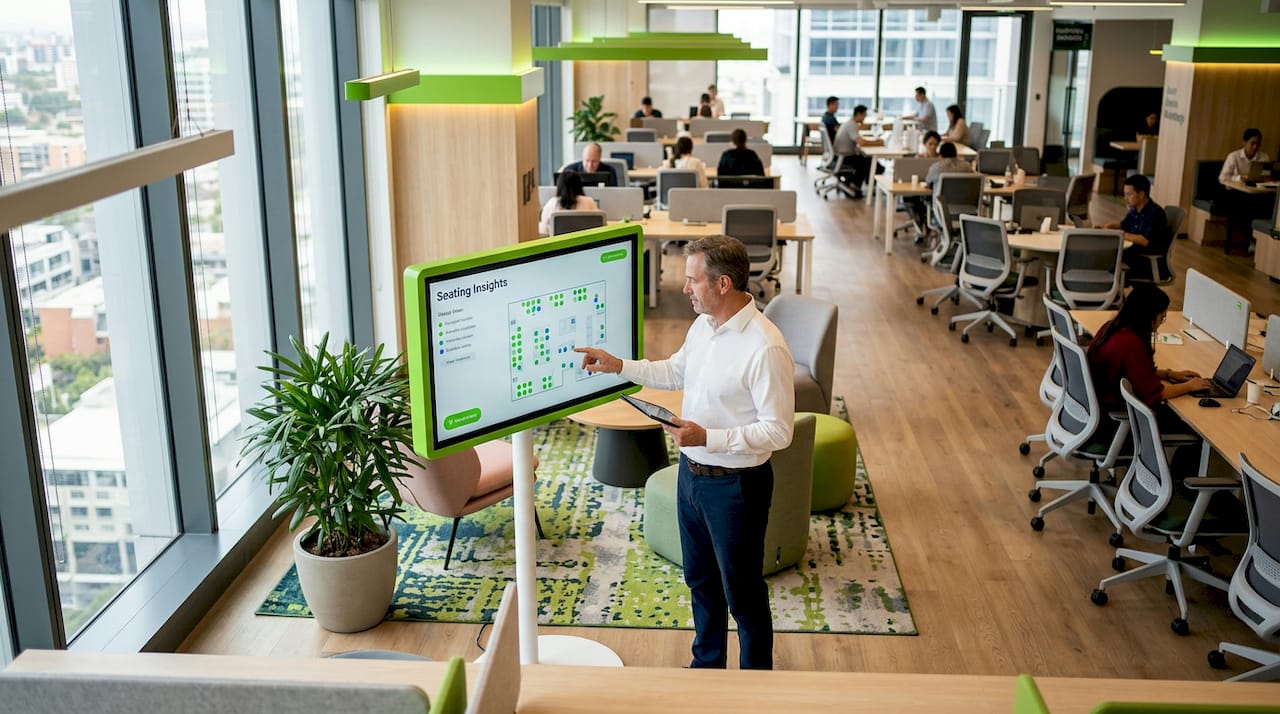
In fixed venues, smart seating integrates technology to enhance comfort and assist facility management through occupancy and usage data. A cinema can track which seats fill first, adjust pricing dynamically, and even warm seats before showtime based on booking data.
The medical application is the most compelling and the least discussed. For people with spinal cord injuries, prolonged pressure on the same tissue points causes pressure ulcers that can be life-threatening. The Kalogon smart wheelchair cushion, for example, uses machine learning to map each user’s unique pressure profile and adjust air cell inflation in real time. That’s not a comfort feature. That’s a medical intervention delivered through seating.
On the consumer side, smart seating is also showing up in portable and outdoor contexts. Understanding why mobile seating matters for comfort and convenience is relevant here too, as the principles of body support and adaptability travel with you beyond the office.
Before you spend money on a smart seating system, there’s one distinction that will save you a lot of regret. The difference between “connected” chairs and “adaptive” chairs is fundamental. A connected chair collects data and sends it to an app. An adaptive chair uses that data to physically change itself. Both are marketed as “smart.” Only one actually does the work for you.
Here’s what to evaluate before buying:
The smart seating market bifurcates into commoditized and premium segments, and the gap between them is wide. A basic connected chair might cost $300 and give you a sitting timer. A premium adaptive system with biometric profiling and IoT integration can run several thousand dollars. Neither is wrong. But buying a premium chair and never calibrating it properly is just an expensive mistake.
Pro Tip: Before committing to any smart seating system, ask the vendor for a trial period or demo. Sitting in a chair for 20 minutes in a showroom tells you almost nothing. You need at least a week of real use to know whether the feedback mechanisms actually change your behavior.
I’ve spent a lot of time thinking about what makes seating genuinely useful versus what makes it sound impressive in a product description. And here’s what I’ve come to believe: the most meaningful smart seating innovations aren’t happening in corner offices. They’re happening in medical and accessibility contexts, where the stakes are real.
Working through the research on pressure management systems for wheelchair users genuinely shifted my perspective. When a system maps pressure distribution 60 times per second and adjusts air cells independently to prevent tissue damage, that’s not a wellness gadget. That’s technology closing a gap that passive products never could. The lessons from that medical context, particularly around calibration, personalization, and data-driven adjustment, are slowly making their way into mainstream office and consumer seating.
What I find underappreciated is the non-intrusiveness question. The best smart seating I’ve encountered works quietly in the background. You notice the results (fewer aches, better focus, healthier habits) without feeling like you’re being managed by your furniture. The worst smart seating is a nagging machine that makes you want to throw it out the window by Thursday afternoon.
My honest take: if you’re exploring ergonomic urban seating or thinking about how to sit better in your daily life, smart seating is worth understanding even if you don’t buy a $2,000 chair. The principles, posture awareness, pressure management, thermal comfort, are ones you can apply with far simpler tools.
— Jonas
Smart seating principles don’t have to live behind a four-figure price tag. At Sitpack, the focus is on seating that genuinely responds to how you live and move, whether that’s a concert standing area, a mountain trail, or a packed festival ground.

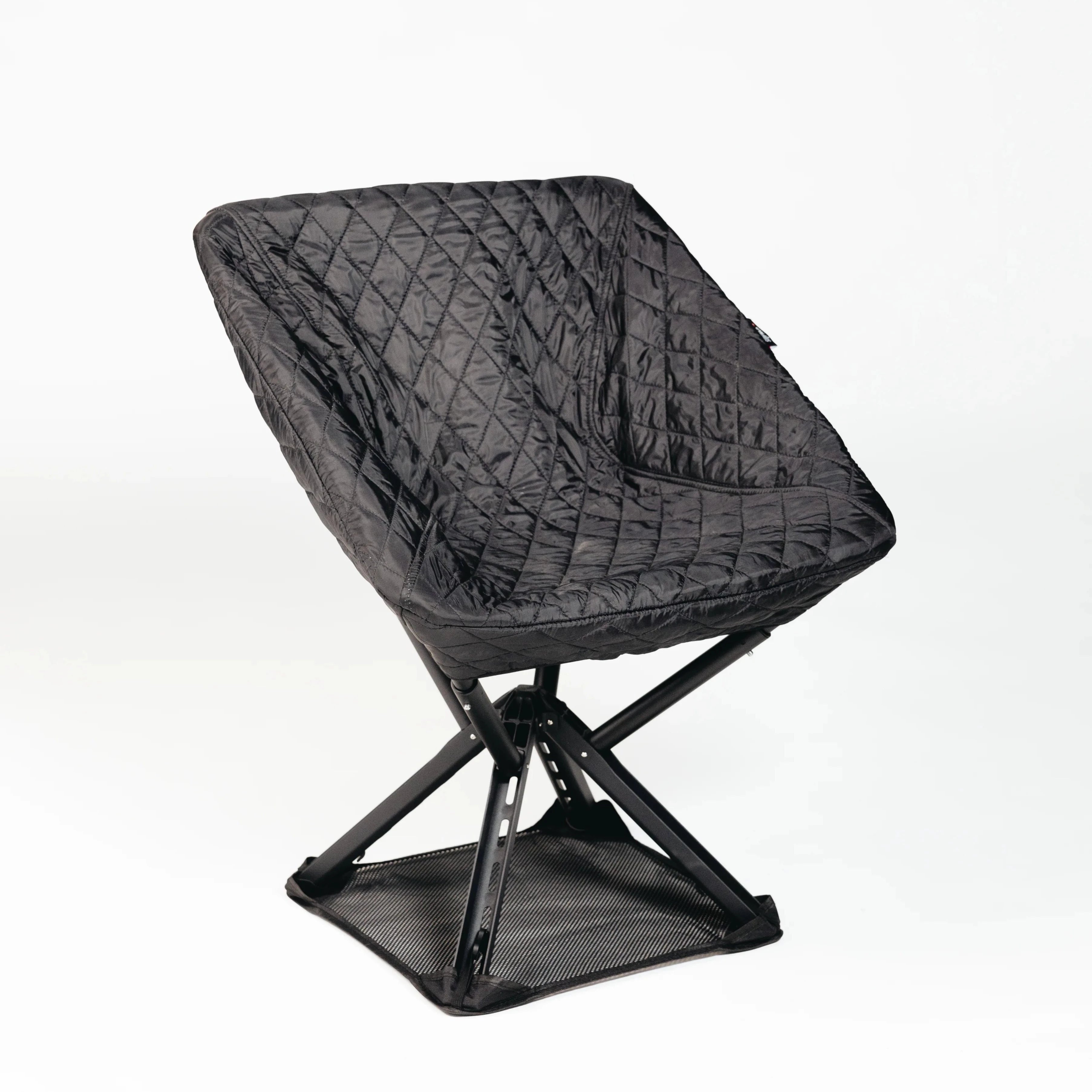
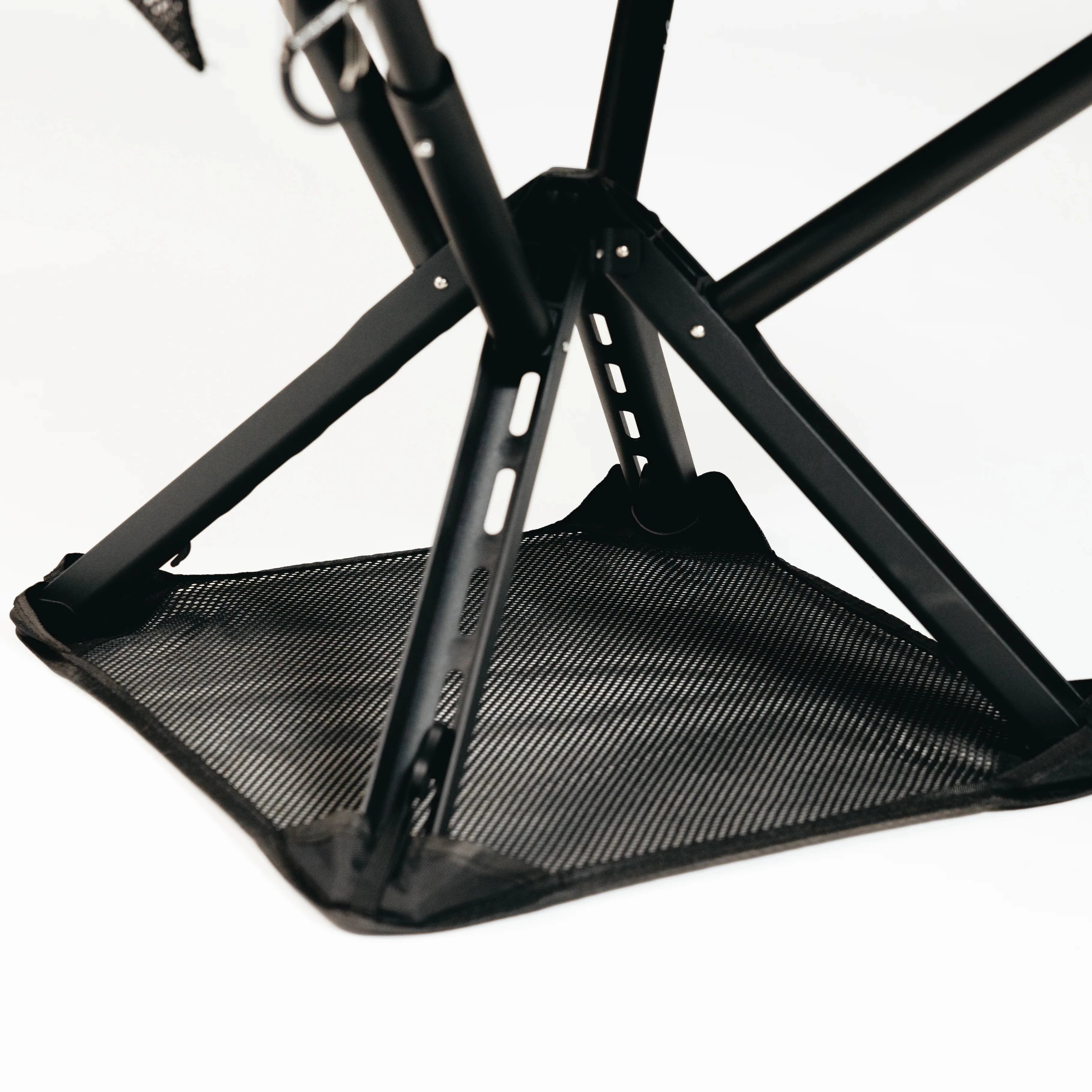
The Sitpack Campster II and Sitpack Zen are built around the idea that great seating is adaptive by design: lightweight, packable, and shaped to support your body wherever you actually are. No app required, no calibration headaches. Just sit down and feel the difference. With a 45-day satisfaction guarantee and fast worldwide delivery, trying smarter portable seating has never been lower risk. Browse the full range at Sitpack and find the seat that fits your life.
Smart seating is any seat that uses embedded sensors and technology to monitor your posture, detect your presence, or automatically adjust its settings for comfort and health. It goes well beyond a standard ergonomic chair by actively responding to your body in real time.
Smart seating works through a loop of sensors (pressure mats, IMUs, temperature sensors), a microcontroller that processes the data, and actuators that physically adjust the seat or send alerts to a connected app. The system continuously reads your body and responds accordingly.
The primary benefits include improved posture through real-time feedback, reduced pressure-related discomfort or injury, better thermal comfort, and long-term sitting habit data that supports proactive wellness. For medical users, pressure management systems can prevent serious tissue injuries.
A connected chair collects posture and occupancy data and sends it to an app for you to review. An adaptive chair goes further by using that data to physically adjust itself, changing lumbar support, redistributing pressure, or regulating temperature without you needing to do anything.
For most people, a well-calibrated smart chair with posture alerts and sitting duration reminders delivers real behavioral change over time. The key is proper setup. A smart chair that isn’t calibrated to your body is just an expensive chair with a Bluetooth chip.