Vogn
0
Tilmeld dig og få 10% i rabat på din ordre
Forventet levering
1-3 dage
Du vil måske også kunne lide




Dansk Firma


TL;DR:
- Eco-friendly seating relies on verified sustainable materials, durable design, and low-emission components. Certification standards like GREENGUARD Gold and FSC ensure genuine environmental claims. Longevity and repairability reduce environmental impact more than material choices alone.
Eco-friendly seating is defined by three core factors: the materials used in production, the product’s lifespan and repairability, and the emissions it releases indoors. Understanding what makes seating eco-friendly matters because your chair affects more than just your comfort. It shapes indoor air quality, drives resource consumption, and contributes to your organization’s environmental footprint over decades. Third-party certifications like GREENGUARD, FSC, ISO 14001, and the Global Recycled Standard (GRS) give you a reliable way to verify sustainability claims before you buy. Get these fundamentals right, and you’ve got a seat that’s genuinely good for you and the planet.
Sustainable seating materials fall into three broad categories: recycled content, renewable biomaterials, and responsibly sourced natural fibers. Each has real strengths and real tradeoffs. Knowing the difference stops you from falling for a “natural” label that doesn’t actually mean much.
Recycled materials are the most common starting point. Recycled PET fabrics reduce raw material demand significantly, but manufacturing energy and chemical use still matter. Not all recycled textiles carry equal environmental benefits, so always check whether the product holds a GRS (Global Recycled Standard) certificate to confirm the recycled content claim is verified.
Renewable biomaterials include bamboo, hemp, and cork. Bamboo grows back in three to five years, requires no pesticides, and produces a hard, durable frame material. Hemp fiber works well in upholstery blends and sequesters carbon during growth. Cork is harvested without cutting the tree, making it one of the most genuinely renewable options available. These materials shine when they replace virgin plastics or non-certified wood.
Responsibly sourced wood carries an FSC (Forest Stewardship Council) certificate, which confirms the timber came from a forest managed for biodiversity and worker welfare. Without FSC certification, “natural wood” is a marketing claim, not a sustainability guarantee.
Here’s a quick comparison of common seating materials by sustainability profile:
| Material | Key strength | Key concern |
|---|---|---|
| Recycled PET fabric | Reduces virgin plastic demand | Manufacturing energy and chemical use |
| FSC-certified wood | Verified responsible sourcing | Requires certification check |
| Bamboo | Fast-growing, pesticide-free | Processing chemicals vary |
| Cork | Harvested without cutting tree | Limited structural applications |
| Bio-based foam | Reduces petroleum dependency | Biodegradability claims vary |
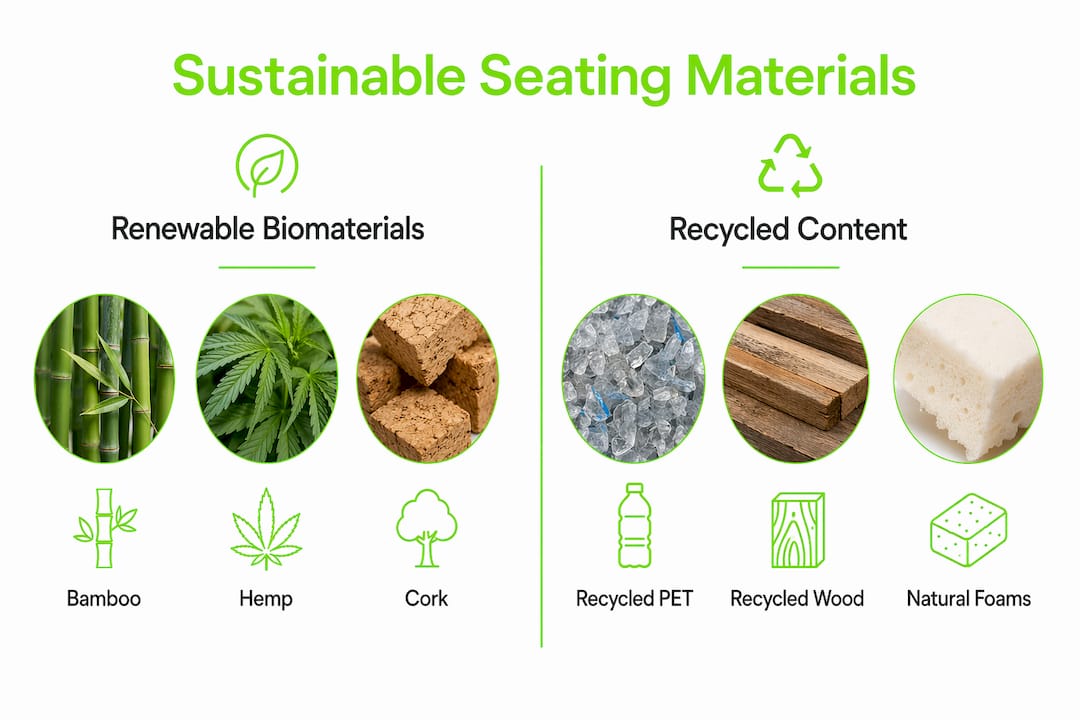
Natural foams made from soy or latex replace a portion of petroleum-based polyurethane, but “bio-based” doesn’t automatically mean biodegradable. Synthetic alternatives like high-density polyurethane can actually outlast natural foams, which matters when you’re thinking about sustainable furniture materials over a 20-year horizon.
Pro Tip: Ask manufacturers for a full material disclosure sheet before purchasing. If they can’t provide one, that’s a red flag worth taking seriously.
Durability is the single most underrated factor in sustainable furniture. A chair with a 10-to-50-year lifespan drastically reduces environmental impact compared to replacing a cheaper chair every three to five years. That’s not just about saving money. Every replacement chair represents new raw materials, new manufacturing energy, and new shipping emissions.
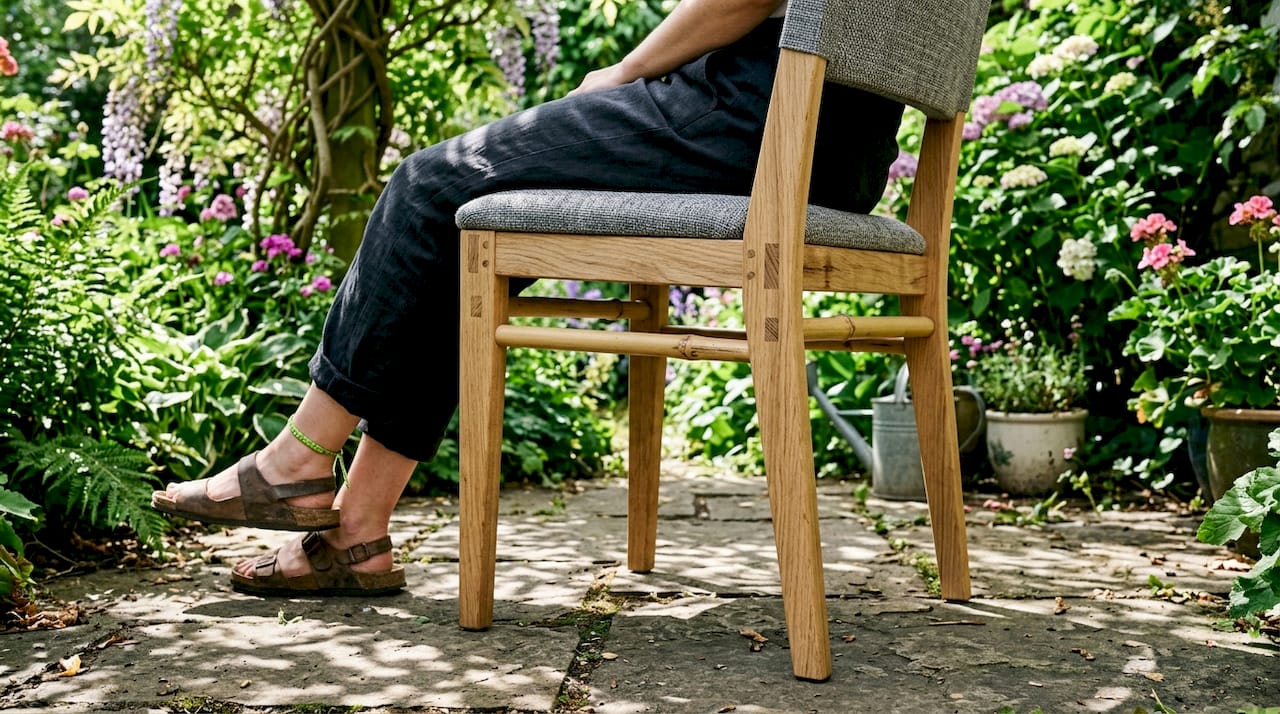
The math is blunt: a 50-year chair outperforms multiple short-lived “eco” chairs in total carbon footprint, even if the long-lasting chair uses slightly less sustainable materials. Embedded carbon from manufacturing is the biggest variable, and durability is what amortizes it.
Design for Disassembly (DfD) takes durability one step further. DfD means a product is built so its components can be separated, repaired, or recycled at end of life. Mechanical fasteners instead of glues are the key technical difference. Screws and bolts allow you to swap a worn cushion or a cracked leg without sending the whole chair to landfill.
Here’s how to evaluate a chair’s repairability before you buy:
Pro Tip: The most eco-friendly chair is often the one you already own. Before replacing any seating, check whether a repair, refinish, or reupholster job can extend its life by another decade.
The role of innovation in outdoor seating design increasingly centers on modular construction, where individual parts are swapped rather than entire products discarded. That shift is what separates genuinely sustainable seating from products that simply use a recycled label.
Indoor air quality is a direct health outcome of your seating choice. Most people don’t think about their chair as an air quality issue, but the materials in conventional seating off-gas volatile organic compounds (VOCs) for months or years after manufacture. VOCs come from adhesives, foam treatments, fabric coatings, and synthetic dyes.
Low-VOC certified finishes help prevent indoor air contamination linked to cognitive decline and sick building syndrome. That’s not a minor concern. Poor indoor air quality reduces concentration, increases headaches, and contributes to chronic fatigue in office environments.
The health and productivity case is concrete:
“Sustainability in seating isn’t just about what a chair is made of. It’s about what it releases into the air you breathe every day. A chair that off-gasses VOCs for two years isn’t a healthy choice, regardless of what material it’s made from.”
The benefits of ergonomic chairs compound when low-VOC materials are part of the design. You get postural support and cleaner air in the same product, which is the combination that actually moves the needle on workplace health outcomes.
Certifications are the only reliable way to separate genuine sustainability from marketing language. Without third-party verification, any brand can call its product “green” or “eco-conscious” without consequence. Third-party certifications like GREENGUARD, FSC, ISO 14001, and GRS are the standards that provide real transparency.
The certifications worth knowing:
| Certification | What it covers | Who issues it |
|---|---|---|
| GREENGUARD Gold | VOC and chemical emissions | UL Solutions |
| FSC | Responsible wood sourcing | Forest Stewardship Council |
| ISO 14001 | Environmental management systems | ISO |
| GRS | Recycled content verification | Textile Exchange |
| ISO 14006 | Eco-design integration | ISO |
Greenwashing is common in the furniture industry. A product described as “sustainably inspired” or “nature-forward” with no certification to back it up is a marketing claim, not a verified fact. Always ask for the certificate number, not just the logo.
Choosing genuinely sustainable seating requires looking beyond the product page. The purchase decision is only one part of the lifecycle. Here’s how to evaluate options with real rigor:
Pro Tip: For organizations buying in volume, build a sustainability scorecard with weighted criteria: material certification, emissions testing, repairability, and manufacturer take-back. Score each supplier before shortlisting. It takes an hour to build and saves months of second-guessing.
The benefits of versatile seating extend beyond comfort. Modular, adaptable designs serve multiple use cases over their lifespan, which means fewer total chairs purchased and a smaller cumulative footprint.
Eco-friendly seating requires verified materials, certified low emissions, and a design built for repair and long-term use, not just a recycled label on the hang tag.
| Point | Details |
|---|---|
| Material certification matters | Look for FSC, GRS, or GREENGUARD documentation, not just marketing language. |
| Durability beats material choice | A long-lasting chair reduces embedded carbon more than material selection alone. |
| Low-VOC emissions protect health | GREENGUARD Gold-certified seating links to 5%–12% productivity gains and fewer sick days. |
| Design for Disassembly enables circularity | Mechanical fasteners and labeled components allow repair and recycling at end of life. |
| Repair before replacing | The most sustainable chair is often the one already in use, extended through maintenance. |
I’ve spent a lot of time looking at seating from a sustainability angle, and the thing that consistently surprises people is how little the material label matters compared to how long a chair actually lasts. Everyone fixates on whether the fabric is recycled or the frame is bamboo. Those things matter, but they’re secondary to durability.
A chair that lasts 40 years and uses conventional steel is a better environmental choice than a chair made from recycled PET that gets tossed after five years. The carbon embedded in manufacturing is the dominant variable, and only longevity amortizes it. That’s the insight most buyers miss because it’s less visible than a certification badge.
The other thing I’d push back on is the assumption that “all-natural” automatically means healthier. Some natural materials off-gas just as aggressively as synthetic ones, depending on how they’re processed and finished. The only reliable signal is a verified emissions test, not the material category. GREENGUARD Gold is the standard I trust because it covers the full chemical profile, not just a handful of common VOCs.
Circular design is where the real future lies. Circularity moves furniture from a “take-make-waste” model to one where products are repaired, refurbished, and eventually recycled with minimal loss. The brands building toward that model are the ones worth paying attention to, because they’re designing products that age well instead of products that just look good on a spec sheet.
— Jonas
Sitpack builds portable seating around the principles that actually define sustainability: long service life, minimal material waste, and designs that hold up through real use rather than falling apart after a season.
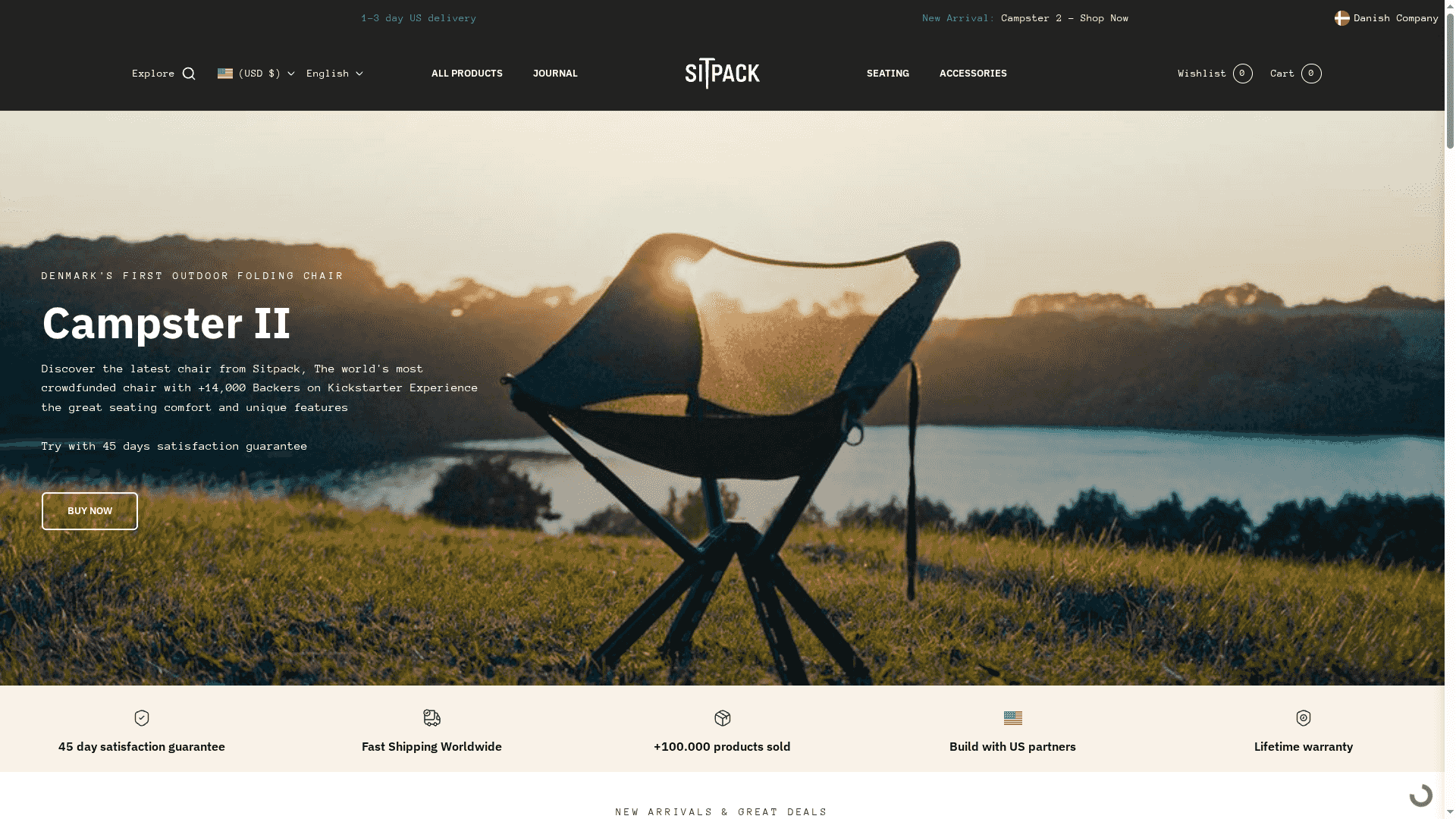
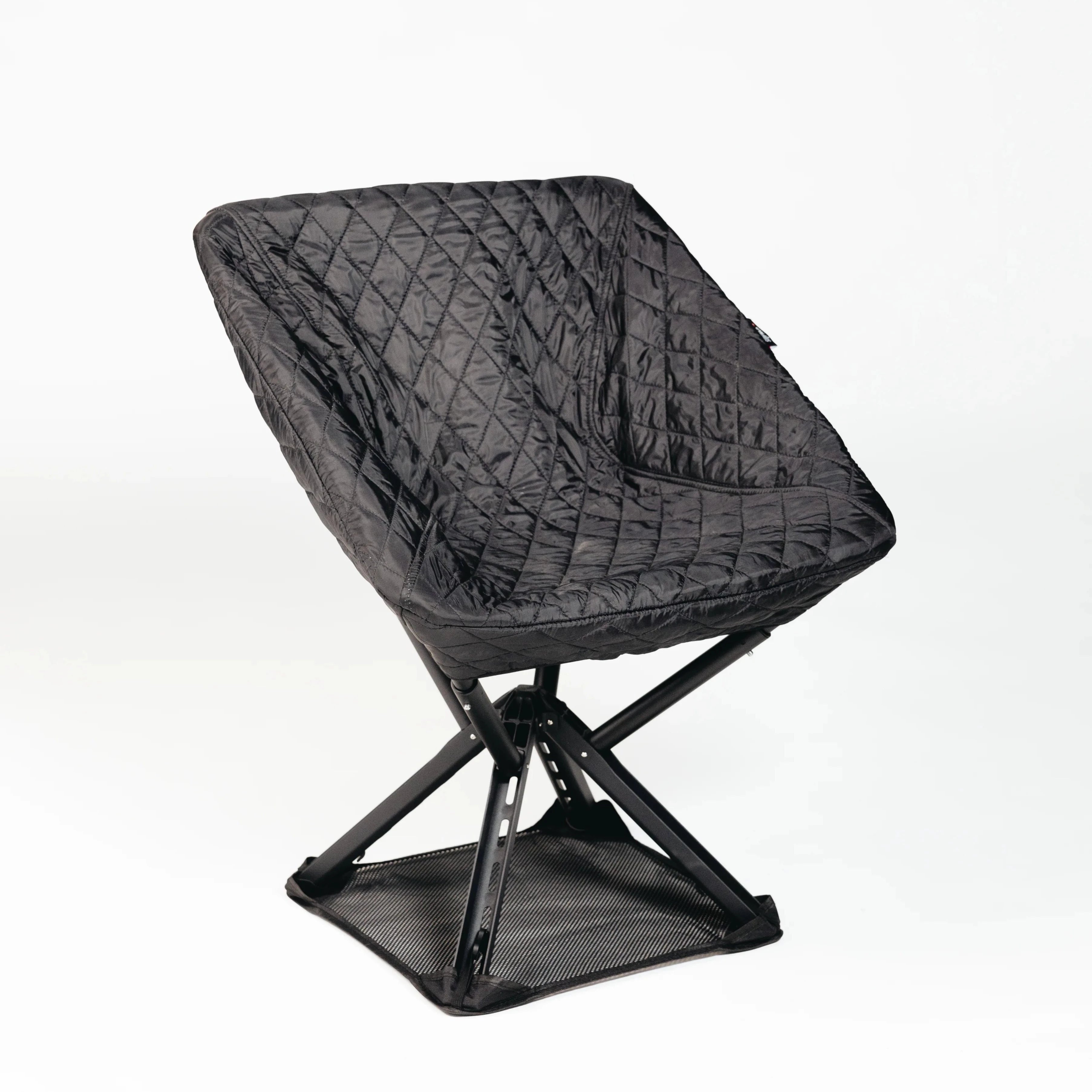
The Campster II and Sitpack Zen are built with durability as the starting point, not an afterthought. Replaceable components mean you repair rather than replace, which is exactly the circular thinking that reduces your long-term footprint. If you’re looking for portable seating options that combine genuine durability with a minimal environmental profile, Sitpack’s lineup is worth a close look. The 45-day satisfaction guarantee and lifetime warranty back up the durability claim with something concrete.
Eco-friendly seating combines responsibly sourced or recycled materials, low-VOC emissions verified by certifications like GREENGUARD Gold, and a durable design built for repair and disassembly rather than disposal.
Look for GREENGUARD Gold for emissions, FSC for wood sourcing, GRS for recycled content, and ISO 14001 or ISO 14006 for manufacturer-level environmental management and eco-design practices.
Yes. A chair with a 50-year lifespan outperforms multiple short-lived “eco” chairs in total carbon footprint because manufacturing emissions are the largest variable, and longevity is what spreads that cost over time.
VOCs (volatile organic compounds) are chemicals released by adhesives, foams, and fabric coatings in furniture. Prolonged exposure links to cognitive decline and sick building syndrome, which is why low-VOC certification directly affects health and productivity.
Request the actual certificate number for any claimed certification and verify it independently with the issuing body. Vague terms like “sustainably inspired” or “nature-forward” with no documentation are marketing claims, not verified sustainability standards.