Vogn
0
Tilmeld dig og få 10% i rabat på din ordre
Forventet levering
1-3 dage
Du vil måske også kunne lide


Dansk Firma

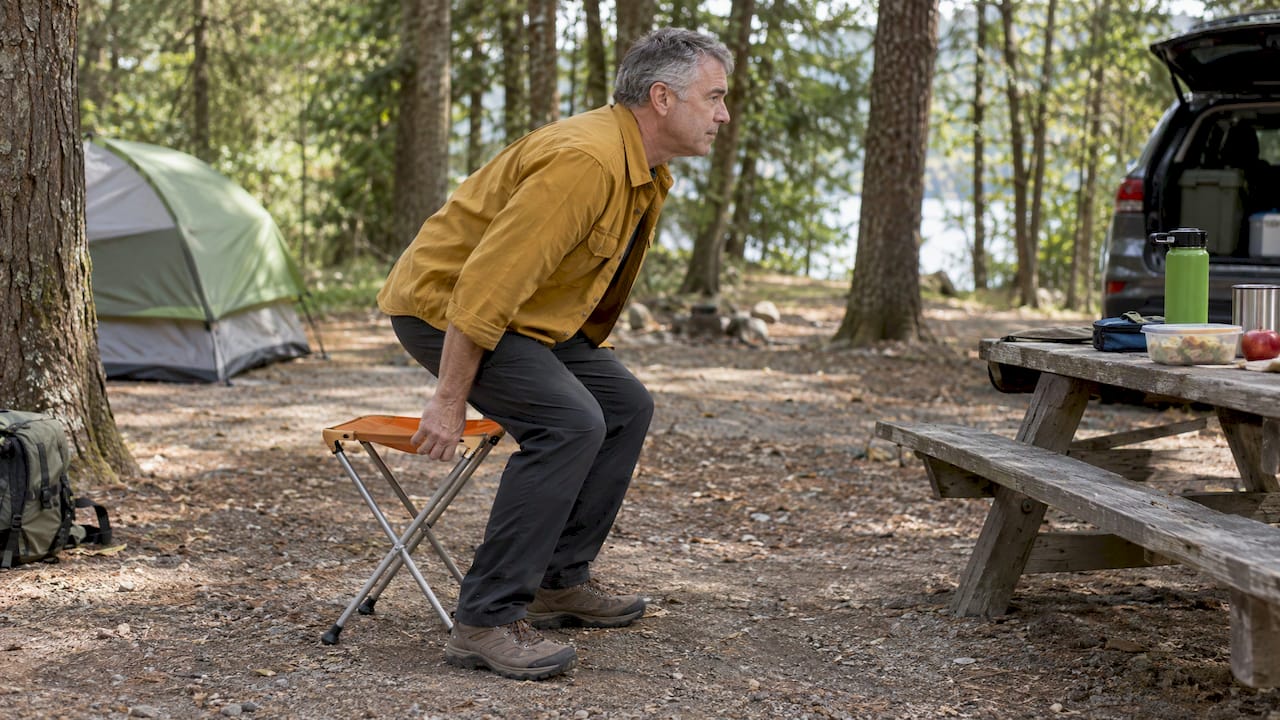
Sit-to-stand support is anything that helps you lower yourself into a seat and rise from it safely: a stable surface to push from, a steady seat, a helping hand from another person, or a walking aid once you are upright. It is not a single product. It is the combination of a good seat, a good technique and the right amount of help. If you spend your days on trails, trains and park benches, the seat you pick is part of that support, and our portable stools and chairs at Sitpack are made with that in mind: light to carry and simple to sit on.
People also use the phrase for the physical-therapy exercise, and for the standing-desk world, which is a different thing entirely. This guide covers the first meaning in plain terms, then shows what it means when your seat lives in a backpack.
Sit-to-stand is the transition from sitting to upright standing. According to a 2024 study in BMC Musculoskeletal Disorders, it moves your body’s center of mass from a stable seated base to a much less stable upright position. That is why it takes lower-limb strength, balance, mobility, coordination and postural control all at once.
You do it dozens of times a day without noticing: getting out of the car, off the couch, up from a camp stool after a long lunch break. Rehabilitation texts treat it as a foundational transfer skill, because standing is what lets you walk and engage with the world around you. People who cannot bear weight through their legs may need a different kind of transfer altogether, such as a sit-pivot transfer, which is a clinician’s territory.
The word covers a lot of ground. In the 2024 cerebral palsy study, “supported” STS meant moving independently while using something external, like a wall or a piece of furniture. Hands-on help from another person was classed separately, as dependent. The same study followed 4,250 children: 60% rose without support, 14% used external support such as walls or furniture, and 26% were unable to or needed another person’s help. That split shows how common and how varied support is, even in a single population.
In everyday life, support comes in a handful of forms:
| Type of support | What it does | Good to know |
|---|---|---|
| Armrests or the seat edge | Gives your hands something stable to push from | Guidance from Johns Hopkins says to push from the chair arms or seat when needed, with the longer-term goal of using your hands less |
| Wall or sturdy furniture | Adds a point of contact in front or beside you | Must be stable and non-slip |
| Carer coaching or physical help | Cues the movement and steadies you | Needs proper technique to protect both people |
| Handling belts, chair raisers and similar equipment | Reduce the effort or change the geometry | New Zealand guidance advises getting expert advice on equipment |
| Walking aids (stick, frame) | Support balance once you are standing | Selected by balance and weight-bearing needs, and reassessed by a physiotherapist when needs change |
The last row has a catch worth knowing. A walker is not a push-off surface. An NHS transfer leaflet says to push up from the stable chair or toilet surface first, and to place your hands on the walker only after you are standing. It also says the floor should be dry and the aids checked for wear.
The seat itself is a variable too. The Cochrane review of STS after stroke discusses changing chair height, chair design or starting posture, and using armrests as ways to make rising easier. In other words, the seat is part of the support, not just the place you land.

Several health sources describe nearly the same sequence. Here it is as steps, with the point where each one tends to go wrong.
If you are practicing it as an exercise, the Kingston and Richmond programme suggests aiming for 10 repetitions. Johns Hopkins gives 10 repetitions twice daily as its example for people who can already stand without another person’s support.
This is where backs and shoulders get hurt. The New Zealand caregiver guidance warns against hooking someone under the armpits, pulling them toward you, letting them hold your neck or pulling on their arm. Any of these can injure or destabilize both of you. Coach the movement, keep the person’s weight over their feet, and get expert advice on equipment if you are doing this regularly.
Most STS guidance assumes a solid indoor chair. Outdoors, you give up some of that: the ground is uneven, the seat may be low, and there may be no arms at all. That does not make a portable seat a poor choice. It means a few things are worth thinking through, using the same principles as above:
If you want to think through the comfort and support side of carrying a seat with you, our piece on ergonomic portability goes through what to look for, and our portable seating checklist covers lightweight, comfort and eco picks.
Anyone who finds rising from a seat tiring or unsteady can benefit from thinking about support, and the research mostly concerns people with specific conditions:
If none of these describe you, the practical takeaway is simpler: the lean-forward, feet-back technique makes getting up from a low camp seat easier at any age, and a stable seat helps.
The search term overlaps with office ergonomics, so a quick distinction. UCLA Health describes a sit-stand workstation as one that can be adjusted for sitting and moved up for standing. It changes your working position through the day. It does not give you hands-on, exercise or transfer assistance of the kind used in rehabilitation. UCLA Health also says standing at a workstation is not a substitute for exercise, and recommends balancing sitting and standing with movement and recovery.
In short: a sit-stand desk changes your workspace, while sit-to-stand support changes how you get from seat to feet.
This part is about safe use, and it is worth reading before you practice anything.
Nothing here replaces a clinician’s judgment about your own body. If you are unsure whether you can bear weight or rise safely, a doctor or physical therapist is the right person to see.
Our take on seats and standing up
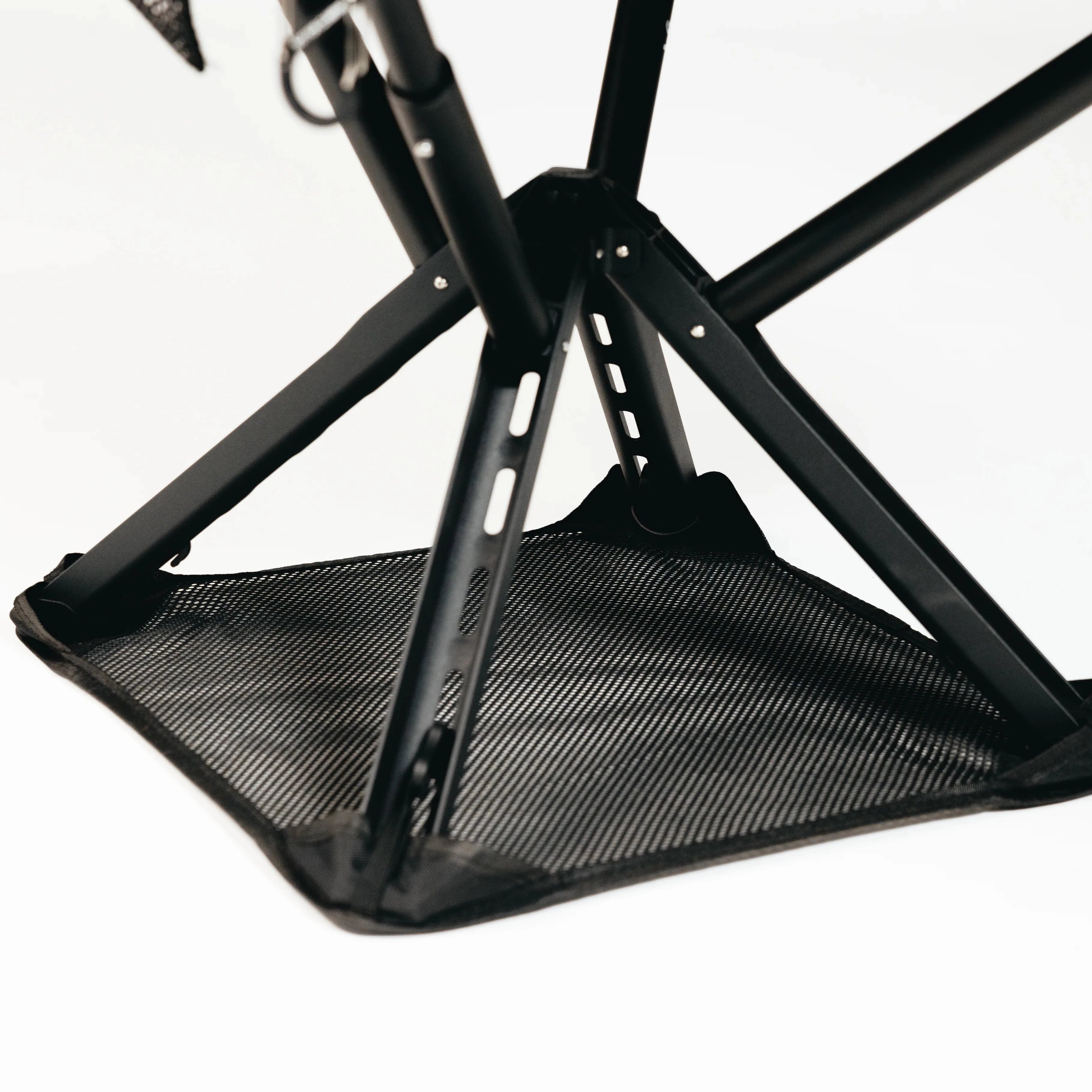
We design portable seating for people who move around a lot, and we think about the moment you get up as much as the moment you sit down. A seat that is light enough to come along, simple enough to set up in seconds and stable enough to trust once you are on it makes a lot of difference on a long day outside.
That is why we keep the design minimal and the build durable. Fewer parts means fewer things to wobble, and a seat you actually carry is a seat you actually use. Whether you are at a campsite, on a commute or waiting at a festival, a good seat is a small piece of support you take with you.
We back our products with a 45-day satisfaction guarantee and a lifetime warranty on select items, so you can find the seat that suits the way you rise, rest and go.
Jonas
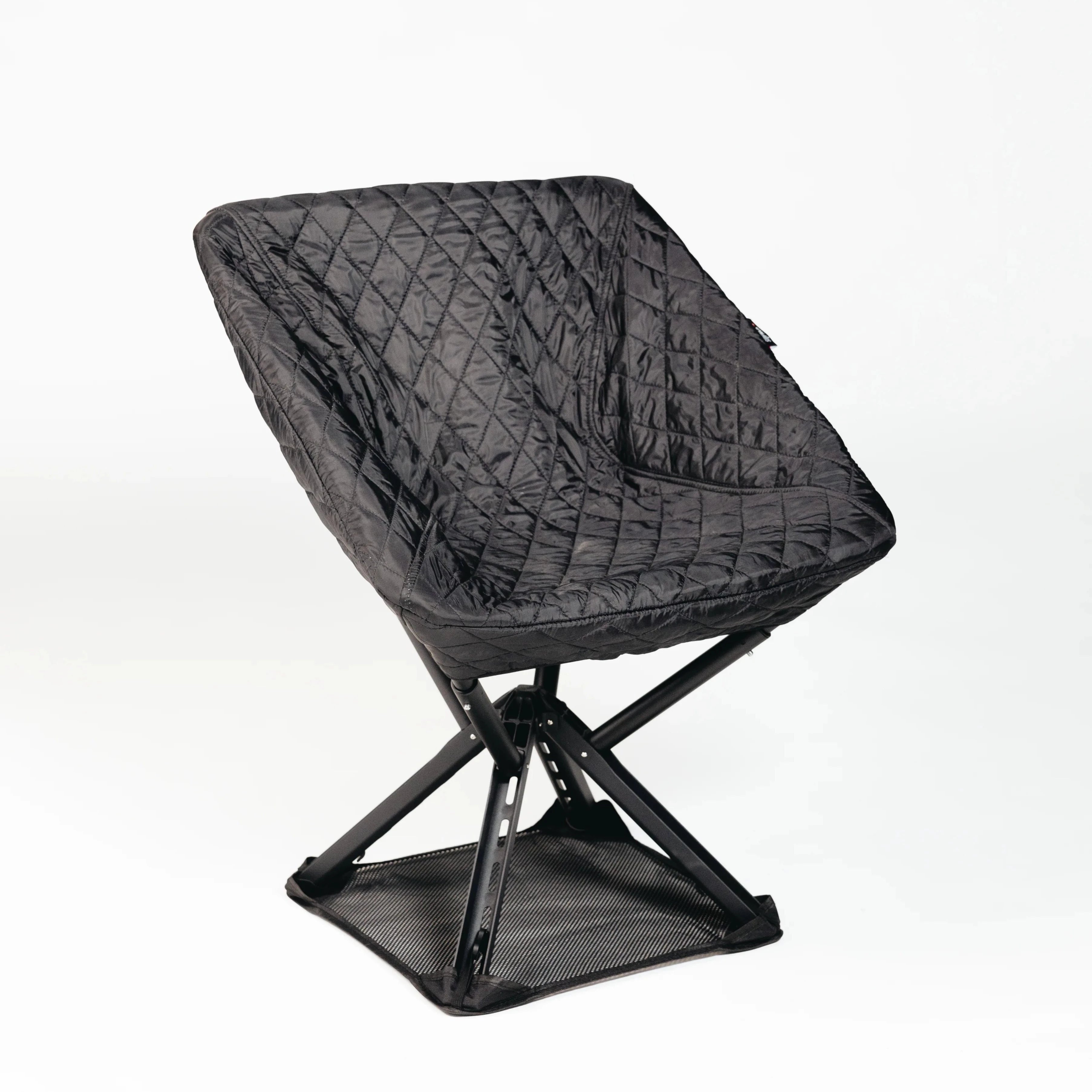
If you want a seat that goes where you go, look at the Campster portable chair for camps and trips, or the Sitpack ZEN X portable stool for a compact perch in the city. Our range is built to be lightweight, minimalistic and durable, ships worldwide, and comes with a 45-day satisfaction guarantee. You can browse everything in the full Sitpack collection.
It means any help that makes moving from sitting to standing, and back, safer or easier. That can be a stable surface like armrests or a wall, coaching or physical help from a carer, equipment such as handling belts or chair raisers, or a walking aid once you are on your feet. In research, using external support like furniture is classed differently from needing another person’s physical help.
Generally no. An NHS transfer leaflet advises pushing up from the stable chair or toilet surface first, then placing your hands on the walker after you are standing. A walker can move, so it is best treated as a balance aid for after the rise.
The Kingston and Richmond NHS programme suggests aiming for 10 repetitions. Johns Hopkins gives 10 repetitions twice daily as an example for people who can already stand without another person’s support. Stop if you feel pain, dizziness or breathlessness, and ask a doctor or physical therapist what is right for you.
No. A sit-stand desk is an adjustable workstation that lets you alternate sitting and standing while you work. It does not provide transfer assistance or rehabilitation exercise, and UCLA Health notes that standing at work is not a substitute for exercise.
A lot. Seat height, design and starting posture all change how hard the rise is, and armrests can help. Whatever seat you use, it should sit steadily on firm ground so you can plant your feet, lean forward and push without it shifting.