Vogn
0
Tilmeld dig og få 10% i rabat på din ordre
Forventet levering
1-3 dage
Du vil måske også kunne lide




Dansk Firma

TL;DR:
- Sustainable camping emphasizes thoughtful behavior and preparation over eco-labeled gear, focusing on the Leave No Trace principles. Proper waste management, eco-conscious gear choices, and mindful water and fire practices are essential for minimizing environmental impact. Habits developed through planning and routine are more impactful than product purchases in achieving genuine green camping.
Sustainable camping isn’t really about stocking up on the flashiest eco-labeled gear you can find online. It’s about making smarter decisions before you ever leave your driveway. Every campsite visit is a series of choices, and those choices add up fast, whether that means how you handle your trash at 2 a.m. when the bears are sniffing around, or whether you bothered to check local fire restrictions before lighting up. This checklist walks you through the essentials for genuinely low-impact outdoor adventures, from foundational principles to practical habits that actually make a difference.
| Point | Details |
|---|---|
| Follow Leave No Trace | Always use the seven Leave No Trace principles as the foundation of every camping trip. |
| Choose green gear | Prioritize repairing, borrowing, or buying used eco-friendly gear whenever possible. |
| Smart food and water habits | Prep meals using local, organic food in reusable containers and follow safe water practices. |
| Dispose responsibly | Keep campsites clean by packing out all waste and using proper sanitation methods. |
| Protect waterways and fire safety | Dispose of greywater and soaps at least 200 feet from water and limit fires to reduce impacts. |
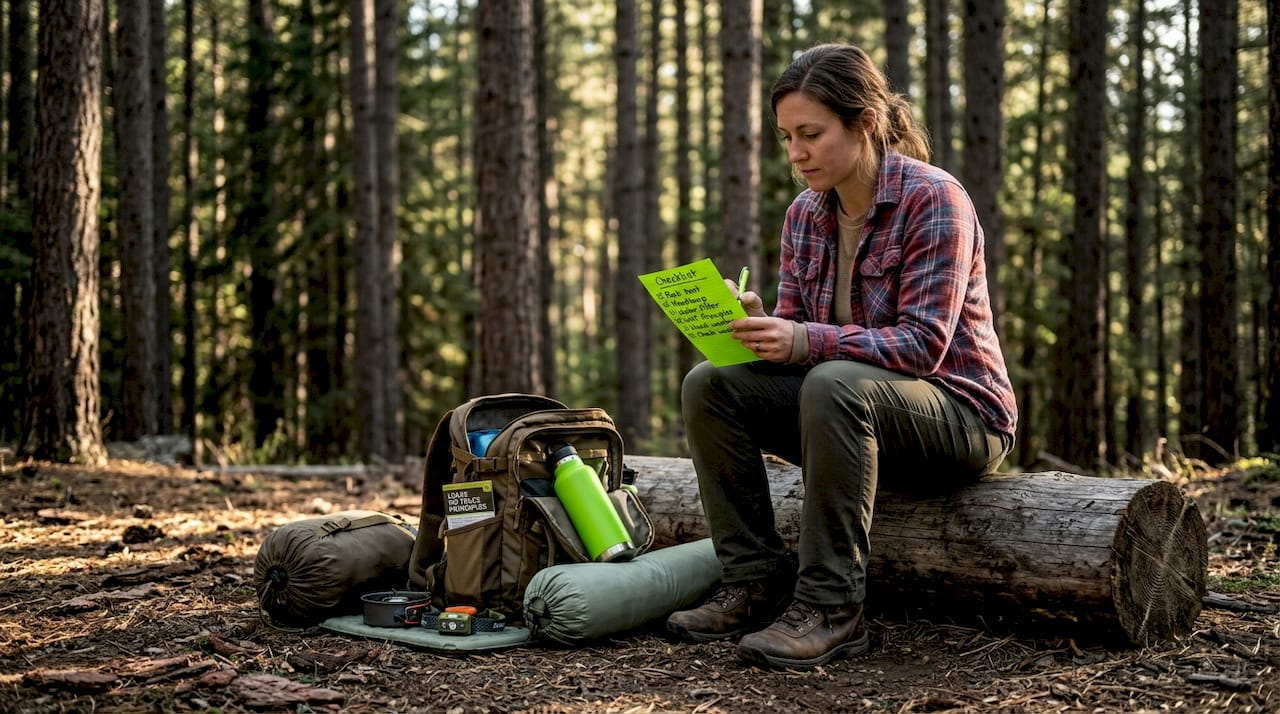
Before you start filling your pack with recycled-fabric everything, let’s get the foundation right. The Leave No Trace Seven Principles are the non-negotiable starting point for any eco-conscious camper, and they’ve been refined over decades of real-world application in wild places.
The seven principles are:
These aren’t just feel-good guidelines. They’re a practical roadmap for every decision you’ll make out there. Here’s the thing many campers miss: the LNT framework is fundamentally about planning and behavior, not product selection. Buying an organic cotton sleeping bag liner is nice, but forgetting to pack out your apple core is a real environmental problem. You can explore how eco camping innovation is evolving to support these principles, but always remember that innovation follows values, not the other way around.
“Green camping is rooted in preparation and Leave No Trace discipline. Even the most sustainably made gear can’t substitute for thoughtful, principle-driven behavior in the field.” — LNT-certified outdoor educator
Get those seven principles tattooed on your brain (or, you know, written on a small card in your pack). Everything else on this checklist flows from them.
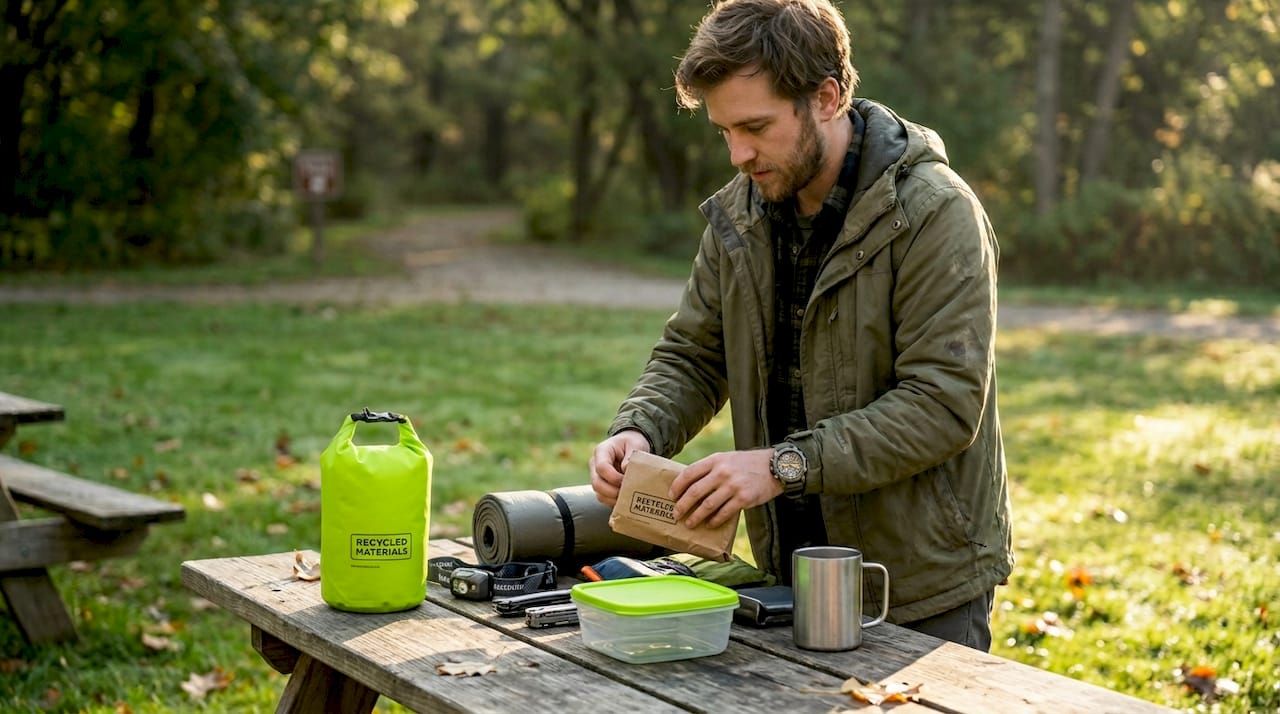
With principles in place, let’s talk packing. Good news: you probably don’t need to buy as much as you think. The most sustainable piece of gear is the one you already own and maintain well.
Here’s a solid eco-essentials checklist to work from:
When choosing materials, prioritize recycled, organic, and long-lasting over trendy and disposable. A good rule is the repair or borrow principle: borrow gear from friends, repair what you have, and if you must buy new, check programs like REI Re/Supply for quality used equipment. This approach cuts manufacturing demand significantly, which is where most of a product’s lifetime environmental impact actually lives.
| Conventional gear | Greener alternative |
|---|---|
| Single-use plastic cutlery | Titanium or bamboo reusable set |
| Disposable hand warmers | Reusable rechargeable hand warmer |
| Chemical fire starters | Natural fatwood sticks or a magnesium striker |
| Heavy nylon tent | Recycled or bluesign-certified lightweight shelter |
| Foam sleeping pad (non-recyclable) | Closed-cell foam pad (recyclable) or quality air pad |
| Cheap plastic water bottles | Stainless steel or filtered reusable bottle |
Some gear is frankly overrated and creates unnecessary waste. Skip these:
Pro Tip: Going lighter is greener. Lighter packs mean less fuel consumption getting to the trailhead, less physical impact on trails, and less temptation to “just this once” leave something behind because your bag is too heavy. Check out the case for minimalistic camping gear and the world of ultralight camping gear for inspiration on trimming down without sacrificing comfort.
Gear is only half the story. What you eat, how you pack it, and how you handle water all carry serious environmental weight. This is the area where a lot of well-intentioned campers quietly drop the ball.
For meals, the golden rule is simple: prepare meals ahead using fresh, local, organic food packed in reusable containers. Cook at home, portion it out, and freeze portions in silicone bags or stainless containers. This cuts down dramatically on packaging waste and keeps camp cooking fast and clean.
Smart utensil and wrap choices for sustainable camp cooking:
Water is where math matters. The general guideline is 1 gallon of water per person per day for drinking and cooking combined. Here’s how that plays out for group trips:
| Group size | Daily water need | 3-day trip total |
|---|---|---|
| 1 person | 1 gallon | 3 gallons |
| 2 people | 2 gallons | 6 gallons |
| 4 people | 4 gallons | 12 gallons |
| 6 people | 6 gallons | 18 gallons |
Carrying 18 gallons for a group of six is not realistic. That’s why a quality water filter or UV purifier is genuinely essential, not optional. It lets you resupply from natural sources safely, slashing the weight and plastic waste from carrying bottled water.
For greywater (that’s the soapy water left from washing dishes or yourself), always use biodegradable soap and dispose of it at least 200 feet from any water source, trail, or campsite. Scatter it broadly over vegetation rather than dumping it in a concentrated spot. Connecting eco food solutions to thoughtful meal planning is where sustainable camping really starts to click.
With food and water handled, let’s focus on the part nobody likes to talk about: the mess. Proper waste management is where green camping gets real, and it’s the area most likely to define your actual impact on any given site.
Here’s a step-by-step approach to managing waste at camp:
A few etiquette points that go beyond just your own waste:
Pro Tip: Build a tiny “leave no trace” mini-kit in a small zip bag: a few WAG bags, a trowel, a pack-out bag, and hand sanitizer. Keep it clipped to the outside of your pack so it’s always accessible and never an afterthought. You can find great minimalist waste tips to help you streamline this kit even further.
To round out your green camping checklist, two areas demand special attention: campfires and waterway protection. These are the ones most frequently handled carelessly, even by experienced campers.
For campfires, stick to this checklist:
The minimize campfire impacts principle from LNT isn’t just about safety; it’s about preserving the soil, air quality, and surrounding vegetation for future visitors and for wildlife habitat.
For waterways, the rule is universal and non-negotiable: dispose of gray water at least 200 feet from any water source. Even biodegradable soaps can introduce phosphates and other compounds that trigger algae blooms in sensitive aquatic ecosystems. That 200-foot buffer is cited consistently across all credible outdoor organizations, and for good reason. It’s the distance at which soil can filter out many contaminants before they reach groundwater or streams.
Explore how fire safety innovation is helping campers reduce their fire-related impact without giving up the warmth and ambiance of the outdoors.
Here’s something the outdoor industry doesn’t love to advertise: you can fill your pack with certified sustainable gear from top to bottom and still leave a campsite in worse shape than you found it. The uncomfortable truth is that behavior drives impact, not purchasing decisions.
The proactive planning and LNT principles that underpin green camping are fundamentally about what you do, not what you own. A camper with a twenty-year-old tent who packs out every scrap of waste, uses a camp stove in dry conditions, and always digs a proper cathole is doing far more for the environment than someone who just dropped a fortune on a “green” gear haul and then leaves their orange peels buried next to the fire ring.
The mistake I see over and over is this: people assume that buying eco-labeled products is itself the act of sustainability. It isn’t. It’s a starting point at best. True change comes from consistently doing the small, slightly inconvenient things: packing out that last piece of foil, carrying your greywater the full 200 feet, resisting the urge to pick up that cool-looking rock.
Connecting this to the eco camping mindset means practicing your routines at home before you head out. Seriously. Set up your camp kitchen in the backyard and practice your waste sorting. Cook a meal and dispose of the greywater correctly in the garden. Run through your cathole process (you can skip the actual digging for this one). Muscle memory formed at home becomes reliable habit in the field, where you’re tired, maybe a little cold, and less likely to think things through carefully.
Pro Tip: Write your personal green camping checklist by hand the night before any trip. The physical act of writing it forces you to think through each decision rather than running on autopilot. Habits live in repetition, and repetition starts with intention.
Reading a checklist is a solid start. Actually putting it into practice, trip after trip, is where the real work happens and where you’ll notice your footprint genuinely shrinking.
At Sitpack, we believe that gear should earn its place in your pack through durability, versatility, and smart design. Our portable seating solutions are built to last, made with minimalism in mind, and designed to keep your pack light without sacrificing comfort around the campfire. Dive deeper into minimalistic gear insights to find out how streamlining your kit supports both your comfort and the environment, or browse our guides on ultralight gear options to see how less really can be more on the trail. Prepare with purpose, and let every trip leave the wilderness better than you found it.
It means you should camp, dig catholes, and dispose of any waste at least 200 feet from water sources, trails, and campsites to protect the surrounding environment from contamination and disruption.
Store and pack out all food scraps in sealed, reusable containers to prevent wildlife attraction and soil contamination, leaving nothing behind regardless of how small or organic the scrap is.
No. Even biodegradable items like soaps and utensils must be properly disposed of at least 200 feet from water, since they can still cause nutrient pollution and algae blooms if discarded near aquatic ecosystems.
Only if locally permitted, and only using small fires in existing rings with local wood. In dry or high-use conditions, opt for camp stoves to minimize soil damage, air pollution, and wildfire risk.