Cart
0
Sign up and get 10$ off your order
Expected delivery
1-3 days
You may also like




Danish Company


TL;DR:
- Ergonomic urban seating is designed around human body dimensions to enhance comfort, safety, and accessibility for diverse users. Small adjustments in seat height, depth, and armrest placement significantly improve usability, especially for seniors and mobility-challenged individuals. Cities like New York are investing heavily in such seating, and portable solutions offer flexible, ergonomic comfort when fixed benches fall short.
Most people assume public seating is designed for looks first and comfort second. A bench is a bench, right? Wrong. What is ergonomic urban seating, really? It’s a precise, human-centered approach to designing public furniture that accommodates diverse bodies, supports healthy posture, and keeps people sitting comfortably for longer. The difference between a well-designed public bench and a poorly designed one can come down to a few centimeters of seat depth or armrest height. Those small numbers have a surprisingly large effect on who can actually use the seat and who has to walk past it.
| Point | Details |
|---|---|
| Ergonomics is about dimensions | Seat height, depth, and armrest placement determine comfort and independence for diverse users. |
| Accessibility requires placement too | Seating must connect to accessible pathways, not just meet dimensional specs, to be truly usable. |
| Standards exist to guide design | EN 17210 and universal design principles give cities measurable targets for inclusive public seating. |
| Real-world investment is growing | Cities like New York are committing serious funding to ergonomic seating at scale across transit networks. |
| Portable seating fills the gaps | Where fixed urban seating falls short, lightweight portable options can deliver ergonomic comfort on demand. |
The short answer is that ergonomic urban seating supports proper posture, enables longer comfortable use, and allows people to sit and stand safely across a range of body types and mobility levels. It’s not simply about padding or weather-resistant materials. True ergonomic design means the geometry of the seat itself is calibrated to the human body.
Think about the last time you sat on a bus stop bench and felt your legs dangle slightly, or your lower back strain forward after five minutes. That’s an ergonomics failure, not just a comfort inconvenience. The goal of ergonomic design is to meet the body where it is, not force the body to adapt to an arbitrary shape.
There’s a common misconception that urban seating design is primarily a visual or durability exercise. City planners and architects often spend enormous energy on material selection and streetscape aesthetics while the actual sitting geometry gets far less attention. The result? Public benches that look great in a city rendering but leave seniors struggling to stand back up, parents unable to juggle a stroller and a seat, and anyone with a mobility limitation simply skipping the seat entirely.
Good ergonomic urban seating changes that equation entirely.
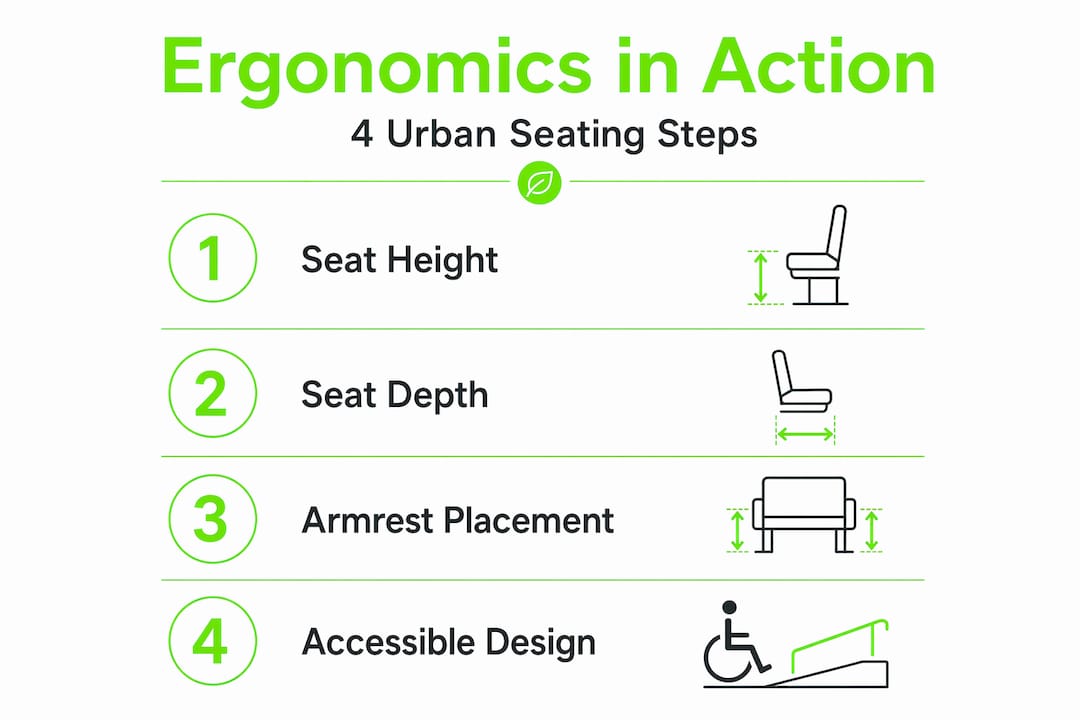
Getting urban seating right comes down to a set of physical dimensions that most people never consciously notice but feel immediately. Here’s what actually matters:
None of this is complicated in theory. In practice, designers often prioritize aesthetics or durability and underestimate the ergonomic micro-dimensions that are critical for user comfort and independence. A centimeter here or there genuinely determines whether a 70-year-old with mild arthritis can get up unassisted.
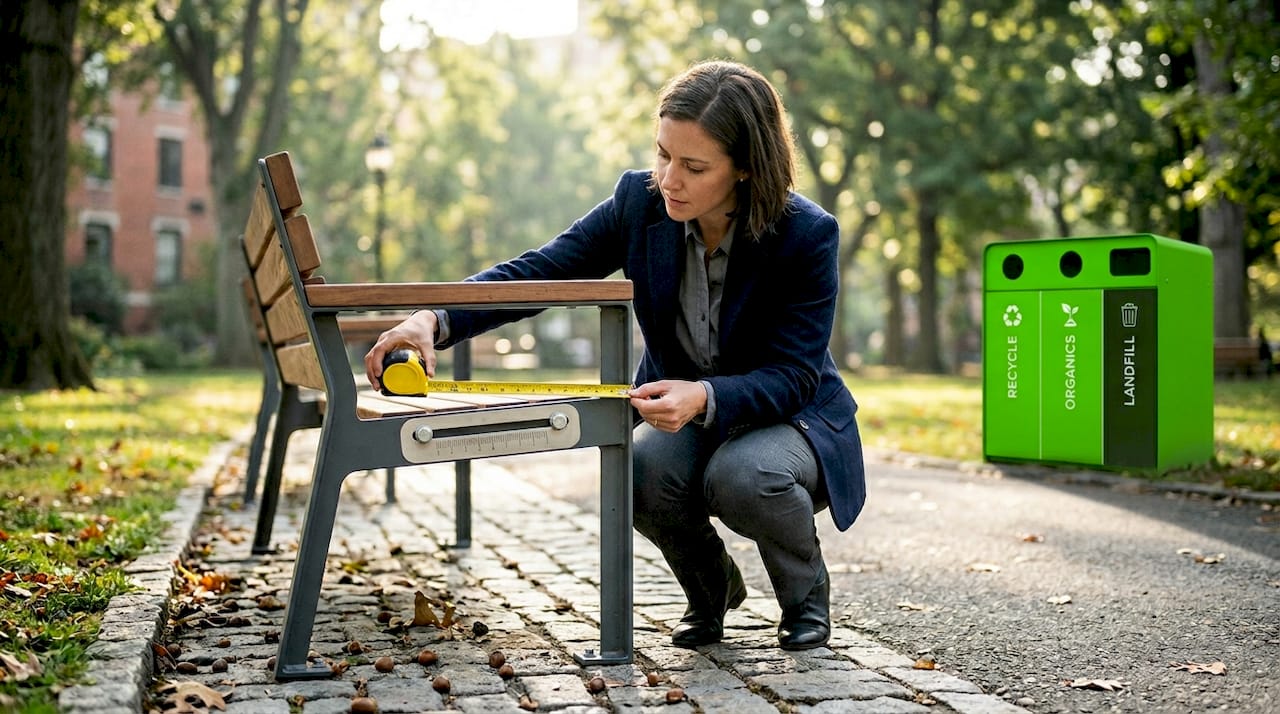
Pro Tip: When evaluating any public bench, sit down and check whether your feet rest flat, your knees form roughly a 90-degree angle, and the armrests actually give you enough leverage to push up. If any one of those three fails, the bench misses the ergonomic mark.
Standards like BS EN 17210:2021 exist to codify these principles under Universal Design guidelines, giving cities and procurement teams measurable targets rather than guesswork.
Ergonomic public seating and accessible seating are not the same thing, but they should be inseparable. Accessibility goes further than just seat dimensions. It asks how a person with a mobility device, limited grip strength, or a visual impairment experiences the entire act of finding and using a seat.
Here are the accessibility factors that often get overlooked even in well-intentioned designs:
“Universal design in seating is no longer a nice-to-have. It’s increasingly both a compliance requirement and a social inclusion strategy, grounded in measurable ergonomic improvements.”
The social dimension of accessible seating is often underappreciated. When seating excludes people with mobility challenges or older adults, it effectively signals to those groups that a public space is not for them. Getting the ergonomics right is a statement about who the city values. Inclusive ergonomic public seating builds community rather than quietly filtering people out.
Theory is useful. Real examples are better. Ergonomic urban seating has produced some genuinely clever solutions over the last decade, and a few are worth knowing about.
Kanji seating is a strong case study in millimeter precision. Rather than treating seating as a rough approximation of human dimensions, Kanji-style designs work backward from exact anthropometric data to define every surface. The result is a bench that can serve an 80-year-old woman and a 30-year-old commuter with the same structural geometry.
The Living Chair concept from Habitable City takes a different approach entirely. Ergonomic design, in this framing, doesn’t prescribe a single seated posture. Instead it offers varied ways to sit, lean, perch, or recline, adapting to different body movements and social uses throughout the day. It treats urban furniture as a landscape rather than a fixed object.
Here’s a quick comparison of how different design approaches stack up:
| Design approach | Ergonomic strength | Accessibility | Social flexibility |
|---|---|---|---|
| Standard park bench | Low to moderate | Often poor | Limited |
| Kanji-style precision bench | High | Good | Moderate |
| Modular adaptive seating | High | Excellent | High |
| Transit shelter seating | Moderate | Variable | Low |
| Portable ergonomic seating | High | Self-directed | High |
On the infrastructure side, New York City committed $40 million to install universal ergonomic seating at 875 bus stops per year for a decade. That’s a serious policy signal that ergonomic and accessible seating at transit stops is no longer optional. The program specifically prioritizes older adults, parents with strollers, and people with disabilities.
Materials matter too. Sustainable urban seating now integrates recycled plastics, FSC-certified wood, and powder-coated steel that reduces maintenance frequency. Better materials mean less replacement, which means better long-term value for cities and fewer resources consumed over time.
Pro Tip: When designing urban spaces or advocating for better seating, look for modular systems that allow seat components to be swapped or adjusted without full replacement. They’re easier to retrofit for accessibility and far more budget-friendly over a 10-year horizon.
Ergonomic seating that genuinely works also extends dwell time and encourages social interaction, turning transit stops and plazas from pure pass-through spaces into places people actually want to linger.
Whether you’re selecting seating for a project, advising a community group, or pushing your city council to upgrade the bench outside your local library, here’s a practical framework for evaluating ergonomic urban seating:
For commuters and urban residents who simply want versatile seating for outdoor comfort without waiting on city procurement timelines, portable ergonomic solutions give you control over where and how you sit.
I’ve spent a lot of time thinking about why so much public seating is quietly awful, and I think the core problem is that nobody actually tests it like a user. Designers sit in office chairs and sketch benches. Planners approve renders on screens. Nobody parks their posterior on a prototype for 20 minutes and gets up again.
What I’ve found is that the micro-dimensions really do make or break the experience. A seat that’s 2 cm too deep creates a subtle, nagging discomfort that most people chalk up to “benches are just uncomfortable.” They’re not. A well-dimensioned bench with proper armrests feels genuinely good after 15 minutes. That difference is entirely in the numbers, not the materials.
I’m also skeptical of the idea that fixed public seating can fully solve the ergonomics problem for every user in every scenario. Cities are getting better, and investments like New York’s $40 million bus stop program are genuinely exciting to see. But the reality is that urban seating networks are patchy, maintenance is inconsistent, and a lot of people, including commuters, event-goers, and travelers, spend long stretches of time in places where good fixed seating simply doesn’t exist.
The future I’d like to see combines well-funded fixed infrastructure with widespread adoption of personal portable seating. One complements the other. You shouldn’t have to choose between waiting for your city to get its act together and having somewhere comfortable to sit today.
— Jonas
Fixed urban seating is improving, but it’s still not everywhere you need it. If you’ve ever stood for 40 minutes at a transit stop with perfectly good seating energy going to waste, you know the gap I’m talking about.
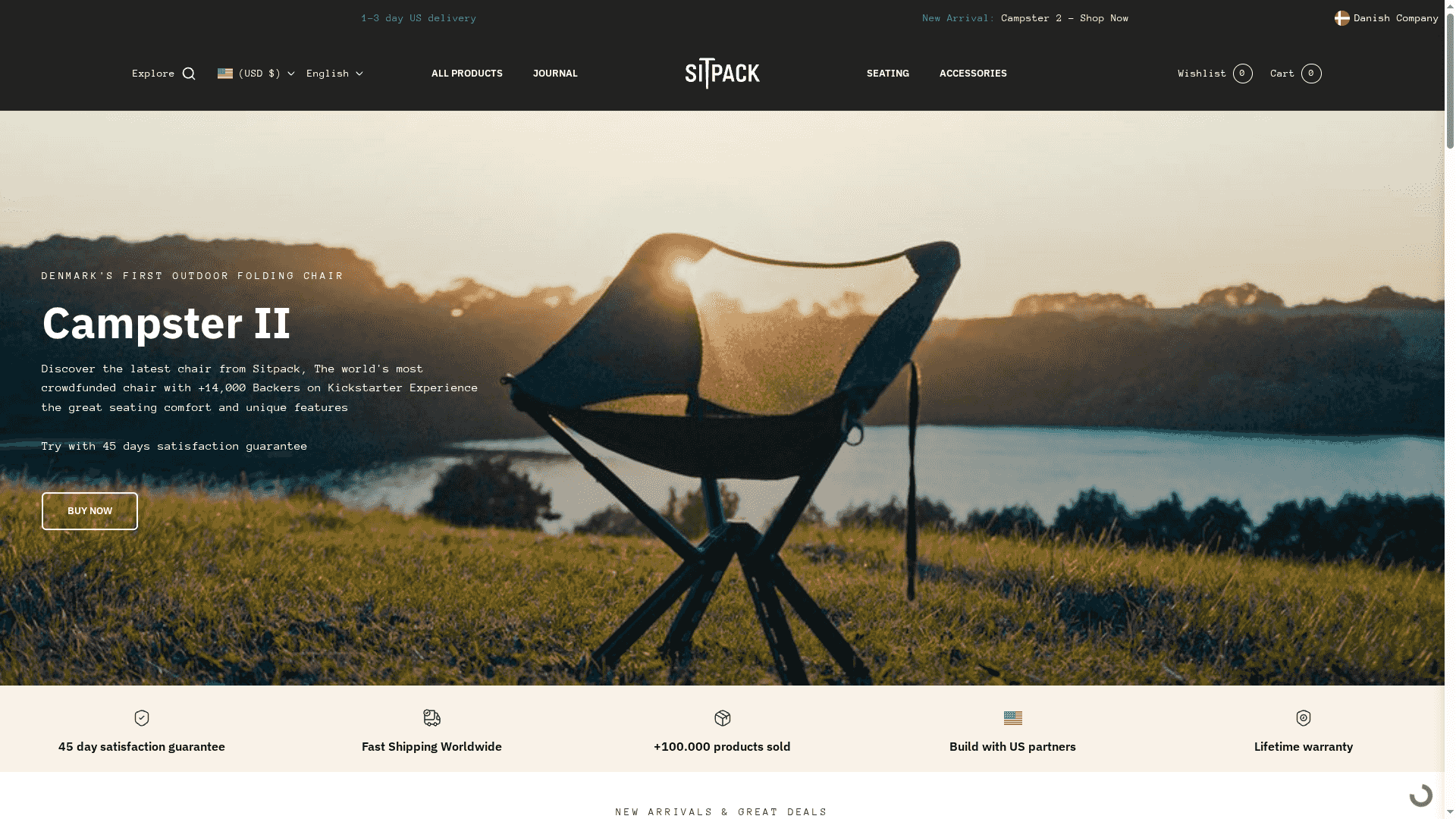
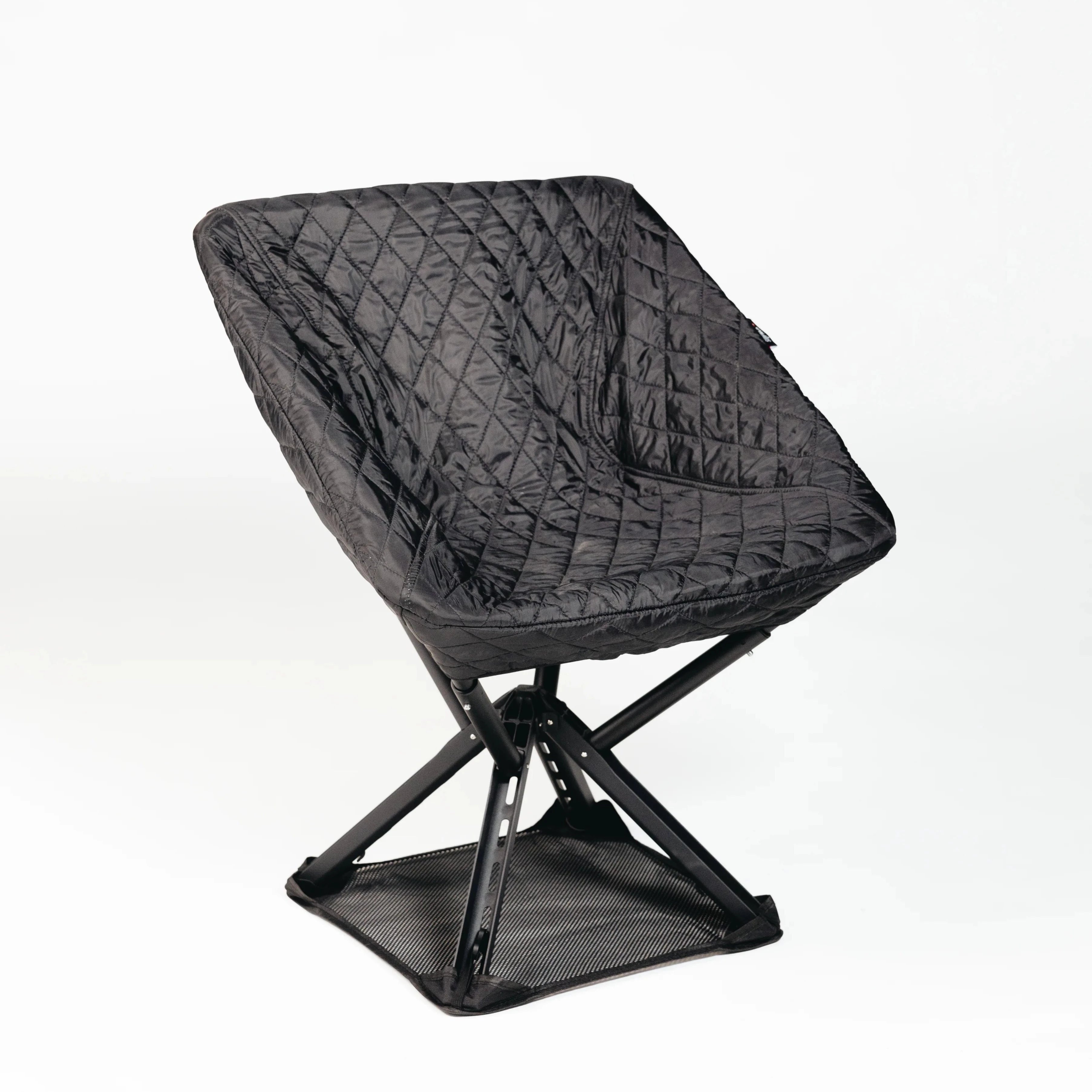
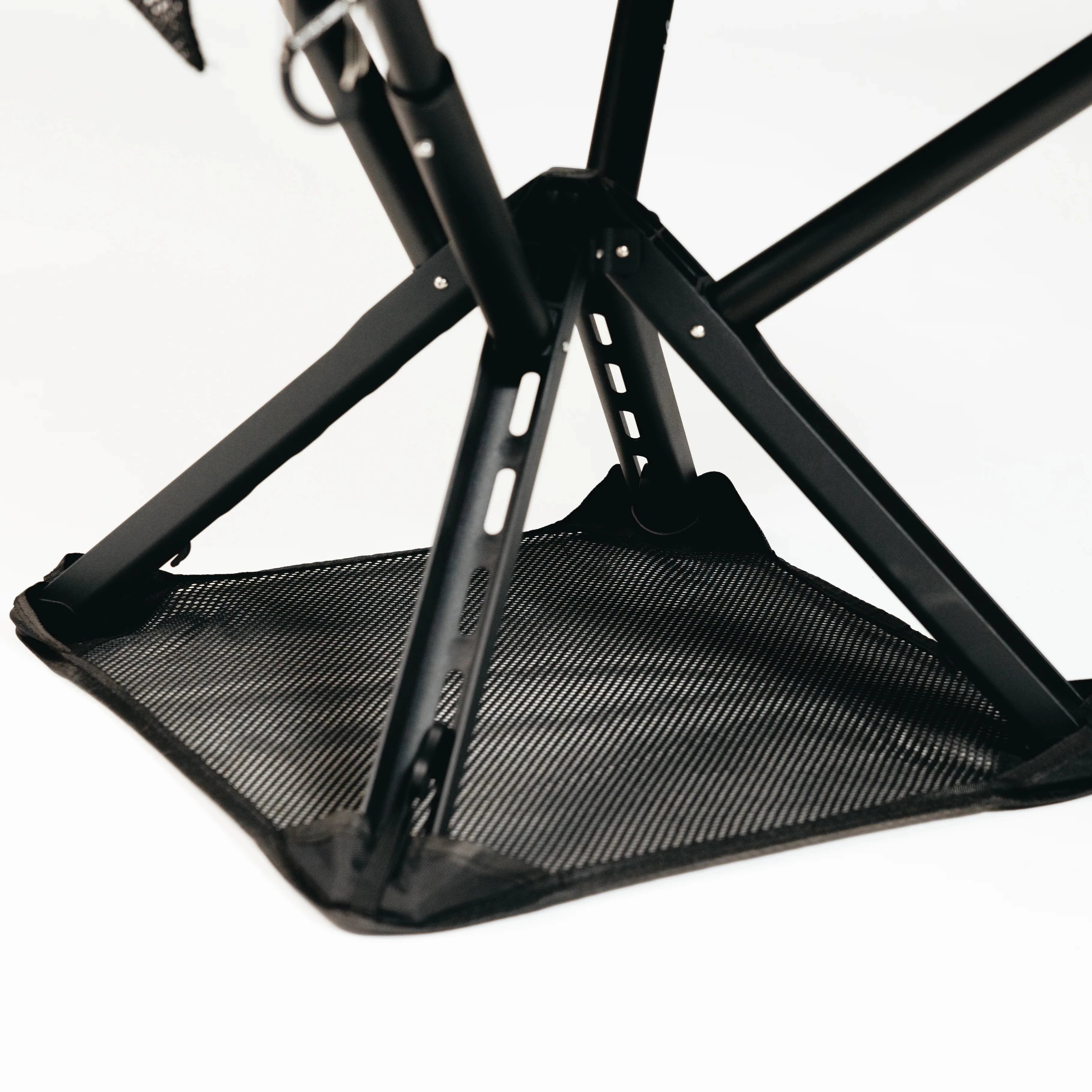
Sitpack’s portable seating solutions, including the Campster II and the Sitpack Zen, are built around the same ergonomic principles discussed throughout this article: proper weight distribution, posture support, and freedom of movement. They’re lightweight enough to carry in a bag and sturdy enough to trust at the end of a long day on your feet. Explore portable urban seating options at Sitpack and find a seat that actually goes where you go.
Ergonomic urban seating is public furniture designed around human body dimensions and posture needs, featuring calibrated seat height, depth, armrest placement, and back support to enable comfortable, safe use for diverse users including seniors, people with disabilities, and commuters.
The standard ergonomic range calls for seat heights of 16 to 18 inches, seat depths of around 16 inches, and armrests positioned 7 to 9 inches above the seat surface, which supports natural posture and makes sitting and standing transitions easier.
Armrests placed correctly provide the leverage needed to push yourself from seated to standing, which is critical for older adults and people with limited mobility. Without them, many users simply avoid seating that would otherwise be accessible.
BS EN 17210:2021 provides functional requirements under Universal Design principles for accessible and usable built environment seating, giving designers and city planners specific measurable values to meet rather than relying on general guidance.
Yes. Portable seating designed with proper weight distribution, seat geometry, and postural support can meet the same ergonomic standards as fixed urban furniture, with the added advantage that you control where and when you use it.