Cart
0
Sign up and get 10$ off your order
Expected delivery
1-3 days
You may also like


Danish Company


TL;DR:
- Seat contouring shapes seats to match the body’s natural curves, enhancing comfort by redistributing pressure. It supports proper spinal alignment, reduces muscle fatigue, and improves thermophysiological comfort by facilitating heat and moisture management. Modern design incorporates flexible and adaptive features that respond to movement, making long sitting sessions more comfortable and healthier.
Seat contouring is defined as the deliberate shaping of a seating surface to match the natural curves and pressure points of the human body, and it is the primary reason why well-designed seats feel dramatically better than flat ones. Whether you’re parked in an office chair for eight hours, bouncing along a trail in a car, or pulling a portable seat out of your pack at a concert, the geometry of what you’re sitting on determines how your body loads, aligns, and ultimately feels. A 2025 MDPI study confirmed that segmented seat pan designs allow increased mobility and better pressure distribution compared to flat alternatives. The science behind why seat contouring improves comfort spans biomechanics, posture, dynamic movement, and even heat management at the seat surface.
The core problem with flat seats is simple: your body weight concentrates almost entirely on two small bony points called the ischial tuberosities, which most people know as their “sit bones.” That concentrated load creates localized pressure that restricts blood flow, compresses soft tissue, and triggers the familiar ache that sets in after 20 minutes on a hard bench. Contoured seat design spreads that load across a much larger surface area, including the thighs and surrounding gluteal tissue, so no single point bears the full brunt.
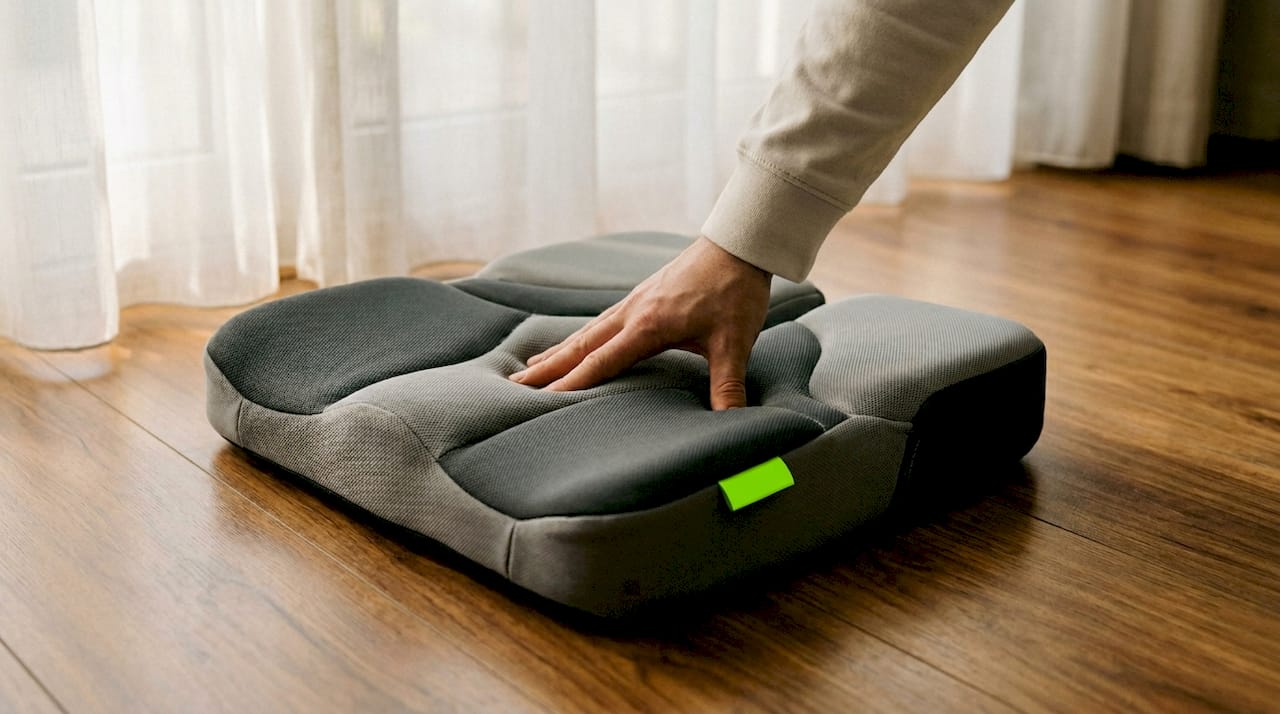
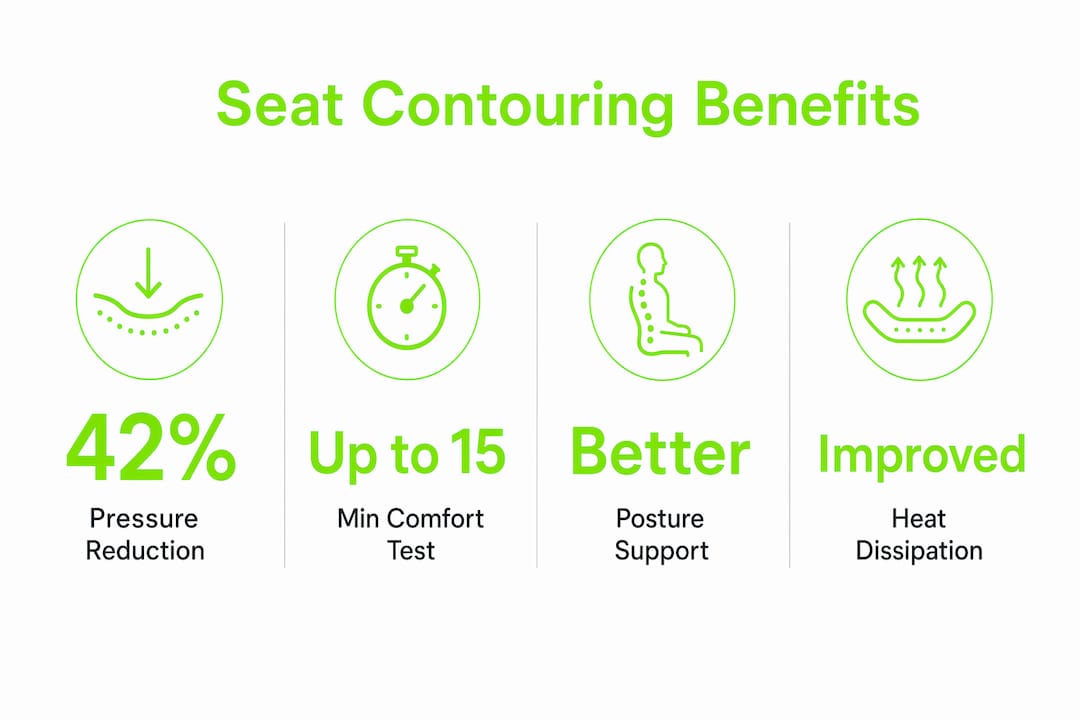
The numbers here are genuinely striking. A 2026 Springer Nature study on optimized wheelchair cushions found that non-uniform stiffness distribution reduces maximum contact stress by 42% and deep tissue stress by 39% compared to uniform cushions. That is not a marginal improvement. It means nearly half the peak pressure your sit bones would otherwise absorb simply gets redistributed to tissue that can handle it better.
| Seat type | Peak contact stress | Deep tissue stress | Mobility support |
|---|---|---|---|
| Flat, uniform cushion | High (baseline) | High (baseline) | Minimal |
| Contoured, uniform stiffness | Moderate | Moderate | Low |
| Contoured, optimized stiffness | 42% lower than baseline | 39% lower than baseline | Moderate to high |
| Adaptive segmented seat pan | Low | Low | High |
Modern contoured designs go further by incorporating flexible or segmented seat pans that allow micro-adjustments as you shift weight. This means the seat responds to you rather than forcing you to adapt to it, which is a meaningful distinction for anyone sitting for extended periods.
Pro Tip: When testing a contoured seat, sit for at least 15 minutes before judging comfort. The pressure redistribution benefits only become apparent once your body settles into the contour geometry.
Pressure relief is only half the story. The other half is what contouring does to your skeleton and muscles. A properly contoured seat encourages a forward pelvic tilt, which in turn maintains the spine’s natural S-shaped curve. Without that tilt, the pelvis rotates backward into what ergonomists call “sacral sitting,” where the lower back flattens and the lumbar discs absorb load they were never designed to handle continuously.
The Alimed Profile Sitting Orthosis is a clinical example of this principle in action. Its contour cuts and ischial bars are specifically shaped to guide the pelvis into proper alignment, relieving pressure while simultaneously correcting posture. The same biomechanical logic applies to well-designed office chairs, automotive seats, and portable seating solutions. Contour geometry is not decoration. It is functional architecture for your skeleton.
A four-segment flexible seat pan, as studied in the MDPI ergonomic chair research, demonstrates how spinal alignment improves when the seat surface actively supports the pelvis rather than just passively holding it. The result is a more balanced load between abdominal and back muscles, which reduces fatigue over time. Waterfall seat edges, where the front of the seat curves downward, also reduce thigh pressure and maintain leg circulation during long sitting sessions, preventing the leg numbness that plagues people on long flights or road trips.
Key posture benefits of contoured seating:
Pro Tip: If a contoured seat feels slightly firm at first, that is often correct. A seat that is too soft allows the pelvis to sink past the optimal tilt angle, negating the alignment benefits entirely.
Static contouring solves the pressure problem at rest. Dynamic contouring solves the problem of staying seated for a long time. The human body is not built for stillness. Muscles need micro-movements to pump blood, tissues need periodic pressure relief to stay healthy, and the nervous system actively signals discomfort when you hold any position too long. Dynamic contoured seats work with that biology rather than against it.
A 2026 Amsterdam UMC study on a portable dynamic cushion design found that flexible chamber systems support posture shifts and trunk muscle activation while reducing the discomfort associated with static pressure dwell time. In plain terms: a seat that moves slightly with you keeps your muscles engaged and your tissues from being compressed in the same spot for too long.
Here is how dynamic contoured seating delivers those benefits in practice:
The contrast with a fixed flat pan is stark. Sitting on a rigid, flat surface for two hours is essentially asking your soft tissue to absorb constant, unrelieved compression. A dynamic contoured seat turns that two-hour session into a series of small, managed pressure cycles that your body handles far more comfortably.
Here is something most people never think about when evaluating a seat: heat and moisture matter just as much as pressure. Your body generates heat continuously, and when you sit, that heat and the associated moisture from perspiration have nowhere to go unless the seat material allows it. A seat that traps heat and humidity at the contact surface becomes uncomfortable regardless of how well it distributes pressure.
A 2026 MDPI study on automotive seat cover materials found that laminated seat covers significantly increase thermal and evaporative resistance, causing heat and humidity to build up at the seat-body interface. The study identified material M6 as the top performer for moisture dissipation, while laminated material M4 accumulated heat and retained moisture under load. This is a direct comfort trade-off that seat designers must navigate.
| Material type | Thermal resistance | Moisture transport | Comfort under load |
|---|---|---|---|
| Breathable mesh (e.g., M6-type) | Low | High | Good |
| Standard fabric | Moderate | Moderate | Moderate |
| Laminated cover (e.g., M4-type) | High | Low | Poor over time |
| Perforated foam with cover | Low to moderate | Moderate to high | Good |
The geometry of the contoured seat also plays a role here. A seat that fits the body closely creates a larger contact area, which can trap more heat if the material is not breathable. This is why seat comfort technologies that combine contour geometry with breathable or moisture-wicking materials outperform designs that optimize only one dimension. For travel and outdoor seating especially, thermo-physiological comfort is not a luxury consideration. It is a core part of whether you actually want to stay seated.
Understanding the science of seat contouring gives you a real advantage when evaluating any seat, whether it is an office chair, a car seat, or a portable seat for travelers. The key is knowing what to look for beyond the marketing copy.
The role of comfort in portable seating follows the same rules. Lightweight portable seats are not exempt from these principles. A well-contoured portable seat that weighs 500 grams will serve you better on a five-hour outdoor event than a heavily padded flat seat that weighs twice as much.
Seat contouring improves comfort by redistributing pressure away from the ischial tuberosities, supporting natural spinal alignment, enabling beneficial micro-movements, and working with breathable materials to manage heat and moisture at the seat surface.
| Point | Details |
|---|---|
| Pressure redistribution | Contoured designs reduce peak contact stress by up to 42%, spreading load across larger tissue areas. |
| Posture and alignment | Forward pelvic tilt encouraged by contouring maintains the spine’s natural S-curve and reduces muscle fatigue. |
| Dynamic movement support | Flexible seat designs reduce static pressure dwell time and keep trunk muscles gently activated. |
| Thermo-physiological comfort | Breathable materials paired with contour geometry prevent heat and moisture buildup at the seat interface. |
| Geometry over padding | Optimized stiffness distribution outperforms added thickness for reducing contact stress and improving comfort. |
I will be honest: when I first started digging into seat design research, I expected it to be dry. What I found instead was a genuinely fascinating intersection of biomechanics, materials science, and human physiology that most people interact with every single day without realizing it.
The thing that surprised me most is how thoroughly the “more padding equals more comfort” assumption falls apart under scrutiny. The 2026 research on 3D-printed cushions makes it clear that geometry and stiffness distribution do the heavy lifting, not thickness. I have sat on expensive, heavily padded seats that left me aching after an hour, and on slim, well-contoured portable seats that felt fine after three. The difference was always the shape, not the stuffing.
What I find genuinely exciting is where the technology is heading. 3D printing now allows designers to create non-uniform stiffness distributions that were impossible to manufacture even five years ago. Adaptive air chamber systems are moving out of medical seating and into consumer products. And the growing awareness of thermo-physiological comfort means material selection is finally getting the attention it deserves alongside pressure mapping.
The practical takeaway I keep coming back to is this: comfort is multidimensional. Pressure, posture, movement, and microclimate all contribute, and a seat that excels in only one dimension will eventually let you down in another. The best seats address all four. That is not a high bar to clear, but it requires intentional design rather than just good intentions.
— Jonas

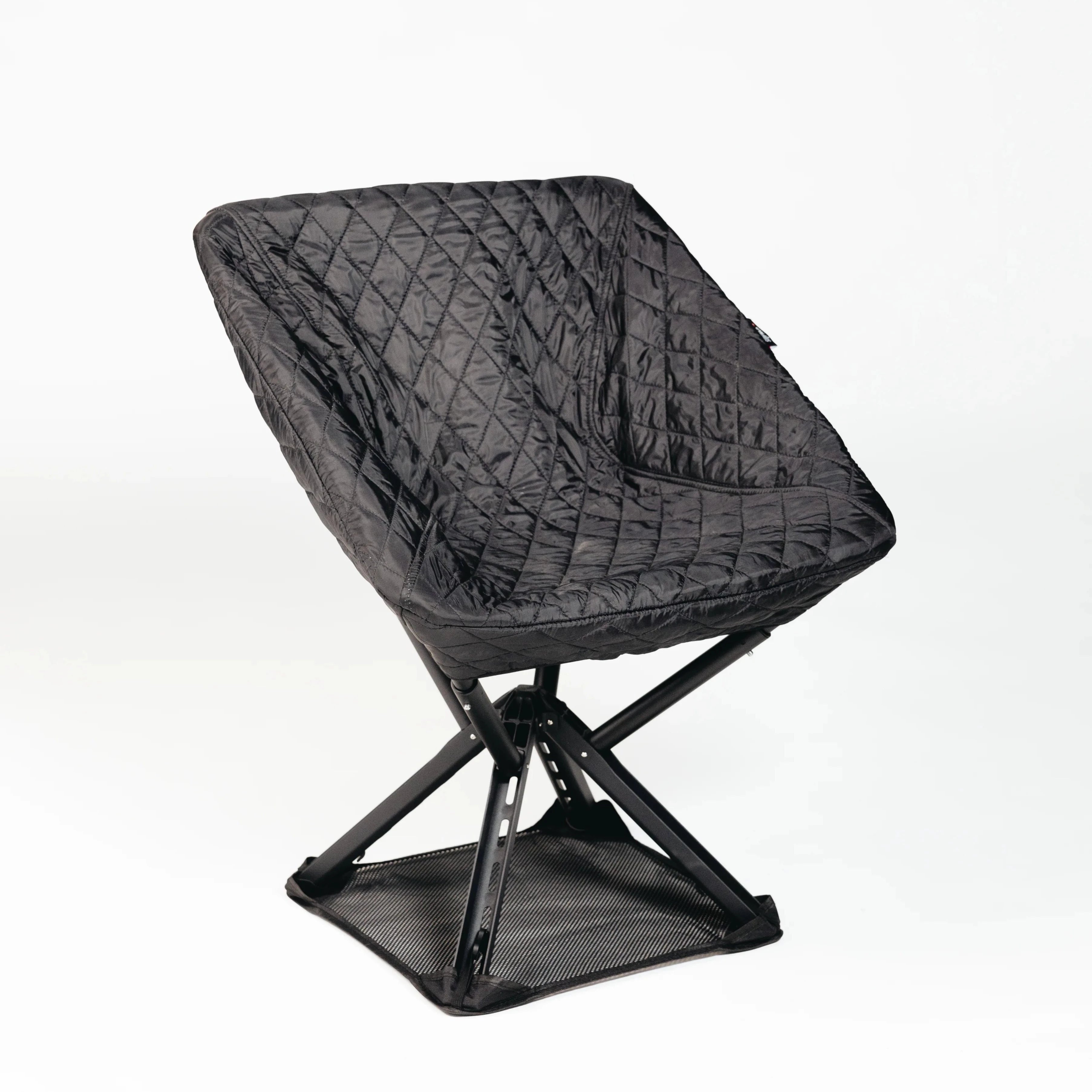
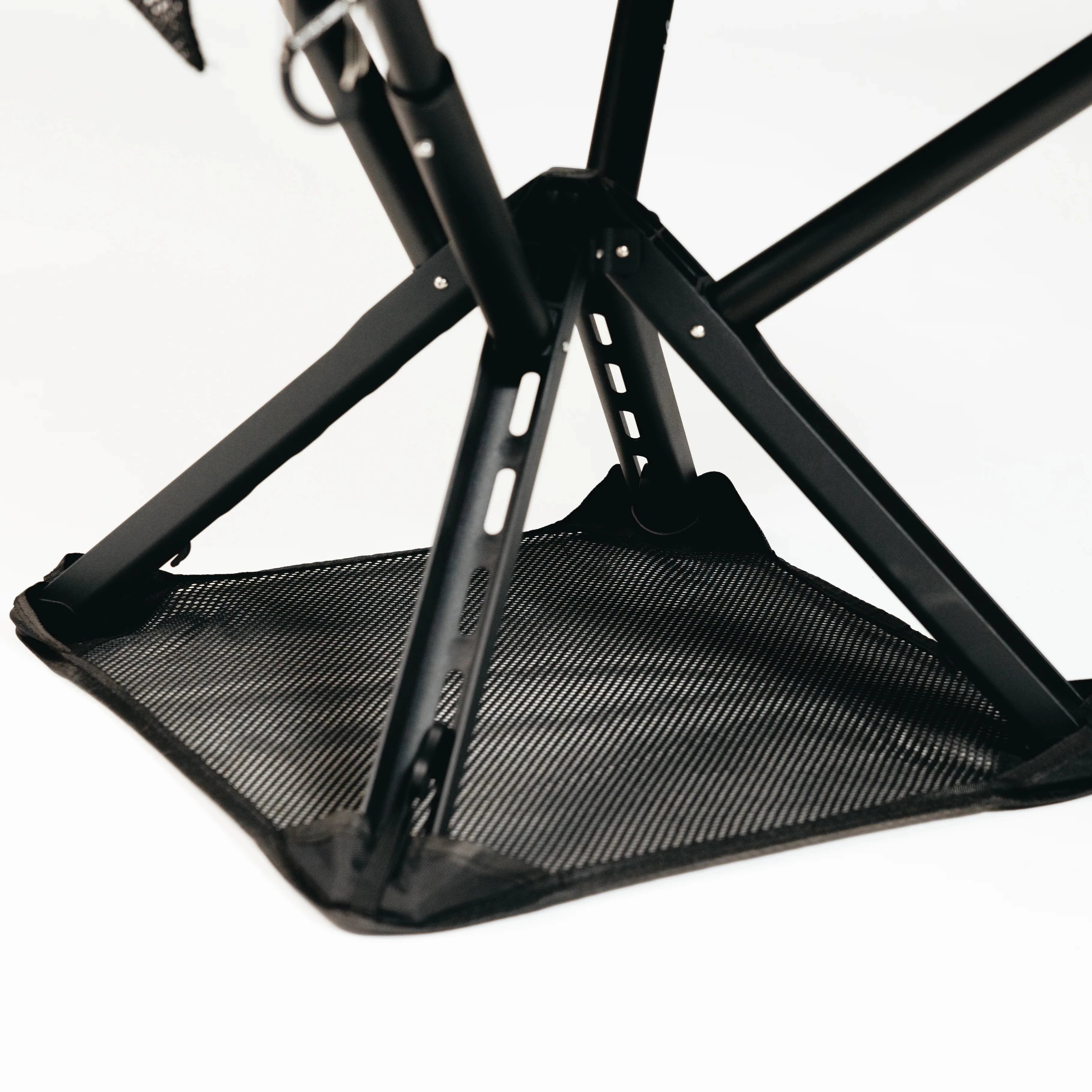
Sitpack designs portable seating with the same principles that make contoured seats work in offices and cars, applied to gear you can actually carry anywhere. The Campster II and Sitpack Zen both incorporate seat geometry that supports natural hip and pelvis positioning, so you are not just parking your posterior on a flat surface and hoping for the best. Materials are selected for breathability as well as durability, which means the thermo-physiological comfort factors that ruin long sits on laminated surfaces are actively managed. If you want to explore how these design choices translate into real-world comfort for travel, outdoor events, and everyday adventures, visit Sitpack and see the full range of portable seating solutions built around science-backed comfort principles.
Seat contouring is the practice of shaping a seat surface to match the natural curves and pressure points of the human body, particularly around the ischial tuberosities, pelvis, and thighs. The goal is to distribute body weight more evenly and support natural spinal alignment.
Research shows that optimized contoured cushion designs can reduce maximum contact stress by 42% and deep tissue stress by 39% compared to uniform flat cushions, according to a 2026 Springer Nature study on wheelchair seating.
No. Studies confirm that optimizing seat geometry and stiffness distribution reduces contact stress more effectively than increasing padding thickness. A well-contoured, moderately firm seat typically outperforms a thick, flat one for long-duration comfort.
Even a well-contoured seat becomes uncomfortable if the cover material traps heat and moisture. Laminated materials significantly increase thermal and evaporative resistance, while breathable fabrics maintain a comfortable microclimate at the seat surface during extended use.
Contoured seats that encourage forward pelvic tilt help maintain the spine’s natural S-curve, reducing strain on lumbar discs and lower back muscles. This makes contoured seating a practical tool for managing and preventing lower back discomfort during prolonged sitting.