Cart
0
Sign up and get 10$ off your order
Expected delivery
1-3 days
You may also like


Danish Company


TL;DR:
- Packability allows gear to compress or fold into a small size without losing function or comfort. It enhances mobility, reduces physical and mental fatigue, and enables spontaneous travel and urban convenience. Trade-offs include less durability and comfort, but safety essentials should always remain prioritized.
Packability is defined as a gear item’s ability to compress or fold into a compact form without losing its core function or comfort. For outdoor enthusiasts, travelers, and urban dwellers, this single trait determines whether your gear fits in a carry-on, slips into a daypack, or gets left at home. Ultralight packing standards set a base weight target under 10 lbs, with experienced minimalists reaching 6–8 lbs. That reduction translates directly into faster movement, less fatigue, and more freedom to say yes to unplanned adventures. Sitpack builds its entire product line around this principle, proving that even seating can be packable without compromise.
Packability is the difference between gear that travels with you and gear that holds you back. When your kit compresses small and weighs little, you move faster, recover quicker, and adapt to changing plans without stress. The importance of packability goes beyond saving space. It reshapes how you travel entirely.
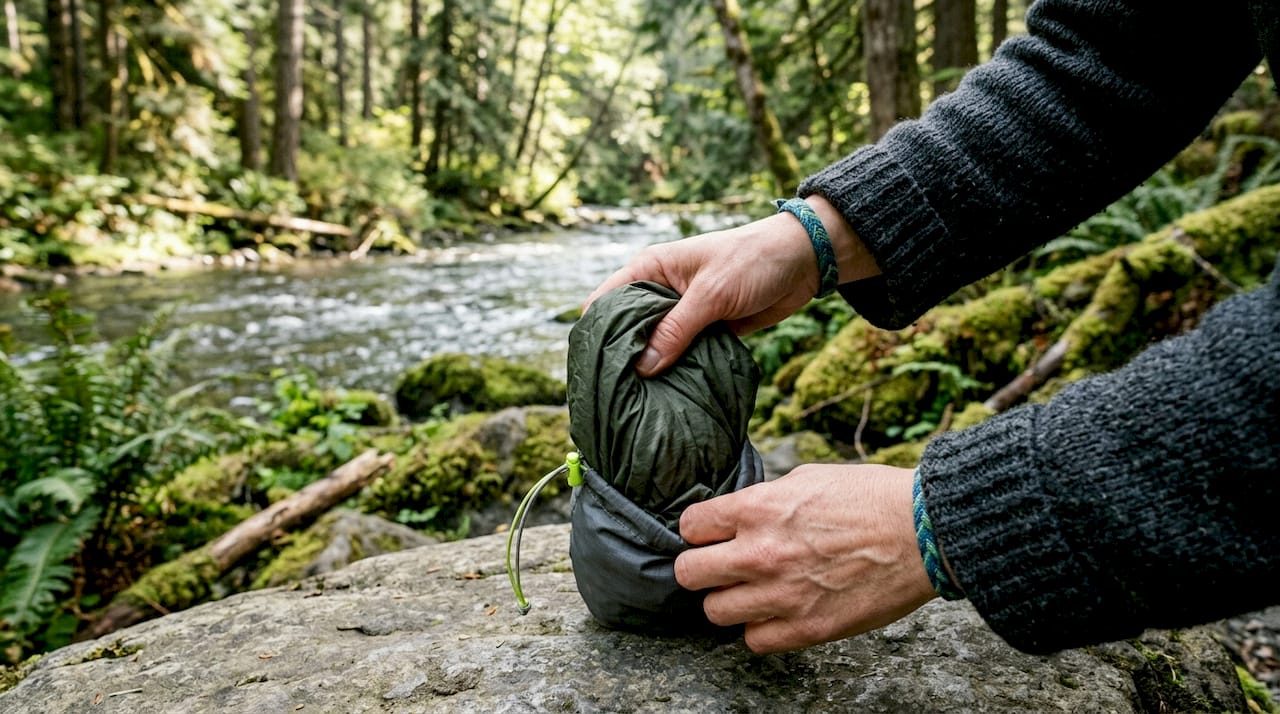
The most direct benefit is physical. Carrying less weight reduces joint strain and muscle fatigue, especially on long travel days or multi-hour hikes. Multi-functional gear that replaces two or more single-purpose items cuts total load and eliminates the mental overhead of deciding what to bring. Fewer items mean fewer decisions, and fewer decisions mean more mental energy for the actual experience.
Packability also reduces what researchers and experienced travelers call decision fatigue. When your packing system is tight and purposeful, you stop second-guessing every item. Experienced travelers treat packing as a routine system, using modular packable gear to stay present rather than constantly managing their load.
Pro Tip: Before any trip, lay out everything you plan to bring, then remove one third of it. You will almost never miss what you cut, and your back will thank you by day two.
Packable gear shines brightest when plans change without warning. A spontaneous overnight stay, an unexpected side trail, or a last-minute city hop all become easy when your gear fits in a small bag. Packability enables spontaneity by removing the logistical friction that forces travelers to say no to opportunities.
For urban users, the benefits are just as real. A packable daypack that folds to the size of a paperback book lives in your work bag until you need it. Packable backpacks compress to roughly paperback size and expand to around 15 liters, weighing just over 1 lb. That means you carry almost nothing until the moment you need extra capacity, then voila, you have a functional bag.
Space savings matter in every travel context. Overhead bins on budget airlines fill fast. Hostel lockers are small. City apartments have no storage. Packable gear solves all three problems without asking you to sacrifice function.
The trade-offs are real, though. Packable daypacks use thinner materials and minimal harness systems, which means less durability and comfort compared to traditional daypacks. For a day trip or urban commute, that trade-off is easy to accept. For a week-long trek with heavy loads, you need to weigh the compromise carefully.
The best packable gear earns its compressibility through specific material and construction choices. Fabrics like 210D nylon offer a strong balance of weight and tear resistance for bags and gear pouches. For insulated outerwear, down insulation delivers superior warmth-to-weight ratio and compresses tightly, though it loses loft when wet. Synthetic insulation packs slightly larger but performs reliably in damp conditions.
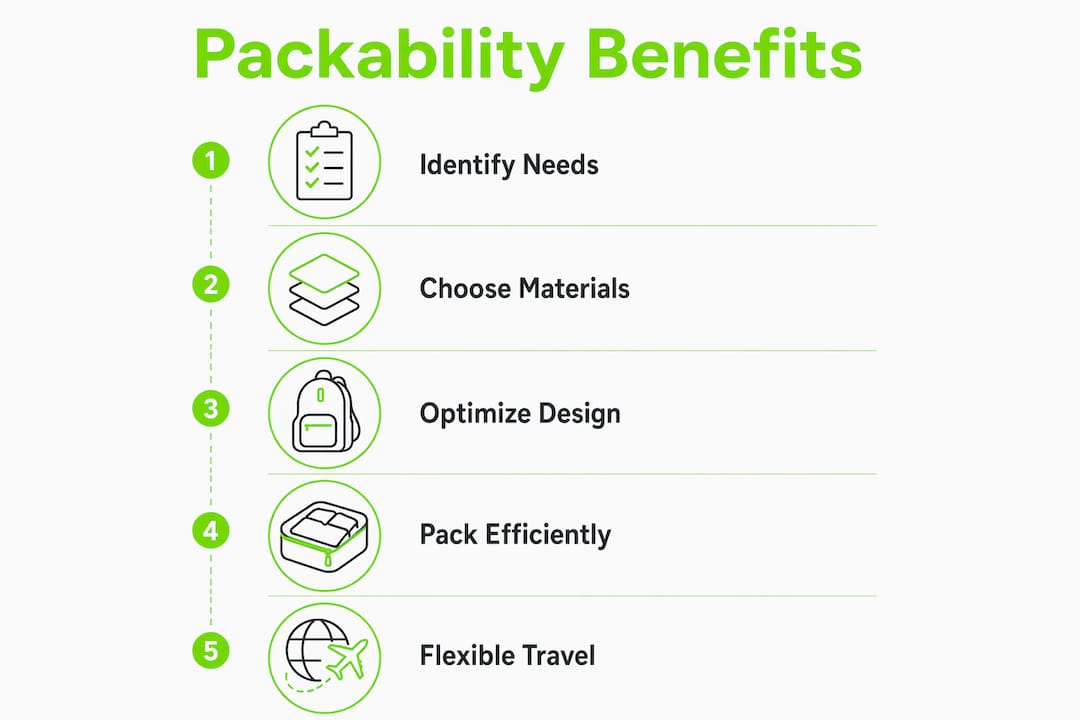
Structural features matter just as much as fabric choice. Compression straps, baffle designs, and reinforced seams allow gear to hold its shape under load while still collapsing flat when empty. These details separate gear that packs well once from gear that packs well trip after trip.
| Feature | Purpose | Trade-off |
|---|---|---|
| 210D nylon fabric | Lightweight and tear-resistant shell | Less abrasion resistance than heavier denier |
| Down insulation | Maximum warmth-to-weight and compression | Loses loft when wet |
| Synthetic insulation | Reliable warmth in wet conditions | Packs larger than down |
| Compression straps | Reduces packed volume significantly | Adds minor weight and complexity |
| Reinforced seams | Extends lifespan of thin materials | Slight weight addition |
Efficient packable gear compresses to less than 25% of its fully deployed volume. That compression ratio is the benchmark for gear that genuinely earns the “packable” label. Anything that packs down to half its size is just foldable, not truly packable.
Pro Tip: Check the packed size listed in product specs, not just the weight. A jacket that weighs 12 oz but packs to the size of a football is not truly packable for tight travel situations.
Choosing packable gear starts with a clear picture of your actual trip needs. Packing for every possible scenario is the most common mistake travelers make. It leads to overstuffed bags, sore shoulders, and gear you never touch.
Pro Tip: Pack your clothing in compression cubes or stuff sacks. They reduce volume by up to a third and keep your bag organized without adding meaningful weight.
Packability always involves compromise. The lightest, most compressible gear tends to use thinner materials that wear faster and offer less structural support. Understanding where those trade-offs land helps you make smarter choices rather than chasing the smallest packed size at all costs.
Durability takes the biggest hit. Ultra-thin fabrics abrade faster on rough terrain and puncture more easily than heavier alternatives. For gear that sees daily hard use, a slightly heavier but more durable option often makes more sense over a full season.
Comfort is the second trade-off. Packable daypacks typically use minimal shoulder harnesses and no frame sheets. That works fine for light loads under 15 lbs. Push past that weight, and the lack of structure becomes a real problem for your back and shoulders.
The goal is not the lightest possible kit. The goal is the most functional kit for your specific trip, carried as efficiently as possible.
Packability is the single most practical feature to evaluate in travel and outdoor gear because it directly affects your mobility, comfort, and freedom to adapt.
| Point | Details |
|---|---|
| Define packability clearly | Gear that compresses to under 25% of its deployed volume qualifies as genuinely packable. |
| Prioritize multi-use items | One item replacing two reduces total load and cuts decision fatigue on every trip. |
| Know the trade-offs | Thin materials pack small but wear faster; match material choice to your trip’s demands. |
| Never cut safety essentials | The Ten Essentials stay in your kit regardless of weight targets or packability goals. |
| Build a packing system | Organize by weight distribution and usage frequency to improve comfort and efficiency. |
Packability changed how I travel, but not in the way I expected. The obvious win is physical. Carrying less weight is simply easier on your body. But the real shift is mental. When your entire kit fits in one bag and sets up in seconds, you stop thinking about your gear and start thinking about where you are.
The mistake I see most often is treating packability as a competition. Travelers obsess over shaving grams from their sleep system while hauling a full-size tripod and four pairs of shoes. Packability only works when it applies to the whole kit, not just the glamorous ultralight pieces. I’ve found that lightweight packing for outdoor adventures requires honest self-assessment, not just better gear.
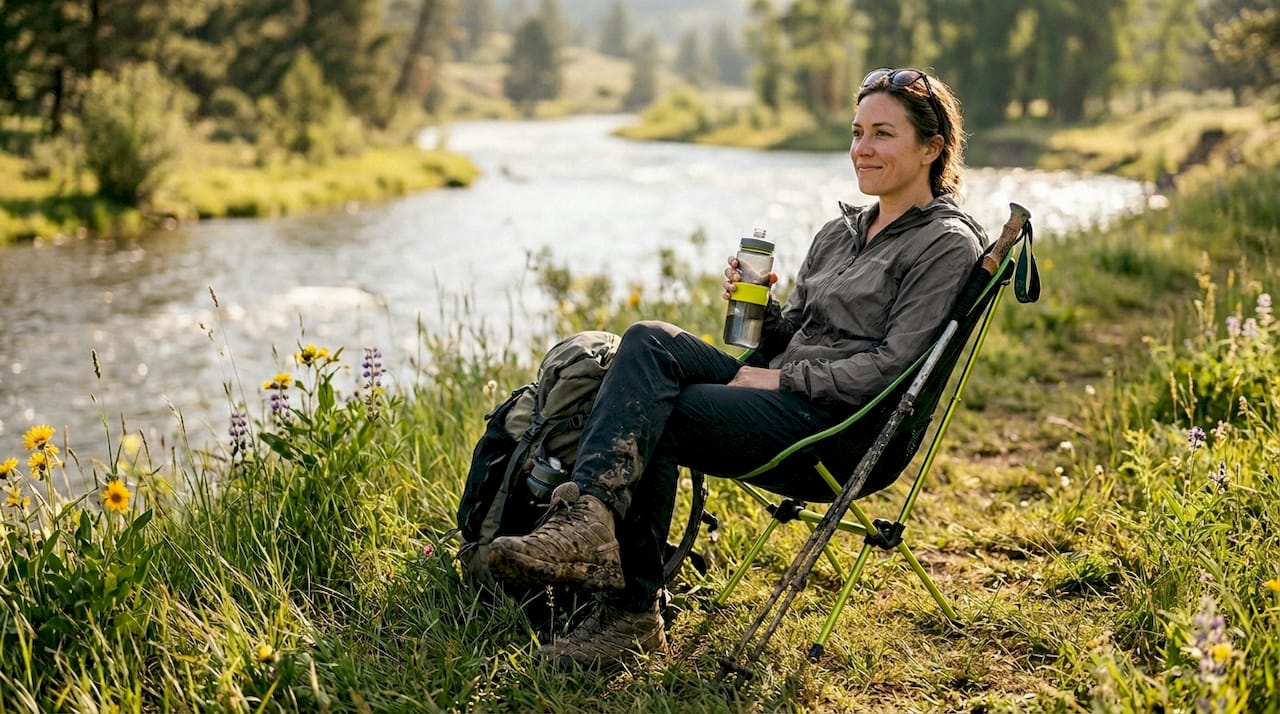
Seating is the category most travelers ignore entirely. You either sit on the ground, hunt for a bench, or skip the break altogether. A packable stool from Sitpack fits in a side pocket and weighs almost nothing. That sounds like a small thing until you’re at a trailhead, a crowded festival, or a long airport layover and you can just sit down wherever you want. That kind of freedom is exactly what packability is supposed to deliver.
My honest advice: evaluate every item in your kit through one question. Does this earn its space and weight? If the answer is no, leave it home. Your future self, somewhere on a trail or in a foreign city with a light pack and a clear head, will be grateful.
— Jonas
Packable seating is the category most gear lists forget, and Sitpack built its entire product line to fix that gap.
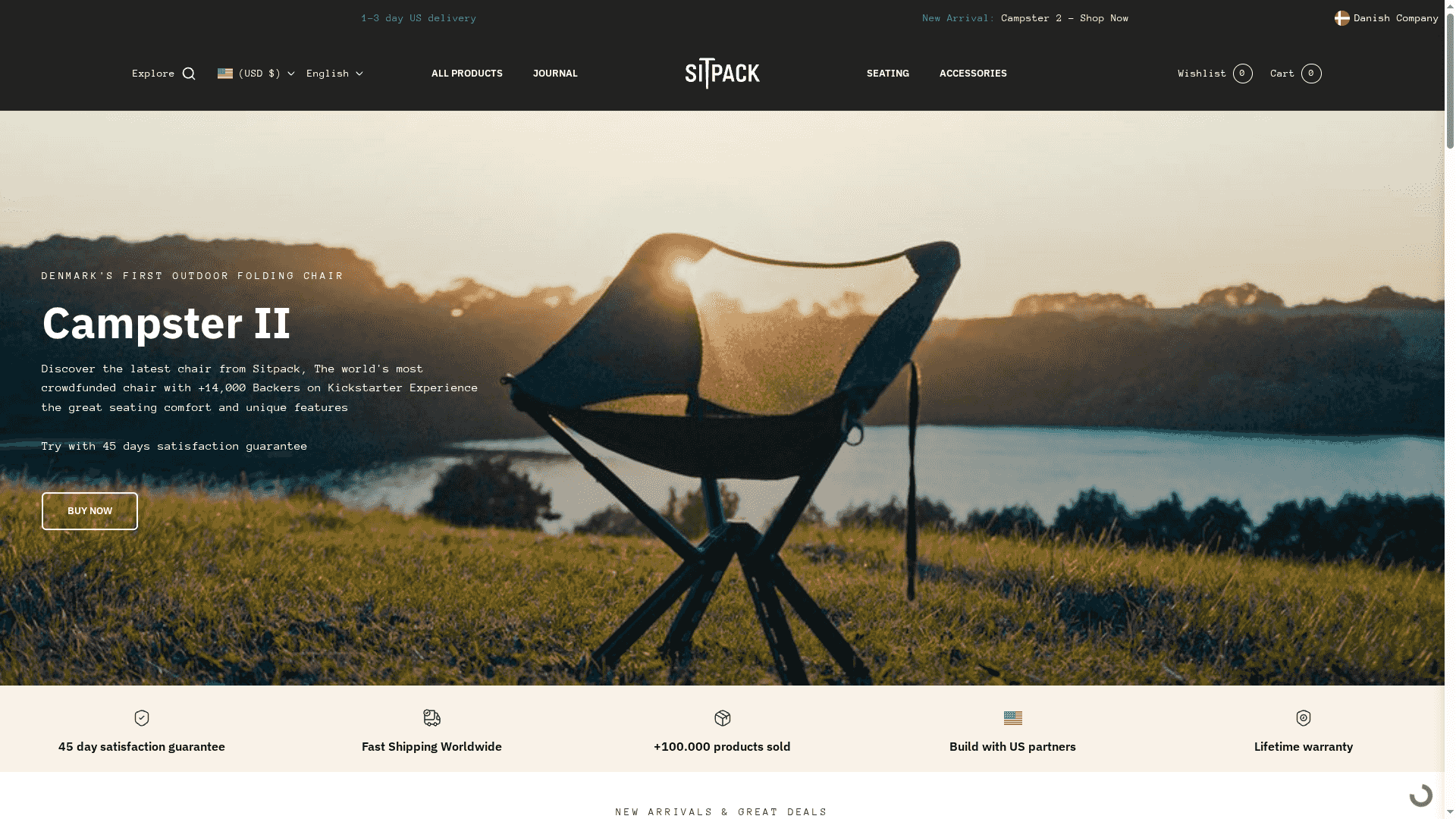
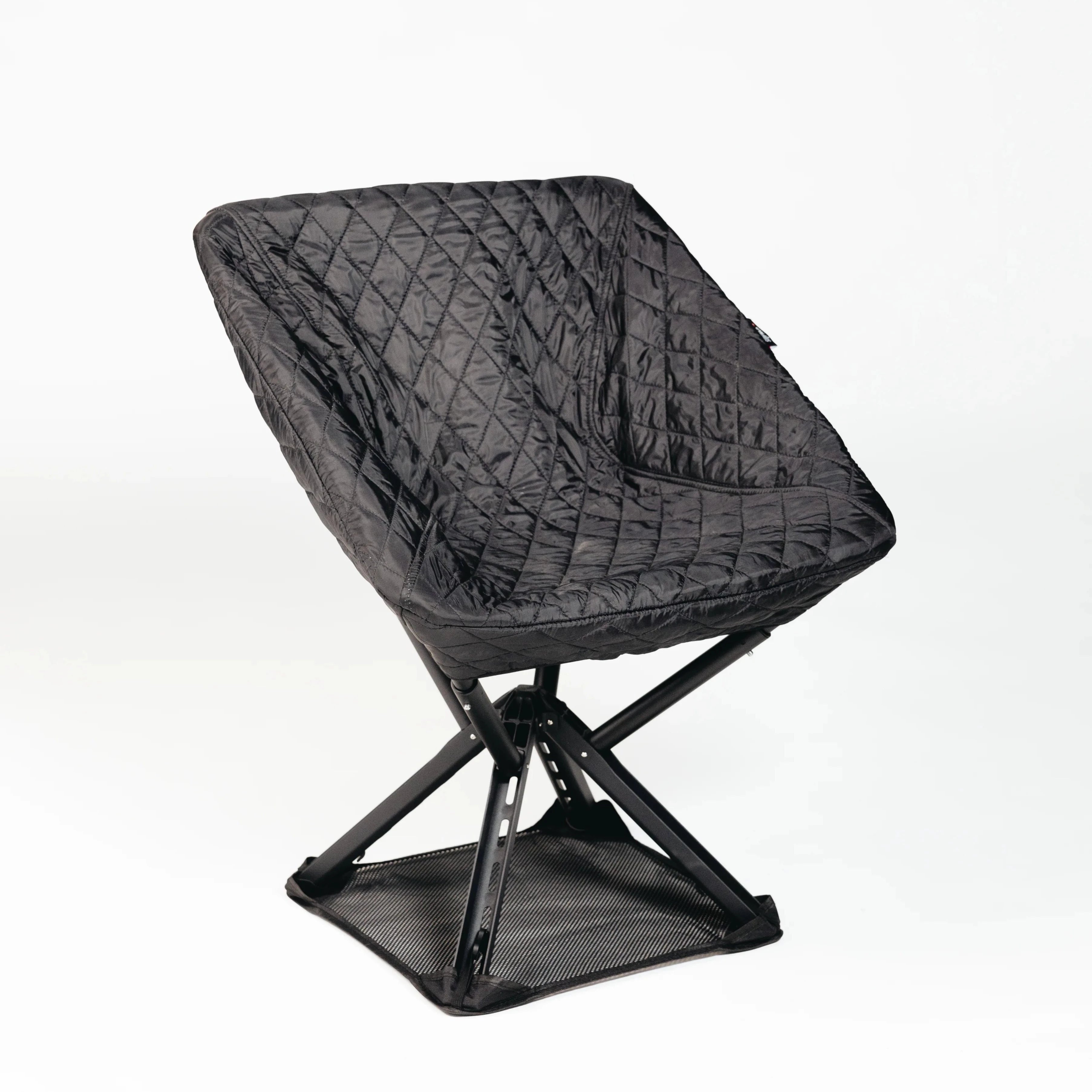
The Sitpack Zen and Campster II fold down to a fraction of their deployed size and slip into a bag pocket or clip to a pack strap. They are built for outdoor enthusiasts, travelers, and urban commuters who want the comfort of a proper seat without hauling a bulky chair. Sitpack products come with a lifetime warranty and ship worldwide, so wherever your next trip takes you, a proper seat can come along. If you want to see the full range of packable seating options, Sitpack’s catalog covers everything from ultralight stools to compact camp chairs.
Packability describes how efficiently a piece of gear compresses or folds into a compact form for storage or transport. Truly packable gear compresses to less than 25% of its fully deployed volume.
Packable items reduce physical strain, fit in smaller bags, and give you the flexibility to adapt to changing plans without checking extra luggage or leaving gear behind.
Start by defining your trip type, then choose multi-use items and apply a packing system organized by weight distribution and usage frequency. Cut anything that does not earn its space.
Safety items including first aid supplies, navigation tools, and emergency shelter should always stay in your kit. The Ten Essentials framework defines these as non-negotiable regardless of weight goals.
Packable gear typically uses thinner materials that compress well but wear faster under hard daily use. Match the material weight to your trip’s demands rather than always choosing the lightest option available.