Vogn
0
Tilmeld dig og få 10% i rabat på din ordre
Forventet levering
1-3 dage
Du vil måske også kunne lide





Dansk Firma

TL;DR:
- Modular seating consists of independent, movable furniture units that can be rearranged to fit different spaces and needs. Its key advantages include flexible layouts, easy transport, and individual module replacement, making it ideal for small, dynamic environments. The system differs from fixed sectionals and traditional sofas by offering full reconfigurability and standalone use of each piece.
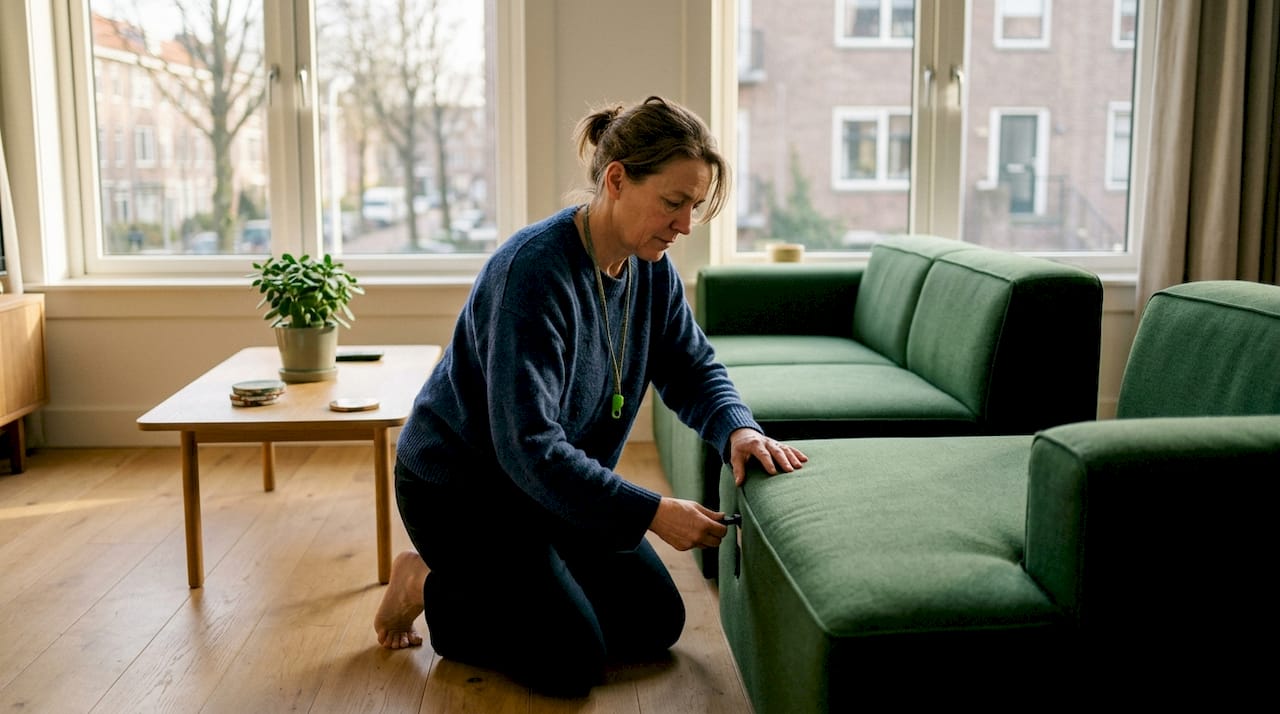
Modular seating is defined as a furniture system made of independent, movable sections called modules that you can rearrange, separate, or combine to fit any space or occasion. The core components typically include armless chairs, corner units, ottomans, and chaises that are not permanently joined together. Unlike a traditional fixed sofa, a modular system gives you full control over your layout. Whether you’re fitting seats into a studio apartment, setting up a lounge at a campsite, or reconfiguring a living room for a dinner party, modular seating furniture adapts to the moment. That flexibility is the whole point.
Modular seating is the industry term for furniture built from freestanding, interchangeable units. Each module works on its own or connects with others to form larger configurations. The system contrasts sharply with traditional sofas, which come as a single fixed piece, and with sectional sofas, which often have bolted frames that lock the layout in place.

The practical impact is significant. You are not buying a sofa. You are buying a system. Add a corner unit when you need more seating for guests. Pull an ottoman to the side when you want open floor space. Take two armless chairs to the backyard for a fire pit night. That kind of real-time adaptability is what separates modular seating furniture from everything else in the furniture category.
For travelers, campers, and urban dwellers with limited square footage, this matters even more. A system you can reconfigure beats a sofa you have to work around every single time.
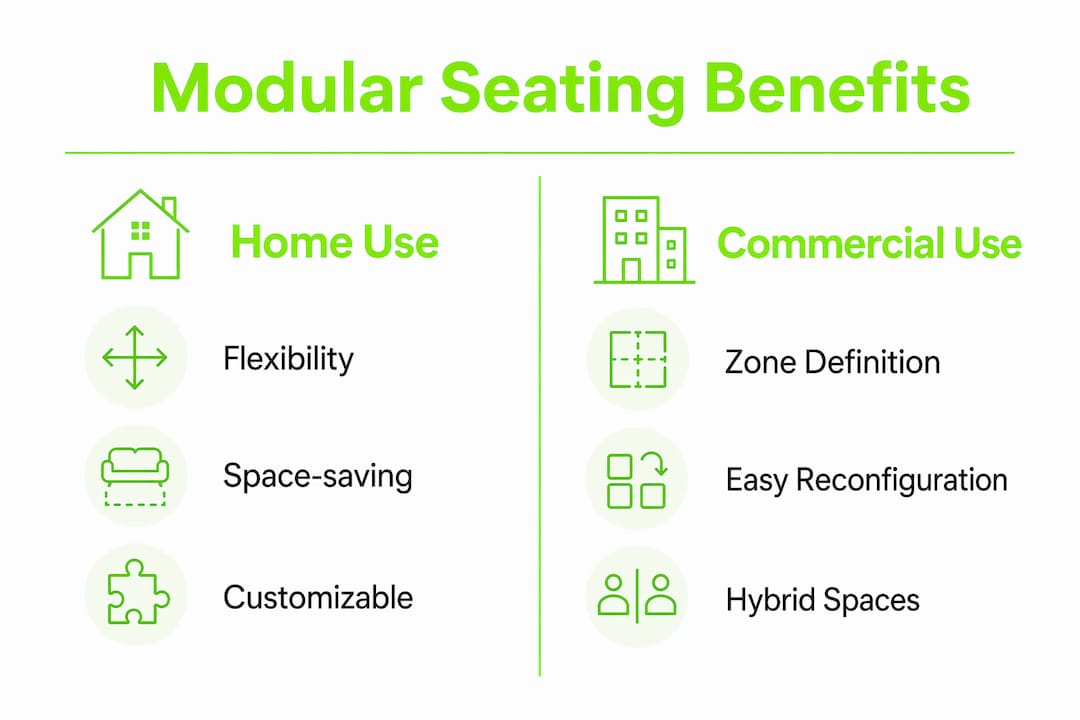
The biggest benefit of modular seating is layout flexibility. You can reconfigure seating arrangements constantly without replacing furniture, scaling up or down by adding or removing modules to optimize floor space in real time. That means your seating grows with your needs instead of fighting against them.
Here is what that flexibility looks like in practice:
Pro Tip: Before buying, map out at least two different configurations for your space. If the system can’t serve both layouts comfortably, it’s not the right fit.
Modular seating also shines in hybrid environments. It defines zones in open-plan spaces without walls by using furniture positioning alone. That is a genuinely useful trick for anyone working from home who needs the living room to double as a focused work area during the day and a relaxed lounge in the evening.
The confusion between modular and sectional sofas is understandable. They look similar in a showroom. The difference is structural and functional.
Modular pieces are freestanding and detachable, unlike sectional sofas that often have bolted fixed frames limiting rearrangement. A sectional sofa maintains a factory-fixed layout. You can choose an L-shape or a U-shape when you buy it, but that shape is essentially permanent. A modular system has no fixed shape at all.
| Feature | Modular seating | Sectional sofa | Traditional sofa |
|---|---|---|---|
| Configuration | Fully reconfigurable | Limited to original layout | Fixed, single piece |
| Transport | Easy, piece by piece | Difficult, large sections | Difficult, one unit |
| Module replacement | Yes, individual pieces | No | No |
| Standalone use | Yes, each module works alone | No | Yes |
| Best for | Flexible, multi-use spaces | Defined large rooms | Compact, stable rooms |
A traditional sofa sits at the other end of the spectrum. It is one piece, one shape, one purpose. It works well in a stable room where nothing changes. The moment your life requires flexibility, a traditional sofa becomes an obstacle.
The transport advantage of modular units is real and often underestimated. Anyone who has tried to wrestle a sectional sofa up a stairwell knows the pain. Individual modules sidestep that problem entirely.
Choosing the right modular system requires more thought than picking a color and a size. The details that seem minor in a showroom become very obvious once you live with the furniture.
Start with module dimensions. Measure every doorway, hallway, elevator, and stairwell between the store and your final destination. Measuring individual module dimensions is critical to ensure ease of transport through elevators or stairwells. A module that looks compact on a website can still be too wide for a tight turn on a landing.
Here are the key factors to evaluate before buying:
Pro Tip: Ask the retailer whether replacement modules are sold individually and whether the product line will remain in production for several years. A modular system loses its value if you can’t source matching pieces later.
Planning configurations before you buy saves real money. Sketch your room to scale, then draw at least three different arrangements using the modules you plan to purchase. If one arrangement doesn’t work, you will know before the delivery truck arrives.
Modular seating covers a wide range of products, and the right type depends entirely on where and how you plan to use it. Here are the main categories and their best applications:
Armless chairs are the most versatile module. They work as standalone seats, line up in a row for event-style seating, or anchor the ends of a larger configuration. They are the building block of almost every modular system.
Corner units create the L-shape or U-shape that most people picture when they think of a sectional-style layout. They are the connective tissue of a larger arrangement and define the overall shape of the configuration.
Ottomans serve double duty as footrests, extra seats, or low coffee tables with a tray on top. In a small apartment, an ottoman module replaces two or three pieces of furniture at once.
Chaise sections add a lounging element to the system. They are ideal for reading corners, afternoon naps, or stretching out after a long hike. For outdoor modular setups, a chaise paired with a corner unit creates a surprisingly comfortable daybed.
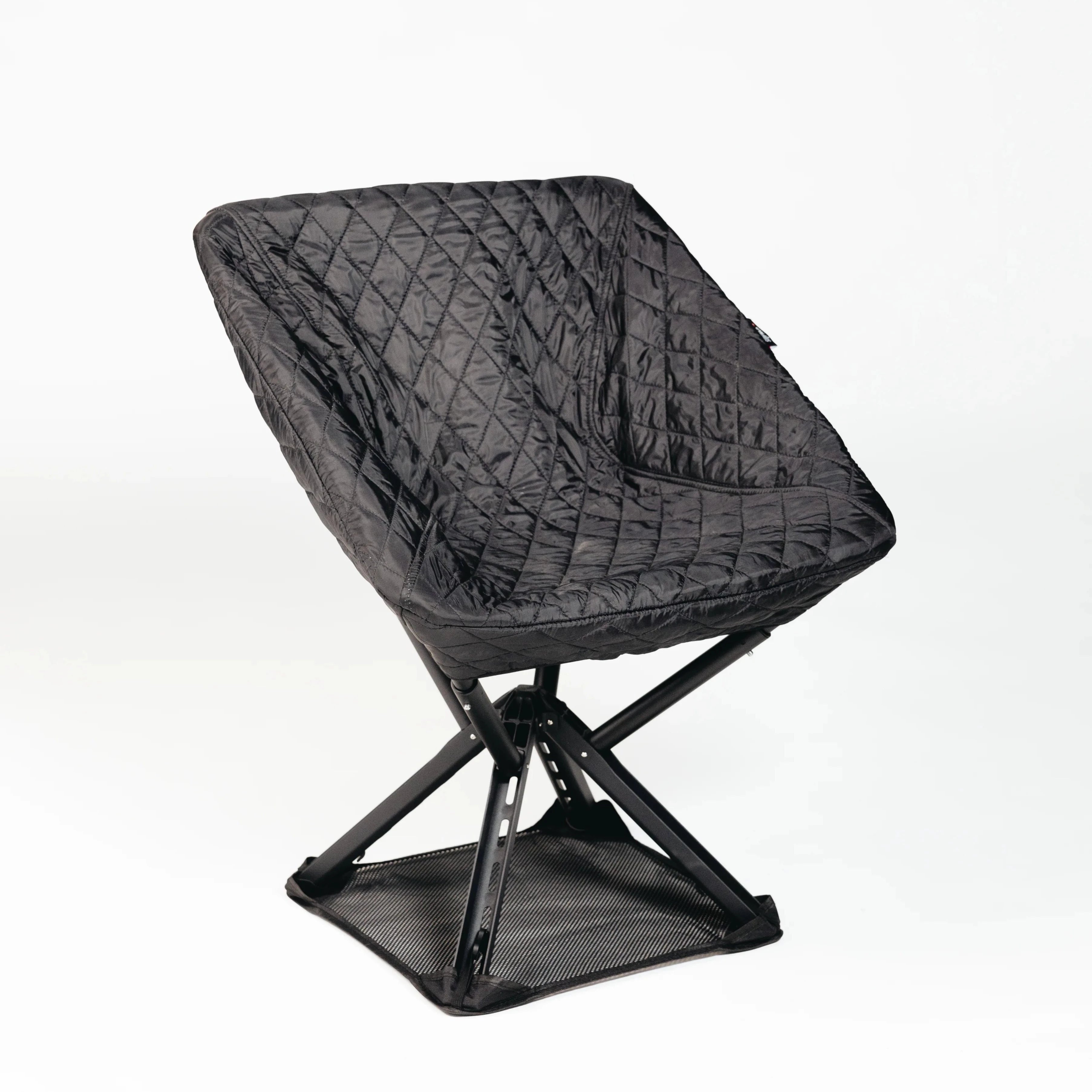
Compact travel modules are a growing category. These are purpose-built for portability, using lightweight frames and weather-resistant materials. They assemble without tools, pack down small, and handle the kind of rough treatment that comes with camping, festivals, and urban rooftop use. Sitpack’s approach to modular camping furniture falls squarely in this category, prioritizing durability and ease of setup over decorative detail.
The multifunctional furniture category overlaps significantly with modular seating, especially for home and workspace solutions where a single piece needs to serve several roles across the day.
Modular seating is the most adaptable furniture system available, and its value multiplies when you match the right module type to your specific environment.
| Point | Details |
|---|---|
| Core definition | Modular seating consists of independent, freestanding units that reconfigure without tools. |
| Key advantage over sectionals | Modules work as standalone pieces; sectionals lock into a factory-fixed layout. |
| Connector and floor stability | Use rubber grip pads or locking connectors on hard floors to prevent modules from drifting. |
| Travel and outdoor use | Prioritize lightweight, weather-resistant modules that assemble quickly and fit through standard doorways. |
| Long-term value | Replace individual worn modules instead of the entire set to extend the system’s lifespan. |
Most buyers treat modular seating as a slightly fancier sofa. They pick a shape, choose a fabric, and stop thinking about it. That approach misses the real value of the system entirely.
The flexibility that makes modular seating worth the investment is not just about rearranging furniture on a Saturday afternoon. It is about having a home that can shift with your life. I have seen people use the same modular system as a work-from-home office boundary in the morning, a social lounge for six people in the evening, and a guest bed configuration on weekends. That range of use is genuinely rare in furniture.
The detail that catches most buyers off guard is connector quality. A beautiful modular sofa with weak connectors becomes an annoying, gap-filled mess within six months of daily use. I always tell people to test the connectors in the showroom by sitting on the seam between two modules and shifting your weight. If it moves, it will only get worse at home.
For outdoor and travel contexts, the calculus shifts toward weight and weather resistance. True flexibility in modular seating means maintaining a coherent design identity even when switching between configurations for work, socializing, or lounging. A system that looks great indoors but warps in the sun is not a flexible system. It is just an expensive mistake.
The sustainability angle is also worth taking seriously. Replacing single modules rather than entire units offers better sustainability and value over time. Buying furniture that lasts and adapts beats buying cheap pieces you replace every few years.
— Jonas
If you have spent time reading about modular seating and realized that portability is your top priority, Sitpack builds products with exactly that in mind.
Sitpack designs portable seating for people who move. Whether you are heading to a campsite, a city rooftop, a festival, or a weekend market, the goal is the same: a seat that goes where you go, sets up fast, and holds up under real conditions. The Campster II and Sitpack Zen are built around lightweight materials, minimal footprint, and the kind of durability that outdoor use demands. If you are ready to stop hauling bulky furniture and start sitting comfortably anywhere, explore Sitpack’s portable chairs and find the setup that fits your life.
Modular seating is a furniture system made of separate, freestanding units that connect or stand alone. You can rearrange the pieces into different layouts without tools or permanent fixtures.
Sectional sofas have fixed frames that lock the layout in place. Modular units are fully detachable and freestanding, so each piece works independently and the overall shape changes whenever you need it to.
Modular seating works well in small spaces because you can scale the configuration to fit the room. Removing a module or two opens up floor space immediately without buying new furniture.
Outdoor modular seating requires weather-resistant materials such as treated fabrics and powder-coated frames. Lightweight modules designed for quick assembly are the best choice for camping, balconies, and travel use.
Rubber grip pads placed under each module or integrated connector clips between units prevent sliding on hard floors. This is a simple fix that makes a significant difference in daily comfort and configuration stability.