Cart
0
Sign up and get 10$ off your order
Expected delivery
1-3 days
You may also like


Danish Company


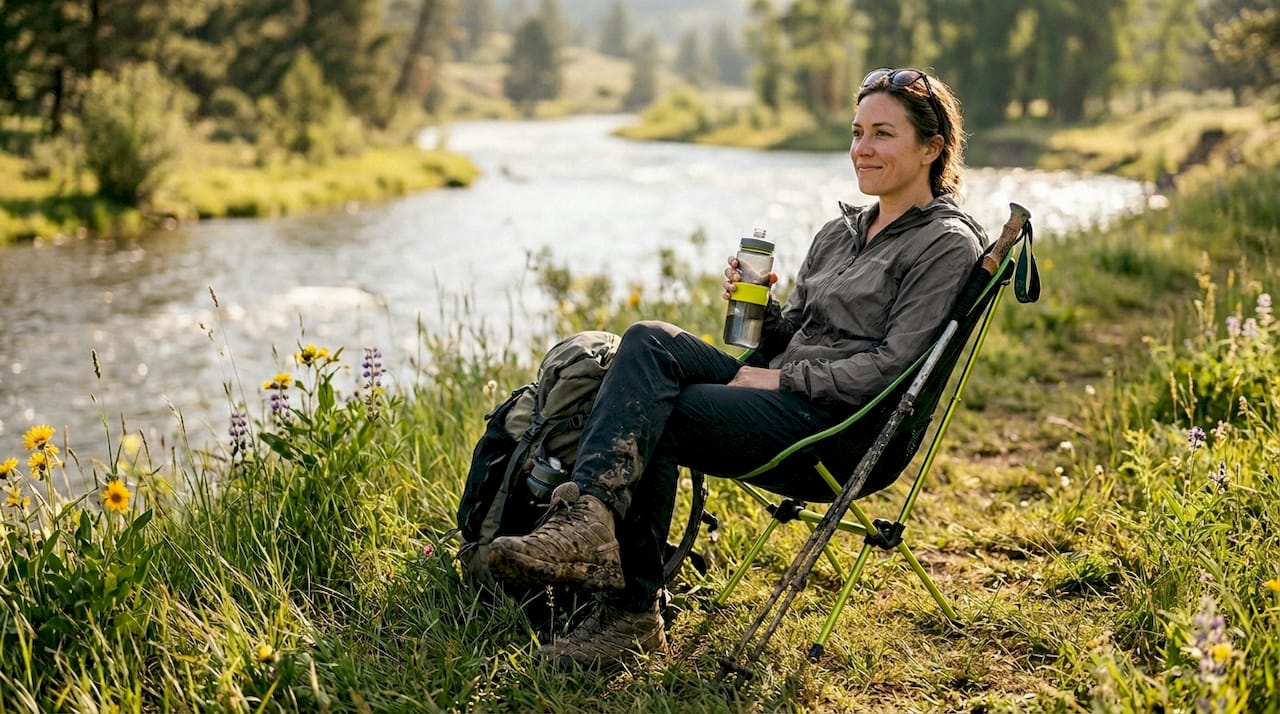
Most outdoor adventurers pack layers, insulated jackets, and thermal socks, yet still end up cold. The reason is almost always the same: they’re losing heat straight through the surface they’re sitting on. Most outdoor enthusiasts underestimate the impact of cold seats on overall comfort and experience. A seat warmer is one of the simplest, most effective tools you can add to your outdoor kit, and once you understand why, you’ll never leave home without one.
| Point | Details |
|---|---|
| Seat warmth is vital | Direct seat warmth prevents rapid heat loss and boosts outdoor comfort during any cold-weather adventure. |
| Technology and features matter | Modern seat warmers offer efficient, adjustable heating with crucial safety controls for outdoors. |
| Choose wisely for conditions | Performance varies—consider heating time, power draw, battery life, and certifications for your activities. |
| Combine for even more comfort | Pair seat warmers with insulation or portable pads for optimal warmth with less power used. |
| Safety and preparation first | Test your seat warmer in real conditions and follow all safety guidelines to avoid hassles or hazards. |
When you sit on cold ground, a rock, or a metal chair, your body conducts heat directly into that surface. This is called conductive heat loss, and it happens faster than heat loss to cold air. Your core temperature drops, your muscles tighten, and your enjoyment of the outdoors shrinks fast.
Outdoor seat warmers provide focused, localized heating that directly counters this process. Rather than relying on your body to warm the surface beneath you, the seat warmer does that work, keeping your core temperature stable and your muscles relaxed. That’s not a small thing. A stable core temperature is the foundation of comfort, endurance, and safety outdoors.
The benefits go beyond just feeling cozy. Here’s what consistent seat warmth actually delivers:
Stat to know: Seat warmers provide focused heating that meaningfully enhances comfort for campers, tailgaters, and outdoor enthusiasts across all seasons.
The psychological impact is real too. Warmth signals safety to your brain. When you’re comfortable, you make better decisions, stay longer, and enjoy the experience more. Pairing a seat warmer with the right chair amplifies those portable seating benefits even further.
Seat warmers are not complicated devices, but the engineering behind them is smarter than most people expect. Understanding how they work helps you choose the right one and use it safely.
The core of any seat warmer is a heating element embedded inside a pad or cushion. Modern seat warmers use embedded resistive wires, carbon fiber panels, or flat heating pads to generate warmth. Each material has trade-offs: resistive wire is affordable and durable, carbon fiber heats more evenly and is thinner, and flat pads are flexible and lightweight.
Power sources vary widely depending on your setup:
Controls are where Joule heating mechanics get practical. Most quality models offer low, medium, and high heat modes. Better models include a thermostat that maintains a set temperature and an auto-shutoff that triggers at around 130°F or after 45 minutes of continuous use. This prevents overheating and saves battery life.
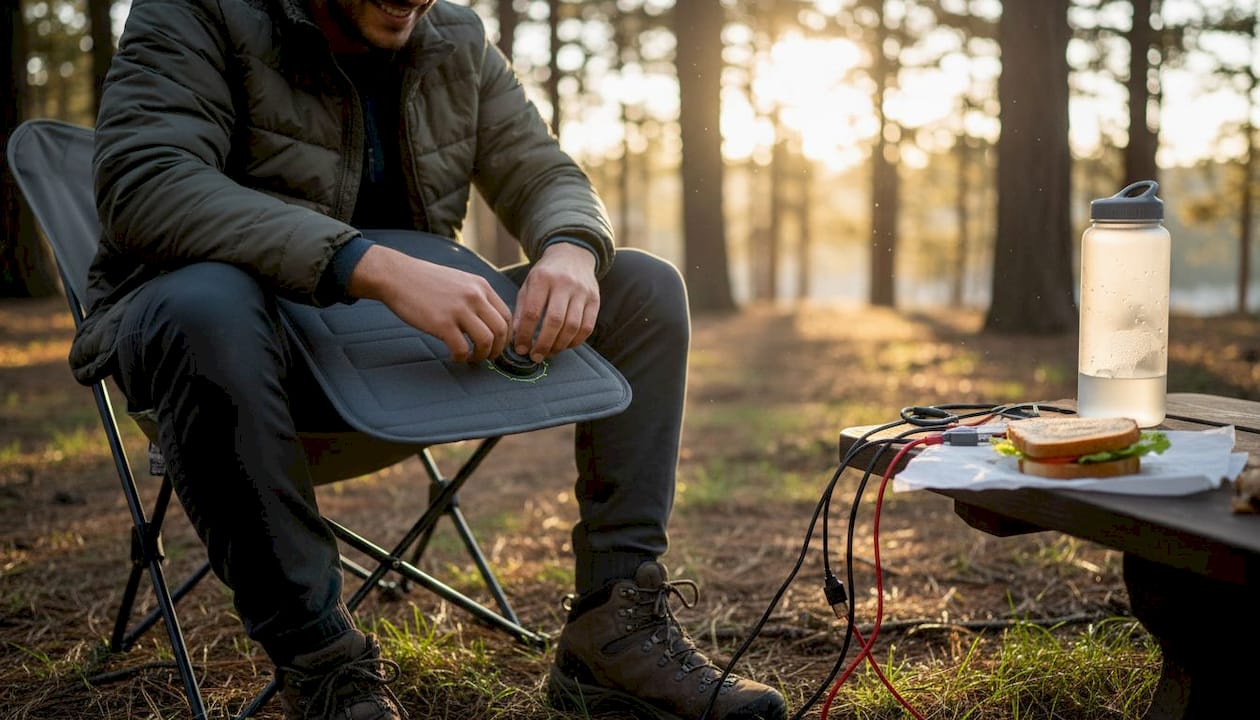
Water resistance is non-negotiable for outdoor use. Look for seat warmer heating technology rated IPX4 or higher, which means the unit can handle splashes and light rain without failing.
| Feature | Entry-level | Mid-range | Premium |
|---|---|---|---|
| Heating element | Resistive wire | Carbon fiber | Carbon fiber + thermostat |
| Power source | USB 5V | 12V / USB | Rechargeable pack |
| Heat modes | 1 (on/off) | 2-3 modes | 3 modes + auto-shutoff |
| Water resistance | None | Splash-resistant | IPX4 rated |
| Heat-up time | 5-8 min | 2-4 min | Under 2 min |
Pro Tip: If you camp in areas with no power access, prioritize a model with a high-capacity rechargeable pack over a USB-only option. You’ll get more heat for longer without needing a power source nearby.
Seat warmers are quickly becoming one of the most practical essential camping accessories you can carry, especially as designs get lighter and battery tech improves.
Not all seat warmers perform equally in the field. Marketing claims are one thing. Real-world numbers are another. Here’s what the data actually shows.
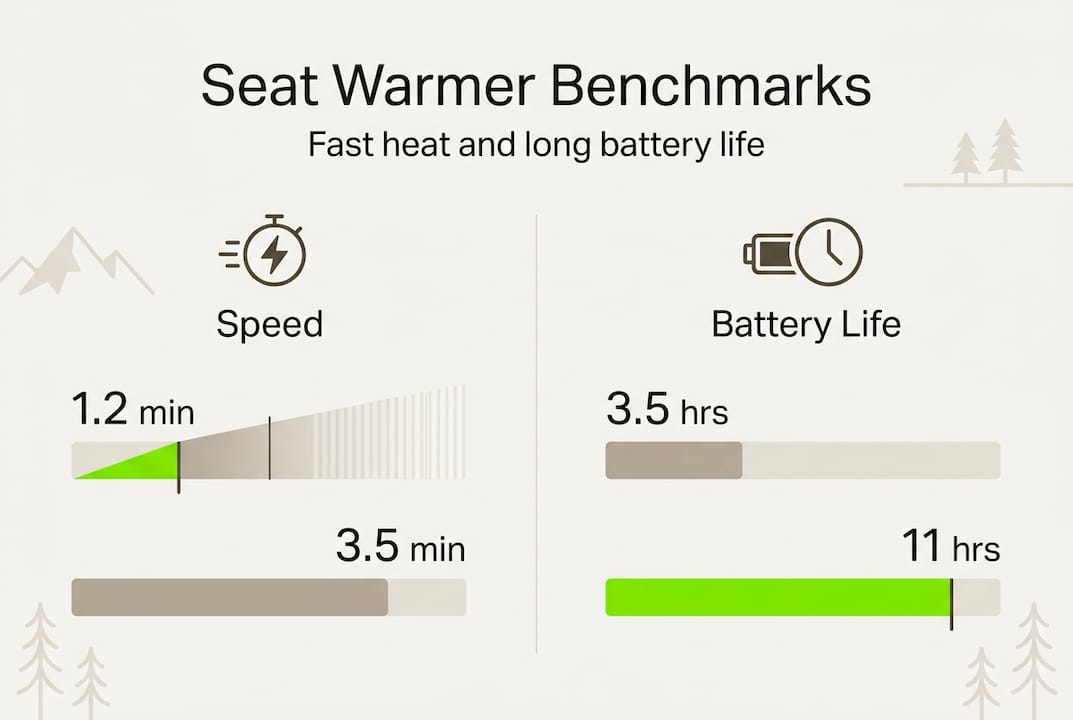
Leading models heat in 1.2 to 3.5 minutes, draw between 28 and 45 watts, and offer battery life ranging from 3.5 to 11 hours depending on the heat setting. That’s a massive range, and it matters when you’re planning a full day outside.
| Model | Heat-up time | Max temp | Battery life | Wattage draw |
|---|---|---|---|---|
| ThermaSeat X3 | 1.5 min | 140°F | 9 hours | 30W |
| WheatWarm Luxe | 2.0 min | 135°F | 11 hours | 28W |
| Slys Heated Chair | 1.2 min | 145°F | 3.5 hours | 45W |
| Dometic GO Heater | 3.5 min | 130°F | 6 hours | 32W |
ThermaSeat X3, WheatWarm Luxe, and Slys Heated Chair represent the current best-in-class range for battery life, max temperature, and heat-up speed. The trade-off is clear: faster heat usually means higher wattage draw and shorter battery life.
For all-day outdoor use, the WheatWarm Luxe’s 11-hour battery life at a modest 28W is hard to beat. For quick warmth at a tailgate or short hike, the Slys Heated Chair’s 1.2-minute heat-up time wins. Understanding your use case before buying saves you from picking the wrong tool.
Pro Tip: Always test your seat warmer at home on the lowest setting first. This lets you gauge actual battery drain before you’re relying on it in the field. Check the portable seat benefits of pairing a quality warmer with a lightweight chair for maximum efficiency.
Models with safety cutoffs are strongly preferred for extended outdoor use. Auto-shutoff at a defined temperature protects both you and the device, especially when you’re focused on other activities.
Seat warmers are excellent tools, but they come with real limitations you should know before you depend on one in the field.
Battery drain is the most common issue. High-draw models risk draining batteries if the engine is off or if you’re running on a standalone pack. A 45W model running for 4 hours pulls significant energy. In an EV, seat warmers are actually more range-efficient than cabin heat, but in deep cold, even EVs need careful management.
Cold weather itself can cause failures. 78% of seat warmer failures below 20°F are due to connection or module issues, not the heating element itself. Voltage sag in cold batteries and brittle wire connections are the two most common culprits.
Here are the key safety rules every outdoor user should follow:
“The safest seat warmers for outdoor use combine auto-shutoff, temperature sensors, and water-resistant construction. These aren’t optional features. They’re the baseline for responsible use.”
For seat warmer best practices, always prioritize certified models over cheap, uncertified alternatives. The price difference is small. The safety difference is not.
Knowing how to use a seat warmer well is just as important as picking the right one. These strategies will help you get the most warmth, the longest battery life, and the most reliable performance outdoors.
Pro Tip: For maximum portable comfort outdoors, pair your seat warmer with a lightweight, packable chair that has a firm base. Soft, collapsible chairs can compress the heating element unevenly, reducing both warmth distribution and the lifespan of the pad.
Maintenance is simple but often skipped. Wipe down the surface after each use, check connections before storage, and never machine wash unless the manufacturer explicitly says it’s safe.
You now know more about seat warmers than most outdoor gear enthusiasts. You understand the technology, the performance benchmarks, the safety rules, and the expert strategies for getting the most out of every session outside. That knowledge is only useful if you pair it with the right gear.

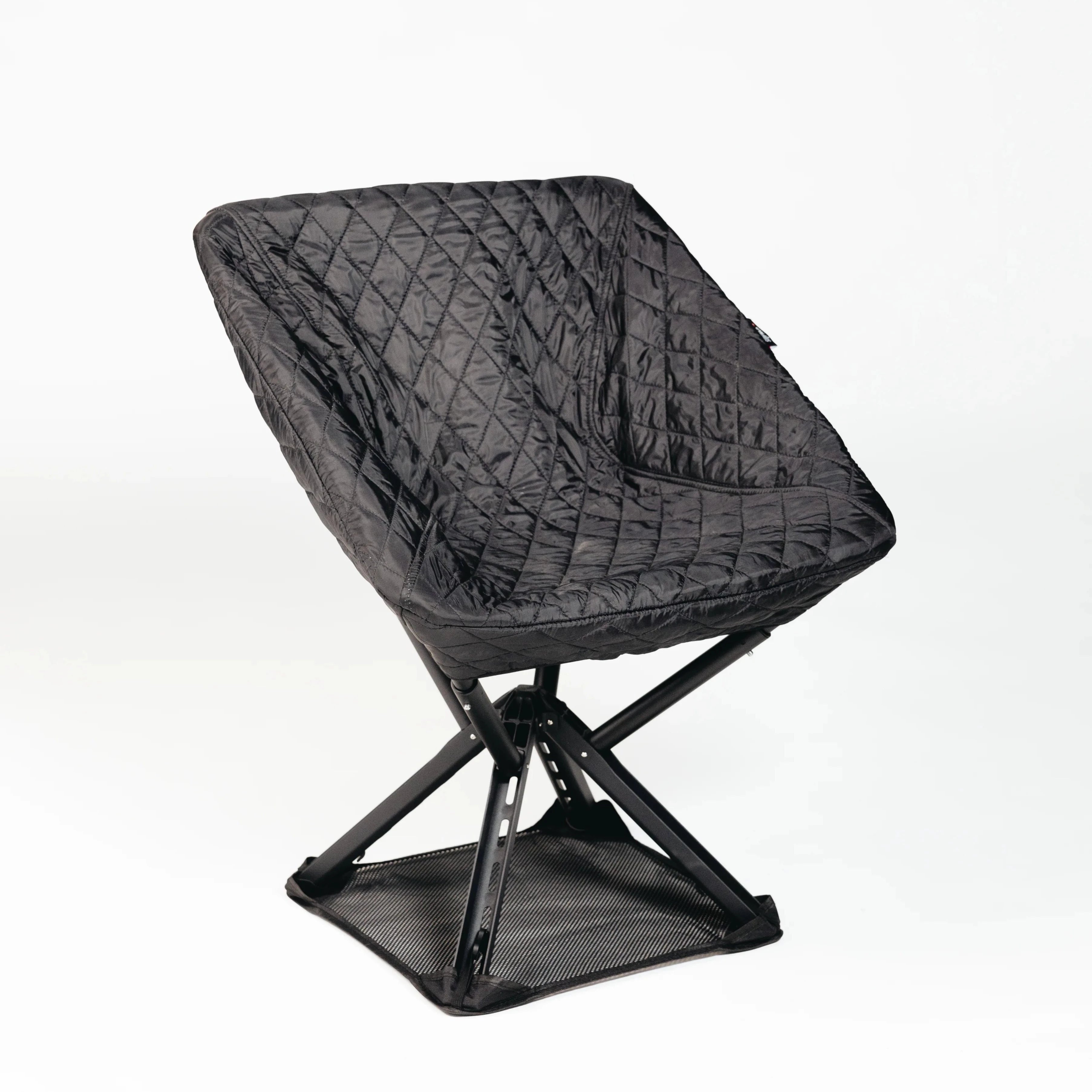
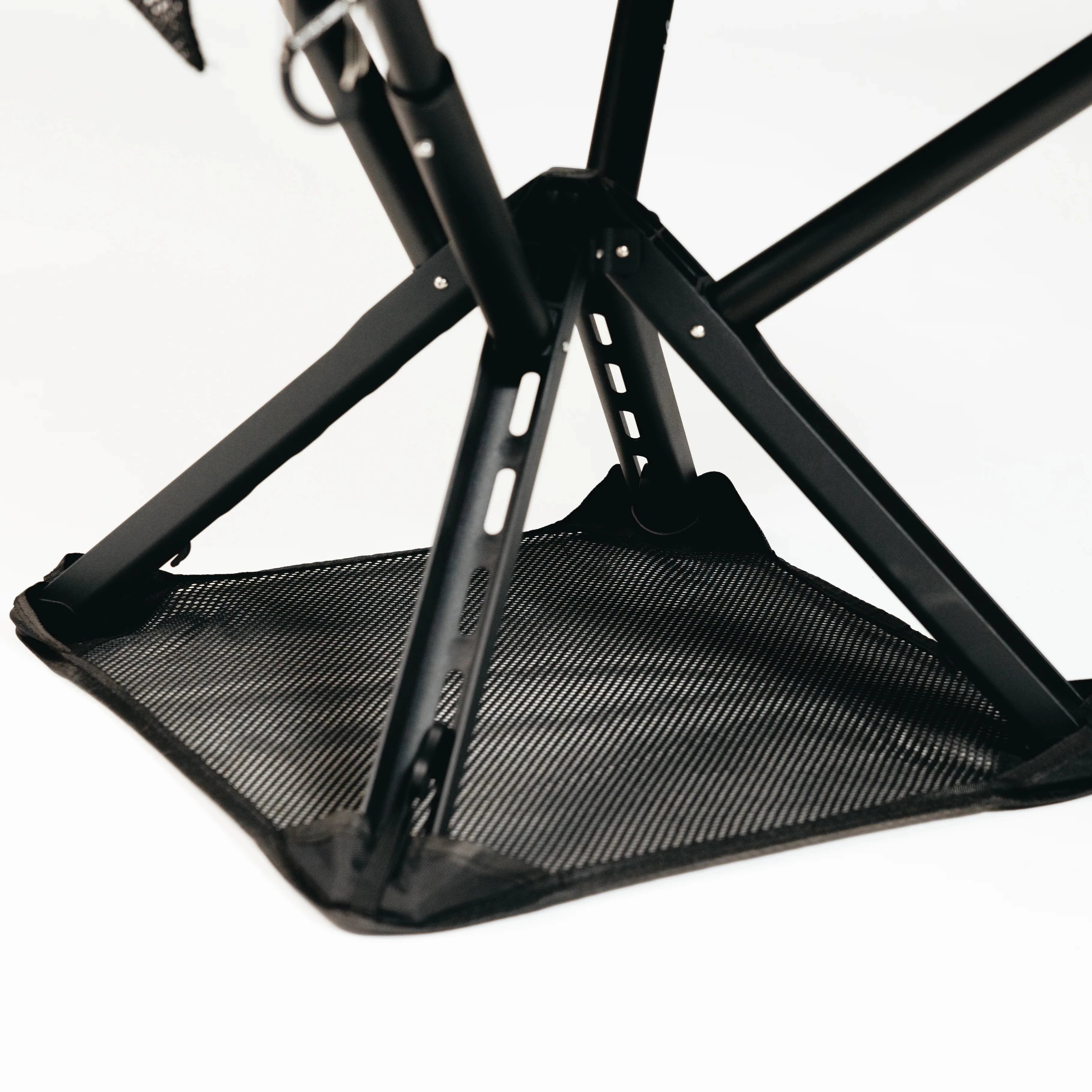
At Sitpack, we design portable seating solutions built for real outdoor use. From the ultralight Campster II to the Sitpack Zen, every product is engineered around the idea that comfort and portability should never be a trade-off. Explore our full range of seat warmer insights and outdoor accessories to find the combination that fits your adventure style. With a 45-day satisfaction guarantee and fast worldwide delivery, upgrading your outdoor comfort has never been easier.
Safety features like auto shut-off and temperature sensors are critical in outdoor seat warmers. Look for models that cut off at 130°F and carry a water-resistance rating of at least IPX4 for reliable outdoor use.
High-draw seat warmers risk battery drain without the engine running, especially models above 40W. Choose low-wattage options in the 28 to 32W range for extended off-grid or parked use.
Portable seat warmers operate 3.5 to 11 hours on a single charge, depending on the heat setting and battery capacity. Running on the lowest setting consistently delivers the longest runtime.
Yes, but 78% of failures below 20°F come from connection or module issues rather than the heating element itself. Always test your gear in cold conditions before any critical outdoor outing.