Cart
0
Sign up and get 10$ off your order
Expected delivery
1-3 days
You may also like


Danish Company

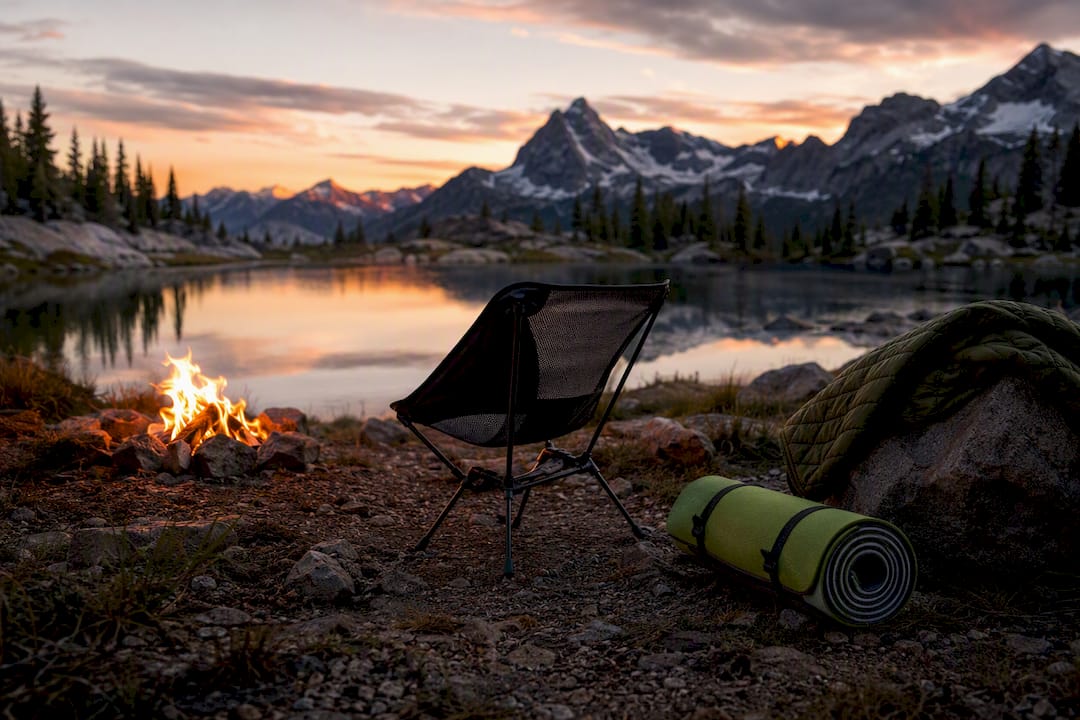
For an overnight backpacking trip, prioritize shelter, your sleep system, and a properly sized pack, then round things out with the Ten Essentials and a lightweight kitchen. Target a base weight (everything except food, water, and fuel) somewhere between 10 and 15 pounds if you’re going lightweight, or up to 20 pounds if you’re new to this. Ultralight setups under 10 pounds exist, but they’re a second-trip goal, not a first-trip requirement.
TL;DR:
- The Big Three or Big Four account for 60 to 70 percent of your base weight, making them the first focus for weight reduction efforts.
- Use a sleeping bag rated 20°F colder than the coldest expected night to ensure safety and comfort, considering that manufacturers tend to be optimistic with ratings.
- Pack only essential lightweight gear, such as a stove, fuel, and one pot, and carry an extra day’s food as a backup in case of weather delays or route changes.
- Select moisture-wicking clothing layers and avoid cotton, with sock choices being crucial for comfort and blister prevention on multi-day trips.
- Weigh your packed bag regularly and follow a checklist for pre-trip planning, including route verification, weather checks, and sharing your itinerary for safety.
Your shelter, sleep system, backpack, and cooking setup, often called the Big Three or Big Four, make up roughly 60 to 70 percent of your base weight. That’s exactly why they deserve your first dollars and your first careful decisions. Drop two pounds off your tent and you’ll feel it more than trimming ounces from your toiletry kit.
Here’s what belongs on your overnight backpacking checklist for shelter and sleep:
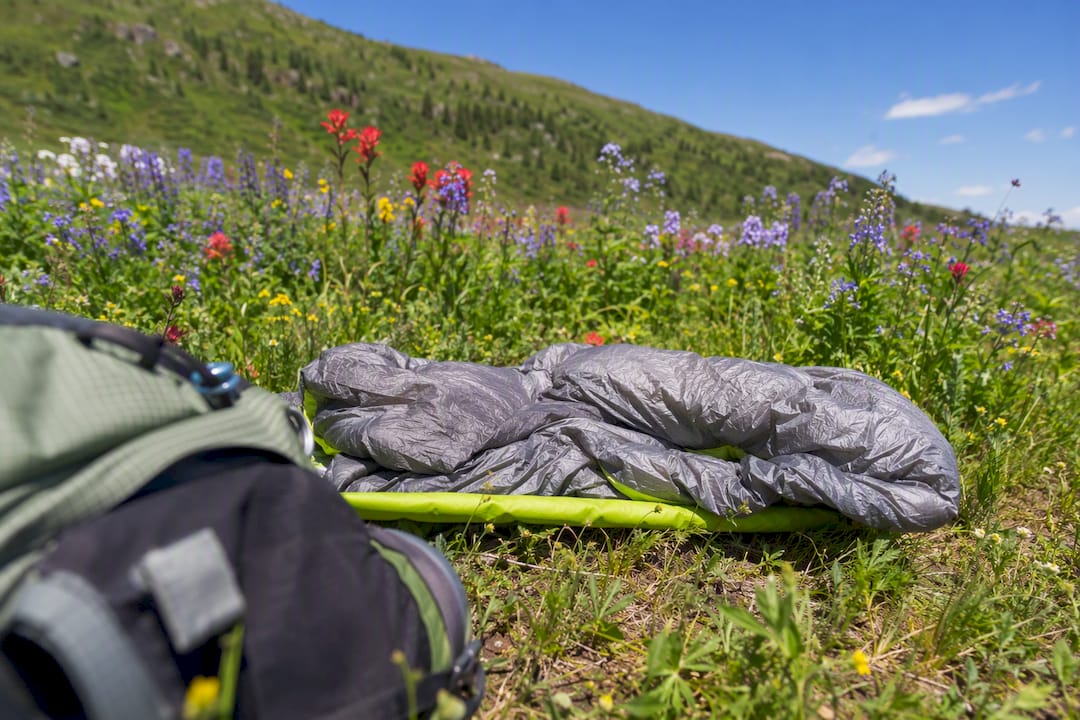
Pick your bag’s temperature rating using the 20°F buffer rule: take the coldest overnight low you expect, then buy a bag rated 20 degrees colder. Sleeping “comfortably” and sleeping “just barely surviving” are different ratings, and most manufacturers grade optimistically.
If you’re chasing an ultralight sleep system, quilts save weight over bags by ditching the zipper and underside insulation you compress anyway, but they perform worse in windy, exposed camps. Trade-offs like that are the entire ultralight game.
A minimal kitchen for one night looks like this: a canister stove, one fuel canister, a single pot, a spork, a lighter, and a backup lighter or waterproof matches. That’s it. Two-pot systems and folding sinks are traditional-weight luxuries you don’t need for one or two nights out.
Statistic Callout: Experienced hikers commonly carry an extra day’s worth of food as an emergency margin, even on a planned one-night trip, in case weather or a wrong turn adds unplanned hours to your return.
Water planning should follow expected availability along your route rather than a flat number, and you should carry a filtration method you actually know how to use instead of one you bought last week and never tested. If you’re in bear country, a canister or proper hang system isn’t optional. Check local land management rules before you go.
Cotton is the one fabric with no place on an overnight backpacking checklist. It soaks up sweat and rain, then refuses to dry, which turns a chilly evening into a genuinely dangerous one. Stick with synthetic or wool for everything that touches your skin.
A reasonable rule of thumb: one hiking outfit for every two days on trail, plus one dry outfit reserved strictly for camp. Layer with a moisture-wicking base layer, an insulating mid layer (fleece or light puffy), and a waterproof or wind-resistant shell. Understanding how moisture-wicking fabric actually works helps explain why the wrong base layer ruins an otherwise good layering plan.
Socks matter more than most beginners expect. A dry pair to sleep in cuts down on blisters and general foot misery far more than any boot upgrade will.
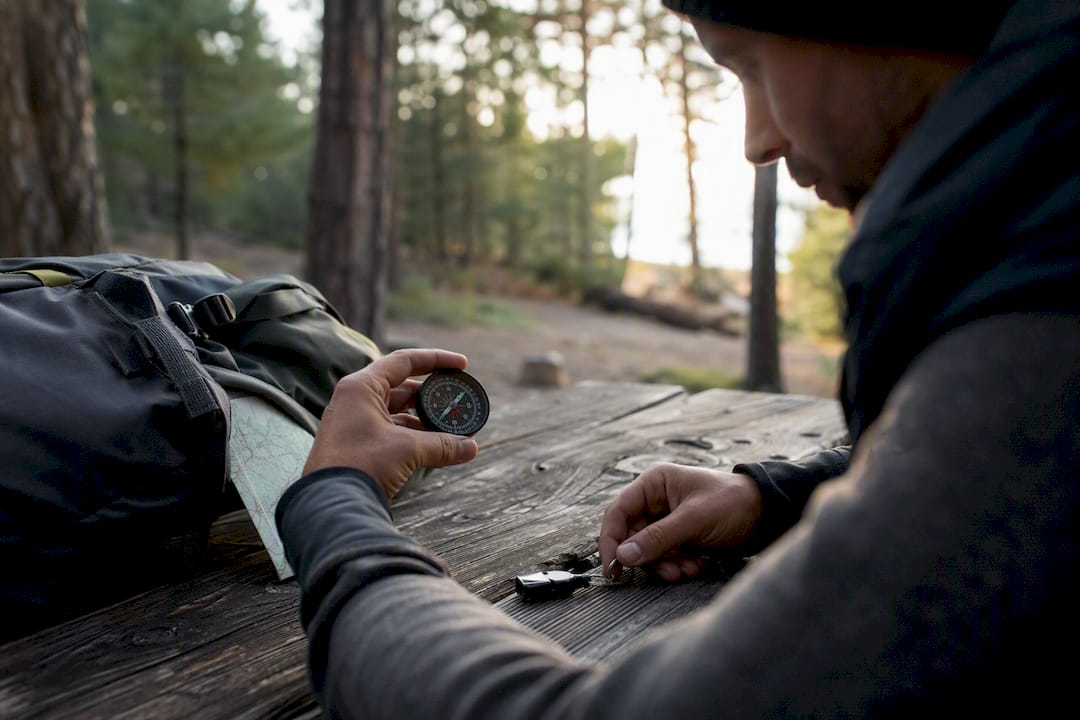
A paper map and compass still belong in your pack, batteries never die on paper. Back them up with an offline GPS app on your phone, but never let your phone be the only copy.
Decide on a satellite communicator or PLB based on how remote your route runs and how quickly help could actually reach you. If you’re more than a few hours from cell coverage or hiking solo, that device stops being a luxury.
Pro Tip: File your itinerary with someone at home before you leave, including your planned bailout points. A signal device only helps if someone knows roughly where to start looking.
Pack out everything you pack in, and treat leave-no-trace as part of your safety kit, not a separate concern.
You don’t need a hospital in your pack for a one or two-night trip, just the basics that address the problems that actually happen: blisters, small cuts, headaches, and hygiene.
Bring any prescriptions in their original containers with a couple extra doses, and pack menstrual products sized for the trip length plus a buffer. Keep toiletries down to a travel toothbrush and a small tube of paste. Anything more is traditional-weight thinking creeping into a fast-and-light bag.
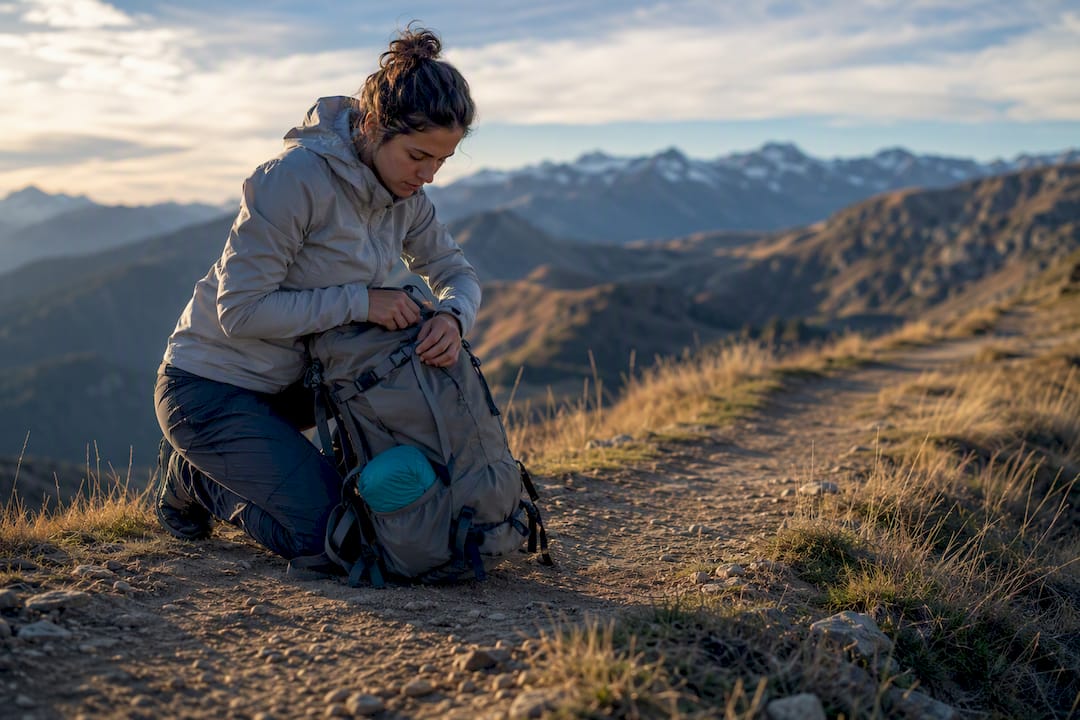
For a one to three-night trip, a 45 to 65 liter pack covers nearly everyone, smaller if your sleep system and shelter are already dialed in light, larger if you’re still using bulkier traditional gear.
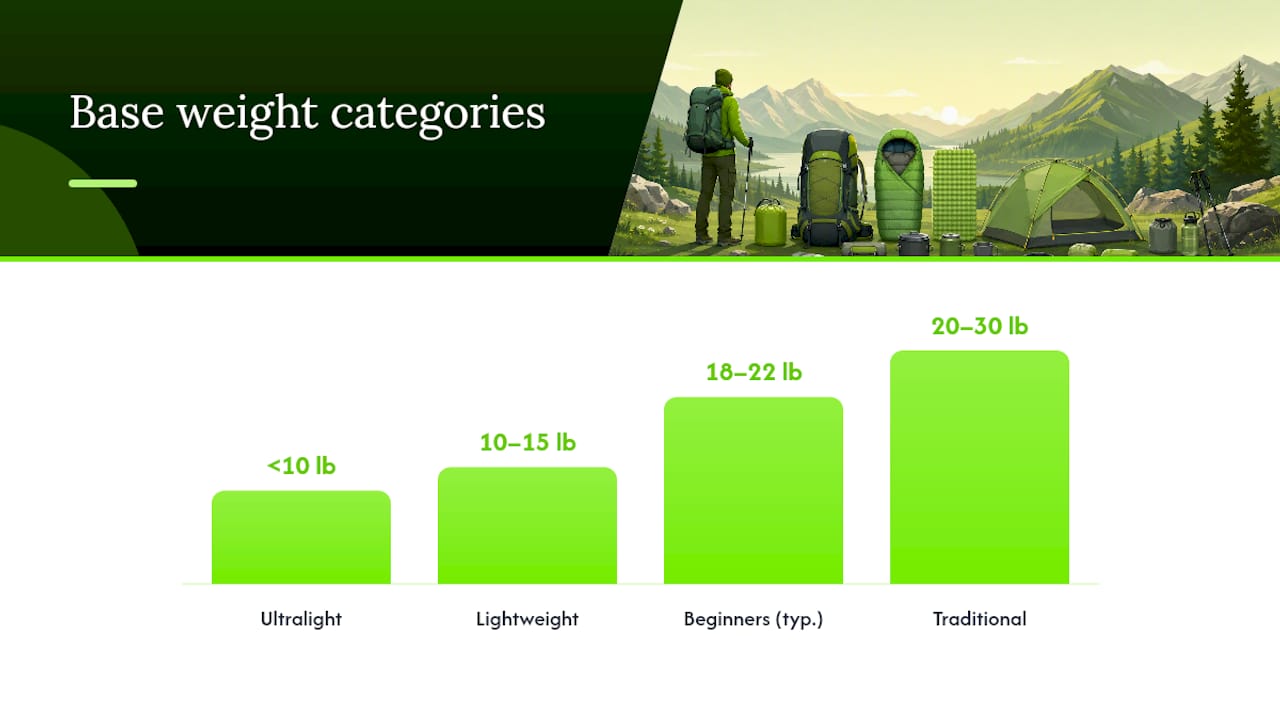
Base weight breaks into three recognized tiers: ultralight under 10 pounds, lightweight between 10 and 15 pounds, and traditional in the 20 to 30 pound range. Most beginners land around 18 to 22 pounds on a first trip, and that’s completely fine. Experts generally recommend optimizing your Big Three first before chasing ultralight status by cutting your first-aid kit or extra socks.
Pro Tip: Weigh your packed bag on a bathroom scale before your first trip, then again after each gear swap. Watching the number drop is oddly motivating, and it’s the most reliable way to track real progress toward a lighter kit.
A good overnight trip starts being planned days before you lace up your boots. Follow this sequence:
Running through this list feels tedious the first few times. After that, it becomes second nature, and it’s the difference between a trip that goes sideways and one that just gets interesting.
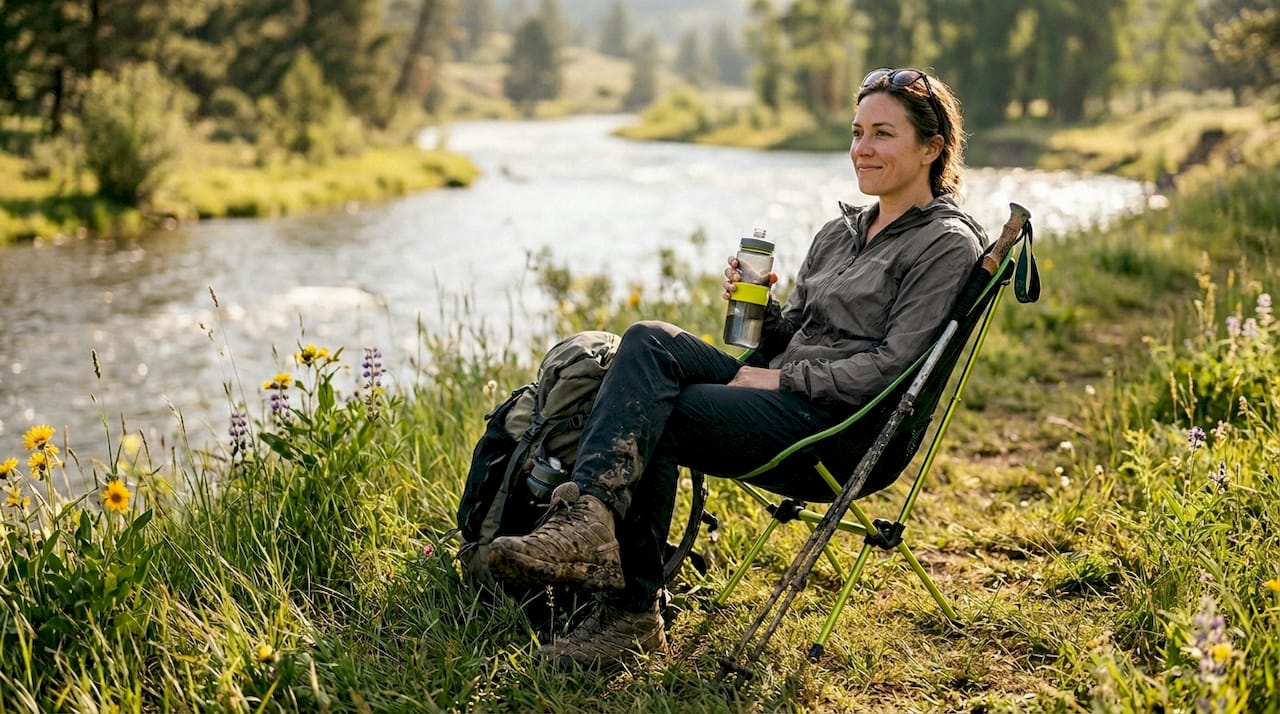
Weight discipline matters, but so does actually enjoying the evening you worked all day to reach. After years of watching hikers eat dinner perched on wet logs or crouched on their heels, I’ve landed firmly on the side of packing a little comfort when the ounces allow it.
A compact seat isn’t part of the Ten Essentials, and it never will be. But for trips where you’re not chasing a sub-10-pound base weight, a few extra ounces for something to sit on at camp is a trade most hikers are glad they made after the first cold, damp evening. If you’re deep in ultralight territory, skip it. If you’re carrying a lightweight or traditional kit already, the math barely moves.
I’d rather see someone carry one smart comfort item they’ll actually use than five ounces of gear they packed out of habit and never touched.
— Jonas
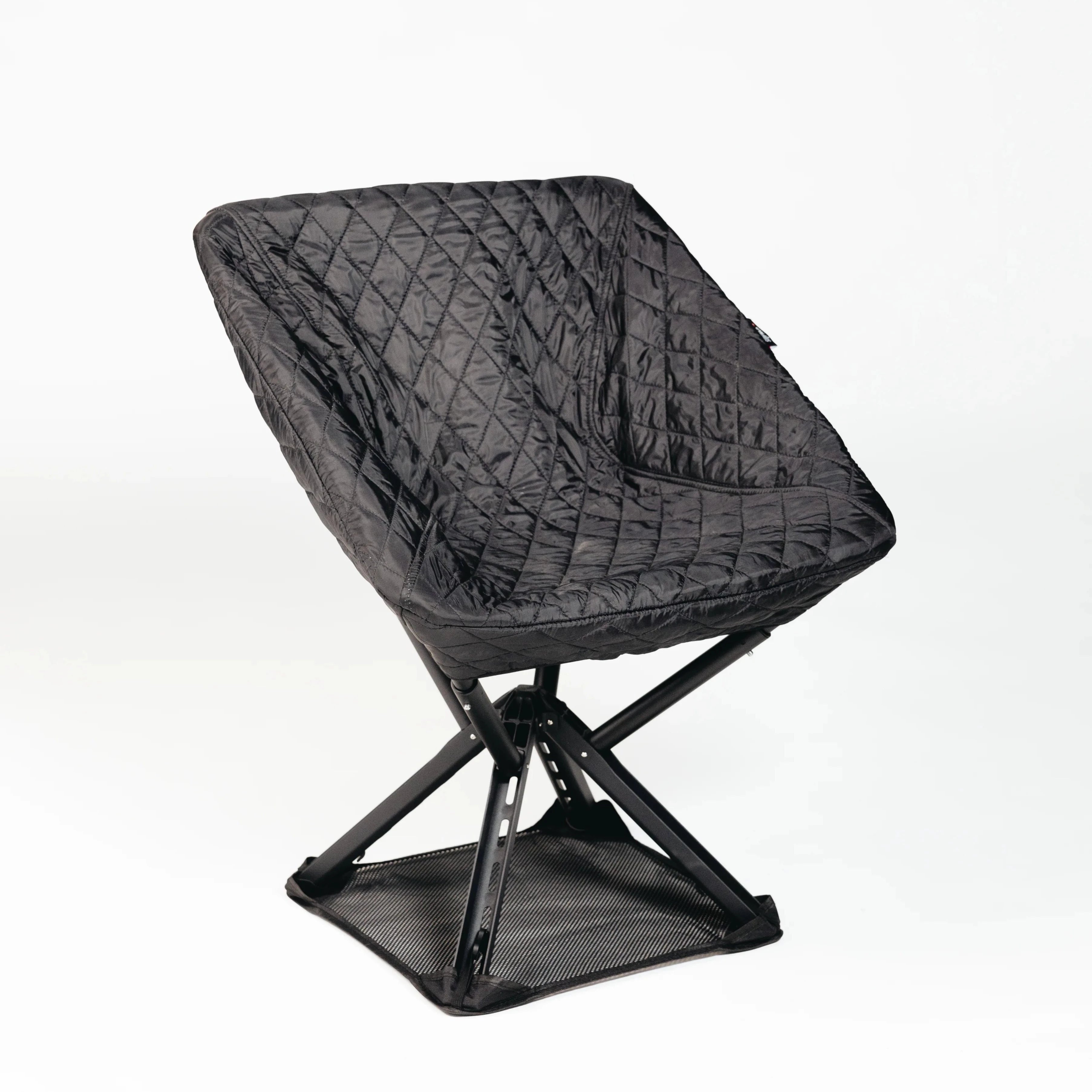
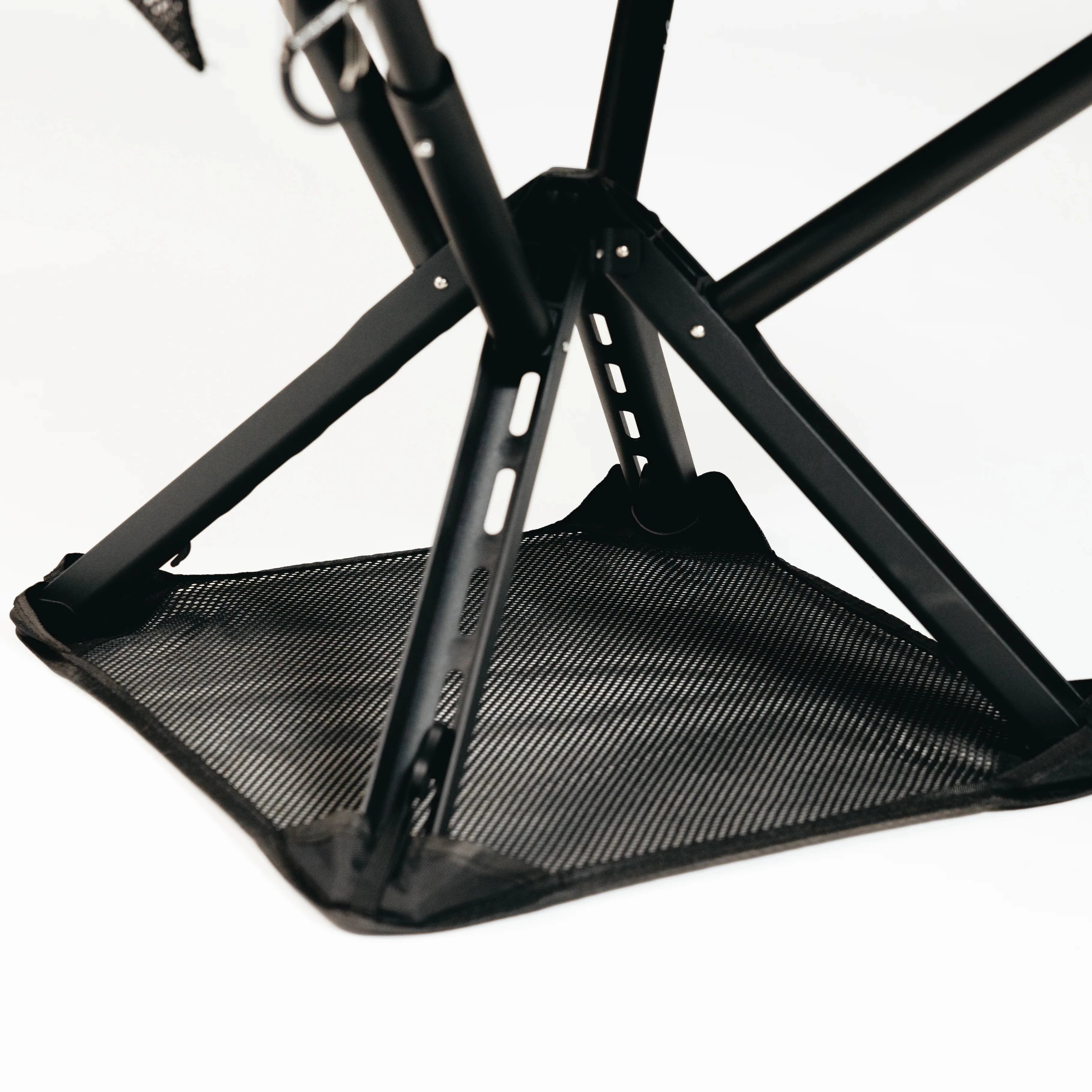
If your knees and hips aren’t thrilled about another night on a rock or a log, that’s exactly the gap Sitpack was built to close. A foldable stool like the Campster II packs down small enough to strap outside most 45 to 65 liter packs, so it doesn’t compete with your Big Three for space.
Bring one if you’re running a lightweight or traditional base weight and value real sitting comfort at camp. Skip it if you’re deep in ultralight territory chasing every ounce. For everyone else, especially anyone dealing with sore hips or knees after a full day on trail, it’s an easy addition that earns its spot. Check sizing and current options on the Sitpack product page before your next trip.
For deeper category guidance, see Sitpack’s full backpacking essentials list, the Ten Essentials breakdown, and REI’s expert checklist for a printable PDF version.