Cart
0
Sign up and get 10$ off your order
Expected delivery
1-3 days
You may also like



Danish Company

TL;DR:
- Proper seat height ensures a neutral posture that protects the spine and promotes healthy blood flow during sitting. Adjusting your chair based on formulas like the 25% body height method or the 10-inch rule helps achieve optimal hip, knee, and foot alignment. Correct seat height reduces back and leg discomfort and should be periodically reevaluated to accommodate body changes and different environments.
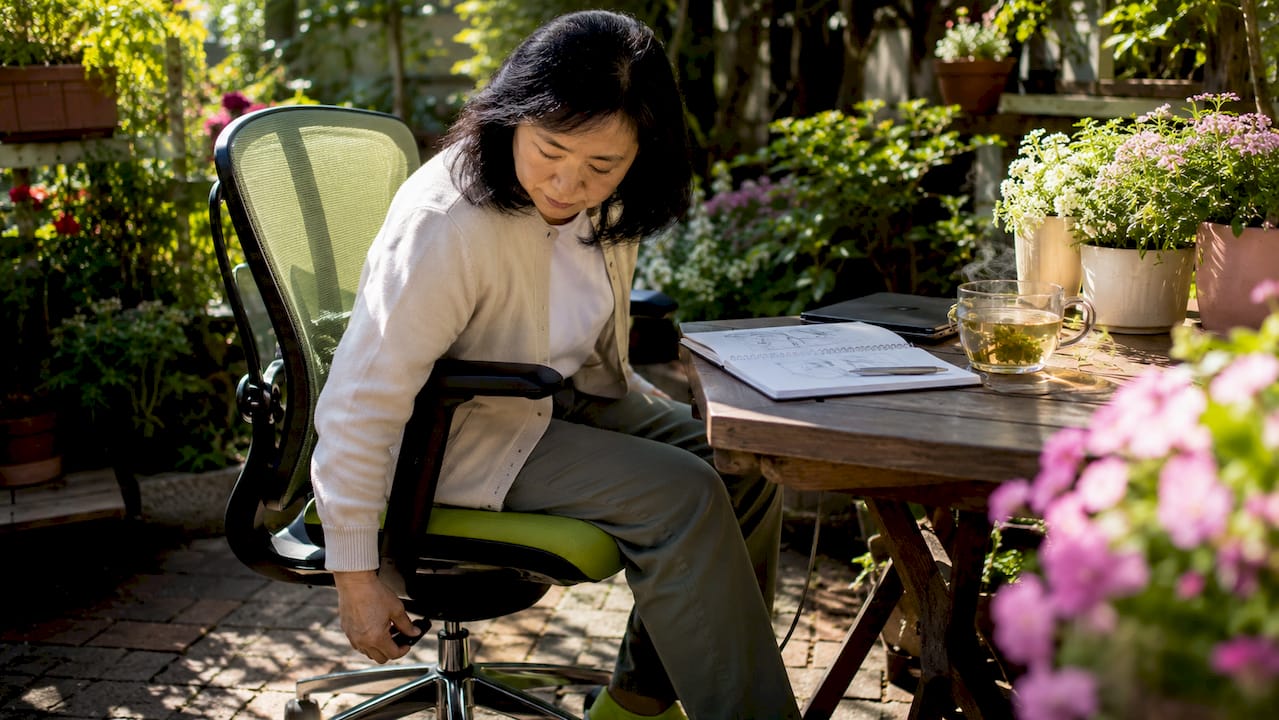
Seat height ergonomics is the practice of adjusting your chair so your knees, hips, and feet hold a neutral posture that protects your spine and keeps blood moving freely. Get it wrong and you are not just uncomfortable. You are loading your lumbar spine, compressing the veins behind your knees, and setting yourself up for the kind of ache that follows you home. Whether you are parked at a desk all day, working from your couch, or planting yourself on a camp chair at sunset, understanding what is seat height ergonomics means understanding how one simple measurement shapes your entire body’s comfort.
Seat height ergonomics is the discipline of matching your chair’s seat height to your body so your posture stays neutral and your joints stay relaxed. The goal is not just comfort. Seat height adjustment primarily aims to maintain neutral spine posture and promote good blood circulation to prevent fatigue and pain. That means your feet rest flat on the floor, your knees form roughly a 90–110 degree angle, and your hips sit level with or slightly above your knees.
The term “ergonomic seat height” is the recognized industry standard for this concept. You will also hear it called “optimal chair height” or “chair height for comfort,” but they all point to the same biomechanical target. OSHA guidelines and ergonomic office chair manufacturers like Herman Miller and Steelcase have built entire product lines around this single measurement because it affects everything from your lower back to your afternoon energy levels.
The reason seat height matters so much is that your pelvis is the foundation of your spine. When your seat is too low, your pelvis tilts backward and flattens your lumbar curve. When it is too high, your thighs lose floor contact and pressure builds behind your knees. Neither position is where you want to spend eight hours.
Finding your ergonomic seat height is more precise than most people realize, and there are two reliable methods to get there fast.
Method 1: The 25% Formula
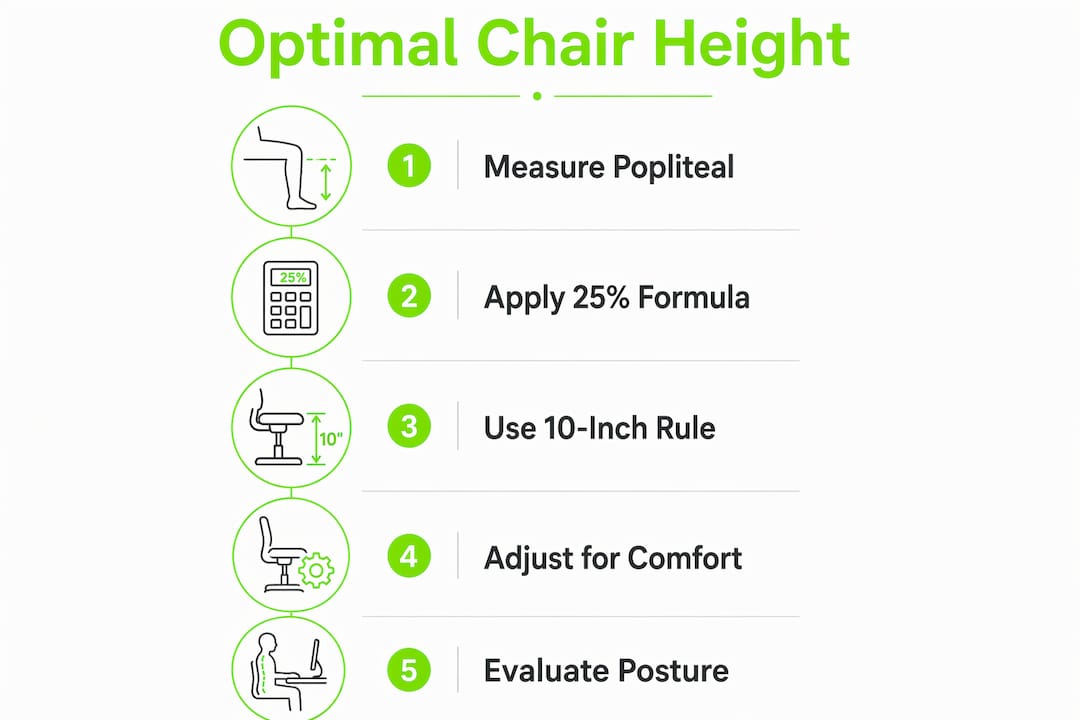
The most widely used formula estimates your optimal seat height as 25% of your total body height minus 1 inch. This formula is accurate for 85–90% of adults. That means it works for the vast majority of people without any fancy equipment.
Here is how to apply it step by step:
Method 2: The 10-Inch Rule
The 10-inch rule estimates ideal chair height by subtracting 10 inches from your desk height. For a standard 30-inch desk, that puts your seat at roughly 20 inches. This method is useful when you are adjusting a workstation seat around a fixed desk rather than starting from scratch.
Pro Tip: Measure your popliteal height, which is the distance from the floor to the back of your bent knee while seated. This number is the most direct proxy for your ideal seat height and accounts for leg-to-torso proportions that the body-height formula can miss.
While formulas give you a solid starting point, personal body proportions and feedback from your own comfort, knee angle, and foot position must guide your final adjustments. Trust the formula to get you close, then trust your body to get you there.
The biomechanics here are worth understanding because they explain why a 2-inch difference in seat height can mean the difference between a productive afternoon and a stiff, aching back.
Incorrect seat height leads to pelvis tilt, lumbar strain, and restricted blood flow due to pressure behind the knees. A seat that is too low causes your pelvis to rotate backward, which flattens the natural S-curve of your lumbar spine. A seat that is too high compresses the soft tissue behind your thighs, slowing circulation to your lower legs.
The hip angle is the key variable most people overlook. Opening the hip angle to between 95 and 135 degrees reduces pressure on spinal discs and enhances comfort. This is why the old “sit at 90 degrees” rule is actually too rigid. A slightly reclined or open hip angle is often healthier than a perfectly upright 90-degree position.
Here is what goes wrong when seat height is off:
“Even with perfect seat height, prolonged static sitting causes fatigue. Dynamic sitting, using tilt and recline features, and taking standing breaks reduce static muscular tension and keep your body fresher longer.”
The benefits of seat height done right are real and measurable. Neutral posture reduces muscular effort because your skeleton, not your muscles, bears the load. Your body stops fighting gravity and starts working with it.
Seat height adjustment looks different depending on where you are sitting, and a one-size-fits-all approach fails most people.
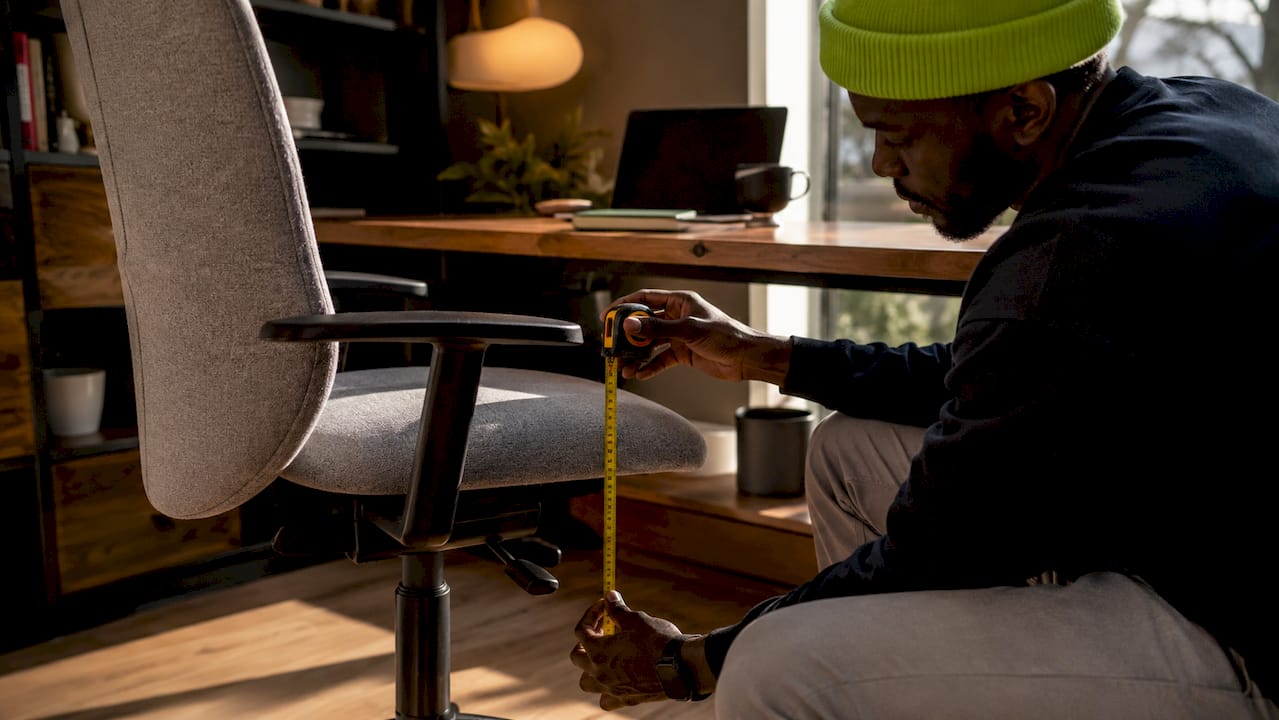
The standard ergonomic office chair height range is 16–21 inches, designed to work with desk heights of 28–30 inches. Most adjustable office chairs from brands like Steelcase, Herman Miller, and IKEA fall within this range. If your desk is fixed and your chair cannot go low enough, a seat cushion raises you. If your feet then lose the floor, a footrest brings the floor back up to you.
| Seating Context | Typical Seat Height Range | Key Adjustment Tool |
|---|---|---|
| Standard office chair | 16–21 inches | Pneumatic height lever |
| Standing desk (seated mode) | 22–30 inches | Desk height + chair combo |
| Petite users (under 5’2") | 14–16 inches | Low-profile chair or footrest |
| Tall users (over 6’5") | 23–25+ inches | Tall-specific chair models |
| Outdoor portable seating | Varies by terrain | Adjustable legs or ground pads |
Users outside the typical height range, specifically those under 4’10" to 5’2" and above 6’5", need seat height adjustments beyond what standard chairs offer. Short users often need seats as low as 14–16 inches. Tall users may need 23–25 inches or more. Standard chairs simply do not serve these bodies well, and forcing a fit causes real musculoskeletal strain over time.
Outdoor seating throws a curveball because the ground is rarely flat and chairs are rarely adjustable. Versatile ergonomic seating for outdoor use prioritizes adaptability over precision. A portable chair that positions your hips above your knees and keeps your feet grounded on uneven terrain does most of the ergonomic work you need. If you are sitting on a hillside or a rocky trail, even a rough approximation of neutral posture beats slumping on a log.
Pro Tip: When using a portable or camp chair outdoors, place it on the flattest ground available and shift your weight slightly forward on the seat. This naturally opens your hip angle and reduces lower back pressure, even without a lumbar support.
Feet must rest flat on the floor or on a footrest if seat height forces them to dangle, to prevent lower leg swelling. This rule applies whether you are in a corner office or at a campsite picnic table.
Most people make the same handful of errors when setting up their chair, and they are surprisingly easy to fix once you know what to look for.
Correct seat height is the single most impactful ergonomic adjustment you can make, because it sets the foundation for every other posture decision your body makes while seated.
| Point | Details |
|---|---|
| Use the 25% formula first | Multiply your height in inches by 0.25, then subtract 1 inch to find your starting seat height. |
| Open your hip angle | Aim for 95–135 degrees at the hip, not a rigid 90, to reduce spinal disc pressure. |
| Always ground your feet | Use a footrest if your feet dangle; dangling feet restrict circulation and cause leg fatigue. |
| Adjust for your environment | Office, home, and outdoor seating each require different approaches to hit neutral posture. |
| Move even when seated correctly | Static sitting causes fatigue regardless of height; use recline, tilt, and standing breaks regularly. |
Here is my honest take after spending a lot of time thinking about how people actually sit versus how ergonomics guides say they should: the biggest barrier is not knowledge. It is inertia. People read that their chair should be at a certain height, nod along, and then never actually change anything because adjusting a chair feels like a minor task that can wait until later. Later never comes.
I have watched people spend hundreds of dollars on lumbar supports and seat cushions while their chair is still set 3 inches too high. The cushion helps a little. Fixing the height would have helped a lot. The formula is not complicated. The 10-inch rule takes about 30 seconds to apply. What takes effort is actually doing it and then sitting with the new position long enough for it to feel normal.
The outdoor context is where I find this conversation gets genuinely interesting. When you are at a trailhead or a festival or a campsite, you are not thinking about popliteal height. But mobile seating solutions that position your hips correctly make a real difference over a long day outside. I have sat on cheap folding chairs that left my knees higher than my hips for four hours and felt it for two days afterward. A well-designed portable chair that approximates neutral posture is not a luxury. It is just smart.
My advice: spend five minutes this week actually measuring and adjusting your seat. Then move around more. That combination beats any cushion, any lumbar roll, and any standing desk gadget on the market.
— Jonas

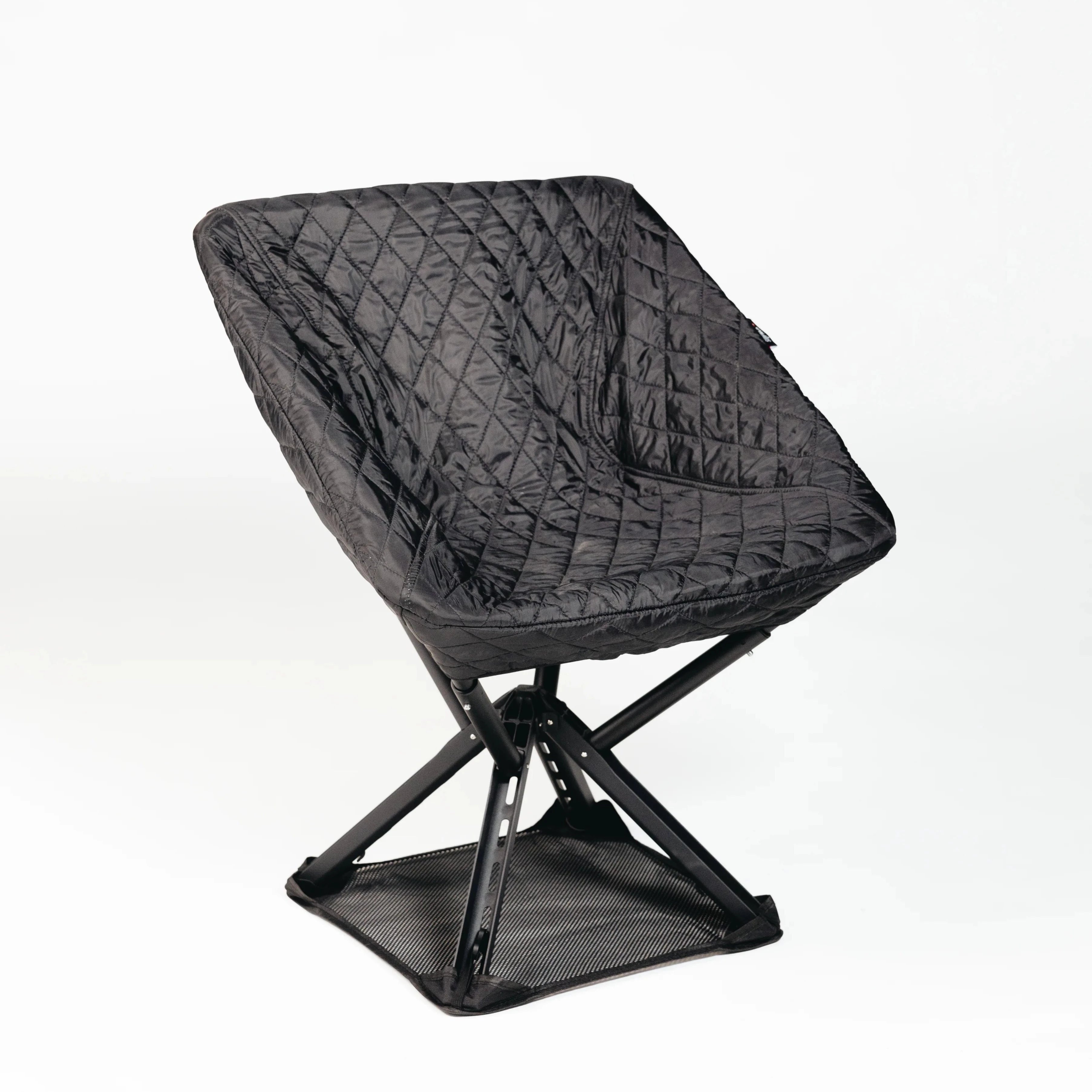
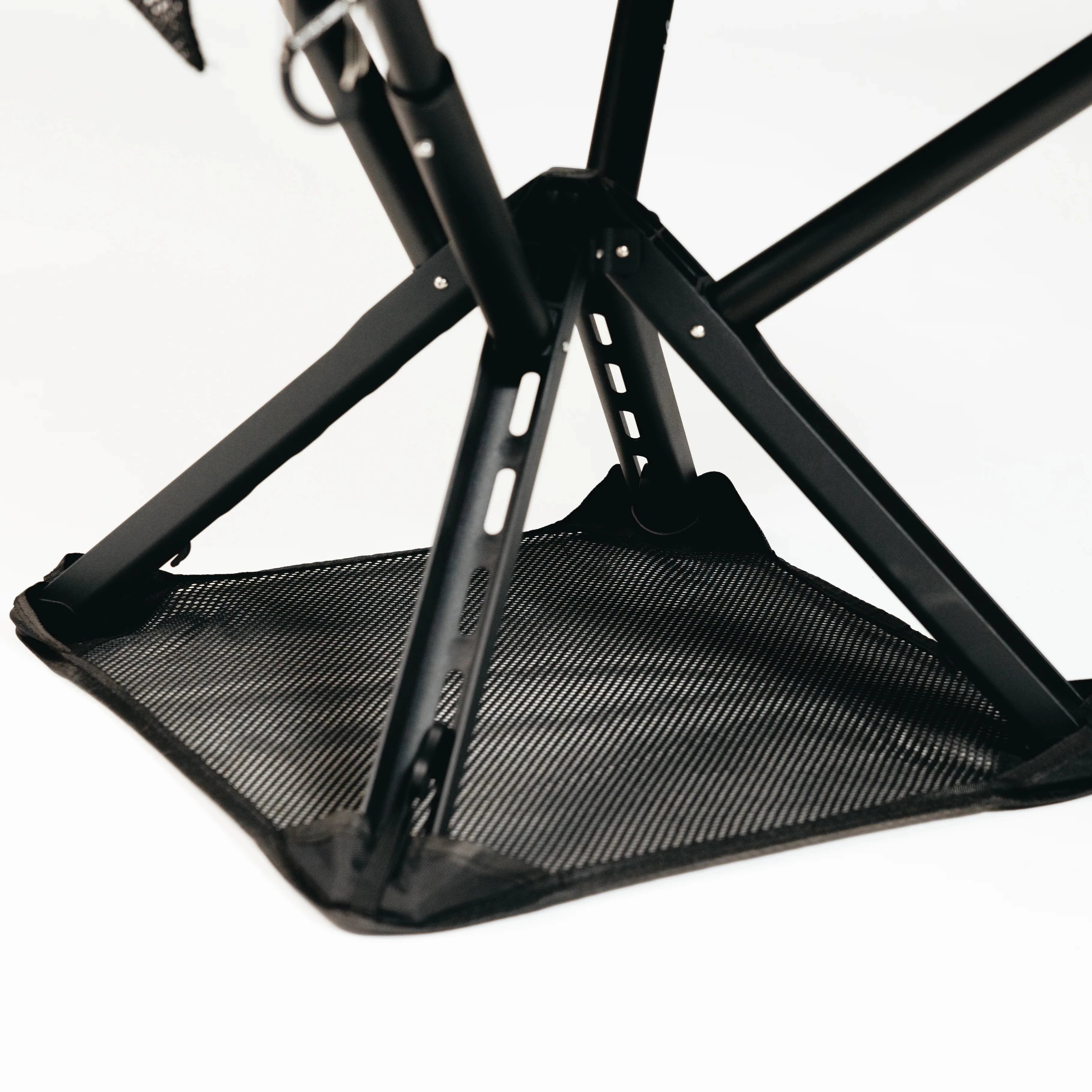
Whether you are dialing in your home office setup or heading out for a weekend of hiking and campfire cooking, Sitpack builds portable seating with your posture in mind. The Sitpack Zen and Campster II are designed to position your hips correctly and keep you comfortable across all kinds of terrain and situations. They are lightweight, durable, and built for people who refuse to choose between comfort and mobility. If you want seating that travels as well as it supports, explore Sitpack’s range and find the right fit for your next adventure or workday. Your posterior will thank you.
The standard ergonomic office chair height is 16–21 inches, which suits most adults working at desks of 28–30 inches. Use the 25% body height formula to find your personal starting point.
Sit on a firm surface with your feet flat on the floor and measure from the floor to the back of your bent knee. That popliteal height is your target seat height. You can also subtract 10 inches from your desk height as a quick starting estimate.
Yes. Incorrect seat height causes posterior pelvic tilt and lumbar strain when too low, and compresses circulation behind the thighs when too high. Both lead to pain and fatigue over time.
Use a footrest. Feet must stay grounded to prevent lower leg swelling and circulation problems. A footrest is not optional when your seat height is dictated by a fixed desk.
The same principles apply, though outdoor terrain makes precision harder. Aim for a seat that keeps your hips level with or above your knees and your feet grounded. Check out ergonomic urban seating principles for guidance that translates well to outdoor and travel contexts.