Cart
0
Sign up and get 10$ off your order
Expected delivery
1-3 days
You may also like


Danish Company


TL;DR:
- Portable chairs vary from ultralight framed slings to heavy-duty traditional models, suited for different trips.
- Key factors in choosing include weight, comfort, setup speed, durability, and intended terrain.
- Using multiple chairs for different activities is often more effective than seeking a single perfect option.
Picture this: you’ve hiked three miles to a stunning overlook, the view is jaw-dropping, and your legs are screaming for a break. You reach into your pack and realize you’ve got nowhere comfortable to park your posterior. The right portable chair can completely transform that moment, and the wrong one can leave you sitting on a rock wishing you’d done more research. This guide breaks down every major type of portable chair, from featherlight frameless slings to beefy steel-frame classics, so you can match the right seat to your adventure style and never be caught standing when you’d rather be sitting.
| Point | Details |
|---|---|
| Chair choice shapes comfort | Selecting the right portable chair type can make or break your outdoor experience. |
| Weight vs. comfort trade-off | Ultralight models save pack weight but often sacrifice support and stability. |
| Best types for each activity | Ground chairs excel on uneven terrain, while framed slings balance comfort and portability for most. |
| No universal best chair | Each chair type serves a distinct purpose—pair your pick to your planned adventure. |
Before diving into specific chair types, it helps to know what actually separates a great portable chair from a frustrating one. Not every criterion matters equally for every trip, so here’s a practical framework to guide your thinking.
Key criteria to evaluate:
Good tips for choosing camp chairs emphasize matching criteria to your specific use case. A thru-hiker and a festival-goer have almost nothing in common when it comes to chair priorities. Understanding the advantages of compact chairs is especially useful when you’re balancing gear across multiple trip types.
For reference, backpacking chair test results show that ultralight framed chairs under 2 lbs balance weight and comfort but can sacrifice stability on soft ground.
Pro Tip: Before your next trip, write down your three non-negotiables. Weight limit? Back support? Setup under 30 seconds? Knowing your priorities upfront saves you from buying a chair that checks nine boxes but fails on the one that actually matters to you.
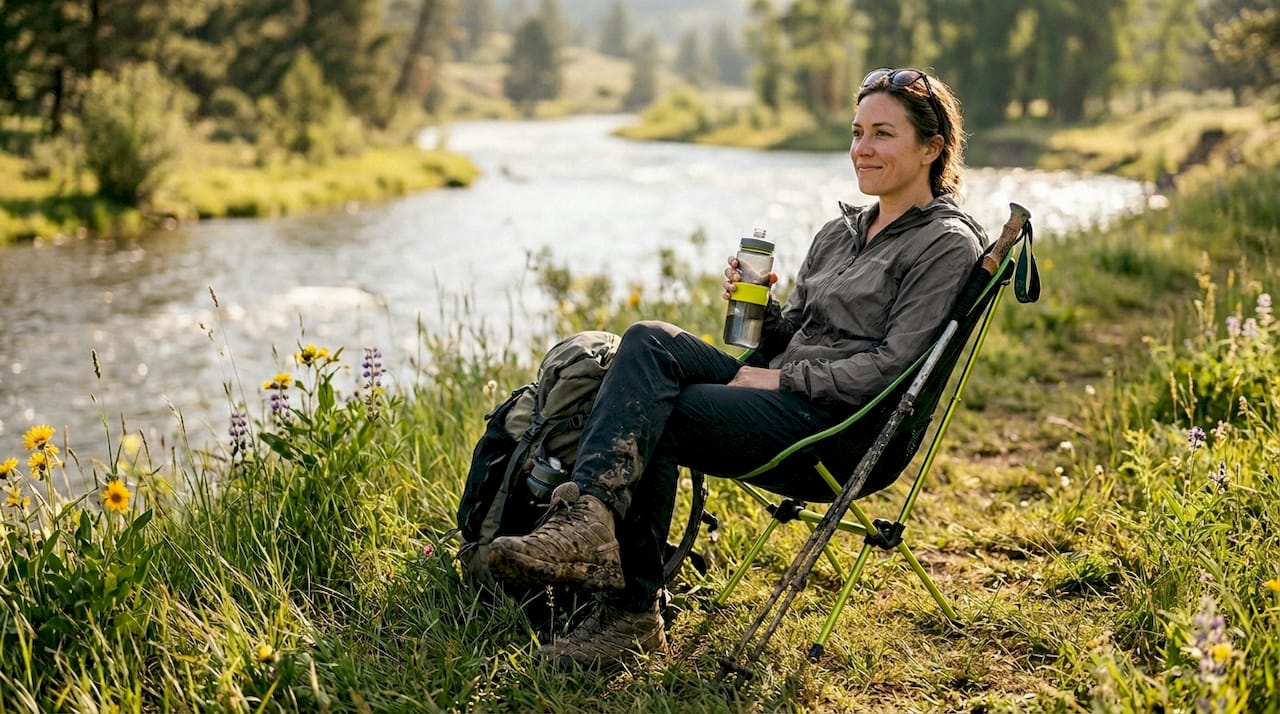
Armed with the main selection criteria, let’s start with the most popular ultralight option. Framed sling chairs are the workhorses of the backpacking world, and for good reason. They hit a genuinely impressive sweet spot between packability and real, seated comfort.
The core design uses shock-corded aluminum poles for a self-standing frame and a tensioned fabric seat that cradles your body. Most models weigh between 1 and 2 lbs and support between 250 and 320 lbs, which covers the vast majority of users. They pack down into a compact stuff sack that slides neatly into or onto a backpack.
Pros:
Cons:
The benefits of compact chairs really shine here. Brands like Helinox have made this category famous. However, Helinox models excel in packability while their low seats can challenge mobility-impaired users. The Helinox Ground Chair takes this even further for those who want to go lower. Framed sling chairs are the go-to recommendation for backpackers who refuse to sacrifice their back for the sake of a few saved ounces.
When saving every ounce matters, these minimalist options excel. Ground chairs and sit pads are for the adventurers who look at a framed sling chair and think, “still too heavy.” These are the solutions that thru-hikers, ultralight backpackers, and fast-and-light travelers swear by.
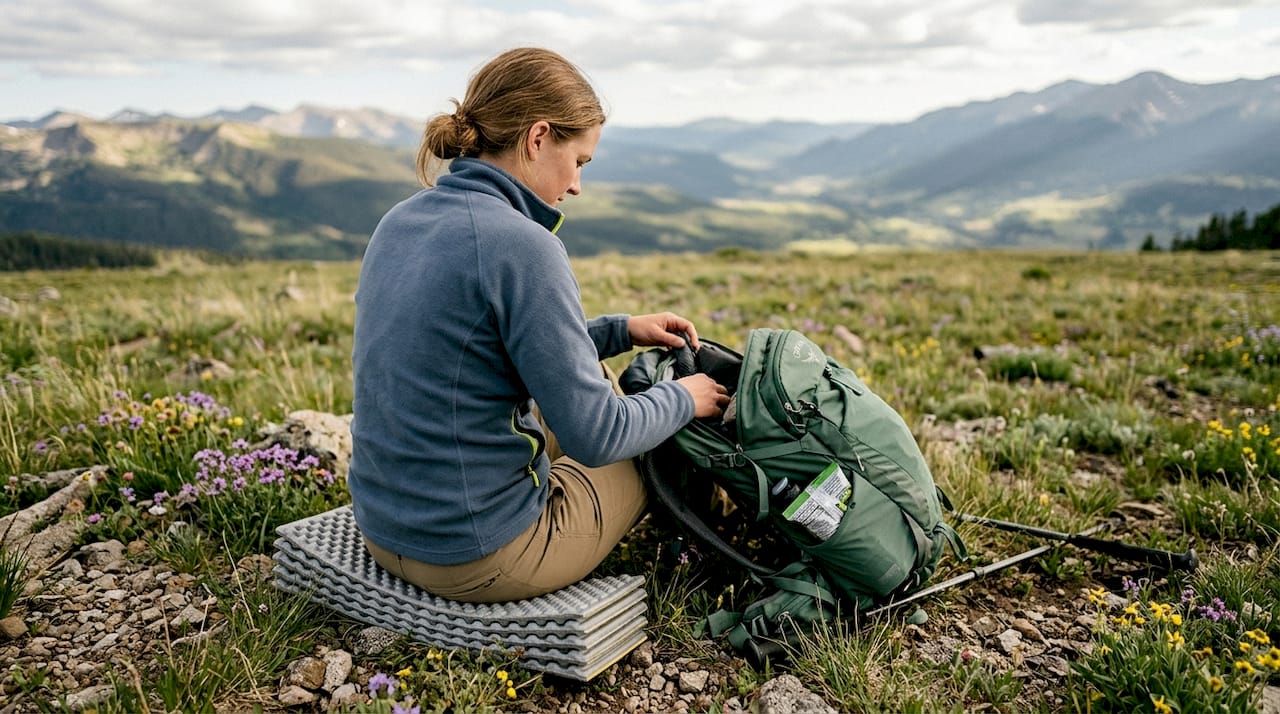
Sit pads are exactly what they sound like: a shaped piece of closed-cell foam you plop on the ground. Ground chairs add a minimal frame or back support panel, keeping seat height between 0 and 4 inches off the ground. Ground chairs and sit pads weigh 0.1 to 1.5 lbs and provide excellent stability on soft or uneven terrain because of their wide, low base.
Pros:
Cons:
For outdoor event seating tips, ground-level options work surprisingly well at concerts or festivals where space is tight and you’re surrounded by others doing the same thing.
“The best ultralight chair is the one you actually bring. A heavier chair left at the trailhead helps nobody.”
Pro Tip: Pair a foam sit pad with a trekking pole-supported back panel for a DIY ultralight chair setup. Check out ultralight chair strategies for clever configurations that weigh next to nothing.
But what if you crave more support or want to recline under the stars? This is where things get genuinely interesting. The portable chair world has some surprisingly creative solutions for people who want more than just a basic seat.
Frameless sling chairs use crossed poles or a self-rolling design to create a supported seat without a traditional rigid frame. The Litesmith QwikBack UL weighs just 2.65 oz and supports up to 250 lbs, which is remarkable engineering for something that packs into itself. Reclining and rocking chairs, meanwhile, range from 1 to 7 lbs and typically feature 250 to 300 lbs capacities with adjustable positions.
Comparison of specialized chair types:
| Type | Weight range | Seat height | Best feature |
|---|---|---|---|
| Frameless sling | 2 oz to 1 lb | 4 to 8 inches | Ultralight, self-packing |
| Reclining chair | 2 to 5 lbs | 10 to 14 inches | Adjustable back angle |
| Rocking chair | 4 to 7 lbs | 10 to 12 inches | Dynamic comfort, fun |
Who benefits most from specialized designs:
The Nemo Stargaze Recliner is a great example of a rocking recliner that genuinely delivers on its comfort promises. For choosing camp chairs in this category, think carefully about whether the extra weight is worth the comfort payoff for your specific trips.
When weight isn’t your top concern, classic folding chairs deliver lasting comfort. These are the chairs your parents probably had at Little League games, and honestly, there’s a reason they’ve stuck around. Steel-frame folding chairs are the undisputed kings of campsite comfort when you’re driving to your destination.
Traditional folding chairs use steel frames, weigh between 7 and 12 lbs, support 300 lbs or more, and often feature rockers, cup holders, and padded armrests. They’re not going anywhere near a backpack, but they’re perfect for car camping, festivals, van life, and tailgating.
Pros:
Cons:
Traditional folding chair specs at a glance:
| Feature | Typical range |
|---|---|
| Weight | 7 to 12 lbs |
| Weight capacity | 300 to 400 lbs |
| Seat height | 14 to 18 inches |
| Packed size | 36 to 42 inches long |
The compact chair benefits become very clear when you compare these side by side with lighter options. A portable chair round-up from Outside confirms that traditional chairs remain the comfort benchmark, but you’re paying for that comfort in pounds.
Having reviewed each type in detail, let’s summarize how they stack up and which is right for you. Sometimes the best decision tool is a clean side-by-side view.
| Chair type | Weight | Comfort level | Best use case |
|---|---|---|---|
| Framed sling | 1 to 2 lbs | High | Backpacking, hiking |
| Ground chair/sit pad | 0.1 to 1.5 lbs | Low to moderate | Ultralight, thru-hiking |
| Frameless sling | 2 oz to 1 lb | Moderate | Fast-and-light travel |
| Reclining/rocking | 1 to 7 lbs | Very high | Base camping, stargazing |
| Traditional folding | 7 to 12 lbs | Maximum | Car camping, festivals |
Chairs under 2 lbs are best for hiking if they hold 250 lbs or more, while ground chairs excel on uneven terrain. The chair benchmarking reference supports these empirical thresholds as reliable starting points.
Quick situational picks:
Using this portable chair selection guide approach, you can narrow down your choice in minutes rather than spending hours lost in gear reviews.
You’ve seen the options side by side, but what’s the honest takeaway after years outside? Here it is: the idea of a single perfect portable chair is a myth, and chasing it usually leads to frustration and wasted money.
Every chair type involves real trade-offs. A chair that’s perfect for a three-day backpacking trip is genuinely miserable at a weekend car camping festival. We’ve seen plenty of people buy one “versatile” chair and end up unhappy in both situations. The compact chair perspective we’ve developed over time is this: context is everything. Your terrain, trip length, travel companions, and even your body all affect which chair actually serves you well.
Our honest, hard-won advice? Consider owning two chairs. A featherlight option for active adventures and a comfortable folding chair for static situations. It sounds like more gear, but it’s actually less compromise. You stop forcing one tool to do two very different jobs, and every outdoor experience gets noticeably better.
Ready to upgrade your sit spot? Now that you know exactly what separates a ground pad from a reclining rocker, you can make a genuinely informed choice instead of guessing at the trailhead.

At Sitpack, we’ve built our entire lineup around the idea that great portable seating shouldn’t mean hauling a heavy chair or sacrificing your back. Whether you’re a weekend warrior looking for a packable companion or a daily commuter who wants a seat anywhere, our portable chairs are designed to fit your life without weighing it down. Browse our collection and find the chair that actually matches how you adventure.
Frameless sling chairs weigh as little as 2.65 oz, making them the ultralight pick for hikers who count every ounce. They pack into themselves and add almost no noticeable weight to your load.
Framed sling chairs offer solid back support and good comfort for most users, but their low seats can challenge people with knee issues or limited mobility during extended sitting sessions.
Ground chairs and sit pads are stable on soft ground due to their wide, low base that distributes weight evenly, making them the smart pick for beaches, meadows, and rocky terrain.
Most portable chairs support at least 250 lbs, and traditional steel-frame folding chairs routinely hold 300 to 400 lbs, so there are solid options across the weight spectrum.