Cart
0
Sign up and get 10$ off your order
Expected delivery
1-3 days
You may also like


Danish Company

TL;DR:
- Folding stools are lightweight, highly portable, and quick to set up for short rests.
- They excel in uneven terrain and limited space, making them ideal for outdoor and city use.
- Most are meant for quick sits and not long-term comfort, especially on soft ground or slopes.
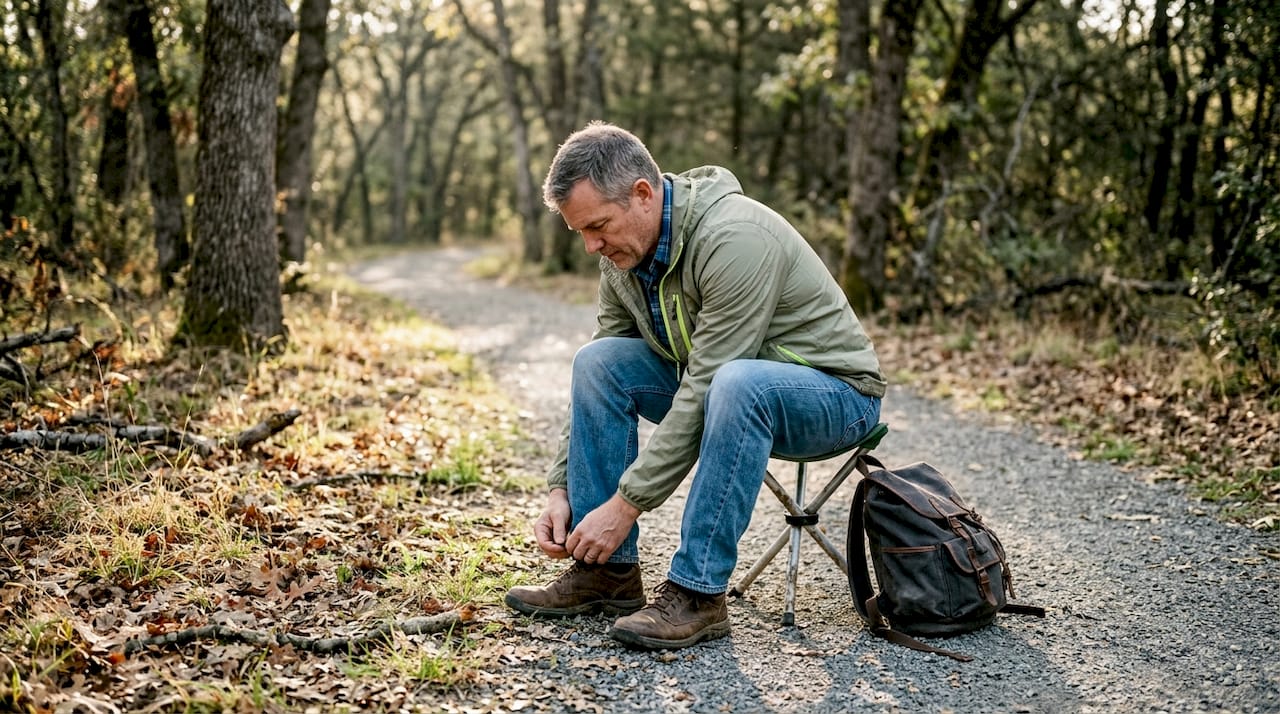
Most people assume that comfortable seating for the outdoors or city life means lugging around something heavy, awkward, and about as packable as a park bench. That assumption is wrong, and folding stools are the proof. These compact, clever little seats have quietly become a go-to solution for hikers, festival-goers, commuters, and anyone who refuses to stand in a two-hour line without complaining. In this article, we break down exactly what makes folding stools worth carrying, how to pick the right one for your lifestyle, and where they honestly fall short. Spoiler: the answer might surprise you.
| Point | Details |
|---|---|
| Super portable design | Folding stools are lightweight and pack small, making them easy to carry anywhere. |
| Rapid setup | Most models allow instant seating in under 10 seconds with no assembly. |
| Versatile surfaces | Tripod and telescoping stools work on sand, grass, and city pavements. |
| Short-term comfort | Folding stools prevent fatigue for quick breaks but aren’t made for all-day sitting. |
| Choose wisely | Select a stool with the right weight capacity, material, and features for your needs. |
Folding stools aren’t just shrunken-down chairs. They represent a fundamentally different philosophy about how we carry comfort with us. Where a traditional camping chair asks you to sacrifice trunk space and shoulder strength, a folding stool fits in a side pocket and weighs less than your water bottle.
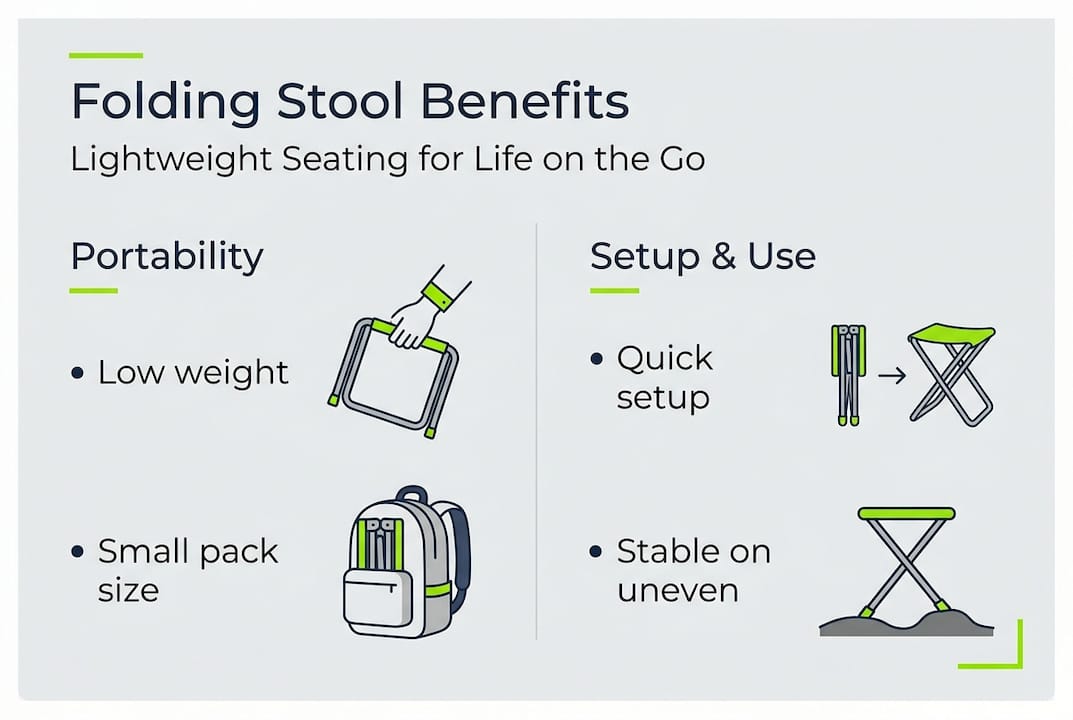
The advantages of foldable chairs start with raw portability. According to a portable stool guide, folding stools offer weights as low as 1.3 lbs and pack sizes small enough to slip into a standard daypack. That’s a game-changer when every ounce counts on the trail.
There are a few main design styles worth knowing:
The mechanics behind these designs are smarter than they look. Shock-corded poles snap into position automatically, much like a tent pole. Quick-release buckles lock the seat fabric taut in seconds. There’s no fumbling with screws or complicated assembly. You just pull it out and sit down.
Here’s a quick comparison to show how folding stools stack up against traditional camping chairs:
| Feature | Folding stool | Traditional camping chair |
|---|---|---|
| Average weight | 1.3 to 2.5 lbs | 4 to 7 lbs |
| Pack size | Fits in a daypack | Requires dedicated bag |
| Setup time | Under 10 seconds | 30 to 90 seconds |
| Surface compatibility | Uneven and flat | Mostly flat |
| Backrest | Usually none | Yes |
The benefits of travel stools become obvious the moment you compare those numbers side by side.
Pro Tip: Tripod folding stools are your best friend on uneven or soft ground. Three legs naturally self-level, so you’re not rocking back and forth while trying to eat your trail mix in peace.
Knowing what folding stools are is one thing. Understanding why they genuinely improve your day is another. Let’s get into the real-world wins.
First, speed. A folding stool sets up in under 10 seconds with zero assembly. That means when you hit a rest stop on a hike, you’re sitting before your hiking partner has even unclipped their pack. At a concert, you’re parked while everyone else is shuffling around looking miserable.
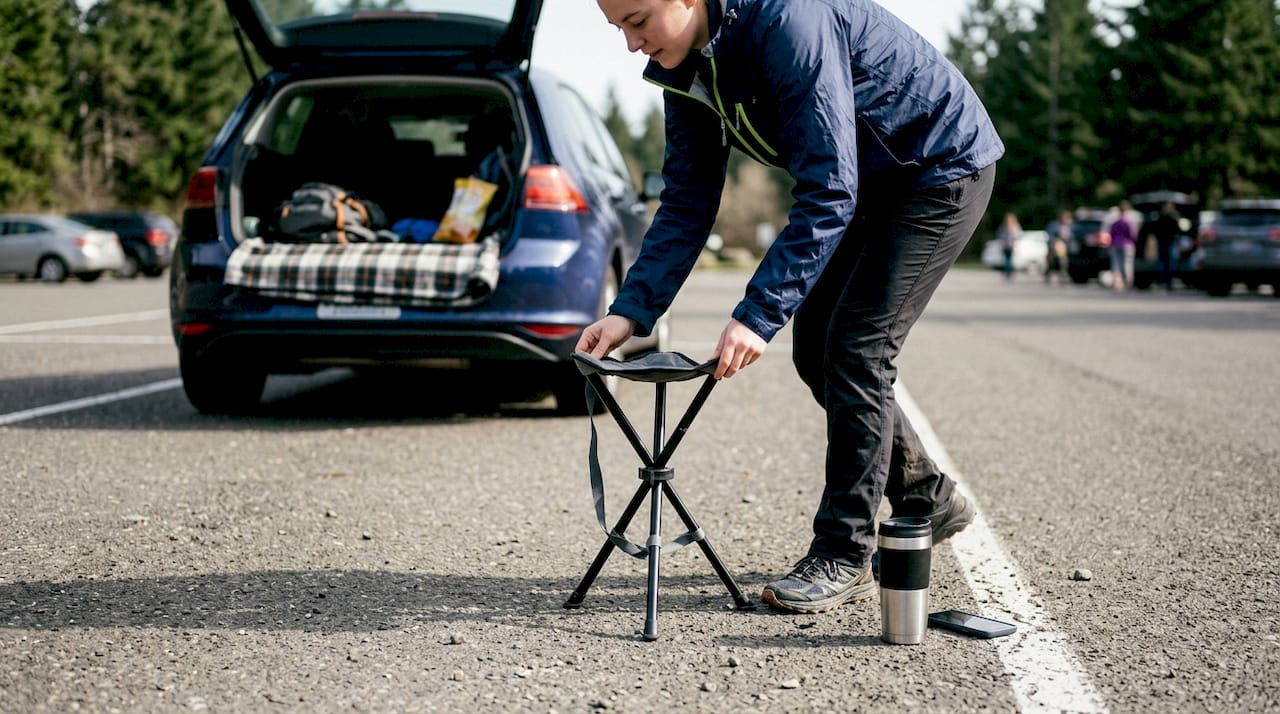
Here’s a look at how some popular models compare in real-world use:
| Model | Weight | Pack size | Setup time | Weight limit |
|---|---|---|---|---|
| Helinox Chair One | 2 lbs 8 oz | 5.5 x 15.5 in | ~60 sec | 320 lbs |
| Walkstool Basic 50 | 1.4 lbs | Fits in a bag | Under 5 sec | 330 lbs |
| Standard tripod stool | 1.5 to 2 lbs | 6 x 14 in | Under 10 sec | 200 to 250 lbs |
Beyond speed, the benefits of foldable seating stretch across a surprisingly wide range of situations. Here are the most common scenarios where a folding stool quietly saves the day:
Most folding stools support between 200 and 600 lbs depending on the model and frame material, so capacity is rarely a concern for most users. And the fatigue reduction is real. Standing for extended periods increases muscle strain and lowers energy levels, even in casual city settings. Parking yourself on a stool for even five minutes resets your legs and keeps you moving longer.
With so many options out there, picking the right stool feels overwhelming. It doesn’t have to be. Focus on a few key factors and the decision gets simple fast.
Here’s what actually matters when you’re shopping:
For surface compatibility, the design style matters a lot. Tripod designs like the Walkstool excel on sand, soft ground, and uneven terrain because three legs naturally find balance. Four-leg stools are more stable on flat pavement or packed earth but wobble on slopes. Telescoping models are incredibly compact and great for travel, though they sometimes feel less rigid underfoot.
For foldable seating for travel, the sweet spot is usually a tripod or telescoping stool under 2 lbs with a packed length under 16 inches.
Pro Tip: If you’re using a stool on soft ground like sand or mud, place a small plastic plate or dense rubber mat under each leg. It distributes the load and stops the legs from sinking. Simple fix, big difference.
For ultralight backpackers who are counting every gram, the honest answer is sometimes a sit pad wins over a stool. If you’re going sub-10 lbs total pack weight, a foam sit pad at 2 oz beats a 1.5 lb stool every time. But if you’re doing anything longer than a quick summit push, the stool earns its weight in comfort.
Folding stools are genuinely useful, but they’re not magic. Let’s clear up a few things that trip people up.
The biggest myth is that any folding stool is comfortable for long sits. It’s not. Most stools prioritize packability over full-chair comfort and skip the backrest entirely. Sitting for 30 minutes is fine. Sitting for three hours? Your lower back will have opinions.
Here are the situations where folding stools genuinely fall short:
As one Helinox Chair One review notes, even well-regarded four-leg camp chairs struggle in deep sand and on slopes, so expecting a lighter stool to perform flawlessly in those conditions is setting yourself up for disappointment.
“Stools are best understood as backup seating or short-duration relief, not a full chair replacement. Match the tool to the task.”
Heavier users or those planning long outdoor sessions should look specifically at models rated for 400 lbs or more with reinforced frames. The foldable chair limitations are real, but they’re manageable when you go in with smart expectations.
Think of a folding stool the way you think of a rain jacket. You don’t wear it all day. You pull it out when you need it, and it does exactly what it promises.
Here’s the honest truth from years of hauling gear into the field: conventional wisdom says to bring the comfiest chair you can manage. Real experience says convenience almost always beats comfort when you’re actually moving through the world.
A folding stool you actually bring with you beats a plush camp chair sitting in your car every single time. We’ve seen it at festivals, on fishing trips, and waiting outside venues in the rain. The people with stools in their bags are sitting. Everyone else is shifting their weight and grumbling.
That said, there are moments where a stool just isn’t enough. If you’re setting up a base camp for two nights or watching a four-hour outdoor show, the personal folding stool stories we hear most often involve people wishing they’d brought a real chair for the long haul.
Our honest take: carry a stool as your everyday portable option and upgrade to a full chair only when you know you’ll be stationary for hours. The stool wins on spontaneity, energy, and sheer convenience. Just don’t ask it to replace your living room couch.
If this article has convinced you that portable comfort is non-negotiable, the next step is finding a stool that actually delivers on that promise. At Sitpack, we’ve built our entire lineup around the idea that seating should go wherever you go, without slowing you down.
Whether you’re planning a weekend camping trip, navigating a packed music festival, or just tired of standing in city lines, our portable folding stools are designed for exactly those moments. Lightweight, durable, and genuinely comfortable for the short sits that matter most, they’re built for people who move. Explore the full collection and find your perfect match for both trail and city life.
Most folding stools support 200 to 600 lbs depending on the model and frame material, so there’s a solid option for most users.
Folding stools are best for short sits and quick breaks since most lack a backrest and aren’t designed for extended seating sessions.
Tripod stools handle sand and uneven ground well thanks to three-point stability, while four-leg stools perform better on flat, firm surfaces like pavement or packed dirt.
Most folding stools are ready in under 10 seconds with no tools or extra assembly required, making them genuinely instant seating wherever you need it.