Cart
0
Sign up and get 10$ off your order
Expected delivery
1-3 days
You may also like
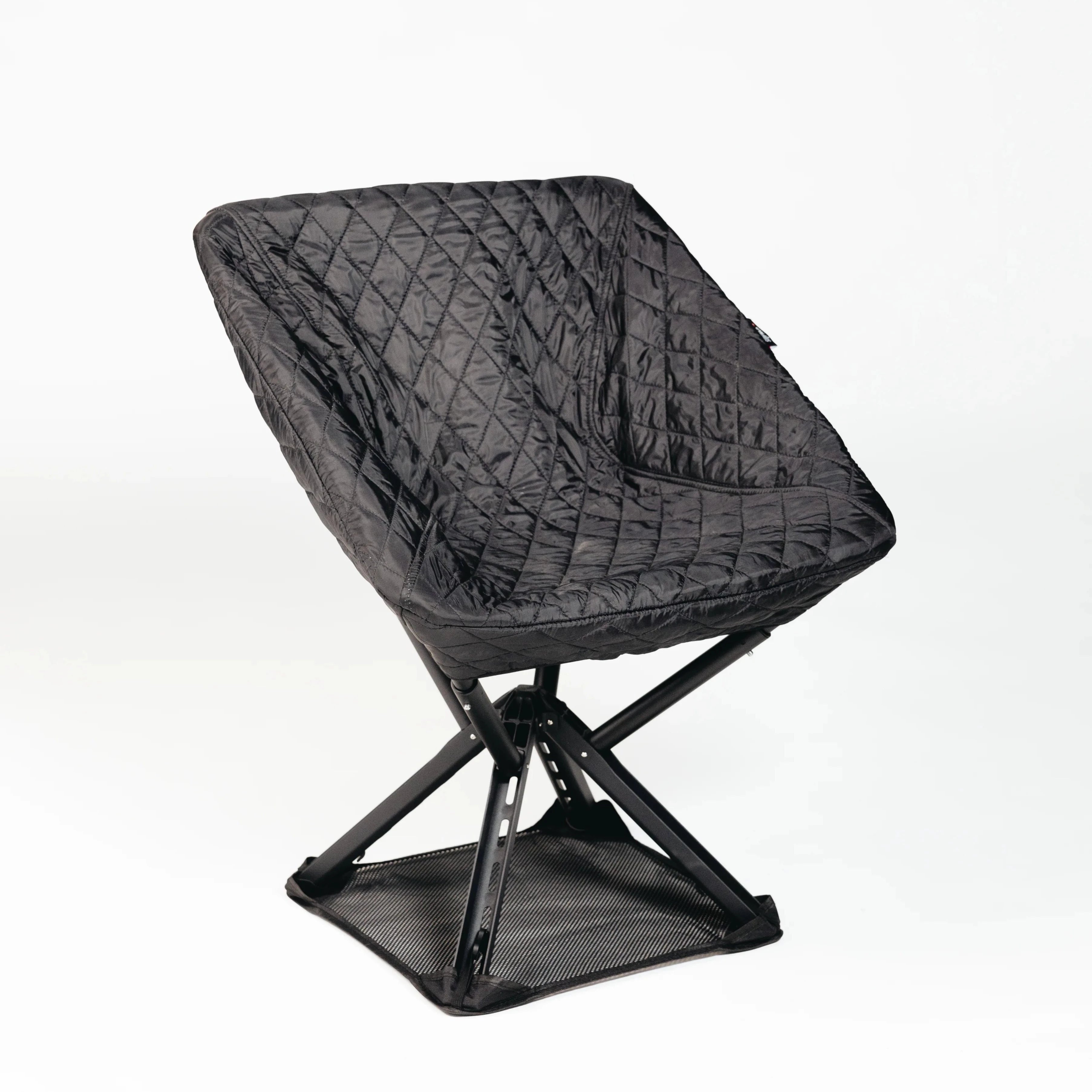
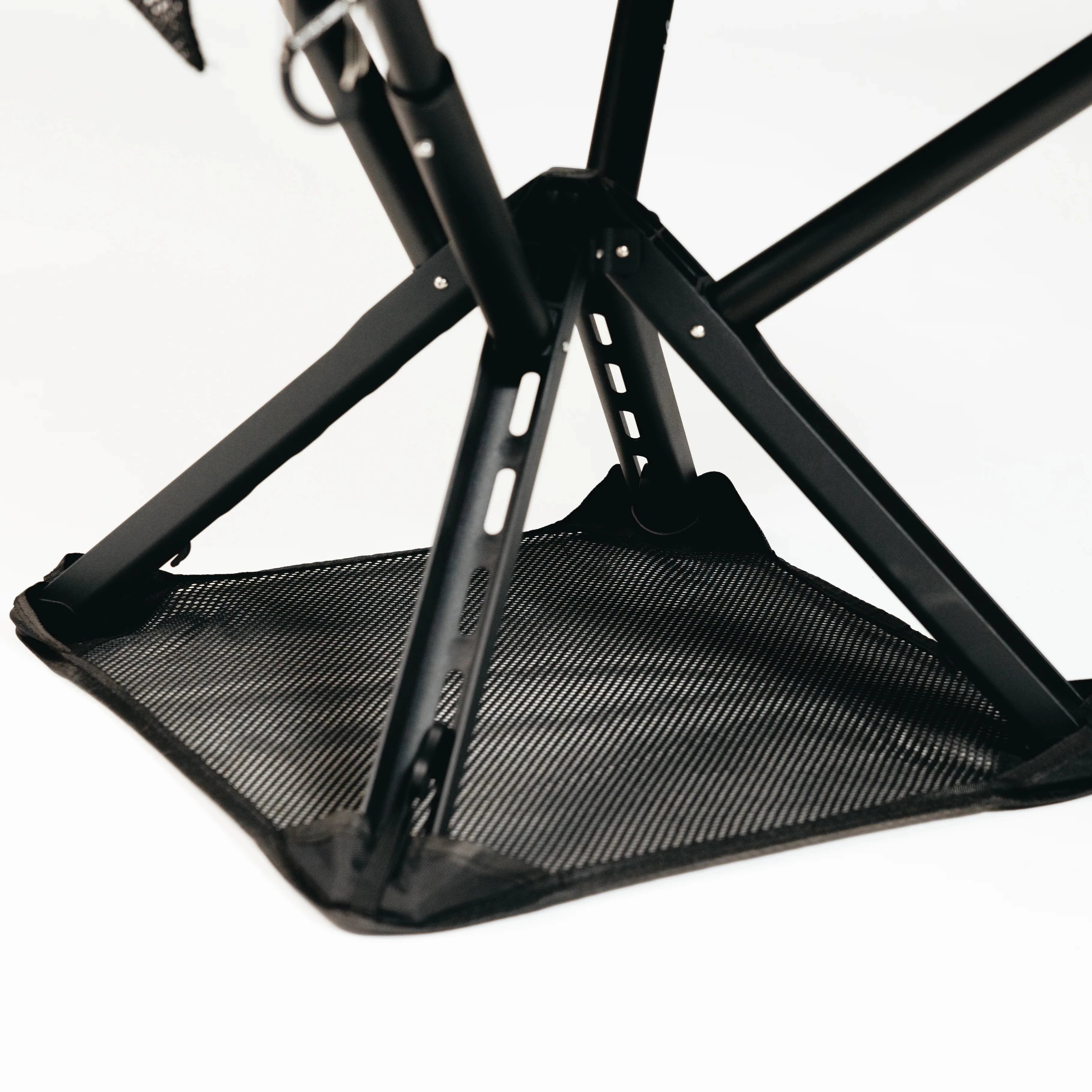

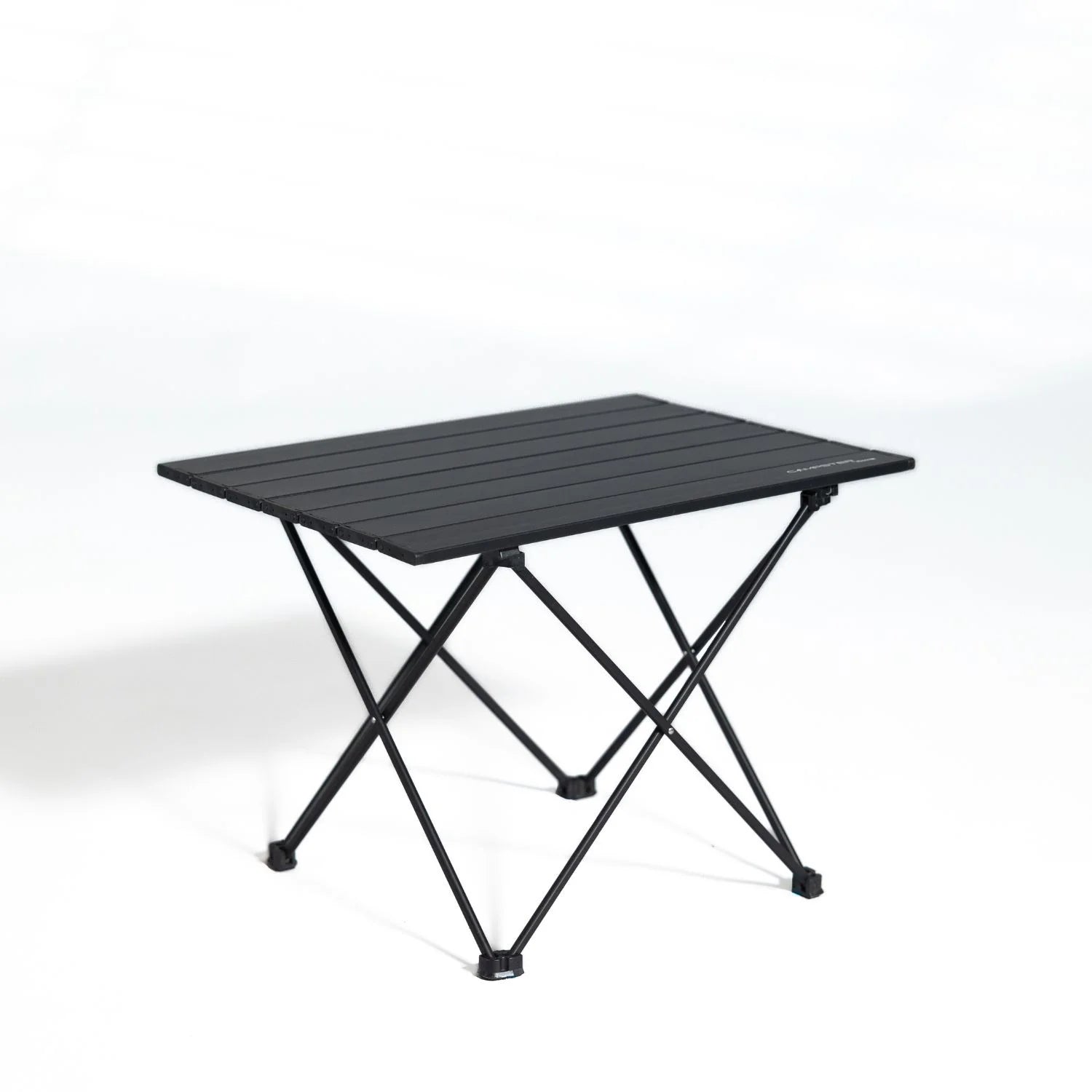



Danish Company

TL;DR:
- Urban commuters face limited fixed seating, leading to discomfort and physical fatigue.
- Portable seating offers personal control, reducing standing fatigue and perceived travel time.
- Choosing ergonomic, lightweight, and quick-deploy seats ensures practical daily use.
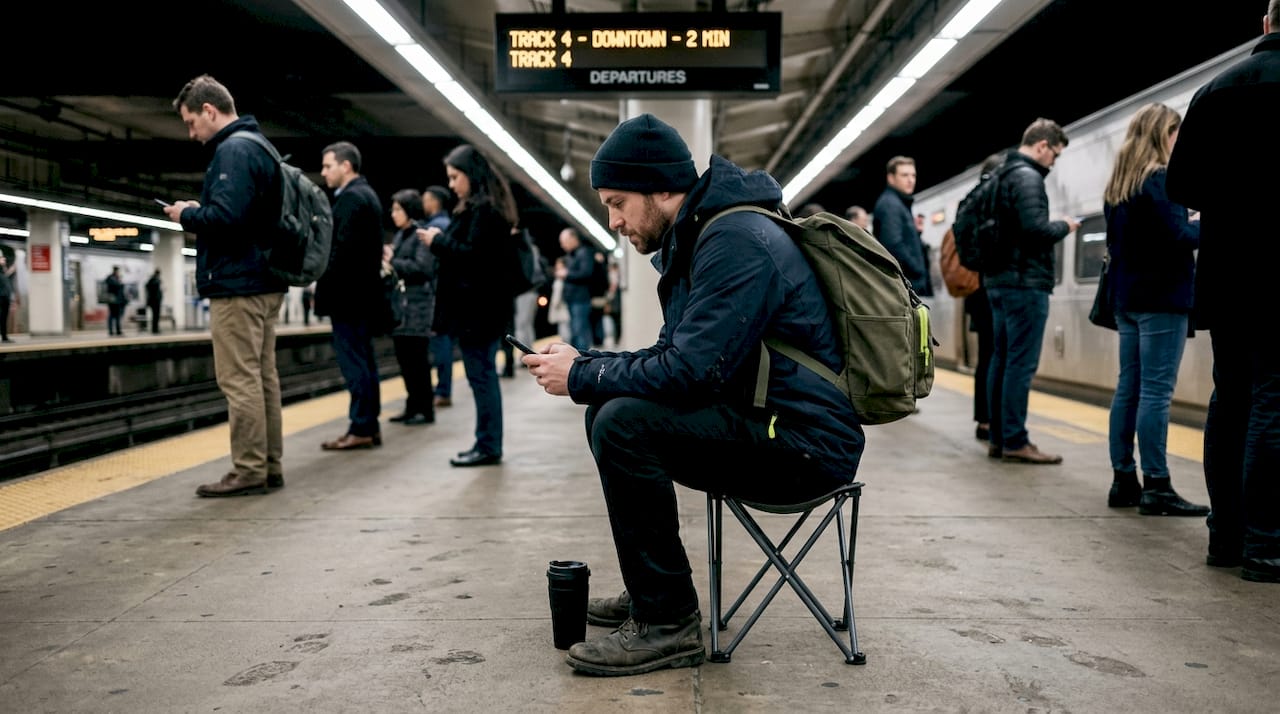
If you’ve ever stood on a crowded subway platform for 20 minutes, shifting your weight from foot to foot while your back quietly lodges a formal complaint, you already know the problem. Millions of urban commuters spend over two hours daily in transit, yet comfortable seating is rarely guaranteed. Fixed benches fill up fast, standing-room-only cars are the norm during rush hour, and your feet pay the price. Portable seating is changing that equation, giving commuters personal control over where and when they rest. This article breaks down why the seating shortage is real, how portable solutions help, and what to look for when choosing one.
| Point | Details |
|---|---|
| Seating scarcity problem | Urban commuters often lack access to comfortable public seating during long waits. |
| Portable seat advantage | Portable seating empowers autonomy, reduces fatigue, and bridges infrastructure gaps. |
| Ergonomics matter most | Optimal height, weight distribution, and support are key for comfort during urban travel. |
| Know the limitations | Portable seats have weight, terrain, and duration limits that should be considered. |
Let’s be honest: city infrastructure was not designed with your comfort as the top priority. It was designed for throughput, meaning moving as many people as possible through a space as quickly as possible. Seating is an afterthought in most transit environments, and the numbers back that up.
“Most American urban dwellers spend over two hours each day in transit, yet few find comfortable places to rest.”
Think about what that actually means. Two-plus hours of standing, leaning against poles, or perching on the edge of a too-narrow ledge. That’s not just uncomfortable, it’s physically taxing. Research consistently links prolonged standing to increased lower limb fatigue, lower back strain, and even cardiovascular stress over time.
Here’s why the portable seating challenges are more layered than they first appear:
The physical toll is only part of the story. Studies show that standing passengers also perceive their travel time as longer compared to seated passengers, meaning that same 30-minute ride feels like 45 minutes when you’re on your feet. That psychological drag compounds daily stress and reduces overall commute satisfaction.
For many commuters, the assumption is that seating is just “part of the deal” with urban transit. But that assumption is worth challenging. You wouldn’t accept an uncomfortable office chair for eight hours a day without looking for a better option. Why accept an uncomfortable commute without doing the same?
The scarcity of fixed seating isn’t going to be solved by city planners anytime soon. Infrastructure upgrades are slow, expensive, and politically complicated. That means the practical solution has to come from you, the commuter, and that’s exactly where portable seating steps in.
Now that we’ve established why fixed seating is limited, let’s look at what portable seating actually does for your daily journey. The short answer: a lot more than most people expect.
The core benefit is autonomy. Instead of hoping a seat opens up, you carry your own. That shift in mindset, from passive waiting to active preparation, changes how you experience the commute entirely. Portable seating empowers urban autonomy, bridging the gaps that transit infrastructure leaves wide open.
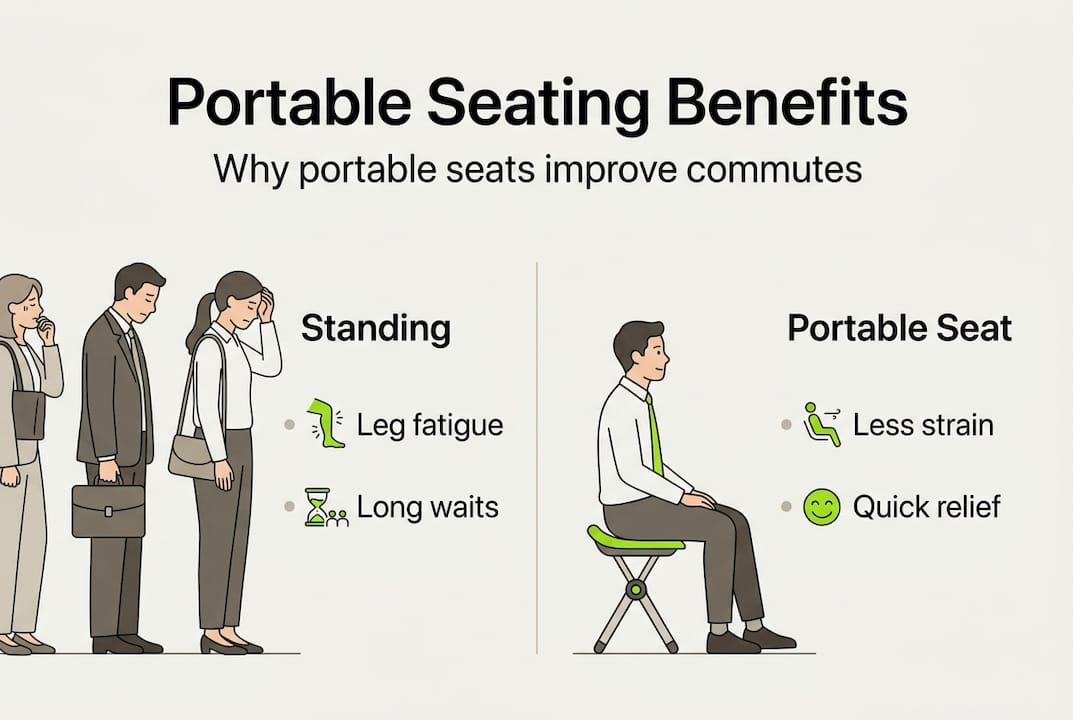
And the science supports the comfort payoff. Passengers value sitting far higher than standing in crowded metros and trains, with measurable differences in both physical comfort and perceived travel time. Sitting reduces muscle activation in the legs and lower back, lowers perceived effort, and makes the journey feel shorter.
Here’s a quick comparison to put it in perspective:
| Factor | Standing | Sitting (portable seat) |
|---|---|---|
| Lower limb fatigue | High after 20+ minutes | Minimal |
| Perceived travel time | Feels longer | Feels shorter |
| Lower back strain | Increases with duration | Significantly reduced |
| Flexibility of use | Limited to fixed spots | Anywhere you stop |
| Mood and well-being | Declines with fatigue | More stable |
Portable seats shine in specific commuter scenarios. Long platform waits, outdoor transit stops, packed event venues, airport layovers, and even outdoor lunch breaks all become more manageable when you’ve got a compact seat in your bag. The best options fold down small enough to slip into a backpack or tote without adding serious weight.
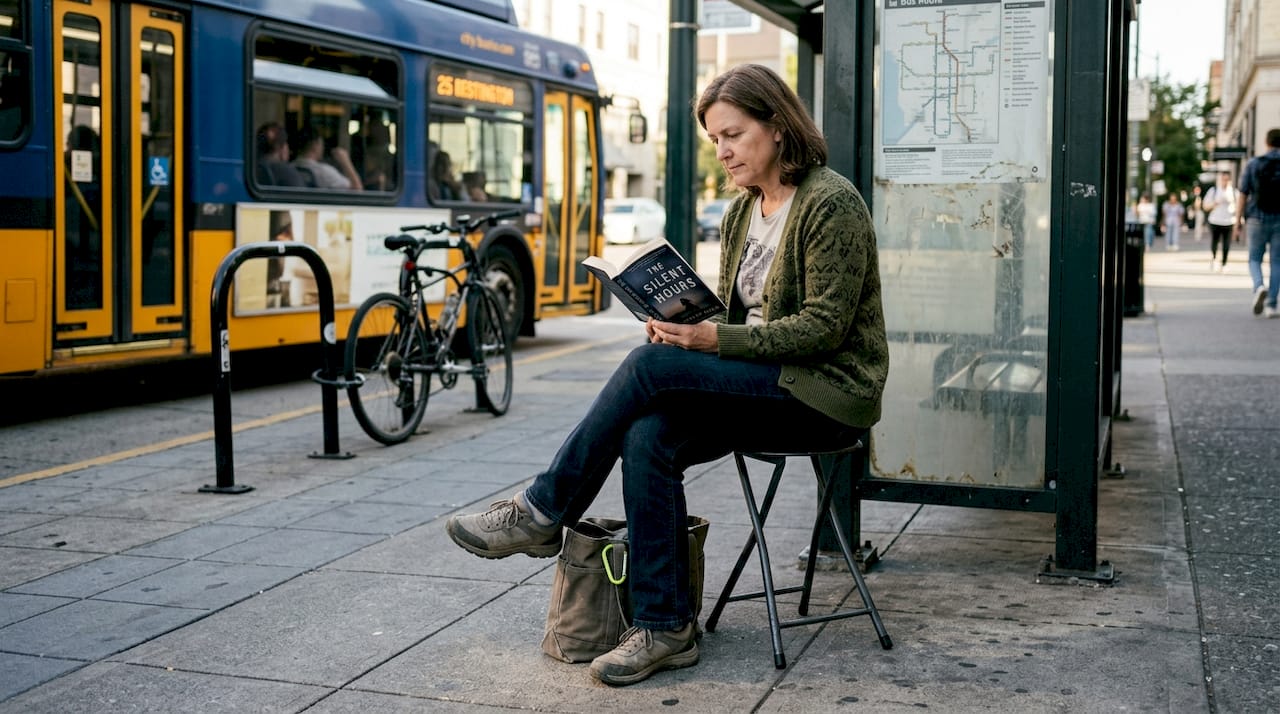
Pro Tip: Look for a portable seat that deploys in under 10 seconds. If setup takes longer than that, you’ll stop using it on busy days, and those are exactly the days you need it most.
Exploring portable seat ideas for city dwellers can open your eyes to just how many practical formats exist, from ultralight stools to foldable chairs with back support. The right pick depends on your specific commute style, but the comfort payoff is real regardless of which direction you go.
Understanding the impact of portable seating leads naturally to the question: what actually makes these products comfortable? Not all portable seats are created equal, and the difference often comes down to ergonomics.
Ergonomic designs distribute weight evenly, reduce muscle load, and optimize seat height and inclination to minimize pressure and increase comfort over time. That’s the research-backed foundation. In practical terms, it means the geometry of the seat matters as much as the padding.
Here’s a breakdown of key ergonomic specs to compare when shopping:
| Feature | Why it matters |
|---|---|
| Seat height | Keeps knees at 90 degrees, reducing hip flexor strain |
| Seat inclination | Slight forward tilt reduces lumbar pressure |
| Base width | Wider base improves stability and weight distribution |
| Material flexibility | Slight give absorbs micro-movements and reduces pressure points |
| Weight capacity | Determines safe load and affects structural stability |
When evaluating a portable seat, work through these ergonomic features in order:
Using a solid portable seating checklist when you shop helps you avoid buying something that looks sleek but leaves you more uncomfortable than the platform floor. Ergonomics isn’t a luxury feature. For commuters using a seat daily, it’s the whole point.
No commuter solution is perfect, and portable seating is no exception. Being clear-eyed about the limitations helps you choose the right product and use it effectively.
The most commonly cited real-world issue is stability on uneven ground. Many urban environments, think cobblestone plazas, cracked sidewalks, or sloped platform edges, can make a lightweight stool feel precarious. Stability on uneven ground requires base mats, and some folding mechanisms require decent grip strength to operate smoothly.
Here’s an honest rundown of what portable seats handle well and where they fall short:
Pro Tip: A small silicone base mat or rubber foot pads can dramatically improve stability on slippery or uneven surfaces. Some seats include these, but if yours doesn’t, they’re cheap and easy to add.
The good news is that most limitations are manageable with the right accessories or a bit of practice. Knowing them upfront means you won’t be surprised when your sleek new stool wobbles on a tilted platform. You’ll just pull out your base mat, adjust your stance, and park your posterior comfortably while everyone else stands around looking envious.
Here’s the thing most people get wrong when they start shopping for a portable commuter seat: they optimize for comfort first and practicality second. That’s backwards.
A plush, well-padded seat that takes three minutes to set up and weighs 4 lbs is going to stay at home on your busiest days. And your busiest days are exactly when you need it. Prioritize quick setup, lightweight design, and ergonomic weight distribution over plushness, and you’ll actually use the thing.
Veteran commuters and urban mobility specialists consistently land on the same conclusion: the best portable seat is the one you actually carry. That means it has to be light enough to forget it’s in your bag, fast enough to deploy without breaking your stride, and ergonomically sound enough to deliver real relief in 10 to 20 minutes of use.
Ignoring ergonomics entirely is the other common pitfall. A seat that’s too low, too rigid, or too narrow can actually leave you more fatigued than standing would have. That’s not a hypothetical, it’s a pattern we see when people grab the cheapest folding stool they can find without checking the geometry.
The sweet spot is minimal but functional. Check out best seating ideas for city dwellers to see what that balance looks like in practice. Comfort matters, but it only matters if you’re actually sitting on it.
You’ve now got the full picture: why seating is scarce, how portable options close the gap, what ergonomics to prioritize, and where the real-world limits lie. The next step is finding a solution that fits your specific commute.

At Sitpack, we’ve built our product lineup around exactly these needs. From the ultralight Sitpack Zen to the versatile Campster II, every seat is designed to be genuinely portable, ergonomically considered, and durable enough for daily urban use. Browse our full range of Sitpack seating solutions and find the one that turns your daily commute from a standing ordeal into something you can actually handle with ease. Fast worldwide delivery, a 45-day satisfaction guarantee, and a lifetime warranty mean you can try it without stress.
Yes, most portable seats are allowed as personal items on public transport, but it’s smart to check your city’s specific transit rules for any restrictions on size or stowage requirements.
Prioritize lightweight design, fast setup, solid ergonomics, and a weight capacity suited to your needs. Quick setup and lightweight portability are the two features that determine whether you’ll actually use it daily.
Yes. Standing raises discomfort and perceived travel time compared to sitting, so even short seated breaks during a commute deliver measurable physical and psychological relief.
Many quality portable seats support up to 400 lbs, but you should always check the seat dimensions and ergonomic specs to make sure the fit works for your body proportions and comfort needs.