カート
0
サインアップすると注文から 10 ドル割引になります
配達予定
1〜3日
こちらもおススメ


デンマークの会社


TL;DR:
- Outdoor seating adjustability allows chairs to fit terrain and user needs for maximum comfort.
- Features like reclining backs, adjustable legs, and lumbar support enhance ergonomics on the go.
- Prioritize key adjustments based on activity, terrain, and duration to find the best portable chair.
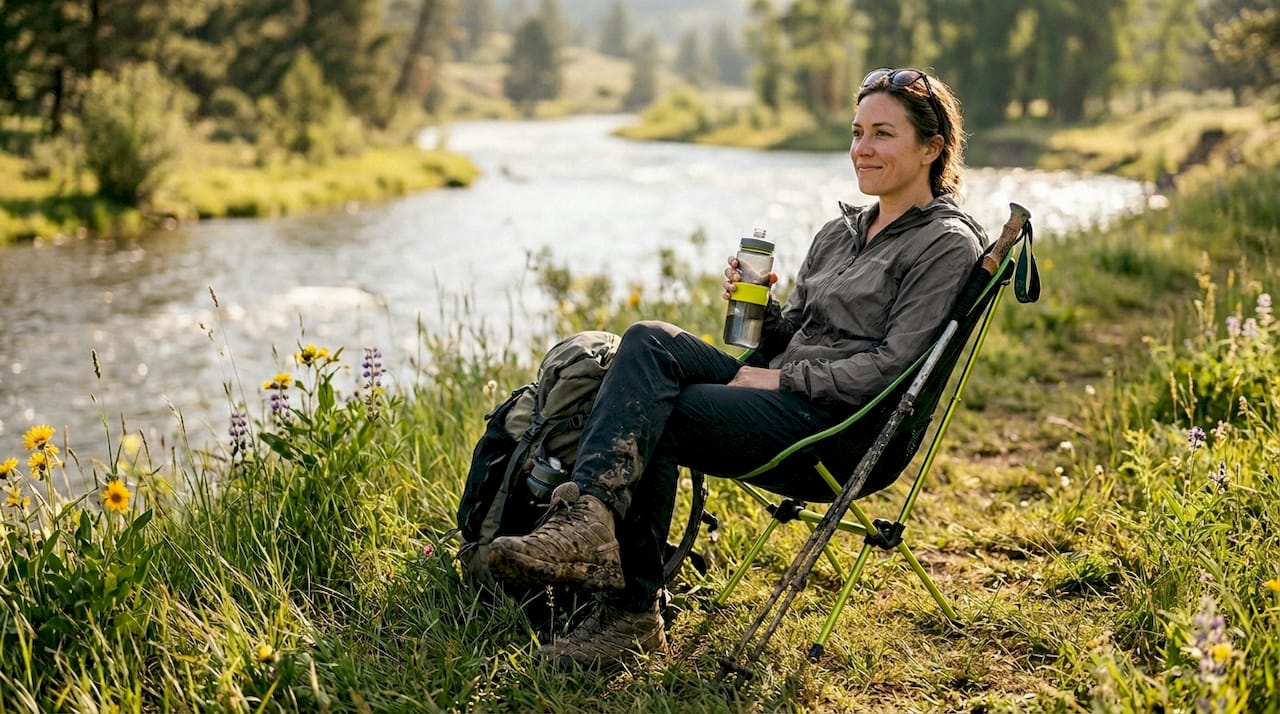
Not all chairs are created equal, and parking your posterior on a wobbly, one-size-fits-all seat at your favorite campsite or festival can turn a great day into a sore one fast. The truth is, outdoor seating adjustability is the quiet hero of every genuinely comfortable adventure, whether you’re perched beside a dancing campfire, soaking in a music festival vibe, or chilling in a city park. In this guide, we break down exactly what adjustability means for outdoor chairs, how the key mechanisms actually work, and how you can match the right features to your real-life adventures. Ready to sit smarter?
| Point | Details |
|---|---|
| Adjustability matters | Features like reclining backs and adjustable legs can dramatically boost comfort during any outdoor activity. |
| Function fits your adventure | Choose chair features that match your typical activities, ground conditions, and personal comfort needs. |
| Balance weight and features | More adjustable options offer flexibility, but may add weight—find your ideal compromise. |
| Simple is often best | For most outdoor uses, a chair with one or two key adjustments is enough for comfort and portability. |
Let’s clear this up right away because “adjustability” gets thrown around a lot in outdoor gear circles. At its core, outdoor seating adjustability simply means your chair can change to fit you, your terrain, or your activity rather than forcing you to adapt to it. That’s a bigger deal than it sounds.
Imagine setting up camp on a rocky hillside. A fixed chair tilts awkwardly, leaving you fighting gravity all evening. An adjustable one lets you level the legs or shift your recline angle so you’re actually comfortable. That’s adjustability doing its job.
The benefits of adjustable seating go well beyond comfort. Think ergonomics, accessibility for different body types, and genuine terrain adaptability. Here’s what the core adjustable features typically look like:
As outdoor comfort specialists often put it, adjustability enhances portability for outdoor use by allowing terrain adaptation and user-specific ergonomics. In practice, this means a chair that works for your 5’4" friend at a picnic table can also work for your 6’3" buddy lounging by the lake, with the right tweaks.
Generic outdoor chairs skip most of this. They’re built for an average user in average conditions, which sounds fine until you’re not average, or the conditions aren’t. Adjustable models bridge that gap, giving you real control over your comfort rather than just hoping for the best.
With the concept established, let’s look at how these adjustability features are actually built into outdoor chairs and what they do for you in the field.
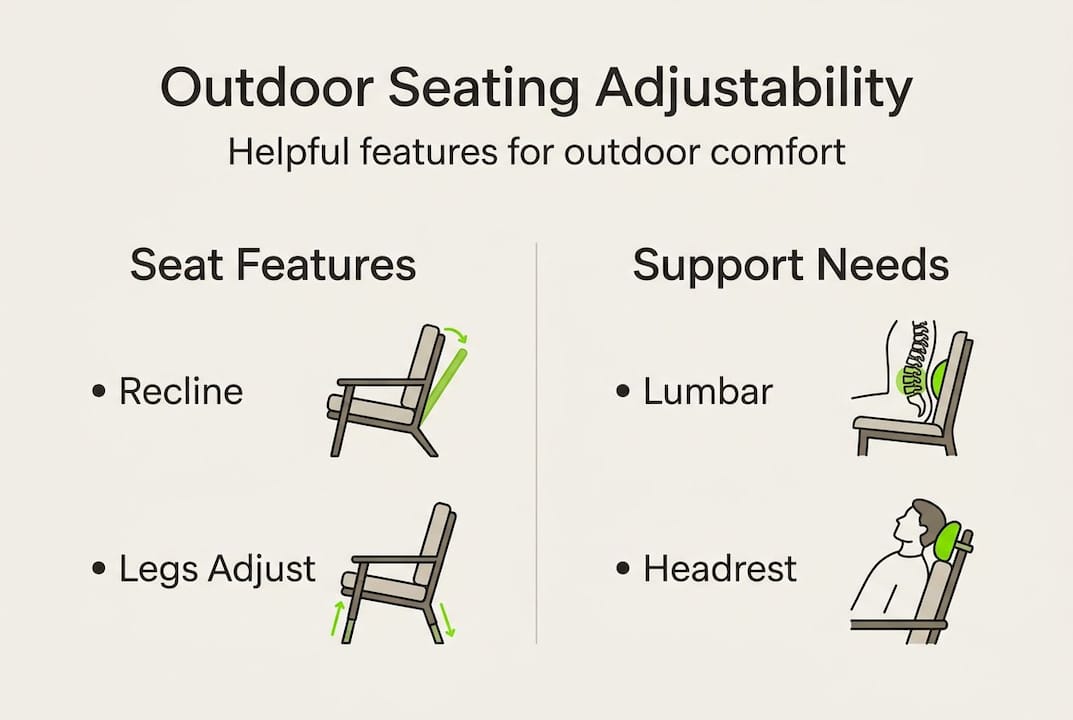
Here’s a quick comparison of the main mechanisms:
| Feature | How it works | Main benefit |
|---|---|---|
| Reclining back | Lever or tension lock shifts seat angle | Relaxation and spinal comfort |
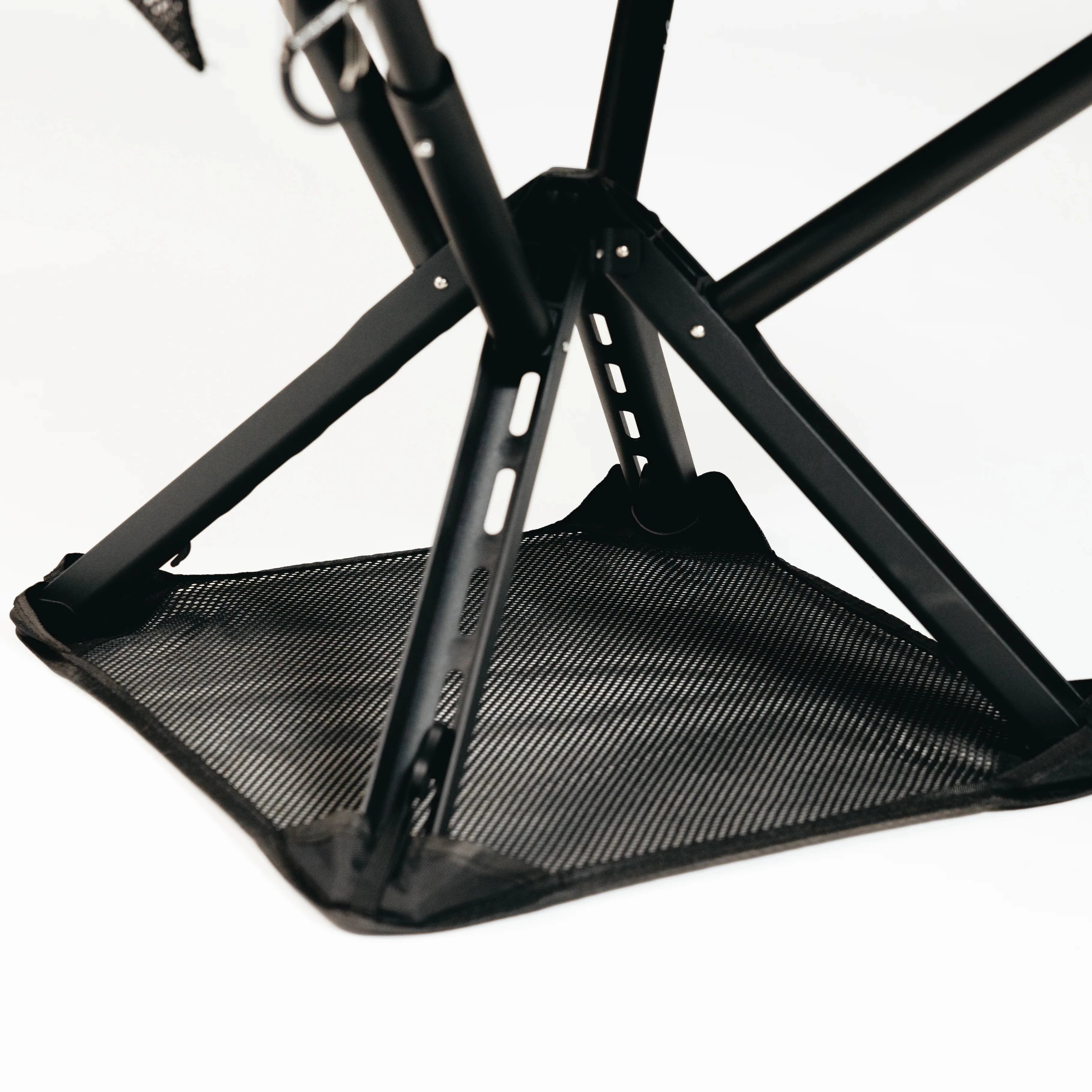
| Adjustable legs | Telescoping or screw-adjust legs | Stability on uneven terrain |
| Lumbar support | Built-in padding or strap system | Lower back relief over long sits |
| Headrest | Removable or sliding panel | Neck comfort for reclining |
| Armrests | Fixed or height-adjustable | Upper body support and rest |
So how do you actually use these systems? It’s simpler than it looks:
Zero-gravity chairs take this a step further. These chairs use lever-locking systems that elevate your legs above heart level at 120 to 128 degrees, creating a “weightless” feel that seriously reduces pressure on your spine. It’s genuinely impressive technology for longer outdoor stays.
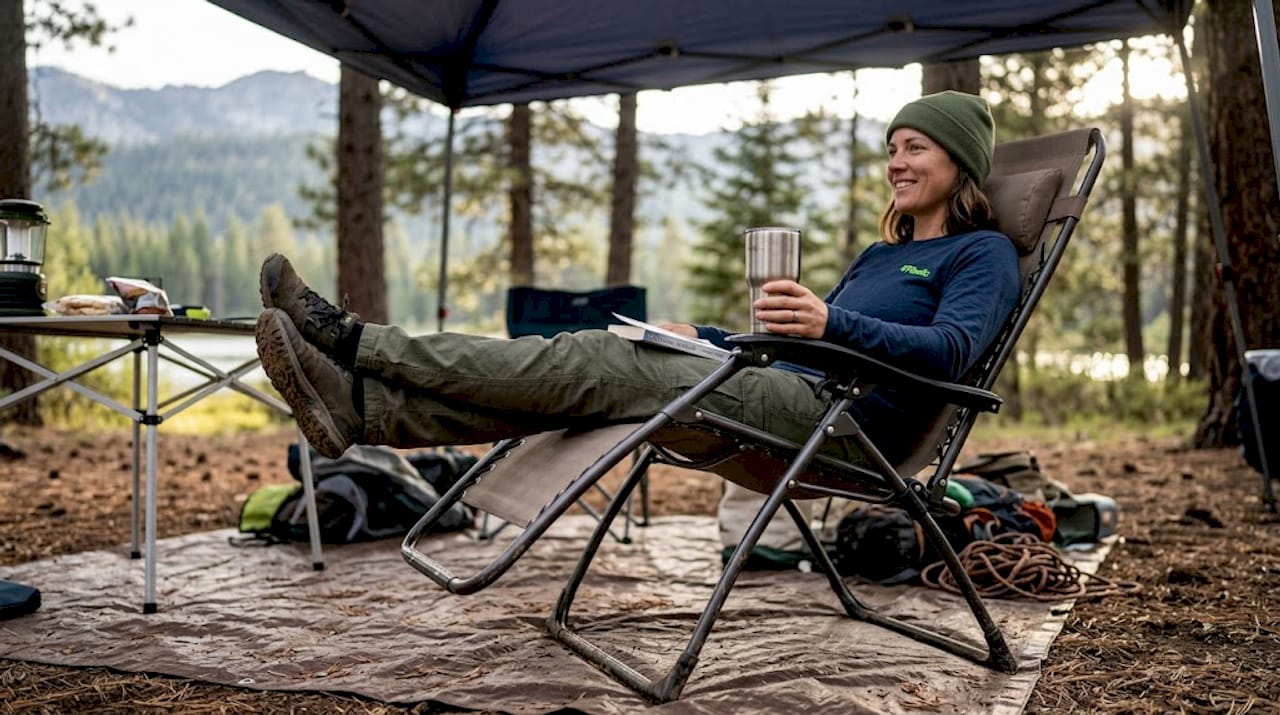
For portable seating solutions, you’ll often find a smart balance: fewer mechanisms, lighter materials, but thoughtful design that still handles the most important adjustments.
Pro Tip: If you plan to sit for more than a couple of hours outdoors, prioritize lumbar and head support over fancy recline angles. Your back will thank you around hour three.
Knowing the mechanics is great, but let’s talk about where adjustability actually saves your day in the real world.
Camping is the classic use case. Ground conditions vary wildly, from soft grass to rocky gravel to sloped lakeside banks. Adjustable legs help stabilize your seat on slopes, and wider feet or rubber tips prevent you from slowly sinking into sand or mud. Low seats, while cozy, can be genuinely tough for taller users or anyone with knee issues to stand up from.
Festivals bring a different challenge. You’re often in tight spaces, surrounded by crowds, and on your feet on and off all day. A chair with flexible height adjustment lets you sit when you need to, stand without wrestling yourself upright, and stay comfortable even as fatigue sets in.
Urban adventures, think city parks, rooftop hangs, or street-side people-watching, call for a different priority mix. Here, compactness and portability often win over a full suite of adjustability features. You still want some comfort, but lugging a heavy, feature-packed chair three subway stops is not exactly inspiring.
Here’s a quick scenario guide:
| Setting | Key adjustability needs | Watch out for |
|---|---|---|
| Camping | Adjustable legs, wider feet | Sinking in soft ground |
| Festivals | Height flexibility, easy stand-up | Fatigue, tight spaces |
| Hiking/backpacking | Ultra-light, minimal features | Weight vs. comfort trade-off |
| Urban leisure | Compact fold, basic comfort | Bulk and carrying ease |
User diversity matters here too. Tall users above 6 feet often find their feet dangling awkwardly in low zero-gravity chairs. Older users or those with joint issues need higher seat heights and firm armrests to push up from. One size never truly fits all outdoors.
Some key features to look for based on your scenario:
Once you know when and why adjustability matters, here’s how to make the best personal choice without over-buying or under-buying.
Here’s a simplified decision framework:
Pro Tip: Avoid chasing features that look impressive in reviews but won’t match your actual habits. A six-position recline sounds amazing until you realize you always sit in position two anyway.
Check out practical outdoor seating tips for even more scenario-specific guidance before you buy.
Here’s an honest take after years of watching people shop for outdoor chairs: most buyers overthink it. They pile on features, max out their budget on a chair with eight adjustments, then carry it once and leave it in the garage.
The reality? One or two well-chosen adjustments satisfy around 90% of real outdoor sitting needs. A reliable recline and a sensible lumbar pad will outperform a gadget-heavy chair that takes ten minutes to set up. We’ve seen it over and over.
The smartest approach is to ignore the showroom checklist and ask yourself where you actually sit most often, and for how long. That answer should shape every feature decision. Versatile seating comfort is not about having the most adjustments, it’s about having the right ones for your life. Comfort in the field beats gimmicks in the store, every single time.
Now that you know what to look for, finding the right chair becomes a lot less overwhelming. At Sitpack, we’ve built our entire range around exactly this balance: smart adjustability, genuine portability, and the kind of durability that holds up from the campfire to the city park.
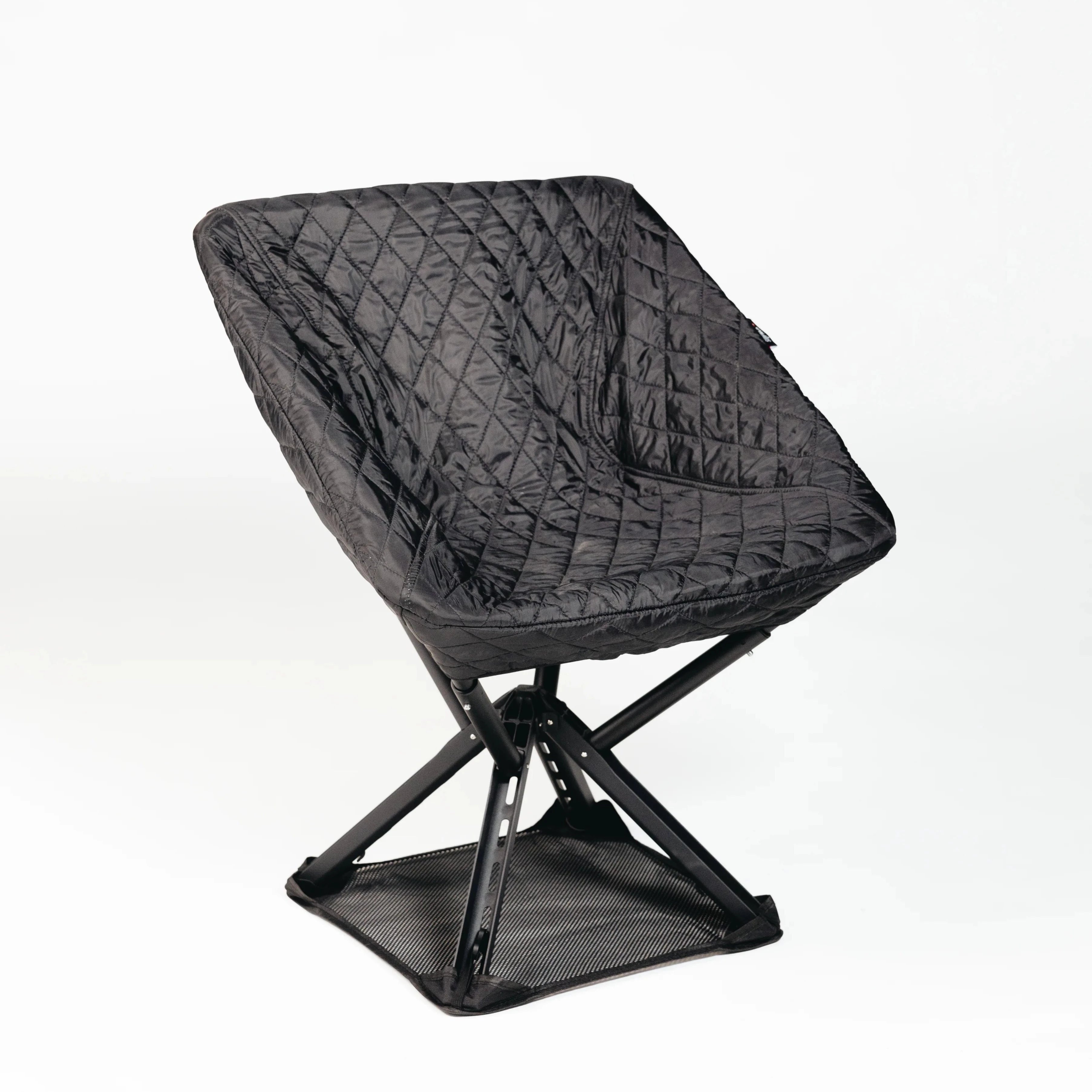
Whether you’re gearing up for festival season, planning a camping trip, or just want a reliable seat for spontaneous urban adventures, Sitpack portable seating has you covered. From the ultra-compact Sitpack Zen to the versatile Campster II, every product is designed to move with you, not weigh you down. Explore the full range and find your perfect match.
It means the chair lets you change parts like back angle, height, or supports to fit your comfort and the ground beneath you. Common mechanisms include reclining backs from 100 to 160 degrees, adjustable legs, lumbar support, and headrests.
Generally yes, because more moving parts mean more material. Trade-offs exist between weight savings and feature richness, so it’s worth prioritizing what you’ll actually use.
Adjustable legs let you level your seat on slopes or rocky surfaces, keeping you stable without awkward leaning. Wider feet also prevent sinking in soft ground like sand or mud.
Look for a higher seat height and a deeper seat to support longer legs comfortably. Tall users above 6 feet often find their feet dangling in low zero-gravity chairs, so seat height matters a lot.
Not at all. Simpler solutions satisfy most practical outdoor needs, and one or two well-chosen adjustments tailored to your main activity will serve you better than an overloaded feature list.