カート
0
サインアップすると注文から 10 ドル割引になります
配達予定
1〜3日
こちらもおススメ


デンマークの会社


TL;DR:
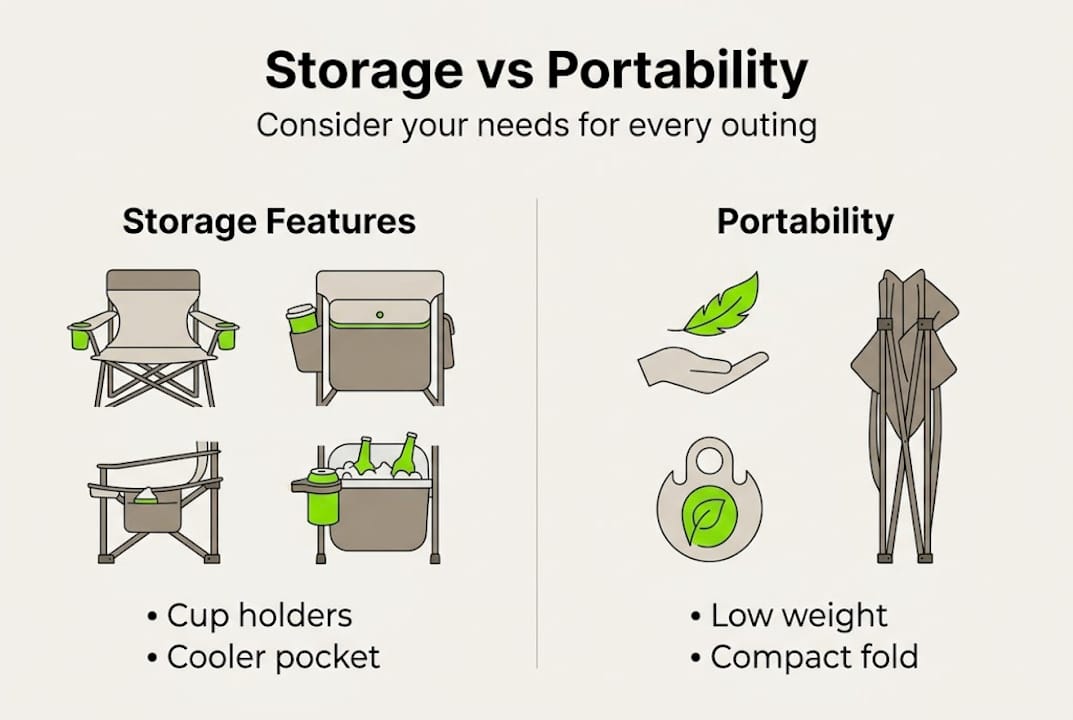
- Built-in storage in outdoor chairs keeps essentials accessible and reduces the need for extra bags.
- More storage features tend to add weight, so choose based on activity and transportation method.
- Prioritize minimal, essential storage for comfort and portability in activities like hiking or backpacking.
Picture this: you’re finally settled into your camp chair, the fire’s crackling beautifully, and your drink is sitting a frustrating six feet away on a cooler you’d have to get up to reach. Sound familiar? That small inconvenience is the kind of thing that quietly ruins an otherwise perfect outdoor moment. Modern foldable chairs with built-in storage are changing this experience entirely, keeping your essentials within arm’s reach without forcing you to haul an extra bag. This guide breaks down exactly why storage capacity matters, which features actually earn their keep, and how to match the right chair to the way you actually spend time outdoors.
| Point | Details |
|---|---|
| Integrated storage adds convenience | Built-in pockets and compartments keep essentials within easy reach during outdoor activities. |
| Consider weight vs. features | More storage often means heavier chairs, so balance your portability and gear needs. |
| Match storage to your activity | Tailor your chair choice to your most common setting, whether it’s long camps or quick hikes. |
| Smart selection improves comfort | Choosing the right storage features can make outdoor relaxation truly hands-free and enjoyable. |
Let’s get something straight first. When we talk about “storage capacity” in outdoor chairs, we’re not talking about some fancy furniture spec. We mean the real, practical ability of a chair to hold your stuff right where you’re sitting. That includes cup holders molded into the armrest, zippered side pockets, mesh pouches on the back, insulated cooler compartments, and even headrest pockets. The goal is simple: keep essentials accessible without needing extra bags strapped to your shoulder or dumped on the ground where they’ll collect dirt and get kicked over.
Why does this matter? Because outdoor activity already demands a lot of mental and physical energy. Whether you’re at a tailgate, fishing from the bank, watching your kid’s soccer tournament, or camping for the weekend, you’re managing gear, weather, food, and people simultaneously. The last thing you need is to constantly get up to dig through a backpack just to grab your sunscreen or rehydrate. Multifunctional outdoor seats solve this by integrating storage directly into the seating itself, which sounds obvious when you say it out loud but makes a genuinely huge quality-of-life difference in practice.
According to expert testing, storage in foldable chairs via integrated pockets, cup holders, and cooler compartments enhances functionality by keeping essentials accessible without additional gear, making them ideal for camping and tailgating. It’s the kind of feature you don’t think about until you have it, and then you can’t go back.
Here are the most common storage features found on outdoor chairs today:
“The best outdoor chair is the one where everything you need is exactly where you expect it to be, without a second thought.”
Pro Tip: Always prioritize chairs with insulated pockets or cooler compartments if you’re going somewhere without refrigeration. A cold drink in the armrest beats a lukewarm one in the cooler every single time.
Knowing why storage matters leads naturally to the next question: what’s actually available, and which features pull their weight in real outdoor use?
The lightweight seating guide covers a wide range of chair types, and storage varies dramatically across them. The ALPS Mountaineering King Kong chair is a fan favorite for a reason: it features 2 cup holders, 2 side pockets, and a headrest storage pocket, earning an impressive 80/100 overall score in expert testing. That’s a seriously well-rounded storage setup for a basecamp chair. Meanwhile, Coleman chairs are frequently called out for their smart mesh pouch design, which is ideal for phones and lighter gear since the breathable mesh lets you see and grab items instantly.
Here’s a quick comparison of how popular chairs stack up on storage:
| Chair model | Storage features | Ease of access | Best use case |
|---|---|---|---|
| ALPS King Kong | 2 cup holders, 2 side pockets, headrest pocket | High | Basecamp, tailgate |
| Coleman Quad | Mesh side pouches, cup holder | Medium | Camping, events |
| Playamigo | 25L compartment, MOLLE loops, external pockets | High | Beach, heavy-gear camp |
| Sitpack Campster II | Minimalist design, accessory-compatible | Medium | Hiking, travel, urban |
In real outdoor use, the difference between a zippered pocket and an open mesh pouch is more significant than it sounds. Zippered pockets protect valuables from rain or accidental spills; mesh pouches are faster to access but offer zero weather resistance. Cooler pouches typically use insulated lining similar to a basic lunch bag, good for 2 to 4 hours of cold retention depending on conditions.
Here’s a simple process to organize your chair before heading out for a day:
This simple sequence takes about 60 seconds and means you won’t spend your entire afternoon getting up to search through a backpack.
Here’s where things get a little more honest. More storage almost always means more weight. That’s not a deal-breaker, but it is a real consideration depending on how you get to your outdoor spot.
Chairs with generous storage, like the King Kong mentioned earlier, add significant weight and bulk, with the King Kong tipping the scales at 14.1 lbs. That’s fine when you’re pulling up in a truck and setting up 20 feet from the tailgate. It becomes a genuine problem when you’re hiking a mile to a backcountry campsite. Ultralight backpacking chairs, on the other hand, often shed storage features entirely to minimize pack size, which makes sense from a weight-savings perspective but means you’re back to digging through your pack every time you need chapstick.
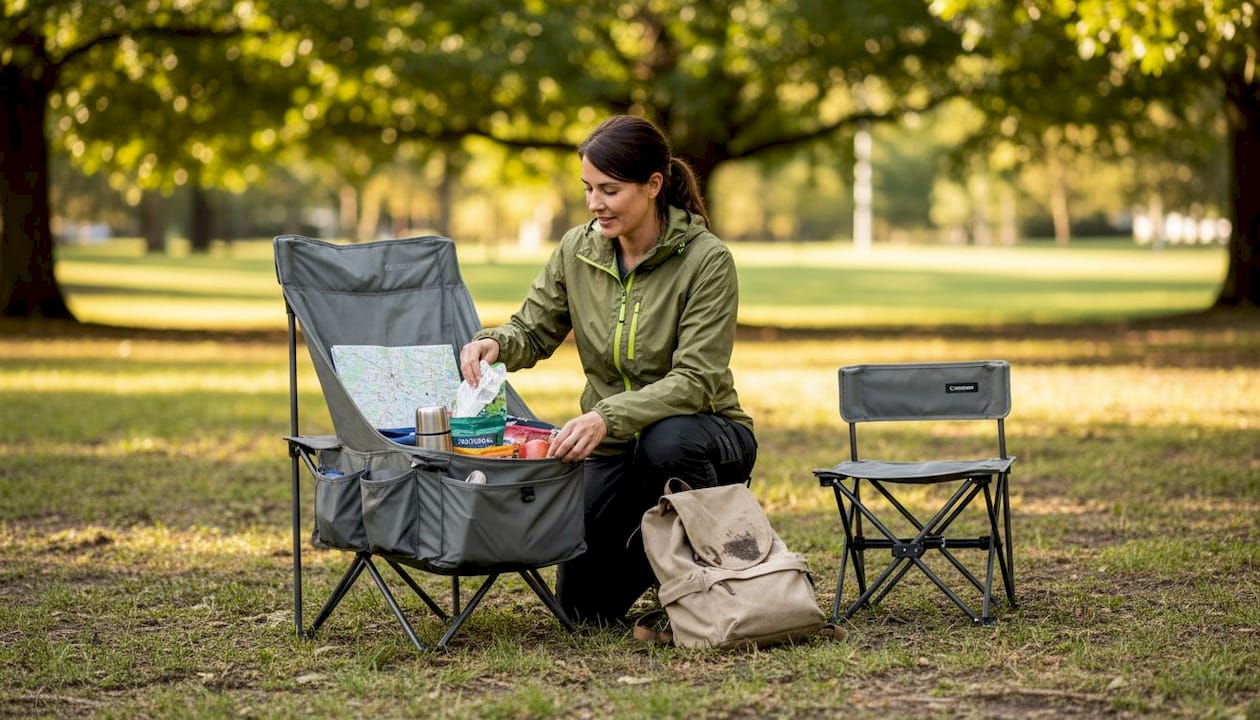
Check out how weight and storage trade off across common categories:
| Chair category | Avg. weight | Storage level | Portability rating |
|---|---|---|---|
| Heavy-duty camp chair | 12 to 15 lbs | High | Low |
| Mid-range foldable | 6 to 9 lbs | Medium | Medium |
| Ultralight backpack chair | 1.5 to 3 lbs | Low to none | High |
| Compact travel chair | 2 to 4 lbs | Low | High |
The sweet spot really comes down to your activity type. If you’re doing a base camp setup where the car is nearby, load up on storage. If you’re covering miles on foot, every ounce matters and a lightweight chair comparison will serve you better than a heavy-duty hauler.
Pro Tip: For day trips and static setups, maximize storage features without guilt. For multi-day treks or anything involving real mileage on foot, prioritize low weight and accept that you’ll carry a small separate pouch for essentials.
Now that the trade-offs are clear, let’s talk about actually matching a chair to your life rather than just to a spec sheet.
Start with your most common activity. Be honest with yourself here, because a lot of people buy a chair for the adventure they aspire to rather than the one they actually go on most weekends.
Here’s a quick pairing of storage types to activities:
One genuinely clever category worth knowing about is the all-in-one chair backpack hybrid. The Playamigo integrates a 25L main compartment, external pockets, and MOLLE loops, effectively turning your chair into a full camp carryall. You carry everything in, unpack it, and then sit in the bag. It’s not for everyone, but for beach trips or heavy static setups, it’s a legitimately smart solution.
Also think practically about volume versus variety. A chair with five small pockets may actually carry less total volume than one with a single deep side compartment. Test fit your usual items before committing to a chair if you can, especially if you rely on a large water bottle or specific tools. Check out outdoor chair essentials for a fuller breakdown of what most people actually need on hand.
Pro Tip: Chairs that double as gear bags are fantastic for static setups like festivals or base camps. For anything involving actual walking, a slim chair plus a light daypack almost always beats a single heavy chair-backpack combo.
Here’s a take you won’t find in most gear guides: more storage can actually make your outdoor experience worse.
I know, that sounds backward after everything we’ve covered. But there’s a real pattern where people buy chairs loaded with pockets and compartments and then fill every single one of them. The result isn’t a relaxed outdoor experience. It’s a portable clutter station. A family group around a base camp setup genuinely benefits from heavy-duty storage, while a solo trekker with a chair stuffed with things they won’t touch has just added unnecessary weight and decision fatigue.
True comfort in outdoor seating isn’t about maximum capacity. It’s about knowing exactly what you’ll actually reach for and having only that within arm’s reach. A cup holder, one secure pocket for your phone and keys, and maybe a small cooler sleeve. That’s it for most people on most trips.
Exploring multifunctional seats examples is genuinely useful, but the most important question before buying any chair isn’t “how much can it carry?” It’s “what do I actually use every time I sit down outside?” Answer that honestly and you’ll spend less, carry less, and enjoy more.
If this guide has you rethinking what you actually need from your next outdoor chair, that’s exactly the right starting point. Finding the balance between smart storage and genuine portability is what separates a good chair from a great one.
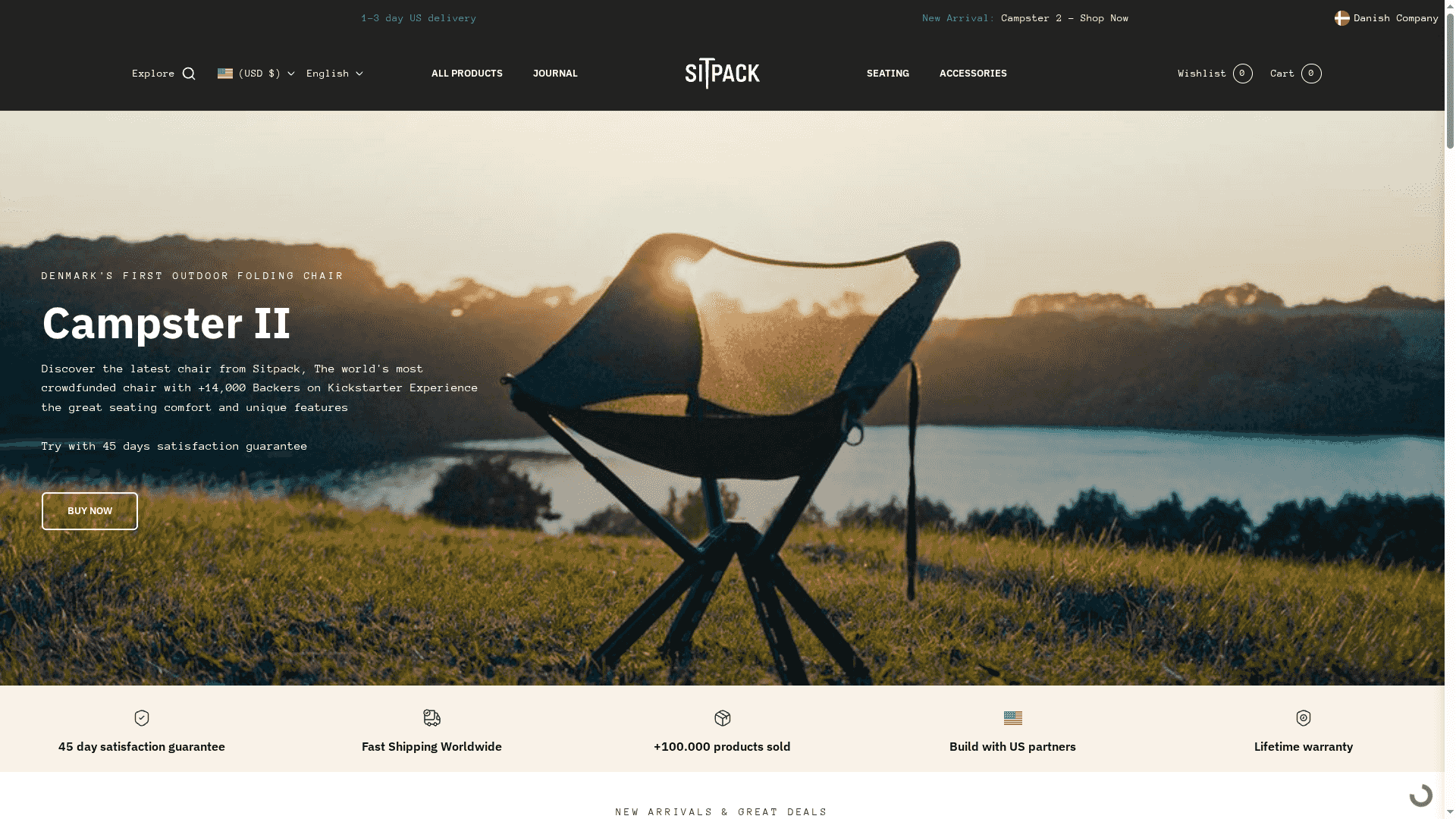
At Sitpack, the focus is on seating that earns its place in your kit without dragging you down. Whether you’re after a minimal travel companion or a feature-rich camp chair, the range is built around real outdoor use. You can also see storage features in action across different chair types to find the setup that actually fits the way you adventure. Smart seating starts with knowing what you need, and we’re here to help you figure that out.
Good storage offers space for your essentials like snacks, drinks, your phone, and gear within easy reach, without making the chair too heavy or bulky. The best setups balance accessible pockets and cup holders with a design that doesn’t compromise portability.
Yes, generally speaking. Models packed with pockets and insulated compartments add noticeable weight, with storage-heavy chairs like the King Kong weighing over 14 lbs, while ultralight options strip storage to stay under 3 lbs.
Camping, fishing, beach lounging, and tailgating benefit most because they involve long stationary periods where easy access to gear and supplies makes a real difference to your comfort and enjoyment.
Often, yes. More storage features can bulk up the chair’s frame and reduce packability, though heavy-duty chairs excel at base camps where you’re stationary and transport isn’t a concern.