index

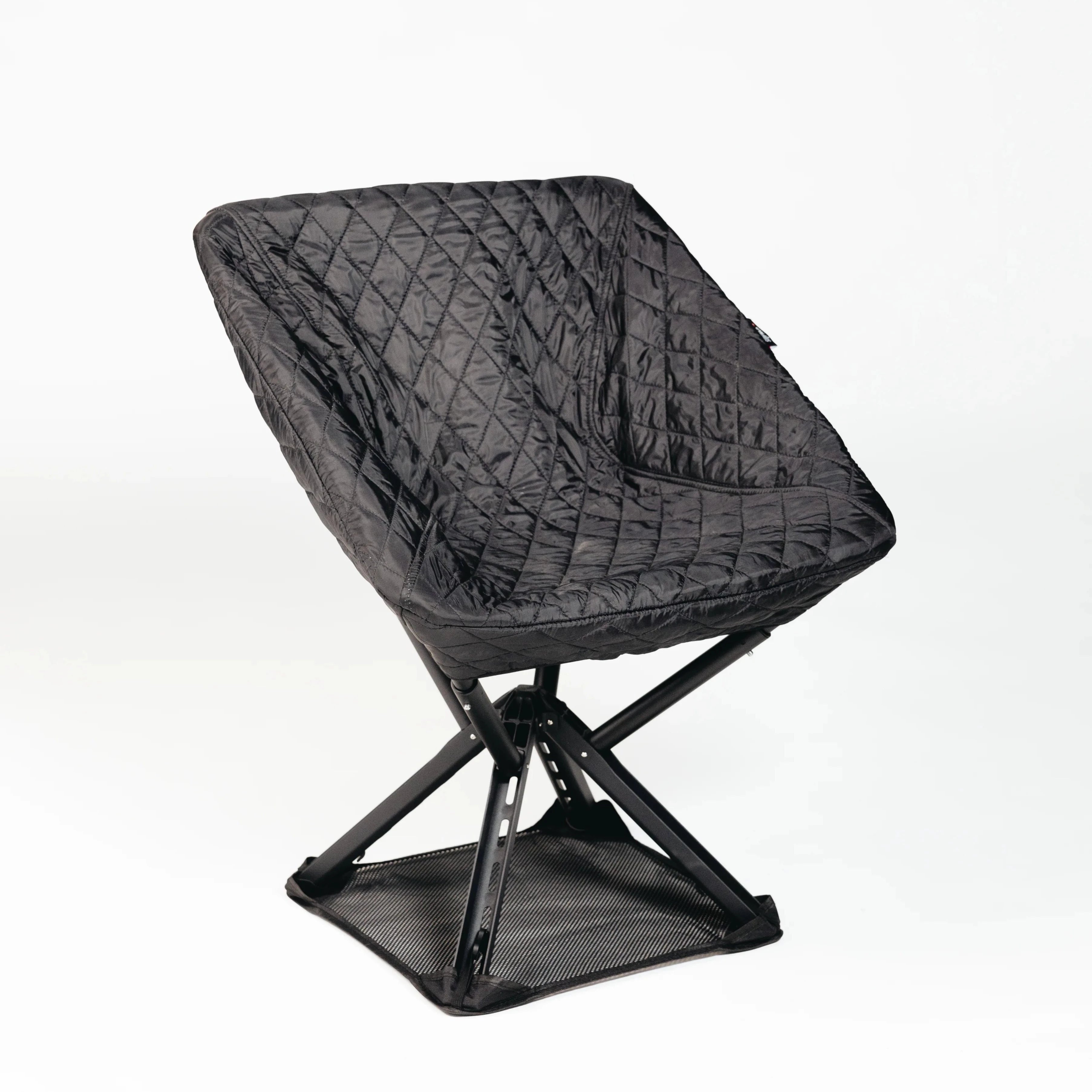
Fast delivery is a retailer-backed shipping tier that gets your order to you faster than the store’s default option, such as same-day, next-day, or a few business days. It is not just a marketing label. It is an operational promise backed by priority processing, upgraded carrier lanes, or both. For shoppers buying portable outdoor seating and accessories, like a Sitpack Campster II before a camping weekend, that promise can mean the difference between having your chair at the trailhead or scrambling for a log to sit on.

A few things to know right away:

  • “Fast delivery” covers several tiers: same-day, next-day, and expedited options typically faster than standard shipping.
  • Speed only matters when it is reliable. A promised window the retailer consistently meets beats a vague “ships fast” claim every time.
  • Delivery speed directly affects whether shoppers complete a purchase or abandon their cart.

Table of Contents

What do “standard,” “expedited,” and “express” actually mean?

These labels get tossed around interchangeably, which is genuinely confusing. Here is what they typically mean in practice, though no universal standard exists across merchants:

  • Standard shipping: The retailer’s default, slowest option. Often a multiple-business-day delivery depending on origin and destination.
  • Expedited shipping: A faster-than-standard tier that typically offers quicker delivery than standard shipping. It can mean priority processing, upgraded transit, or both.
  • Express shipping: Often used interchangeably with expedited, though some merchants reserve it for next-day or very fast service. Courier and merchant definitions vary, so always check the promised window, not the label.
  • Same-day delivery: Orders placed before a cutoff are picked, packed, and in transit within hours. Same-day typically carries higher costs and is limited to certain service areas near fulfillment centers.
  • Express delivery (Cambridge Dictionary definition): an arrangement to send a package so it arrives much more quickly than by the normal method, often within a few days.

The key takeaway: “expedited” on one site might mean 3 business days; on another, it means next-day. What matters is the concrete delivery window, not the label.

Why delivery speed affects your purchase decision more than you think

Research finds 43% of shoppers abandoned carts because of long or unclear delivery windows, and 69% identify next‑day delivery as a primary purchase incentive. That is not a minor friction point. That is a deal-breaker for nearly half of online shoppers.
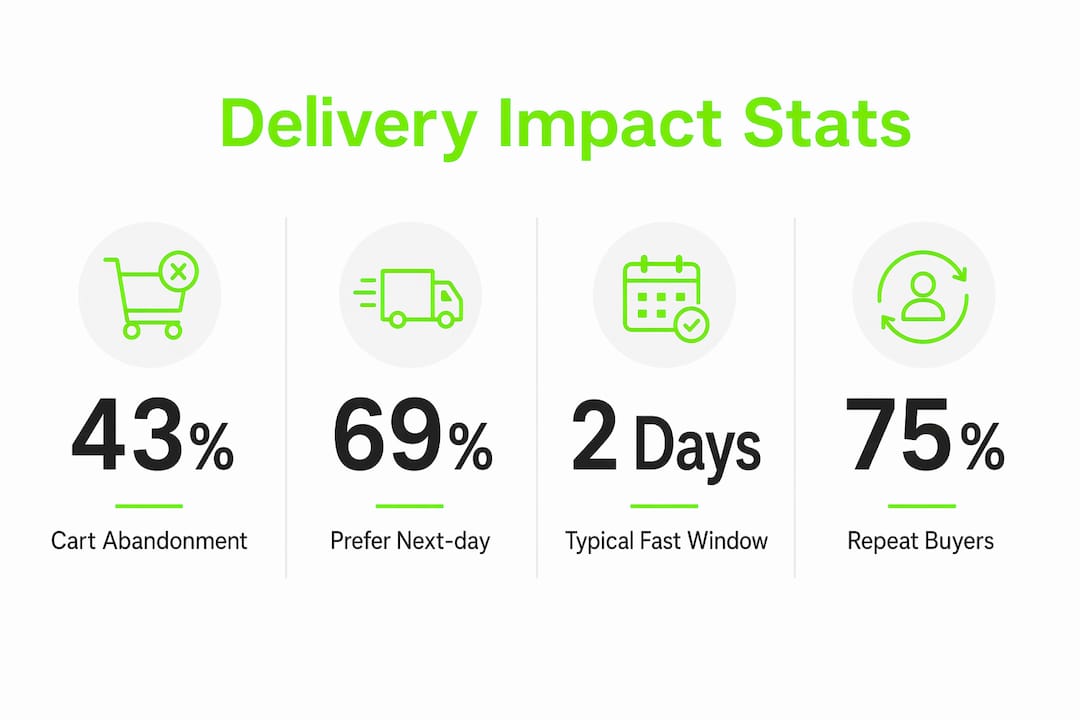
Infographic showing key shopper statistics on fast delivery preferences

For outdoor seating buyers specifically, timing is everything. You are not browsing for fun when you need a portable chair for a festival next Saturday. A retailer that consistently meets shorter delivery windows earns repeat business; one that misses its promised date loses it, often permanently.

The behavioral research on this is striking: late deliveries harm repeat-purchase behavior more than early deliveries of the same margin help it. That negative asymmetry means a retailer over-promising and under-delivering is riskier than one that sets a conservative window and nails it.

Warehouse worker scanning parcels on conveyer belt

How retailers actually make delivery faster

Speed does not just happen because a merchant slaps “expedited” on a checkout option. Several operational levers drive it:

  • Priority pick and pack: Orders flagged for fast delivery jump the queue in the warehouse, cutting processing time from 24+ hours to a few hours.
  • Upgraded carrier service: The retailer maps “expedited” to a faster carrier product, like a 1–3 day air lane or a next-day ground product in metro zones.
  • Distributed fulfillment: Retailers with multiple warehouses route your order from the facility closest to your address, shrinking transit time without necessarily using air freight.
  • Dedicated last-mile partners: Same-day options often rely on local courier networks rather than national carriers.

The weak links are worth knowing: pickup cadence, linehaul method, and last-mile partner compliance can all undermine speed even when an order is marked expedited. A retailer with great processing but a slow regional carrier still misses the window.

How to spot genuine fast delivery before you buy

Not every “fast shipping” badge is worth trusting. Here is what to look for on a product page and at checkout:

  • Explicit delivery date or window: “Arrives by Thursday, June 12” beats “ships in 1–3 days” every time.
  • Cutoff time: A stated order cutoff (e.g., “order by 2 PM ET for next-day”) signals real operational planning.
  • Fulfillment origin: Some retailers show which warehouse ships your order. Closer origin = shorter transit.
  • Carrier service level: “UPS Next Day Air” or “FedEx 2Day” is verifiable. “Fast shipping” is not.
  • Tracking milestones: Real-time tracking from pick to delivery is a sign the retailer has operational visibility.
  • Exception and guarantee language: Does the retailer offer a refund or reship if the expedited window is missed?

Avoid vague signals: “we ship fast,” unclear fee structures, or shipping labels with no concrete dates. Retailers that show estimated delivery dates on product pages reduce cart abandonment and increase conversion because shoppers can plan around a real date.

Pro Tip: Look for delivery estimates on the product page or in your cart, not just at checkout. Good retailers surface this information early so you can make a confident decision before you enter your payment details.

Practical steps to secure fast delivery for a portable chair or accessory

You can stack the odds in your favor with a few deliberate moves:

  1. Filter for eligible items first. Many retailers let you filter by delivery speed. Use it to see only in-stock items that qualify for expedited options.
  2. Check fulfillment location and stock status. “In stock” at a warehouse 300 miles away beats “in stock” at one across the country.
  3. Choose an explicit expedited or express option at checkout. Do not assume standard shipping will arrive in time.
  4. Order before the retailer’s cutoff time. Missing the cutoff by an hour can add a full business day.
  5. Consider local pickup or same-day courier. If you are in a metro area, this is often the fastest and most reliable option.
  6. Confirm tracking and delivery windows after purchase. A confirmation email with a concrete delivery date is your proof of the promise.

For last-minute camping or festival needs, prioritize in-stock items shipping from nearby fulfillment centers. If timing is critical, paid express is worth the premium.

Pro Tip: For bulky or oversized items like folding chairs and outdoor accessories, call customer service to confirm same-day or next-day eligibility. Special handling requirements can quietly disqualify items from the fastest tiers.

Costs, trade-offs, and the environmental side of fast shipping

Faster delivery costs more. That is not a surprise, but the full picture is worth understanding:

  • Higher carrier fees: Expedited and express lanes cost more per shipment, and retailers usually pass some or all of that to you.
  • Handling surcharges: Bulky items like portable seating may carry additional fees for expedited handling.
  • Non-refundable expedited fees: If you cancel or return an order, the fast shipping fee is often non-refundable.
  • Environmental impact: Last-mile delivery is the most expensive and carbon-intensive segment of B2C fulfillment. Accelerating delivery, especially via air freight, raises CO₂ output compared to standard 3–5 day ground options.

Retailers also limit fast options by SKU or shipping lane to control costs, so not every product in a catalog will qualify for same-day or next-day service.

When is same-day or next-day delivery actually worth it?

A few clear scenarios where paying for speed makes sense:

  • Scheduled trips or events: If your camping trip is Friday and it is Wednesday, a $15–$25 express fee is cheap insurance.
  • Last-minute replacement: A broken or forgotten chair with no time to borrow one makes expedited shipping a practical necessity.
  • High use-value, short window: When the value of having the item immediately clearly exceeds the shipping premium, pay for speed.

Skip the upgrade when your schedule is flexible, when standard shipping reliably meets your timeline, or when the shipping fee approaches or exceeds the product’s value. Free standard shipping that arrives in 4 days is a better deal than $20 express for a $15 accessory.

How Sitpack presents fast delivery for portable seating

Here is a labeled example of how a portable seating merchant should present shipping signals, using Sitpack’s public claims as a reference point:

  • Shipping promise headline: Sitpack advertises fast worldwide delivery across its product pages.
  • Delivery estimate: Look for a date or business-day count on the product page or at checkout. Sitpack’s pages are where you verify the current estimate for your location.
  • Cutoff time: Check the product page or cart for any stated order cutoff. This is the field that tells you whether today’s order ships today.
  • Expedited fee: Sitpack lists shipping options and fees at checkout. Compare the cost of expedited tiers against your timeline.
  • Tracking availability: Sitpack provides order tracking so you can follow your chair from warehouse to doorstep.
  • Guarantee language: Sitpack backs orders with a 45-day satisfaction guarantee. Confirm current delivery terms on the site, as fulfillment windows can vary by destination.

Disclosure: This is an illustrative example of how a merchant should present fast-delivery signals. It is not a legal guarantee of specific delivery dates. Always verify current delivery estimates and cutoffs directly on the retailer’s product pages.

Key Takeaways

Fast delivery is only as good as the window a retailer actually promises and consistently meets. A realistic 2-day estimate the retailer hits every time beats a flashy “next-day” badge that misses half the time.

Point Details
Look for explicit dates A concrete delivery date on the product page is more trustworthy than a vague “ships fast” label.
Confirm order cutoffs Missing a cutoff by an hour can add a full business day to your delivery.
Prioritize local fulfillment In-stock items at nearby warehouses arrive faster without requiring expensive air freight.
Weigh cost vs. urgency Expedited fees make sense for time-sensitive trips; skip them when your schedule is flexible.
Sitpack fast delivery Sitpack offers fast worldwide delivery with a 45-day guarantee — verify current windows and cutoffs at checkout.

Speed matters, but reliability matters more

Here is the thing about fast delivery that most shoppers overlook: the number on the label is not the point. The point is whether the retailer hits it. Research consistently shows that late deliveries damage loyalty far more than early deliveries build it. That asymmetry should change how you shop.

When I look at the outdoor seating category specifically, the stakes are higher than they are for, say, a book or a phone case. A portable chair that arrives the day after your camping trip is useless. The gear has to show up when you need it. That means the most important question at checkout is not “how fast can this ship?” but “how reliably does this retailer meet its promised window?”

My honest recommendation: before you pay for expedited shipping, check the retailer’s reviews for delivery accuracy, not just product quality. A merchant with a 4.8-star product rating and a pattern of late deliveries is a worse bet than one with a 4.3-star product and a spotless fulfillment record. Speed and reliability together are the goal. Either one alone is not enough.
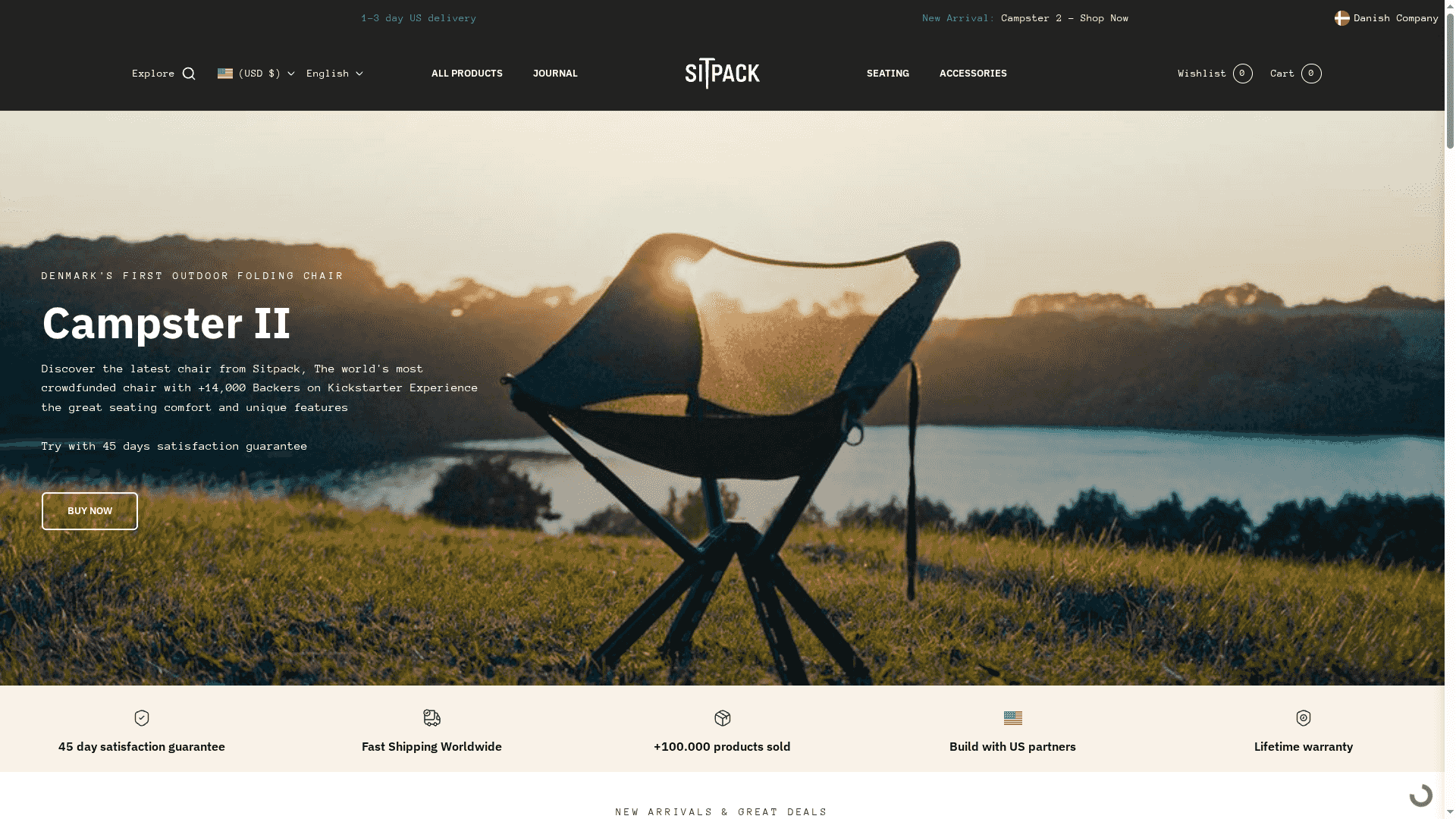
Sitpack ships portable seating fast — here is how to check

Sitpack

Sitpack sells portable outdoor chairs and accessories, including the Campster II and Sitpack Zen, with fast worldwide delivery and a 45-day satisfaction guarantee. If you are buying a portable chair for an upcoming trip, the smartest move is to check current delivery estimates and cutoff times directly on the product page before you add to cart. Fulfillment windows vary by destination, and the product page is where you get the real number, not a marketing promise. Head to sitpack.com to browse in-stock options, check your delivery estimate, and confirm whether expedited shipping is available for your location.

Useful sources

The claims in this article draw on the following sources:

  • IJSRA 2025 delivery loyalty study: Underpins the cart-abandonment (43%) and next-day preference (69%) statistics, the EDD-on-product-page findings, and the last-mile cost and emissions data. Used in the “why it matters,” “how to spot,” and “costs and trade-offs” sections.
  • SKUTOPIA expedited shipping primer: Primary source for the definition of expedited shipping, the operational levers behind faster delivery, and the weak-link analysis. Used in “definition and tiers” and “how it works.”
  • Shopify same-day delivery explainer: Covers same-day mechanics and cost implications for merchants and shoppers. Used in “definition and tiers.”
  • 3P Logistics expedited shipping overview: Explains label ambiguity and common delivery windows across courier and merchant definitions. Used in “definition and tiers.”
  • Retail Business Journal on fast delivery as competitive advantage: Industry analysis on speed as a strategic priority. Used in “why it matters.”
  • SAGE journal on delivery timing and consumer behavior: Research on the negative asymmetry of late deliveries and the operational case for conservative promises. Used in “why it matters,” “costs and trade-offs,” and the perspective section.