Cart
0
Sign up and get 10$ off your order
Expected delivery
1-3 days
You may also like


Danish Company

TL;DR:
- Minimalism involves intentionally keeping only what supports your priorities and removing everything else.
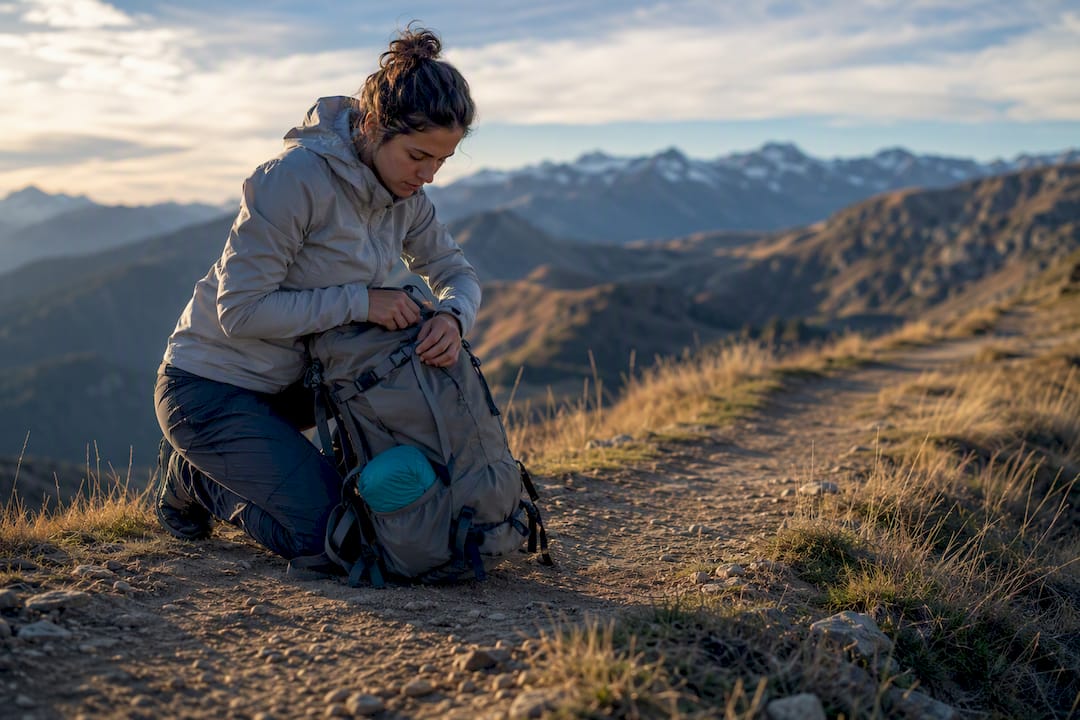
- For travelers, it means lighter packs, fewer gear decisions, and extended trips, which reduce stress and increase freedom.
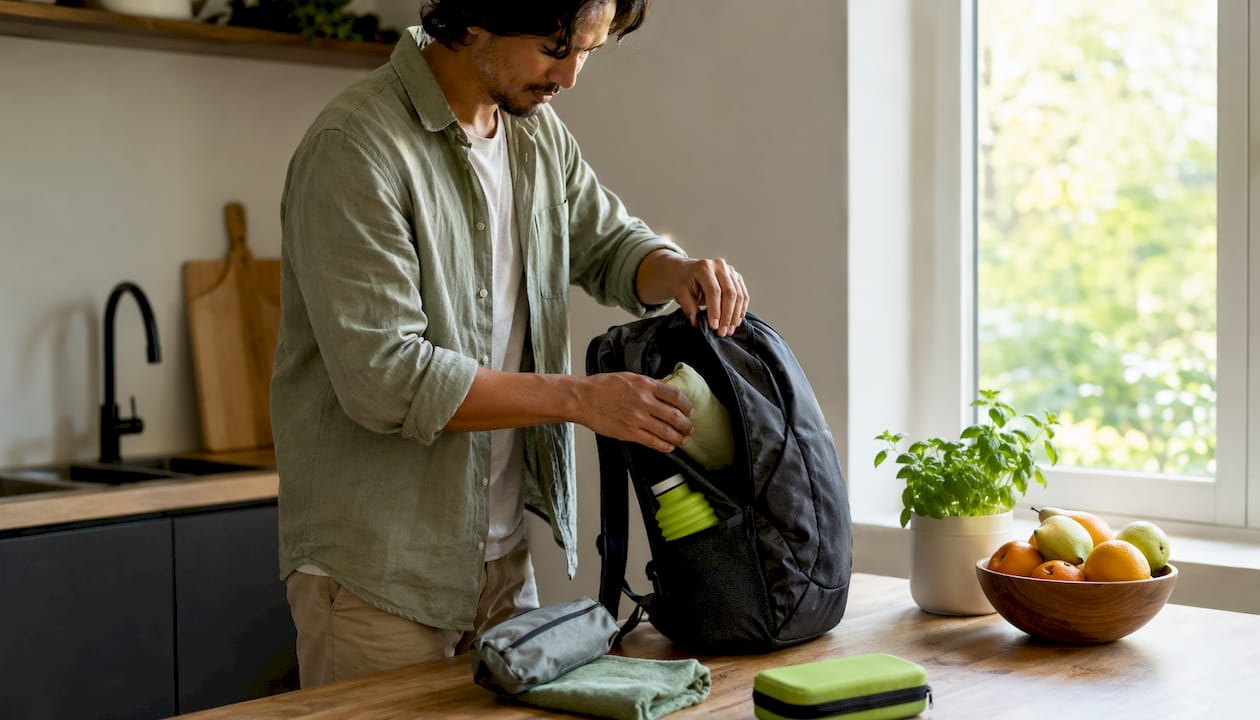
A minimalist lifestyle means intentionally keeping only what supports your priorities and removing everything else. That’s the whole definition. Joshua Becker of Becoming Minimalist frames it as removing distractions to focus on what matters, and The Minimalists echo the same idea: it’s about living with less so you can do more of what counts. For travelers, that translates directly into lighter packs, fewer gear decisions at 5 AM, and the freedom to stay out longer. YouGov research cited by Capital One confirms that Americans are drawn to minimalism primarily to cut spending, reduce stress, and clear clutter — all three of which hit differently when you’re hauling a pack across a trailhead.
Three quick wins travelers can expect:
The philosophy rests on a few principles you can use as decision rules every time you pack or buy gear.
Intentionality is the core. Every item needs a clear answer to “why is this here?” If you can’t answer that in one sentence, the item probably doesn’t belong. James Clear describes minimalism as focusing on fundamentals and using constraints to block incremental distractions — which is exactly the mindset that stops you from tossing “just in case” items into your bag.
Negative space is a feature, not a failure. An empty pocket in your pack isn’t wasted capacity; it’s room to breathe, and it signals that you’ve made deliberate choices. Minimal and Modern puts it well: good minimalism isn’t empty for the sake of empty — every item must earn its place.
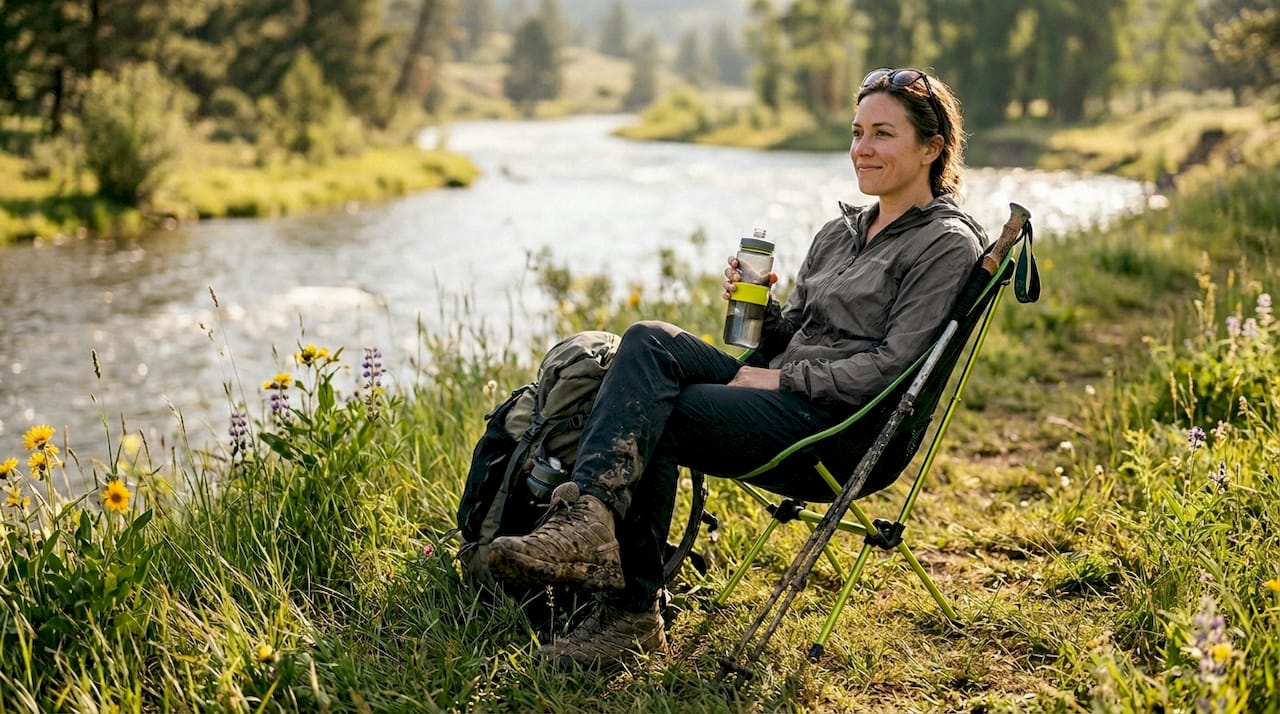
Multipurposeism is where minimalism pays off most for outdoor travelers. One item that does two jobs beats two single-purpose items every time. A seat that doubles as a table surface, a jacket that works as a pillow, a bottle that serves as a cooking vessel — these swaps compound fast.
“Minimalism is not about having less. It’s about making room for more of what matters.” — The Minimalists
Constraints as a tool is the underrated one. Set a rule like “one-in, one-out” before you need it, and you never have to make a hard decision under pressure. Buy for use, not for trend. If you wouldn’t reach for it on your next trip, it doesn’t come home from the store.
One quick, high-leverage starting point: digital minimalism. Clearing unused apps, subscriptions, and notification streams takes 20 minutes and creates the mental clarity that makes physical decluttering feel possible. It’s a low-stakes warm-up that builds the decision muscle you’ll need for the harder gear edits.
The evidence is solid. A peer-reviewed study published in Springer found that minimalists report measurable wellbeing gains across autonomy, competence, mental space, awareness, and positive emotions. A separate study in PMC confirmed a statistically significant positive relationship between minimalism and consumer wellbeing. Psychology Today links reduced clutter to calm, clarity, and better presence — which matters a lot when you’re navigating an unfamiliar trail or a crowded airport.
| Benefit | Research basis | Traveler outcome |
|---|---|---|
| Mental wellbeing | Springer wellbeing study | Calmer decisions, less trip anxiety |
| Reduced stress | YouGov/Capital One data | Less gear management, more presence |
| Financial savings | Capital One minimalism research | Lower gear spend, more budget for experiences |
| Smaller ecological footprint | ScienceDirect environmental study | Lighter pack, less waste on trail |
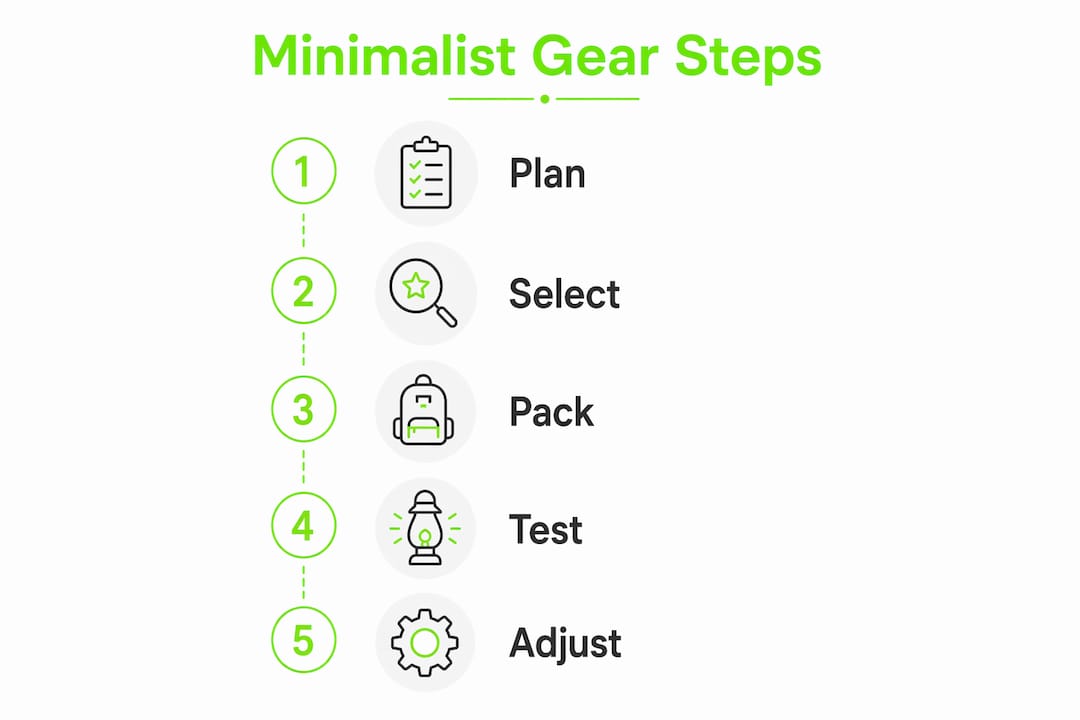
Translated into trail terms:
Start now, not after the next trip.
| Timeline | Action | Measurable outcome |
|---|---|---|
| Day 1 | Declutter one gear category | Identify 3–5 items to donate or sell |
| Week 1 | Set pack weight target | Hard ceiling in lbs/kg for next trip |
| 30 days | Complete “live without” test | Confirm which boxed items you never needed |
| 3 months | Quarterly audit + one-in/one-out review | Stable gear count, no re-accumulation |
Pro Tip: The hardest part of minimalism isn’t the initial purge — it’s managing incoming flow. Before you buy anything new, ask: “What does this replace?” If the answer is “nothing,” put it back. Emptied space is not an invitation to refill.
The most common one is the unilateral purge — tossing shared items without talking to the people you live with first. Minimalism in a shared home requires agreements, not executive decisions. Get everyone on board before anything leaves the house.
A few other traps worth knowing:
“The goal is not to own less. The goal is to own intentionally — and that looks different for everyone.” — Joshua Becker, Becoming Minimalist
For gear decisions specifically, a short do/don’t list:
One emotional note: empty shelves and empty pack pockets feel uncomfortable at first. That discomfort is normal. Treat the empty space as a deliberate pause, not a problem to solve. Wait 30 days before replacing anything you’ve removed.
The philosophy gets concrete fast when you’re standing in a gear shop. Prefer multipurpose, lightweight, and durable items with documented specs. Weight and pack volume are the two numbers that matter most; warranty signals durability and long-term value.
Packing checklist by function:
Weight targets by trip type:
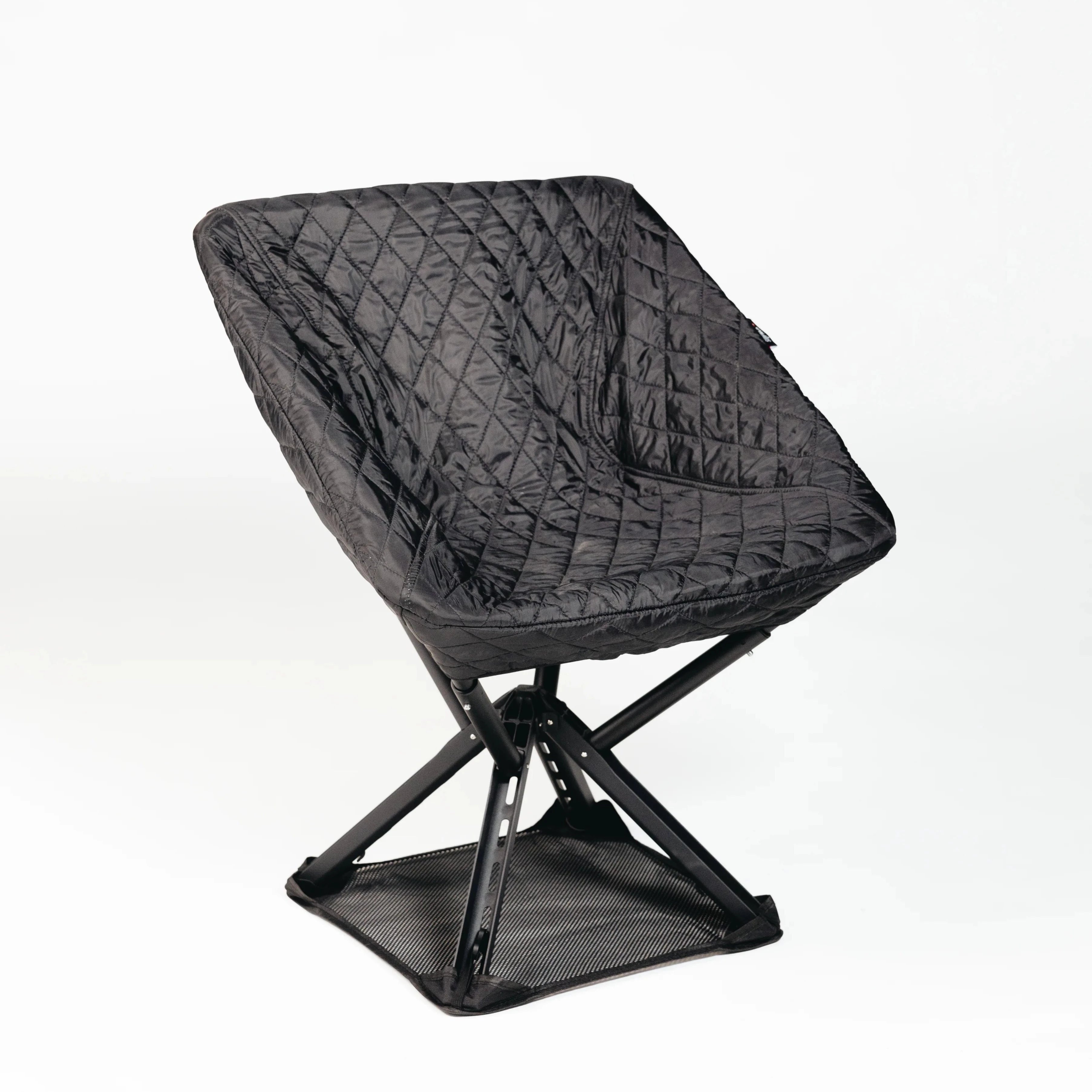
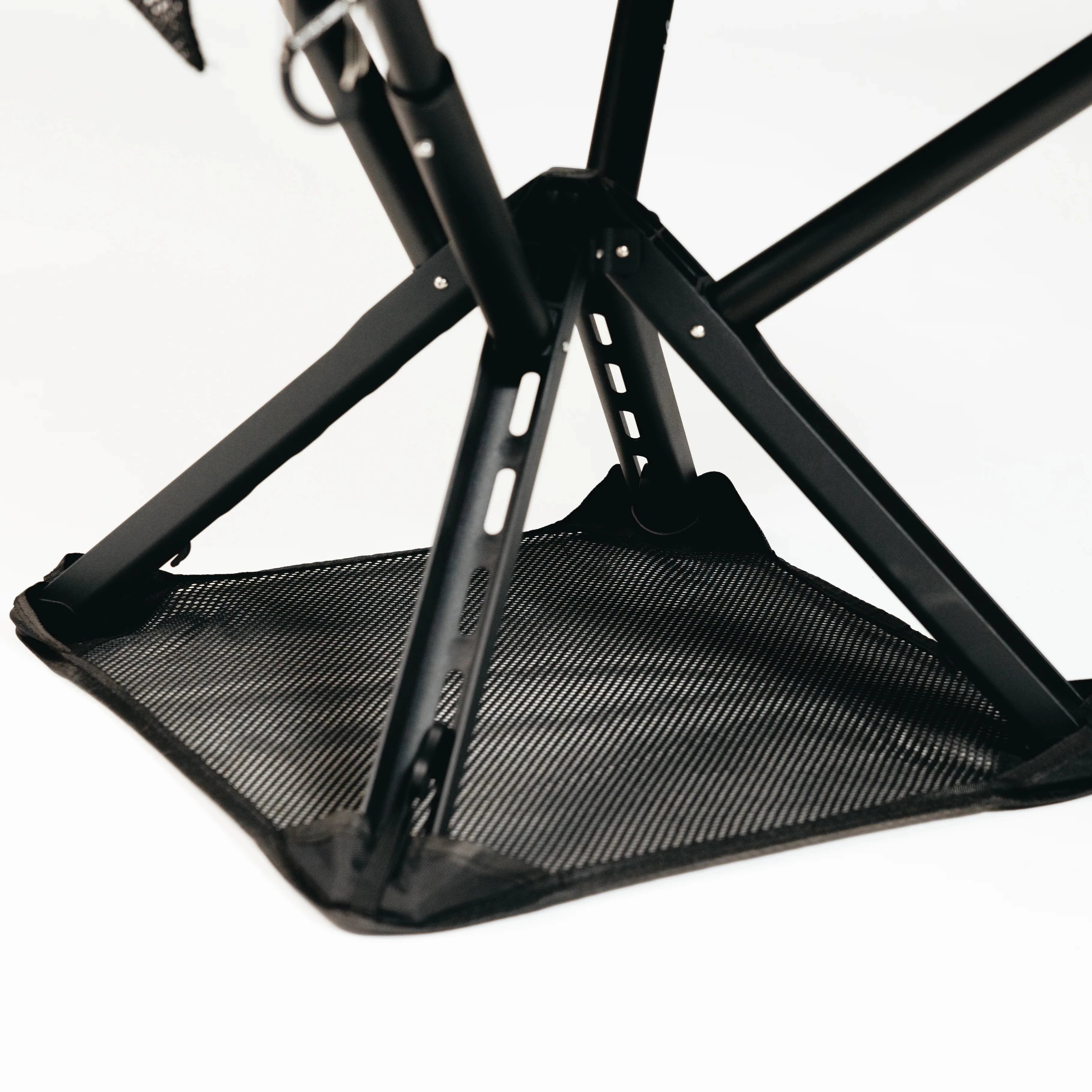
For portable seating, Sitpack’s minimalistic chair design philosophy prioritizes packed weight, pack volume, and load-bearing capacity as the three non-negotiable specs. The Sitpack Campster II and Sitpack Zen are built around exactly this framework — lightweight materials, compact pack size, and a lifetime warranty that signals the brand’s confidence in durability. Sitpack’s outdoor minimalist design guide breaks down how these trade-offs play out across different trip types.
Pro Tip: For seating, the trade-off triangle is weight vs. comfort vs. durability. You can optimize two of the three. Most travelers should prioritize weight and durability — comfort follows from good design, not from extra padding.
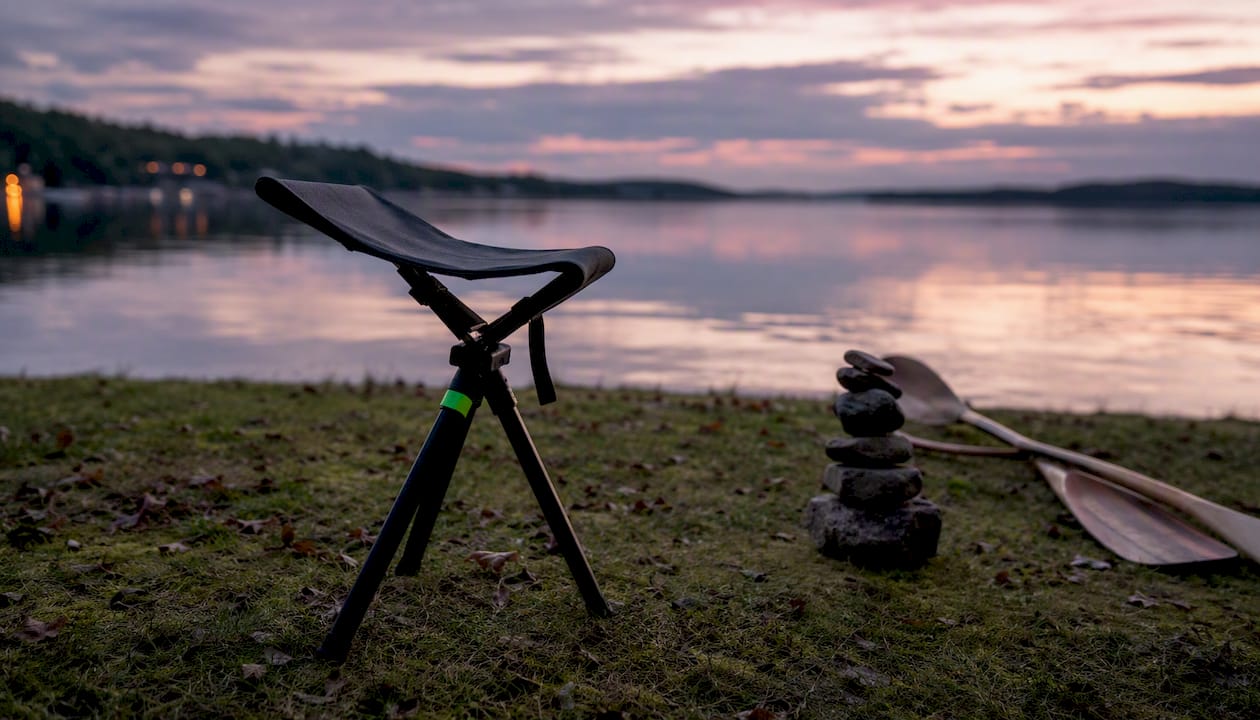
Use this checklist at the point of purchase or while packing.
Must-have:
Nice-to-have:
Avoid:
Sitpack’s minimalistic camping gear guide provides practical weight and volume benchmarks for travelers who want to cross-check their current kit against real-world specs.
Pro Tip: Before swapping out your current seat, take your candidate chair on one short trip first. Comfort on a 2-hour hike feels different from comfort at a 3-day basecamp. Test before you commit.
A minimalist lifestyle works for travelers because intentionality, multipurpose gear, and strict weight targets compound into lighter packs, lower costs, and more freedom on trail.
| Point | Details |
|---|---|
| Define it by intentionality | Minimalism means every item earns its place — not a specific item count. |
| Research backs the benefits | Studies link minimalism to better wellbeing, lower stress, and a smaller ecological footprint. |
| Start with one category | Declutter one gear category, set a weight target, and run a 30-day “live without” test. |
| Multipurpose gear is the lever | One quality portable seat replaces multiple single-purpose items and cuts pack weight. |
| Sitpack as a practical resource | Sitpack’s portable seating guides offer weight, volume, and warranty benchmarks for minimalist travelers. |
Here’s the honest take: most minimalism content is written for people decluttering their living rooms. The advice is fine, but it misses the specific pressure travelers feel — the weight on your back, the limited space in a hostel locker, the moment you realize you packed three things that do the same job.
The principle that actually changes behavior for outdoor travelers isn’t “own less.” It’s own with intention and test your assumptions in the field. A 30-day experiment at home is useful. One overnight trip with a stripped-down kit is more useful. The trail has a way of making the right call obvious.
The other thing most guides understate: the financial compounding. Replacing five mediocre single-purpose items with two quality multipurpose ones costs more upfront and saves money over every trip after that. A lifetime-warranted portable seat you carry for ten years is a better financial decision than a cheap folding chair you replace every season.
Pack one less thing next trip. Note what you didn’t miss. That’s the whole experiment.
Direct evidence used in this article:
Sitpack resources (E-E-A-T and product guidance):
Background reading: