カート
0
サインアップすると注文から 10 ドル割引になります
配達予定
1〜3日
こちらもおススメ
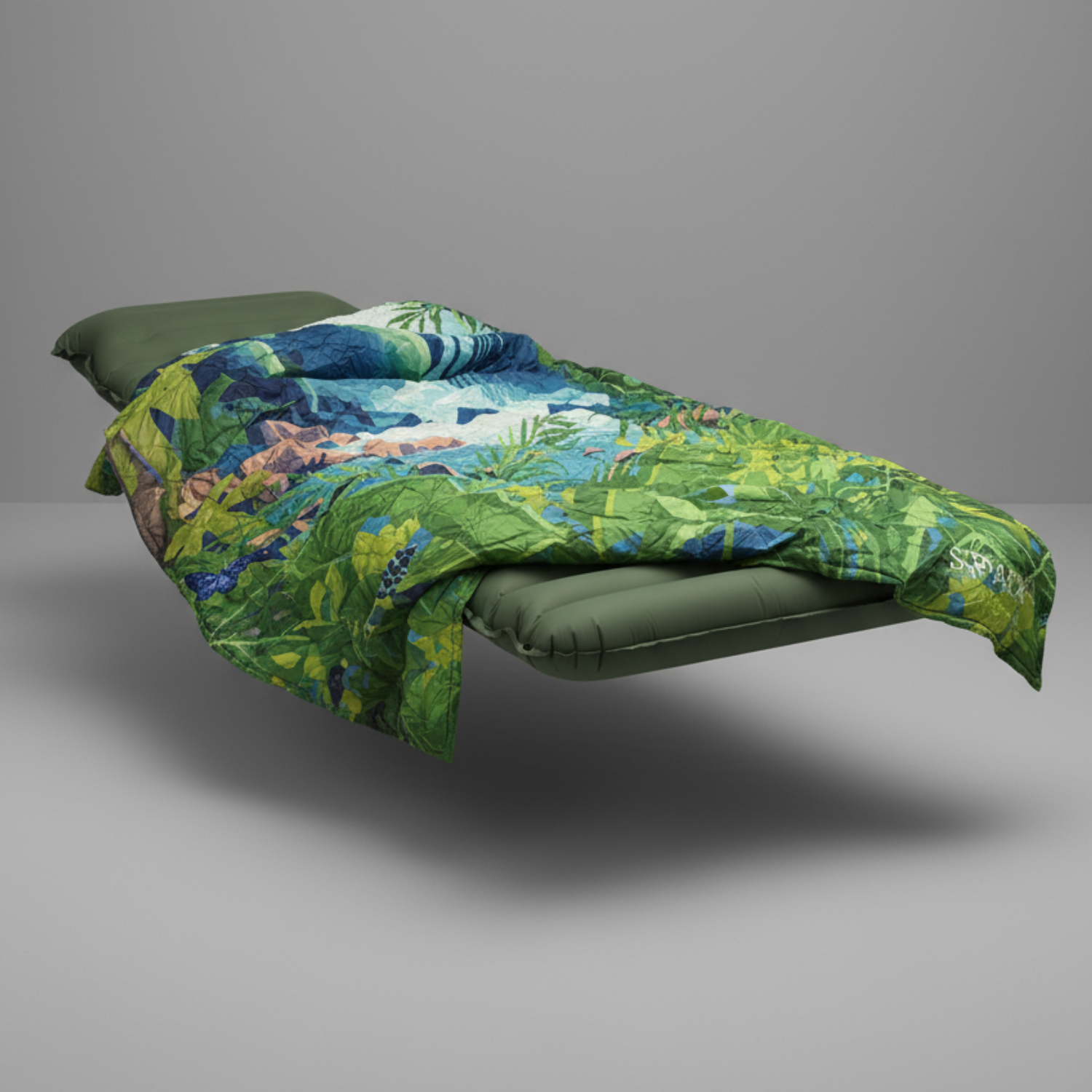
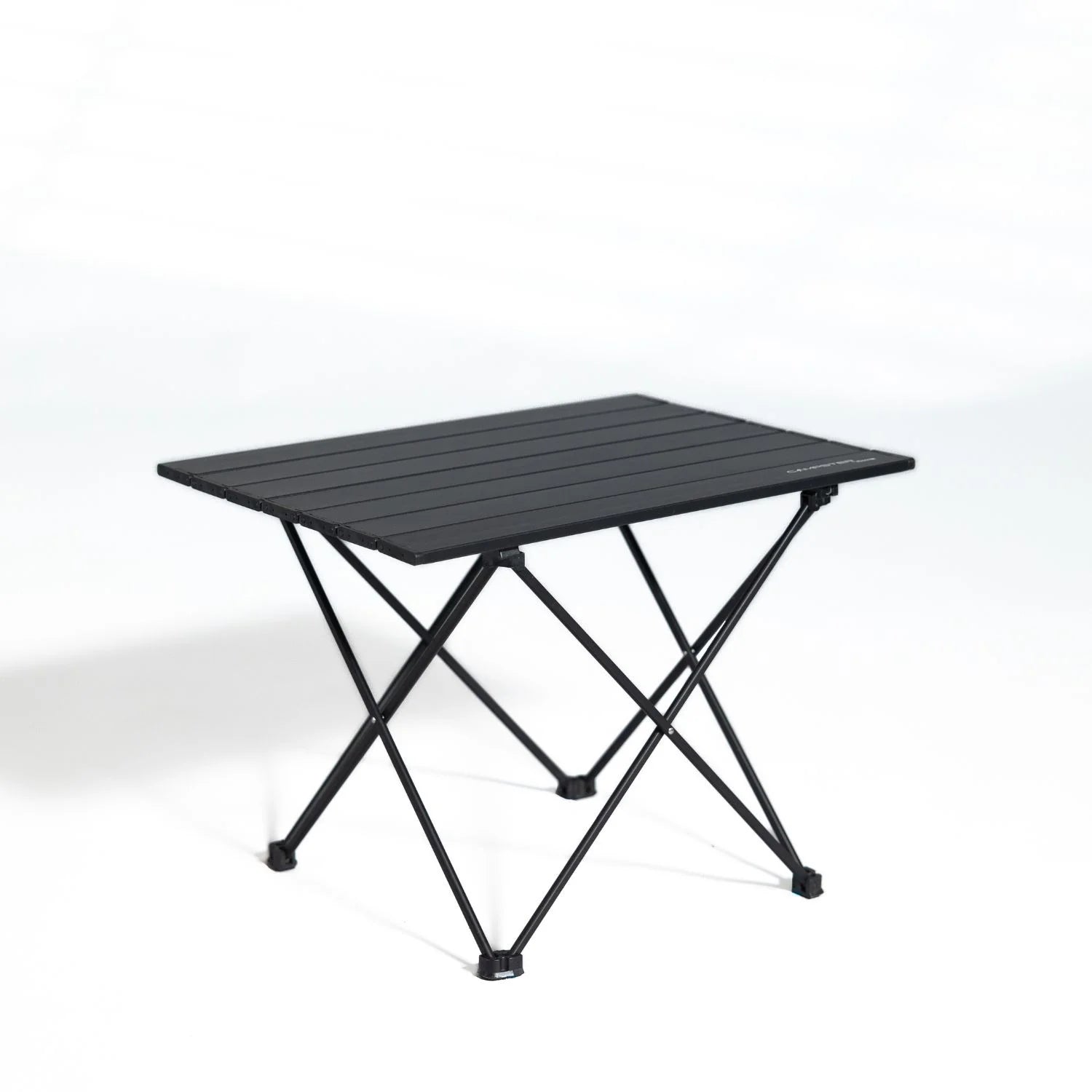
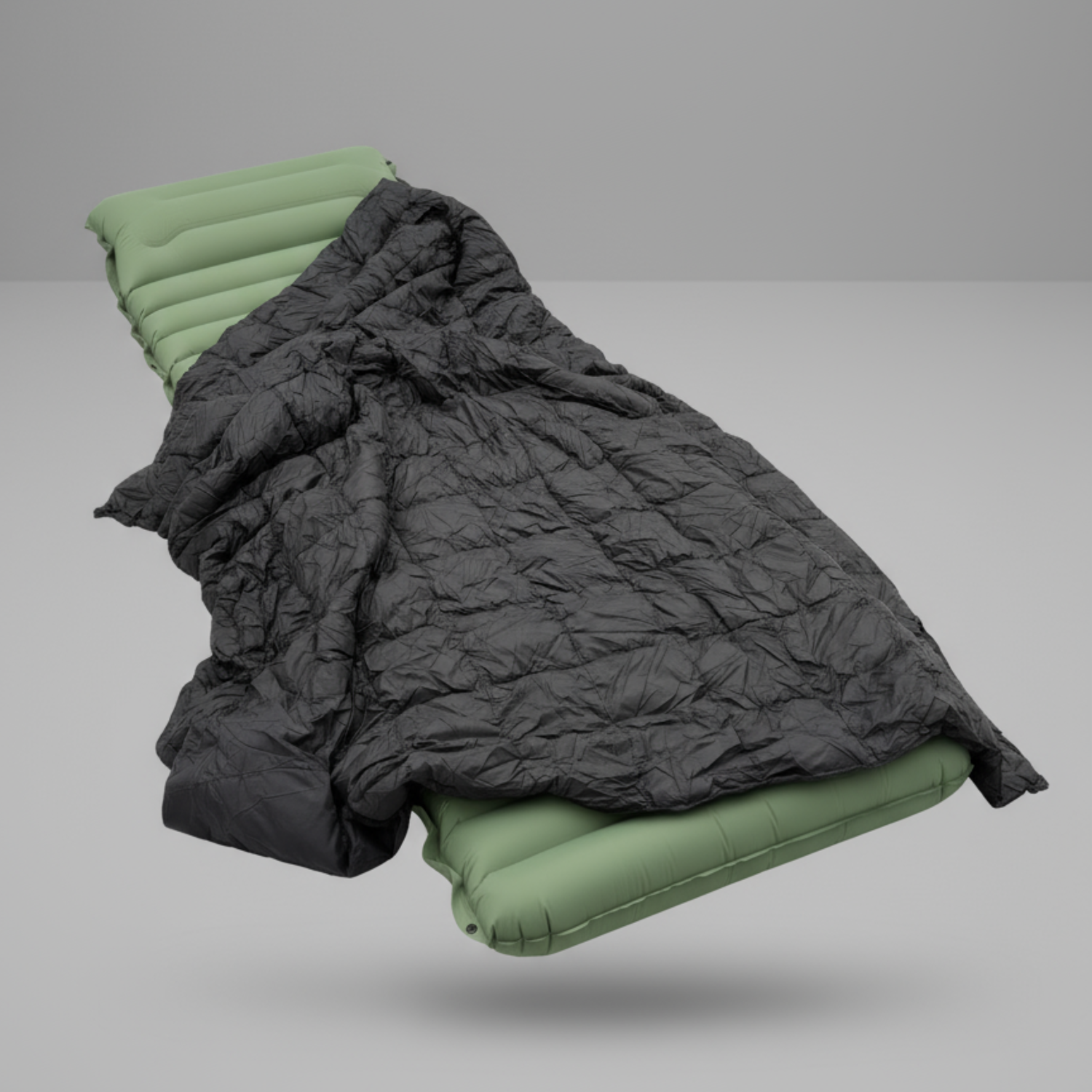
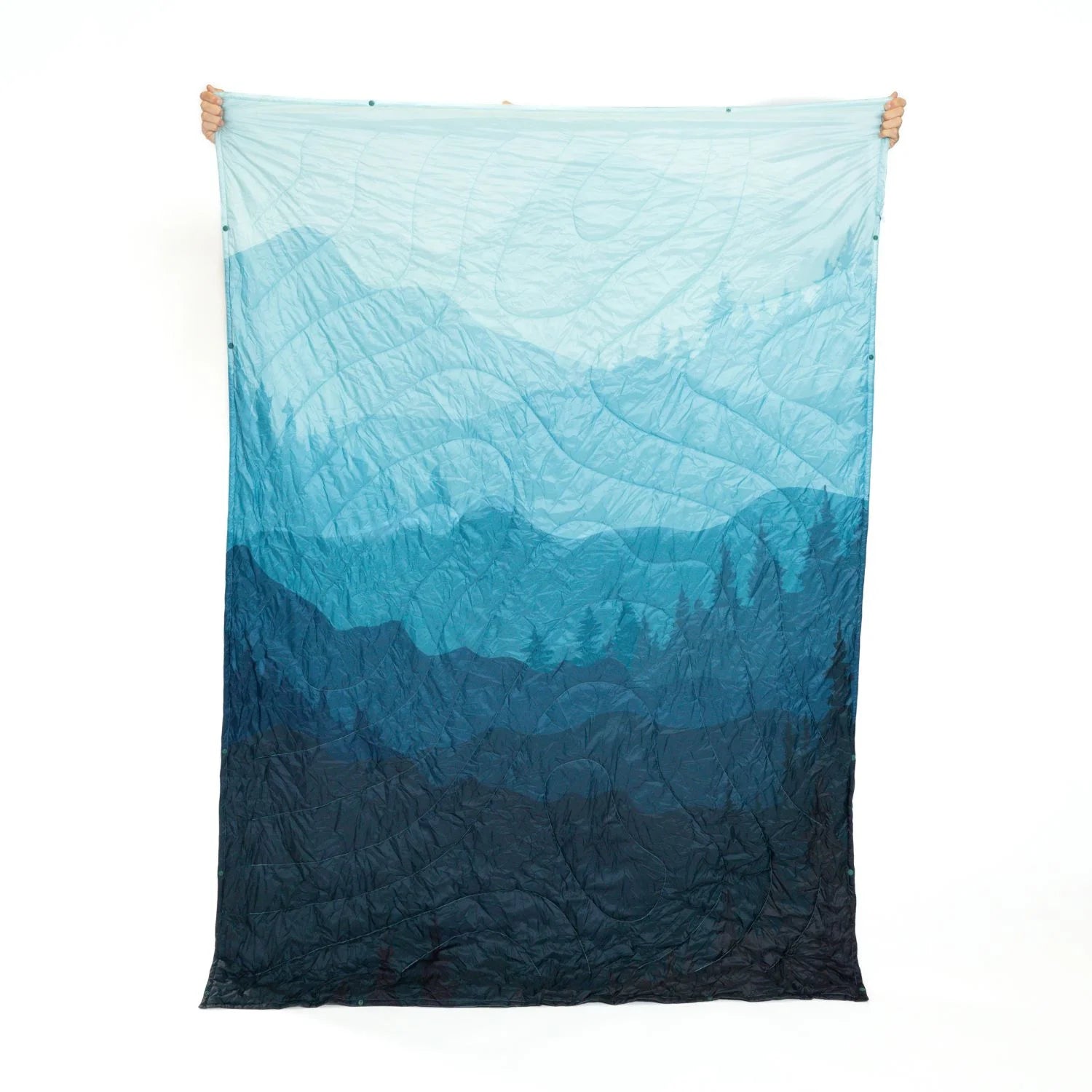


デンマークの会社

TL;DR:
- Non-slip seating prevents sliding by increasing friction and using design features like wedges and barriers. It improves stability and reduces fatigue for users in various settings, including outdoor environments. Proper seat fit and posture are essential for effective non-slip support and safety.
Non-slip seating refers to seats and cushions engineered with materials and design features that prevent sliding by increasing friction between the sitter and the seat surface. The industry term you’ll see in clinical and occupational therapy settings is “anti-slip seating,” though both phrases describe the same concept. Whether you’re parking your posterior on a portable camp chair or sitting through a long outdoor event, the right anti-slip seating keeps you stable, reduces fatigue, and lets you focus on what actually matters. Understanding what is non-slip seating, how it works, and what to look for makes the difference between a seat that holds you in place and one that sends you slowly sliding toward the ground.
Non-slip seating works by increasing friction between the user and the seat surface. Rubber and silicone materials achieve friction coefficients ranging from 0.5 to 1.0 on dry surfaces. That range matters because it means these materials resist horizontal movement with roughly half to equal the force of your body weight pressing down.
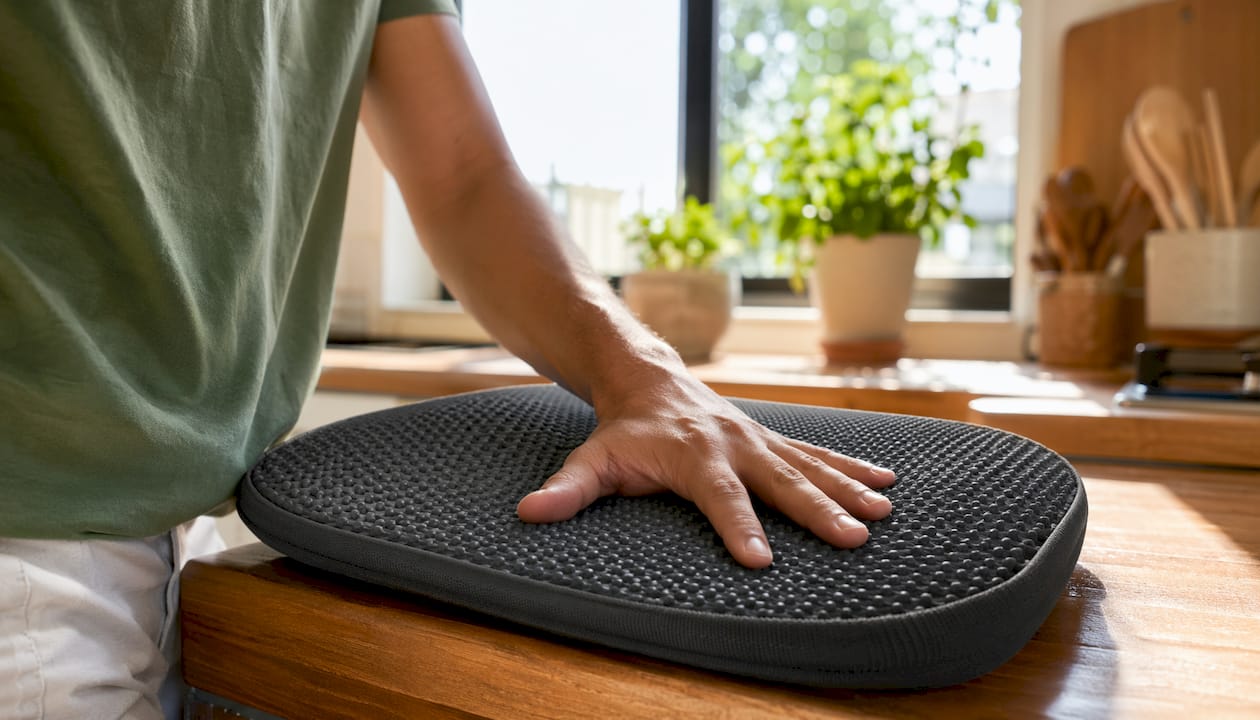
The physics are simple but the design is not. Friction alone only solves part of the problem. Cushion geometry plays an equally important role. Wedge cushions tilt the pelvis backward, using gravity to push your weight into the seat rather than forward off it. Anti-thrust cushions use a physical shelf or barrier to block forward migration entirely. Together, friction and geometry address the two main causes of sliding: surface slipperiness and poor pelvic alignment.
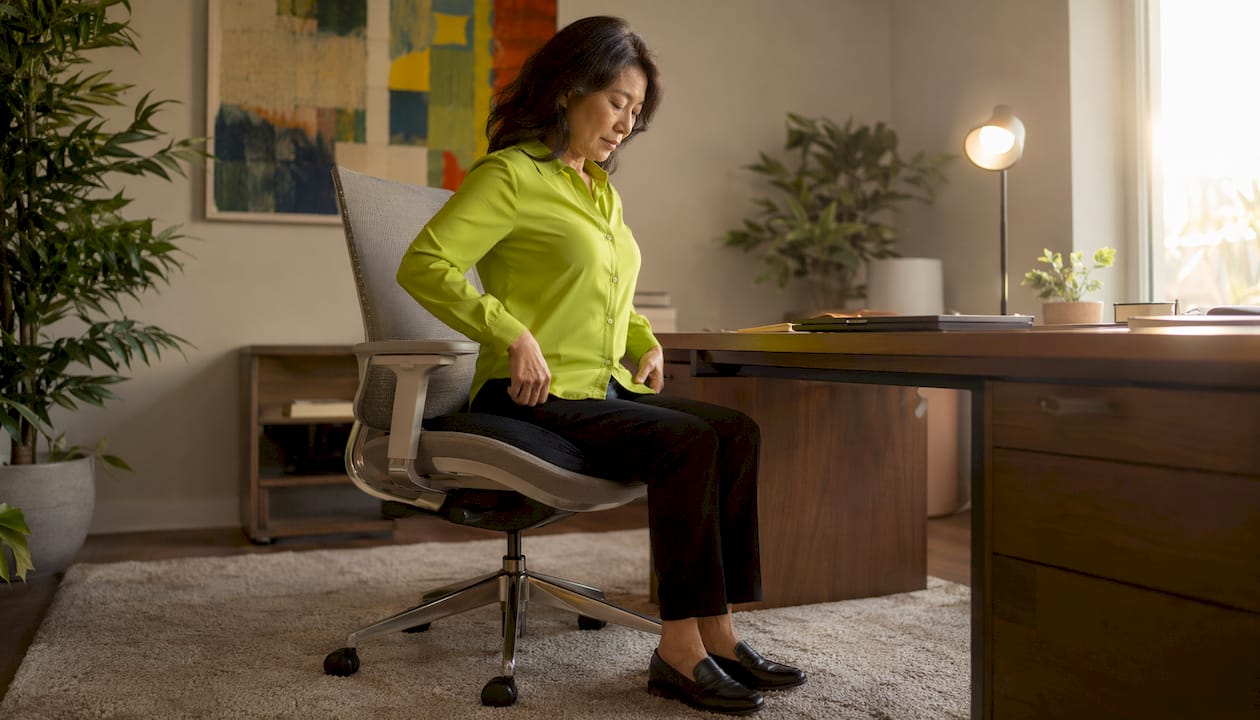
Posture alignment also affects how well any anti-slip seat performs. When your feet rest flat on the floor and your knees sit at roughly 90 degrees, your body weight distributes evenly across the seat. That even distribution maximizes contact between the seat surface and your body, which in turn maximizes friction. A seat that fits your body well works with the non-slip material. A seat that fits poorly fights against it.
Pro Tip: Before buying any non-slip cushion or seat, check that your feet reach the floor comfortably. Dangling feet shift your weight forward and undermine even the best friction-enhancing material.
Occupational therapists apply these principles routinely. They assess not just the cushion but the whole seating setup, including backrest contact, seat depth, and foot support, before recommending any anti-slip aid. That whole-picture approach is the standard for a reason.
Non-slip seating solutions come in several distinct forms, each targeting a specific cause of sliding. Knowing which type fits your situation saves you money and frustration.
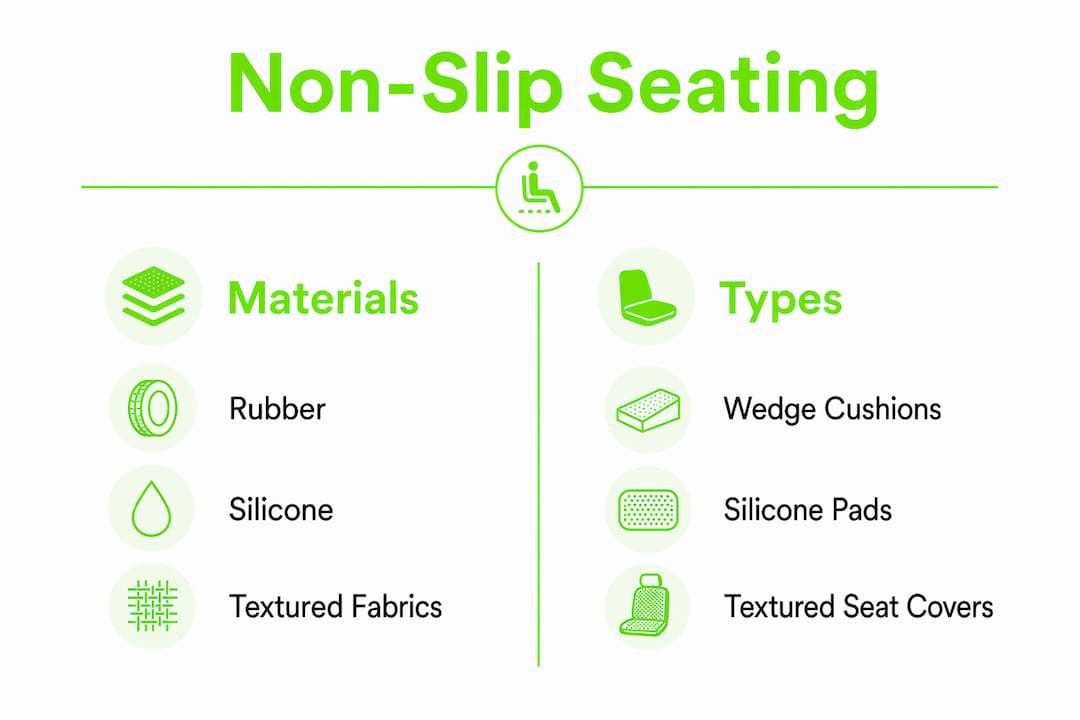
Wedge cushions. These tilt the front of the seat higher than the back, angling the pelvis rearward. Gravity does the work. The user’s weight naturally settles into the chair rather than migrating forward. Wedge cushions work well for people with mild postural instability or those sitting for long periods outdoors.
Anti-thrust cushions. These feature a raised shelf or pre-ischial ridge at the front edge of the cushion. Anti-thrust cushion shelves sit approximately 1 inch high to physically block forward sliding. They are common in wheelchair seating and clinical care settings.
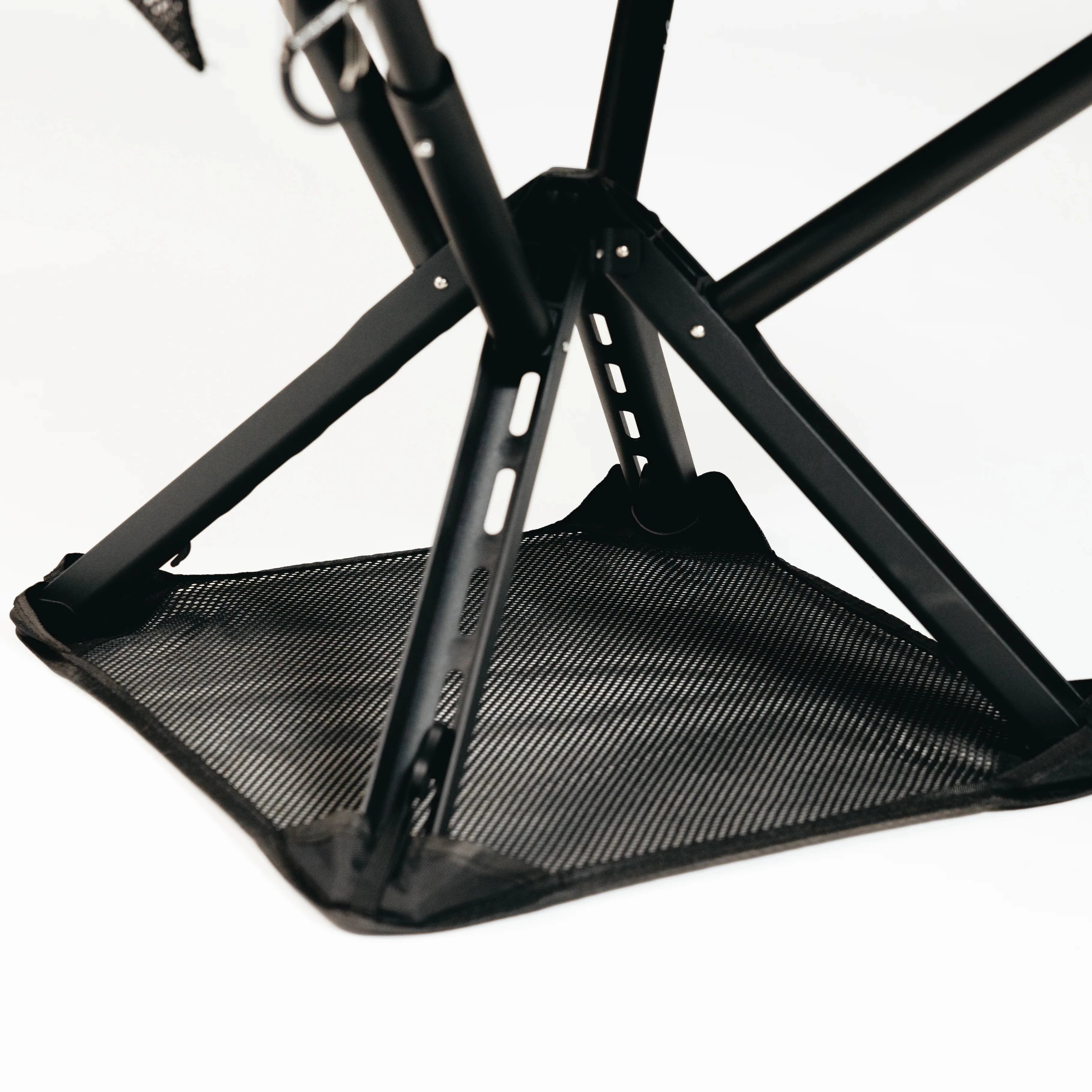
Non-slip mats and gel sheets. These are placed between an existing cushion and the seat frame. Non-slip wheelchair mats made from high-friction materials improve posture and reduce slipping by increasing resistance between the user and the seat. They are the most affordable entry point for adding anti-slip properties to any chair.
Rubberized seat covers. These wrap around an existing seat and use a textured or rubberized backing to grip the seat frame. They work well for smooth surfaces like plastic or metal outdoor chairs.
The materials behind these products follow a consistent pattern. Rubberized bases, silicone pads, and textured fabrics all increase surface friction. The key design detail that separates good products from mediocre ones is the cushion base. A smooth-bottom cushion placed on a smooth chair seat creates a sliding surface on both sides of the cushion. That doubles your problem instead of solving it.
| Solution type | Best use case | Key material |
|---|---|---|
| Wedge cushion | Mild postural instability, long sitting | Foam with rubberized base |
| Anti-thrust cushion | Forward sliding, wheelchair users | Gel or foam with shelf design |
| Non-slip mat or gel sheet | Adding grip to any existing chair | Silicone or rubberized mesh |
| Rubberized seat cover | Smooth outdoor chairs, travel seats | Textured rubber or silicone backing |
One design detail worth knowing: pre-ischial ridges in cushions should not exceed 5 mm in height. Ridges deeper than that increase pressure on the skin beneath the sit bones, which raises the risk of pressure sores. Good design balances grip with skin safety.
Choosing the right anti-slip seating starts with the user, not the product. A cushion that works brilliantly for one person can be useless or even harmful for another.
Pro Tip: Sit in the chair with the cushion in place and deliberately shift your weight forward. If the cushion moves with you instead of staying put, the base material is not gripping the seat frame. Try a silicone mesh non-slip mat underneath the cushion.
Anti-slip seat covers increase friction but cannot overcome poor chair-to-user contour mismatches. Good fit is the foundation. Non-slip materials are the finishing layer. Get the fit right first, then add friction.
Combining non-slip seating with ergonomic seating principles gives you the best outcome. Ergonomic design addresses posture, weight distribution, and support. Non-slip materials lock that position in place. Neither works as well without the other.
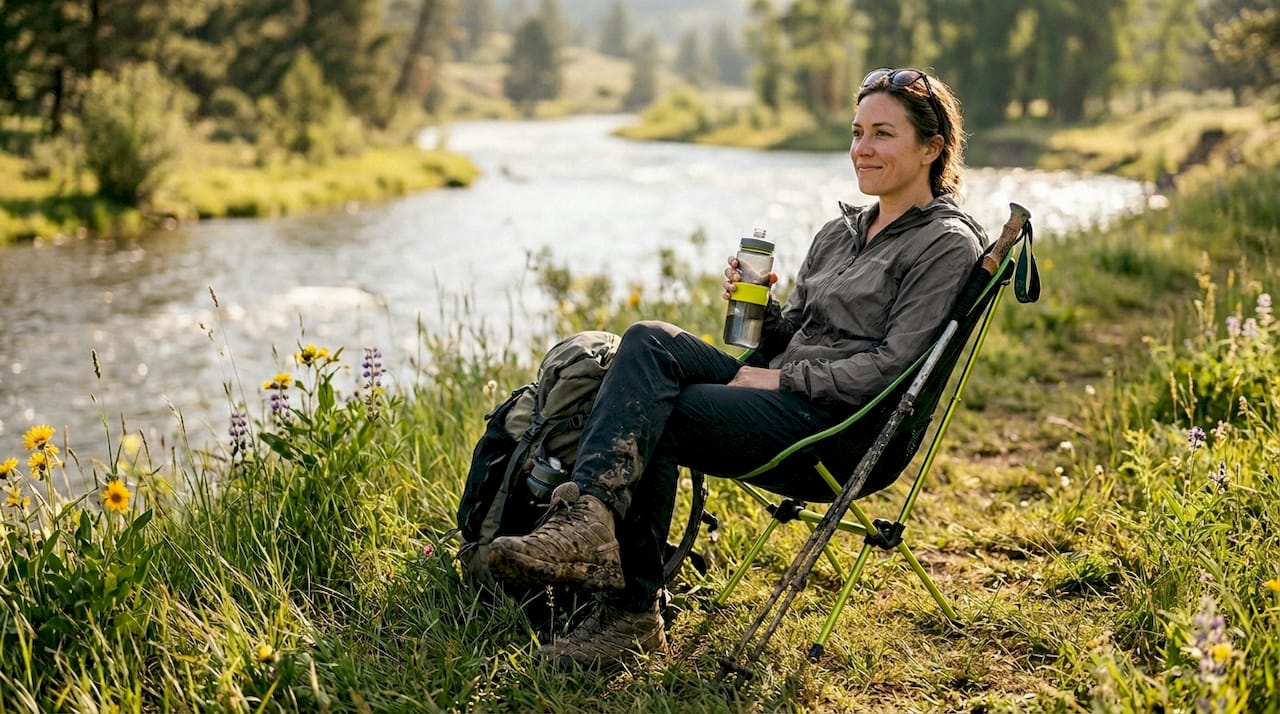
Outdoor settings create unique challenges for seating stability. Uneven ground, smooth chair surfaces, and changing weather all increase the risk of sliding. Non-slip seating addresses each of these directly.
For outdoor enthusiasts and travelers, adaptable seating for travel that incorporates non-slip features means you can set up on a rocky hillside, a wooden deck, or a sandy beach without constantly readjusting your position. That stability is not just comfortable. It is what lets you stay out longer and enjoy more.
Non-slip seating works best when friction-enhancing materials combine with correct chair fit, proper posture alignment, and ergonomic design.
| Point | Details |
|---|---|
| Friction is the foundation | Rubber and silicone materials with friction coefficients of 0.5–1.0 prevent horizontal sliding. |
| Cushion geometry matters | Wedge and anti-thrust designs use gravity and physical barriers to stabilize pelvic position. |
| Chair fit comes first | Correct seat depth, foot support, and backrest contact must be in place before adding non-slip aids. |
| Ridge depth has a safety limit | Pre-ischial ridges should not exceed 5 mm to avoid pressure sore risk. |
| Non-slip seating supports independence | Stable seating reduces fatigue, prevents falls, and eliminates the need for physical restraints. |
Most people treat non-slip seating as an afterthought. They buy a cushion, toss it on the chair, and wonder why they’re still sliding around by the end of the afternoon. I’ve seen this pattern repeat itself constantly, and the fix is almost always the same: the chair fit was wrong from the start.
Here’s the thing that most product descriptions won’t tell you. A rubberized cushion base gripping a smooth plastic chair seat is only as good as the contact area between them. If the cushion is too wide, too narrow, or the wrong shape for the seat, it shifts. And once it shifts, all that carefully engineered friction becomes irrelevant.
The clinical world figured this out years ago. Occupational therapists don’t just hand someone a non-slip mat and call it done. They assess the whole seating system. Feet flat, knees at 90 degrees, backrest contact, seat depth. Then they add the non-slip element. That sequence is not bureaucratic caution. It is the reason the solution actually works.
For outdoor use specifically, I’d push you to think about surface variability. A seat that grips perfectly on a flat wooden deck may shift on a canvas camp chair or a sloped picnic bench. Test your setup on the actual surface you plan to use. And if you’re combining a non-slip cushion with a portable or foldable chair, check that the seat base is firm enough to give the cushion something solid to grip.
The best non-slip seating is not the most expensive or the most technically complex. It is the one that fits your chair, fits your body, and stays put when you lean forward to grab your coffee.
— Jonas
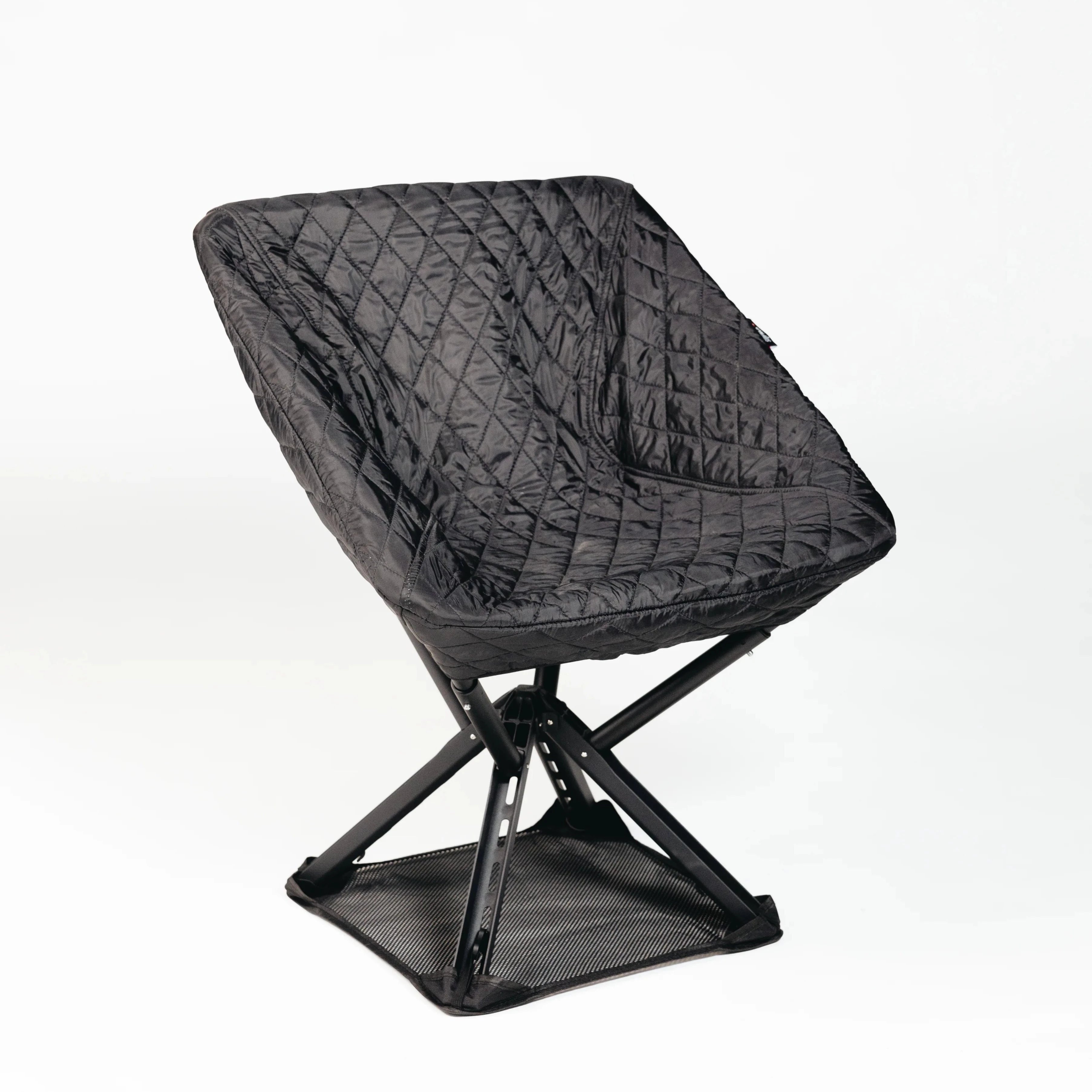
Sitpack builds portable seating with stability and comfort at the core of every design. If you’ve been thinking about non-slip seating for outdoor adventures, travel, or everyday use, Sitpack’s lineup is worth a close look.
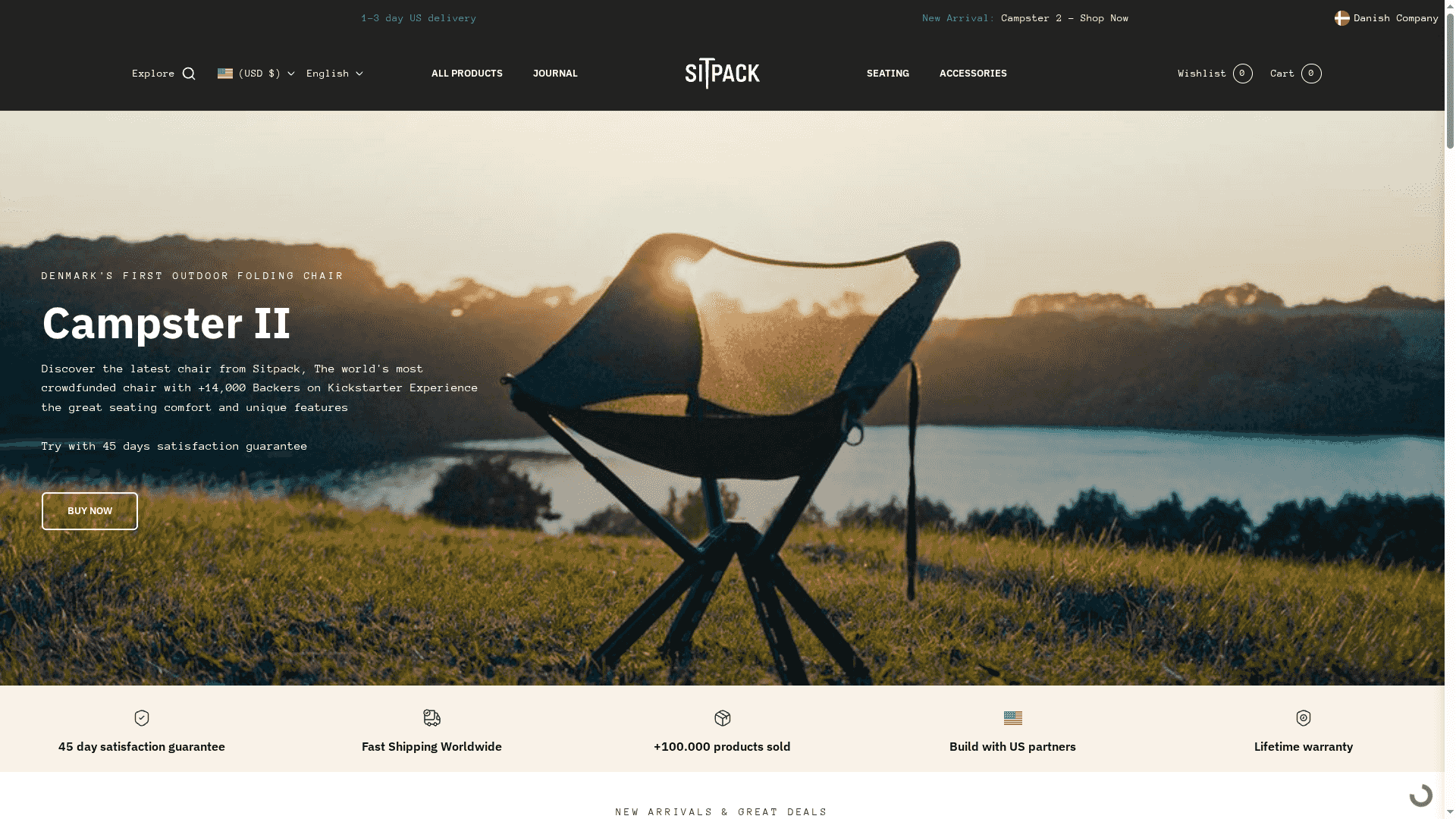
The Campster II and Sitpack Zen are built for people who want a seat that holds its position whether you’re on a hillside, a festival field, or a city bench. Ergonomic design, durable materials, and thoughtful construction mean you’re not constantly readjusting. Sitpack also backs its products with a 45-day satisfaction guarantee and fast worldwide delivery, so trying one out carries very little risk. Head over to Sitpack’s homepage to see the full range of portable seating solutions built for real outdoor use.
Non-slip seating is any seat or cushion designed to prevent the sitter from sliding by increasing friction between the body and the seat surface. It uses materials like rubber or silicone and design features like wedge shapes or raised barriers to keep you stable.
Rubber and silicone are the most effective non-slip materials, with friction coefficients of 0.5–1.0 on dry surfaces. Textured fabrics and rubberized mesh bases also add grip between cushions and chair frames.
A non-slip cushion works best when the chair fits the user correctly, with feet flat, knees at 90 degrees, and proper seat depth. Poor chair fit reduces the effectiveness of even the best non-slip material.
Non-slip seating benefits anyone who sits for long periods on smooth surfaces, including outdoor enthusiasts, travelers, and office workers. Reduced fatigue and improved posture are advantages for all users, not just those with medical needs.
Shift your weight forward deliberately while seated. If the cushion moves with you, the base is not gripping the chair frame. A properly functioning non-slip cushion stays fixed to the seat while your body shifts above it.